


Sales Pipeline vs Sales Funnel: A 2026 Comparison for Sales Teams
In the world of sales and marketing, the terms 'sales pipeline' and 'sales funnel' are often used interchangeably, leading to confusion that can misdirect strategy and muddle reporting. While both are essential models for understanding how a prospect becomes a customer, they represent two fundamentally different perspectives. Understanding the comparison between a sales pipeline vs sales funnel is not just a matter of semantics; it's crucial for aligning your sales and marketing teams and driving predictable revenue growth.
- In a Nutshell
- What is a Sales Pipeline? The Sales Rep's Roadmap
- What is a Sales Funnel? The Customer's Journey
- Sales Pipeline vs Funnel: The 5 Core Differences
- 1. Perspective: Seller vs. Buyer
- 2. Focus: Actions vs. Numbers
- 3. Purpose: Management vs. Analysis
- 4. Structure: Linear vs. Tapering
- 5. Customisation: Process-Specific vs. Universal Model
- A Deep Dive into the Stages of a Sales Pipeline
- Stage 1: Prospecting & Lead Generation
- Stage 2: Qualification
- Stage 3: Meeting or Demo
- Stage 4: Proposal
- Stage 5: Negotiation & Commitment
- Stage 6: Closed-Won or Closed-Lost
- Understanding the Stages of a Sales Funnel
- Top of the Funnel (TOFU): Awareness
- Middle of the Funnel (MOFU): Interest and Desire (or Consideration)
- Bottom of the Funnel (BOFU): Action (or Decision)
- Why Your Sales Strategy Depends on a Healthy Pipeline
- The Funnel's Critical Role in Your Marketing Strategy
- Measuring Success: Key Metrics for Pipeline and Funnel
- How to Visualise and Manage Your Sales Pipeline Effectively
- Common Mistakes to Avoid in Pipeline and Funnel Management
- FAQ: Sales Pipeline vs Sales Funnel
- What are the 5 stages of a sales pipeline?
- What are the 7 stages of a sales pipeline?
- What are the stages of the sales funnel and pipeline?
- What is the difference between a sales process and a sales funnel?
- Final Thoughts: Using Pipeline and Funnel Together
A sales pipeline visualises the specific actions your sales team takes to move a deal from a qualified lead to a closed sale, focusing on the seller's process. In contrast, a sales funnel represents the customer's journey from initial awareness to making a purchase, focusing on conversion rates and the buyer's behaviour. Getting this distinction right is the first step toward building a more efficient and scalable growth engine for your business.
In a Nutshell
- Seller's View vs. Buyer's View: A sales pipeline is from the seller's perspective, tracking the actions and stages a salesperson controls. A sales funnel is from the buyer's perspective, mapping their journey from awareness to purchase.
- Focus on Actions vs. Numbers: The pipeline focuses on managing active deals and the specific steps needed to close them. The funnel focuses on the volume of leads and the conversion rates between each stage of the buyer's journey.
- Purpose is Different: Pipelines are primarily for sales management, forecasting revenue, and tracking individual rep performance. Funnels are for marketing analysis, identifying leaks in the customer journey, and optimising lead generation.
- Structure and Shape: A pipeline is a linear process where deals move from one stage to the next. A funnel is, by its nature, a tapering model where a large number of prospects at the top gets smaller as they move towards the bottom.
- Not Interchangeable, But Complementary: The most successful companies don't choose one over the other. They use the funnel to diagnose marketing health and feed qualified leads into the pipeline, which the sales team then uses to manage and close deals.
What is a Sales Pipeline? The Sales Rep's Roadmap
A sales pipeline is a clear, visual representation of where potential customers are within your sales process. Think of it as a roadmap that your sales representatives follow for every active deal. It's composed of a series of distinct stages that a prospect moves through as they get closer to making a purchasing decision. Each stage represents a specific set of actions that a salesperson must complete.
For example, a typical pipeline stage might be 'Proposal Sent'. For a deal to be in this stage, the salesperson must have already had a discovery call, conducted a demo, and sent a formal proposal. The pipeline provides an at-a-glance view of all ongoing deals, their estimated value, and their current status. This makes it an indispensable tool for sales managers and reps.

The primary purpose of a sales pipeline is to manage and organise the sales process from an internal perspective. It answers the question, “What steps do we need to take to close this deal?” By tracking deals through these stages, sales leaders can accurately forecast future revenue, identify potential bottlenecks where deals tend to stall, and manage the workload of their team members effectively. It’s a hands-on, operational tool focused on action and process.
What is a Sales Funnel? The Customer's Journey
A sales funnel, on the other hand, illustrates the journey from the customer's point of view. It's a theoretical model that represents the path a person takes from being a complete stranger to your brand to becoming a paying customer. The 'funnel' shape is a perfect metaphor because it starts wide at the top with a large number of people who have become aware of your brand and gradually narrows as people drop off at various stages.
Unlike the pipeline's focus on sales actions, the funnel is concerned with customer behaviour and conversion rates. It answers the question, “How many people are moving from one stage of interest to the next?” The top of the funnel (TOFU) represents the 'Awareness' stage, where marketing efforts like blog posts, social media, and advertising attract a broad audience. As prospects move down, they enter the middle (MOFU) for 'Interest' and 'Consideration', and finally the bottom (BOFU) for the 'Decision' or 'Action' stage.
The main goal of analysing a sales funnel is to understand and optimise the customer acquisition process. Marketers use funnel data to see where they are losing potential customers. For example, if many people visit a landing page but few sign up for a webinar, there's a 'leak' in the funnel at that point. This data-driven insight allows marketing teams to make targeted improvements, such as refining their messaging or improving the user experience, to guide more people toward the final purchase.
Sales Pipeline vs Funnel: The 5 Core Differences
While they both map the path to a sale, the pipeline vs funnel comparison reveals fundamental differences in perspective, purpose, and application. Understanding these distinctions is key to using both tools effectively. Here’s a breakdown of the core differences.
| Feature | Sales Pipeline | Sales Funnel |
|---|---|---|
| Perspective | Seller-centric (Internal) | Buyer-centric (External) |
| Focus | Actions and Deals | Numbers and Conversion Rates |
| Purpose | Sales Management & Forecasting | Marketing Analysis & Optimisation |
| Structure | Linear and Process-Driven | Tapering and Journey-Driven |
| Key Question | "What do we do next to close?" | "Where are we losing customers?" |
1. Perspective: Seller vs. Buyer
The most significant difference is the point of view. A sales pipeline is built from the inside out. It reflects your company's specific sales process and the actions your team takes. It's all about what your salespeople are doing—making calls, sending emails, giving demos, and negotiating contracts.
The sales funnel is built from the outside in. It maps the customer's mental and emotional journey. It focuses on what the potential buyer is thinking and feeling at each stage, from “I have a problem” to “This product is the solution.”
2. Focus: Actions vs. Numbers
A pipeline is action-oriented. Its value lies in tracking the progress of individual deals. A sales manager looks at the pipeline to see if Rep A has followed up with a key prospect or if Rep B has sent out the proposal they promised. It’s a to-do list for closing business.
A funnel is numbers-oriented. Its value lies in tracking volume and conversion rates. A marketing manager looks at the funnel to see that 10,000 people visited the website (Awareness), 500 downloaded an ebook (Interest), and 50 signed up for a trial (Decision). It’s a diagnostic tool for the health of the customer acquisition process.
3. Purpose: Management vs. Analysis
The pipeline is a tool for management. Sales leaders use it to manage their team's activities, forecast revenue based on the value and probability of deals in each stage, and ensure the team is on track to hit its targets. It’s operational and forward-looking.
The funnel is a tool for analysis. Marketing leaders use it to analyse the effectiveness of their campaigns. By identifying where the biggest drop-offs occur, they can adjust their strategies to improve performance. It’s diagnostic and often backward-looking, analysing past performance to inform future strategy.
4. Structure: Linear vs. Tapering
A pipeline is typically visualised as a horizontal bar or a series of columns (like a Kanban board), where deals move linearly from left to right through predefined stages. In an ideal world, every qualified deal that enters the pipeline would move through every stage and become a customer.
A funnel is always visualised as a vertical, tapering shape. It inherently acknowledges that not everyone who enters will make it to the end. The structure is designed to measure the drop-off, which is a natural and expected part of the marketing process.
5. Customisation: Process-Specific vs. Universal Model
Sales pipelines are highly customised to a company's unique sales cycle. A SaaS company selling to enterprises will have a very different pipeline with more stages than a B2C company selling a simple product online. The stages are named and defined by the company's internal processes.
Sales funnels, while adaptable, tend to follow more universal, psychological models of buyer behaviour, such as AIDA (Awareness, Interest, Desire, Action). The core concepts of attracting a wide audience and nurturing them towards a decision are applicable across most industries.
A Deep Dive into the Stages of a Sales Pipeline
While the exact stages of a sales pipeline can and should be tailored to your specific business model, they generally follow a logical progression from initial contact to a closed deal. A well-defined pipeline typically includes five to seven stages. Here’s a detailed look at a common six-stage structure.
Stage 1: Prospecting & Lead Generation
This is the starting point where potential customers are identified. Leads can come from various sources: inbound marketing efforts (funnel outputs!), cold outreach, referrals, or networking. The goal here is to build a list of potential accounts or individuals who fit your ideal customer profile. Tools like Apollo.io or Hunter Campaigns (Hunter.io) are often used at this stage to find and verify contact information for targeted outreach.
Stage 2: Qualification
Not every lead is a good fit. In the qualification stage, a sales rep determines if the prospect has a genuine need for the product, the budget to afford it, and the authority to make a purchasing decision. This is often done through an initial discovery call or by using a framework like BANT (Budget, Authority, Need, Timeline). A deal officially enters the pipeline only after it has been qualified.
This step is critical for preventing the pipeline from getting clogged with low-quality leads.
Stage 3: Meeting or Demo
Once a lead is qualified, the next step is a more in-depth interaction, such as a formal meeting, a product demonstration, or a needs analysis call. This is where the sales rep dives deep into the prospect's challenges and showcases how their solution can specifically address those pain points. Efficiently scheduling these crucial appointments can be streamlined with tools like SimplyBook.me, which automates the booking process.
Stage 4: Proposal
After a successful demo where the prospect has shown clear interest, the sales rep creates and sends a formal proposal. This document outlines the solution being offered, the scope of work, pricing, and terms and conditions. Modern proposal software like PandaDoc or Better Proposals can automate this process, creating professional, trackable documents that improve the chances of success.
Stage 5: Negotiation & Commitment
Few deals are accepted without some back-and-forth. This stage involves handling objections, negotiating on price or terms, and getting verbal or written commitment from the key decision-makers. It requires strong communication and negotiation skills from the sales rep. Using an eSignature tool like eSignly can accelerate this stage by making it easy for clients to formally approve contracts.
Stage 6: Closed-Won or Closed-Lost
This is the final stage. The deal is either won, and the prospect becomes a customer, or it is lost to a competitor or to inaction. Both outcomes are valuable. A 'won' deal adds to revenue, while a 'lost' deal provides important data.
Analysing why deals were lost can reveal weaknesses in the product, pricing, or sales process that need to be addressed.

Understanding the Stages of a Sales Funnel
The sales funnel maps the customer's journey, which is less about a company's internal process and more about a potential customer's evolving level of engagement and intent. The most widely recognised model is AIDA, which breaks the journey into four key stages.
Top of the Funnel (TOFU): Awareness
This is the widest part of the funnel, where the goal is to attract as many relevant people as possible. At this stage, individuals are experiencing a problem or have a need, and they are just starting to research it. They are not yet aware of your specific solution or brand. Marketing activities here are focused on education and visibility, such as:
- Blog posts and articles optimised for search engines
- Social media updates and advertising
- Infographics and videos
- Podcasts and webinars
Middle of the Funnel (MOFU): Interest and Desire (or Consideration)
Once someone becomes aware of your brand and starts engaging with your content, they move into the middle of the funnel. Here, they are actively researching solutions to their problem. They are comparing different options and trying to determine the best course of action. The goal for marketers is to build trust and position their solution as the best choice.
Content in this stage is more detailed and solution-focused:.
- In-depth guides and ebooks
- Case studies and customer testimonials
- Email newsletters and nurture sequences
- Product webinars and comparison sheets
Effective email outreach is crucial at this stage. Platforms like Reply.io help automate and personalise email sequences to nurture these leads effectively, keeping your brand top-of-mind as they evaluate their options.
Bottom of the Funnel (BOFU): Action (or Decision)
This is the narrowest part of the funnel. The prospect is now ready to make a purchase decision. They have done their research and have likely shortlisted a few options, including yours. The marketing and sales efforts here are focused on converting this high-intent prospect into a customer.
Activities are highly targeted and aim to remove any final barriers to purchase:.
- Free trials or live demos
- Consultations and strategy sessions
- Special offers or discounts
- Pricing page visits and quote requests
At this point, a lead from the funnel is typically handed over to the sales team and officially enters the sales pipeline as a qualified opportunity.
Why Your Sales Strategy Depends on a Healthy Pipeline
A well-managed sales pipeline is the backbone of any successful sales organisation. It moves beyond being a simple tracking system to become a strategic asset that directly influences revenue, efficiency, and growth. Its importance in a sales strategy cannot be overstated.
First and foremost, a pipeline provides accurate revenue forecasting. By assigning a value to each deal and a probability of closing based on its stage, sales leaders can predict future revenue with a reasonable degree of accuracy. For example, deals in the 'Proposal' stage might have a 70% chance of closing, while deals in the 'Qualification' stage have a 20% chance. This forecasting allows businesses to make informed decisions about hiring, spending, and strategic planning.
Second, it is essential for resource allocation and management. A visual pipeline shows managers where deals are concentrated and where they are getting stuck. If multiple deals are stalled in the 'Negotiation' stage, it might indicate a need for more training on handling objections. If a top-performing rep has too many early-stage deals, it might be time to allocate some to another team member to ensure every opportunity gets the attention it deserves.
Finally, a pipeline is a powerful tool for performance management and process optimisation. It provides objective data on each rep's performance, such as their win rate, average deal size, and sales cycle length. This data helps identify top performers and those who may need coaching. Furthermore, by analysing the pipeline as a whole, companies can spot systemic bottlenecks and refine their sales process to make it more efficient, shortening the sales cycle and increasing the overall win rate.
Pro Tip: Define strict entry and exit criteria for each pipeline stage. For a deal to move from 'Demo' to 'Proposal', require that the prospect has confirmed budget and identified all decision-makers. This prevents 'pipeline bloating' and ensures your forecast is based on genuinely progressing deals.
The Funnel's Critical Role in Your Marketing Strategy
Just as the pipeline is central to sales, the funnel is the cornerstone of a modern marketing strategy. It provides a framework for understanding customer behaviour and a diagnostic tool for improving the entire customer acquisition process. Without a funnel-based approach, marketing efforts can feel disjointed and difficult to measure.
The funnel’s most critical role is in identifying and fixing leaks. A funnel visually represents the drop-off rate between each stage of the buyer's journey. If 1,000 people click on an ad but only 20 fill out the contact form, there is a 98% leak. This data is a massive red flag for the marketing team, prompting them to investigate the landing page's messaging, design, or form length.
By systematically identifying and plugging these leaks, marketers can significantly increase the number of leads they generate from the same amount of traffic.
Additionally, the sales funnel comparison helps in optimising marketing channels and spend. By tracking leads from different channels (e.g., Google Ads, LinkedIn, SEO) as they move through the funnel, marketers can determine which sources generate not just the most leads, but the highest quality leads—those that are most likely to convert into customers. This allows them to double down on effective channels and reduce spending on underperforming ones, maximising their return on investment.
Ultimately, the funnel provides a deep understanding of the customer journey. It forces marketers to think from the customer's perspective and create content and experiences that are tailored to their needs at each specific stage. This customer-centric approach builds trust and guides prospects more smoothly towards a purchase, resulting in higher conversion rates and a more efficient marketing engine.
Measuring Success: Key Metrics for Pipeline and Funnel
To effectively manage your sales and marketing efforts, you need to track the right metrics for both your pipeline and your funnel. While some metrics overlap, they generally measure different aspects of the growth engine.
Key Sales Pipeline Metrics
These metrics focus on the health and efficiency of your sales process.
- Number of Deals in Pipeline: The total count of active opportunities your team is working on. This is a measure of overall activity and potential.
- Average Deal Size: The average monetary value of the deals in your pipeline. Tracking this helps in forecasting and understanding if you're moving up or down market.
- Pipeline Value: The total potential revenue of all deals currently in the pipeline. This is a top-line figure used in revenue forecasting.
- Win Rate (or Close Rate): The percentage of deals that result in a 'Closed-Won' status. This is a primary indicator of sales effectiveness.
- Sales Velocity: A measurement of how quickly deals move through your pipeline and generate revenue. It's calculated by: (Number of Deals x Average Deal Size x Win Rate) / Length of Sales Cycle. A higher velocity means you're making money faster.
Key Sales Funnel Metrics
These metrics focus on the effectiveness and efficiency of your marketing and lead generation efforts.
- Lead Generation Volume: The total number of new leads entering the top of your funnel in a given period. This measures the reach of your marketing campaigns.
- Conversion Rate (Stage-to-Stage): The percentage of people who move from one funnel stage to the next (e.g., the percentage of website visitors who become leads). This is crucial for identifying leaks.
- Lead-to-Customer Conversion Rate: The overall percentage of leads that eventually become paying customers. This is the ultimate measure of funnel effectiveness.
- Cost Per Lead (CPL): The total cost of a marketing campaign divided by the number of leads it generated. This measures the efficiency of your marketing spend.
- Customer Lifetime Value (CLV): The total revenue a business can expect from a single customer account. Comparing CLV to the cost of acquisition helps determine long-term profitability.
How to Visualise and Manage Your Sales Pipeline Effectively
While you could theoretically manage a pipeline on a spreadsheet or a whiteboard, these methods quickly become chaotic and unmanageable as your business grows. The most effective way to visualise and manage a sales pipeline is with a dedicated Customer Relationship Management (CRM) platform.
A CRM acts as a centralised hub for all your customer data and sales activities. It allows you to build a visual representation of your pipeline, often in a Kanban-style board where deals are represented as cards that you can drag and drop from one stage to the next. This provides instant clarity on the status of every deal.
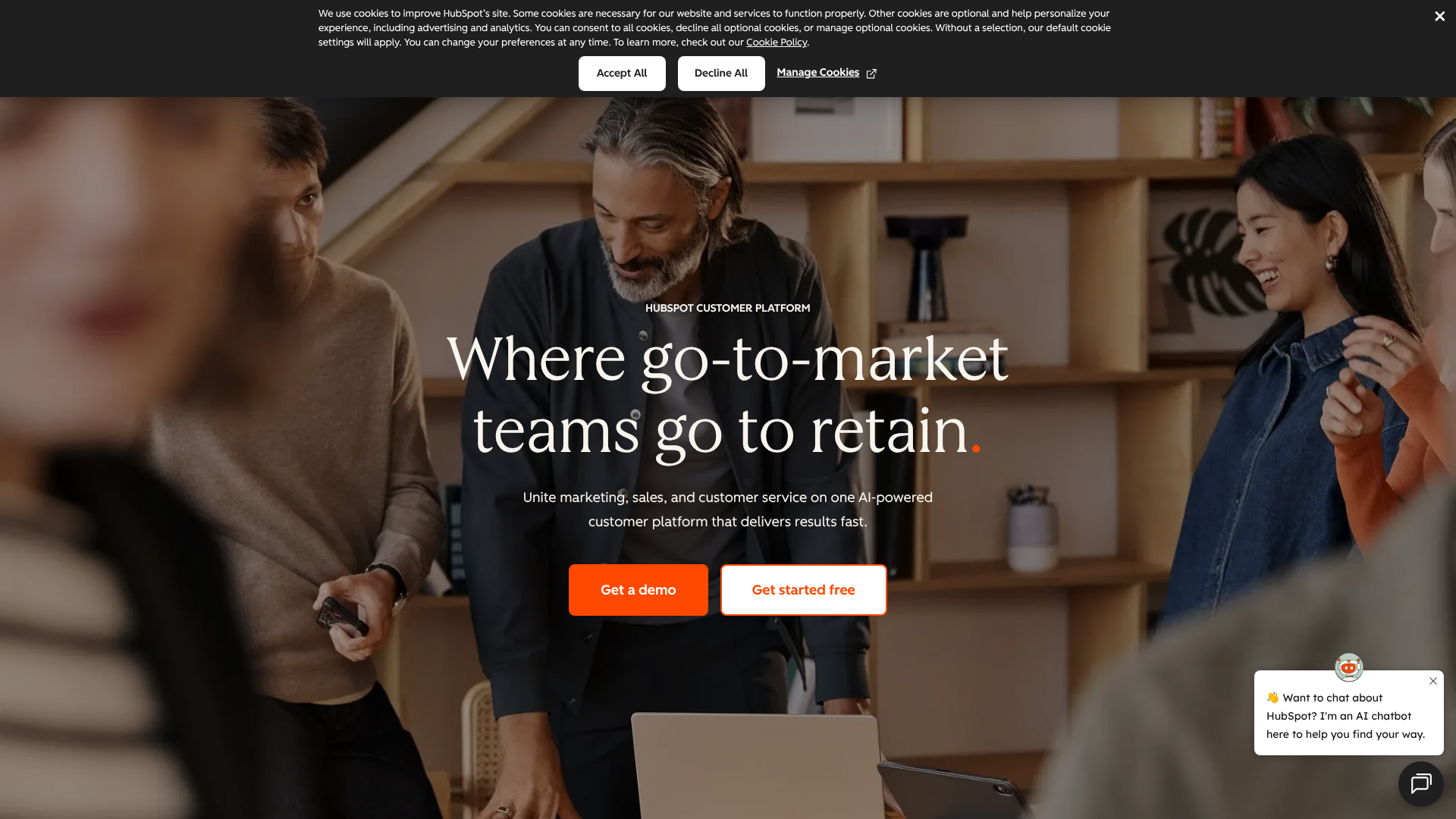
For businesses looking to implement a robust system, there are excellent tools available. For instance, HubSpot CRM is widely popular for its user-friendly interface and powerful free version. It allows teams to easily set up custom pipeline stages, track deal progress, log sales activities, and automate tasks, making it a fantastic starting point for small to medium-sized businesses.
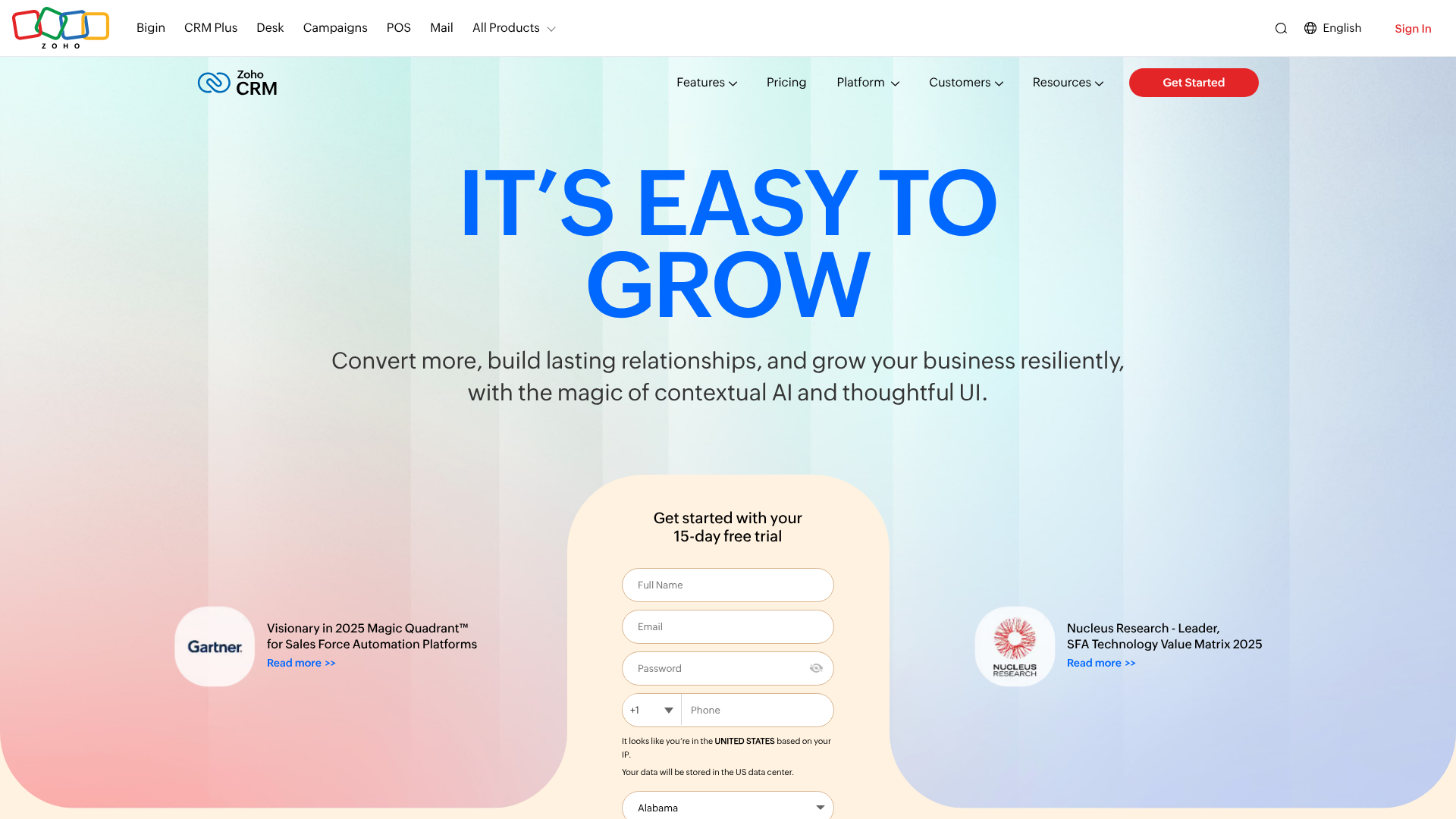
For companies that require more advanced features and deep customisation, Zoho CRM offers a comprehensive suite of tools. It provides extensive options for tailoring the platform to complex sales processes, along with powerful analytics and automation capabilities to manage a high volume of deals efficiently.
Regardless of the tool you choose, the key to effective pipeline management lies in best practices:
- Keep It Updated: Your pipeline is only as good as the data in it. Reps should update their deals daily.
- Define Clear Stage Criteria: Everyone on the team must agree on the exact actions required to move a deal to the next stage.
- Conduct Regular Reviews: Sales managers should hold weekly pipeline review meetings to discuss key deals, identify risks, and strategise on next steps.
Common Mistakes to Avoid in Pipeline and Funnel Management
Even with a clear understanding of the pipeline vs funnel distinction, companies can fall into common traps that undermine their effectiveness. Avoiding these mistakes is crucial for maintaining a healthy and predictable growth model.
1. Confusing the Two Concepts: The most fundamental error is using the terms interchangeably. This leads to muddled conversations where marketing reports on funnel conversion rates while sales talks about pipeline velocity, causing strategic misalignment. Ensure both teams understand and respect the distinct purpose of each model.
2. A Bloated or Unrealistic Pipeline: A common mistake in sales is to fill the pipeline with unqualified or dormant leads to make it look impressive. This creates a false sense of security and leads to wildly inaccurate revenue forecasts. Be ruthless about removing dead deals and enforcing strict qualification criteria.
3. Ignoring Funnel Leaks: Sales teams are often so focused on the deals already in the pipeline that they, along with marketing, neglect to analyse why so many potential leads never make it that far. Ignoring the top and middle of the funnel is like trying to fill a bucket with holes in it; you'll always be struggling for volume.
4. Lack of Clear Stage Definitions: When the criteria for moving a deal from one pipeline stage to the next are vague, reps will interpret them differently. This results in inconsistent data, making it impossible to trust your reports or accurately forecast sales. Your definitions should be objective and action-based.
5. Failing to Clean and Update Regularly: Both the pipeline and the funnel require constant maintenance. A pipeline cluttered with deals that haven't moved in months is useless. Funnel metrics based on outdated tracking or old campaigns are misleading.
Schedule regular time for data hygiene and review.
FAQ: Sales Pipeline vs Sales Funnel
What are the 5 stages of a sales pipeline?
A typical 5-stage sales pipeline includes: 1. Qualification, where you determine if a lead is a good fit; 2. Meeting/Demo, the first significant interaction to understand needs; 3. Proposal, where you send a formal offer; **4.
Negotiation**, where you finalise terms; and 5. Closed, where the deal is either won or lost. These stages can be customised, but this structure covers the core journey of a deal.
What are the 7 stages of a sales pipeline?
A more granular 7-stage pipeline provides greater detail. It often breaks down the initial and final stages. A common 7-stage model is: 1. Prospecting, identifying potential leads; **2.
Initial Contact**, the first outreach; 3. Qualification, assessing fit; 4. Needs Assessment, a deep-dive discovery call; 5. Proposal/Quote, presenting the solution; **6.
Negotiation/Closing**, handling objections and signing contracts; and 7. Post-Sale Follow-up, ensuring customer satisfaction and seeking referrals.
What are the stages of the sales funnel and pipeline?
The sales funnel stages represent the customer's journey: Awareness (discovering your brand), Interest/Consideration (researching solutions), and Decision/Action (ready to buy). The sales pipeline stages represent your internal sales process: Prospecting, Qualification, Demo, Proposal, Negotiation, and Closed. The funnel feeds qualified leads into the top of the pipeline.
What is the difference between a sales process and a sales funnel?
A sales process is a set of repeatable steps your sales team takes to move a prospect from an early-stage lead to a closed customer. It is essentially the detailed blueprint for your sales pipeline; the pipeline is the visual representation of that process in action. A sales funnel, in contrast, is not your process but a model of your customer's buying process, tracking their journey from awareness to purchase.
Final Thoughts: Using Pipeline and Funnel Together
Ultimately, the debate over sales pipeline vs sales funnel isn't about choosing one over the other. It's about understanding that they are two essential, complementary views of the same overarching goal: turning strangers into customers. They are two sides of the same coin, and the most successful businesses master both.
Your sales funnel is your diagnostic tool for marketing. It tells you how effectively you are attracting your target audience and guiding them on their journey. Your sales pipeline is your operational tool for sales. It tells you how effectively your team is managing qualified opportunities and converting them into revenue.
The funnel fills the pipeline, and the pipeline converts the interest generated by the funnel.
By aligning both models, you create a powerful, data-driven system for predictable growth. Marketing can focus on improving funnel conversion rates to deliver a steady stream of high-quality leads, and sales can execute a defined process to efficiently close them. If you're ready to gain clear visibility and control over your sales process, exploring a CRM like HubSpot CRM or the more customisable Zoho CRM is the most logical and impactful next step.