

Best Practices for Sales Prospecting: A Guide for B2B Sales Teams
Effective sales prospecting is the lifeblood of any successful sales organisation. It’s the process of identifying and engaging potential customers to build a pipeline of qualified opportunities. However, the old methods of high-volume, low-quality outreach no longer work. To succeed today, sales teams must adopt a set of best practices for sales prospecting that prioritise quality, personalisation, and value over sheer quantity.
- Quick Summary
- What Are the Best Practices for Sales Prospecting? (And Why They Matter)
- The Core Pillars of Effective Prospecting Strategies
- Pillar 1: Defining Your Ideal Customer Profile (ICP)
- Pillar 2: Building a High-Quality, Targeted List
- Pillar 3: Mastering Multi-Channel Outreach
- Pillar 4: The Art of Personalisation at Scale
- Pillar 5: Leading with Value, Not a Pitch
- Choosing the Right Prospecting Tools & Techniques
- A Practical Look at Prospecting Tools: Pros, Cons, and Pricing
- Common Sales Prospecting Mistakes to Avoid
- Implementation Checklist: Putting Best Practices into Action
- Frequently Asked Questions about Sales Prospecting
- How many touchpoints does it take to get a meeting?
- What is the difference between a lead and a prospect?
- How much time should I spend prospecting each day?
- Is cold calling dead?
- Final Thoughts
This guide breaks down the modern strategies and techniques you need to connect with the right buyers and consistently exceed your targets.
Moving away from a scattergun approach to a strategic one is essential. Today's buyers are more informed and have less time than ever before. They can spot a generic, automated email from a mile away. This is why understanding and implementing prospecting best strategies is not just an advantage; it's a necessity for survival and growth in a competitive market.
Quick Summary
- Define Your Ideal Customer: Success starts with a crystal-clear Ideal Customer Profile (ICP). Knowing exactly who you're targeting makes every other prospecting activity more effective.
- Embrace a Multi-Channel Approach: Don't rely on a single channel. The most effective prospecting techniques combine email, phone calls, social media (especially LinkedIn), and even video to engage prospects where they are most active.
- Personalise Every Interaction: Generic templates are a recipe for failure. Research your prospects and tailor your messaging to their specific pain points, industry, and role. This shows you've done your homework and respect their time.
- Lead with Value, Not a Sales Pitch: Your initial goal isn't to sell; it's to start a conversation and earn the right to a meeting. Offer insights, share relevant content, or provide helpful advice to build trust and position yourself as an expert advisor.
- Use Technology Wisely: The right technology stack, including a CRM and a sales engagement platform, can automate tedious tasks and provide valuable data, freeing you up to focus on high-value activities like research and conversation.
What Are the Best Practices for Sales Prospecting? (And Why They Matter)
At its core, adopting the best practices for sales prospecting means shifting from a seller-centric mindset to a buyer-centric one. It’s the difference between interrupting a prospect's day with an irrelevant pitch and engaging them with a timely, relevant solution to a problem they are actively trying to solve. This strategic process involves deep research, thoughtful outreach, and persistent, value-driven follow-up.
Why does this shift matter so much? Firstly, it dramatically improves your conversion rates. When you focus your energy on a smaller pool of highly qualified prospects who fit your ICP, you're more likely to book meetings and close deals. A targeted approach ensures your message resonates, cutting through the noise of generic marketing messages that buyers receive daily.
Secondly, it protects and enhances your brand's reputation. Sending thousands of untargeted, spammy emails can get your domain blacklisted and damage your company's image. A thoughtful, professional approach builds trust and positions your brand as a credible authority in your industry. Finally, it creates a more sustainable and predictable sales pipeline, which is the foundation of long-term business growth.
The Core Pillars of Effective Prospecting Strategies

To build a successful and repeatable prospecting engine, you need to build it on a foundation of solid principles. These pillars are not just individual sales prospecting tips; they are interconnected components of a comprehensive strategy. Mastering each one will elevate your outreach from a simple task to a strategic advantage.
Pillar 1: Defining Your Ideal Customer Profile (ICP)
Before you write a single email or make a single call, you must know exactly who you are trying to reach. An Ideal Customer Profile (ICP) is a detailed description of the perfect company to buy your product or service. This goes far beyond basic demographics like industry and company size.
A robust ICP includes:
Firmographics: Industry, company size, annual revenue, geographical location. * Technographics: The specific technologies they currently use. For example, do they use a competitor's software. Do they use complementary tools that integrate with your solution.
Behavioural Data: How they engage with vendors, their buying process, and triggers that indicate a need for your solution (e.g., hiring for a specific role, recent funding round, company expansion). * Pain Points: The specific challenges, frustrations, and problems that your product solves for them.
Creating a detailed ICP prevents you from wasting countless hours on leads that will never convert. It acts as a filter, ensuring that everyone you reach out to has a high potential to become a valuable, long-term customer.
Pillar 2: Building a High-Quality, Targeted List
Once your ICP is defined, the next step is to build a list of companies and contacts that match it. Quality trumps quantity here. A list of 100 highly-qualified, well-researched prospects is far more valuable than a list of 10,000 random contacts.
There are several ways to build this list. LinkedIn Sales Navigator is an excellent tool for filtering companies and individuals based on your ICP criteria. Industry-specific databases and directories can also be valuable sources. The key is to verify the information to ensure it's accurate and up-to-date.
Data enrichment tools are crucial for this stage. A platform like Apollo.io can not only help you find contacts but also provide verified email addresses, direct-dial phone numbers, and other company insights. This ensures your outreach actually reaches the intended recipient and gives you the data you need for effective personalisation.
Pillar 3: Mastering Multi-Channel Outreach
In 2026, relying on a single channel for prospecting is a critical mistake. Buyers have different communication preferences, and a multi-channel approach allows you to connect with them on their terms. A well-designed outreach sequence, often called a cadence, combines several touchpoints over a period of weeks.
An effective multi-channel sequence might look like this:
Day 1: Personalised email + LinkedIn connection request. * Day 3: Follow-up email (replying in the same thread). * Day 5: Phone call, leaving a value-driven voicemail if they don't answer. * Day 7: Engage with their content on LinkedIn (like or comment).
Day 10: Send a final email with a different value proposition or a case study.
This approach keeps you top-of-mind without being annoying. It demonstrates persistence and shows that you are genuinely interested in starting a conversation. Tools known as Sales Engagement Platforms (SEPs) are designed to manage these complex sequences. Platforms like Outreach and Reply.io help you automate the scheduling of tasks, track engagement across all channels, and ensure no prospect falls through the cracks.
Pillar 4: The Art of Personalisation at Scale
Personalisation is arguably the most important element of modern prospecting. A generic message is an ignored message. True personalisation goes beyond simply using a prospect's name and company in a template. It involves referencing specific, relevant information that shows you've done your research.
Here are some powerful personalisation triggers:
Company News: Mention a recent funding announcement, a new product launch, or an executive hire. * LinkedIn Activity: Reference a post they recently wrote or shared, or an article they commented on. * Shared Connections: Mention a mutual connection you both have. * Their Role: Acknowledge the specific challenges and priorities associated with their job title.
Content Engagement: If they downloaded a whitepaper from your website, reference it in your outreach.
This level of customisation demonstrates genuine interest and immediately differentiates you from the competition. While it takes more time upfront, the return on investment is significantly higher. SEPs can help by using custom fields and snippets to insert these personalised details into your sequences, allowing you to achieve personalisation at scale without sacrificing quality.
Pro Tip: Use the "10-80-10" rule for your emails. The first 10% (the opening line) should be highly personalised. The middle 80% can be a more standardised explanation of the problem you solve and your value proposition. The final 10% (the call-to-action) should be clear and direct.
Pillar 5: Leading with Value, Not a Pitch
Your first interaction with a prospect should never be a hard sell. The goal of prospecting is not to close a deal in the first email; it's to earn a conversation. To do that, you must provide value upfront. Instead of talking about your product's features, focus on the prospect's world.
Leading with value can take many forms:
- Sharing an Insight: Offer a unique perspective on a trend or challenge in their industry.
- Providing a Resource: Send them a link to a helpful blog post, a relevant case study, or an industry report.
- Making an Introduction: If you know someone who could be a valuable connection for them, offer to introduce them.
- Offering a Quick Tip: Share a small piece of advice that could help them with a specific problem.
This approach flips the traditional sales dynamic. Instead of being a salesperson asking for their time, you become a trusted advisor offering help. This builds goodwill and makes prospects far more likely to respond positively and agree to a meeting.

Choosing the Right Prospecting Tools & Techniques
Having the right strategy is essential, but executing it efficiently requires the right set of tools. A well-integrated sales tech stack can automate repetitive tasks, provide critical data, and empower your team to focus on what they do best: building relationships and selling. The key is to choose tools that support your process, not dictate it.
How to Select Your Sales Tech Stack
Building your tech stack should be a deliberate process. Start with the foundation and add layers as your needs evolve.
The Foundation: A CRM: Your Customer Relationship Management (CRM) system is the central hub for all customer and prospect data. It's where you track interactions, manage your pipeline, and store contact information. For teams starting out, the free HubSpot CRM is an excellent choice due to its user-friendly interface and powerful features. For businesses that need deep customisation, Zoho CRM offers a flexible and scalable solution.
The Engine: A Sales Engagement Platform (SEP): An SEP sits on top of your CRM and automates your multi-channel outreach sequences. It allows you to build cadences, track email opens and clicks, and manage call lists. Leading platforms like Outreach are built for enterprise teams needing advanced analytics, while Reply.io is a great option for teams of all sizes looking for powerful AI features and multi-channel capabilities.
The Fuel: Data & Email Finding Tools: You need accurate data to fuel your outreach. Tools like Apollo.io and Hunter Campaigns (Hunter.io) provide access to vast B2B databases, allowing you to find contacts that fit your ICP and verify their email addresses and phone numbers.
Specialised Tools: Depending on your sales process, you might also need tools for specific tasks. Proposal software like PandaDoc or Better Proposals can streamline the process of creating and sending sales documents. Appointment scheduling tools like SimplyBook.me eliminate the back-and-forth of booking meetings.
Top Prospecting Techniques Explained
Your tools enable your techniques. Here are some of the most effective prospecting techniques that modern sales teams use:
Cold Calling 2.0: Cold calling isn't dead, but it has evolved. The modern approach is warm calling. It involves thorough research before dialling, a clear and concise opening statement that focuses on a relevant problem, and the goal of securing a brief discovery call, not closing a deal on the spot.
Strategic Cold Emailing: Effective cold emails are short, personalised, and focused on the recipient. They have a compelling subject line, a body that quickly addresses a likely pain point, and a clear, low-friction call-to-action (e.g., "Are you open to learning more?"). Tools like Instantly.ai help manage sending at scale while warming up email domains to ensure high deliverability.
Social Selling on LinkedIn: LinkedIn is a goldmine for B2B prospecting. This involves more than just sending connection requests. Effective social selling means optimising your profile, sharing valuable content, engaging with your prospects' posts, and participating in relevant industry groups to build your credibility before you ever send a direct message.
Referral Prospecting: This is often the most effective technique. A referral from a happy customer or a mutual connection provides immediate trust and credibility. The key is to build a systematic process for asking for referrals at the right time, such as after a successful project completion or a positive client review.
A Practical Look at Prospecting Tools: Pros, Cons, and Pricing
Choosing the right tools can feel overwhelming. Here’s a breakdown of some of the top options in key categories to help you decide. Remember that pricing for many B2B software tools can change, so it's always best to visit their website for the most current information.
| Tool Category | Top Recommendations | Key Strengths | Potential Drawbacks | Pricing |
|---|---|---|---|---|
| CRM | HubSpot CRM | Excellent free tier, very easy to use, great for SMBs | Paid plans can become costly as you scale | Free CRM available; check site for Sales Hub pricing |
| CRM | Zoho CRM | Highly customisable, affordable pricing tiers, broad feature set | Can have a steeper learning curve than simpler CRMs | Visit their website for current pricing tiers |
| Sales Engagement | Outreach | Enterprise-grade features, powerful analytics, deep integrations | High price point, may be too complex for small teams | Custom pricing; contact their sales team for a quote |
| Sales Engagement | Reply.io | Strong AI features, multi-channel support (email, calls, social) | The user interface can feel busy to new users | Offers various plans; check their site for details |
| Data & Outreach | Apollo.io | All-in-one platform for data, sequencing, and calls | Data accuracy can sometimes be inconsistent | Offers a free tier and several paid plans |
CRM Platforms: The Foundation
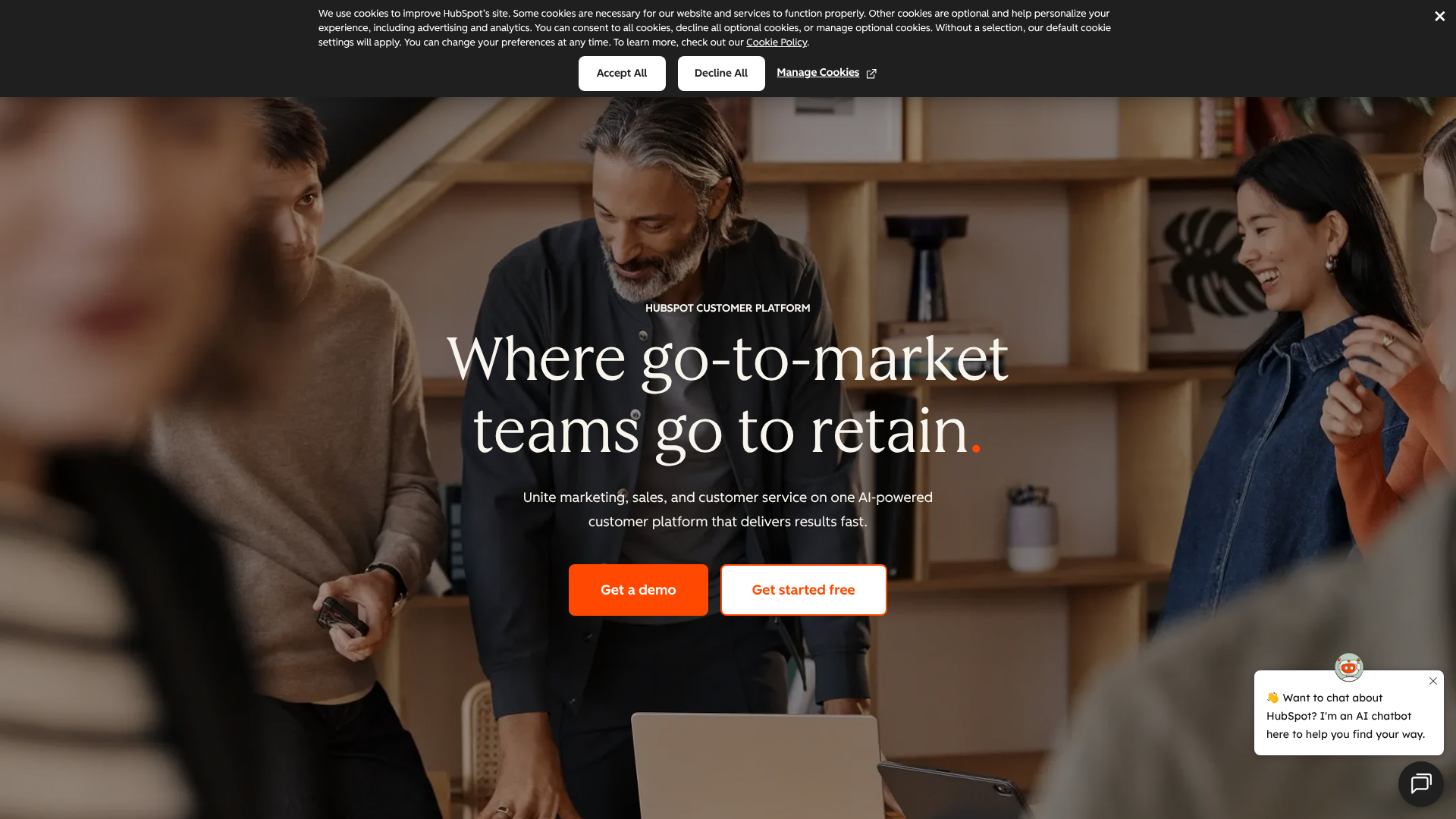
HubSpot CRM is often the go-to for small and medium-sized businesses. Its main advantage is the powerful free version, which provides more than enough functionality for a small team to get organised. The user interface is clean and intuitive, making adoption easy.
- Pros: Generous free plan, easy to learn and use, integrates seamlessly with other HubSpot marketing and service tools.
- Cons: The cost can escalate quickly as you move up to the professional and enterprise tiers. Advanced features are locked behind these higher-priced plans.
Zoho CRM is a strong contender for businesses that need more flexibility. It's known for its extensive customisation options, allowing you to tailor the platform to your specific sales process. It's also generally more affordable than many of its competitors at higher tiers.
- Pros: Very affordable, highly customisable, part of a massive ecosystem of Zoho business apps.
- Cons: The sheer number of features and settings can be overwhelming for new users, and the interface isn't as polished as some alternatives.
Sales Engagement Platforms: The Engine
Outreach is the market leader in the sales engagement space, particularly for larger, enterprise-level sales teams. It offers deep analytics, AI-powered insights, and robust governance features that are critical for managing a large team.
- Pros: Powerful and feature-rich, excellent for data-driven sales organisations, strong reporting capabilities.
- Cons: It is one of the more expensive options on the market and can be overly complex for smaller teams without dedicated sales ops support.
Reply.io provides a compelling alternative that serves businesses of all sizes. It excels at multi-channel outreach, allowing you to easily incorporate email, calls, LinkedIn tasks, and WhatsApp messages into a single sequence. Its AI tools for email writing and appointment setting are also a major plus.
- Pros: Strong multi-channel support, useful AI features, more accessible pricing than enterprise-focused competitors.
- Cons: Some users find the interface can be cluttered, and the learning curve for advanced features can take some time.
Common Sales Prospecting Mistakes to Avoid
Knowing what to do is only half the battle; knowing what not to do is just as important. Many sales teams fall into common traps that sabotage their prospecting efforts. Avoiding these pitfalls will put you far ahead of the competition.
Prospecting Without a Clear ICP: This is the most fundamental mistake. If you don't know who you're targeting, your messaging will be generic, and your efforts will be wasted on companies that are a poor fit. It leads to low response rates and a pipeline full of unqualified leads.
Using Generic, Non-Personalised Templates: Sending the same email to hundreds of people is not prospecting; it's spamming. Buyers can spot a generic template instantly. A lack of personalisation shows a lack of effort and respect for the prospect's time, making it easy for them to delete your message without a second thought.
Giving Up Too Soon: Research consistently shows that it takes multiple touchpoints to get a response. Many salespeople give up after sending one or two emails. A persistent, multi-channel follow-up strategy is essential for breaking through the noise and getting on a prospect's radar.
Pitching Features Instead of Solving Problems: Your prospects don't care about your product's features; they care about their own problems. Your outreach should focus entirely on their challenges and how you can help them achieve their goals. Frame your solution in the context of the value and outcomes it delivers for them.
Failing to Track and Optimise: Prospecting is a science as much as an art. You must track your key metrics, such as email open rates, reply rates, and meetings booked. This data will tell you what's working and what's not, allowing you to iterate and improve your approach over time. Not tracking your results is like flying blind.
Implementation Checklist: Putting Best Practices into Action
Ready to transform your prospecting process? Here is a simple, actionable checklist to help you implement these best practices.
Step 1: Define and Document Your ICP. Schedule a meeting with your sales and marketing teams. Collaboratively define and write down your Ideal Customer Profile, including firmographics, pain points, and buying triggers. Make this document accessible to everyone.
Step 2: Choose and Configure Your Core Tech Stack. Select a CRM and a Sales Engagement Platform that fit your team's size and budget. Integrate them and ensure all reps are properly trained on how to use them effectively.
Step 3: Block Out Dedicated Prospecting Time. Prospecting is often the first thing to be pushed aside when things get busy. Prevent this by having every sales rep block out 1-2 hours of uninterrupted prospecting time on their calendar every single day. Treat this time as sacred.
Step 4: Create 3-5 Multi-Channel Outreach Sequences. Based on your ICP and different buyer personas, build a few core outreach cadences in your SEP. These should include a mix of emails, calls, and social touches spread out over 2-3 weeks.
Step 5: Set Up Tracking for Key Metrics. In your SEP or CRM, create a dashboard to monitor the most important prospecting metrics. At a minimum, track the number of new contacts added, activities completed, email reply rates, and meetings booked.
Step 6: Schedule a Weekly Review. Hold a brief weekly meeting to review your prospecting metrics. Discuss what's working, share successful messaging, and identify areas for improvement. This creates a culture of continuous learning and optimisation.
Pro Tip: When creating your outreach sequences, build a library of effective email templates and call scripts. Don't force reps to use them word-for-word, but provide them as a starting point they can customise for each prospect. This ensures consistency in messaging while still allowing for personalisation.
Frequently Asked Questions about Sales Prospecting
Here are answers to some of the most common questions sales professionals have about prospecting.
How many touchpoints does it take to get a meeting?
There is no single magic number, but industry data suggests it often takes between 8 and 12 touchpoints to secure a meeting with a new prospect. This highlights the importance of persistence and using a multi-channel follow-up sequence. A single email or call is rarely enough to get a response from a busy decision-maker.
What is the difference between a lead and a prospect?
These terms are often used interchangeably, but they have distinct meanings. A lead is any individual or company that has shown some level of interest but has not yet been qualified. They might have downloaded an ebook or visited your website. A prospect is a lead that has been qualified.
This means you have determined that they fit your Ideal Customer Profile (ICP) and have a genuine potential need for your solution.
How much time should I spend prospecting each day?
This can vary depending on your specific role (e.g., a Sales Development Representative vs. an Account Executive). However, a common best practice is to dedicate a consistent block of time each day to prospecting activities. Many successful sales reps block out 90 minutes to 2 hours of focused, uninterrupted time daily for research, outreach, and follow-up.
Is cold calling dead?
No, cold calling is not dead, but it has certainly evolved. The old method of dialling through a list with a generic script is ineffective. Modern "cold calling" is really "warm calling." It involves researching the prospect beforehand, having a clear and relevant reason for calling, and focusing the conversation on their potential problems rather than your product. It is most effective when used as part of a broader multi-channel strategy, not as a standalone technique.
Final Thoughts
Mastering the best practices for sales prospecting is a continuous journey, not a destination. The strategies that work today will need to adapt to the changing behaviours of buyers and the evolution of technology. The core principles, however, remain constant: understand your customer deeply, lead with value, be persistent, and use technology to enhance, not replace, human connection.
By moving away from a high-volume, low-quality approach and embracing a strategic, buyer-centric mindset, you can build a powerful and predictable sales pipeline. This not only helps you hit your targets but also builds a stronger brand and more meaningful customer relationships. The key is to be consistent, measure your results, and never stop learning.
If you're looking to build a powerful tech stack to support these practices, a solid foundation is crucial. Consider exploring tools like the free HubSpot CRM to organise your data and a platform like Reply.io to automate and manage your multi-channel outreach effectively.