




101+ Best Cold Email Subject Lines for Sales Teams (To Get More Opens)
Your cold email could contain the most compelling, value-packed message ever written, but it's useless if it never gets opened. The subject line is the gatekeeper to your entire outreach effort. Getting the best cold email subject lines right isn't just a small tweak; it's the difference between a successful campaign and a folder full of ignored messages. It's the single most influential factor in determining your open rate.
- What You'll Learn
- What Makes a Cold Email Subject Line 'Best'?
- The Core Principles of Effective Email Subject Lines
- Brevity is Your Ally
- Spark Curiosity, Don't Give Everything Away
- Personalise, Personalise, Personalise
- Establish Relevance and Value Immediately
- Sound Human, Not Like a Robot or Marketer
- 101+ Best Cold Email Subject Lines (Categorised for Any Situation)
- 1. The "Quick Question" Formula
- 2. The Personalised Compliment
- 3. The Referral / Social Proof
- 4. The Value Proposition / Benefit-Driven
- 5. The Ultra-Short and Mysterious
- 6. The Problem-Solver
- 7. The Follow-Up (Use with Honesty)
- 8. The Number/Data-Driven
- 9. The Hyper-Relevant & Timely
- 10. The Direct and Honest
- How to Craft and Test Your Own Winning Subject Lines
- Step 1: Deeply Understand Your Audience
- Step 2: Brainstorm and Categorise Your Ideas
- Step 3: A/B Test Everything
- Step 4: Analyse Your Open Rates (And Beyond)
- The "Cost" of Bad Subject Lines vs. The ROI of Great Ones
- Pros and Cons of Different Subject Line Styles
- Frequently Asked Questions about Cold Email Subject Lines
- What subject line gets the most opens?
- What is the 30/30/50 rule for cold emails?
- What is a catchy subject line for an email?
- How do you write a killer subject line?
- What is the 3 email rule?
- Final Thoughts
This guide breaks down the science and art of crafting subject lines that demand a click. We'll move beyond a simple list of examples and explore the psychological principles that make them work. You'll get over 101 actionable ideas you can adapt and, more importantly, learn the framework for creating your own effective email subject lines for any situation.
What You'll Learn
- Psychology First: The most effective subject lines are built on principles of curiosity, personalisation, and value. A formula is good, but understanding why it works is better.
- Brevity is Key: Keep subject lines under seven words. This ensures they are fully visible on mobile devices, where over half of all emails are read.
- Avoid Spam Triggers: Words like "free," "guarantee," or excessive punctuation can land your email in the spam folder before it ever has a chance.
- Testing is Non-Negotiable: The only way to know what works for your specific audience is to A/B test different subject lines. What works for one industry may not work for another.
What Makes a Cold Email Subject Line 'Best'?
In the world of sales outreach, the "best" subject line isn't the cleverest, the funniest, or the most formal. The best subject line is the one that gets a relevant prospect to open your email. That's it. Its sole job is to earn a click and pass the baton to the first line of your email body.
Think of it as the first step in the classic AIDA (Attention, Interest, Desire, Action) marketing model. The subject line is purely about grabbing Attention. It needs to cut through an inbox crowded with internal memos, newsletters, and other sales pitches. It does this by being relevant, intriguing, or personal enough to make the recipient pause and think, "This might be for me."
An effective subject line accomplishes this without being deceptive. Clickbait might get you an open, but it instantly destroys trust if the email body doesn't deliver on the promise or implication. The goal is to create a seamless transition from the subject line's intrigue to the email's value proposition, setting a positive tone for the entire interaction.
The Core Principles of Effective Email Subject Lines

Before jumping into a list of examples, it's crucial to understand the foundational principles. Once you grasp these concepts, you can generate endless cold email subject ideas on your own. These rules are the strategic backbone of every successful subject line.
Brevity is Your Ally
An average inbox displays about 60 characters of a subject line on a desktop, and as few as 30 on a mobile phone. Any subject line longer than 5-7 words is likely to be cut off, leaving your message incomplete and unprofessional. Short subject lines are easier to read and process at a glance.
They also tend to mimic the way colleagues communicate internally. An email from your boss is more likely to say "Quick question" than "An Important and Time-Sensitive Question Regarding the Q4 Marketing Budget." Brevity feels more natural and less like a sales pitch, which lowers the recipient's guard.
Spark Curiosity, Don't Give Everything Away
Humans are naturally curious. A subject line that creates an "information gap"—a space between what the recipient knows and what they want to know—is incredibly compelling. You want to pique their interest enough that they feel a slight urge to click just to satisfy that curiosity.
For example, "Idea for [Company Name]" is effective because it doesn't reveal the idea. The recipient has to open the email to find out what it is. The key is to be intriguing without being vague. "Hello" is too vague, but "Question about your recent project" is specific enough to be relevant yet open-ended enough to create curiosity.
Personalise, Personalise, Personalise
Personalisation is the single most powerful technique in cold email. In a sea of generic outreach, a subject line that shows you've done your homework stands out immediately. This goes far beyond simply using a [First Name] mail merge tag.
Effective personalisation can include their company name, a recent project they launched, a piece of content they published, a mutual connection, or their specific job role. A subject line like "Loved your thoughts on AI in the latest podcast" is a thousand times more effective than "Business proposal." It shows genuine interest and establishes that you aren't just blasting a template to a list of a thousand names. Platforms like Apollo.io can provide the detailed company and contact data needed to make this level of personalisation possible at scale.
Establish Relevance and Value Immediately
Every professional is constantly asking, "What's in it for me?" Your subject line should, whenever possible, hint at the answer. It needs to be relevant to their role, their company's goals, or a problem they are likely facing. A subject line that promises a solution or a valuable idea is hard to ignore.
For instance, "A new way to handle SDR onboarding" is highly relevant to a sales manager. It speaks directly to a challenge within their domain. This approach frames you as a problem-solver from the very first impression, rather than just another salesperson trying to sell a product.
Sound Human, Not Like a Robot or Marketer
Corporate jargon and overly formal language are inbox killers. Your subject line should sound like it was written by one human for another. Using lowercase letters, for example, can make an email feel more personal and less like an automated marketing blast.
Compare "Our Revolutionary Solution Can Increase Your ROI" with "a thought on your sales process". The first one screams "SPAM," while the second feels like a casual, low-pressure message from a peer. Don't be afraid to adopt a slightly more informal tone; it's often more effective at building rapport.
101+ Best Cold Email Subject Lines (Categorised for Any Situation)
Here is a comprehensive list of top cold email subjects, broken down by the psychological strategy they use. Don't just copy and paste these; use them as a starting point and adapt them to your specific prospect and industry.
1. The "Quick Question" Formula
This style works because it's low-commitment and high-curiosity. It feels easy for the recipient to answer and doesn't signal a lengthy sales pitch inside.
- Quick question
- Question about [Company Name]
- Question for you, [Name]
- Question about [their recent activity, e.g., your LinkedIn post]
- [Name], quick question
- Curious about your process for [specific task]
- A question for the [Job Title] team
- Thoughts on this?
- Can you help with this?
- 15 seconds for a quick question?
2. The Personalised Compliment
Genuine flattery shows you've done your research and value their work. It immediately builds rapport and makes the recipient more receptive to your message.
Loved your post on LinkedIn
Your work on [project] is impressive
Great article in [Publication]
Big fan of your podcast
[Name], enjoyed your comment about [topic]
Your background in [skill] is inspiring
Congrats on the new round of funding
Impressed by [Company Name]'s recent launch
Following your work at [Company Name]
Your perspective on [industry trend] was spot on
3. The Referral / Social Proof
Using a mutual connection's name is the fastest way to build trust. It bypasses the "stranger danger" filter in our brains.
- [Mutual Connection] suggested I reach out
- Intro from [Name]
- [Name] said we should connect
- Following up on [Mutual Connection]'s suggestion
- Saw you're also connected with [Name]
- Referred by your colleague, [Colleague's Name]
- A friend of [Mutual Connection]
- We met at [Event]
- [Name] from [Company] mentioned you
- Your investor, [Investor's Name], and I were talking
4. The Value Proposition / Benefit-Driven
This approach directly answers "What's in it for me?" by hinting at a solution, an idea, or a benefit.
- Idea for [Company Name]
- A new way to handle [pain point]
- Potential improvement for [their department]
- A better way to achieve [goal]
- Save time on [tedious task]
- An idea to increase your [metric]
- Resources for [Company Name]
- Thought you might find this useful
- A new strategy for [their team]
- Helping [Company Name] with [challenge]
- A different approach to [process]
- [Benefit] for [Company Name]
- A potential partnership?
- Ideas for your [specific goal]
- Quick idea for your team
5. The Ultra-Short and Mysterious
These mimic internal company emails. Their brevity and slightly vague nature create a powerful curiosity gap.
- your thoughts?
- next steps
- intro
- meeting?
- checking in
- about our chat
- [Your Name] / [Their Name]
- [Your Company] x [Their Company]
- coffee?
- follow up
Pro Tip: When using ultra-short subject lines, your sender name and the first line of the email (the preview text) become even more critical. Make sure your sender name is clearly identifiable as a real person, and the preview text provides immediate context to justify the mysterious subject.
6. The Problem-Solver
This style works best when you have a very clear understanding of your Ideal Customer Profile (ICP) and their common pain points.
- Struggling with [common problem]?
- Fixing your [broken process]
- Is [challenge] a priority for you?
- A solution for [pain point]
- Tired of dealing with [annoyance]?
- The problem with [current method]
- A better way to manage [task]
- Can I help with [challenge]?
- Your thoughts on solving [problem]?
- Stop wasting time on [task]
7. The Follow-Up (Use with Honesty)
These are for follow-up emails in a sequence. Using "Re:" on a first-touch email is deceptive and not recommended, but it's perfect for continuing a conversation.
Re: our chat last week
Following up on my last email
Just checking in on this
Any update on this?
A final follow-up
[Name], thoughts on my previous email?
Next steps for our conversation
Still interested in [topic]?
Circling back on this
Let me know if I can help
8. The Number/Data-Driven
Numbers feel concrete and credible. They can make your claim more believable and intriguing.
- 15 minutes to discuss [goal]?
- How [Competitor] grew 30%
- 3 ideas to improve your [metric]
- Can you spare 10 minutes on Tuesday?
- One question, two minutes of your time
- Cut your [cost] by 25%
- 3 mistakes you might be making with [process]
- 1 quick suggestion
- 48 hours left
- [Number] of your competitors use us
9. The Hyper-Relevant & Timely
Connecting your email to a recent event makes it feel urgent and highly relevant.
- Saw your company in the news
- Following your recent funding announcement
- Question about your new [product/feature] launch
- Your recent post about [topic]
- In response to your job posting for [Job Title]
- Noticed you just hired a new [Job Title]
- Congrats on the award!
- Your company's expansion to [City]
- Read about your partnership with [Other Company]
- Your thoughts on the [Industry Event] last week?
10. The Direct and Honest
Sometimes, the best approach is to be straightforward. This can be refreshing in a world of clever marketing angles.
- Hoping to connect
- Introduction from [Your Name] at [Your Company]
- [Your Company] <> [Their Company] Partnership
- Reaching out
- My proposal for [Company Name]
- Cold email, I know…
- Hoping you can help
How to Craft and Test Your Own Winning Subject Lines
Having a list of ideas is great, but the real skill is in creating and validating your own effective email subject lines. This is a process of strategy, creativity, and data analysis. Here’s a step-by-step guide to mastering it.
Step 1: Deeply Understand Your Audience
Before you write a single word, you need to know who you're writing to. What is their job title. What are their primary responsibilities and pain points. What language do they use.
What are their company's strategic goals.
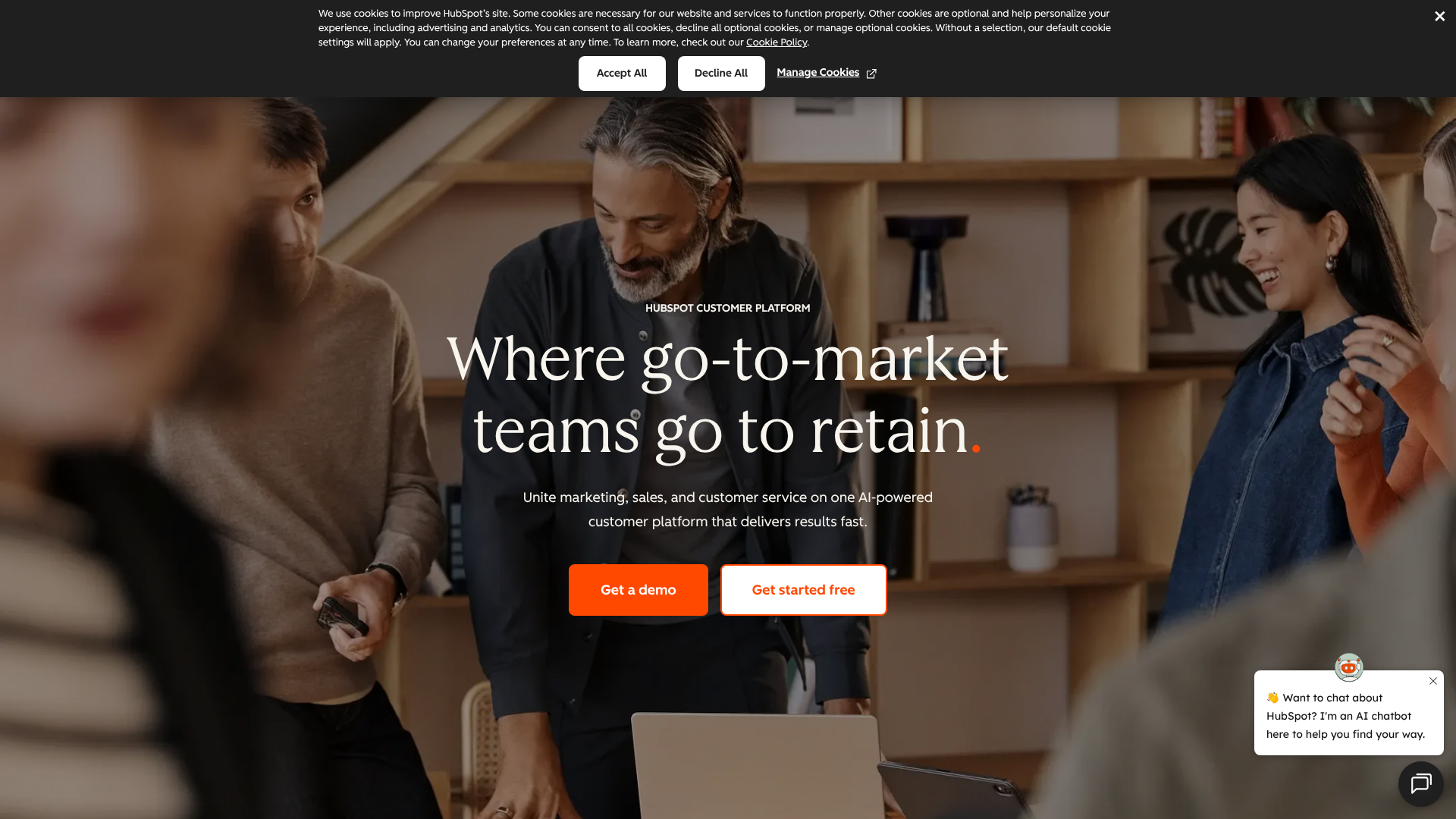
A CRM like HubSpot CRM is invaluable for this. It allows you to store and organise detailed information about your prospects, their companies, and your past interactions. This data is the raw material for crafting deeply personalised and relevant subject lines.
Step 2: Brainstorm and Categorise Your Ideas
Using your audience research, start brainstorming subject lines based on the categories listed above. Don't censor yourself; just write down as many ideas as you can. Try to create at least 3-5 variations for each campaign you plan to run.
For example, if you're reaching out to VPs of Sales, you might brainstorm:
- Value Prop: "Idea for your SDR team"
- Curiosity: "Question about [Company Name]'s sales process"
- Personalised: "Loved your interview on the Sales Success podcast"
Step 3: A/B Test Everything
This is the most critical step. You should never assume you know which subject line will perform best. A/B testing (or split testing) is the process of sending one version of your subject line to a small portion of your list and a second version to another small portion. The version that gets more opens is then sent to the rest of the list.
Manually managing this process is tedious and prone to error. This is where sales engagement platforms are essential. Tools like Reply.io, Outreach, and Instantly.ai have built-in A/B testing features that automate the entire process. You can set up multiple subject line variations, and the software will automatically test them, identify the winner, and scale the campaign accordingly.
This data-driven approach removes guesswork and systematically improves your results over time.
Step 4: Analyse Your Open Rates (And Beyond)
Your open rate is the primary metric for judging a subject line's success. A good open rate for cold email can range from 20% to 50% or even higher, depending on the quality of your list and the relevance of your message. Track this metric diligently for every campaign.
However, don't stop there. A great subject line that leads to a low reply rate might be misleading. Always look at the full funnel: open rates, reply rates, and meeting booked rates. The ultimate goal is not just opens, but meaningful conversations.
The best subject lines are those that attract the right prospects who are more likely to engage with your email's content.
The "Cost" of Bad Subject Lines vs. The ROI of Great Ones
It's easy to think of a subject line as a minor detail, but its impact is enormous. The "cost" of a bad subject line isn't just a lower open rate for a single campaign; it has cascading negative effects.
When your emails are consistently ignored or marked as spam, your sender reputation suffers. Email service providers like Google and Microsoft track how recipients interact with your emails. If they see a pattern of low engagement, they are more likely to start filtering your future emails directly to the spam folder, making it even harder for your messages to be seen. This can cripple your entire outreach operation.
Furthermore, every unopened email represents a wasted opportunity and sunk cost. You've spent time and resources building a list, researching prospects, and writing a compelling email body. A bad subject line renders all that effort worthless.
The return on investment (ROI) of crafting great subject lines is the inverse of this. Higher open rates lead directly to more replies, more conversations, and more meetings booked. It amplifies the effectiveness of all the other work you've put into your campaign. A 10% increase in your open rate can mean a 10% increase in your sales pipeline, a significant impact from optimising just a few words.
Pros and Cons of Different Subject Line Styles
No single style of subject line is perfect for every situation. Understanding the trade-offs of each approach can help you choose the right one for your specific audience and goal.
| Style | Pros | Cons |
|---|---|---|
| Curiosity-Driven (e.g., "Quick question") | Very high open rates, feels low-pressure and personal, easy to write. | Can feel like clickbait if the email body is a hard sales pitch. May attract less qualified prospects. |
| Benefit-Driven (e.g., "Idea for [Company]") | Pre-qualifies the reader, sets clear expectations, frames you as a problem-solver. | Can sound too "salesy" if not phrased carefully. May have slightly lower open rates than curiosity-based lines. |
| Hyper-Personalised (e.g., "Loved your podcast") | Extremely effective at building rapport, shows genuine effort, very high open and reply rates. | Not easily scalable without significant research time or advanced data tools. |
| Ultra-Short/Vague (e.g., "next steps") | Mimics internal communication, high curiosity factor, stands out in a crowded inbox. | Can be confusing or deleted if it looks like a mistake or spam. Relies heavily on a strong preview text. |
Pro Tip: The best strategy is often to combine styles. For example, a hyper-personalised, curiosity-driven subject line like "Question about your post on AI" blends two powerful techniques into one highly effective package.
Frequently Asked Questions about Cold Email Subject Lines
Here are answers to some of the most common questions people have when trying to improve their cold outreach.
What subject line gets the most opens?
While there's no single "magic" subject line, variations of "Quick question" consistently rank among the highest performers in many studies and tests. This is because it's short, personal, and creates a low-friction curiosity gap.
However, the true answer is that the best-performing subject line is always one that is highly personalised and relevant to the specific recipient. A subject like "[Mutual Connection] suggested I reach out" will almost always outperform a generic one, even a proven formula like "Quick question."
What is the 30/30/50 rule for cold emails?
The 30/30/50 rule is a conceptual framework for understanding what drives the success of a cold email. It suggests that 30% of your success comes from the subject line, 30% comes from the preview text (the first line of your email), and 50% comes from the email body itself.
This highlights that while the subject line is critical for getting the open, the job isn't done. The preview text must provide context and continue the intrigue, and the body of the email must deliver on the promise and provide clear value to the reader.
What is a catchy subject line for an email?
In the context of B2B sales and professional communication, "catchy" means something different than it does in consumer marketing. A catchy B2B subject line is not about being funny, clever, or using puns. It's about catching their professional attention.
A catchy subject line is one that is intriguing, relevant to their work, and personalised. It catches their eye because it stands out from the generic noise and speaks directly to their professional world, their challenges, or their recent activities.
How do you write a killer subject line?
Writing a killer subject line comes down to mastering the core principles. First, keep it short and mobile-friendly (under 7 words). Second, focus on sparking curiosity or clearly stating a benefit. Third, personalise it whenever possible with details you've researched about the prospect or their company.
Finally, always write like a human, not a marketing department. Use a natural, conversational tone. The ultimate step is to A/B test your creations to let data, not just your intuition, determine what a "killer" subject line is for your audience.
What is the 3 email rule?
The "3 email rule" typically refers to a common structure for a short follow-up sequence in sales outreach. It's not a hard-and-fast rule but a general guideline. The structure is usually an initial email, a follow-up email a few days later, and a final "break-up" email.
The break-up email is a polite, no-pressure message that closes the loop, often saying something like, "Since I haven't heard back, I'll assume this isn't a priority right now. Please feel free to reach out if that changes." This professional persistence can often generate replies from prospects who were simply busy.
Final Thoughts
The best cold email subject lines are not found; they are crafted. They are the product of understanding your audience, applying psychological principles, and committing to a process of continuous testing and improvement. While the 101+ ideas in this guide provide a powerful starting point, the real breakthrough comes when you internalise the strategies behind them.
Focus on being personal, relevant, and human. Spark curiosity without being deceptive, and always hint at the value you can provide. Your subject line is your first impression, and in the fast-paced world of sales, you rarely get a second chance to make a good one.
If you're ready to move beyond guesswork and implement a data-driven approach to your outreach, using the right tools is key. To effectively scale your campaigns and A/B test your subject lines for optimal performance, consider exploring platforms like Reply.io or Instantly.ai. They provide the automation and analytics needed to turn these principles into a predictable and growing sales pipeline.