


Online Courses for Web Development: A Buyer's Guide for Aspiring Coders
Choosing the right path to become a web developer can feel overwhelming. With countless options available, finding the best online courses for web development requires a clear strategy. This guide breaks down everything you need to know, from understanding different course types to comparing pricing models and identifying the key features that lead to success. Whether you're a complete beginner or looking to specialise, this is your starting point for making an informed decision.
- Quick Summary
- What Exactly Are Online Web Development Classes?
- Key Features and Benefits of Learning Online
- How to Choose the Right Web Development Course: A Buyer's Framework
- Define Your Career Goals: Front-End, Back-End, or Full-Stack?
- Key Features to Look For in a Course
- Consider Your Learning Style
- Top Recommendations for Online Web Development Courses in 2026
- For a Structured, University-Style Experience: Coursera & edX
- For a Massive Library of A La Carte Courses: Udemy
- For Interactive, Hands-On Learning: Codecademy & Scrimba
- For a Free, Comprehensive Curriculum: The Odin Project & freeCodeCamp
- For Course Creators and Educators
- Understanding the Costs: Pricing Models Explained
- The Pros and Cons of Learning to Code Online
- Frequently Asked Questions about Web Development Courses
- What is the best online course for web development?
- Is 40 too old to become a web developer?
- Is 3 months enough for web development?
- What are the big 3 of web development?
- Will AI replace web developers?
- Final Thoughts: Your Next Steps to Becoming a Web Developer
The journey to learn web development online is accessible, flexible, and can be incredibly rewarding. It equips you with in-demand skills that are applicable across nearly every industry. By the end of this guide, you'll have a framework for selecting a course that aligns with your career goals, learning style, and budget.
Quick Summary
- Your Goals Dictate Your Path: The best course for you depends entirely on whether you want to pursue front-end, back-end, or full-stack development. Define your goal first to narrow your options effectively.
- Look for Project-Based Learning: Theoretical knowledge is useful, but practical experience is essential. Prioritise courses that require you to build real-world projects for your portfolio.
- Pricing Models Vary Widely: Options range from completely free, community-driven curricula to affordable one-time purchases and comprehensive monthly subscriptions. There is a path for every budget.
- A Strong Portfolio Trumps Certificates: While certificates can be a nice addition to your CV, a portfolio showcasing your completed projects is the most powerful tool for landing a job.
What Exactly Are Online Web Development Classes?
Online web development classes are structured educational programmes delivered via the internet that teach individuals how to build and maintain websites and web applications. Unlike traditional university degrees, they focus specifically on the practical skills needed in the tech industry. These courses cover the foundational technologies that power the web, starting with the essentials.
The core of any web development curriculum revolves around the "big three": HTML (HyperText Markup Language) for structure, CSS (Cascading Style Sheets) for styling and layout, and JavaScript for interactivity and functionality. Once you master these, courses often progress to more advanced topics. This includes front-end frameworks like React, Angular, or Vue.js that help build complex user interfaces, and back-end technologies like Node.js, Python, or PHP for server-side logic and database management.
These programmes come in several formats to suit different learning styles and commitments. You'll find self-paced video courses on platforms like Udemy, interactive text-based tutorials on Codecademy, and highly structured, university-affiliated specialisations on Coursera. There are also comprehensive, free curricula like The Odin Project that guide you through the best resources available online. The primary goal of all these formats is to provide a clear, guided path to gaining job-ready skills.
Key Features and Benefits of Learning Online

Choosing to learn web development online offers significant advantages over traditional educational routes. The most compelling benefit is the unparalleled flexibility. You can learn from anywhere in the world and fit your studies around existing work or family commitments, progressing at a pace that suits you.
Cost-effectiveness is another major factor. A university computer science degree can cost tens of thousands of pounds, while many high-quality online web development courses are available for a fraction of that price. Some of the most respected online curricula are even completely free, removing financial barriers and making a tech career accessible to a much wider audience.

The content of online courses is often more current than traditional academic programmes. The web development landscape changes rapidly, with new tools and frameworks emerging constantly. Online platforms can update their material in real-time to reflect the latest industry standards, ensuring you're learning skills that are in high demand right now. This practical focus means you spend less time on abstract theory and more time building tangible projects that form the basis of a professional portfolio.
How to Choose the Right Web Development Course: A Buyer's Framework
With so many options, selecting the right course can feel like the hardest part of getting started. Using a structured approach helps you filter through the noise and find a programme that aligns perfectly with your personal and professional ambitions. The key is to start with your end goal in mind and work backwards.
Define Your Career Goals: Front-End, Back-End, or Full-Stack?
Before you even look at a course, you need to decide what kind of developer you want to be. This choice will determine the technologies you need to learn.
- Front-End Developer: You'll build the visual and interactive parts of a website that users see and interact with. Your core skills will be HTML, CSS, JavaScript, and a modern framework like React or Vue.js. If you have an eye for design and enjoy creating user experiences, this is the path for you.
- Back-End Developer: You'll work on the server, database, and application logic that powers the website from behind the scenes. You'll need to learn a server-side language like Node.js, Python, or PHP, along with database technologies like SQL or MongoDB. If you enjoy logic, data, and problem-solving, this is your area.
- Full-Stack Developer: You're a generalist who is comfortable working on both the front-end and the back-end. This path requires a broader skillset but makes you highly versatile. Most comprehensive web development courses aim to produce full-stack developers.
Key Features to Look For in a Course
Once you know your path, evaluate courses based on these critical features:
- Curriculum Depth and Relevance: Check if the course covers modern, in-demand technologies. Look at the syllabus. Does it go beyond the basics? A good curriculum will not only teach you a language but also how to use it in the context of real-world development practices like version control with Git.
- Project-Based Learning: This is non-negotiable. You learn to code by coding. The best online courses for web development are built around a series of projects that increase in complexity. These projects will form your professional portfolio, which is far more valuable to employers than any certificate.
- Instructor Expertise and Community Support: Look up the instructor. Do they have real-world industry experience? Read reviews from other students. Additionally, check for a supportive community, such as a Discord server or active Q&A forums, where you can get help when you're stuck.
Pro Tip: Don't get too caught up on certificates. While a certificate from a well-known institution like Meta or IBM can be a nice bonus, employers are almost always more interested in what you can build. Focus on courses that help you create a portfolio of 3-5 impressive, polished projects.
Consider Your Learning Style
Finally, be honest about how you learn best. Do you prefer watching video lectures, reading detailed documentation, or jumping straight into an interactive code editor? Different platforms cater to different styles.
- Visual Learners: Platforms like Udemy, with their vast libraries of video courses, are a great fit.
- Hands-On Learners: Interactive platforms like Codecademy or Scrimba, where you code directly in the browser, provide immediate feedback and reinforcement.
- Self-Directed Learners: Text-based, self-guided curricula like The Odin Project are ideal for those who are highly motivated and prefer to learn by reading and building independently.
Top Recommendations for Online Web Development Courses in 2026
Navigating the sea of web development courses is easier when you know the major players and what they offer. Here’s a breakdown of the top platforms, categorised by their strengths and teaching styles.
For a Structured, University-Style Experience: Coursera & edX
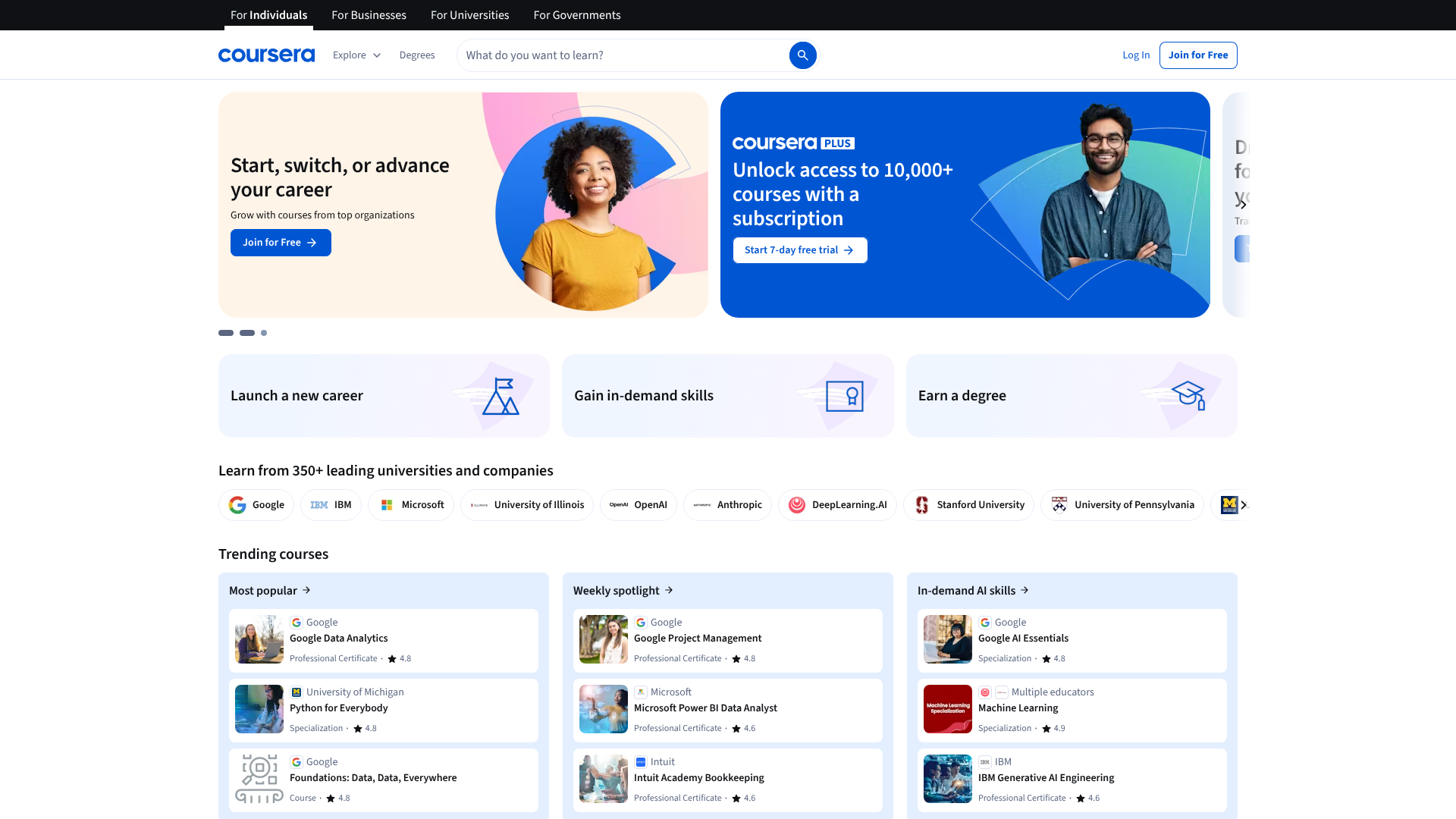
If you value a structured curriculum with brand recognition, Coursera and edX are excellent choices. They partner with universities and major tech companies like Google, Meta, and IBM to offer professional certificates and specialisations.
- What they offer: These platforms provide comprehensive learning paths, such as the "Meta Front-End Developer Professional Certificate". The courses include video lectures, readings, auto-graded assignments, and peer-reviewed projects.
- Pros: High-quality content from reputable sources; certificates carry weight on a CV; very structured and easy to follow.
- Cons: Can be more expensive due to their subscription model; sometimes the pace can feel slower than other platforms.
For a Massive Library of A La Carte Courses: Udemy
Udemy is a massive online marketplace where individual instructors create and sell their own courses. It's known for its huge selection and frequent, deep discounts.
- What they offer: You can find a course on almost any technology imaginable. Highly-rated, comprehensive bootcamps like "The Web Developer Bootcamp" by Colt Steele or courses by Jonas Schmedtmann are community favourites.
- Pros: Extremely affordable during sales (often £10-£20 for a 40+ hour course); you get lifetime access to the material; wide variety of topics and teaching styles.
- Cons: Quality is not standardised and can vary greatly between instructors; requires you to build your own curriculum by picking and choosing courses.
For Interactive, Hands-On Learning: Codecademy & Scrimba
For those who learn best by doing, Codecademy and Scrimba offer a unique, interactive experience. Their platforms feature in-browser code editors that let you apply concepts immediately.
- What they offer: Guided career paths with interactive lessons, quizzes, and projects. Scrimba's interactive video format is particularly innovative, allowing you to pause a video and edit the instructor's code directly.
- Pros: Highly engaging and motivating; great for building muscle memory; provides instant feedback.
- Cons: Subscription-based; may not cover theoretical concepts as deeply as video-based courses.
For a Free, Comprehensive Curriculum: The Odin Project & freeCodeCamp
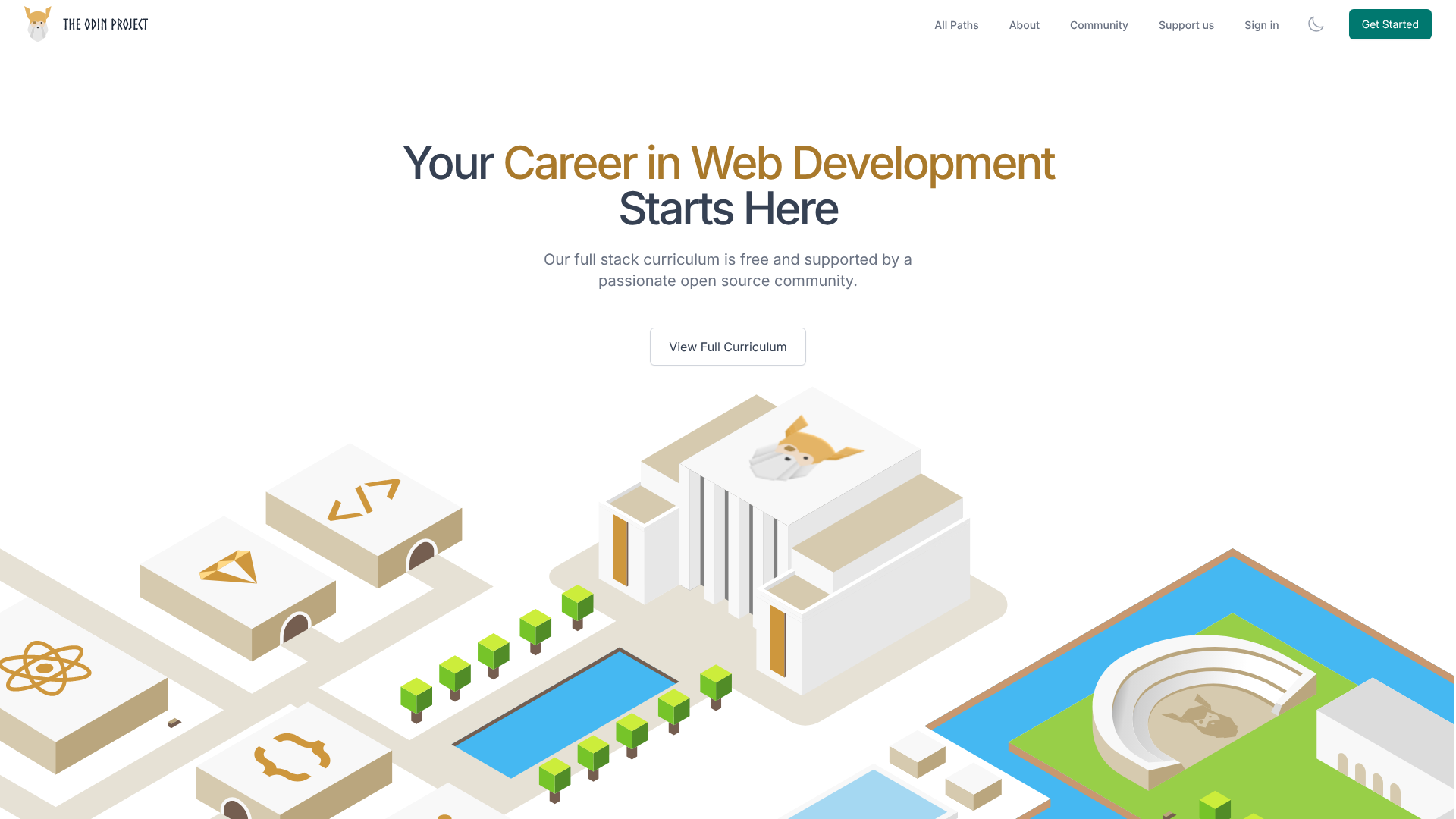
If your budget is zero, you can still get a world-class web development education. The Odin Project and freeCodeCamp are two of the most respected free resources available.
- What they offer: A full-stack curriculum that curates the best free resources from across the web and guides you through them. Both are heavily project-focused and have massive, supportive communities.
- Pros: Completely free; highly practical and project-oriented; strong emphasis on learning how to learn.
- Cons: Requires a high degree of self-discipline and motivation; no dedicated instructor to answer your questions.
For Course Creators and Educators
If you are an experienced developer considering teaching others, several platforms can help you build and sell your own online web development classes. Instead of just taking a course, you can create one.
Platforms like Teachable and LearnWorlds provide all-in-one solutions for creating, marketing, and selling your educational content. They handle everything from video hosting and payment processing to student management. For those who prefer to build on a familiar platform, Tutor LMS is a powerful plugin that turns a WordPress site into a full-featured learning management system, giving you maximum control over your course's design and functionality.
Understanding the Costs: Pricing Models Explained
Financial investment is a key consideration when choosing a course. The good news is that there are high-quality options at every price point. Understanding the different pricing models will help you find a path that fits your budget.
One-Time Purchase Model
This is the model used by platforms like Udemy. You pay a single, upfront fee for a specific course and typically receive lifetime access to its content, including any future updates. This is a great option if you want to learn a particular skill without committing to a recurring payment. Prices can range from £10 to £200, but frequent sales often bring the cost of even the most comprehensive courses down to around £15.
Subscription Model
Platforms like Coursera, Codecademy Pro, and LinkedIn Learning use a subscription model. You pay a monthly or annual fee for access to their entire library of courses. This can be very cost-effective if you plan to take multiple courses. Monthly fees typically range from £25 to £50.
This model encourages continuous learning but requires an ongoing financial commitment.
Free Model
Some of the best resources to learn web development online are completely free. The Odin Project and freeCodeCamp are prime examples. They are supported by donations and volunteers and provide a full-stack curriculum at no cost. This is the most budget-friendly option, but it demands the most self-motivation to see it through to completion.
| Pricing Model | Example Platforms | Typical Cost (UK) | Best For |
|---|---|---|---|
| One-Time Purchase | Udemy, Skillshare | £15 – £200 per course | Learning specific skills without commitment. |
| Subscription | Coursera, Codecademy | £25 – £50 per month | Learners who want access to a wide catalogue. |
| Free | The Odin Project, freeCodeCamp | £0 | Self-motivated learners on a tight budget. |
| Bootcamp | General Assembly, Le Wagon | £5,000 – £15,000+ | Those seeking an intensive, immersive experience. |
The Pros and Cons of Learning to Code Online
While online learning has democratised tech education, it's important to have a balanced view. It's a fantastic path for many, but it comes with its own set of challenges that you should be prepared for.
The Advantages
- Flexibility and Self-Pacing: You control your schedule. This is ideal for career changers or anyone with existing commitments. You can speed through topics you find easy and spend more time on those you find difficult.
- Affordability: As discussed, online courses are significantly cheaper than traditional degrees or in-person bootcamps, making education more accessible.
- Variety and Specialisation: The sheer number of online courses means you can find instruction on almost any niche technology or specialisation you can think of, from blockchain development to advanced CSS animations.
The Disadvantages
- Requires Self-Discipline: Without a fixed schedule or a teacher looking over your shoulder, the responsibility to stay on track is entirely on you. It's easy to fall behind if you're not highly motivated.
- Potential for Isolation: Learning alone can be isolating. It's crucial to actively participate in online communities to connect with fellow learners and combat this.
- Overchoice and Quality Control: The vast number of options can lead to "analysis paralysis". On platforms with user-generated content like Udemy, you also have to be careful to choose high-quality, up-to-date courses.
Frequently Asked Questions about Web Development Courses
Here are answers to some of the most common questions aspiring developers have when starting their journey.
What is the best online course for web development?
There is no single "best" course for everyone. The best course is the one that aligns with your career goals, learning style, and budget. For a beginner seeking a comprehensive, free option, The Odin Project is often recommended. For those who prefer interactive learning, Codecademy's Full-Stack Engineer path is excellent.
For learners who want a recognised certificate, the Meta Front-End Developer course on Coursera is a strong contender.
The key is to research the options, read reviews, and perhaps try a few free introductory lessons before committing. The most important factor is choosing a course that you will be motivated to complete. Consistency and finishing what you start are more important than the specific platform you choose.
Is 40 too old to become a web developer?
Absolutely not. Age is irrelevant in web development; skills and a strong portfolio are what matter. In fact, older career changers often bring valuable soft skills from their previous careers, such as project management, communication, and problem-solving, which are highly sought after in the tech industry. Many companies value the maturity and diverse experience that career changers bring to their teams.
Success depends on your dedication to learning and building, not your date of birth. The tech industry is more of a meritocracy than many other fields. If you can demonstrate your ability to build functional, well-designed applications, you will find opportunities.
Is 3 months enough for web development?
Three months is enough time to learn the fundamentals of front-end development (HTML, CSS, JavaScript) and build a few simple projects. You can become "job-ready" for an entry-level or junior position in this timeframe if you study full-time and are extremely dedicated, similar to an intensive bootcamp.
However, becoming a proficient, well-rounded developer is a long-term journey. Three months is a great start, but you should expect to be continuously learning throughout your career. It's better to set a realistic goal of building a solid foundation in three months rather than expecting to achieve mastery.
What are the big 3 of web development?
The "big three" are the foundational technologies that every web developer must know: HTML, CSS, and JavaScript. They are the building blocks of virtually every website and web application.
- HTML (HyperText Markup Language): Provides the basic structure and content of a web page. Think of it as the skeleton.
- CSS (Cascading Style Sheets): Used to style the HTML content, controlling colours, fonts, layouts, and animations. It's the clothing and appearance.
- JavaScript: A programming language that adds interactivity and dynamic functionality to a website. It's the brain and muscles that make things happen.
Will AI replace web developers?
It is highly unlikely that AI will replace web developers. Instead, AI is becoming a powerful tool that will change how developers work, much like the introduction of compilers or frameworks did in the past. AI tools like GitHub Copilot can automate repetitive coding tasks, help debug code, and accelerate the development process.
This allows developers to focus on more complex, creative, and strategic tasks like system architecture, user experience design, and complex problem-solving. The role will evolve, and developers who learn to use AI tools effectively will become more productive and valuable, not obsolete.
Final Thoughts: Your Next Steps to Becoming a Web Developer
Embarking on the journey to learn web development online is an exciting and empowering decision. The path is clear: define your goals, choose a learning style that suits you, and find a course that focuses on building real-world projects. Remember that the platform you choose is less important than your commitment to consistent practice.
Your primary focus should be on building a strong portfolio that showcases your skills. Start with small projects and gradually increase their complexity. Engage with online communities, ask questions, and don't be afraid to make mistakes—it's the fastest way to learn. The best time to start is now.
And for the experts among you who are ready to share your knowledge with the next generation of developers, exploring a platform like Teachable or LearnWorlds could be your next big step. They provide the tools to turn your expertise into impactful online courses for others to follow.