

Service Level Agreement Templates: A 2026 Buyer's Guide for Businesses
Setting clear expectations is the foundation of any successful business relationship. When a service provider and a client come together, ambiguity can lead to misunderstandings, disputes, and dissatisfaction. This is where a Service Level Agreement (SLA) becomes essential, acting as a formal contract that defines the standards of service. Using professional service level agreement templates is the most efficient way to create these critical documents, ensuring all necessary components are included while saving significant time and resources.
- What to Know
- What Are Service Level Agreement Templates? (And Why You Need One)
- Key Features and Components to Look For in SLA Templates
- Scope of Services
- Performance Metrics and KPIs
- Responsibilities of Both Parties
- Penalties and Remedies (Service Credits)
- Reporting and Monitoring
- Termination Clause
- How to Choose the Right Service Agreement Template for Your Needs
- Step 1: Identify Your Service Type
- Step 2: Consider Your Industry
- Step 3: Evaluate the Three Main Types of SLAs
- Step 4: Assess Customisation Options
- Top Recommendations: Where to Find Reliable SLA Templates
- 1. Professional Legal Template Providers (Recommended)
- 2. Industry-Specific Software Platforms
- 3. Free Online Template Libraries
- Understanding Pricing and Costs
- Pros and Cons of Using Pre-Made Level Agreement Forms
- How to Write and Customise Your SLA Template: A Step-by-Step Guide
- 1. Start with a Reliable Base Template
- 2. Define All Parties and the Agreement Period
- 3. Detail the Services Provided
- 4. Set Measurable Performance Metrics (SMART Goals)
- 5. Outline Reporting and Communication Protocols
- 6. Agree on Penalties and Incentives
- 7. Review with Stakeholders and Legal Counsel
- Frequently Asked Questions (FAQ)
- What are P1, P2, P3, P4 SLA?
- What are some examples of SLAs?
- What should an SLA include?
- Who is responsible for an SLA?
- What does 99.9% uptime SLA mean?
- Final Thoughts: Making Your Service Level Agreement Work for You
This guide will walk you through everything you need to know about SLA templates. We'll cover what they are, how to choose the right one for your specific needs, what key features to look for, and how to customise a template to create a clear, enforceable agreement that protects both you and your clients. Whether you're a service provider or a client, understanding these documents is crucial for a transparent and productive partnership.
What to Know
- Clarity is Key: A Service Level Agreement (SLA) is a formal contract that defines specific service standards, metrics, and penalties to eliminate ambiguity between a provider and a client.
- Templates Save Time: Using pre-made SLA templates provides a professional structure and ensures you don't miss crucial clauses, but they must always be customised to fit your unique business context and legal requirements.
- Essential Components: Every effective SLA should detail the scope of services, define key performance indicators (KPIs) like uptime and response times, outline responsibilities, and specify reporting procedures and penalties for non-compliance.
- Selection Depends on Context: The right template for you will depend on your industry, the type of service being offered, and any specific legal or compliance needs. A one-size-fits-all approach rarely works.
- Professional Sources Recommended: For legally sound and comprehensive documents, using a trusted provider like LegalContracts is often a safer and more reliable option than relying on generic free downloads.
What Are Service Level Agreement Templates? (And Why You Need One)
A Service Level Agreement, often shortened to SLA, is a contract between a service provider and a client that specifies, in measurable terms, what the client can expect from the service. It goes beyond a simple statement of work by defining the quality, availability, and responsibilities associated with the service. Think of it as the official rulebook for the service relationship.
Using a template for this process provides a pre-built framework for your agreement. Instead of starting from a blank page, a template gives you the standard sections, legal clauses, and structural elements required for a comprehensive document. This not only saves an immense amount of time but also reduces the risk of omitting critical information that could lead to disputes later on.
These documents are more than just a formality; they are a tool for managing expectations and building trust. For the provider, an SLA clearly demonstrates their commitment to quality and provides a benchmark for performance. For the client, it offers transparency and a clear recourse if the promised service standards are not met.
Are SLAs Legally Binding?
This is one of the most common questions, and the answer is yes, a Service Level Agreement can be legally binding, provided it forms part of a valid contract. For any contract to be enforceable in the UK, it generally needs to contain several key elements: an offer, acceptance of that offer, consideration (something of value exchanged, usually money), and an intention to create legal relations.
When an SLA is incorporated into a master service agreement or a primary contract, it carries the same legal weight. Its clauses, including performance metrics and penalties, can be enforced in court. This is why it's so important to ensure the language used is precise and the metrics are unambiguous. Vague terms like "best effort" or "prompt response" are difficult to enforce, whereas a commitment to "99.9% server uptime" or a "4-hour response time for critical issues" is a clear, measurable promise.
Key Features and Components to Look For in SLA Templates
Not all SLA templates are created equal. A good template should be comprehensive, covering all the critical areas of the service relationship. When evaluating different options, ensure they include clear sections for the following components. These elements work together to create a document that leaves no room for interpretation.

Scope of Services
This is arguably the most important section. It should provide a detailed description of the services being provided and, just as importantly, what is excluded. For example, an IT support SLA might state that it covers software troubleshooting on company-owned devices but excludes support for personal mobile phones. Specificity here prevents "scope creep," where the client expects services that were never intended to be part of the agreement.
Performance Metrics and KPIs
This is the heart of the SLA, where quality is quantified. These metrics, or Key Performance Indicators (KPIs), must be measurable. Common examples include:
- Availability/Uptime: Often expressed as a percentage (e.g., 99.9% uptime), this is common for web hosting, software-as-a-service (SaaS), and network services.
- Response Time: How quickly the provider will acknowledge an issue. This is often tiered based on severity.
- Resolution Time: How quickly the provider will resolve a reported issue.
- Error Rate: The percentage of errors in a given output, such as in data entry or manufacturing.
Many services use a priority system (e.g., P1, P2, P3, P4) to classify issues, with each level having a different response and resolution time target. A P1 (Critical) issue might require a 15-minute response, while a P4 (Low) issue might have a 24-hour response window.
Responsibilities of Both Parties
A service relationship is a two-way street. A good SLA outlines the obligations of both the provider and the client. The provider's responsibilities are tied to the performance metrics, but the client also has duties. For example, the client may be responsible for providing timely access to systems, approving changes, or designating a single point of contact for communication.
Penalties and Remedies (Service Credits)
What happens if the provider fails to meet the agreed-upon metrics. This section defines the consequences. The most common form of remedy is a "service credit," where the client receives a discount on their next bill. For instance, if server uptime drops below the promised 99.9% in a given month, the SLA might stipulate a 10% credit on that month's fee.
This clause incentivises the provider to maintain high standards.
Reporting and Monitoring
This section details how performance will be tracked and communicated. It should specify the frequency of reports (e.g., monthly), the format of the reports, and who will receive them. Transparency in reporting is crucial for maintaining trust and allows both parties to have productive conversations based on objective data rather than subjective feelings.
Termination Clause
Finally, the SLA must outline the conditions under which either party can terminate the agreement. This could be due to a prolonged failure to meet service levels, a breach of contract, or simply for convenience with a specified notice period (e.g., 30 days). A clear exit strategy protects both parties and ensures a professional conclusion to the relationship if it's no longer working.
How to Choose the Right Service Agreement Template for Your Needs
Selecting the right template is the first step towards creating an effective SLA. The best choice depends entirely on your specific circumstances. A generic, one-page document found online might suffice for a simple freelance project, but it will be wholly inadequate for a complex IT outsourcing arrangement. Following a structured process can help you find the perfect fit.
Step 1: Identify Your Service Type
The nature of the service you are providing or receiving will dictate the structure and content of the SLA. A template for a creative marketing agency will look very different from one for a cloud hosting provider. The former will focus on metrics like lead generation and campaign deadlines, while the latter will centre on uptime, data security, and server response times. Start by searching for templates designed specifically for your service category, such as "IT service agreement templates" or "customer support SLA forms."
Step 2: Consider Your Industry
Certain industries have unique regulatory and compliance requirements that must be reflected in an SLA. For example, a healthcare software provider must address data privacy under regulations like HIPAA in the US or GDPR in the UK. A financial services company will have strict security and auditing requirements. When choosing a template, ensure it can accommodate these industry-specific clauses.
This is an area where professional template providers like LegalContracts excel, as they often offer documents tailored to various regulated sectors.
Step 3: Evaluate the Three Main Types of SLAs
SLAs are typically structured in one of three ways. Understanding these types will help you select a template that aligns with your business model:
- Customer-based SLA: This agreement is with a single customer and covers all the services they use. It's tailored to their specific needs, which is ideal for strategic clients or large accounts.
- Service-based SLA: This is a standard agreement for a specific service that is offered to all customers. For example, a company might have a single service-based SLA for its standard cloud storage plan that applies to every client who signs up.
- Multi-level SLA: This complex structure combines elements of the other two and is often used in large organisations. It might have a corporate-level SLA covering general issues, a customer-level SLA for issues specific to a customer group, and a service-level SLA for a particular service.
Step 4: Assess Customisation Options
A template is a starting point, not a final product. The best templates are easily customisable. Avoid static PDF files that are difficult to edit. Look for templates in formats like Microsoft Word (.docx) or those offered through online platforms that allow you to add, remove, and modify clauses easily.
The ability to tailor the document to your exact needs is non-negotiable.
Pro Tip: Avoid the 'watermelon effect' where metrics look green (good) on the surface, but the client is still unhappy (red on the inside). Supplement quantitative KPIs with qualitative feedback, like regular satisfaction surveys, to get a true picture of service quality.
Top Recommendations: Where to Find Reliable SLA Templates
Once you know what you're looking for, the next question is where to find it. The internet is flooded with options, ranging from free downloads to premium legal services. The source you choose can significantly impact the quality and reliability of your final document.
1. Professional Legal Template Providers (Recommended)
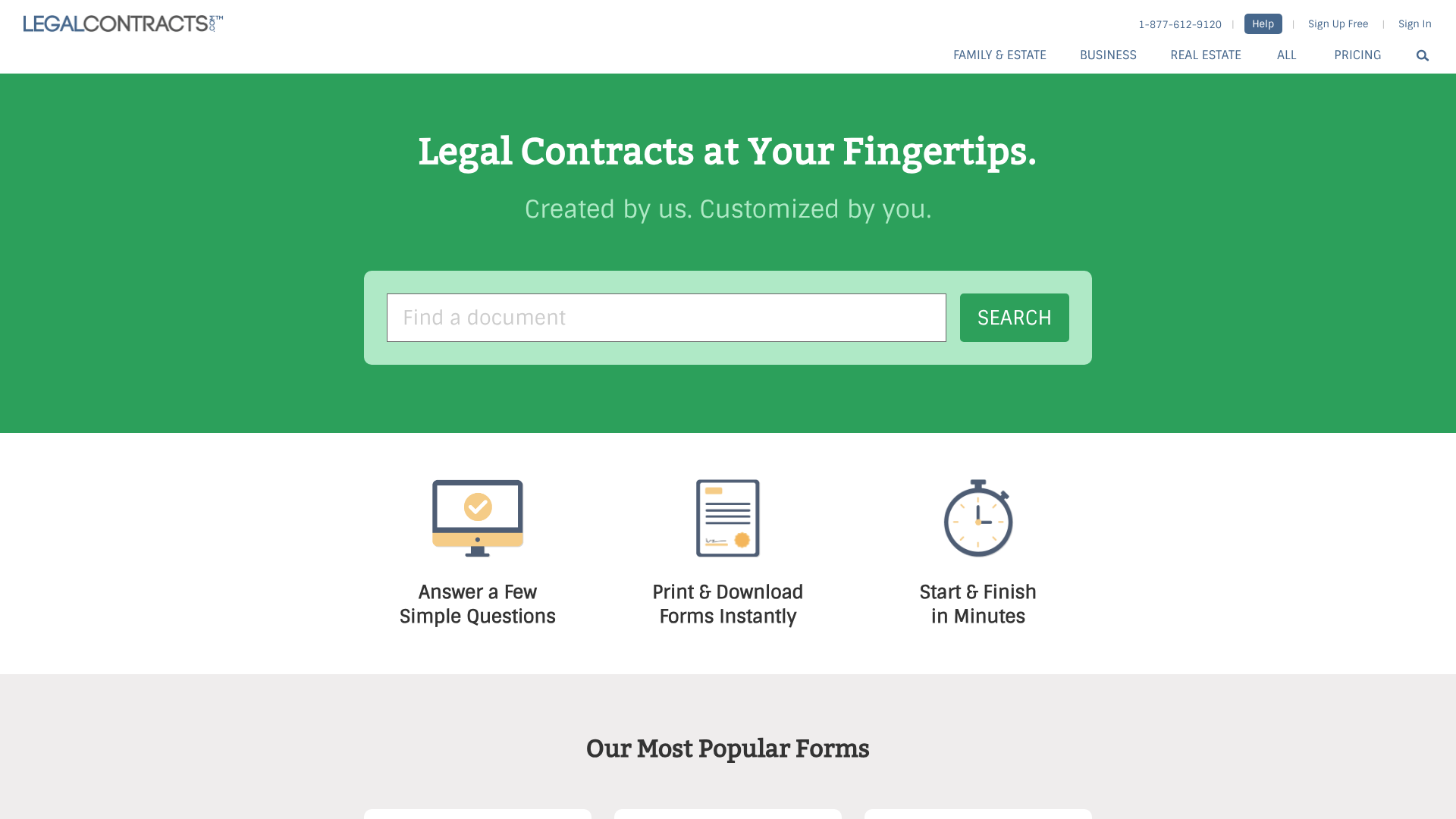
For businesses that require legally sound and comprehensive documents, using a specialised online legal service is the best option. These platforms offer templates that are drafted and vetted by legal professionals.
One strong contender in this space is LegalContracts. They provide a guided, step-by-step process to create customised legal documents, including service agreements. You answer a series of questions, and the platform generates a document tailored to your inputs.
- Pros: Documents are legally vetted, highly customisable, and cover a wide range of industries and services. The guided process ensures you don't miss important details.
- Cons: These are typically paid services, either through a one-off purchase or a subscription model. For a very small, informal project, this might be more than you need.
- Best for: Small to medium-sized businesses, freelancers, and anyone who wants the peace of mind that comes with a professionally drafted document without the high cost of hiring a solicitor.
2. Industry-Specific Software Platforms
Many software tools, particularly in the IT and customer support sectors, come with built-in SLA management features. Platforms for Managed Service Providers (MSPs) or helpdesk software like Zendesk or Jira Service Management allow you to define SLA policies directly within the tool. These policies then automatically track ticket response and resolution times.
- Pros: Fully integrated with your workflow, automates monitoring and reporting, and is designed for the specific service you offer.
- Cons: The SLA is tied to the software platform. It may not produce a formal, standalone contract document suitable for signing.
- Best for: Teams that need to manage operational SLAs within their existing software ecosystem.
3. Free Online Template Libraries
Numerous websites offer free SLA templates. You can often find basic examples on the websites of government bodies, universities, or business blogs. These can be a good starting point for understanding the structure of an SLA or for very simple, low-risk agreements.
- Pros: They are free of charge.
- Cons: The quality is highly variable. They may be outdated, overly simplistic, or not applicable to your jurisdiction. There is no guarantee of legal soundness, and you bear all the risk.
- Best for: Educational purposes, internal departmental agreements, or very small, informal projects where the financial risk is minimal.
Understanding Pricing and Costs
The cost of an SLA can range from nothing to thousands of pounds. Understanding the different pricing models and what you get for your money is crucial for making a smart investment in your business's legal health.

Free Templates: The Hidden Costs
While the initial cost is zero, free templates can be expensive in the long run. A poorly drafted agreement can lead to disputes that cost far more in legal fees and lost business than a professional template ever would. The time you spend trying to adapt a generic document to your specific needs is also a cost. The biggest risk is legal exposure; if a clause is unenforceable or key protections are missing, you could be left vulnerable.
Paid Single Templates
Some websites allow you to purchase a single level agreement form for a one-off fee. This can be a good middle ground if you only need one specific document. Prices can vary widely, from around £20 to over £100, depending on the complexity and source of the template. This model is straightforward but can become expensive if you need multiple types of legal documents.
Subscription Services
This is the model used by platforms like LegalContracts. For a monthly or annual fee, you get access to their entire library of legal documents. This is often the most cost-effective option for businesses that need ongoing access to various contracts, agreements, and forms. A subscription ensures you always have access to the latest versions and can create new documents as your business grows and its needs change.
Hiring a Solicitor
The most traditional and expensive route is to hire a solicitor to draft a custom SLA from scratch. This provides the highest level of customisation and legal assurance. However, the cost can easily run into the hundreds or even thousands of pounds, which is often prohibitive for small businesses and startups. This option is best reserved for highly complex, high-value, or high-risk service agreements.
Pros and Cons of Using Pre-Made Level Agreement Forms
Using templates is a common practice for a reason, but it's important to weigh the benefits against the potential drawbacks. Here’s a balanced look at the pros and cons.
| Aspect | Pros of Using Templates | Cons of Using Templates |
|---|---|---|
| Cost | Significantly lower initial cost compared to hiring a solicitor. Many affordable options are available. | Free or low-quality templates can lead to future legal costs if they are flawed or unenforceable. |
| Speed | Allows you to generate a professional-looking agreement in minutes or hours, not days or weeks. | The speed can lead to a lack of attention to detail, resulting in a generic document that doesn't fit. |
| Standardisation | Ensures consistency in the agreements you use across all clients, which simplifies contract management. | A standard template may not adequately address the unique needs or risks of a specific client relationship. |
| Expertise | Good templates are drafted by legal experts, giving you access to professional language and clauses. | You still need a basic understanding of the terms to fill out the template correctly and negotiate effectively. |
How to Write and Customise Your SLA Template: A Step-by-Step Guide
Once you've chosen a template, the real work begins: customising it to perfectly reflect your agreement. A template is a tool, and its effectiveness depends on how you use it. Follow these steps to transform a generic template into a powerful, specific contract.
https://www.youtube.com/watch?v=6Pw8qdhe5Tw
1. Start with a Reliable Base Template
Your final document will only be as good as its foundation. Begin with a high-quality, comprehensive template from a trusted source, such as a professional legal document provider. This ensures the underlying structure and standard clauses are solid.
2. Define All Parties and the Agreement Period
Fill in the basic information first. Clearly state the full legal names of the service provider and the client. Specify the start date of the agreement and its duration. Will it be for a fixed term (e.g., one year) or will it be an ongoing agreement that renews automatically unless terminated?
3. Detail the Services Provided
This is where you must be incredibly specific. Go back to the "Scope of Services" section and list every service included. Use clear, unambiguous language. For example, instead of "Provide IT support," write "Provide remote IT helpdesk support for company-issued laptops, including software installation and troubleshooting, during business hours (9:00 AM – 5:00 PM GMT, Monday-Friday)."
4. Set Measurable Performance Metrics (SMART Goals)
Define the KPIs that will measure success. For each metric, ensure it is SMART:
- Specific: Clearly define what will be measured (e.g., server uptime).
- Measurable: It must be quantifiable (e.g., measured in percentage).
- Achievable: The target should be realistic for the provider to meet.
- Relevant: The metric should directly relate to the quality of the service.
- Time-bound: The metric is measured over a specific period (e.g., per calendar month).
5. Outline Reporting and Communication Protocols
Decide how performance will be communicated. Who is the main point of contact for each party. How often will performance reports be delivered. What is the process for escalating an issue if it isn't being resolved in a timely manner.
Documenting these protocols prevents communication breakdowns.
6. Agree on Penalties and Incentives
Clearly define the service credits or other penalties that will apply if the provider fails to meet the KPIs. You can also include incentives or bonuses for exceeding targets, which can foster a more collaborative and performance-driven relationship.
7. Review with Stakeholders and Legal Counsel
Before signing, both the provider and the client should review the document thoroughly with all key stakeholders. Even when using a template from a reliable source, it is always a wise investment to have a solicitor conduct a final review, especially for high-value contracts. This final check can catch any issues specific to your situation or jurisdiction.
Frequently Asked Questions (FAQ)
What are P1, P2, P3, P4 SLA?
This refers to a priority-level system used to classify the severity of an issue, common in IT and support services. Each level has a different target for response and resolution times. A typical breakdown is:
P1 (Critical/Urgent): A major system outage affecting all users. Requires immediate response (e.g., within 15 minutes) and work towards resolution 24/7.
P2 (High): A significant issue affecting a group of users or a critical function. Requires a fast response (e.g., within 1-2 hours). * P3 (Medium): A minor issue or problem with a workaround available. Response can be slower (e.g., within 4-8 business hours).
P4 (Low): A cosmetic issue, general question, or feature request. Handled during standard business hours with a longer response time (e.g., 24 hours).
What are some examples of SLAs?
SLAs are used across many industries. Some common examples include:
Cloud Hosting: A web host guarantees 99.99% server uptime per month. * Call Centre: A customer service provider agrees to answer 80% of calls within 60 seconds. * IT Helpdesk: An IT department commits to resolving all P1 (critical) tickets within 4 hours.
Marketing Agency: An agency agrees to deliver a specific number of qualified leads per quarter.
What should an SLA include?
A comprehensive SLA should include a checklist of key components:
An introduction defining the parties and the agreement's purpose. * A detailed Scope of Services (including exclusions). * Specific and measurable Key Performance Indicators (KPIs). * The responsibilities and duties of both the provider and the client.
A section on penalties or remedies for non-performance (e.g., service credits). * Reporting procedures, including frequency and format. * A clear termination clause and exit strategy. * Any industry-specific compliance or security requirements.
Who is responsible for an SLA?
Both the service provider and the client are responsible for upholding their respective obligations in the SLA. However, the day-to-day management and monitoring of SLA performance typically fall to a specific role. On the provider's side, this is often a Service Level Manager or an Account Manager. Their job is to track performance, generate reports, and act as the primary point of contact for the client regarding the agreement.
What does 99.9% uptime SLA mean?
A 99.9% uptime guarantee, often called "three nines," is a common metric for availability. It sounds impressive, but it's important to understand what it means in practical terms. Over the course of a full year (365 days), 99.9% uptime allows for a total of 8.77 hours of downtime. This breaks down to about 43.8 minutes of downtime per month.
Understanding this calculation helps clients set realistic expectations for service availability.
Final Thoughts: Making Your Service Level Agreement Work for You
A well-crafted Service Level Agreement is more than just a legal document; it's a blueprint for a successful and transparent business relationship. It transforms vague promises into concrete commitments, providing a clear framework for measuring performance and managing expectations. By ensuring both parties are aligned from the outset, an SLA minimises the potential for conflict and builds a foundation of trust.
While free service agreement templates can be a tempting starting point, the potential risks associated with outdated or incomplete documents often outweigh the initial savings. For any serious business engagement, investing in a professional, customisable template is a prudent decision that protects your interests and lends credibility to your operations.
By carefully selecting a template that fits your industry, customising it with specific and measurable metrics, and ensuring all parties understand their responsibilities, you can create a powerful tool that supports a healthy, long-term partnership. If you're ready to create a professional, legally-sound service level agreement, consider exploring the customisable options available at LegalContracts to protect your business and set clear expectations.