

5 Best Non Disclosure Agreement Templates for UK Businesses (2026)
Protecting your business's sensitive information is not just a good idea; it's essential for survival and growth. Whether you're discussing a new project with a contractor, sharing financial data with a potential investor, or developing a new product with a partner, you need a way to ensure your secrets stay secret. This is where using reliable non disclosure agreement templates becomes crucial, providing a legal framework to safeguard your intellectual property and confidential data without the high cost of bespoke legal drafting.
- Quick Summary
- What Exactly Are Non-Disclosure Agreement Templates?
- Key Features and Benefits of Using an NDA Template
- How to Choose the Right NDA Template for Your Needs
- Top 5 Non-Disclosure Agreement Templates Reviewed
- 1. LegalContracts
- 2. LawDepot
- 3. DocuSign
- 4. GOV.UK Template
- 5. Rocket Lawyer
- Comparison of Top NDA Template Providers
- Understanding the Costs: Free vs. Paid NDA Forms
- Common Pitfalls to Avoid When Using NDA Templates
- Frequently Asked Questions (FAQ)
- Can I write my own non-disclosure agreement?
- Does an NDA need to be notarised to be legally binding in the UK?
- What are the three main types of NDA?
- What should be avoided in an NDA?
- Can you create an NDA without a lawyer?
- Do NDAs hold up in court?
- Final Thoughts
These pre-drafted documents, often called NDA templates or confidentiality agreement forms, offer a solid foundation for creating a legally binding contract. They outline what information is considered confidential, how it can be used, and the consequences of a breach. For startups, freelancers, and small businesses across the UK, finding the right template can save time, money, and prevent costly disputes down the line. This guide reviews the best options available to help you make an informed choice.
Quick Summary
- What is an NDA? A Non-Disclosure Agreement (NDA) is a legal contract between two or more parties that outlines confidential material, knowledge, or information that the parties wish to share with one another for certain purposes, but wish to restrict access to.
- Why Use a Template? NDA templates provide a cost-effective and efficient way to create a legally sound document. They are ideal for standard situations, saving you the expense of hiring a solicitor for every agreement.
- Key Consideration: The most important factor is choosing a template that fits your specific situation. Consider whether you need a unilateral (one-way) or mutual (two-way) agreement and if it needs to be tailored for a specific industry.
- Top Recommendation for Customisation: For a template that offers guided customisation and is built to be legally robust, services like LegalContracts are often the best choice, adapting the document to your answers.
- Free vs. Paid: Free templates can be sufficient for very simple, low-risk scenarios. Paid services generally offer greater protection, customisation, and peace of mind for more complex or high-value information.
What Exactly Are Non-Disclosure Agreement Templates?
A non-disclosure agreement, commonly known as an NDA, is a legally enforceable contract that establishes a confidential relationship. The party or parties signing the agreement agree that sensitive information they may obtain will not be made available to any others. An NDA is also known as a confidentiality agreement (CA), confidential disclosure agreement (CDA), proprietary information agreement (PIA), or secrecy agreement (SA).
Non disclosure agreement templates are essentially pre-written versions of these contracts. They provide the standard legal language and structure required for the agreement to be valid. Instead of starting from scratch, you can use a template as a starting point, filling in the specific details relevant to your situation, such as the names of the parties involved and the exact definition of what constitutes 'confidential information'.
There are two primary types of NDAs:
- Unilateral NDA: This is a one-way agreement where only one party is disclosing confidential information, and the other party (the recipient) agrees not to disclose it. This is common when a company shares proprietary data with a contractor or consultant.
- Mutual NDA: This is a two-way agreement where both parties are disclosing confidential information to each other. This is often used in joint ventures or partnerships where both sides will be sharing sensitive data.
Using a template simplifies the process of creating these crucial legal documents. It makes legal protection accessible to small businesses and individuals who may not have the budget for a solicitor to draft a new contract for every interaction. However, the quality and suitability of the template are paramount to ensuring your information is actually protected.
Key Features and Benefits of Using an NDA Template
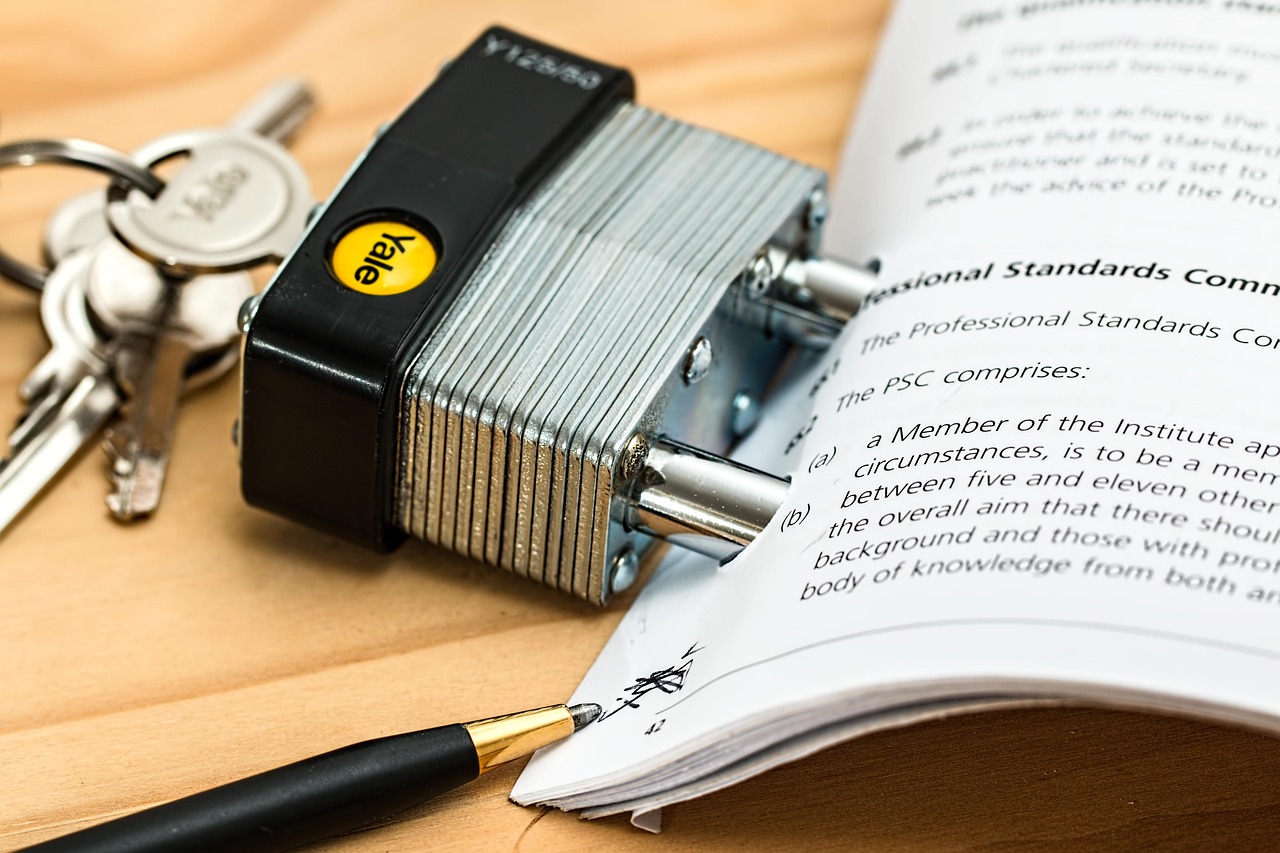
Using well-drafted NDA templates offers several significant benefits, especially for businesses that need to move quickly without compromising on legal protection. The primary advantage is the combination of speed, cost-effectiveness, and legal clarity. Instead of waiting days or weeks for a solicitor, you can generate a document in minutes.
Beyond efficiency, a good template ensures you cover all the essential legal bases. Key clauses included in most high-quality confidentiality agreement forms are:
- Identification of Parties: Clearly naming all individuals or companies involved in the agreement.
- Definition of Confidential Information: This is the most critical part of the NDA. It must specifically define what information is covered by the agreement. If it's too vague, it may be unenforceable. If it's too narrow, you might leave critical data unprotected.
- Obligations of the Recipient: This section outlines the recipient's duty to keep the information secret and not use it for any purpose other than what is explicitly permitted.
- Exclusions: Not all information can be kept confidential forever. This clause specifies what is not considered confidential, such as information that is already public knowledge or was independently developed by the recipient.
- Term of the Agreement: This defines how long the duty of confidentiality lasts. It can be a fixed period (e.g., 3-5 years) or, in some cases, indefinitely for trade secrets.
- Remedies for Breach: This clause outlines the consequences if one party breaks the agreement, which can include financial damages or court-ordered injunctions to stop further disclosure.
The main benefit is peace of mind. A formal, signed agreement creates a powerful deterrent against leaks and provides a clear legal path for recourse if a breach occurs. It signals that you take your intellectual property seriously, setting a professional tone for your business relationships from the very beginning.
How to Choose the Right NDA Template for Your Needs
Selecting the right option from the many non disclosure agreement templates available is crucial for ensuring your protection is adequate. A generic, one-size-fits-all document might not hold up if challenged, so careful consideration is needed. Here are the key factors to weigh when making your choice.
First, determine the direction of information flow. Do you need a unilateral or mutual NDA. A unilateral agreement is for when you are the only one disclosing sensitive information. A mutual agreement is necessary when both parties will be sharing confidential data with each other.
Choosing the wrong type can leave one party's information unprotected.
Next, consider the specific context and industry. A non disclosure form for a tech startup developing software will need different clauses than one for a manufacturer sharing design specifications. Some templates are designed for general use, while others are tailored for specific scenarios like employee onboarding, contractor agreements, or M&A discussions. Always look for a template that aligns closely with your use case.
Jurisdiction is another critical factor. Legal requirements can vary, so it's vital to use a template that is compliant with UK law. Using a template designed for the US, for example, might include clauses that are not enforceable in British courts. Always check that the template specifies its jurisdiction or is provided by a reputable UK-based source.
Finally, assess the complexity and value of the information you're protecting. For highly valuable trade secrets, a basic free template might be insufficient. You may need a more detailed agreement that includes specific clauses about returning or destroying information after the agreement terminates, or non-solicitation clauses to prevent a contractor from poaching your staff. In these high-stakes situations, using a premium, customisable template service is a wise investment.
Pro Tip: Before sending an NDA, read it from the recipient's perspective. If the definition of 'confidential information' is overly broad or the obligations are unreasonable, the other party may refuse to sign it, causing delays. A good NDA is fair and precise, protecting your interests without being unnecessarily restrictive.
Top 5 Non-Disclosure Agreement Templates Reviewed
Navigating the world of online legal documents can be confusing. To help, we've reviewed and ranked the top five sources for non disclosure agreement templates suitable for UK businesses, from comprehensive paid services to reliable free options.
1. LegalContracts
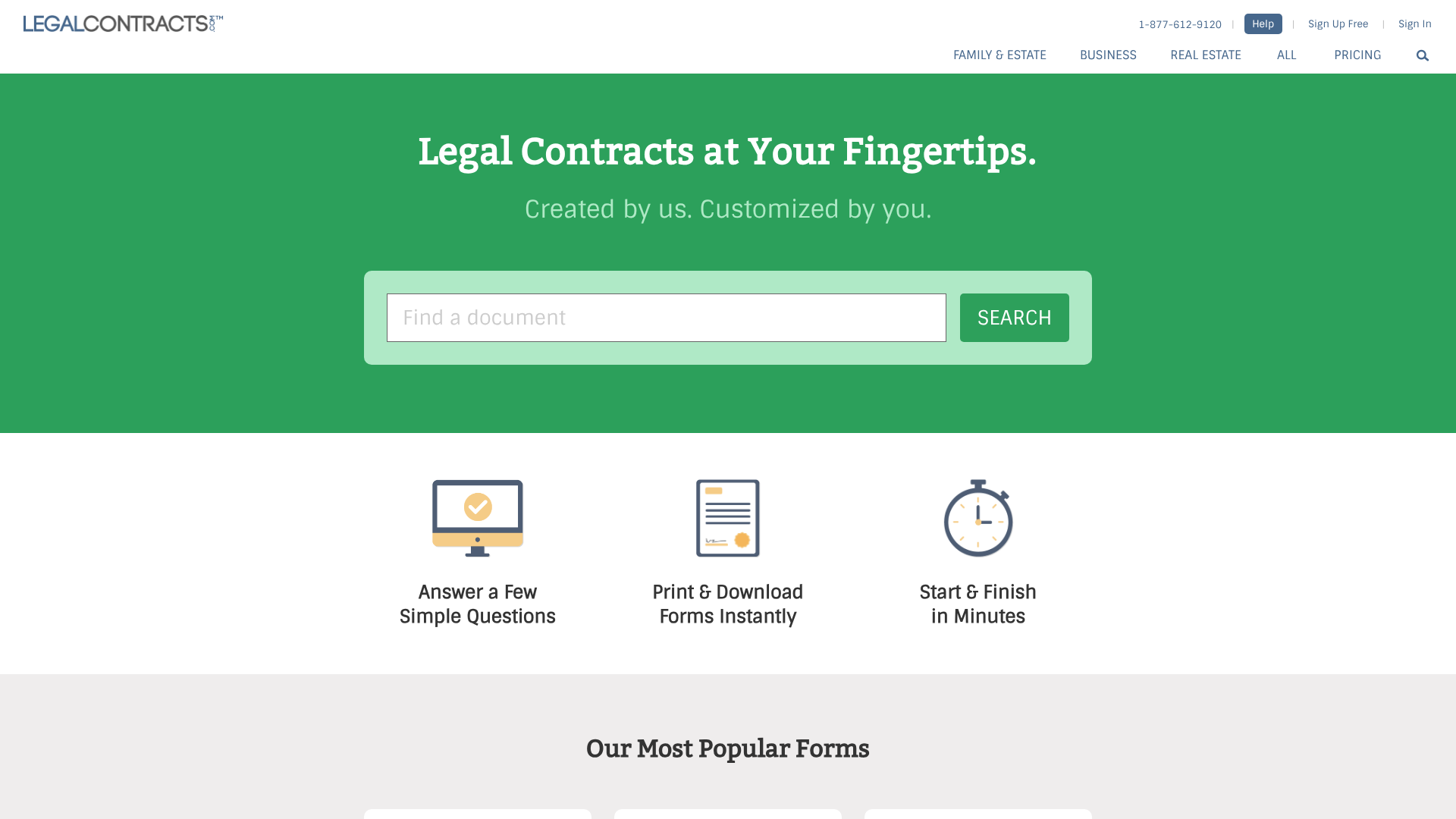
LegalContracts stands out for its intelligent, questionnaire-based approach. Instead of just giving you a static document to fill in, it guides you through a series of questions about your specific situation. Based on your answers, it generates a customised NDA tailored to your needs. This process helps ensure you've considered all the necessary details and results in a more robust and relevant agreement.
The platform is designed for users with no legal background, explaining legal terms in plain English as you go. It allows you to create both unilateral and mutual NDAs and covers a wide range of scenarios, making it highly versatile. The final document is professional and formatted for immediate use.
Pros
- Highly Customisable: The question-and-answer format creates a document tailored to your specific circumstances.
- User-Friendly: The process is simple and easy to follow, even for those unfamiliar with legal documents.
- Legally Sound: The templates are created by legal professionals and are designed to be enforceable.
Cons
- Subscription-Based: While you can create a document, you typically need a subscription or to pay a one-off fee to download and print it without a watermark.
- Can Be Slower: The guided process is thorough, which means it can take a bit longer than simply downloading a blank form.
2. LawDepot
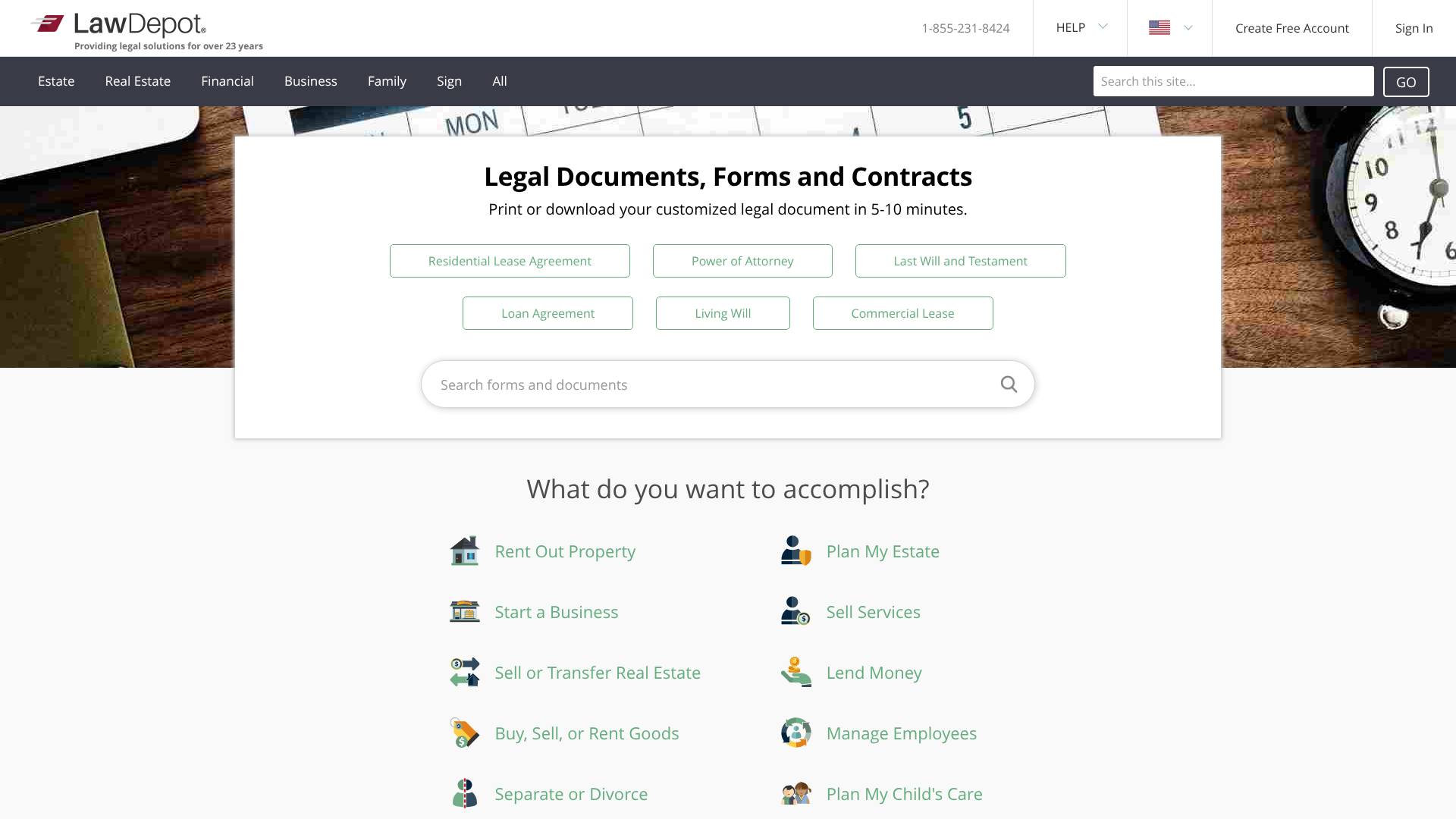
LawDepot is another major player in the online legal forms space and offers a very similar experience to LegalContracts. It also uses a step-by-step questionnaire to build a customised confidentiality agreement form. The platform is well-regarded for its extensive library of documents and its clear, straightforward process.
It is particularly good for those who need a reliable document quickly. The interface is clean, and the questions are easy to understand. LawDepot's templates are suitable for a wide variety of situations, from protecting business plans to safeguarding client lists. They offer a free trial, which allows you to create and download your first document for free.
Pros
- Easy to Use: The guided process simplifies the creation of a complex legal document.
- Comprehensive Options: Allows for detailed customisation, including specifying the governing law (important for UK businesses).
- Free Trial: You can often create your first document for free, which is a great way to test the service.
Cons
- Subscription Model: After the trial, continued access requires a subscription, which might not be cost-effective for infrequent users.
- Automatic Renewal: Some users have reported being caught by automatic subscription renewals if they forget to cancel the trial.
3. DocuSign
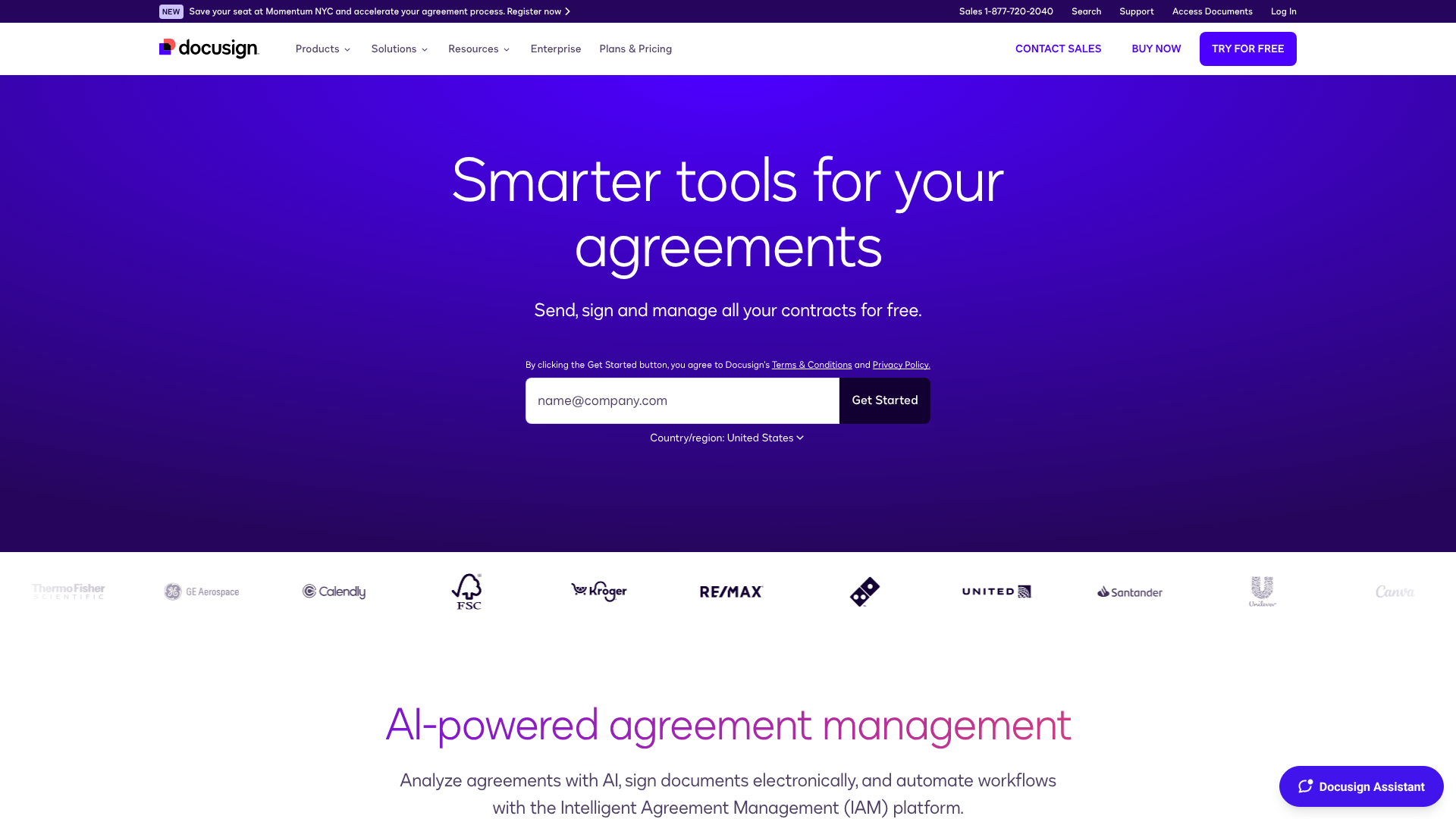
DocuSign is best known for its e-signature platform, but it also provides a library of common business document templates, including NDAs. The primary advantage of using DocuSign is the seamless integration of document creation and electronic signing. You can generate an NDA and send it for signature within a single, secure platform.
Their templates are more basic than those from LegalContracts or LawDepot. They are generally standard forms that you fill in, rather than being built from a questionnaire. However, for straightforward situations where the main goal is to get a signed agreement quickly and efficiently, DocuSign is an excellent choice. It streamlines the entire workflow from creation to execution.
Pros
- Integrated E-Signatures: The best option for managing the entire lifecycle of the agreement digitally.
- Efficiency: Very fast for creating and executing simple NDAs.
- Trusted Brand: DocuSign is a globally recognised and trusted platform for secure document handling.
Cons
- Less Customisation: The templates are more generic and offer fewer customisation options.
- Focused on Signing: The platform's main strength is the signature process, not the legal drafting itself.
4. GOV.UK Template
For businesses looking for a completely free and reliable option, the UK government's own website provides a sample confidentiality agreement. This template is part of a collection of resources designed to help businesses protect their intellectual property. As it comes from an official source, you can be confident that it is compliant with UK law.
This is a basic, no-frills template. It's provided as a downloadable document that you can edit. It's a great starting point for very simple, low-risk situations, such as initial discussions with a potential partner. However, it lacks the guidance and customisation of paid services and may require some legal knowledge to adapt correctly.
Pros
- Completely Free: No costs or subscriptions involved.
- Authoritative Source: Provided by the UK government, ensuring it's legally relevant for the UK.
- Simple and Clear: The language is straightforward and easy to understand.
Cons
- Very Basic: Lacks detailed clauses for complex situations.
- No Guidance: You are on your own to fill it out correctly, which carries some risk if you're not careful.
- May Not Be Sufficient: Not recommended for protecting high-value trade secrets or complex intellectual property.
5. Rocket Lawyer
Rocket Lawyer offers a service that blends the DIY document building of LawDepot with access to real lawyers. You can create an NDA using their document builder, and if you have questions, you can ask a lawyer through their platform. This hybrid model is excellent for those who want the affordability of a template but need the reassurance of professional legal advice.
The document creation process is straightforward, and the platform offers a good level of customisation. The key differentiator is the legal support. For a monthly fee, you get access to their document library plus the ability to get legal questions answered and have your documents reviewed.
Pros
- Access to Legal Advice: The option to ask a lawyer questions provides significant added value and peace of mind.
- Good Customisation: The document builder is robust and allows for detailed tailoring.
- Comprehensive Service: A good all-in-one solution for ongoing legal needs, not just a one-off NDA.
Cons
- Subscription Cost: The model is best suited for businesses with regular legal needs, as the subscription is more expensive than document-only services.
- Limited Free Access: Like others, a free trial is available but full features require a paid membership.
Comparison of Top NDA Template Providers
| Feature | LegalContracts | LawDepot | DocuSign | GOV.UK | Rocket Lawyer |
|---|---|---|---|---|---|
| Primary Use Case | Customised legal documents | Quick, guided legal forms | E-signature workflow | Basic, free agreements | DIY docs with legal help |
| Customisation Level | High | High | Low | Very Low | High |
| Ease of Use | Very Easy | Very Easy | Easy | Moderate | Easy |
| Pricing Model | Subscription / Pay-per-doc | Subscription (Free Trial) | Subscription | Free | Subscription |
| UK Law Specific? | Yes | Yes | General (adaptable) | Yes | Yes |
| Legal Support | No | No | No | No | Yes |
Understanding the Costs: Free vs. Paid NDA Forms

When searching for non disclosure forms, you'll quickly find both free and paid options. Understanding the difference is key to choosing the right level of protection for your business. The decision often comes down to a trade-off between cost and risk.
Free templates, like the one offered on the GOV.UK website, are an attractive option for startups and freelancers on a tight budget. They can be perfectly adequate for simple, low-stakes situations. For example, if you're having a preliminary chat with a potential collaborator and want to establish a baseline of confidentiality, a free template can suffice. The main advantage is obvious: there is no financial cost.
However, the risks associated with free templates can be significant. They are often generic and may not include clauses that are critical for your specific industry or situation. They lack any guidance, meaning you could fill them out incorrectly or omit crucial information without realising it. If a dispute arises, a poorly drafted or incomplete free NDA might be found to be unenforceable in court, leaving your sensitive information exposed.
Paid services, such as LegalContracts or Rocket Lawyer, mitigate these risks. While they require a fee, you are paying for more than just a document. You are paying for a guided process that helps you create a customised agreement tailored to your needs. These platforms are designed by legal professionals to be robust and compliant with current law.
The cost often includes the peace of mind that comes from knowing your agreement is comprehensive and built to be legally sound. For any situation involving high-value intellectual property, financial data, or long-term business strategy, the small investment in a paid service is a worthwhile insurance policy.
Common Pitfalls to Avoid When Using NDA Templates
While NDA templates are incredibly useful, they are not foolproof. There are several common pitfalls that can weaken your agreement or even render it unenforceable. Being aware of these issues can help you use templates effectively and avoid costly mistakes.
One of the most frequent errors is an overly broad or vague definition of "Confidential Information." Some templates use generic language that tries to cover everything. However, courts often look unfavourably on definitions that are too sweeping. Your definition should be as specific as possible about what is being protected. For example, instead of just saying "business information," specify "customer lists, financial projections, marketing strategies, and proprietary software source code."
Another red flag is an unreasonable duration. The term of the NDA—how long the confidentiality obligation lasts—should be appropriate for the type of information being shared. While some trade secrets might require perpetual confidentiality, most business information loses its value over time. A term of 3 to 5 years is common and generally considered reasonable.
An indefinite term for all information could be challenged as an unfair restraint on trade.
Be wary of templates that don't specify the governing law and jurisdiction. This clause determines which country's or state's laws will be used to interpret the agreement and where any legal disputes will be heard. For a UK business, you must ensure the agreement is governed by the laws of England and Wales, Scotland, or Northern Ireland, as appropriate. Without this clause, you could face a complicated and expensive international legal battle.
Finally, don't just download a template and sign it. You must read and understand every clause. If there's something you don't understand, or if a clause seems irrelevant or unfair, it needs to be addressed. Using a template doesn't absolve you of the responsibility to know what you're signing.
Frequently Asked Questions (FAQ)
Can I write my own non-disclosure agreement?
Yes, you can technically write your own NDA, and using a template is a form of doing that. However, creating one entirely from scratch without a legal background is risky. For a contract to be legally binding, it must contain specific elements like offer, acceptance, consideration, and an intention to create legal relations. Missing any of these, or using ambiguous language, could make your agreement unenforceable.
Using a reputable template is a much safer approach.
Does an NDA need to be notarised to be legally binding in the UK?
No, an NDA does not need to be notarised to be legally binding in the UK. The key requirement for it to be a valid contract is that it is signed by the involved parties (known as execution). As long as the agreement is clear, fair, and signed, it is generally enforceable. Notarisation is a practice more common in other legal systems, particularly in the US for certain types of documents.
What are the three main types of NDA?
The three common classifications for NDAs are based on the parties and the information involved. The first two are the most common: Unilateral (one-way) and Mutual (two-way). A third, less common type is the Multilateral NDA, which involves three or more parties where at least one party is disclosing information and the others agree to protect it. This can be useful in complex negotiations involving multiple potential partners.
What should be avoided in an NDA?
You should avoid overly broad and vague definitions of confidential information, as courts may not enforce them. Also, avoid unreasonable time restrictions; the duration of confidentiality should be appropriate for the information shared. Finally, avoid any clauses that would be illegal or against public policy, as these will be struck down by a court and could invalidate the entire agreement.
Can you create an NDA without a lawyer?
Yes, you can create an NDA without hiring a solicitor, especially for standard business situations. This is the primary purpose of services like LegalContracts and LawDepot. These platforms are designed to guide you through the process of creating a legally sound document. However, for extremely high-stakes situations involving complex intellectual property or multi-million-pound deals, consulting with a solicitor is always recommended.
Do NDAs hold up in court?
Yes, a well-drafted NDA is a legally enforceable contract and will hold up in court. To be enforceable, the agreement must be reasonable in its scope, duration, and geographical limitations. It must clearly define the confidential information and not be an unfair restraint on a person's ability to work. Courts will generally enforce NDAs that are designed to protect legitimate business interests.
Final Thoughts
In today's competitive business environment, protecting your confidential information is non-negotiable. Non disclosure agreement templates provide an accessible, affordable, and efficient tool for businesses of all sizes to safeguard their most valuable assets. From initial conversations with contractors to detailed negotiations with investors, having a solid NDA in place sets a professional tone and provides a critical layer of legal security.
While free options can serve a purpose for simple, low-risk scenarios, the guided, customisable approach offered by paid services provides superior protection and peace of mind. They help you avoid common pitfalls and create a document that is tailored to your specific needs, increasing the likelihood that it will be enforceable if ever challenged.
If you're looking for a reliable and user-friendly way to create a customised NDA that is compliant with UK law, a service like LegalContracts is an excellent choice. Its intelligent, step-by-step process ensures you cover all the necessary bases, allowing you to focus on growing your business with confidence.