
Best Time to Send Email Campaigns: A Marketer's Guide to Higher Opens
Crafting the perfect email is only half the battle. You can have the most compelling copy and a stunning design, but if it lands in a subscriber's inbox at the wrong moment, it’s likely to be ignored, deleted, or buried under a pile of other messages. Finding the best time to send email campaigns is a critical lever for improving performance, yet it's one that many marketers overlook. It’s the difference between a campaign that drives results and one that falls flat.
- What You'll Learn
- Unpacking the "Best Time": Why Email Campaign Timing Matters
- The Generally Accepted "Best" Times to Send Emails
- How to Find Your Optimal Email Send Time
- Industry-Specific Email Campaign Timing Tips
- The Pros and Cons of Different Sending Strategies
- Sending on Peak Days (Tuesday/Thursday)
- Sending on Off-Peak Days (Weekends/Monday)
- The Cost of Getting It Wrong
- Advanced Timing Tools and Techniques
- Frequently Asked Questions (FAQ)
- What is the best time to send an email campaign?
- Is it better to send an email at 8am or 9am?
- What is the 80/20 rule in email marketing?
- What should be avoided in email marketing?
- What is the rule of 7 in email marketing?
- Final Thoughts
This guide moves beyond generic advice to give you a data-backed framework for discovering the optimal send time for your unique audience. We'll explore industry benchmarks, the psychology behind subscriber behaviour, and the practical steps you can take to ensure your emails get the attention they deserve. Understanding when to send emails isn't about finding a single magic hour; it's about developing a strategy that aligns with your audience's daily rhythm.
What You'll Learn
- General Benchmarks: The widely accepted best days to send emails are Tuesday and Thursday, with the most popular time being around 10:00 AM.
- Audience is Key: The universal 'best time' doesn't exist. Your optimal email send time depends entirely on your specific audience, their habits, and your industry.
- Data Over Guesswork: The most reliable way to find your perfect send time is by analysing your own campaign data and running consistent A/B tests.
- Tools Can Help: Modern email marketing platforms offer features like send-time optimisation and detailed analytics to automate the process and provide clear insights.
- Context Matters: For automated emails, like welcome messages or abandoned cart reminders, the best time is immediately after the user's action, not a specific time of day.
Unpacking the "Best Time": Why Email Campaign Timing Matters
At its core, identifying the optimal email send time is about maximising visibility. You want your message to arrive when your subscribers are most receptive and actively checking their inboxes. An email sent at 10 AM on a Tuesday morning faces a different environment than one sent at 11 PM on a Saturday night. The first arrives during a peak productivity window, while the second might be lost in the weekend shuffle or seen as an after-hours intrusion.
Getting the timing right delivers several key benefits that directly impact your marketing ROI. The most immediate effect is on your open rates. An email that sits at the top of the inbox when a user logs in is far more likely to be opened than one buried on the second page. This initial engagement has a powerful cascading effect on all other metrics.
A higher open rate naturally leads to a higher click-through rate (CTR). More people opening your email means more people have the opportunity to click your links, visit your landing pages, and engage with your call-to-action. Ultimately, this translates into more conversions, whether your goal is driving sales, generating leads, or increasing webinar sign-ups. Conversely, consistently poor timing can lead to lower engagement, which can harm your sender reputation and increase the chances of your emails landing in the spam folder.
The Generally Accepted "Best" Times to Send Emails
While the golden rule is to test for your own audience, industry-wide data provides an excellent starting point. Decades of email marketing have revealed clear patterns in subscriber behaviour. These benchmarks are not absolute laws but are foundational email campaign timing tips that can guide your initial strategy before you begin collecting your own data.
The Best Days of the Week
Studies consistently show that mid-week is the sweet spot for email engagement. Here's a breakdown of how each day typically performs:
- Tuesday: Often hailed as the best day to send emails. By Tuesday, people have cleared the Monday morning backlog and have settled into their work routine. They are actively engaged with their inbox but not yet overwhelmed by end-of-week pressures.
- Thursday: A very close second to Tuesday. People are often wrapping up projects and planning for the weekend, making them receptive to new information, offers, and content. It's a peak day for engagement before the Friday slowdown begins.
- Wednesday: A reliable and solid choice. It captures audiences in the middle of their work week when routines are stable. While it may not always outperform Tuesday or Thursday, it consistently delivers strong results.
- Monday: Generally considered a poor choice. Inboxes are flooded with emails that accumulated over the weekend, and people are busy planning their week. Your campaign is more likely to be deleted in a mass clean-up.
- Friday: Engagement tends to drop off as the day progresses. People are focused on finishing their work and looking forward to the weekend. If you must send on a Friday, aim for the morning.
- Saturday & Sunday: Typically the lowest engagement days, especially for B2B audiences. However, they can be highly effective for B2C brands in sectors like retail, entertainment, and hobbies, where subscribers have more leisure time to browse.
The Best Times of the Day
Once you've chosen a day, the specific hour you send can make a significant difference. The most popular send times align with common breaks in the typical workday.
- 10:00 AM: This is the most popular and often most effective send time. By mid-morning, most people have had their first coffee, dealt with urgent tasks, and are taking a short break to check their emails.
- 2:00 PM: The post-lunch dip in productivity is a prime time for email engagement. Many people use this period to catch up on non-urgent communications, making them more likely to open and read marketing messages.
- 8:00 AM – 9:00 AM: This window can capture people checking their phones during their morning commute or as they first settle in at their desks. It works best for concise, mobile-friendly emails that are easy to scan quickly.
- 6:00 PM – 8:00 PM: For B2C campaigns, the evening can be a goldmine. People are relaxing at home, browsing on their tablets or phones, and are often more receptive to promotional content, especially from e-commerce and lifestyle brands.

How to Find Your Optimal Email Send Time
General benchmarks are a fantastic starting point, but the true path to maximising engagement lies within your own data. Your audience is unique, and their habits may not align perfectly with global averages. A B2B software company targeting executives will have a vastly different optimal send time than a B2C fashion brand targeting university students. Here’s a step-by-step process to pinpoint the perfect timing for your subscribers.
Step 1: Analyse Your Audience
Before you even look at your analytics, think critically about who you're trying to reach. Creating a simple persona can reveal powerful insights into their daily routines.
- B2B vs. B2C: This is the most significant distinction. B2B audiences are almost exclusively active during standard business hours (e.g., 9 AM – 5 PM, Monday to Friday). B2C audiences have much more varied schedules, with evenings and weekends often being peak engagement times.
- Demographics and Lifestyle: Consider the daily life of your subscriber. A campaign for new parents might perform best late at night after the children are asleep. A message for university students could see high engagement mid-afternoon between lectures.
- Time Zones: If you have a global or national audience, sending a campaign at 10 AM in London means it arrives at 5 AM in New York. Most modern email platforms allow you to segment your audience by time zone or use features that automatically deliver the email at the same local time for everyone, which is crucial for maintaining consistent engagement.
Step 2: Dive Into Your Own Data
Your past campaign performance is a treasure trove of information. Nearly every email marketing service provides detailed reports that can help you identify patterns. Look for an "opens by time of day" or similar report.
When reviewing your analytics, don't just look at open rates. Pay close attention to click-through rates and conversion rates as well. You might find that a specific time slot generates fewer opens but a higher number of clicks and sales, making it more valuable for your business goals. Platforms like ActiveCampaign offer sophisticated reporting that visualises these trends, making it easy to spot when your subscribers are most active.
Pro Tip: Look for trends over a longer period, such as the last 3-6 months. A single campaign's results can be an anomaly, but consistent patterns over dozens of sends reveal true audience behaviour.
Step 3: Run A/B Tests
Once you have a hypothesis based on your audience profile and past data, it's time to test it scientifically. A/B testing, or split testing, is the most reliable method for determining when to send emails.
The process is straightforward:
- Form a Hypothesis: Start with a clear question, such as "Will our open rate be higher if we send at 2 PM instead of 10 AM on a Thursday?"
- Segment Your List: Take a statistically significant portion of your subscriber list and split it into two equal, random groups (Group A and Group B). 3.
Send the Campaign: Send the exact same email to both groups, but at different times. Group A receives it at 10 AM, and Group B receives it at 2 PM. 4. Analyse the Results: After 24-48 hours, compare the open rates, click-through rates, and conversion rates for both groups.
The winning time is your new benchmark.
Many email marketing platforms, including GetResponse, have built-in A/B testing features that simplify this process. Some even offer a "Perfect Timing" feature that uses historical data to automatically send the email at the optimal time for each individual subscriber.
Industry-Specific Email Campaign Timing Tips
While individual testing is paramount, different industries have established their own best practices based on the typical behaviour of their target customers. Use these as another layer of insight when forming your testing hypotheses.
For B2B & SaaS
Business-to-business communication lives and dies by the traditional work week. The audience is professionals who are focused on their jobs. The best time to reach them is squarely within business hours.
- Best Days: Tuesday, Wednesday, Thursday.
- Best Times: 10 AM to 12 PM. This window avoids the Monday morning rush and the Friday afternoon checkout.
- Avoid: Weekends and evenings are almost always ineffective. Emails sent outside of work hours are likely to be ignored or buried by the next morning.
For E-commerce & Retail (B2C)
B2C audiences are driven by personal schedules, moods, and even pay cycles. Timing should align with leisure and browsing habits.
- Best Days: Friday can be very strong, as people plan weekend shopping. Saturday and Sunday also perform well for browsing and impulse buys.
- Best Times: Lunch breaks (12 PM – 2 PM) and evenings (6 PM – 9 PM) are prime slots. This is when people are relaxing and scrolling on their devices.
- Consider: Align major promotions with common paydays, such as the end of the month, to capitalise on increased spending power.
For Non-Profits
Donation appeals and awareness campaigns often rely on emotional connection, so timing should reflect moments of reflection.
- Best Days: Mid-week (Tuesday, Wednesday, Thursday) is effective for informational content and event invitations.
- Best Times: Late afternoon (3 PM – 4 PM) can capture attention as the workday winds down. Storytelling-heavy emails can also perform well on weekend mornings.
- Key Insight: Urgency is a major driver. Send final donation reminders towards the end of the day and end of the week to create a sense of immediacy.
For Media & Publishing
For blogs, news outlets, and content creators, timing is about integrating into the subscriber's daily information diet.
- Best Times: Morning newsletters (7 AM – 9 AM) are perfect for the commute. Lunchtime roundups (12 PM) offer a midday break. Evening summaries (6 PM – 7 PM) are great for those catching up on the day's events.
- Strategy: Consistency is key. If you send a daily newsletter, deliver it at the same time every day to build a habit with your readers.
The Pros and Cons of Different Sending Strategies
Choosing your send time isn't just about picking the most popular slot; it's a strategic decision with trade-offs. Understanding the advantages and disadvantages of different approaches can help you make a more informed choice.
Sending on Peak Days (Tuesday/Thursday)
This is the most common strategy, aiming to reach the largest possible audience when they are most active.
- Pros: You have the highest probability of reaching subscribers when they are actively checking their email. This strategy is based on solid, aggregated data and is a safe bet for most businesses.
- Cons: This is when everyone else is sending their emails too. Your message will face the most intense competition in the inbox, making a compelling subject line absolutely essential to stand out.
Sending on Off-Peak Days (Weekends/Monday)
This contrarian approach aims to avoid the inbox rush and capture attention when there's less noise.
- Pros: With fewer emails arriving, yours has a much better chance of being seen. This can be particularly effective for B2C brands whose products align with weekend activities or hobbies.
- Cons: The potential audience is smaller. Many people, especially in B2B, don't check their email regularly over the weekend. You risk your message being completely missed or buried by the time Monday morning arrives.
The Cost of Getting It Wrong
Choosing the wrong send time isn't just a missed opportunity; it can have tangible negative consequences for your email marketing programme. When your emails consistently arrive at inconvenient times, subscribers are more likely to ignore them. This trains their email client (like Gmail or Outlook) to view your messages as low-priority, increasing the chances they'll be filtered into the 'Promotions' tab or even the spam folder.
This lack of engagement damages your sender reputation, which is a critical score that internet service providers use to judge your trustworthiness. A poor reputation leads to lower deliverability across the board, meaning fewer of your emails will reach the primary inbox in the future. The ultimate cost is a disengaged list, lower ROI on your marketing efforts, and a higher rate of unsubscribes.
Advanced Timing Tools and Techniques
Once you've mastered the basics of testing and analysis, you can explore more advanced features and strategies to further refine your timing.
Send Time Optimisation (STO)
Many modern email marketing platforms now offer Send Time Optimisation (STO). This powerful feature uses machine learning to analyse the historical engagement data of each individual subscriber on your list. Instead of sending a campaign to everyone at 10 AM, the system delivers the email to each person at the specific time they are most likely to open it.
For example, Subscriber A might always open emails around 8:30 AM, while Subscriber B is more active at 1:00 PM. An STO feature will automatically schedule the delivery for those unique times. This level of personalisation can provide a significant lift in open rates. Platforms like Selzy and ActiveCampaign incorporate this technology to take the guesswork out of timing.
Triggered and Automated Emails
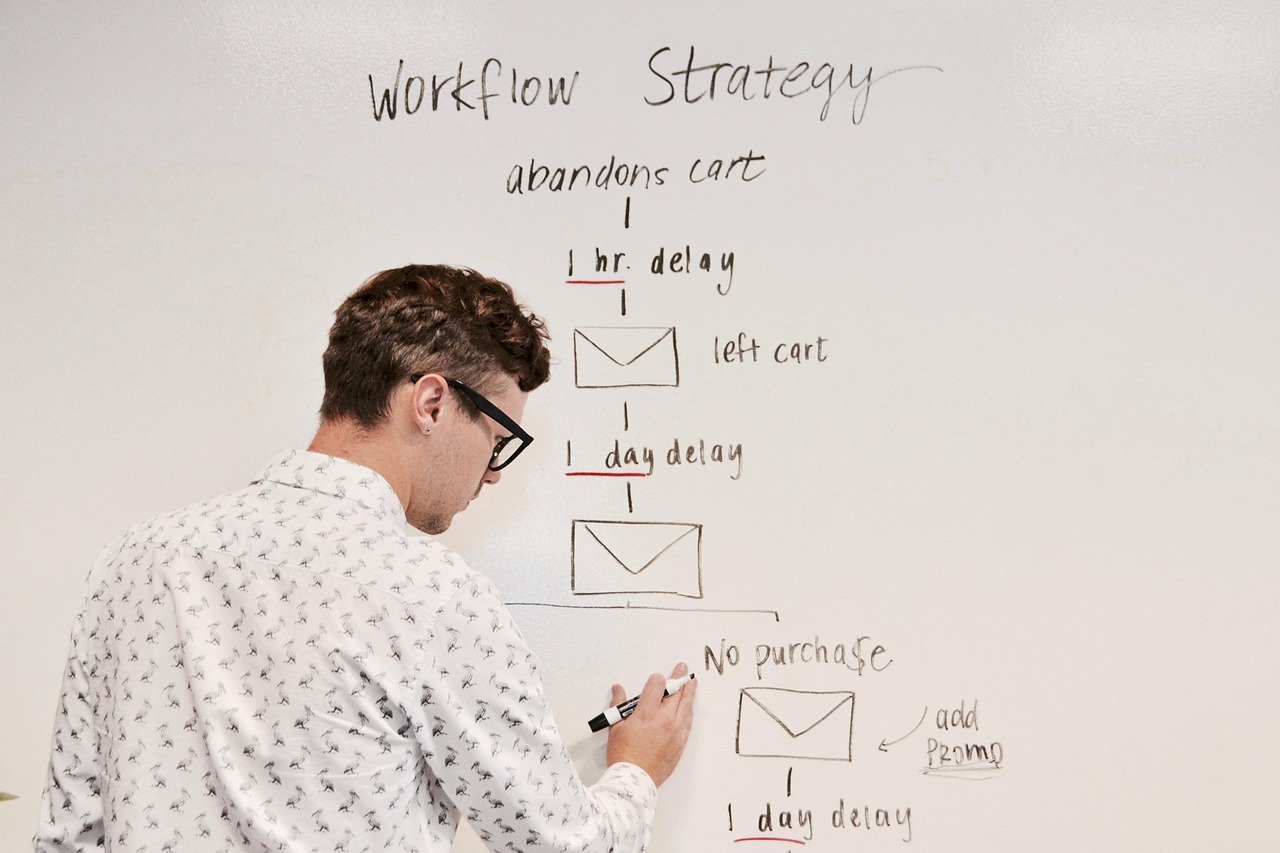
It's important to distinguish between one-off campaigns and automated emails. For messages in an automation sequence—such as a welcome series, an abandoned cart reminder, or a purchase confirmation—the concept of a 'best time' changes. The timing is dictated by the user's action, not the clock.
- Welcome Email: Should be sent immediately after a user subscribes, while your brand is still top-of-mind.
- Abandoned Cart Email: Typically sent 1-4 hours after a user leaves your site without purchasing.
- Post-Purchase Email: Sent immediately to confirm the order and provide shipping details.
In these cases, immediacy and relevance are far more important than the specific time of day.
Considering Seasonality
Email engagement isn't static throughout the year. As noted by marketing expert Nancy Harhut, seasonality plays a huge role. For example, she points out that the first two weeks of January often see a major dip in response rates as people recover from the holidays and get back into their routines. Waiting until late January can result in a significant increase in opens.
Similarly, engagement patterns shift dramatically around major holidays like Black Friday or Christmas. During these periods, inboxes are incredibly crowded, and timing becomes even more critical. Be aware of these seasonal trends and adjust your sending strategy accordingly.
Pro Tip: Don't just test different times of the day; test different days of the week. You might discover that a 7 PM send on a Sunday outperforms your 10 AM send on a Tuesday, especially if you're in the B2C space.
Frequently Asked Questions (FAQ)
What is the best time to send an email campaign?
The most widely accepted best time to send an email campaign is mid-week, specifically on Tuesdays and Thursdays, around 10:00 AM. This is when people have settled into their work week and are actively checking their inboxes. However, this is just a general guideline. The absolute best time for your campaign depends on your specific audience, industry, and the content of your email.
The most effective approach is to use this benchmark as a starting point and then conduct A/B tests to find the unique sweet spot for your subscribers.
Is it better to send an email at 8am or 9am?
Choosing between 8 AM and 9 AM depends on your audience's morning routine. An 8 AM send time is excellent for catching people during their commute, making it ideal for mobile-optimised, easily scannable content like news updates. A 9 AM send time targets people as they are settling in at their desks and starting their workday. It can be more effective for emails that require a bit more focus or a click-through to a desktop site.
For B2B audiences, 9 AM is often slightly better as it avoids the initial rush of clearing urgent overnight messages.
What is the 80/20 rule in email marketing?
The 80/20 rule, also known as the Pareto Principle, is a guideline for content strategy in email marketing. It suggests that 80% of your emails should provide value to your subscribers, such as educational content, helpful tips, entertainment, or exclusive insights. The remaining 20% of your emails can be directly promotional, focusing on selling your products or services. This approach helps build trust and keeps your audience engaged, making them more receptive when you do send a sales-focused message.
What should be avoided in email marketing?
Several practices should be avoided to maintain a healthy and effective email marketing programme. Avoid using misleading or spammy subject lines, as this erodes trust and hurts deliverability. Don't send emails without clear personalisation; messages that feel generic are easily ignored. You should also avoid sending to unengaged subscribers for long periods, as this can harm your sender reputation.
Finally, never make it difficult for people to unsubscribe. A clear and easy unsubscribe process is required by law and is a sign of a trustworthy brand.
What is the rule of 7 in email marketing?
The Rule of 7 is a classic marketing principle which states that a prospective customer needs to see or hear a marketing message at least seven times before they take action and make a purchase. In email marketing, this concept underscores the importance of consistent communication and automated follow-up sequences. A single email is rarely enough to drive a conversion. You need a series of touchpoints—through welcome series, lead nurturing campaigns, and regular newsletters—to build familiarity, trust, and guide a subscriber towards a decision.
Final Thoughts
Determining the best time to send email campaigns is a continuous process of learning and refinement, not a one-time decision. While industry benchmarks point towards mid-week, mid-morning sends as a reliable starting point, the ultimate answer lies hidden within your own audience's behaviour. By embracing a data-driven approach—analysing your past performance, understanding your subscribers' routines, and consistently A/B testing—you can move beyond guesswork and make strategic decisions that significantly boost your email marketing ROI.
Don't be afraid to experiment with unconventional times. A contrarian strategy might just be what you need to cut through the noise of a crowded inbox. The goal is to find the unique intersection of when your audience is most receptive and when the competition is lowest. The tools and data to find this sweet spot are more accessible than ever.
If you're ready to take the guesswork out of your campaigns, consider using a platform with advanced analytics and send-time optimisation. Tools like ActiveCampaign and GetResponse can provide the data you need to make smarter, more effective timing decisions for every email you send.