
Donor Management Software Comparison Chart for Non-Profits: Choose the Right Tool in 2026
Choosing the right software to manage your supporters can feel overwhelming. With dozens of options available, each promising to streamline your workflow and boost donations, it's difficult to know where to start. A detailed donor management software comparison chart is one of the most effective ways to cut through the noise, allowing you to see exactly how different platforms stack up. This guide provides that clarity, breaking down the essential features, pricing models, and top contenders to help your non-profit make an informed decision that supports your mission for years to come.
- What to Know
- What Exactly is a Donor Management Software Comparison Chart?
- The Core Features to Compare in Donor Management Tools
- Donor Database & Contact Management
- Donation Processing & Tracking
- Communication & Engagement Tools
- Reporting & Analytics
- How to Choose the Right Donor Software for Your Organisation
- Step 1: Assess Your Needs and Budget
- Step 2: Consider Your Team's Technical Skill
- Step 3: Evaluate Scalability
- Step 4: Check for Support and Training Options
- Donor Software Comparison: Top Platforms for 2026
- The Comprehensive Donor Management Software Comparison Chart
- 1. Bloomerang: Best for Donor Retention
- 2. DonorPerfect: Best for Growing Non-Profits
- 3. Little Green Light: Best for Small Non-Profits on a Budget
- 4. Fundraising.com: Best for Integrated Fundraising Campaigns
- 5. VolunteerMark: Best for Volunteer-Centric Organisations
- Understanding Pricing Models and Hidden Costs
- Frequently Asked Questions (FAQ)
- What is the difference between a CRM and donor management software?
- Is there free donor management software?
- How much should a small non-profit spend on donor software?
- What is the most important feature in a donor management tool?
- Final Thoughts: Making Your Decision
Finding the right system isn't just about technology; it's about building stronger, more meaningful relationships with the people who believe in your cause. The right tool centralises crucial information, automates repetitive tasks, and provides the insights you need to engage your community effectively. Let's dive into how you can compare donor software and select the perfect fit for your organisation's unique needs.
What to Know
- Centralised Data is Key: The primary benefit of any donor management tool is creating a single source of truth for all supporter information, from contact details and donation history to communication logs and event attendance.
- Compare Core Features: When evaluating options, focus on essential features like contact management, donation processing, reporting capabilities, and integrated communication tools. These form the backbone of any effective system.
- Budget Accordingly: Pricing structures vary significantly, from affordable monthly plans for small charities to complex enterprise-level subscriptions. Always factor in potential hidden costs like payment processing fees or charges for premium support.
- Scalability Matters: Choose a solution that can grow with your non-profit. Consider contact limits, feature tiers, and whether the platform can support more complex fundraising strategies as your organisation expands.
What Exactly is a Donor Management Software Comparison Chart?
A donor management software comparison chart is a visual tool designed to simplify the complex process of selecting a new platform. It lays out the key attributes of various software options in a structured, side-by-side format, typically a table. This allows non-profit leaders, fundraisers, and administrators to quickly assess and contrast different systems based on a consistent set of criteria.
Instead of navigating dozens of websites and sales demos just to find basic information, a comparison chart organises everything in one place. It typically includes columns for features, pricing, target audience, and integration capabilities. This direct comparison makes it much easier to spot the differences that matter most to your organisation.
For example, one platform might excel at automated email campaigns, while another offers superior volunteer management. A chart immediately highlights these strengths and weaknesses. It transforms an often chaotic research project into a methodical evaluation, saving you valuable time and resources that can be better spent on your mission.
The Core Features to Compare in Donor Management Tools
When you start your donor software comparison, you'll notice a long list of features. To avoid getting lost in the details, focus on the core functionalities that will have the biggest impact on your daily operations and fundraising success. These are the non-negotiables that every good system should handle well.
Donor Database & Contact Management
This is the heart of any donor management system. It's more than just a digital address book; it's a comprehensive record of every interaction with your supporters. Look for the ability to create detailed donor profiles that track contact information, giving history, relationships with other supporters, and communication preferences. A powerful feature to look for is segmentation, which allows you to group contacts based on criteria like donation amount, frequency, or campaign engagement. This enables highly personalised communication.
Donation Processing & Tracking
Your software should make it as easy as possible for people to give. This means offering customisable online donation forms that are simple to embed on your website. Key features include support for one-off and recurring donations, pledge management for tracking future commitments, and the ability to handle different payment methods. The system should also automatically generate tax receipts and thank-you messages, saving your team countless hours of administrative work.
Communication & Engagement Tools
Building relationships requires consistent and meaningful communication. Many donor management tools include built-in email marketing features, allowing you to send newsletters, campaign updates, and appeals directly from the platform. This is incredibly efficient because you can use the segmentation features of your database to target the right message to the right audience. Some platforms also offer integrations for direct mail campaigns or SMS messaging, providing a multi-channel approach to engagement.
Reporting & Analytics
Data is crucial for understanding what's working and what isn't. Your software should provide clear, easy-to-understand reports and dashboards. Essential reports include fundraising performance over time, donor retention rates, campaign effectiveness (ROI), and LYBUNT/SYBUNT (Last Year But Unfortunately Not This/Some Year But Unfortunately Not This) lists. These insights help you make strategic decisions, refine your fundraising efforts, and demonstrate your impact to your board and stakeholders.

Pro Tip: Don't overlook integrations. The ability to connect your donor management software with other tools you already use, like accounting software (e.g., Xero, QuickBooks) or your main email platform (e.g., Mailchimp), can create a much more efficient workflow and prevent data silos.
How to Choose the Right Donor Software for Your Organisation

Selecting the right platform is a strategic decision that will affect your organisation for years. A systematic approach ensures you choose a tool that not only meets your current needs but also supports your future growth. Follow these steps to guide your decision-making process.
Step 1: Assess Your Needs and Budget
Before you even look at a single piece of software, look inward. Gather your team and create two lists: 'must-have' features and 'nice-to-have' features. Your must-haves are the core functions you cannot operate without, such as online donation processing or donor segmentation. Nice-to-haves might include things like event management or grant tracking.
Next, establish a realistic budget. How much can you afford to spend per month or per year? Remember to account for potential one-time setup fees and ongoing costs like payment processing. Having a clear budget will immediately narrow down your options and prevent you from wasting time on platforms you can't afford.
Step 2: Consider Your Team's Technical Skill
A powerful tool is useless if your team finds it too complicated to use. Be honest about the technical comfort level of your staff and volunteers. Is the user interface intuitive and user-friendly? Will it require extensive training? Many vendors offer free trials or live demos—use them. This is the best way to get a feel for the software's day-to-day usability.
Step 3: Evaluate Scalability
Your non-profit aims to grow, and your software should be able to grow with you. Examine the pricing tiers and feature sets. If your database of supporters doubles in size next year, will the software still be affordable? Does the platform offer more advanced features in higher-tier plans that you might need in the future? Choosing a scalable solution prevents the costly and disruptive process of migrating to a new system down the line.
Step 4: Check for Support and Training Options
When something goes wrong or you can't figure out a feature, you'll need reliable support. Investigate what kind of customer support each vendor offers. Is it limited to email, or can you get help via phone or live chat? What are their support hours? Also, look for comprehensive training resources like a knowledge base, video tutorials, and webinars. Good support and training are critical for successful adoption and long-term value.
Donor Software Comparison: Top Platforms for 2026
With the key features and selection criteria in mind, it's time to compare donor software options. We've analysed several leading platforms, including industry favourites and specialised tools, to give you a clear overview. Below is our comprehensive donor management software comparison chart, followed by detailed reviews of each platform.
The Comprehensive Donor Management Software Comparison Chart
| Feature | Bloomerang | DonorPerfect | Little Green Light | Fundraising.com | VolunteerMark |
|---|---|---|---|---|---|
| Best For | Donor Retention | Growing Non-Profits | Small Non-Profits | Campaign Management | Volunteer Coordination |
| Pricing Model | Contact-Based Tiers | Contact-Based Tiers | Contact-Based Tiers | Platform Fee | Tiered (Volunteers) |
| Core CRM | Yes | Yes | Yes | Limited | No (Specialised) |
| Donation Forms | Yes | Yes | Yes | Yes | No |
| Reporting | Advanced | Highly Customisable | Standard | Campaign-Specific | Volunteer-Specific |
| Email Marketing | Yes | Yes | Yes | Basic | Yes |
| Volunteer Management | Add-on | Add-on | Basic | No | Yes (Core Focus) |
1. Bloomerang: Best for Donor Retention
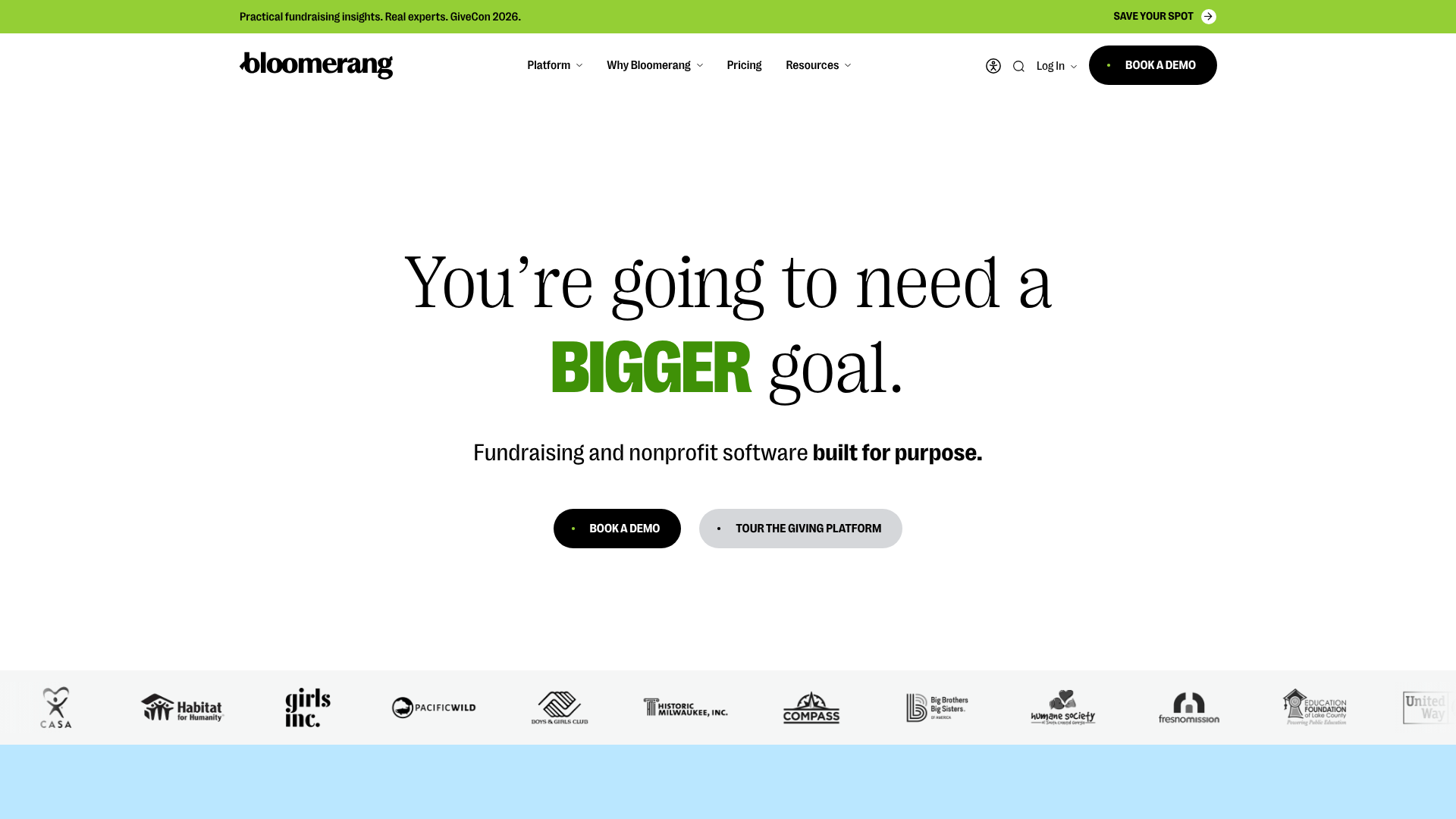
Bloomerang is designed around the principle of donor retention, a critical metric for long-term sustainability. Its standout feature is an interactive dashboard that displays a 'donor engagement score' for each contact. This score, based on a proprietary algorithm, helps you quickly identify your most engaged supporters and those at risk of lapsing, allowing you to focus your relationship-building efforts where they'll have the most impact.
The platform's interface is clean and intuitive, making it one of the easier systems to learn. It integrates email marketing, donation processing, and reporting into a single, cohesive package. Bloomerang's reporting tools are particularly strong, offering clear visualisations of key metrics like retention rate and fundraising progress. It's an excellent choice for organisations that want to move beyond simple transaction tracking and focus on building lasting donor loyalty.
Pros
- Excellent focus on donor engagement and retention metrics.
- User-friendly interface that is easy for teams to adopt.
- Robust reporting and analytics capabilities.
Cons
- Can be more expensive than some competitors, especially for larger contact lists.
- Some advanced features may require higher-tier plans.
2. DonorPerfect: Best for Growing Non-Profits
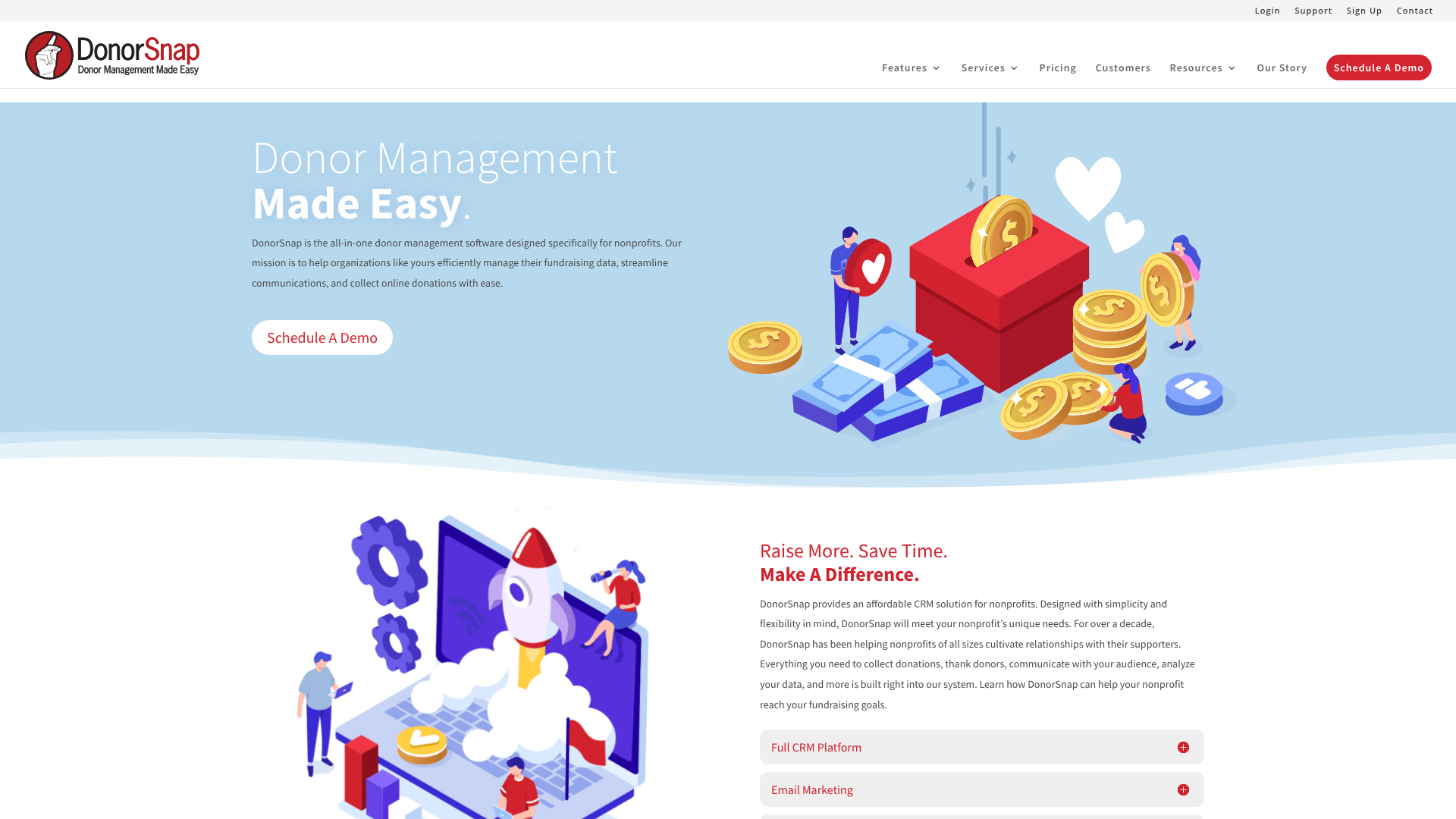
DonorPerfect is a highly flexible and customisable platform that can adapt to the needs of a wide range of non-profits. It's a true workhorse, offering a vast array of features for fundraising, reporting, and donor management. One of its greatest strengths is its ability to be tailored to your specific workflow with user-defined fields and customisable report templates.
This platform boasts an extensive library of integrations, connecting with services like QuickBooks, Constant Contact, and a wide variety of payment processors. This makes it a great choice for organisations that already have a set of tools they like to use. While its sheer number of features can present a steeper learning curve, it offers the power and scalability that growing non-profits need to manage increasing complexity.
Pros
- Highly customisable fields and reports.
- Extensive integration options with other popular software.
- Scalable pricing and feature sets that can grow with your organisation.
Cons
- The interface can feel dated and less intuitive than more modern platforms.
- The number of features can be overwhelming for small teams or new users.
3. Little Green Light: Best for Small Non-Profits on a Budget
Little Green Light (LGL) has earned a loyal following among small to mid-sized non-profits for one simple reason: it offers powerful, essential features at an incredibly affordable price point. LGL provides all the core functionality you need—contact management, donation tracking, mailings, and reporting—without the complexity or high cost of larger systems.
Its pricing is straightforward and based on the number of contacts in your database, with all features included in every plan. This transparency is a huge plus for organisations on a tight budget. While it may not have the slickest interface or the most advanced automation, LGL is a reliable and practical tool that empowers smaller non-profits to professionalise their fundraising efforts without breaking the bank.
Pros
- Very affordable and transparent pricing.
- Includes all core features needed by most small non-profits.
- Excellent customer support and a strong user community.
Cons
- The user interface is functional but less modern than competitors.
- Lacks some of the advanced automation and reporting features of more expensive platforms.
4. Fundraising.com: Best for Integrated Fundraising Campaigns
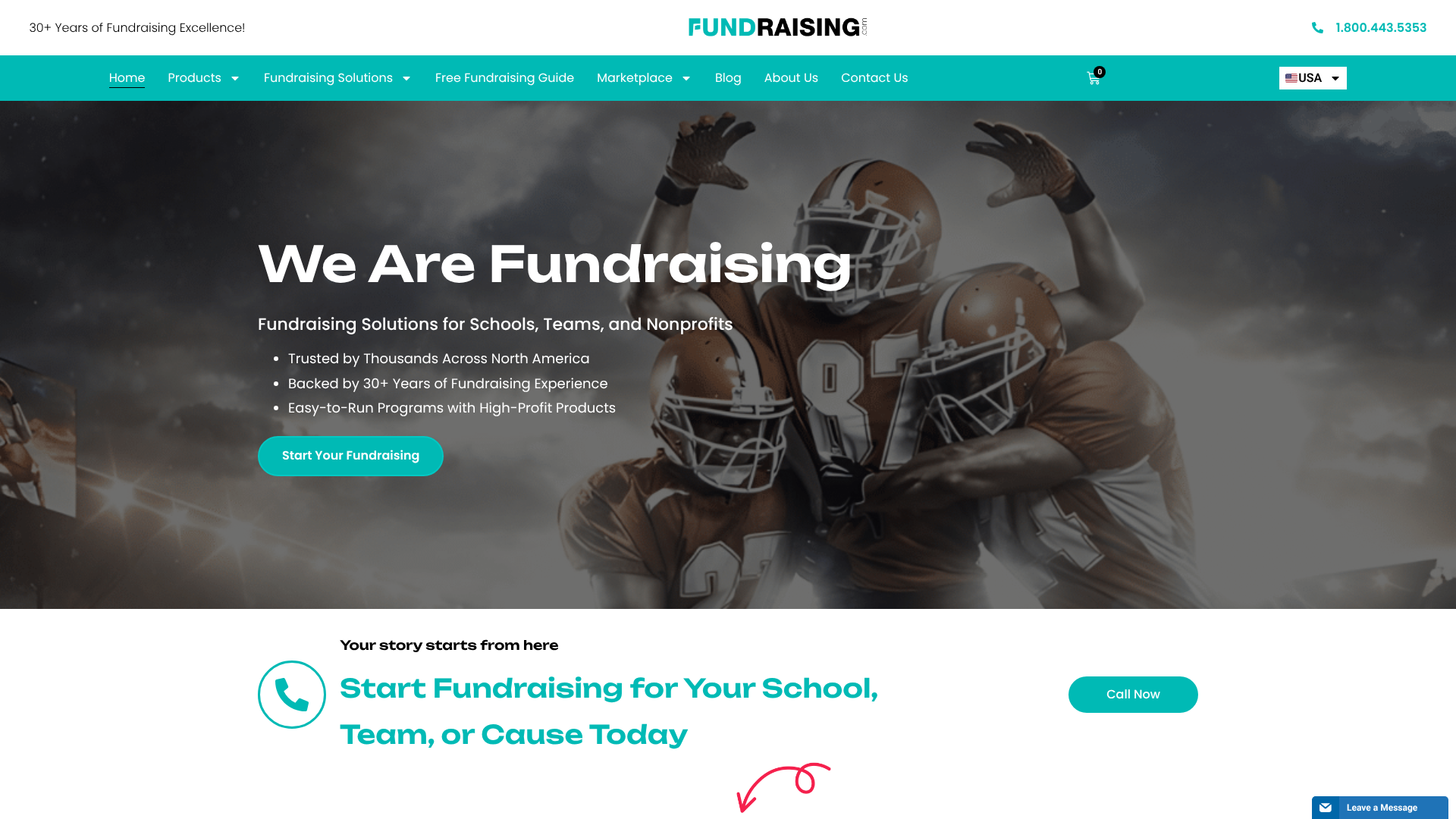
While traditional donor management tools focus on being a central database, Fundraising.com excels as a platform for executing specific, high-impact fundraising campaigns. It's particularly strong for organisations that rely on events, crowdfunding, or product-based fundraising. The platform provides the tools to create beautiful campaign pages, sell tickets, manage auctions, and run online stores.
This makes it less of an all-in-one CRM and more of a specialised fundraising engine. It's an ideal choice for schools, sports teams, or charities that run several distinct fundraising drives throughout the year. It can work alongside a primary CRM or, for smaller organisations, serve as the main hub for their fundraising activities. Its focus is on providing a seamless and engaging experience for donors participating in a campaign.
Pros
- Excellent tools for a wide variety of campaign types (crowdfunding, events, etc.).
- Easy-to-use interface for creating attractive campaign pages.
- Provides a great user experience for donors and participants.
Cons
- Not a full-featured donor management CRM for long-term relationship tracking.
- Contact management and reporting are focused on campaigns, not holistic donor history.
5. VolunteerMark: Best for Volunteer-Centric Organisations
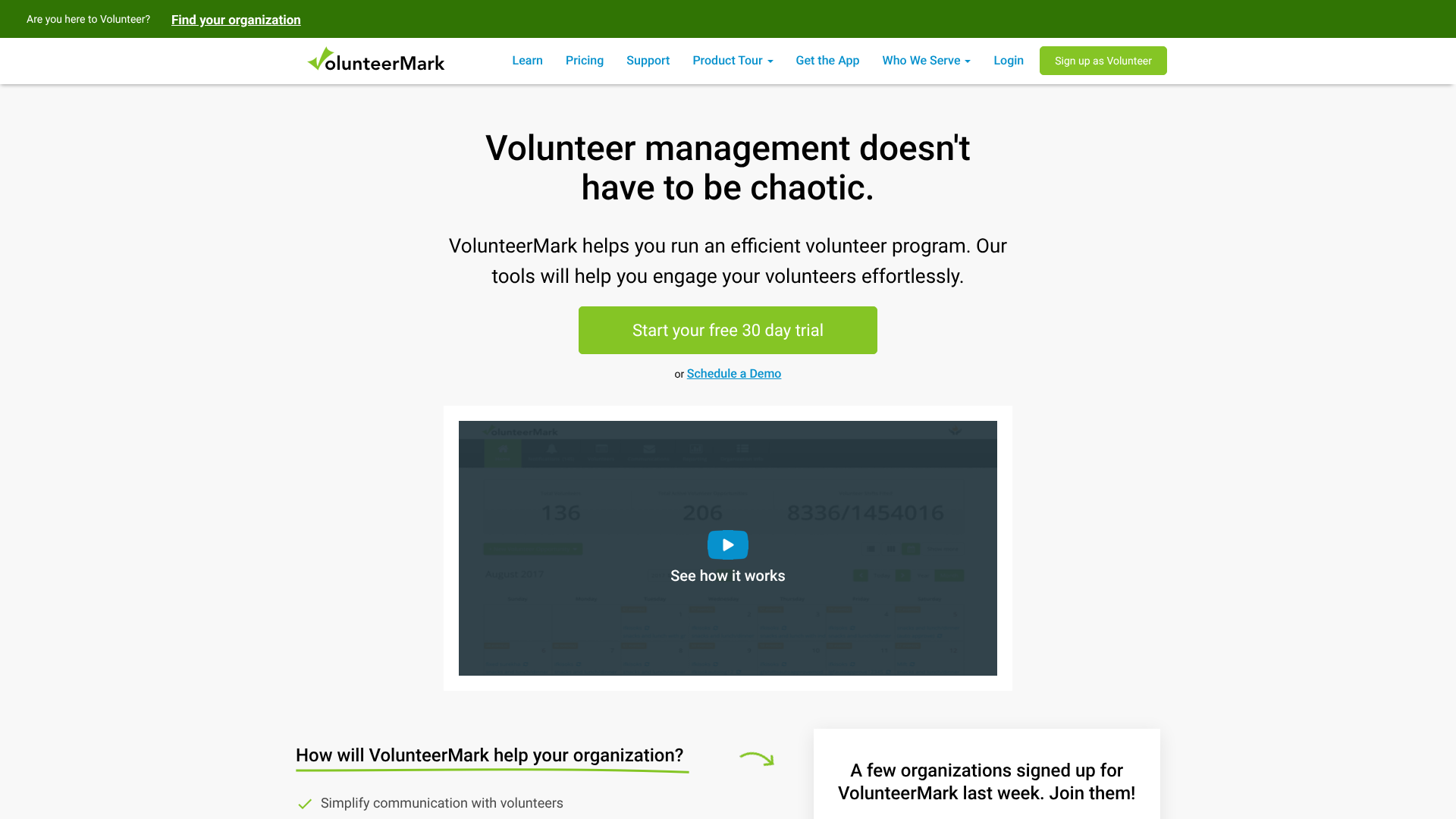
For many non-profits, volunteers are just as important as donors—and often, they are the same people. VolunteerMark is a specialised platform designed to streamline every aspect of volunteer management. It helps you recruit, schedule, communicate with, and track the hours of your volunteers, solving a major administrative headache for volunteer coordinators.
The platform allows you to post volunteer opportunities, let individuals sign up for shifts, and send automated reminders. It also provides valuable reporting on volunteer engagement and impact. While it's not a donor management tool in the traditional sense, it's a crucial piece of the puzzle for any organisation that relies heavily on volunteer support. Using a tool like VolunteerMark ensures your volunteers have a positive, organised experience, which in turn strengthens their connection to your mission and can lead to increased financial support.
Pros
- A dedicated, comprehensive solution for volunteer management.
- Simplifies scheduling, communication, and hour tracking.
- Helps improve the volunteer experience and retention.
Cons
- Not a fundraising or donation processing platform.
- Best used as a complementary tool alongside a dedicated donor CRM.
Understanding Pricing Models and Hidden Costs
One of the most confusing aspects of a donor software comparison is the pricing. Vendors use several different models, and it's important to understand them to accurately calculate the total cost of ownership.
The most common model is pricing by the number of contacts. In this structure, you pay a monthly or annual fee based on how many donor or supporter records are in your database. This is often tiered, so the cost per contact decreases as your list grows. Another popular model is feature-based tiering, where lower-priced plans offer basic functionality and you must upgrade to more expensive plans to access advanced features like automation or in-depth analytics.
Beyond the subscription fee, be vigilant for potential hidden costs. These can include:
Onboarding or Setup Fees: Some companies charge a one-time fee for helping you set up your account and import your data. * Payment Processing Fees: While the software vendor may not charge this directly, the integrated payment gateway (like Stripe or PayPal) will take a percentage of each online donation. * Premium Support: Basic support might be included, but some vendors charge extra for phone support or a dedicated account manager.
Add-On Modules: Features like event management, grant tracking, or advanced email tools may be sold as separate modules for an additional monthly fee.
Always ask for a full breakdown of all potential costs before signing a contract to ensure the platform truly fits your budget.
Frequently Asked Questions (FAQ)
What is the difference between a CRM and donor management software?
A CRM (Customer Relationship Management) is a broad term for software that manages interactions with customers or clients. Donor management software is a specialised type of CRM built specifically for the needs of non-profits. While a generic CRM can be adapted, donor management software comes with pre-built features for fundraising, donation tracking, pledge management, and receipting that are essential for charities.
Is there free donor management software?
Yes, there are some free options available, but they often come with significant limitations. Free plans typically restrict the number of contacts you can store, the number of users who can access the system, or the features you can use. They can be a good starting point for very small or brand-new non-profits, but most organisations find they quickly outgrow the limitations and need to upgrade to a paid plan.
How much should a small non-profit spend on donor software?
There's no single answer, as it depends on the non-profit's size and needs. However, a good benchmark for a small organisation (e.g., under 2,500 contacts) is typically between £30 and £100 per month. Platforms like Little Green Light are specifically designed for this budget range, offering robust features without a high price tag. It's an investment in efficiency that should pay for itself through increased donations and time saved.
What is the most important feature in a donor management tool?
While it varies by organisation, the most critical feature for most is the centralised donor database and contact management. This is the foundation upon which everything else is built. Without a clean, organised, and comprehensive database, features like reporting, segmentation, and personalised communication become ineffective. A system that makes it easy to maintain rich, detailed profiles of your supporters is invaluable.
Final Thoughts: Making Your Decision
Choosing the right software is one of the most important operational decisions a non-profit can make. The right system will save you time, provide critical insights, and ultimately help you raise more money to advance your mission. The wrong one can lead to frustration, wasted resources, and missed opportunities.
Use the donor management software comparison chart and reviews in this guide as your starting point. Focus first on your organisation's specific needs, budget, and long-term goals. Take advantage of free trials and demos to get a hands-on feel for your top contenders. The best platform isn't necessarily the one with the most features, but the one that best fits your team's workflow and helps you build stronger relationships with your supporters.
If your fundraising strategy relies on running diverse and engaging campaigns, Fundraising.com provides a powerful, user-friendly toolkit worth exploring. For organisations where volunteers are the lifeblood of your operations, a specialised tool like VolunteerMark can transform how you manage and engage your most dedicated supporters.