


What Is Sales Engagement Software? A Guide to Streamlining Sales Outreach
If your sales team is struggling to keep up with follow-ups, spending more time on admin than on selling, and using a messy combination of spreadsheets, email clients, and your CRM, you're facing a common but solvable problem. The answer lies in understanding what sales engagement software is and how it can transform your outreach process from chaotic to streamlined. This software acts as a powerful layer on top of your CRM, designed to automate, track, and optimise every interaction you have with potential customers.
- In a Nutshell
- What Exactly Is Sales Engagement Software?
- The Core Definition: Beyond Simple Automation
- How Sales Engagement Platforms Differ from a CRM
- The Problem It Solves for Modern Sales Teams
- The Must-Have Features of Top Sales Engagement Tools
- Multi-Channel Sequencing (Cadences)
- Deep Analytics and Performance Reporting
- AI-Powered Personalisation and Insights
- Seamless CRM Integration
- Key Benefits: Why Your Sales Team Needs an SEP
- Skyrocket Sales Productivity
- Improve Prospect Engagement and Response Rates
- Enforce Best Practices and Standardise Outreach
- Gain Unprecedented Visibility into What Works
- How to Choose the Right Sales Engagement Solution
- Step 1: Define Your Team's Core Needs and Pain Points
- Step 2: Evaluate Key Features Against Your Needs
- Step 3: Check for Critical Integrations
- Step 4: Consider User Experience and Ease of Adoption
- Step 5: Assess Scalability and Support
- Top Sales Engagement Platforms for 2026
- 1. Outreach: The Enterprise Powerhouse
- 2. Apollo.io: The All-in-One Prospecting and Engagement Tool
- 3. Reply.io: The Multi-Channel Specialist
- 4. HubSpot Sales Hub: The CRM-Native Solution
- Understanding Pricing and Cost Structures
- Common Pricing Models: Per User, Per Month
- What Influences the Cost?
- Hidden Costs to Watch For
- A General Price Range
- The Pros and Cons of Adopting Sales Engagement Software
- Frequently Asked Questions (FAQ)
- What is the difference between CRM and a sales engagement platform?
- Is SFA a CRM tool?
- What is the 3-3-3 rule in sales?
- Final Thoughts
Sales engagement platforms are built to solve the modern sales dilemma: how to deliver personalised, consistent communication at scale without overwhelming your reps. They centralise outreach across multiple channels like email, phone, and social media, allowing your team to execute proven sales strategies efficiently. By automating repetitive tasks and providing deep analytics on what's working, these tools free up your salespeople to do what they do best—build relationships and close deals.
In a Nutshell
- Core Function: Sales engagement software automates and tracks multi-channel communication (email, phone, social) with prospects, helping reps execute their outreach strategy more efficiently.
- Key Benefits: The primary advantages include a significant boost in sales productivity, higher prospect engagement, consistent messaging across the team, and access to data-driven insights to improve performance.
- It Complements, Not Replaces, a CRM: A CRM is a system of record for customer data, while a sales engagement platform is a system of action for customer communication. They work best when tightly integrated.
- Essential Features: Look for capabilities like multi-step sequencing (cadences), A/B testing, detailed analytics, call diallers, and seamless integration with your existing CRM.
What Exactly Is Sales Engagement Software?
At its heart, sales engagement software is a tool that helps sales representatives connect with more prospects in a more meaningful and efficient way. It bridges the gap between having a list of leads in a CRM and actually turning those leads into conversations. Think of it as the engine that powers your sales outreach.
While a CRM stores all your customer data—who they are, their contact details, and past interactions—it's often passive. A sales engagement platform is active. It takes that data and helps you act on it by creating structured, multi-channel communication workflows.
The Core Definition: Beyond Simple Automation
It’s easy to mistake sales engagement tools for simple email automation software, but they are far more sophisticated. They don't just send emails; they orchestrate a complete communication strategy. This strategy, often called a sequence or cadence, can include a mix of automated emails, manual email steps, phone call reminders, tasks to connect on LinkedIn, and other touchpoints.
An effective analogy is to think of your CRM as your library of contacts. It’s organised and full of valuable information. A sales engagement platform is the highly efficient personal assistant who takes that information, drafts personalised messages, schedules calls, sends reminders, and tracks every single interaction, reporting back on what was most effective.
How Sales Engagement Platforms Differ from a CRM
This is one of the most common points of confusion for teams exploring new sales technology. While there is some overlap, their primary purposes are distinct. A CRM is fundamentally a database for relationship management, whereas a sales engagement platform is a workflow tool for communication management.
Here’s a simple breakdown:
| Aspect | Customer Relationship Management (CRM) | Sales Engagement Platform (SEP) |
|---|---|---|
| Primary Role | System of Record | System of Action & Engagement |
| Main Focus | Storing customer data, tracking deal stages, managing the sales pipeline. | Executing, automating, and tracking outreach across multiple channels. |
| Core Functionality | Contact management, pipeline visualisation, sales forecasting, reporting. | Email sequencing, call dialling, task management, engagement analytics. |
| Example Use | Viewing a prospect's entire history with your company. | Enrolling a prospect in a 14-day outreach sequence of emails and calls. |
Modern solutions like HubSpot CRM with its Sales Hub add-on are blurring these lines by building sales engagement features directly into the CRM. This creates a unified system, which can be a huge advantage for teams looking to simplify their tech stack. However, standalone sales engagement solutions often offer deeper, more specialised features for outreach.
The Problem It Solves for Modern Sales Teams
Today's sales reps face immense pressure. They need to manage hundreds of leads, personalise their communication, follow up consistently, and hit aggressive targets. Doing this manually is nearly impossible. Reps often find themselves bogged down by administrative tasks—logging calls, scheduling follow-ups, and copying and pasting email templates.
This is where sales engagement solutions shine. They eliminate the manual, repetitive work that consumes a salesperson's day. By automating the follow-up process and centralising all communication tasks in one place, they give reps back their most valuable resource: time. This allows them to focus on high-value activities like having quality conversations with interested prospects and strategising on key accounts.
The Must-Have Features of Top Sales Engagement Tools

When evaluating different sales engagement platforms, you'll find a wide array of features. However, a few core capabilities are non-negotiable for any team serious about improving its outreach. These features are the foundation of what makes this software so impactful.
Multi-Channel Sequencing (Cadences)
This is the cornerstone of any sales engagement tool. A sequence (or cadence) is a pre-defined series of touchpoints that a rep can launch for a prospect. It's not just about email; a powerful sequence blends multiple channels to maximise the chances of getting a response.
A typical sequence might look like this:
Day 1: Automated personalised email. * Day 3: Phone call task is created for the rep. * Day 5: Automated follow-up email (if no reply). * Day 7: Task to connect and engage on LinkedIn.
Day 10: Final automated email to gauge interest.
Platforms like Reply.io and Outreach are particularly strong in this area, allowing you to build complex, branching sequences based on prospect behaviour. For example, if a prospect clicks a link in an email, they can be automatically moved to a different, more high-intent sequence.
Deep Analytics and Performance Reporting
Data is what separates guessing from knowing. Top-tier sales engagement solutions provide granular analytics that show you exactly what is and isn't working. This goes far beyond simple open and click rates.
You should be able to track:
- Template Performance: Which email templates get the most replies?
- Sequence Performance: Which sequences result in the most meetings booked?
- A/B Testing: Test different subject lines, call scripts, or calls-to-action to see what resonates with your audience.
- Team and Rep Leaderboards: See which reps are most effective and identify coaching opportunities.
This data empowers sales managers to make informed decisions, refine their strategy, and provide targeted coaching to help every rep succeed.
AI-Powered Personalisation and Insights
Artificial intelligence is transforming sales engagement. AI features can help your team work smarter, not just harder. One of the most common applications is in message optimisation. AI can analyse thousands of interactions to suggest better wording, recommend the best time of day to send an email, or score a prospect's engagement level.
Another powerful AI feature is conversation intelligence. This technology records, transcribes, and analyses sales calls. It can identify keywords, measure talk-to-listen ratios, and pinpoint moments where a competitor was mentioned. This provides invaluable insights for training and helps reps perfect their pitch.
Seamless CRM Integration
Your sales engagement platform must work hand-in-hand with your CRM. Without a deep, bi-directional integration, you create more work for your team, not less. A proper integration ensures that all activities performed in the engagement tool are automatically logged in the CRM.
When a rep sends an email, makes a call, or completes a task in the SEP, a record of that activity should instantly appear on the contact's record in your CRM, such as Zoho CRM. This creates a single source of truth for all customer interactions and eliminates the soul-crushing task of manual data entry.
Pro Tip: When evaluating integrations, ask about custom field mapping. The ability to sync custom data fields between your CRM and SEP is crucial for advanced segmentation and personalisation.
Key Benefits: Why Your Sales Team Needs an SEP
Adopting a sales engagement platform isn't just about getting a new piece of technology; it's about fundamentally improving how your sales team operates. The benefits extend from individual rep productivity to overall revenue growth.
Skyrocket Sales Productivity
Industry research often shows that sales reps spend less than a third of their time actively selling. The rest is consumed by administrative tasks, research, and internal meetings. Sales engagement platforms directly attack this problem by automating the most time-consuming parts of the sales process.
By putting follow-ups on autopilot and streamlining workflows, reps can engage with significantly more prospects in the same amount of time. This increased activity level directly translates to more conversations, more meetings booked, and a fuller pipeline.
Improve Prospect Engagement and Response Rates
In sales, persistence and consistency are key. Yet, it's easy for leads to fall through the cracks when reps are managing everything manually. Sales engagement tools ensure that every lead receives consistent, timely follow-up across multiple channels.
This structured approach prevents leads from going cold and keeps your company top-of-mind. Furthermore, by enabling personalisation at scale, reps can send relevant, targeted messages that are more likely to get a response than generic email blasts.
Enforce Best Practices and Standardise Outreach
How do you ensure every rep on your team is using the most effective messaging and following the proven sales process? Sales engagement platforms provide the answer. Sales leaders can build and share battle-tested sequences and email templates with the entire team.
This standardises the outreach process, ensuring a consistent brand voice and strategy. It's also an incredible tool for onboarding new hires. Instead of starting from scratch, a new rep can immediately begin using the same successful cadences as your top performers, dramatically shortening their ramp-up time.
Gain Unprecedented Visibility into What Works
Without an SEP, much of sales outreach is a black box. You know reps are sending emails and making calls, but you don't have clear data on what activities are actually driving results. Sales engagement platforms provide complete visibility into the sales process.
Managers can see which strategies are working and which are not, allowing them to double down on successful tactics and eliminate ineffective ones. This data-driven approach to sales management leads to continuous improvement and more predictable revenue.
How to Choose the Right Sales Engagement Solution

With so many options on the market, selecting the right sales engagement solution can feel daunting. Following a structured evaluation process will help you find the platform that best fits your team's unique needs and goals.
Step 1: Define Your Team's Core Needs and Pain Points
Before you look at any software, look at your team. What are your biggest challenges. Where are the bottlenecks in your current process. Make a list.
Are you struggling with:.
- Inconsistent follow-up?
- Low response rates to emails?
- Too much time spent on manual data entry?
- Lack of visibility into rep activity?
- Difficulty onboarding new hires?
Your list of pain points will become your shopping list for features. This ensures you focus on solving your actual problems, not just acquiring flashy new technology.
Step 2: Evaluate Key Features Against Your Needs
Once you know your problems, you can look for the features that solve them. If your team is heavily reliant on cold calling, a platform with a powerful, integrated dialler and call analytics is a must. If your strategy is email-centric, look for advanced A/B testing and template analytics.
Don't be swayed by a platform that has hundreds of features you'll never use. The best tool is the one that does what you need it to do exceptionally well. Create a simple scorecard to rate each potential platform against your must-have features.
Step 3: Check for Critical Integrations
As mentioned earlier, integration with your CRM is paramount. But don't stop there. Consider the other tools in your sales stack. Does the platform integrate with your calendar for easy meeting booking (like SimplyBook.me).
What about your proposal and e-signature software, such as PandaDoc or Better Proposals.
A well-integrated tech stack creates a smooth workflow for your reps and ensures data flows correctly between systems. A lack of integration creates data silos and manual work, defeating the purpose of the software.
Step 4: Consider User Experience and Ease of Adoption
A powerful platform is worthless if your team finds it too complicated to use. The user interface (UI) should be intuitive and easy to navigate. During the evaluation process, insist on a live demo for your entire team, not just for management.
Pay attention to how easily a rep can perform common tasks like enrolling a prospect in a sequence or making a call. A steep learning curve can lead to low adoption rates, meaning you won't see a return on your investment. Look for a platform that your reps are genuinely excited to use.
Step 5: Assess Scalability and Support
Think about your future needs. Will this platform be able to support your team as it grows? Does it offer plans and features that can accommodate a larger, more complex sales organisation? Switching platforms is a major disruption, so choose one you can grow with.
Also, investigate the level of customer support and onboarding provided. A good vendor will offer comprehensive training to get your team up and running quickly. Check reviews and ask for customer references to gauge the quality of their ongoing support.
Top Sales Engagement Platforms for 2026
Here are a few of the leading sales engagement platforms, each with its own unique strengths. This is not an exhaustive list, but it represents some of the best options available for different types of sales teams.
1. Outreach: The Enterprise Powerhouse
Outreach is one of the pioneers and market leaders in the sales engagement space. It's a comprehensive platform designed for mature and enterprise-level sales organisations that need a high degree of power, customisation, and analytics. Its AI assistant, Kaia, provides real-time assistance during sales calls, making it a standout feature.
Pros
- Deep Feature Set: Offers some of the most advanced sequencing, reporting, and AI capabilities on the market.
- Robust Analytics: Provides deep insights into every aspect of the sales process, ideal for data-driven teams.
- Scalability: Built to handle the complexity and scale of large, global sales teams.
Cons
- High Cost: It is one of the more expensive options, which can put it out of reach for smaller businesses.
- Complexity: The sheer number of features can create a steeper learning curve for new users.
2. Apollo.io: The All-in-One Prospecting and Engagement Tool
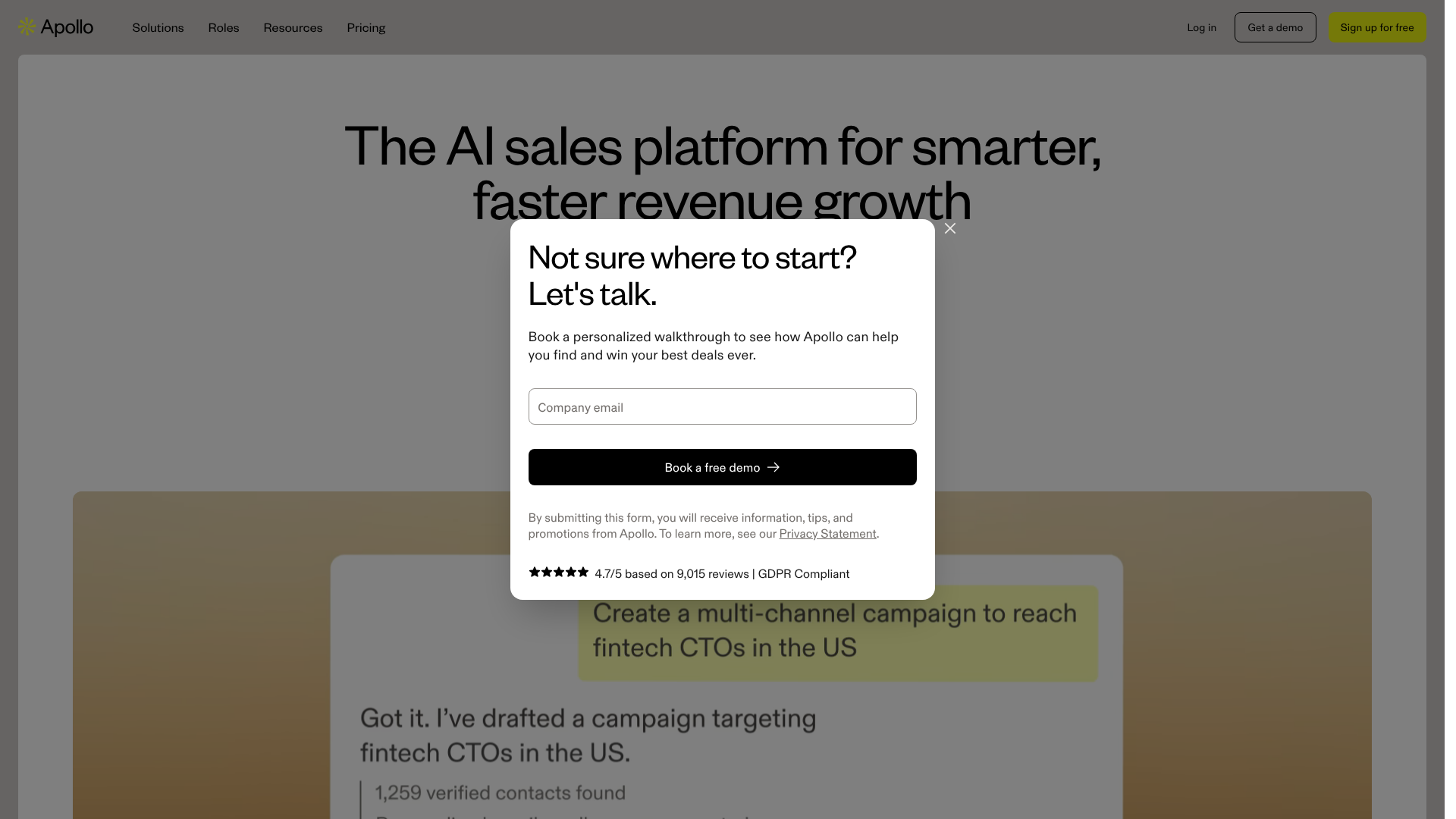
Apollo.io stands out by combining a massive B2B contact database with a full-featured sales engagement platform. This all-in-one approach is incredibly appealing for small to mid-sized businesses that want to consolidate their tech stack and reduce costs. You can find leads and engage with them all within a single tool.
Pros
- Excellent Value: Combining lead data and engagement tools into one subscription offers significant cost savings.
- All-in-One Solution: Simplifies the sales stack by eliminating the need for a separate data provider.
- User-Friendly: The interface is generally intuitive, making it easy for teams to get started.
Cons
- Variable Data Quality: While the database is huge, the accuracy of contact information can sometimes be inconsistent.
- Less Specialised: While it does many things well, it may not have the same depth in specific features as a dedicated tool like Outreach.
3. Reply.io: The Multi-Channel Specialist

Reply.io excels at true multi-channel outreach. While many platforms focus primarily on email and calls, Reply.io has strong, native integrations for automating communication across LinkedIn, WhatsApp, and SMS. This makes it a fantastic choice for teams who want to connect with prospects wherever they are.
Pros
- Strong Multi-Channel Automation: A leader in orchestrating touchpoints across a wide variety of channels.
- AI Assistant: Features an AI-powered writing assistant to help reps craft effective emails quickly.
- Data Sourcing: Includes a Chrome extension to help find and verify prospect email addresses.
Cons
- Tiered Pricing: The cost can increase as you add more communication channels and advanced features.
- Learning Curve for Advanced Features: Setting up complex, multi-channel sequences can take some time to master.
4. HubSpot Sales Hub: The CRM-Native Solution
For teams already using the HubSpot ecosystem, HubSpot Sales Hub is a natural choice. It builds sales engagement functionalities like sequencing, automated follow-ups, and call tracking directly into the HubSpot CRM. This eliminates any friction from integration and creates a single, unified platform for all sales and marketing activities.
Pros
- Perfect CRM Integration: Being part of the same platform means data is always perfectly in sync.
- Ease of Use: HubSpot is known for its clean, user-friendly interface, which makes adoption easy.
- All-in-One Platform: Combines sales, marketing, and service tools for a complete view of the customer journey.
Cons
- Less Feature-Rich than Standalones: While powerful, it may lack some of the highly specialised, advanced features of dedicated platforms like Outreach.
- Best Value within Ecosystem: It makes the most sense for companies committed to using HubSpot for their broader business operations.
Understanding Pricing and Cost Structures
Pricing for sales engagement software can vary widely, so it's important to understand the factors that influence the final cost. This will help you budget effectively and avoid surprises.
Common Pricing Models: Per User, Per Month
The vast majority of sales engagement solutions operate on a Software-as-a-Service (SaaS) model. This means you'll typically pay a subscription fee per user, per month. Most vendors require an annual contract, especially for larger teams, but some may offer month-to-month options at a higher rate.
What Influences the Cost?
Several factors determine the price you'll pay:
Feature Tiers: Most platforms offer multiple pricing tiers. A basic plan might include email sequencing, while a professional or enterprise plan will add features like call analytics, AI capabilities, and advanced reporting. * Number of Users: The total cost is a direct multiple of the per-user price. The more reps you have, the higher your total subscription cost.
Add-ons: Some features, like conversation intelligence or access to a data provider, may be sold as optional add-ons for an additional fee.
Hidden Costs to Watch For
Beyond the subscription fee, be aware of potential additional costs. Some vendors charge one-time implementation or onboarding fees to help get your team set up. Premium customer support might also come at an extra cost. Always ask for a detailed quote that outlines all potential charges before signing a contract.
A General Price Range
As of 2026, you can expect to pay anywhere from £40 to over £150 per user per month. The lower end typically represents platforms with more basic feature sets or those aimed at smaller businesses, while the higher end is for enterprise-grade solutions with advanced AI and analytics. Always visit the official websites for the most current and detailed pricing information.
The Pros and Cons of Adopting Sales Engagement Software
Like any business decision, implementing a sales engagement platform has both significant upsides and potential challenges. A balanced view can help you make the right choice and prepare your team for the transition.
The Upsides (Pros)
- Massive Efficiency Gains: Automating repetitive tasks frees up significant time for reps to focus on selling.
- Improved Consistency: Ensures every lead gets the right amount of follow-up, preventing deals from slipping through the cracks.
- Data-Driven Coaching: Provides managers with the insights they need to offer targeted, effective coaching.
- Faster Onboarding: New reps can become productive more quickly by using pre-built, proven sequences.
- Increased Engagement: A structured, multi-channel approach leads to more conversations and meetings.
The Potential Downsides (Cons)
- Financial Cost: These platforms represent a significant monthly investment, especially for larger teams.
- Risk of Over-Automation: If not used thoughtfully, automated outreach can feel impersonal or robotic to prospects.
- Learning Curve: Your team will need time and training to master the new tool and workflows.
- Requires Good Data: The effectiveness of the platform is highly dependent on the quality of the contact data in your CRM.
Pro Tip: To combat the risk of sounding robotic, train your team to use templates as a starting point, not a final script. Encourage them to add a line or two of genuine, manual personalisation to each automated email before it sends.
Frequently Asked Questions (FAQ)
Here are answers to some common questions about sales engagement software.
What is the difference between CRM and a sales engagement platform?
A Customer Relationship Management (CRM) system is a database of record. Its primary job is to store and organise all information about your customers and prospects, including contact details, company information, and the history of your relationship. It provides a 360-degree view of the customer.
A Sales Engagement Platform (SEP), on the other hand, is a system of action. Its primary job is to help salespeople execute their outreach. It uses the data from the CRM to power automated communication sequences, manage tasks, and track engagement across channels like email, phone, and social media. In short, the CRM holds the 'who' and 'what', while the SEP drives the 'how' and 'when' of communication.
Is SFA a CRM tool?
SFA, or Sales Force Automation, is typically a component or feature set within a CRM. SFA focuses on automating internal sales processes to improve efficiency. This can include automating lead routing, generating quotes, and managing sales pipelines.
While both SFA and SEPs involve automation, SFA is more focused on internal operational efficiency, whereas SEPs are focused on automating external prospect and customer communication. A modern CRM will often have SFA capabilities built-in.
What is the 3-3-3 rule in sales?
The 3-3-3 rule is a prospecting guideline designed to help sales reps stay focused and effective. It stands for:
- Identify 3 companies you want to target each day.
- Find 3 key contacts (decision-makers or influencers) within each of those companies.
- Attempt to reach them in 3 different ways (e.g., email, phone call, LinkedIn message).
This rule provides a clear, manageable structure for daily prospecting. Sales engagement platforms are the perfect tools to execute a 3-3-3 strategy, as they allow you to build sequences that incorporate these multiple touchpoints in an organised and trackable way.
Final Thoughts
In today's competitive sales environment, sales engagement software has evolved from a luxury to a necessity. It is the critical link between your sales strategy and its execution, empowering your team to work more intelligently, consistently, and effectively. By automating the mundane and providing clear insights, these platforms allow your salespeople to reclaim their time and focus on what truly matters: building relationships.
The key is to choose a solution that aligns with your team's specific challenges, workflow, and budget. Whether you need an all-in-one tool that includes prospecting data or a powerful enterprise platform for a large, complex team, the right sales engagement solution will undoubtedly lead to a more productive team and a healthier pipeline.
If you're looking to boost your team's efficiency, exploring a platform like Apollo.io for its all-in-one capabilities or HubSpot Sales Hub for its tight CRM integration could be a great next step in transforming your sales process.