


Risk Management in Construction Projects: A Guide for Contractors
Effective risk management in construction projects is the critical process that separates successful builds from those plagued by delays, budget overruns, and safety incidents. It's a structured approach to identifying, assessing, and mitigating potential problems before they can derail progress. Without a solid plan for managing risks in construction, even the most well-designed project can face significant challenges, leading to financial loss and reputational damage.
- What You'll Learn
- What is Risk Management in Construction Projects? An In-Depth Look
- The Core Benefits of a Solid Construction Risk Management Strategy
- Enhanced Financial Control and Predictability
- Improved Project Timelines and Scheduling
- A Safer Work Environment for Everyone
- Better Decision-Making and Stakeholder Confidence
- The 5-Step Process for Managing Risks in Construction
- Step 1: Risk Identification
- Step 2: Construction Project Risk Assessment
- Step 3: Risk Response Planning
- Step 4: Risk Implementation
- Step 5: Risk Monitoring and Control
- Common Types of Risks in Construction Projects
- Financial and Economic Risks
- Technical and Operational Risks
- Safety and Environmental Risks
- Legal and Contractual Risks
- Management and Organisational Risks
- Choosing the Right Tools and Strategies for Your Project
- Understanding the Costs and ROI of Risk Management
- Pros and Cons of Implementing a Formal Risk Management System
- Frequently Asked Questions (FAQ)
- What are the four main types of construction risk?
- What are the 5 steps in the construction risk management process?
- What is an example of risk management in construction?
- How do you manage risk in construction?
- What are common risk management tools?
- Final Thoughts
This guide breaks down the entire process into manageable steps. We'll explore the core principles, the tangible benefits, the tools that can help, and how to build a resilient strategy that protects your projects, your people, and your profits. Understanding these concepts is not just good practice; it's essential for survival and growth in the modern construction industry.
What You'll Learn
- The Core Process: Risk management is a proactive, five-step cycle: identify, assess, respond, implement, and monitor. It's about controlling uncertainty, not just reacting to problems.
- Key Benefits: A robust strategy leads to better financial control, safer work sites, more reliable timelines, and increased stakeholder confidence.
- Common Risk Categories: Risks in construction typically fall into four main categories: financial, operational, safety/environmental, and legal/contractual.
- Essential Tools: Modern construction risk management relies on tools like risk registers, contingency plans, and specialised software to streamline monitoring and response.
- Strategic Importance: Implementing a formal risk management system is a strategic investment that delivers a significant return by preventing costly errors and delays.
What is Risk Management in Construction Projects? An In-Depth Look
At its heart, risk management in construction projects is a systematic, proactive process designed to handle uncertainty. It’s not about eliminating every single risk—an impossible task—but about understanding potential threats and opportunities so you can make informed decisions. Think of it as the project's immune system; it works quietly in the background to identify potential threats and neutralise them before they cause serious harm.
This process moves beyond simple checklists. It involves a continuous cycle of identifying what could go wrong, analysing the likelihood and potential impact of each issue, and then deciding on the best course of action. This might mean finding ways to prevent the risk, reducing its potential damage, transferring the risk to another party (like an insurer), or simply accepting it and having a backup plan ready.
A common misconception is that risk management is purely negative, focusing only on preventing disasters. However, a comprehensive approach also identifies positive risks, or opportunities. For example, identifying a chance to procure materials at a lower cost or finish a phase ahead of schedule are also part of managing project variables to achieve the best possible outcome. It’s a discipline that transforms project managers from firefighters, constantly battling unexpected problems, to strategists, navigating challenges with foresight and control.
The Core Benefits of a Solid Construction Risk Management Strategy
Implementing a formal process for managing risks in construction isn't just about ticking a box; it delivers tangible, measurable benefits that impact every aspect of a project. When done correctly, it becomes a powerful driver of efficiency, safety, and profitability.
Enhanced Financial Control and Predictability
One of the most significant advantages is greater control over the project budget. By identifying financial risks like material price volatility, unexpected labour costs, or potential fines for non-compliance early on, you can build realistic contingencies. This prevents the kind of budget blowouts that can cripple a project, ensuring financial predictability and protecting your profit margins.
Improved Project Timelines and Scheduling
Delays are one of the costliest problems in construction. A thorough construction project risk assessment identifies potential schedule disruptors, such as permitting hold-ups, supply chain issues, or subcontractor delays. With this foresight, project managers can create more resilient schedules, build in appropriate buffers, and develop alternative plans to keep the project moving forward even when obstacles arise.
A Safer Work Environment for Everyone
Safety is non-negotiable. A core component of construction risk management is identifying and mitigating hazards on the job site. This systematic focus on safety helps prevent accidents, reduces the risk of injuries, and ensures compliance with health and safety regulations. A safer site not only protects your workforce but also minimises the risk of costly work stoppages, legal action, and damage to your company's reputation.
Pro Tip: Use a 'lessons learned' register from past projects. Analysing what went wrong (and right) previously is one of the most effective ways to identify recurring risks and prevent them from happening again on your current project.
Better Decision-Making and Stakeholder Confidence
Risk management provides a clear, data-driven framework for making critical decisions. Instead of relying on guesswork, you can evaluate options based on their risk profiles. This structured approach builds confidence among clients, investors, and other stakeholders, as it demonstrates that the project is being managed professionally and responsibly.
The 5-Step Process for Managing Risks in Construction
Effective construction risk management follows a structured, cyclical process. Each step builds on the last, creating a comprehensive framework for controlling project uncertainty. Mastering this five-step cycle is fundamental to protecting your projects from common pitfalls.
Step 1: Risk Identification
The first step is to identify every potential risk that could affect the project. This is a brainstorming effort that should involve the entire project team, from architects and engineers to site managers and key subcontractors. Methods for identifying risks include reviewing documents from past projects, using industry checklists, conducting site inspections, and holding dedicated risk workshops. The goal is to create a comprehensive list of all possible threats and opportunities.
Step 2: Construction Project Risk Assessment
Once risks are identified, you need to analyse them. This involves two key actions: assessing the probability (likelihood) of the risk occurring and evaluating the potential impact (consequence) it would have on the project's cost, schedule, or quality. This is often visualised using a risk matrix, which plots probability against impact, helping you prioritise which risks demand the most attention. High-probability, high-impact risks are your top priority.
Step 3: Risk Response Planning
After assessing the risks, you must decide how to respond to them. There are four primary strategies:
- Avoid: Change the project plan to eliminate the risk entirely. For example, choosing a different construction method to avoid a known ground stability issue. * Transfer: Shift the financial impact of the risk to a third party.
The most common example is purchasing insurance or using contractual clauses like indemnity agreements. * Mitigate: Take action to reduce the probability or impact of the risk. For instance, implementing stricter safety protocols to mitigate the risk of accidents. * Accept: For low-impact or low-probability risks, you may decide to accept them and develop a contingency plan to deal with them if they occur.
Step 4: Risk Implementation
This step is about action. The strategies developed in the response planning stage are now assigned to specific team members who are responsible for carrying them out. This involves communicating the plan, allocating necessary resources, and integrating the risk response actions into the overall project management plan. A plan is useless without clear ownership and execution.
Step 5: Risk Monitoring and Control
Risk management is not a one-time event; it's an ongoing process. Throughout the project lifecycle, you must continuously monitor the identified risks, track the effectiveness of your response plans, and scan for new risks that may emerge. This is typically managed using a 'risk register'—a live document that tracks each risk, its status, and the actions being taken. Regular risk review meetings are essential to keep the plan current and effective.
Common Types of Risks in Construction Projects
Construction projects are exposed to a wide array of risks. Understanding and categorising them helps in developing more targeted and effective mitigation strategies. While every project is unique, most risks can be grouped into a few key categories.
Financial and Economic Risks
These risks directly impact the project's bottom line. They include things like inaccurate cost estimating, budget overruns, and cash flow problems. External factors also play a huge role, such as inflation driving up material costs, fluctuations in currency exchange rates for imported goods, or a sudden economic downturn affecting project funding.
Technical and Operational Risks
This category covers the practical, on-the-ground challenges of building. It includes design errors or omissions that require costly rework, unforeseen site conditions like poor soil quality or hidden utilities, and equipment failure. Operational risks also involve supply chain disruptions, where materials don't arrive on time, and issues with productivity or the quality of workmanship.
Safety and Environmental Risks
Construction sites are inherently hazardous environments. Safety risks include worker accidents, falls from height, and exposure to hazardous materials. Environmental risks can range from the impact of extreme weather events like flooding or high winds on the project schedule to non-compliance with environmental regulations, which can lead to fines and work stoppages. According to the UK's Health and Safety Executive (HSE), the construction sector remains one of the highest-risk industries for workplace injuries, underscoring the need for diligent safety management.
Legal and Contractual Risks
These risks arise from the complex web of agreements that govern a construction project. They include disputes with clients or subcontractors, delays in securing necessary permits and approvals, and 'scope creep', where the project requirements change without a formal change order. Poorly drafted contracts can leave a company exposed to liability. Using standardised and legally sound documents from services like LegalContracts can help mitigate these risks by ensuring clarity and enforceability from the outset.
Management and Organisational Risks
Sometimes the biggest risks are internal. These can include poor communication between the office and the field, a shortage of skilled labour, or ineffective project management. A lack of clear roles and responsibilities can lead to confusion and errors, while high staff turnover can disrupt project continuity and knowledge.
Choosing the Right Tools and Strategies for Your Project
An effective construction risk management plan is supported by a combination of proven strategies and modern tools. While the principles remain constant, the methods for applying them have evolved, with technology playing an increasingly important role in providing clarity and control.
Essential Strategies and Techniques
Before diving into software, it's crucial to have the foundational strategies in place. These are the cornerstones of any successful risk management programme.
- The Risk Register: This is your central command centre for risk information. At its simplest, it's a spreadsheet or document that lists all identified risks, their assessment (probability and impact), the planned response, the person responsible for managing it, and its current status. A well-maintained risk register provides a real-time overview of the project's risk landscape.
- Contingency Planning: This is your financial safety net. A contingency fund is a portion of the budget set aside specifically to cover the costs of unforeseen events or accepted risks. The amount is typically calculated based on the quantitative risk assessment, ensuring you have an appropriate buffer to handle problems without derailing the entire project budget.
- Clear Contracts and Insurance: These are your primary tools for risk transfer. Watertight contracts clearly define the roles, responsibilities, and liabilities of all parties, reducing the chance of disputes. Comprehensive insurance policies, such as professional indemnity and contractor's all-risk insurance, transfer the financial burden of specific major events to the insurer.
Top Software for Construction Risk Management
Modern software solutions can automate and streamline many aspects of risk management, moving you beyond cumbersome spreadsheets. These platforms provide a single source of truth, improve communication, and offer powerful analytics.
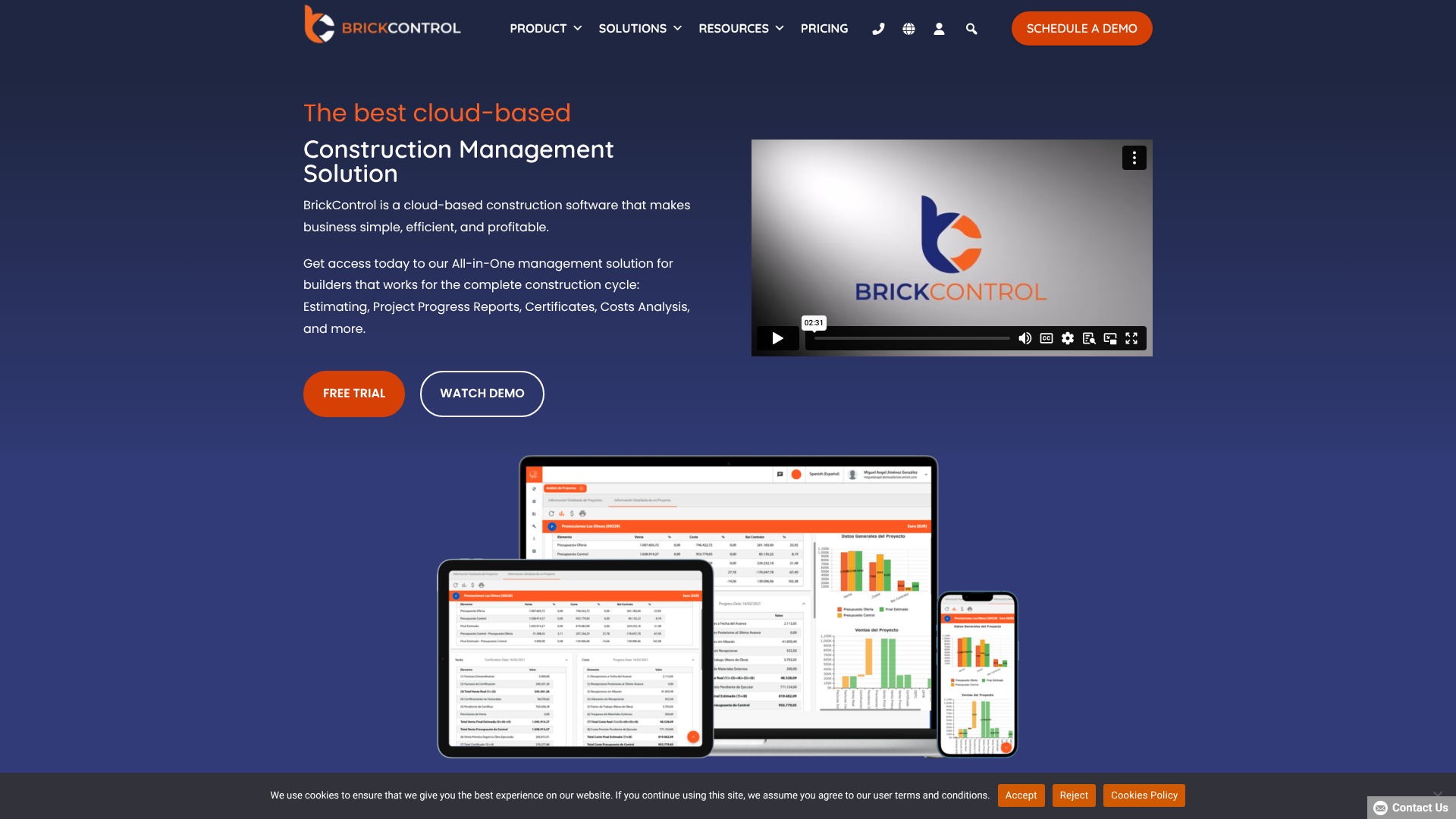
- BrickControl: This is a comprehensive construction management software that helps with risk management by providing tight control over project financials and progress. By integrating estimating, scheduling, and cost control, it allows project managers to spot deviations from the plan early. This real-time visibility is crucial for identifying financial and operational risks before they escalate.
- HammerTech: Focused primarily on safety and site operations, HammerTech is a powerful tool for mitigating some of the highest-impact risks in construction. The platform digitises safety processes like inductions, permits, and incident reporting. This not only improves compliance and reduces accidents but also provides a wealth of data that can be used to identify safety trends and proactively address hazards.
- Procore: As one of the leading platforms in the industry, Procore offers a wide range of modules, including dedicated risk management tools. It helps centralise risk registers, track incidents, and manage insurance documentation, connecting field and office teams to ensure everyone is working with the same information.
Understanding the Costs and ROI of Risk Management
Implementing a formal risk management system involves an investment of both time and money. However, it's crucial to view these expenditures not as costs, but as an investment in project certainty and profitability. The cost of not managing risk is almost always higher than the cost of implementing a proactive plan.
Direct and Indirect Costs
The direct costs are the most obvious. These can include subscriptions for construction management software, fees for hiring a specialist risk consultant, or the cost of additional insurance coverage. There are also costs associated with training your team on new processes and software.
Indirect costs are less tangible but just as real. They primarily involve the time your team dedicates to risk management activities—attending risk workshops, updating the risk register, and conducting site safety audits. While this time could be spent on other tasks, its value lies in preventing much larger, more time-consuming problems down the line.
Calculating the Return on Investment (ROI)
The ROI of risk management is primarily measured in cost avoidance. It’s about the money you didn't have to spend on rework, legal fees, accident compensation, or penalties for project delays. For example, if spending £10,000 on a safety management platform and additional training prevents a single serious accident that could have cost £100,000 in fines, compensation, and project downtime, the ROI is tenfold.
To put it in perspective, consider a common risk: a design error discovered late in the construction phase. The cost to fix it at this stage could be 50-100 times higher than if it were caught during the design review process. A robust risk management process that includes thorough design reviews provides a clear and substantial return on the time invested.
Pro Tip: Start small. You don't need a complex, expensive system from day one. Begin by implementing a simple risk register on a spreadsheet and holding regular risk review meetings. As your projects and team mature, you can gradually incorporate more sophisticated tools and processes.
Pros and Cons of Implementing a Formal Risk Management System
Adopting a structured approach to construction risk management offers significant advantages, but it's also important to be aware of the potential challenges. A balanced perspective helps in setting realistic expectations and ensuring a successful implementation.
The Advantages (Pros)
- Proactive Problem-Solving: The most significant benefit is shifting from a reactive 'firefighting' mode to a proactive state. You anticipate problems and address them before they escalate, giving you far greater control over the project's outcome.
- Greater Project Certainty: By systematically addressing uncertainties, you increase the likelihood of completing the project on time and within budget. This predictability is highly valued by clients and investors.
- Enhanced Reputation: Companies known for managing projects well and maintaining excellent safety records build a strong reputation. This can lead to more business opportunities and make it easier to attract top talent.
- Improved Team Collaboration: The process of identifying and planning for risks requires input from all parts of the project team. This fosters better communication and a shared sense of ownership over the project's success.
The Potential Challenges (Cons)
- Initial Investment: Setting up a formal system requires an upfront investment in time, training, and potentially software. This can be a hurdle for smaller companies, though the long-term benefits typically outweigh the initial costs.
- Can Be Perceived as Bureaucratic: If not implemented efficiently, risk management can become a box-ticking exercise that adds paperwork without adding value. It's essential to keep the process practical and focused on the most significant risks.
- Requires Team-Wide Buy-In: A risk management plan is only effective if everyone on the team takes it seriously. Overcoming resistance to change and ensuring consistent participation from all team members can be a challenge.
- Cannot Eliminate All Risks: It's important to remember that risk management is about reducing and controlling risk, not eliminating it entirely. Unexpected events, or 'black swans', can still occur. The goal is to build resilience, not to achieve invincibility.
Frequently Asked Questions (FAQ)
What are the four main types of construction risk?
The four primary categories of risk in construction are Financial (e.g., budget overruns, inflation), Operational/Technical (e.g., design errors, equipment failure, supply chain delays), Safety and Environmental (e.g., worker accidents, hazardous materials, extreme weather), and Legal/Contractual (e.g., permit issues, disputes with subcontractors, scope creep).
What are the 5 steps in the construction risk management process?
The five core steps form a continuous cycle: 1. Risk Identification (finding potential risks), 2. Risk Assessment (analysing their likelihood and impact), 3. Risk Response Planning (deciding how to handle them), 4.
Risk Implementation (putting the response plan into action), and 5. Risk Monitoring and Control (tracking risks and adjusting the plan throughout the project).
What is an example of risk management in construction?
A great example is managing the risk of material price volatility. A project manager might identify that the price of steel is unstable (Identification). They assess this as a high-impact, medium-probability risk (Assessment). To respond, they could lock in a price with a supplier in advance or include a price escalation clause in the client contract (Response).
They then execute the chosen option (Implementation) and track steel prices throughout the project (Monitoring).
How do you manage risk in construction?
You manage risk by following the five-step process consistently. This involves creating a comprehensive risk register to document and track all potential issues, developing clear response strategies for the most significant risks, assigning ownership for each risk, and holding regular review meetings with the project team to ensure the plan remains relevant and effective.
What are common risk management tools?
Common tools include the Risk Register (a central log of all risks), a Risk Matrix (a visual tool for prioritising risks based on probability and impact), and Contingency Plans (pre-defined actions for specific events). Increasingly, construction management software platforms are used to digitise and automate these processes, providing real-time data and improving collaboration.
Final Thoughts
Ultimately, risk management in construction projects is not an administrative burden; it is a fundamental discipline for achieving success. It provides the framework to navigate the inherent uncertainties of the industry with confidence and control. By moving from a reactive to a proactive mindset, you can protect your budget, your schedule, and most importantly, your people.
Embracing a structured approach to identifying, assessing, and mitigating risks transforms potential disasters into manageable challenges. It builds resilience into your operations and fosters a culture of foresight and accountability. Whether you're just starting with a simple risk register or implementing a sophisticated software solution, the principle remains the same: anticipate what's next to build a better future.
Exploring tools like BrickControl for project oversight or HammerTech for site safety can be a great next step in strengthening your risk management framework. By investing in these processes and tools, you are investing directly in the success and sustainability of your projects.