


Project Management for Construction Projects: A Beginner's Guide
Successfully managing a building site is a complex task with dozens of moving parts. Effective project management for construction projects is the essential discipline that brings order to this chaos, ensuring a structure is built on time, within budget, and to the required quality standards. It's the difference between a profitable, smoothly-run project and one plagued by delays, cost overruns, and safety issues.
- What You'll Learn
- What Exactly Is Project Management for Construction Projects?
- The Core Phases of Construction Management: A Step-by-Step Breakdown
- Phase 1: Project Initiation and Conception
- Phase 2: Pre-construction and Planning
- Phase 3: Procurement
- Phase 4: Construction and Execution
- Phase 5: Monitoring and Control
- Phase 6: Project Closeout and Handover
- Key Benefits: Why Effective Construction Project Management Matters
- Enhanced Budget Control and Cost Savings
- Improved Time Management and Scheduling
- Superior Quality Assurance
- Proactive Risk Mitigation
- Choosing the Right Construction Management Software
- Top Software Recommendations for Beginners
- Understanding Pricing and Costs
- Common Mistakes in Construction Management (And How to Avoid Them)
- Frequently Asked Questions (FAQ)
- What is the most important skill for a construction project manager?
- What are the main differences between construction management and project management?
- How does technology impact project management in construction?
- What is the 'critical path' in construction scheduling?
- Can I manage a small construction project without special software?
- Final Thoughts
For anyone new to the industry, understanding the principles of construction management can feel overwhelming. It involves more than just overseeing work; it's a strategic process of planning, coordinating resources, managing stakeholders, and mitigating risks from the initial concept to the final handover. This guide will break down everything you need to know to get started.
We'll walk through the core phases of a construction project, explore the critical benefits of a structured approach, and help you identify the right tools to make your job easier. Whether you're an aspiring project manager or a contractor looking to improve your processes, this guide provides the foundational knowledge you need.
What You'll Learn
- The Core of Construction Management: It's the specialised practice of planning, coordinating, and supervising a project from its conception to completion to meet specific goals of time, cost, and quality.
- The Six Essential Phases: Every construction project follows a lifecycle, including initiation, pre-construction, procurement, execution, monitoring, and closeout. Mastering these stages is key to success.
- Why Software is Non-Negotiable: Modern construction management relies on technology to handle scheduling, budget tracking, document control, and safety compliance, making complex projects manageable.
- Common Pitfalls for Newcomers: Many beginners stumble due to poor communication, inaccurate estimates, or uncontrolled changes (scope creep). We'll show you how to avoid these common errors.
What Exactly Is Project Management for Construction Projects?
At its heart, project management for construction projects is the application of knowledge, skills, tools, and techniques to meet project requirements. Unlike project management in IT or marketing, construction management deals with tangible, high-stakes assets. It orchestrates a complex dance between architects, engineers, contractors, suppliers, and labourers to transform a blueprint into a physical structure.
The discipline is built around the 'iron triangle' of project management: scope, time, and cost. The project manager's primary goal is to balance these three constraints. If a client wants to expand the scope (e.g., add another floor), it will inevitably impact the time and cost. A skilled manager navigates these trade-offs to deliver the best possible outcome.
What makes project management in construction unique are its specific challenges. These include navigating complex building regulations and permits, managing on-site safety for hundreds of workers, coordinating the logistics of heavy materials and equipment, and dealing with unpredictable factors like weather. The key players in this process include the client (owner), the architect/designer, the general contractor, and numerous subcontractors (electricians, plumbers, etc.), all of whom must be managed and kept in alignment.
The Core Phases of Construction Management: A Step-by-Step Breakdown
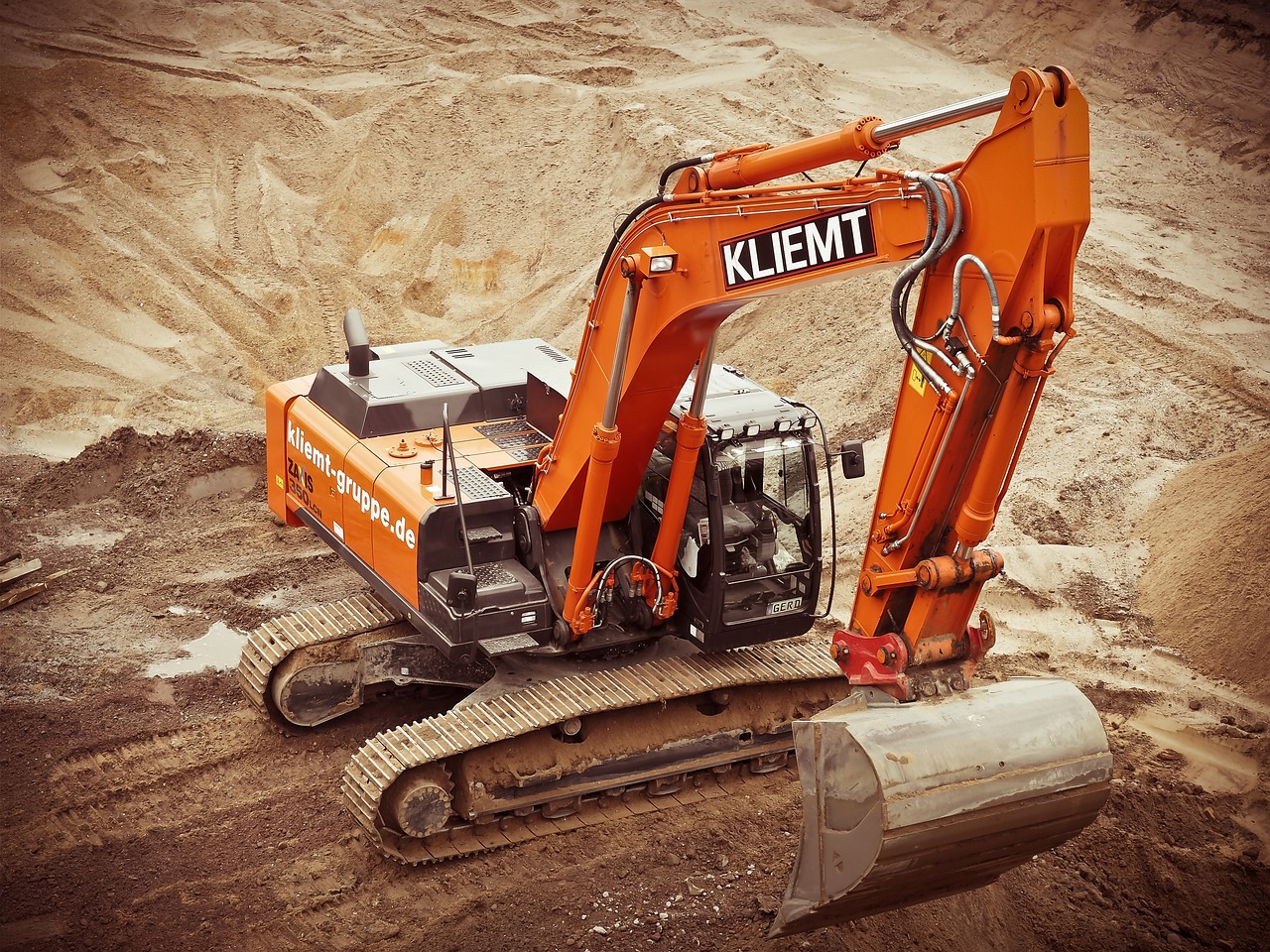
Every construction project, from a small residential extension to a towering skyscraper, follows a structured lifecycle. Understanding these phases helps you anticipate challenges, allocate resources effectively, and maintain control from start to finish. Breaking a project down into these manageable stages is the first step towards successful delivery.
Phase 1: Project Initiation and Conception
This is the very beginning, where the project is just an idea. The primary goal here is to determine if the project is feasible and to define its broad outlines. The owner works with architects and consultants to conduct feasibility studies, assessing the project's financial viability, location suitability, and potential return on investment.
During this phase, a project charter or business case is created. This document outlines the project's vision, objectives, and key stakeholders. It answers the fundamental question: "Should we do this project?" If the answer is yes, the project gets the green light to move into the detailed planning stage. A rough budget and timeline are often established here to set initial expectations.
Phase 2: Pre-construction and Planning
Once the project is approved, the detailed planning begins. This is arguably the most critical phase, as decisions made here will impact every subsequent stage. The project team is assembled, including the project manager, architects, engineers, and key contractors. The design is refined from a concept into detailed blueprints and technical specifications.
A comprehensive project management plan is developed, which includes a detailed work breakdown structure (WBS), a precise schedule (often using Gantt charts), and a line-item budget. Risk assessment is crucial; the team identifies potential risks—such as supply chain disruptions, labour shortages, or unexpected site conditions—and develops mitigation plans. This is also the stage where all necessary permits and legal approvals are secured, a process that can be complex and time-consuming. Ensuring all contracts are clear and legally sound is vital, and using a service like LegalContracts can help create customised, professional agreements to protect all parties involved.
Phase 3: Procurement
With a solid plan in place, the procurement phase involves sourcing everything needed to build the project. This isn't just about buying materials; it's a strategic process of acquiring labour, equipment, and services. The project manager or a procurement team will send out bids or tenders to subcontractors and suppliers.
This process involves evaluating proposals, negotiating prices, and awarding contracts. Careful selection of vendors is critical to ensuring quality and reliability. The procurement team must also manage the logistics of material delivery, ensuring that concrete, steel, and other supplies arrive on-site exactly when they are needed to avoid delays and storage issues.
Phase 4: Construction and Execution
This is the phase where the building happens and the plan is put into action. The project manager oversees all on-site activities, coordinating the work of various subcontractors to ensure everyone is working in the correct sequence. Daily and weekly meetings are held to track progress, resolve issues, and plan upcoming tasks.
Safety management is a top priority during execution. The project manager is responsible for ensuring the site complies with all health and safety regulations to prevent accidents. Quality control is also constant, with regular inspections to verify that work is being completed according to the specifications and drawings. This is the most dynamic and resource-intensive phase of the project.
Phase 5: Monitoring and Control
This phase runs concurrently with the execution phase. It's all about measuring progress against the plan and taking corrective action when necessary. The project manager uses Key Performance Indicators (KPIs) to track performance related to cost, schedule, and quality.
Regular progress reports are sent to stakeholders to keep them informed. If the project is falling behind schedule or going over budget, the manager must identify the cause and implement a solution. This phase also involves managing change orders. If the client requests a change, the manager must assess its impact on cost and schedule, get formal approval, and update the project plan accordingly.
Phase 6: Project Closeout and Handover
The final phase begins once construction is complete. It involves a series of steps to formally close the project and hand it over to the owner. A final inspection, or 'punch list', is conducted to identify any minor defects or outstanding issues that need to be rectified before final acceptance.
All project documentation, including warranties, manuals, and as-built drawings, is compiled and given to the owner. The commissioning process ensures all systems (like HVAC, electrical, and plumbing) are tested and functioning correctly. Once the owner is satisfied, a certificate of substantial completion is issued, all final payments are made, and the building is ready for occupancy.
Key Benefits: Why Effective Construction Project Management Matters
Implementing a formal construction project management framework isn't just about ticking boxes; it delivers tangible benefits that directly impact the bottom line and project success. Without it, projects are susceptible to chaos, financial loss, and failure. Here’s a deeper look at the advantages.
Enhanced Budget Control and Cost Savings
One of the most significant benefits is rigorous financial oversight. A project manager establishes a detailed budget during the planning phase and continuously tracks actual spending against it. This proactive monitoring allows them to spot potential overruns early and take corrective action.
Effective management also leads to cost savings through efficient resource allocation, waste reduction, and better negotiation with suppliers and subcontractors. By preventing costly delays and rework, good project management directly protects the project's profitability. According to a report by the Project Management Institute (PMI), organisations that undervalue project management report 67% more of their projects failing outright.
Improved Time Management and Scheduling
Time is money in construction. A project manager develops a detailed project schedule using tools like the Critical Path Method (CPM) to identify the sequence of tasks that directly impact the project's completion date. This allows the team to focus on the most critical activities.
By managing dependencies between tasks and allocating resources efficiently, a project manager ensures the project stays on track. When delays do occur—due to weather, material shortages, or other issues—the manager can adjust the schedule to minimise the overall impact, keeping stakeholders informed of any changes to the completion date.
Superior Quality Assurance
Delivering a project on time and on budget is meaningless if the quality is poor. Construction project management establishes clear quality standards and specifications from the outset. Throughout the execution phase, regular inspections and quality control checks are performed to ensure all work meets these standards.
This focus on quality prevents defects and the need for costly rework later on. It ensures that the final building is not only safe and functional but also meets the client's expectations, leading to higher client satisfaction and a better reputation for the construction firm.
Proactive Risk Mitigation
Construction is an inherently risky business. A structured management approach involves identifying potential risks during the planning phase and developing strategies to mitigate them. These risks can range from safety hazards and labour disputes to regulatory changes and unforeseen ground conditions.
By having a risk management plan in place, the project team is prepared to respond to issues when they arise, rather than being caught off guard. This proactive stance reduces the likelihood of major disruptions that could derail the project, saving both time and money.
Pro Tip: Create a Risk Register early in the planning phase. List every potential risk, its probability, its potential impact, and a planned response. Review and update this document at every project meeting to stay ahead of problems.
Choosing the Right Construction Management Software
In the 21st century, managing a construction project with spreadsheets and paper documents is no longer viable. The complexity of modern projects demands specialised software that can centralise information, automate workflows, and provide real-time insights. Choosing the right platform is a critical decision that can significantly impact efficiency and profitability.
Key Features to Look For
When evaluating software options, there are several core features that are essential for effective construction management. Your choice should align with your company's specific needs, but these features form a solid foundation for any good platform.
- Project Scheduling: The ability to create and manage detailed project timelines, often with Gantt charts to visualise dependencies and the critical path.
- Cost Control and Budgeting: Tools for creating budgets, tracking expenses in real-time, managing change orders, and forecasting final costs.
- Document Management: A centralised repository for all project documents, including blueprints, contracts, RFIs (Requests for Information), and daily reports. Version control is essential.
- Collaboration and Communication: Features that allow team members, subcontractors, and clients to communicate and share information easily, reducing misunderstandings.
- Mobile Accessibility: The ability for site managers and workers to access project information, submit reports, and view plans from a mobile phone or tablet is crucial for on-the-go work.
- Safety and Compliance: Modules specifically designed for managing safety inspections, incident reporting, worker certifications, and compliance with regulations.
Factors to Consider Before You Buy
Beyond features, you need to consider how the software will fit into your business operations. A powerful tool that is difficult to use or doesn't scale with your company can become more of a hindrance than a help.
- Ease of Use: The interface should be intuitive for both office staff and field crews. A steep learning curve can lead to low adoption rates, defeating the purpose of the investment.
- Scalability: Can the software grow with your business? It should be able to handle both small projects and large, complex ones as your company expands.
- Integration Capabilities: Does it integrate with other software you already use, such as accounting or payroll systems? Smooth data flow between systems saves time and prevents errors.
- Customer Support and Training: Look for a provider that offers robust customer support and comprehensive training resources to help your team get up and running quickly.
Top Software Recommendations for Beginners
Navigating the market for construction management software can be tough. There are dozens of options, each with different strengths. Here are a couple of excellent recommendations that cater to different needs, especially for those just starting to formalise their project management processes.
1. BrickControl: The All-in-One Solution
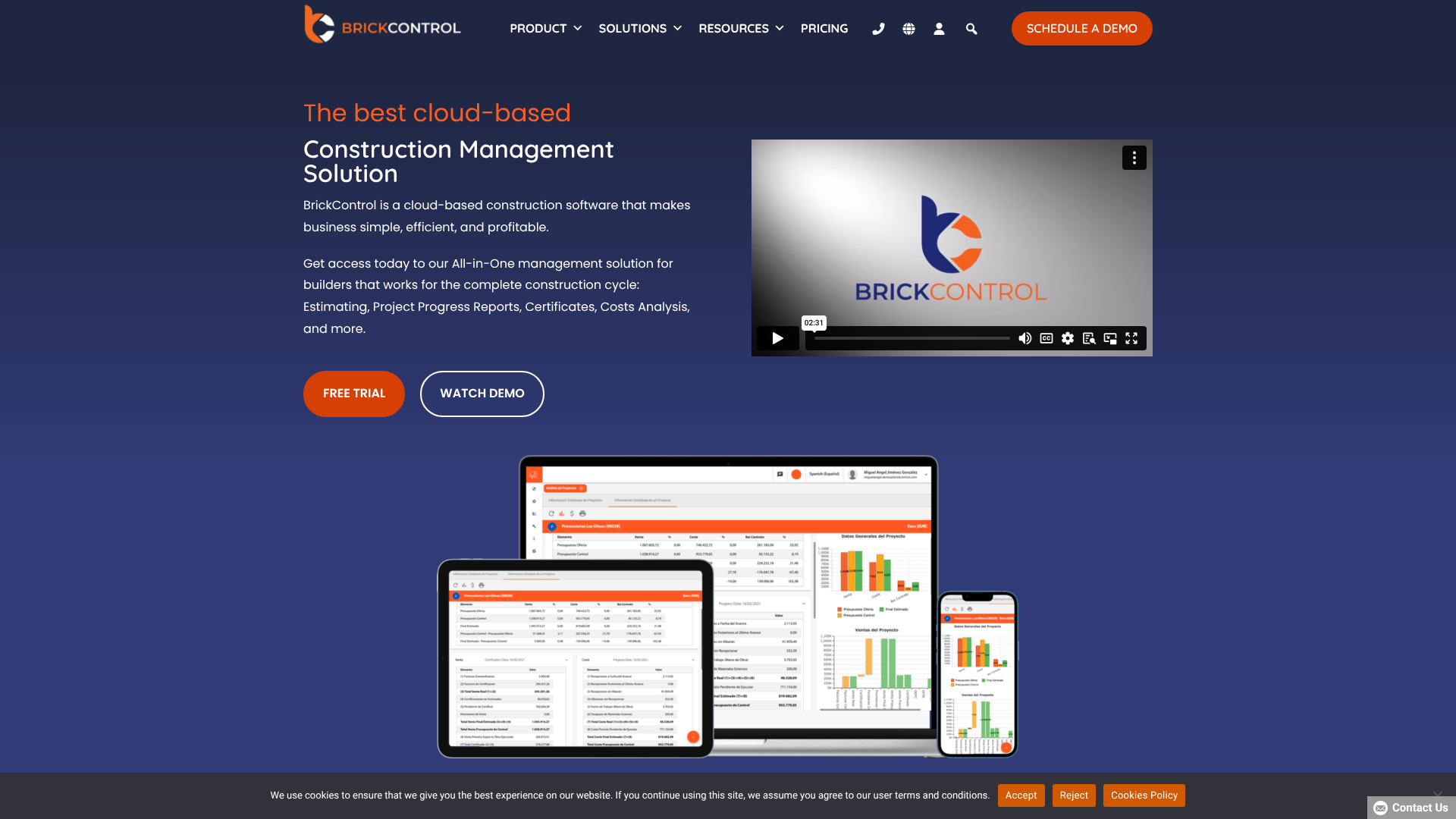
For companies looking for a comprehensive platform that covers nearly every aspect of construction management, BrickControl is a powerful choice. It's designed as an integrated ERP (Enterprise Resource Planning) system, meaning it connects project management with financials, procurement, and resource management in one place.
This all-in-one approach eliminates the need for multiple, disconnected software tools. You can manage budgets, track project progress, handle purchasing, and generate detailed financial reports from a single dashboard. Its strength lies in providing a complete overview of your business's health, not just individual projects.
Pros
- Fully Integrated: Combines project management with accounting and ERP features for a holistic view.
- Strong Financial Controls: Excellent tools for budgeting, cost tracking, and profitability analysis.
- Scalable: Suitable for small contractors and can grow with a business to handle more complex operations.
Cons
- Learning Curve: As a comprehensive ERP, it may have a steeper learning curve than simpler, single-purpose tools.
- Can be Overkill for Very Small Projects: Sole traders or those managing very simple jobs might not need its full range of features.
2. HammerTech: For Safety and Compliance Focus
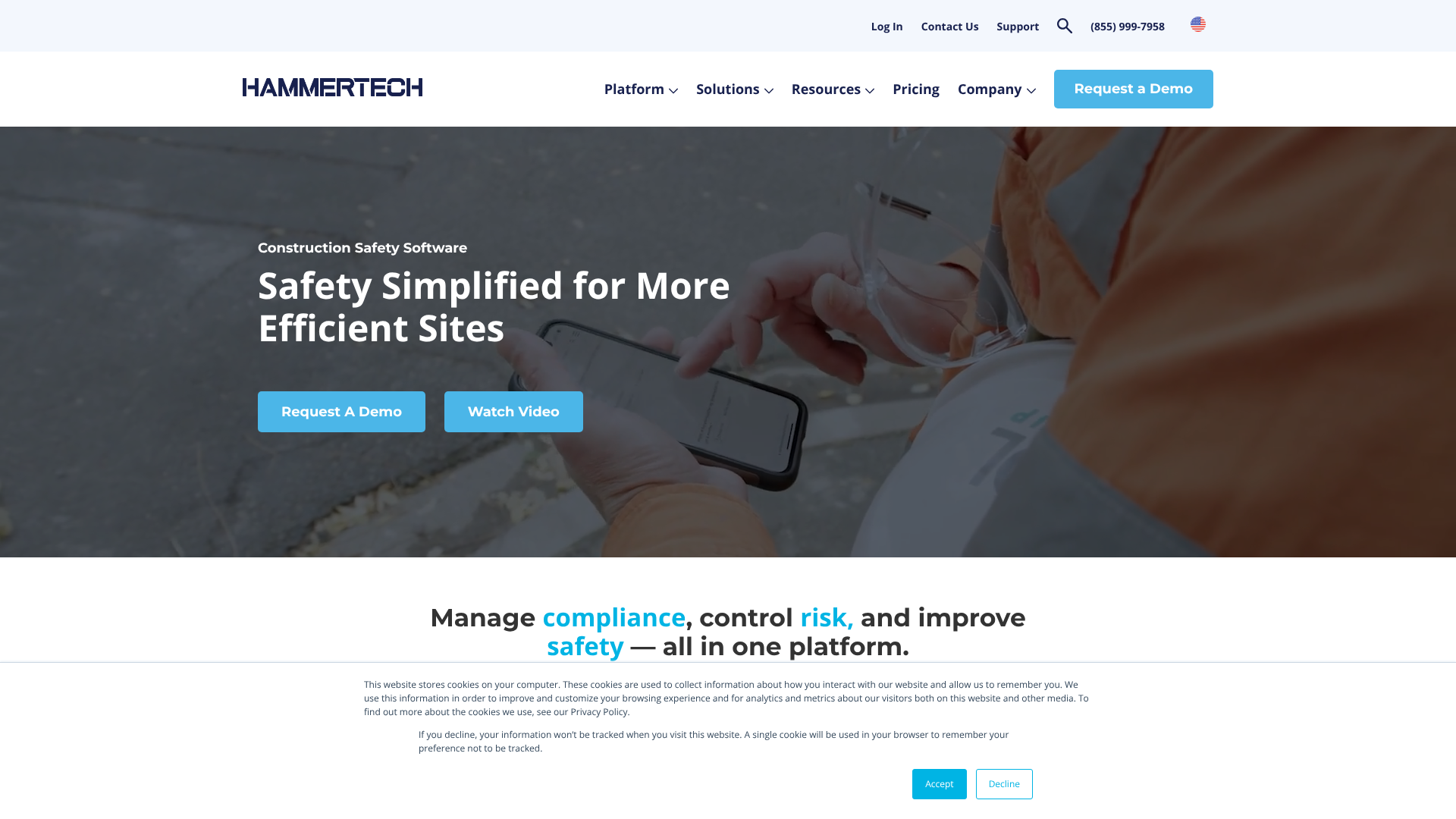
If your primary concern is improving on-site safety, streamlining operations, and ensuring regulatory compliance, then HammerTech is an industry leader. While it handles many aspects of project management, its core focus is on field operations and safety management.
HammerTech excels at managing worker orientations, safety inspections, permits, and incident reporting. It digitises processes that are often handled with paper, making them more efficient and providing a clear audit trail. This focus helps reduce risk, lower insurance premiums, and create a safer working environment for everyone on site.
Pros
- Best-in-Class Safety Features: Unmatched tools for managing all aspects of health and safety compliance.
- Streamlines Field Operations: Simplifies daily logs, worker check-ins, and equipment management.
- Reduces Risk and Liability: Provides robust documentation to demonstrate due diligence and compliance.
Cons
- Niche Focus: It's not a full-suite financial or bidding tool. It's best used alongside an accounting system.
- Primarily for Larger Teams: The platform delivers the most value on larger projects with many subcontractors and a strong focus on formal safety protocols.
Understanding Pricing and Costs
Investing in construction management software requires understanding the different pricing models and potential hidden costs. Most software is sold as a SaaS (Software as a Service) subscription, typically billed monthly or annually. The most common models include:
- Per User, Per Month: You pay a flat fee for each person who needs access to the software. This is simple but can become expensive for large teams.
- Tiered Plans: Providers offer several plans (e.g., Basic, Pro, Enterprise) with different feature sets and usage limits. You choose the tier that best fits your company's size and needs.
- Percentage of Project Value: Some platforms charge a fee based on the total value of the construction projects you manage through the system.
When comparing costs, look beyond the subscription fee. Ask about potential hidden costs such as one-time setup or implementation fees, charges for data migration, costs for training your team, and whether ongoing customer support is included or an extra charge. Always visit the provider's website for the most current pricing information and request a custom quote for your business.
Common Mistakes in Construction Management (And How to Avoid Them)
Even with the best tools, beginners can fall into common traps. Being aware of these pitfalls is the first step to avoiding them and ensuring your projects run smoothly. Here are some of the most frequent mistakes made in construction management.
Poor Communication
Communication breakdowns are the root cause of many project failures. When stakeholders aren't kept in the loop, or when instructions to subcontractors are unclear, mistakes happen. This can lead to rework, delays, and disputes.
How to Avoid It: Establish a clear communication plan from the start. Define who needs to be informed about what, and how often. Use a centralised software platform where all communication is logged and accessible, creating a single source of truth for the entire project team.
Inaccurate Cost and Time Estimates
Overly optimistic estimates set a project up for failure from day one. Underestimating costs can destroy profitability, while unrealistic timelines create immense pressure and lead to cut corners. This often happens due to a lack of historical data or pressure to win a bid.
How to Avoid It: Base your estimates on historical data from similar projects whenever possible. Break down the project into the smallest possible tasks and estimate each one individually (bottom-up estimating). Always include a contingency fund (typically 5-10% of the total budget) to cover unexpected costs.
Neglecting Risk Management
Many new managers focus entirely on the plan and fail to consider what could go wrong. They assume the best-case scenario and are unprepared when a key supplier goes out of business, a storm floods the site, or a critical piece of equipment breaks down.
How to Avoid It: Dedicate time during the planning phase to brainstorm potential risks with your team. For each risk, assess its likelihood and potential impact, and develop a response plan. This proactive approach turns potential disasters into manageable problems.
Pro Tip: Don't just file the risk plan away. Make risk management a standing agenda item in your weekly project meetings. This keeps potential threats top-of-mind and allows the team to adapt as new risks emerge.
Scope Creep
Scope creep is the term for uncontrolled changes or additions to the project's scope without corresponding adjustments to time and budget. It often starts with a small client request that seems easy to accommodate, but many small changes can quickly derail a project.
How to Avoid It: Implement a formal change order process. Any requested change, no matter how small, must be documented. Its impact on the schedule and budget must be calculated and approved in writing by the client before any work begins. This maintains control and ensures you are compensated for extra work.
Frequently Asked Questions (FAQ)
What is the most important skill for a construction project manager?
While technical knowledge is important, the single most critical skill is communication. A construction project manager must effectively communicate with a wide range of people, from clients and architects to labourers and government inspectors. The ability to clearly convey information, actively listen, negotiate conflicts, and build relationships is what separates good managers from great ones.
What are the main differences between construction management and project management?
Construction management is a specialised form of project management. While both disciplines share core principles like managing scope, time, and budget, construction management deals with unique challenges. These include a heavy emphasis on on-site safety, navigating building codes and regulations, managing physical logistics of materials and equipment, and coordinating a diverse, often contract-based workforce in a dynamic field environment.
How does technology impact project management in construction?
Technology has transformed the industry. Modern software allows for real-time collaboration, accurate cost tracking, and streamlined document control. Drones are used for site surveys, Building Information Modeling (BIM) creates 3D models of projects before construction begins, and mobile apps put project plans and safety checklists in the hands of every worker on site, increasing efficiency and reducing errors.
What is the 'critical path' in construction scheduling?
The critical path is the longest sequence of dependent tasks that must be completed to finish the project. Any delay in a task on the critical path will directly delay the entire project's completion date. Project managers identify and closely monitor the critical path to know where to focus their attention to keep the project on schedule.
Can I manage a small construction project without special software?
For a very small, simple project (like a minor home renovation), you might be able to get by with spreadsheets and manual methods. However, as soon as a project involves multiple subcontractors, a detailed schedule, and a formal budget, dedicated software becomes essential. The risk of errors, miscommunication, and cost overruns increases exponentially with project complexity, and software is the best tool to manage that risk.
Final Thoughts
Stepping into the world of project management for construction projects is a challenging but incredibly rewarding endeavour. It's a discipline that demands a unique blend of technical knowledge, leadership, and communication skills. By understanding the core phases, recognising the immense benefits of a structured approach, and leveraging the right technology, you can bring control and predictability to even the most complex builds.
Remember that success isn't about having a perfect plan from day one; it's about creating a solid plan and then skilfully managing the inevitable changes and challenges that arise along the way. Avoiding common mistakes like poor communication and scope creep will set you on a path to delivering projects that are not only profitable but also a source of pride.
If you're ready to upgrade your processes, exploring a dedicated software solution is the logical next step. For an all-in-one platform that combines project management with financials, consider exploring what BrickControl has to offer. If your main priority is enhancing site safety and operational efficiency, a specialised tool like HammerTech could be the right fit for your team.