



How to Write a Cold Email for an Internship That Gets Replies
Sending a cold email for an internship can feel like shouting into the void. You spend hours researching companies and crafting the perfect message, only to be met with silence. This guide will show you how to change that. By moving beyond generic templates and adopting a strategic approach, you can turn cold outreach into your most effective tool for landing an internship, even at companies that aren't officially hiring.
- Essential Points
- What Exactly is a Cold Email for an Internship?
- Why Cold Emailing for Internships is a Powerful Strategy
- Bypass the Crowded Application Portals
- Access the "Hidden" Job Market
- Demonstrate Proactivity and Initiative
- The 5-Step Process for Cold Emailing Success
- Step 1: Strategic Research and Targeting
- Step 2: Crafting the Perfect Subject Line
- Step 3: Writing a Compelling Email Body
- Step 4: Attaching Your CV and Portfolio
- Step 5: The Art of the Follow-Up
- Internship Email Templates You Can Adapt
- Tools to Supercharge Your Internship Outreach
- Common Mistakes to Avoid When Cold Emailing for Internships
- Frequently Asked Questions (FAQ)
- How many cold emails should I send?
- What's the best time of day to send an internship cold email?
- Should I attach my CV?
- What if I don't get a reply?
- Can I cold email for an internship with no experience?
- Final Thoughts: Your Proactive Path to an Internship
This isn't about spamming hundreds of inboxes. It's about targeted, personalised communication that demonstrates your value and initiative. We'll walk through the entire process, from finding the right person to email to writing a message they'll actually want to read and, most importantly, reply to. You'll learn the structure, the psychology, and the tools that can help you bypass the crowded online application portals and get your name in front of decision-makers.
Essential Points
- Personalisation is Non-Negotiable: A generic, copy-pasted internship cold email is destined for the bin. Research the person and the company to show you've done your homework and have a genuine interest.
- The Subject Line Determines Everything: Your email's subject line is the single most important sentence. It must be compelling, specific, and professional to earn a click instead of being marked as spam.
- Focus on Giving, Not Taking: Frame your email around the value you can provide to the company, not just what you want to get out of the internship. Showcase your skills and enthusiasm.
- Polite Persistence Pays Off: Most replies don't happen after the first email. A structured and polite follow-up strategy is essential for increasing your response rate without being annoying.
- Use Tools to Work Smarter, Not Harder: Leverage technology to find contact information, track your outreach, and manage follow-ups. This allows you to focus your energy on writing high-quality, personalised emails.
What Exactly is a Cold Email for an Internship?
A cold email for an internship is a proactive message sent to a professional at a company you're interested in, without any prior contact. Unlike a traditional application submitted through a job portal, this email isn't a response to a specific, advertised opening. Instead, it's an initiative you take to introduce yourself, express your interest in their work, and inquire about potential opportunities that may not be publicly listed.
The primary goal isn't necessarily to ask for an internship outright in the first message. Doing so can seem presumptuous. The immediate objective is to start a conversation. You're aiming to build a connection, get on their radar, seek advice, or learn more about the industry.
A successful cold email opens a door, transforming a "cold" contact into a "warm" one who is now aware of you and your potential.
This strategy is fundamentally about networking and creating your own opportunities. While millions of students are competing for the same advertised roles on LinkedIn and Indeed, you're bypassing the queue and speaking directly to the people who make hiring decisions. It's a way to demonstrate ambition, resourcefulness, and a genuine passion for the company's mission—qualities that are highly valued in any prospective intern.
Why Cold Emailing for Internships is a Powerful Strategy

In a competitive job market, relying solely on public job postings is a reactive strategy. Cold emailing for internships flips the script, putting you in control of your search. It's more than just sending an email; it's a strategic move that offers several distinct advantages over traditional methods.
Bypass the Crowded Application Portals
When a company posts an internship opening online, it can receive hundreds, if not thousands, of applications. Your carefully prepared CV can easily get lost in this digital pile, often filtered out by Applicant Tracking Systems (ATS) before a human ever sees it. A well-crafted internship cold email lands directly in the inbox of a relevant person—a team lead, a department head, or a senior employee.
This direct line of communication ensures your message is seen by a human. It allows you to make a personal impression that a standard application form simply can't convey. You're no longer just another applicant in a spreadsheet; you're an individual who has taken the initiative to reach out personally.
Access the "Hidden" Job Market
Many internships and entry-level roles are never formally advertised. They are filled through internal referrals, networking, or by opportunistic managers who meet a promising candidate at the right time. This is often referred to as the "hidden job market," and according to some career experts, it can account for a significant portion of all hires.
Cold emailing is your key to this hidden market. A manager might not have an open role today, but your impressive email could prompt them to create one. They might be thinking about needing help in a few months, and your message arrives at the perfect moment. By reaching out, you position yourself to be the first person they think of when a need arises.
Demonstrate Proactivity and Initiative
Perhaps the most significant benefit is what the act of cold emailing says about you. It shows that you are a go-getter, resourceful, and not afraid to take risks. These are precisely the soft skills that employers are desperate to find in young talent. Any student can click "Apply" on a website, but it takes confidence and effort to identify a key person, find their contact details, and write a compelling, personalised message.
This single action demonstrates problem-solving skills, research abilities, and strong communication. Before they've even read your CV, you've already provided evidence that you are a candidate who takes initiative—a powerful first impression that sets you far apart from the passive applicant.
The 5-Step Process for Cold Emailing Success
Effective cold emailing is a science and an art. It requires a methodical process to ensure your message is targeted, well-written, and professional. Following these five steps will dramatically increase your chances of getting a positive response.
Step 1: Strategic Research and Targeting
This is the most critical step. Sending a brilliant email to the wrong person is a waste of time. Your goal is to find the one person who is most likely to care about your message.
First, identify companies that genuinely interest you. Think beyond the big, famous names. Smaller companies or startups are often more accessible and may have a greater need for proactive interns. Once you have a list of companies, your next task is to find the right person.
Avoid generic addresses like info[[@company](https://[twitter](https://twitter.com/company).com/company).com](https://www.instagram.com/company.com/) or careers[[@company](https://[twitter](https://twitter.com/company).com/company).com](https://www.instagram.com/company.com/). You want to email a specific individual.
Look for the head of the department you want to work in. For a marketing internship, find the Marketing Manager or Head of Growth. For a software engineering role, target an Engineering Manager or a Senior Developer. LinkedIn is your best friend here.
Use its search filters to narrow down people by company, job title, and location.
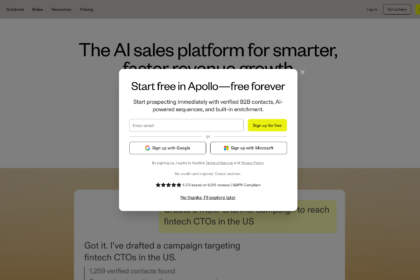
Once you've identified your target, you need their email address. This is where tools become invaluable. A platform like Hunter.io is designed for this exact purpose; you enter a person's name and company, and it finds their likely email pattern. For a more advanced search, Apollo.io provides a massive database of contacts that you can filter by numerous criteria, giving you both names and verified email addresses.
-64e2c521-c8d6-4aaa-b0cf-93a3cd9b9a87-1773911708868-wvmgzm.png "How to Write a Cold Email for an Internship That Gets Replies 3")
Step 2: Crafting the Perfect Subject Line
The subject line is your first impression. If it's boring, generic, or looks like spam, your email will be deleted without ever being opened. A great subject line is specific, personalised, and professional.
Avoid vague titles like "Internship Application" or "Question." These are easily ignored. Instead, try to create a connection or spark curiosity. Here are a few effective formulas:
- The University Connection:
Question from a University of Manchester Student - The Specific Interest:
Following up on your talk about AI Ethics - The Referral (if you have one):
Referral from [Mutual Connection's Name] - The Direct Approach:
[Your Name] <> [Their Company Name] | Aspiring Product Manager
Notice how each example provides context. It tells the recipient who you are and why you might be emailing them, making it feel less like spam and more like a genuine, individual message. Keep it short and mobile-friendly, as many people will first see your email on their phone.
Step 3: Writing a Compelling Email Body
Your email body should be concise, respectful, and focused on the recipient. A good structure to follow is one that is under 150 words and broken into three short paragraphs.
Paragraph 1: The Personalised Opening. Start by explaining why you're emailing them specifically. This is where your research pays off. Mention something they've done that you admire. It could be a project they led, an article they wrote, or a podcast they appeared on.
This shows you've done your homework and aren't just blasting out a template.
*Example: "Dear Mr. Smith, I was incredibly impressed by the recent launch of the new mobile app feature your team developed. The focus on user accessibility was particularly inspiring."
Paragraph 2: The Brief Introduction & Value Proposition. Quickly introduce yourself and connect your skills or passion to their work. Don't just list your qualifications; explain how they are relevant to the company. Briefly mention one or two key skills or a specific project you've completed that aligns with their goals.
*Example: "As a third-year computer science student with a passion for user-centric design, I have been developing my own mobile applications, including one that helps students organise their study schedules. My experience with Swift and UI/UX principles could be of value to your team."
Paragraph 3: The Clear and Easy Call-to-Action (CTA). End with a simple, low-commitment request. Don't ask for an internship directly. Instead, ask for a brief conversation or advice. This is much less intimidating and makes it easier for them to say yes.
*Example: "Would you be open to a brief 15-minute chat in the coming weeks to share some advice for a student aspiring to enter the tech industry?"
Pro Tip: Always proofread your email at least twice. Use a tool like Grammarly to catch any spelling or grammar errors. A single typo can undermine the professionalism of your entire message.
Step 4: Attaching Your CV and Portfolio
To attach or not to attach? This is a common question. Attaching a large file can sometimes trigger spam filters, and some people are wary of opening attachments from unknown senders. A safer and more modern approach is to link to your professional profiles.
Include a link to your LinkedIn profile in your email signature. If you have an online portfolio, website, or GitHub profile, link to that as well. This allows the recipient to view your work on their own terms without having to download anything. It also shows that you are digitally savvy.
If you do choose to attach your CV, ensure it is a clean, well-formatted PDF file with a professional file name (e.g., FirstName-LastName-CV.pdf). Keep the file size small. A one-page CV is ideal for this purpose.
Step 5: The Art of the Follow-Up
Professionals are busy. Their inboxes are flooded. It's very likely that your first email will be missed, even if it's excellent. This is why a polite follow-up is not just acceptable; it's essential.
Many responses come only after a second or third email.
Wait for 3-5 business days before sending your first follow-up. Keep it short and professional. Simply reply to your original email (so they have the context) with a brief message.
*Example Follow-Up: "Hi Ms. Jones, I hope you're having a great week. I just wanted to gently follow up on my email from last Tuesday. I'd still love the chance to briefly connect if you have a spare moment.
Best regards, [Your Name]".
To manage this process effectively, especially if you're reaching out to multiple people, a simple tracking system is crucial. You can use a spreadsheet or a free tool like the HubSpot CRM. This allows you to log who you've contacted, when you emailed them, and when it's time to follow up, ensuring no opportunity slips through the cracks. For those looking to manage a larger-scale outreach, a platform like Reply.io can automate these follow-up sequences, saving you significant time.
Internship Email Templates You Can Adapt

While personalisation is paramount, having a solid template provides a strong foundation. Use these structures as a starting point, and be sure to customise every section to reflect your research and genuine interest. Remember to replace all bracketed information.
Template 1: The "Admirer" Approach
This template works well when you want to contact a specific person whose work you genuinely follow and respect. It focuses on making a personal connection based on their public contributions.
Subject: Question about your work on [Specific Project/Article]
Dear [Mr./Ms. Last Name],
I hope this email finds you well. My name is [Your Name], and I'm a [Your Year, e.g., second-year] student studying [Your Major] at [Your University]. I'm writing to you today because I was truly inspired by your recent article on [Article Topic] in [Publication Name]. Your insights on [Specific Point] were particularly compelling.
My studies have focused heavily on [Relevant Area], and I've been working on a personal project involving [Briefly describe a relevant project, e.g., building a predictive model in Python]. I am passionate about applying these skills to solve real-world problems, much like the work your team does at [Company Name].
I know you must be incredibly busy, but I was hoping you might be open to a brief 15-minute chat sometime in the next few weeks. I would be grateful for any advice you could offer a student looking to build a career in [Their Industry].
Thank you for your time and consideration.
Best regards,
[Your Name]
[Your LinkedIn Profile URL]
[Your Portfolio/GitHub URL (Optional)]
Template 2: The "Value Proposition" Approach
This template is more direct and focuses on a specific skill you possess that could be valuable to their team. It's effective if you have a tangible skill or experience that aligns directly with the company's work.
Subject: [Your Skill, e.g., Python & Data Visualisation] for [Company Name]
Dear [Mr./Ms. Last Name],
My name is [Your Name], a [Your Major] student from [Your University]. I've been following [Company Name]'s innovative work in [Their Field] for some time, and I am particularly impressed with your approach to [Specific Company Activity, e.g., data-driven marketing].
Through my coursework and personal projects, I have developed strong skills in [Your Key Skill 1] and [Your Key Skill 2]. I recently completed a project where I [Briefly describe achievement, e.g., analysed a dataset of 100,000 user reviews to identify key sentiment trends], and I believe this type of analytical work could support your team's goals.
I am actively seeking an internship opportunity where I can contribute my skills and learn from industry leaders like yourself. Would you be the right person to speak to regarding potential summer internships within the [Their Department] team?
Thank you for your time.
Sincerely,
[Your Name]
[Your LinkedIn Profile URL]
[Your Portfolio/GitHub URL (Optional)]
Tools to Supercharge Your Internship Outreach
Manually managing a cold email campaign can be overwhelming. Fortunately, several tools can streamline the process, allowing you to focus on quality over quantity. Using the right technology can be the difference between a scattered effort and a strategic, effective job search.
Finding Contact Information
Before you can send an email, you need an address. Guessing firstname.lastname[@company](https://[twitter](https://twitter.com).com/company).com can work, but it's inefficient. Specialised tools offer much higher accuracy.
- Hunter Campaigns (Hunter.io): Hunter is one of the most popular tools for finding email addresses. Its Domain Search feature lets you find all the email addresses associated with a company, while its Email Finder helps you locate the address of a specific professional. It also includes a verifier to check if an email is deliverable, reducing your bounce rate. The Campaigns feature even lets you send and track simple outreach sequences.
- Apollo.io: Apollo is a more comprehensive B2B database. It's a powerful tool for finding contacts with very specific criteria, such as job title, company size, industry, and technologies used. It's excellent for building a highly targeted list of potential contacts for your internship search and provides verified email addresses and even phone numbers.
Sending and Tracking Emails at Scale
Once you have your list, you need an efficient way to send emails and, crucially, follow up. A dedicated outreach platform can automate this process.
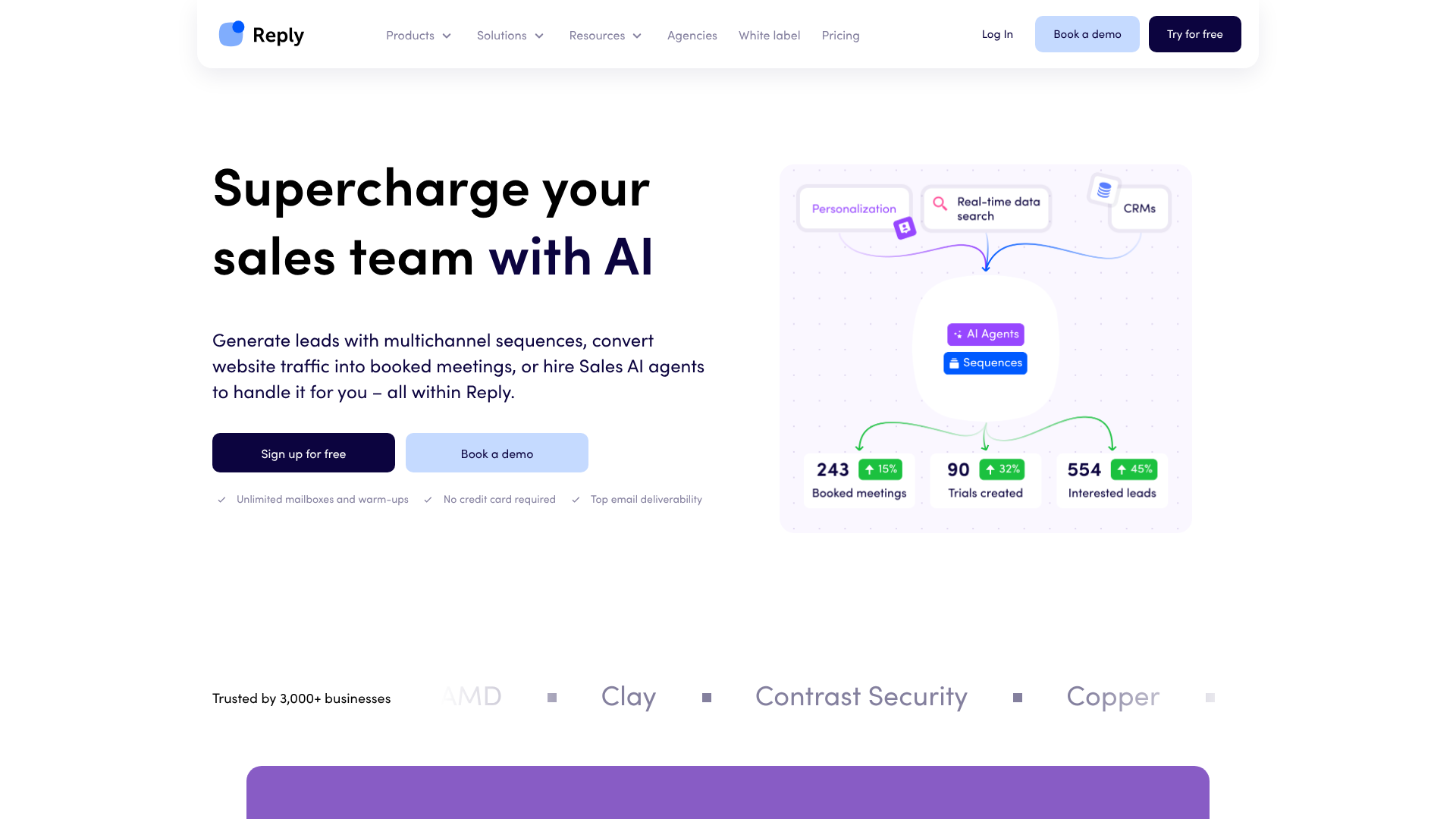
- Reply.io: While designed for sales teams, Reply.io is perfect for a serious internship search. You can create multi-step "sequences" that automatically send your initial email and a series of follow-ups at predetermined intervals until you get a reply. It tracks opens, clicks, and replies, giving you valuable data on what's working.
- Instantly.ai: Instantly is another powerful cold email platform focused on maximising deliverability. It helps your emails land in the primary inbox rather than the spam folder. It also offers features for A/B testing subject lines and email copy, allowing you to refine your approach based on performance data.
Staying Organised with a CRM
A Customer Relationship Management (CRM) system isn't just for businesses. It's an essential tool for organising your professional network and job search.
- HubSpot CRM: HubSpot offers a completely free CRM that is perfect for students. You can create a contact record for every person you email, log your communications, set reminders for follow-ups, and keep notes on your conversations. It provides a centralised dashboard for your entire outreach effort, ensuring you maintain a professional and organised approach.
- Zoho CRM: Zoho also offers a robust free edition of its CRM. It provides similar functionality to HubSpot, allowing you to manage contacts and track your communication pipeline. It's another excellent choice for anyone looking to bring structure to their internship search without any cost.
Common Mistakes to Avoid When Cold Emailing for Internships
A single mistake can get your email deleted in seconds. Being aware of these common pitfalls is just as important as knowing what to do right.
Using a Generic Template: The biggest mistake is sending an email that reads like a copy-and-paste job. If you don't mention the person's name or something specific about their company, they know you've sent the same message to dozens of others. It shows a lack of genuine interest.
A Vague or Boring Subject Line: As discussed, subject lines like "Internship Inquiry" or "Application" are death sentences. They lack urgency and personality, blending in with hundreds of other generic emails. You must stand out.
Making It All About You: Your email should not be a long list of your accomplishments and desires. Frame your message around the recipient and their company. How can you help them? Shift the focus from "I need an internship" to "I have skills that could benefit your team."
Having a Demanding or Vague "Ask": Asking for an internship directly in the first email is a big ask. It puts the person on the spot. Similarly, ending with a vague line like "Let me know if you have any opportunities" is passive. Your call-to-action should be small, specific, and easy, like asking for a 15-minute chat.
Grammar and Spelling Mistakes: This is a non-negotiable. Typos and grammatical errors signal a lack of attention to detail, which is a major red flag for any potential employer. Proofread your email multiple times before hitting send.
Not Following Up: Don't assume silence means "no." It often just means the person is busy. A polite follow-up email a few days later can bring your message back to the top of their inbox and significantly increase your chances of getting a response. Failing to follow up is leaving opportunities on the table.
Frequently Asked Questions (FAQ)
How many cold emails should I send?
Quality will always beat quantity. Sending 10 highly personalised and well-researched emails is far more effective than sending 100 generic ones. A good goal is to aim for 5-10 high-quality emails per day. This pace allows you enough time to do proper research for each person you contact while still building momentum in your search.
What's the best time of day to send an internship cold email?
While many studies suggest that mid-week (Tuesday to Thursday) and mid-morning (around 10 AM) are optimal times for email open rates, this is secondary to the quality of your email. A brilliant, personalised email sent at 8 PM will still get a better response than a generic one sent at 10 AM on a Tuesday. Don't overthink the timing; focus on making the content excellent.
Should I attach my CV?
It's generally safer to link to your LinkedIn profile and online portfolio in your email signature rather than attaching your CV. This avoids potential spam filters and the recipient's hesitation to open attachments from strangers. If a company's career page or a contact specifically asks for a CV, then you should attach it as a cleanly formatted, one-page PDF.
What if I don't get a reply?
Do not take it personally. Professionals receive hundreds of emails a day, and yours may have been missed. This is why following up is crucial. Send a polite follow-up after 3-5 business days.
If you still don't hear back after a second follow-up a week later, it's best to move on. The key is to be persistent but not pestering.
Can I cold email for an internship with no experience?
Absolutely. When you have limited professional experience, your cold email should focus on your potential, passion, and transferable skills. Highlight relevant university coursework, personal projects, and extracurricular activities. Showcase your enthusiasm for the industry and your eagerness to learn.
A candidate who demonstrates immense drive and a proactive attitude can be just as appealing as one with a previous internship.
Final Thoughts: Your Proactive Path to an Internship
Landing a great internship often requires you to create your own luck. The cold email for an internship strategy is the ultimate way to do that. It puts you in the driver's seat, allowing you to connect with the companies you truly admire, not just the ones with active listings. It's a skill that requires practice, patience, and a bit of courage, but the potential rewards are immense.
Remember the core principles: research meticulously, personalise every message, focus on the value you can offer, keep it concise, and always follow up. Each email you send is an opportunity to build your network and refine your communication skills. Even a "no" is a step forward, as it often comes with valuable feedback or a new contact for the future.
To make your outreach efforts more efficient and organised, consider using the tools at your disposal. A platform like Hunter.io can solve the challenge of finding contacts, while the free HubSpot CRM is an excellent way to track your conversations and ensure you never miss a follow-up. By combining a smart strategy with the right technology, you can turn cold outreach into your most powerful tool for launching your career.