
How to Cold Email for a Job and Get a Reply: A Step-by-Step Guide
The traditional job search can feel like sending your CV into a black hole. You spend hours tailoring your application, click 'submit', and often hear nothing back. Learning how to cold email for a job is a proactive strategy that bypasses the crowded application portals and puts you directly in front of the people who make hiring decisions, giving you a powerful advantage in a competitive market.
- What You'll Learn
- The Power of Proactive Job Seeking: Why Cold Emailing Works
- Step 1: Laying the Groundwork with In-Depth Research
- Identifying Your Target Companies
- Finding the Right Person to Contact
- Using Tools to Find Email Addresses
- Researching Your Contact and Their Work
- Step 2: Crafting an Irresistible Subject Line That Gets Opened
- Step 3: Structuring Your Cold Email for Maximum Impact
- The Personalised Opening Line
- The Value Proposition (Your 'Why')
- The Clear and Simple 'Ask' (Call to Action)
- The Professional Closing and Signature
- The Art of Personalisation: Making Your Email Stand Out
- Show, Don't Tell: Highlighting Your Skills and Experience
- The Crucial Follow-Up: How and When to Nudge Without Annoying
- Common Mistakes in Cold Emailing for Jobs (And How to Avoid Them)
- Beyond Email: Using LinkedIn for a Warmer Outreach
- Real-World Success: Examples of Effective Cold Emails
- FAQ: Your Cold Emailing Questions Answered
- What is the 30/30/50 rule for cold emails?
- Is cold emailing for a job illegal?
- How do I start off a cold email?
- Is cold emailing worth it?
- What are common cold email mistakes?
- Final Thoughts
This approach isn't about spamming hundreds of companies with a generic template. It's a targeted, research-driven method of communication that demonstrates your initiative, highlights your value, and opens doors to opportunities that may not even be advertised. When done correctly, a single, well-crafted cold email can be more effective than a hundred online applications.
This guide will walk you through every step of the process, from finding the right person to contact to writing an email they can't ignore and following up professionally. We'll cover the exact techniques that turn a cold outreach into a warm conversation and, ultimately, a job interview.
What You'll Learn
- Research is Non-Negotiable: The success of your cold email depends almost entirely on the quality of your research into the company, the contact person, and their specific needs.
- Personalisation is Everything: A generic, copy-pasted email will be deleted instantly. Your message must show you've done your homework and are genuinely interested in them.
- Your Subject Line is the First Test: An uninspired subject line guarantees your email will never be opened. It needs to be concise, intriguing, and professional.
- Focus on Their Problem, Not Yours: Frame your email around the value you can bring to the company, not just your desire for a job. Show how you can solve a problem for them.
- The Follow-Up Is Where You Win: Most replies come after a polite and professional follow-up. Don't be afraid to send a gentle nudge after a few days of silence.
The Power of Proactive Job Seeking: Why Cold Emailing Works

In a world of automated application tracking systems (ATS) and overflowing recruiter inboxes, the standard job application process is stacked against the candidate. Your carefully crafted CV might be filtered out by a keyword algorithm before a human ever sees it. This is where cold emailing for jobs fundamentally changes the game. It’s a direct-to-consumer approach for your career.
Instead of waiting for opportunities to be publicly listed, you create them. Many of the best roles are filled through networking or internal referrals before they ever hit a job board. A strategic cold email allows you to tap into this hidden job market. It places you on the radar of a hiring manager or team lead, making you a known quantity when a position does open up.
More importantly, sending a thoughtful cold email demonstrates valuable soft skills that employers crave: initiative, research skills, clear communication, and confidence. It shows you're not just a passive applicant but a proactive problem-solver who is genuinely invested in their company. It’s a powerful first impression that a standard application simply can't replicate.
Step 1: Laying the Groundwork with In-Depth Research
Before you even think about writing your email, you must do your homework. A generic email is a wasted email. The goal of this phase is to gather the specific intelligence you need to make your outreach feel personal, relevant, and valuable. Rushing this step is the single biggest mistake you can make.
Identifying Your Target Companies
Don't just spray and pray. Create a focused list of 10-20 companies you genuinely want to work for. Think about companies whose mission aligns with your values, whose products you admire, or whose work culture seems like a great fit. Consider their size, industry, and recent growth.
A smaller, focused list allows you to dedicate the necessary time to research each one properly, leading to a much higher response rate than a mass-emailing campaign.
Finding the Right Person to Contact
Sending your email to a generic address like info[[@company](https://[twitter](https://twitter.com/company).com/company).com](https://www.instagram.com/company.com/) or careers[[@company](https://[twitter](https://twitter.com/company).com/company).com](https://www.instagram.com/company.com/) is the equivalent of putting it straight in the bin. You need to find a specific individual. Your ideal contact is the person who would likely be your manager or the head of the department you want to join. For a software engineering role, this could be the Engineering Manager or the Head of Engineering.
For a marketing role, it might be the Marketing Director.
Use LinkedIn to identify these individuals. Search for the company, go to their 'People' tab, and use keywords like 'manager', 'director', or the specific team name (e.g., 'Product Design'). The goal is to find the decision-maker who feels the pain you can solve.
Using Tools to Find Email Addresses
Once you have a name and a title, you need their email address. Guessing can work sometimes (e.g., firstname.lastname[@company](https://[twitter](https://twitter.com).com/company).com), but it's unreliable. This is where specialised tools become invaluable. They significantly increase your chances of landing in the right inbox.
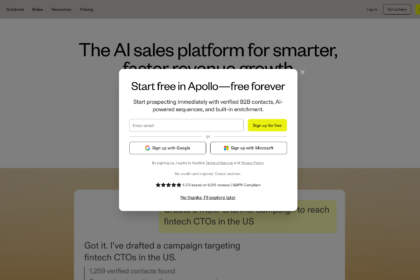
Platforms like Hunter Campaigns (Hunter.io) are designed for this exact purpose. You can enter a company's domain, and it will show you the common email patterns and often provide a list of known email addresses associated with that company. Similarly, Apollo.io is a powerful sales intelligence platform that can be used to find contact information for professionals across millions of companies. It provides verified email addresses and even mobile numbers, along with other useful data points for your research.
-922da349-c437-4730-886b-62732df11203-1767777735920-l9r8v9.png "How to Cold Email for a Job and Get a Reply: A Step-by-Step Guide 3")
Researching Your Contact and Their Work
Now that you have your target, dig deeper. This is the research that will fuel your personalisation. Look at their LinkedIn profile again. What was their career path.
Did they recently share an article or post about a challenge their team is facing. Did they speak at a conference or write a blog post. A quick Google search can reveal interviews, articles, or side projects.
Also, research the company's recent activities. Did they just launch a new product. Secure a round of funding. Announce an expansion.
Understanding their current priorities helps you tailor your value proposition to what matters to them right now. This level of detail shows you're not just looking for any job; you're interested in this job at this company.
Step 2: Crafting an Irresistible Subject Line That Gets Opened
The average professional receives over 120 emails per day. Your subject line is competing for attention in a very crowded space. It has one job: to convince a busy person to click and open your message. If it fails, the quality of your email body is irrelevant.
The best subject lines are short, specific, and intriguing.
Avoid generic and desperate-sounding subjects at all costs. Anything like "Job Application," "Enquiry about opportunities," or "Experienced Professional Seeking Role" will likely be ignored or sent straight to spam. Your subject line should feel like it's from a peer, not an anonymous applicant.
Here are a few proven formulas for effective subject lines:
- The Referral: If you have a mutual connection, use it. This is the most powerful opener. Example:
Referral from Jane Doe - The Specific Question: This sparks curiosity and frames you as a problem-solver. Example:
Quick question about the new mobile UI - The Value Proposition: This leads with the benefit you offer. Example:
Idea for improving user onboarding - The Personal Connection: This shows you've done your research on the individual. Example:
Enjoyed your podcast on scaling tech teams
Keep it concise, ideally under 10 words. Many people read emails on their mobile phones, where longer subject lines get cut off. The goal is to create enough curiosity and relevance to earn a click, setting the stage for the rest of your email to work its magic.
Step 3: Structuring Your Cold Email for Maximum Impact
Once your subject line gets the email opened, the body of your message needs to deliver on that promise quickly and effectively. The structure should be logical, concise, and focused entirely on the recipient. A good rule of thumb is to keep the entire email under 200 words. Busy people don't read essays; they scan for value.
The Personalised Opening Line
Start by immediately establishing why you're emailing them specifically. This is where your research pays off. Your first sentence should be a genuine, specific compliment or connection that proves you're not sending a mass email. This hook is critical for keeping their attention.
- Bad Opening:
My name is John Smith and I am writing to enquire about job opportunities. - Good Opening:
I've been following the launch of Project Atlas at your company and was incredibly impressed with the data visualisation component. - Good Opening:
I saw your recent LinkedIn post about the challenges of scaling customer support and it really resonated with my experience at my previous role.
The Value Proposition (Your 'Why')
This is the heart of your email. In 2-3 sentences or bullet points, you need to connect your skills and accomplishments directly to the company's needs or goals. Don't just list your responsibilities; showcase your results. Use quantifiable achievements to demonstrate your impact.
For example, instead of saying "I was responsible for social media marketing," say:
At my last company, I grew our organic social media traffic by 45% in six months.I developed and executed a content strategy that led to a 20% increase in lead generation.
This section should answer the recipient's unspoken question: "Why should I care?" Make it clear how you can solve a problem or help them achieve a goal.
The Clear and Simple 'Ask' (Call to Action)
Your email must have a clear call to action (CTA), but it's crucial to make it a low-friction request. Directly asking for a job is too aggressive and puts the recipient on the defensive. Instead, your goal is to start a conversation. The best 'ask' is for a brief amount of their time and expertise.
Examples of effective, low-commitment CTAs:
Would you be open to a brief 15-minute chat next week to discuss how my skills in UX research could benefit your team?If you're the right person to speak with, I'd love to find 10 minutes to share an idea I have for your user onboarding flow.If you're not the right person, could you please point me in the direction of who might be?
The Professional Closing and Signature
End your email with a simple, professional closing like "Best regards," or "Kind regards,". Your signature should be clean and provide essential information without being cluttered. Include your full name, a link to your LinkedIn profile, and a link to your portfolio or personal website if you have one. There's no need to include your home address or a photo.
The Art of Personalisation: Making Your Email Stand Out
We've touched on personalisation, but it's so important that it deserves its own section. This is the single factor that separates a successful cold email from one that gets deleted. True personalisation goes far beyond using a mail merge to insert a person's name and company. It's about demonstrating genuine interest and a deep understanding of their context.
Think of it as showing your work. Anyone can find a name. Only a dedicated candidate will take the time to understand what that person cares about. Mentioning a specific company project is good.
Mentioning a specific challenge within that project that you have experience solving is great. Referencing a quote from a podcast they were on a month ago is exceptional.
This level of detail makes the recipient feel seen and respected. It changes the dynamic from a job seeker asking for something to a peer offering valuable insight. As one hiring manager on LinkedIn noted, "The emails I reply to are the ones that show they understand my team's recent product launch and have a specific idea for how to improve it. It shows they're already thinking like a team member."
Pro Tip: Create a 'personalisation' field in your job search tracker. For each contact, jot down 2-3 unique points you discovered during your research (e.g., a recent article they wrote, a shared university, a comment they made on a post). This gives you a quick reference when you're ready to write the email.
Show, Don't Tell: Highlighting Your Skills and Experience

When you get to the value proposition part of your email, it's tempting to list your job duties. Resist this urge. Your responsibilities describe what you were supposed to do; your accomplishments describe how well you did it. Hiring managers care about results, not tasks.
The most effective way to communicate your value is by using concrete, quantifiable data.
Instead of saying:
- Managed the company blog and wrote articles.
Say:
• Grew monthly blog readership from 10,000 to 50,000 in one year through a data-driven SEO content strategy.
Instead of saying:
- Worked on improving the mobile app.
Say:
• Led a redesign of the checkout flow in our mobile app, resulting in a 15% reduction in cart abandonment.
Numbers cut through the noise. They provide tangible proof of your capabilities and help the hiring manager immediately grasp the potential return on investment of hiring you. If you don't have hard numbers, you can still focus on the outcome. For example, "Streamlined a reporting process that saved the team approximately 5 hours per week."
The Crucial Follow-Up: How and When to Nudge Without Annoying
Sending the first email is only half the battle. People are busy, and your email can easily get buried. A polite, professional follow-up is often what prompts a response. In fact, sales data shows that a significant percentage of replies come after at least one follow-up message.
Not following up is leaving opportunity on the table.
Wait about 3 to 5 business days before sending your first follow-up. Any sooner can feel impatient. The key is to be persistent but not pushy. Your follow-up email should be very short and sent as a reply to your original message.
This keeps all the context in one thread and makes it easy for the recipient to see what you're referring to.
Here's a simple and effective follow-up template:
Subject: Re: [Original Subject Line]
Hi [Name],
Just wanted to gently follow up on my email from last week. I know you're likely very busy.
Would you have 15 minutes for a brief chat next week?
Best regards,
[Your Name]
You can send one or two more follow-ups, spaced about a week apart. If you still don't hear back after three attempts, it's best to move on. While tools like Reply.io can automate follow-up sequences for sales outreach, for a job search, it's often better to manage this process manually to maintain a personal touch and adjust your approach as needed.
Common Mistakes in Cold Emailing for Jobs (And How to Avoid Them)
Even with the best intentions, it's easy to make small mistakes that can sink your cold emailing efforts. Being aware of these common pitfalls is the first step to avoiding them.
- Making it Too Long: Your email should be scannable in 30 seconds. Anything longer than 200 words is likely too long. Get to the point quickly and respect their time.
- Focusing on Yourself: Avoid phrases like "I am looking for a job" or "I need an opportunity." Frame everything around their needs and how you can provide value to their company.
- Attaching Your CV: Attaching a file to a first-contact email can trigger spam filters and seems presumptive. Instead, link to your LinkedIn profile or online portfolio in your signature.
- Typos and Grammatical Errors: This is a cardinal sin. It signals a lack of attention to detail. Use a tool like Grammarly and read your email out loud before sending it.
- A Vague Call to Action: An ask like "Let me know if you have any openings" is weak. It puts the work on them. Have a specific, easy-to-say-yes-to request, like a 15-minute call.
As a Reddit user in the r/jobsearchhacks community wisely put it, "The biggest mistake is sending a template. We can spot them a mile away. The second biggest is not proofreading. If you can't write a clean email, how can I trust you with my company's work?"
Beyond Email: Using LinkedIn for a Warmer Outreach
Cold emailing doesn't have to happen in a vacuum. You can significantly increase your chances of getting a reply by warming up your contact on LinkedIn first. This multi-channel approach makes your name familiar before your email even lands in their inbox.
Start by following the person on LinkedIn. A few days before you plan to email them, engage with their activity. Don't just 'like' their posts; leave a thoughtful, insightful comment that adds to the conversation. This demonstrates genuine interest and intelligence.
After you've engaged a couple of times, you can send a connection request. Always include a personalised note. A simple message works best:
Hi [Name], I really enjoyed your recent post on [topic]. I'm also passionate about this space and would love to connect and follow your work.
Once they accept your connection request, they are much more likely to recognise your name when your email arrives. In your email's opening line, you can even reference your new connection: Hi [Name], thanks for connecting with me on LinkedIn. As I mentioned... This simple strategy transforms a cold outreach into a much warmer one.
Real-World Success: Examples of Effective Cold Emails
Theory is helpful, but seeing it in practice is better. Let's break down two examples of effective cold emails and analyse why they work.
Example 1: The Targeted Value Proposition
Subject: Question about the [Project Name] launch
Hi Sarah,
My name is Alex, and I'm a product marketer who has been following the launch of your new analytics dashboard. The way your team has simplified complex data is brilliant.
I noticed in a recent tech article that user adoption is a key focus for you this quarter. In my previous role at Company XYZ, I developed a new user onboarding flow that increased feature adoption by 30% in the first 90 days. I also created a series of short video tutorials that reduced support tickets by 20%.
I have a few ideas on how a similar approach could accelerate adoption for your new dashboard. Would you be open to a 15-minute chat next week to discuss?
Best regards,
Alex Johnson
[LinkedIn Profile URL]
[Portfolio URL]
Why it works:
- Specific Opening: It references a specific project, showing Alex has done their research.
- Problem-Oriented: It connects directly to a known company priority (user adoption).
- Quantifiable Results: It uses hard numbers (30%, 20%) to prove value.
- Low-Friction CTA: It asks for a short chat to share ideas, not for a job.
Example 2: The Informational Interview Request
Subject: Your recent podcast on FinTech
Hi David,
I'm a recent finance graduate and just listened to your appearance on the 'Future of Money' podcast. Your insights on the importance of UX in consumer finance apps were particularly inspiring.
I'm currently exploring career paths in the FinTech space, and your journey from analyst to Head of Product at Company ABC is exactly what I aspire to. I've been working on a personal project analysing the user flows of popular banking apps, and your work has been a huge influence.
I know you're incredibly busy, but I was hoping you might be able to spare 15 minutes in the coming weeks for a brief informational chat. I'd love to ask a couple of questions about your experience in the industry.
Kind regards,
Maria Rodriguez
[LinkedIn Profile URL]
Why it works:
- Genuine Compliment: The opening is specific and shows Maria actually listened to the podcast.
- Shows Initiative: Mentioning her personal project demonstrates passion and proactivity.
- Respectful Ask: It acknowledges his busy schedule and asks for advice, not a job, which is flattering and easy to agree to.
- Clear Goal: The purpose is clearly stated as an informational interview.
FAQ: Your Cold Emailing Questions Answered
Here are answers to some of the most common questions about cold emailing for jobs.
What is the 30/30/50 rule for cold emails?
The 30/30/50 rule is a guideline for allocating your time to maximise effectiveness. It suggests spending 30% of your time on research (finding the right companies and contacts), 30% on writing and personalising the body of the email, and a crucial 50% of your effort on crafting the perfect subject line and opening sentence. This weighting emphasises that if you can't get your email opened and immediately capture attention, the rest of your work is wasted.
Is cold emailing for a job illegal?
In most Western countries, including the UK and the US, cold emailing for a job is not illegal. Regulations like GDPR (in Europe) and CAN-SPAM (in the US) are primarily aimed at commercial and bulk marketing messages, not individual, personalised outreach for networking or job-seeking purposes. However, it's essential to follow best practices: be professional, provide a clear way for them to know who you are (your signature), and don't be deceptive. If someone asks you to stop contacting them, you must respect their request.
How do I start off a cold email?
The best way to start a cold email is with a highly personalised first sentence that immediately explains why you are contacting that specific person. This 'hook' should reference something you've learned from your research. It could be a recent project they worked on, an article they wrote, a talk they gave, or a shared connection. This proves you've done your homework and prevents your email from sounding like spam.
Is cold emailing worth it?
Yes, absolutely, but only if it's done correctly. A targeted, well-researched, and personalised cold email campaign can have a much higher return on investment than spending the same amount of time sending out hundreds of generic online applications. It allows you to bypass gatekeepers, access the hidden job market, and make a memorable first impression. It's a quality-over-quantity strategy that puts you in control of your job search.
What are common cold email mistakes?
The most common mistakes include sending a generic, non-personalised template, writing an email that is too long and difficult to read, focusing on what you need instead of the value you can offer, having a vague or boring subject line, and having typos or grammatical errors. Another frequent mistake is attaching a CV to the initial email, which can appear too forward and may get caught by spam filters.
Final Thoughts
Mastering how to cold email for a job is less about finding a magic template and more about developing a strategic mindset. It’s about shifting your approach from being a passive applicant to a proactive business partner who can offer tangible value. It requires diligence in research, thoughtfulness in communication, and persistence in follow-up.
Every email you send is an opportunity to build a connection and showcase your professionalism. By focusing on the recipient's needs, demonstrating your unique value, and making your request clear and easy, you can cut through the noise and create your own opportunities.
To make the initial research phase more efficient, consider using tools designed to find professional contact information. Platforms like Hunter Campaigns (Hunter.io) and Apollo.io can significantly speed up the process of identifying the right contacts and finding their verified email addresses, allowing you to spend more time crafting the perfect, personalised message that will land you the interview.