




How to Use Cold Email Templates for Job Hunting: A Step-by-Step Guide
The traditional job application process can feel like sending your CV into a black hole. You spend hours tailoring your application, only to receive an automated rejection or, more often, complete silence. A proactive approach is needed, and that's where using effective cold email templates for a job can transform your search. This strategy allows you to bypass the crowded application portals and connect directly with the people who make hiring decisions, opening doors to opportunities that aren't even advertised yet.
- What You'll Learn
- What is a Cold Email for a Job Application?
- The Anatomy of a Winning Cold Job Email
- Step 1: The Compelling Subject Line
- Step 2: The Personalised Opening
- Step 3: The Value Proposition (Your "Pitch")
- Step 4: The Clear Call-to-Action (CTA)
- Step 5: The Professional Signature
- 7 Proven Cold Email Templates for Job Seekers
- Template 1: The Speculative Application
- Template 2: The Networking Request
- Template 3: The "I Admire Your Work" Email
- Template 4: The Follow-Up After a Networking Event
- Template 5: The Recent Graduate / Career Changer
- Template 6: Reaching Out to a Recruiter
- Template 7: The "Problem Solver" Pitch
- How to Find the Right Person to Email
- Tools to Supercharge Your Job Search Outreach
- Why You Need More Than Just Gmail
- Recommended Outreach Platforms
- Tracking Your Conversations with a CRM
- Common Mistakes to Avoid When Using Cold Email Templates for a Job
- Being Too Generic
- Making It All About You
- Writing a Novel
- Having a Weak or Vague CTA
- Forgetting to Follow Up
- Frequently Asked Questions (FAQ)
- How many follow-up emails should I send?
- Is it okay to cold email a CEO?
- What's the best time of day to send a cold email for a job?
- Should I attach my CV to the first cold email?
- Final Thoughts: Turning Templates into Opportunities
This guide breaks down the entire process, from understanding the core components of a successful outreach message to providing proven templates you can adapt. We'll cover how to find the right contacts, what common mistakes to avoid, and which tools can help you manage your outreach efficiently. By the end, you'll have a clear framework for turning cold emails into warm conversations and, ultimately, job offers.
What You'll Learn
- The Core Components: A successful cold job email requires a personalised opening, a clear value proposition that shows how you can help the company, and a specific call-to-action.
- Customisation is Key: Generic, copy-pasted templates are easily ignored. The secret is to use a template as a foundation and heavily personalise it with research about the company and the person you're contacting.
- The Full Process: We'll walk you through the essential steps, including identifying the right person to email, crafting a compelling message, and implementing a non-intrusive follow-up strategy.
- Actionable Templates: You'll get access to several
cold job email samplesdesigned for different scenarios, such as speculative applications, networking requests, and reaching out to recruiters. - Essential Tools: Learn about platforms that can help you find contact information, send email sequences, and track your conversations to stay organised throughout your job search.
What is a Cold Email for a Job Application?

A cold email for a job is a proactive message sent to a company or a specific individual within that company when there is no advertised job opening you are applying for. Unlike a traditional application where you respond to a public listing, a cold email initiates the conversation. You are introducing yourself, expressing interest in their work, and exploring the possibility of a future role. The primary goal isn't to ask for a job directly but to start a dialogue, get on their radar, and build a professional connection.
This approach fundamentally shifts the dynamic of your job search. Instead of passively waiting for opportunities to appear, you actively create them. It shows initiative, confidence, and a genuine interest in the company that goes beyond a specific job title. It demonstrates that you've done your research and believe you can add value to their team, which is a powerful first impression to make on a potential employer.
This is where job application email templates serve as a valuable starting point. They provide a structure and ensure you include all the necessary components. However, their real power is unlocked only through deep personalisation. A template gives you the skeleton, but your research and unique value proposition provide the substance that captures a hiring manager's attention.
The Anatomy of a Winning Cold Job Email
Crafting a cold email that gets a response is an art, but it's one based on a clear, repeatable formula. Each component plays a critical role in moving the reader from curiosity to action. Breaking it down into steps makes the process manageable and ensures you don't miss any crucial elements.
Step 1: The Compelling Subject Line
The subject line is your first and only chance to make an impression in a crowded inbox. It must be concise, professional, and intriguing enough to earn a click. Avoid generic and desperate-sounding titles like "Job Application" or "Enquiry about Open Roles". These are easily filtered or ignored.
Instead, aim for something that feels personal and relevant to the recipient. A good subject line often references a mutual connection, a specific department, or a shared interest. For example, "Question about the marketing team at [Company Name]" is much more effective than a generic plea. The goal is to sound like a peer reaching out, not a random applicant.
Here are a few effective formulas:
- Referral-based: "[Mutual Connection's Name] suggested I reach out"
- Specific & Curious: "Quick question about your work in [Their Area of Expertise]"
- Value-Oriented: "Idea for [Company Name]'s [Specific Project or Goal]"
Step 2: The Personalised Opening
Once they've opened the email, the first line must immediately confirm that this isn't a mass-sent message. This is where your research pays off. Start by mentioning something specific and genuine that connects you to them or their company. This could be a recent project they launched, an article they wrote, or a talk they gave.
For example, you could start with: "I was incredibly impressed by the recent launch of [Product Name] and how your team managed to [achieve a specific outcome]." This shows you're not just looking for any job; you're interested in their work specifically. This simple act of personalisation builds rapport and makes the recipient far more receptive to the rest of your message.
Avoid generic flattery like "I'm a big fan of your company." Be specific. The more detailed your reference, the more authentic your interest will appear. This opening sets a positive tone and proves you've invested time before asking for theirs.
Step 3: The Value Proposition (Your "Pitch")
This is the heart of your email. In two or three sentences, you need to connect your skills and experience directly to the company's needs or goals. Don't just list your accomplishments. Instead, frame them as solutions to problems they might be facing.
This is your chance to show, not just tell, how you can add value.
An effective pitch might sound like this: "With my five years of experience in scaling user acquisition for B2B SaaS companies, I helped my previous employer increase trial sign-ups by 40% in six months. I see that [Company Name] is expanding into the European market, and I believe my expertise could support that growth." This is powerful because it's specific, data-driven, and directly relevant to the company's current activities.
Think about what keeps the person you're emailing up at night. Is it hitting sales targets. Improving product design. Scaling infrastructure.
Tailor your pitch to address a potential pain point, and you'll become a potential solution rather than just another applicant.
Step 4: The Clear Call-to-Action (CTA)
Your email must end with a clear, low-friction request. If you're vague, the recipient won't know what to do next, and the conversation will stall. Avoid passive phrases like "Feel free to look at my CV" or "Let me know if there are any openings."
Instead, ask for a specific, small commitment of their time. The goal is to make it as easy as possible for them to say yes. A great CTA is a request for a brief conversation. For example: "Would you be open to a brief 15-minute chat next week to discuss how my background in [Your Skill] might benefit your team?"
This is effective because it's time-bound, specific, and focused on a conversation, not an immediate job offer. It respects their time while clearly defining the next step. Always propose a next step that is easy for them to agree to.
Step 5: The Professional Signature
Finally, your signature should provide all the necessary information for them to learn more about you without having to ask. It should be clean, professional, and concise. Include your full name, phone number, and a link to your LinkedIn profile. If relevant to your field, you should also include a link to your online portfolio, GitHub profile, or personal website.
This makes it easy for them to vet you with a single click. A complete signature signals professionalism and makes you appear organised and prepared. It's a small detail, but it contributes to the overall positive impression you're trying to create.
7 Proven Cold Email Templates for Job Seekers
While every cold email should be heavily personalised, starting with a proven structure can save you time and ensure you hit all the right notes. Below are several email templates for jobs designed for various scenarios. Use them as a foundation and adapt them with your own research and value proposition.
Template 1: The Speculative Application
This template is for reaching out to a company you admire, even if they have no advertised roles. The goal is to express your admiration and position yourself as a valuable potential hire for when a need arises.
Subject: Question about the [Department Name] team
Hi [First Name],
I've been following [Company Name]'s work for a while, and I was particularly impressed by [mention a specific project, achievement, or company value]. The way your team approached [specific detail] really stood out to me.
With my background in [Your Key Skill or Area, e.g., product marketing for mobile apps], I've helped companies like [Previous Company] achieve [mention a key result, e.g., a 30% increase in user engagement]. I believe my experience in [Your Specific Skill] could be a great asset to your team as you continue to [mention one of their stated goals].
I know you might not be actively hiring right now, but I wanted to connect in case a relevant opportunity opens up in the future. Would you be open to a brief 15-minute call in the coming weeks to chat about your team's goals?
Best regards,
[Your Name]
[Your LinkedIn Profile URL]
[Your Phone Number]
Template 2: The Networking Request
Use this template to connect with someone in a role or company you're targeting. The goal isn't to ask for a job, but to ask for advice and build a relationship.
Subject: Your experience at [Company Name]
Hi [First Name],
I came across your profile on LinkedIn and was really impressed by your career path from [Their Previous Role] to your current position as [Their Current Role] at [Company Name].
I'm currently a [Your Role] and am exploring a similar transition. I'm particularly interested in learning more about the culture and the type of challenges the [Their Department] team at [Company Name] tackles.
I know you're busy, but I was hoping you might have 20 minutes in the next couple of weeks to share some of your insights. I'd be grateful for any advice you could offer.
Thanks for your time,
[Your Name]
[Your LinkedIn Profile URL]
Template 3: The "I Admire Your Work" Email
This is for reaching out to a leader or influential person in your field. It's a powerful way to build your network with key people.
Subject: Your recent article/talk on [Topic]
Hi [First Name],
I recently read your article on [Article Title] / saw your talk at [Event Name], and your point about [mention a specific, interesting point] really resonated with me. It's given me a new perspective on how to approach [related task in your work].
My work focuses on [Your Area], and I've been applying similar principles to [mention a brief, relevant project or achievement].
I'm sure your schedule is packed, but I wanted to reach out and say thank you for sharing your expertise. If you're ever open to a quick chat about trends in [Their Industry], I'd love to connect.
All the best,
[Your Name]
[Your LinkedIn Profile URL]
Template 4: The Follow-Up After a Networking Event
This template helps you solidify a connection you made in person or at a virtual event. It's crucial to follow up within 24-48 hours to stay top-of-mind.
Subject: Great to meet you at [Event Name]
Hi [First Name],
It was a pleasure meeting you at [Event Name] yesterday. I really enjoyed our conversation about [mention a specific topic you discussed].
As we discussed, I'm passionate about [Your Field] and am always looking for new challenges. I've attached a link to my portfolio here: [Link to Portfolio/Website] so you can get a better sense of my work.
I'd love to continue our conversation. Would you be open to a quick virtual coffee chat next week?
Best,
[Your Name]
[Your LinkedIn Profile URL]
[Your Phone Number]
Template 5: The Recent Graduate / Career Changer
This template is tailored for those with less direct experience, focusing instead on transferable skills, passion, and potential.
Subject: Passion for [Industry] & [Company Name]
Hi [First Name],
As a recent graduate from [Your University] with a degree in [Your Degree], I've been actively following innovative companies in the [Industry] space, and [Company Name] is at the top of my list. I was particularly inspired by your company's mission to [mention their mission or a core value].
During my studies, I developed strong skills in [mention 2-3 key skills, e.g., data analysis, project management] through projects like [mention a specific project or internship]. I'm a quick learner and am eager to apply my analytical abilities to solve real-world problems.
I understand that I'm at the beginning of my career, but I'm confident that my enthusiasm and foundational skills would allow me to contribute to your team. Would you be willing to have a brief chat about what qualities you look for in entry-level talent?
Thank you for your consideration,
[Your Name]
[Your LinkedIn Profile URL]
Template 6: Reaching Out to a Recruiter
Recruiters are gatekeepers to many opportunities. This template is direct and gives them the key information they need to see if you're a potential fit for any roles they're filling.
Subject: [Your Job Title] interested in opportunities at [Company Name]
Hi [First Name],
I'm a [Your Job Title] with [Number] years of experience in [Your Industry/Specialty]. I've been following [Company Name] and am very impressed with your growth in [mention a specific area].
My key skills include [Skill 1], [Skill 2], and [Skill 3]. In my previous role at [Previous Company], I was responsible for [mention a key achievement, e.g., leading a project that resulted in a 20% cost saving].
I see that you recruit for the [Department Name] team and wanted to introduce myself. I'm actively exploring new opportunities and would welcome the chance to discuss if my profile aligns with any current or future needs.
My CV is available upon request.
Best regards,
[Your Name]
[Your LinkedIn Profile URL]
Template 7: The "Problem Solver" Pitch
This is a bold approach where you identify a potential problem or opportunity for the company and hint at how you could solve it.
Subject: An idea for [Company Name]'s mobile user experience
Hi [First Name],
I'm a regular user of the [Company Name] app and a UX designer by trade. While using the app recently, I noticed a small opportunity to potentially improve the [specific feature] workflow to reduce user drop-off during checkout.
In my work at [Previous Company], I redesigned a similar flow and we saw a 15% increase in conversion. I have a few thoughts on how a similar principle might apply to [Company Name].
I've put together a brief document outlining my idea. Would you be open to me sending it over? No strings attached.
Cheers,
[Your Name]
[Your Portfolio URL]
[Your LinkedIn Profile URL]
How to Find the Right Person to Email
Sending the most perfectly crafted email to the wrong address is a wasted effort. Finding the correct contact is just as important as writing the message itself. Your goal is to bypass generic inboxes like info@ or careers@ and connect directly with a decision-maker.
Start with LinkedIn. It's the most powerful tool for this task. Search for the company you're targeting, then look at their employees. You're looking for the person who would likely be your future manager or the head of the department you want to join.
For a software engineering role, this could be an Engineering Manager or the Head of Engineering. For a marketing role, look for a Marketing Director or a specific team lead.
Once you've identified a few potential contacts, you need to find their email address. This is where specialised tools come in handy. Platforms like Hunter Campaigns (Hunter.io) are designed for this exact purpose. You can enter a company's domain, and it will suggest common email patterns (e.g., firstname.lastname[[@company](https://[twitter](https://twitter.com/company).com/company).com](https://www.(https://www.instagram.com/company.com/).com/company.com/)) and show you any publicly available email addresses associated with that domain.
Similarly, Apollo.io offers a vast database of professional contacts with verified email addresses, which can significantly speed up your research process.
-67c9c1e4-21d6-4e88-a514-f352c136d0b7-1770801639702-ik5hkn.png "How to Use Cold Email Templates for Job Hunting: A Step-by-Step Guide 3")
Pro Tip: When in doubt, it's often better to aim slightly higher up the organisational chart. A department head might not be the direct hiring manager, but they can easily forward your impressive email down to the right person. This kind of internal referral carries much more weight than a cold email arriving unannounced.
Tools to Supercharge Your Job Search Outreach
If you're serious about using cold email as a job search strategy, relying on a standard email client like Gmail or Outlook will quickly become inefficient. To manage your outreach effectively, you need tools that provide automation, tracking, and organisation.
Why You Need More Than Just Gmail
A standard inbox has several limitations for outreach. There's no easy way to track who has opened your emails, you have to manually remember to send follow-ups, and it's incredibly difficult to keep track of dozens of conversations at different stages. As you scale your efforts, important connections will inevitably fall through the cracks.
Recommended Outreach Platforms
This is where sales engagement platforms, repurposed for job hunting, become invaluable. Tools like Reply.io or Instantly.ai allow you to create personalised email sequences. You can write a series of follow-up emails that are sent automatically at set intervals if you don't receive a response. This ensures persistent, professional follow-up without any manual effort.
These platforms also provide crucial analytics. You can see your open rates, click-through rates, and reply rates for different cold job email samples. This data is gold. It allows you to test different subject lines and messages to see what resonates most with your target audience, helping you refine your approach over time.
Tracking Your Conversations with a CRM
As you start getting replies, you need a system to manage these new relationships. A Customer Relationship Management (CRM) tool is perfect for this. While typically used for sales, a CRM is essentially a powerful contact database. You can create a profile for each person you contact, log your interactions, and set reminders for next steps.
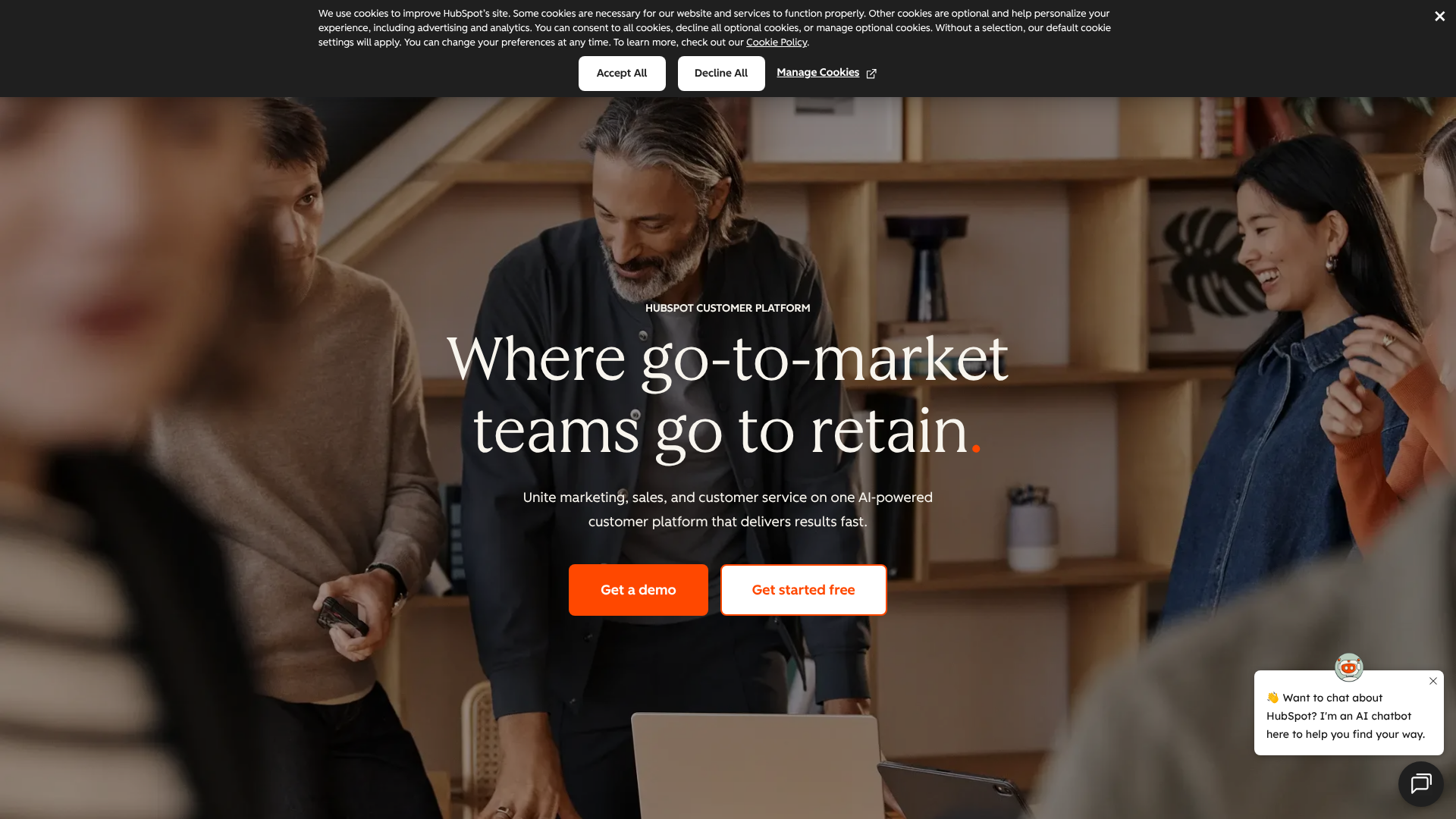
Many job seekers find great success using the free tiers of powerful platforms like HubSpot CRM or Zoho CRM. You can create a simple pipeline with stages like "Contacted," "Replied," "Meeting Scheduled," and "Interview Stage." This provides a visual overview of your entire job search, ensuring no opportunity is forgotten and you always know what the next action is for each contact.
Common Mistakes to Avoid When Using Cold Email Templates for a Job
Even with the best templates and tools, a few common mistakes can derail your cold emailing efforts. Being aware of these pitfalls is the first step to avoiding them and maximising your chances of getting a positive response.
Being Too Generic
This is the most frequent and fatal error. A hiring manager can spot a generic, copy-pasted email from a mile away. If your message could be sent to any company, it will likely be ignored by all of them. Personalisation is non-negotiable.
Mentioning the company's name is the bare minimum; you need to reference specific projects, people, or values to show you've done your homework.
Making It All About You
Your email should be focused on the company's needs, not your own. Avoid starting sentences with "I am looking for…" or "I need a job." Instead, frame your message around how you can help them achieve their goals. Shift the focus from what you want to what you can offer. Your skills and experience are only relevant in the context of how they can solve a problem for the employer.
Writing a Novel
Decision-makers are busy. They don't have time to read a long, rambling email. Your message should be concise and scannable. Aim for a total length of 150-200 words, broken up into short, three-sentence paragraphs.
Get straight to the point, clearly state your value, and make your request. Respect their time, and they'll be more likely to respond.
Having a Weak or Vague CTA
An email without a clear call-to-action is like a conversation that just trails off. The recipient is left wondering what you want from them. Don't end with a passive statement like "I look forward to hearing from you." Be direct and propose a specific, easy-to-accept next step, such as a "brief 15-minute call."
Forgetting to Follow Up
People are busy, and emails get buried. A lack of response doesn't always mean a lack of interest. A polite, concise follow-up email a few days later can often be the one that gets a reply. A simple message like, "Hi [Name], just wanted to follow up on my previous email.
Would you have a moment for a quick chat next week?" is often all it takes. Using an outreach tool can automate this process, ensuring you're persistent without being a pest.
Frequently Asked Questions (FAQ)
How many follow-up emails should I send?
A good rule of thumb is to send two to three follow-up emails. Space them out over a week or two. The first follow-up can be 3-4 days after the initial email, and the next one a week after that. Each follow-up should be shorter than the last.
If you don't get a response after three or four attempts in total, it's best to move on.
Is it okay to cold email a CEO?
This depends on the size of the company. At a small startup of fewer than 50 people, emailing the CEO or founder can be very effective as they are often directly involved in hiring. However, at a large corporation, the CEO is far too removed from the hiring process for individual roles. In that case, it's much more effective to target a department head, director, or hiring manager who is closer to the team you want to join.
What's the best time of day to send a cold email for a job?
While there are many studies on this, the general consensus points to mid-morning (around 10 AM) on Tuesdays, Wednesdays, and Thursdays. This is when people have settled into their work week but aren't yet overwhelmed or looking towards the weekend. However, the best approach is to test what works for you. Tools like Reply.io can help you track open rates at different times to optimise your sending schedule.
Should I attach my CV to the first cold email?
It's generally advised not to attach your CV to the initial cold email. An unsolicited attachment can trigger spam filters and can come across as presumptuous. It's better to focus the first email on starting a conversation and demonstrating value. You can mention that your CV is available upon request or simply offer to send it in your call-to-action.
This makes the exchange more conversational and less transactional.
Final Thoughts: Turning Templates into Opportunities
Mastering the art of the cold email is one of the most valuable skills you can develop in your professional career. It empowers you to take control of your job search, create your own opportunities, and build a network of valuable connections in your industry. While cold email templates for job hunting are an excellent starting point, remember that they are just that—a start.
The real magic happens in the personalisation. It's the research you do, the genuine interest you show, and the specific value you offer that will make your emails stand out and earn a response. Treat each email not as an application, but as the beginning of a professional relationship.
By combining a strong, personalised message with the right tools to stay organised, you can turn this proactive strategy into a powerful engine for your career growth. If you're ready to manage your outreach more effectively, consider starting with a free organiser like HubSpot CRM. For those looking to scale their efforts with automated follow-ups and analytics, platforms like Reply.io can make a significant difference in your efficiency and success rate.