

Semrush Competitors Research: A Marketer's Guide to Outranking Rivals
Understanding your competition is the first step to outmanoeuvring them. Conducting thorough semrush competitors research gives you a data-backed roadmap to see what's working for your rivals, where their weaknesses lie, and how you can capture a larger share of the market. Instead of guessing, you can build a marketing strategy based on proven tactics and identified opportunities. This guide will walk you through the exact tools and processes to turn Semrush into your ultimate competitive intelligence platform.
- What You'll Learn
- Why Competitor Research is Non-Negotiable for SEO Success
- Your Arsenal: A Deep Dive into Semrush Competitor Tools
- A Step-by-Step Guide to Semrush Competitors Research
- Step 1: Identifying Your True SEO Competitors
- Step 2: Analysing Competitor Backlink Profiles
- Step 3: Uncovering and Comparing Keyword Rankings
- Step 4: Deconstructing Their Top-Performing Content
- Advanced Strategies for Leveraging Semrush Competitor Data
- Real-World Wins: Case Studies in Competitor Analysis
- Case Study 1: A SaaS Startup Overtaking an Incumbent
- Case Study 2: An E-commerce Store Finding a Niche Keyword Goldmine
- Staying Ahead: How to Monitor Competitors with Semrush
- From Data to Action: Integrating Insights into Your Marketing Strategy
- Common Pitfalls: Mistakes to Avoid in Your Semrush Competitor Analysis
- Frequently Asked Questions about Semrush Competitor Research
- How to do competitor research in Semrush?
- Which is better, Semrush or Ahrefs?
- What are the common mistakes in competitive analysis?
- Is Semrush or Similarweb better?
- Final Thoughts
This isn't just about spying on other businesses; it's about strategic learning. By analysing their SEO, content, and advertising efforts, you can benchmark your own performance, discover new traffic-driving keywords, and find high-value backlink opportunities you might have otherwise missed. The goal is to transform raw competitor data into actionable insights that fuel your growth.
What You'll Learn
- Identify Your True Competitors: Learn how to use Semrush to find who you're actually competing against in search results, which may differ from your direct business rivals.
- Master Key Semrush Tools: Get a detailed breakdown of essential tools like Organic Research, Keyword Gap, and Backlink Analytics for a complete competitor overview.
- Uncover Keyword & Content Gaps: Discover the exact keywords your competitors rank for that you don't, providing a clear path for your content strategy.
- Reverse-Engineer Backlink Profiles: Find out where your rivals get their most powerful links so you can target the same sources for your own link-building campaigns.
- Avoid Common Pitfalls: Understand the most frequent mistakes marketers make during competitor analysis and how to steer clear of them for more accurate results.
Why Competitor Research is Non-Negotiable for SEO Success
In the world of digital marketing, flying blind is a recipe for failure. Competitor research acts as your GPS, guiding your decisions with real-world data rather than assumptions. It's a foundational element of any successful SEO strategy because it provides critical context. Without understanding the competitive landscape, you're essentially creating content and building links in a vacuum.
Effective semrush competitor analysis allows you to benchmark your performance. Are your traffic numbers growing, but your market share is shrinking. Competitor data reveals this. It helps you set realistic goals based on what others in your niche are achieving.
If a top competitor gets 50,000 monthly organic visits, you know what a high-performance benchmark looks like.
Furthermore, this research is a goldmine for opportunities. You can identify underserved topics, keyword gaps, and content formats that resonate with your shared audience. By seeing what works for others, you can adapt and improve upon their strategies, saving valuable time and resources that might have been wasted on unproven tactics. It’s about working smarter, not just harder.
Your Arsenal: A Deep Dive into Semrush Competitor Tools
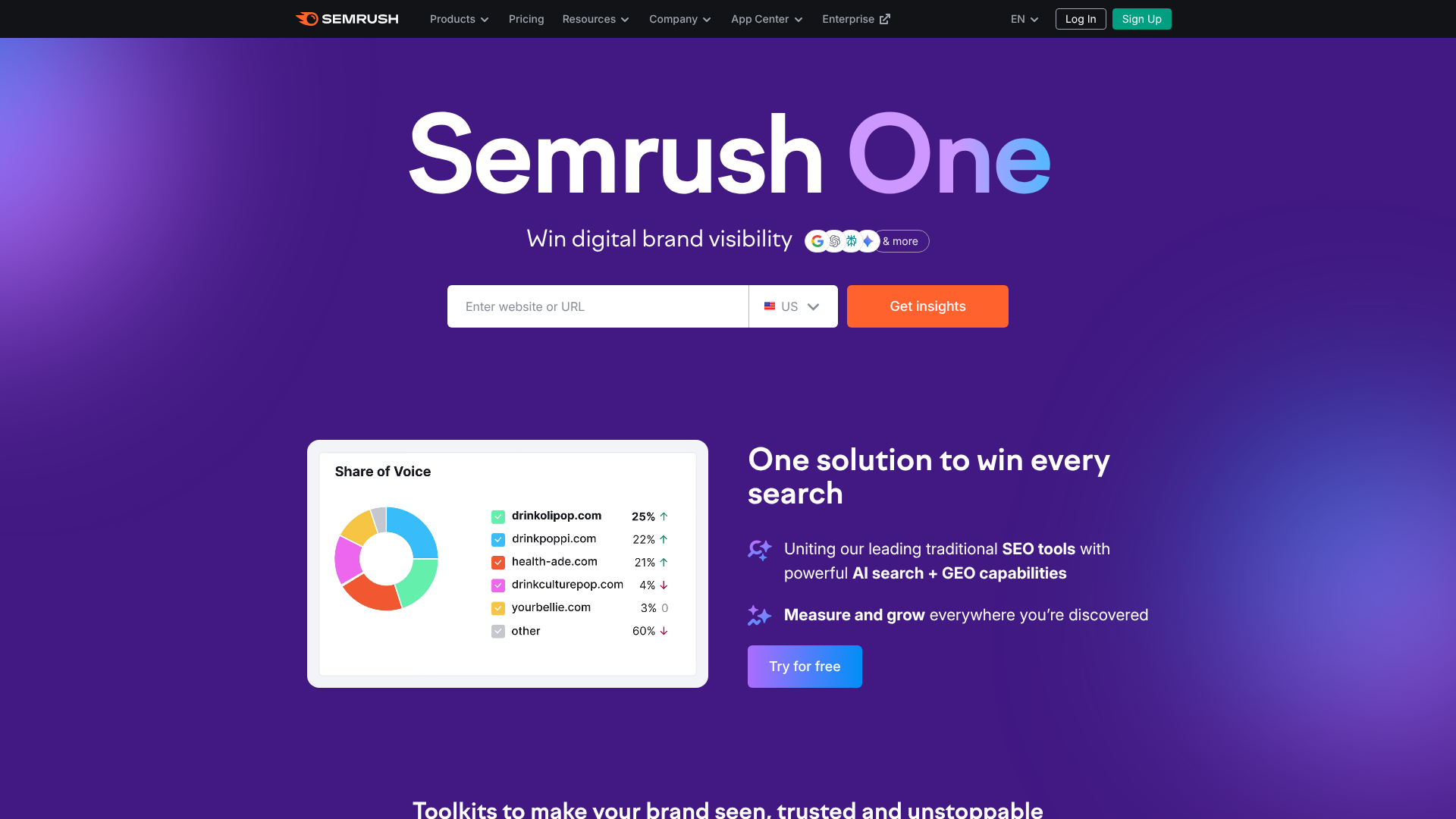
Semrush is packed with a suite of powerful features designed specifically for researching Semrush rivals. Understanding what each tool does and how they work together is key to unlocking a 360-degree view of your competition. These aren't just disparate reports; they are interconnected parts of a complete intelligence-gathering machine.
Domain Overview
Think of the Domain Overview report as your initial reconnaissance mission. You simply enter a competitor's domain, and Semrush provides a high-level dashboard of their online presence. This includes their Authority Score, estimated monthly organic and paid traffic, and the total number of backlinks and referring domains. It’s the quickest way to get a snapshot of a competitor's digital footprint and decide if they warrant a deeper investigation.
Organic Research
This is where you dig into the core of a competitor's SEO strategy. The Organic Research tool shows you every keyword a domain ranks for in Google's top 100 results. You can see their top traffic-driving keywords, analyse position changes over time, and identify their most valuable pages. This is invaluable for understanding their content focus and finding keyword ideas for your own site.
Keyword Gap
The Keyword Gap tool is one of the most actionable features for content strategy. It allows you to compare your domain's keyword profile against up to four competitors simultaneously. The report visualises this comparison, showing you keywords that are unique to your competitors ('Missing'), keywords where they rank higher than you ('Weak'), and keywords you both rank for ('Shared'). This directly highlights content you need to create to close the gap.
Backlink Analytics & Backlink Gap
A strong backlink profile is a critical ranking factor, and these tools let you dissect your competitors' link-building efforts. Backlink Analytics gives you a full list of a domain's backlinks, allowing you to filter by authority, anchor text, and link type. The Backlink Gap tool works similarly to the Keyword Gap, showing you domains that link to your competitors but not to you—providing a ready-made list of outreach targets.
Advertising Research
SEO isn't the only channel. The Advertising Research tool gives you a peek into your competitors' paid search strategies. You can see the keywords they're bidding on, view their ad copy, and estimate their monthly PPC budget. This is useful not only for informing your own paid campaigns but also for identifying commercial keywords they are targeting that you could pursue organically.

A Step-by-Step Guide to Semrush Competitors Research
Knowing the tools is one thing; using them in a systematic workflow is another. Following a structured process ensures you gather comprehensive data and can translate it into a coherent strategy. This step-by-step guide provides a repeatable framework for your analysis.
Step 1: Identifying Your True SEO Competitors
Your business competitors aren't always your SEO competitors. A local shop might compete with a global giant like Amazon in search results for a specific product. Your first step is to identify who you're actually fighting against for rankings.
In Semrush, navigate to Organic Research and enter your own domain. Then, click on the Competitors tab. Semrush will generate a list of domains that rank for a similar set of keywords. The 'Competition Level' metric shows how much keyword overlap you have.
These are your true SEO rivals. Analyse this list and pick the top 3-5 most relevant domains for a deeper dive.
Pro Tip: Don't just look at the domains with the highest competition level. Also, consider smaller, up-and-coming sites that are rapidly gaining keyword positions. These 'Game Changers' can reveal emerging trends and tactics that larger, more established competitors are slower to adopt.
Step 2: Analysing Competitor Backlink Profiles
Once you know who your competitors are, you need to understand why they rank. A huge part of that is their backlink profile. Use the Backlink Analytics tool to inspect each of your top competitors. Pay close attention to the Referring Domains report.
Look for patterns. Are they getting links from industry blogs, news publications, or resource pages. Note the most common sources of high-authority links. Use the Backlink Gap tool to compare your domain against these competitors.
This will instantly generate a list of websites that link to them but not to you, creating a prioritised list for your link-building outreach.
Step 3: Uncovering and Comparing Keyword Rankings
This is where you find your content opportunities. Go to the Keyword Gap tool and enter your domain alongside your top 3-4 competitors. The tool's filters are incredibly powerful. Start by selecting the 'Missing' filter to see all the keywords your competitors rank for, but you have zero visibility for.
This is your low-hanging fruit for new content ideas.
Next, use the 'Weak' filter. This shows keywords where your competitors rank higher than you. This list informs your content optimisation strategy. These are pages you already have that need to be improved, updated, or better optimised to climb the rankings.
Sort by volume and keyword difficulty to prioritise your efforts effectively.
Step 4: Deconstructing Their Top-Performing Content
Data from the previous steps will point you toward which content to create or improve. To understand how to make it better, you need to analyse their top pages. In the Organic Research tool, enter a competitor's domain and go to the Pages tab. This report lists their URLs by the amount of traffic they generate.
Click on the top pages and analyse them manually. What format are they using (e.g., blog post, guide, tool). How long is the content. What kind of media do they include.
This qualitative analysis, combined with the quantitative data from Semrush, gives you a complete blueprint for creating content that is destined to perform well.
Advanced Strategies for Leveraging Semrush Competitor Data
Basic analysis will get you started, but to truly dominate your niche, you need to apply the data in more sophisticated ways. The insights from your semrush competitor analysis should influence every part of your digital marketing, from content creation to paid advertising.
Content Strategy Optimisation
Don't just fill keyword gaps; aim to create the definitive resource on those topics. Use the Keyword Gap analysis to build content clusters. If you notice a competitor ranks for a series of related keywords around a central theme, that's a sign that a comprehensive pillar page supported by smaller, in-depth articles could be highly effective. Use the 'Top Pages' report to find their most successful content formats and create something that is 10x better—more detailed, better designed, and more up-to-date.
Link-Building Opportunities
Go beyond just finding who links to your competitors. Use the Backlink Analytics tool to analyse the context of their best links. Are they from guest posts, resource page mentions, or interviews. This tells you which link-building tactics are most effective in your industry.
You can replicate their success by pursuing similar opportunities. For example, if a competitor gets a lot of links from podcast interviews, it might be time to start a podcast outreach campaign.
PPC Campaign Refinement
Your competitor's paid search strategy can reveal their most profitable keywords. In the Advertising Research tool, look at the keywords they've been bidding on consistently for a long time. These are likely their money-makers. You can choose to compete with them on these terms or, more strategically, target long-tail variations of these keywords that may have lower competition and cost-per-click.
Also, analyse their ad copy to see what value propositions and calls-to-action they use to convert visitors.
Real-World Wins: Case Studies in Competitor Analysis

Theory is great, but seeing how these strategies play out in practice makes the value tangible. Here are two hypothetical scenarios illustrating how businesses can use Semrush for competitor research to achieve significant growth.
Case Study 1: A SaaS Startup Overtaking an Incumbent
A new project management SaaS startup, 'TaskFlow', was struggling to gain traction against an established leader, 'ProjectKing'. Using Semrush, TaskFlow's marketing team discovered through the Keyword Gap tool that ProjectKing ranked for hundreds of keywords related to 'team collaboration software' but had very little content targeting 'remote team productivity'.
TaskFlow saw this as a massive opportunity. They launched a content hub focused entirely on remote work challenges and solutions, creating in-depth guides, templates, and webinars. They used the Backlink Gap tool to find blogs about remote work that linked to ProjectKing and secured guest posts. Within six months, TaskFlow became a top-ranking resource for remote productivity keywords, carving out a profitable niche and stealing market share from the slower-moving incumbent.
Case Study 2: An E-commerce Store Finding a Niche Keyword Goldmine
An online store selling high-end coffee beans, 'BeanPure', was competing with major online retailers. A broad semrush competitor analysis showed they couldn't compete on general terms like 'buy coffee beans'. However, by analysing smaller, niche competitors, they found one that ranked surprisingly well for terms related to 'low-acid coffee'.
Digging into that competitor's top pages in Organic Research, they saw that a single blog post, "The Ultimate Guide to Low-Acid Coffee for Sensitive Stomachs," was driving 40% of their organic traffic. BeanPure created a more comprehensive guide, including a video, a downloadable PDF, and a quiz to help users find the right low-acid blend. They promoted it heavily and quickly outranked the competitor, opening up a new, highly profitable customer segment they hadn't previously considered.
Staying Ahead: How to Monitor Competitors with Semrush
Competitor research is not a one-time task. The digital landscape is constantly changing, with rivals launching new campaigns, targeting new keywords, and earning new backlinks every day. Continuous monitoring is essential to maintain your competitive edge, and Semrush has built-in features to automate this process.
One of the most effective tools for this is Position Tracking. You can set up a project for your domain and add your top competitors. Then, you input your most important target keywords. Semrush will track your rankings and your competitors' rankings for this keyword set daily, sending you email alerts about significant position shifts.
This gives you an early warning if a competitor starts targeting one of your core terms.
Additionally, you can set up automated PDF reports. You can configure Semrush to email you a custom report every week or month that summarises your competitors' organic traffic, new keywords, and new backlinks. This keeps you informed without requiring you to log in and manually pull data every day. This consistent monitoring ensures you can react quickly to threats and opportunities as they arise.
From Data to Action: Integrating Insights into Your Marketing Strategy
Gathering data is useless if it sits in a spreadsheet. The final, most crucial step is to integrate the findings from your semrush competitors research directly into your overarching marketing strategy. This means creating a feedback loop where competitive insights inform your content calendar, SEO priorities, and even product development.
For your content team, the Keyword Gap analysis should become a primary source for brainstorming. Schedule regular meetings to review the data and plan content that directly targets identified opportunities. The goal is to create a proactive content plan, not a reactive one. Instead of just writing about what you think your audience wants, you'll be writing about what the data proves they are searching for.
For your SEO team, the backlink analysis should guide your outreach efforts. Build your link-building campaigns around the tactics and sources that are already working for your rivals. This data-driven approach increases the success rate of your outreach. Ultimately, every piece of data should lead to a specific action item assigned to a team or individual, ensuring that your research translates into tangible business results.
Common Pitfalls: Mistakes to Avoid in Your Semrush Competitor Analysis
While Semrush provides a wealth of data, misinterpreting or misusing it can lead you down the wrong path. Being aware of common mistakes can help you ensure your analysis is accurate, relevant, and actionable.
- Focusing on the Wrong Competitors: As mentioned, your biggest business rival may not be your top SEO competitor. Always start by using the Organic Research > Competitors report to identify who you're actually up against in the SERPs.
- Only Copying, Not Innovating: The goal is not to create a carbon copy of your competitor's website. Use their strategy as a baseline, but always aim to create something better, more comprehensive, or with a unique angle. Simple imitation will rarely lead to market leadership.
- Ignoring Historical Data and Trends: Don't just look at a snapshot in time. Use Semrush's date range filters to see if a competitor's traffic is growing or declining. A sudden spike might indicate a successful new campaign, while a steady decline could reveal a weakness you can exploit.
- Overlooking Paid & Social Strategies: A complete analysis goes beyond organic search. Use the Advertising Research and Social Media Tracker tools to get a fuller picture of their marketing mix. Their paid campaigns often reveal their most high-intent, conversion-focused keywords.
- Forgetting to Monitor Changes: Your competitors are not static. A one-off report will quickly become outdated. Set up automated tracking and alerts in Semrush to stay on top of their moves and adapt your strategy accordingly.
Frequently Asked Questions about Semrush Competitor Research
How to do competitor research in Semrush?
To conduct competitor research in Semrush, start by using the 'Organic Research' tool to identify your main SEO competitors. Then, use the 'Keyword Gap' tool to compare your keyword profile against theirs to find content opportunities. Finally, analyse their backlink profile with the 'Backlink Analytics' and 'Backlink Gap' tools to discover link-building targets.
Which is better, Semrush or Ahrefs?
Both Semrush and Ahrefs are top-tier SEO platforms with excellent competitor analysis features. Semrush is often praised for its comprehensive toolkit that extends beyond SEO into PPC, content marketing, and social media, offering a more all-in-one solution. Ahrefs is renowned for its superior backlink index and user-friendly interface, often considered the gold standard for link analysis. The best choice depends on your primary focus; Semrush is excellent for a holistic marketing overview, while Ahrefs excels in deep backlink investigation.
What are the common mistakes in competitive analysis?
The most common mistakes include analysing the wrong competitors (business rivals vs. SEO rivals), simply copying competitors instead of innovating, ignoring trends by only looking at current data, and failing to monitor competitor activity on an ongoing basis. Another pitfall is focusing solely on organic search and ignoring insights from their paid advertising and social media strategies.
Is Semrush or Similarweb better?
Semrush and Similarweb serve different primary purposes. Semrush is a marketing-focused toolkit designed for SEO, PPC, and content professionals to analyse and improve performance. It provides deep keyword, backlink, and on-page data. Similarweb is more of a market intelligence platform focused on estimating overall website traffic, referral sources, and audience demographics from a broader perspective.
For actionable SEO and PPC competitor research, Semrush is generally the more specialised and powerful tool.
Final Thoughts
Performing effective semrush competitors research is no longer an optional extra; it's a core component of a modern digital marketing strategy. By systematically using the powerful suite of semrush competitor tools, you can move beyond guesswork and build a plan based on what is already succeeding in your market.
From identifying your true search rivals to deconstructing their most successful content and backlink strategies, the insights you gain are invaluable. This data empowers you to find and fill gaps in the market, create superior content, and ultimately, drive more qualified traffic to your website.
The key is to be consistent. Make competitor analysis a regular part of your marketing rhythm, monitor changes, and always be ready to adapt. If you're ready to uncover your competitors' strategies and find your path to the top of the search results, it's time to get started with Semrush.