

Semrush Competitive Analysis: A Marketer's Guide to Uncovering Rival Strategies
Understanding your competition is fundamental to building a successful digital marketing strategy. Without knowing what your rivals are doing, you're essentially navigating blind. A thorough semrush competitive analysis provides the map and compass you need, transforming guesswork into a data-driven plan. It allows you to see the exact strategies driving their traffic, the keywords they rank for, and the backlinks that give them authority, offering a clear path to outperform them.
- What You'll Learn
- What Exactly is a Semrush Competitive Analysis?
- The Core Semrush Tools for Competitor Research
- Domain Overview: Your 30,000-Foot View
- Traffic Analytics: Deconstructing Competitor Traffic
- Organic Research: Uncovering SEO Secrets
- Keyword Gap: Finding Your Golden Opportunities
- Backlink Gap: Building a Superior Link Profile
- Advertising Research: Spying on Paid Campaigns
- A Step-by-Step Guide to Competitive Analysis with Semrush
- Step 1: Identify Your True Competitors
- Step 2: Benchmark Your Performance
- Step 3: Analyse Their Traffic Strategy
- Step 4: Expose Their Keyword Strategy
- Step 5: Reverse-Engineer Their Content Success
- Step 6: Uncover Their Link Building Tactics
- Step 7: Evaluate Their Paid Advertising
- Choosing the Right Semrush Plan for Your Needs
- The Pros and Cons of Using Semrush for Competitor Analysis
- Frequently Asked Questions (FAQ)
- How accurate is Semrush data?
- Can I use Semrush for free for competitive analysis?
- What is the difference between Semrush's Keyword Gap and Backlink Gap?
- How often should I conduct a Semrush competitor analysis?
- Final Thoughts: Turning Analysis into Action
This guide is designed for marketers, business owners, and SEO professionals who want to move beyond basic competitor awareness. We will walk through how to use the powerful tools within Semrush to deconstruct your competitors' online presence. You'll learn not just what the data means, but how to turn those insights into actionable steps that boost your own visibility and market share.
What You'll Learn
- Core Concepts: Understand what a Semrush competitive analysis involves and why it's a critical component of any modern marketing campaign.
- Key Tool Breakdown: Discover the essential Semrush tools for competitor research, including Domain Overview, Traffic Analytics, and the Keyword Gap tool.
- Step-by-Step Process: Follow a practical, seven-step guide to conduct a comprehensive analysis, from identifying your true competitors to evaluating their paid ad strategies.
- Pricing and Plans: Learn how to select the right Semrush plan for your specific analytical needs and budget.
- Actionable Insights: Move beyond data collection and learn how to translate your findings into a winning strategy that drives tangible results.
What Exactly is a Semrush Competitive Analysis?
A competitive analysis is the process of identifying your competitors and evaluating their strategies to determine their strengths and weaknesses relative to your own business. A Semrush competitive analysis elevates this process by using Semrush's extensive suite of tools to gather and analyse massive amounts of data about your rivals' digital marketing efforts. It's the difference between watching your competitor from across the street and having a detailed blueprint of their entire operation.
Think of it like a scout report before a major sporting event. A basic report might tell you who the star players are. A Semrush report tells you their preferred plays, their stamina levels, their performance under pressure, and the exact tactics they used to win their last five matches. This level of detail allows you to anticipate their moves and formulate a counter-strategy.
This type of semrush analysis typically focuses on four key pillars of digital marketing:
- Search Engine Optimisation (SEO): Uncovering the organic keywords that drive traffic to their site, the pages that perform best, and the structure of their backlink profile.
- Paid Advertising (PPC): Analysing the keywords they bid on, the ad copy they use, their estimated monthly budget, and the landing pages they direct traffic to.
- Content Marketing: Identifying their most successful content formats (blogs, videos, case studies), the topics that resonate with their audience, and potential content gaps you can fill.
- Overall Traffic and Audience: Benchmarking their total website traffic, identifying their primary traffic sources (e.g., search, social, direct), and understanding their audience demographics and behaviour.
By examining these areas, you can identify opportunities where your competitors are excelling and areas where they are vulnerable. This information is invaluable for refining your own marketing, allocating your budget more effectively, and ultimately capturing a larger share of the market.
The Core Semrush Tools for Competitor Research
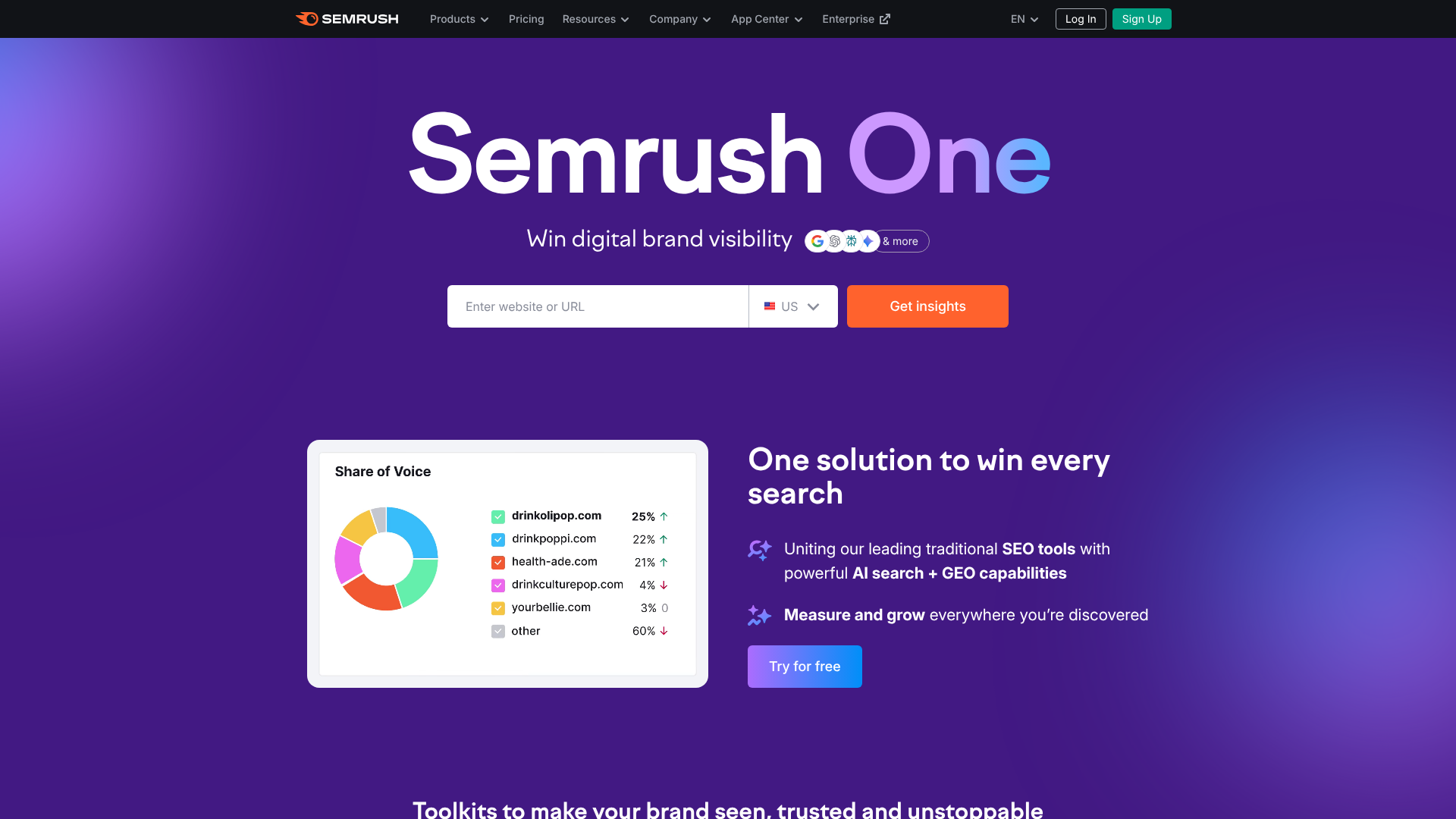
Semrush is not a single tool but a powerful toolkit, and knowing which instrument to use for which job is key to effective competitor research with Semrush. Each tool is designed to dissect a specific part of a competitor's strategy, and when used together, they provide a complete 360-degree view of their digital footprint. Here are the essential tools you'll be using.
Domain Overview: Your 30,000-Foot View
The Domain Overview report is your starting point. Simply enter a competitor's domain, and you'll get a high-level dashboard summarising their entire online presence. It's the quickest way to get a snapshot of their digital health.
Key metrics you'll see include the Authority Score (Semrush's metric for a domain's overall quality and SEO performance), estimated monthly organic and paid traffic, and the total number of backlinks. It also shows top organic keywords, main organic competitors, and a breakdown of traffic by country. Use this to quickly benchmark yourself against several competitors at once.
Traffic Analytics: Deconstructing Competitor Traffic
While Domain Overview gives you SEO-based traffic estimates, Traffic Analytics provides a broader view based on clickstream data. This tool offers a more holistic look at a website's total traffic, not just from search engines. It's incredibly powerful for understanding a competitor's complete marketing mix.
You can see their total visits, unique visitors, and engagement metrics like average visit duration and bounce rate. More importantly, it reveals their traffic sources: Direct, Referral, Search, Social, and Paid. This helps you answer questions like, "Is their social media strategy actually driving traffic?" or "Are they heavily reliant on paid ads?"
Organic Research: Uncovering SEO Secrets
This is where you dive deep into a competitor's SEO strategy. The Organic Research tool shows you every single keyword a domain ranks for in Google's top 100 results. You can see the keyword, its search volume, its ranking position, and the estimated traffic it generates.
Use the 'Positions' tab to track their ranking changes over time—are they gaining or losing visibility for key terms? The 'Pages' tab is equally valuable, showing you which of their URLs attract the most organic traffic. This is a goldmine for reverse-engineering their most successful content.
Keyword Gap: Finding Your Golden Opportunities
The Keyword Gap tool is one of the most actionable features for semrush competitor research. It allows you to compare your own domain's keyword profile against up to four competitors simultaneously. The tool visualises the overlap and highlights specific opportunities.
It categorises keywords into buckets like 'Missing' (keywords your competitors rank for, but you don't), 'Weak' (keywords where they outrank you), and 'Untapped' (keywords one competitor ranks for, but the rest, including you, do not). This immediately gives you a prioritised list of keywords to target for your own SEO and content efforts.
Backlink Gap: Building a Superior Link Profile
Functioning just like the Keyword Gap tool, the Backlink Gap tool analyses referring domains instead of keywords. Backlinks are a crucial ranking factor, and this tool helps you find websites that link to your competitors but not to you.
This provides a ready-made list of high-potential link-building targets. These domains are already linking to sites in your niche, which means they are far more likely to be receptive to linking to your high-quality content as well. It takes the guesswork out of outreach and helps you build authority more efficiently.
Advertising Research: Spying on Paid Campaigns
If your competitors are running Google Ads, the Advertising Research tool pulls back the curtain on their entire PPC strategy. You can see the keywords they are bidding on, view the exact ad copy they are running, and analyse the landing pages they use.
This is incredibly useful for understanding their messaging, their value propositions, and their conversion funnels. You can also see an estimate of their monthly ad spend and the traffic they generate from it. This helps you assess the competitiveness of the paid landscape before investing your own budget.
A Step-by-Step Guide to Competitive Analysis with Semrush
Knowing the tools is one thing; using them in a systematic way to build a coherent strategy is another. Follow this seven-step process to conduct a thorough and actionable competitive analysis with Semrush.
https://www.youtube.com/watch?v=PA6Ll4FkFZk
Step 1: Identify Your True Competitors
You might think you know who your competitors are, but your business competitors aren't always your search competitors. A local shop might compete with another shop down the road, but online they could be competing with a national publication or a niche blogger for keyword rankings.
Start by entering your own domain into the Organic Research tool and navigating to the 'Competitors' tab. Semrush will generate a list of domains that rank for the same organic keywords as you. These are your true SEO rivals. Pick the top 3-5 most relevant domains to focus your analysis on.
Step 2: Benchmark Your Performance
With your list of competitors, head to the Domain Overview tool. Enter your domain alongside two or three of your top rivals. This will give you a side-by-side comparison of key metrics.
Pay close attention to the Authority Score, estimated organic traffic, and the total number of ranking keywords. This initial benchmark gives you a clear picture of where you stand. Are you significantly behind in authority. Do they have a much larger keyword footprint.
This context is crucial for setting realistic goals.
Step 3: Analyse Their Traffic Strategy
Next, use the Traffic Analytics tool to understand their overall marketing mix. Enter a competitor's domain to see their total traffic and, most importantly, the breakdown of their traffic sources.
If a competitor gets 60% of their traffic from 'Search' and you only get 20%, you know SEO is a major opportunity. If they get 30% from 'Referral', it's worth investigating which sites are sending them so much traffic. This analysis reveals their strategic priorities and highlights channels you may be underutilising.
Step 4: Expose Their Keyword Strategy
This is where you find your low-hanging fruit. Go to the Keyword Gap tool and enter your domain and up to four competitors. The tool will generate a list of thousands of keywords, but the magic is in the filters.
Filter for 'Missing' keywords to find terms your competitors all rank for, but you don't. These are often core topics in your industry that you need to create content around. Then, filter for 'Weak' keywords where your competitors rank higher than you. These are pages you likely already have that just need to be optimised better.
Pro Tip: When using the Keyword Gap tool, use the 'Position' filter to focus on keywords where your competitors rank on the first page (positions 1-10). This prioritises terms that are already proven to drive valuable traffic.
Step 5: Reverse-Engineer Their Content Success
Great rankings are driven by great content. To understand what works, go back to the Organic Research tool, enter a competitor's domain, and click on the 'Pages' tab. Sort the results by traffic to see their top-performing content.
Analyse these pages. What topics do they cover. What is the format (e.g., listicle, how-to guide, case study). How long is the content.
This analysis provides a proven blueprint for the type of content that resonates with your shared target audience and with Google.
Step 6: Uncover Their Link Building Tactics
Now it's time to build your authority. Open the Backlink Gap tool, enter your domain and your competitors, and run the report. The tool will show you a list of all the websites that link to your rivals but not to you.
Export this list and sort it by Authority Score to prioritise the most valuable domains. This is now your target list for link-building outreach. You can approach these sites with your own superior content, knowing they are already interested in your topic area.
Step 7: Evaluate Their Paid Advertising
Finally, if paid ads are part of your strategy, use the Advertising Research tool. Enter a competitor's domain to see their PPC activity. Look at their ad copy to understand their unique selling propositions and calls to action.
Check the keywords they are bidding on. Are they targeting high-intent, bottom-of-the-funnel terms or broader, top-of-the-funnel keywords? This insight can save you thousands in testing and help you craft more effective campaigns from day one.
Choosing the Right Semrush Plan for Your Needs
Semrush offers several pricing tiers, and the right choice depends on the scale and depth of your competitive analysis needs. While you can get limited data with a free account, a paid plan is necessary to unlock the tools discussed in this guide. All plans are subscription-based, typically with options to pay monthly or annually for a discount.
Here’s a breakdown of the main plans and how they relate to competitor research:
Pro Plan: This is the entry-level plan, ideal for freelancers, startups, and small businesses. It provides access to all the core tools like Domain Overview, Organic Research, and the Gap Analysis tools. However, it has limits on the number of reports you can run per day and the amount of data in each report. It's perfect for getting started with semrush analysis.
Guru Plan: This is the most popular plan and is well-suited for small to medium-sized businesses and marketing agencies. The key advantage of Guru for competitive analysis is access to historical data, which allows you to track competitor trends over time. It also includes the Content Marketing Platform and offers higher limits on reports and projects.
Business Plan: This plan is designed for large agencies and enterprises. It offers the highest limits, API access for custom integrations, and more advanced reporting features like Share of Voice metrics. It's the best choice for those conducting large-scale, continuous competitor monitoring.
It's also important to mention the .Trends solution. This is an add-on package available for any paid plan that includes Traffic Analytics and Market Explorer. For the deepest and most accurate competitive traffic insights, this add-on is essential. As pricing and features can be updated, it's always best to visit the Semrush website for the most current information and to explore their free trial options.
The Pros and Cons of Using Semrush for Competitor Analysis
No tool is perfect, and while Semrush is a leader in the field, it's important to have a balanced view. Understanding its strengths and limitations helps you use it more effectively and set realistic expectations for your semrush competitor research.
The Advantages (Pros)
- All-in-One Toolkit: The biggest advantage is its comprehensive nature. Semrush combines tools for SEO, PPC, content, social media, and market research into a single platform. This eliminates the need to subscribe to and learn multiple different tools, saving both time and money.
- Vast and Accurate Data: Semrush maintains enormous databases of keywords, backlinks, and advertising data across the globe. Its data is widely considered an industry benchmark for accuracy, providing reliable estimates to base your strategy on.
- Actionable and Intuitive Tools: Features like the Keyword Gap and Backlink Gap tools don't just present data; they frame it as a clear opportunity. They are designed to give you immediate, actionable next steps to improve your marketing.
- Excellent User Interface: For a platform with so much data and so many features, the interface is remarkably clean and easy to navigate. Reports are well-visualised with graphs and charts, making complex data digestible even for non-analysts.
The Disadvantages (Cons)
- Steep Learning Curve: For a complete beginner, the sheer number of tools and metrics can be overwhelming. While the interface is good, mastering the full capabilities of the platform takes time and practice.
- Premium Pricing: Semrush is a professional-grade tool, and its pricing reflects that. The subscription cost can be a significant investment, especially for small businesses or solo entrepreneurs on a tight budget.
- Data is Still an Estimate: It's crucial to remember that metrics like traffic, ad spend, and keyword positions are highly sophisticated estimates, not absolute figures pulled directly from a competitor's Google Analytics. While they are accurate enough for strategic planning, they should not be treated as gospel.
Pro Tip: To overcome the learning curve, take advantage of the free courses and certification exams offered by the Semrush Academy. They provide excellent, in-depth training on every aspect of the platform.
Frequently Asked Questions (FAQ)
Here are answers to some common questions people have when starting with competitive analysis on Semrush.
How accurate is Semrush data?
Semrush data is highly accurate for the purpose of strategic analysis. The platform uses a combination of machine learning algorithms and massive third-party clickstream data sets to model its estimates for traffic, keyword rankings, and ad spend. While these figures will not match a competitor's internal analytics 100%, they are widely regarded as one of the most reliable data sources in the SEO industry and are more than sufficient for making informed marketing decisions.
Can I use Semrush for free for competitive analysis?
Yes, you can perform a limited amount of competitive analysis with a free Semrush account. You can run a small number of Domain Overview or Organic Research reports each day. However, the amount of data you can see in each report is severely restricted. To access the full functionality of tools like Keyword Gap, Backlink Gap, and Traffic Analytics, and to get enough data to form a complete strategy, you will need a paid subscription or to sign up for a free trial.
What is the difference between Semrush's Keyword Gap and Backlink Gap?
Both tools perform a similar function but for different aspects of SEO. The Keyword Gap tool compares the organic keyword rankings of up to five domains to find keyword opportunities. It helps you answer, "What search terms are my competitors ranking for that I'm not?" The Backlink Gap tool compares the backlink profiles of those domains. It helps you answer, "What websites are linking to my competitors but not to me?" One is for content and on-page SEO strategy, while the other is for off-page SEO and link-building strategy.
How often should I conduct a Semrush competitor analysis?
The ideal frequency depends on your industry and goals. A comprehensive, deep-dive analysis like the one outlined in this guide is best performed on a quarterly basis. This allows you enough time to implement changes and see results. However, it's wise to conduct monthly or even weekly check-ins on key metrics.
For example, you might monitor your main competitors' position changes for your top 10 keywords every week to quickly react to any shifts in the search landscape.
Final Thoughts: Turning Analysis into Action
Conducting a semrush competitive analysis is one of the most powerful things you can do to inform your digital marketing strategy. The platform provides an unparalleled view into the tactics that are working for your rivals, effectively giving you a roadmap to success built on real-world data, not theory.
However, the analysis itself is only the first step. The true value is unlocked when you translate those insights into a concrete action plan. Use the Keyword Gap report to build your next three months of content. Use the Backlink Gap report to fuel your outreach campaigns.
Use the Advertising Research report to refine your ad copy. Data without action is just noise.
By regularly monitoring the competitive landscape with Semrush, you transform your marketing from a reactive to a proactive discipline. You can anticipate market shifts, capitalise on competitor weaknesses, and consistently find new avenues for growth. The insights are there, waiting to be discovered.
Ready to see what your competitors are really up to? Explore the tools yourself and start building a more intelligent, data-driven marketing strategy. You can get started with a Semrush trial to begin your own analysis today.