



Semrush Competitive Analysis: A Marketer's Guide to Outranking Rivals
Understanding your competition is no longer optional; it's the foundation of any successful digital strategy. A thorough Semrush competitive analysis provides the data-driven insights needed to see exactly what your rivals are doing, where they're succeeding, and how you can strategically outperform them. It moves you from guesswork to a clear, actionable plan for capturing more market share, traffic, and revenue. By using the powerful suite of tools within Semrush, you can deconstruct competitor SEO, content, and advertising strategies with remarkable precision.
- Quick Summary
- What is Semrush Competitive Analysis?
- The Core Toolkit: Key Semrush Features for Competitor Research
- 1. Domain Overview
- 2. Traffic Analytics
- 3. Organic Research
- 4. Keyword Gap
- 5. Backlink Gap
- 6. Advertising Research
- A Practical Guide: How to Conduct a Semrush Competitive Analysis Step-by-Step
- Step 1: Identify Your True Digital Competitors
- Step 2: Benchmark Overall Performance with Domain Overview
- Step 3: Analyse Traffic Sources and Audience Engagement
- Step 4: Uncover Their Winning Keywords
- Step 5: Deconstruct Their Backlink Strategy
- Step 6: Investigate Their Top Performing Content
- Step 7: Synthesise and Create an Action Plan
- Choosing Your Arsenal: Which Semrush Plan is Right for You?
- Semrush Pricing: Understanding the Investment
- The Honest Verdict: Pros and Cons of Using Semrush for Analysis
- Frequently Asked Questions
- Does Semrush do competitor analysis?
- What are the 5 steps of a competitive analysis?
- Which tool is best for competitor analysis?
- How to use Semrush for competitor analysis?
- Is Semrush better than Google Analytics?
- Final Thoughts
This guide will walk you through everything you need to know, from the fundamental concepts to a step-by-step process for conducting your own analysis. We'll explore the specific reports that deliver the most value, helping you turn raw data into a winning marketing plan. Whether you're looking to identify new keywords, find backlink opportunities, or understand your competitor's traffic sources, Semrush provides a comprehensive view of the digital landscape.
Quick Summary
- What It Is: Semrush competitive analysis is the process of using Semrush's suite of tools to research and understand the marketing strategies of your business rivals, including their SEO, content, advertising, and traffic sources.
- Key Tools: The most powerful features for this task include Domain Overview, Traffic Analytics, Organic Research, Keyword Gap, Backlink Gap, and Advertising Research, each providing a different lens on competitor activity.
- Core Benefit: It transforms your strategy from reactive to proactive, allowing you to anticipate market shifts, capitalise on competitor weaknesses, and make informed decisions based on real-world data, not assumptions.
- The Process: A successful analysis involves identifying your true digital competitors, analysing their traffic and audience, dissecting their keyword and backlink profiles, and examining their paid advertising campaigns to find actionable insights.
- Why It Matters: In a crowded market, understanding the competitive landscape is crucial for differentiation, finding untapped growth opportunities, and allocating your marketing budget effectively for the highest possible return on investment.
What is Semrush Competitive Analysis?
A Semrush competitive analysis is the systematic process of using the Semrush platform to gather, analyse, and interpret data about your competitors' digital marketing efforts. It's not just about seeing who ranks for a few keywords; it's a deep investigation into their entire online presence. This includes their organic search performance, paid advertising campaigns, content marketing strategy, backlink profile, and even their estimated website traffic and audience demographics.
The primary goal is to uncover actionable intelligence. What keywords are driving the most traffic to their site. Which websites are linking to them and giving them authority. What kind of content resonates with their audience.
How much are they spending on Google Ads, and what do their ads look like. Answering these questions gives you a significant strategic advantage.
Think of it as digital reconnaissance. In a traditional business setting, you might visit a competitor's shop to check their pricing, products, and layout. A Semrush competitor research process is the digital equivalent, but far more powerful. It allows you to see behind the curtain of their online operations, revealing the mechanics of their success (or failure) so you can adapt, improve, and ultimately outperform them in the search engine results pages (SERPs) and beyond.
This process is crucial because it helps you benchmark your own performance. Are you lagging behind in organic traffic? Is a competitor dominating a keyword category you've ignored? This kind of Semrush analysis provides the context you need to set realistic goals and build a strategy that directly challenges your rivals' strengths while exploiting their weaknesses.

The Core Toolkit: Key Semrush Features for Competitor Research
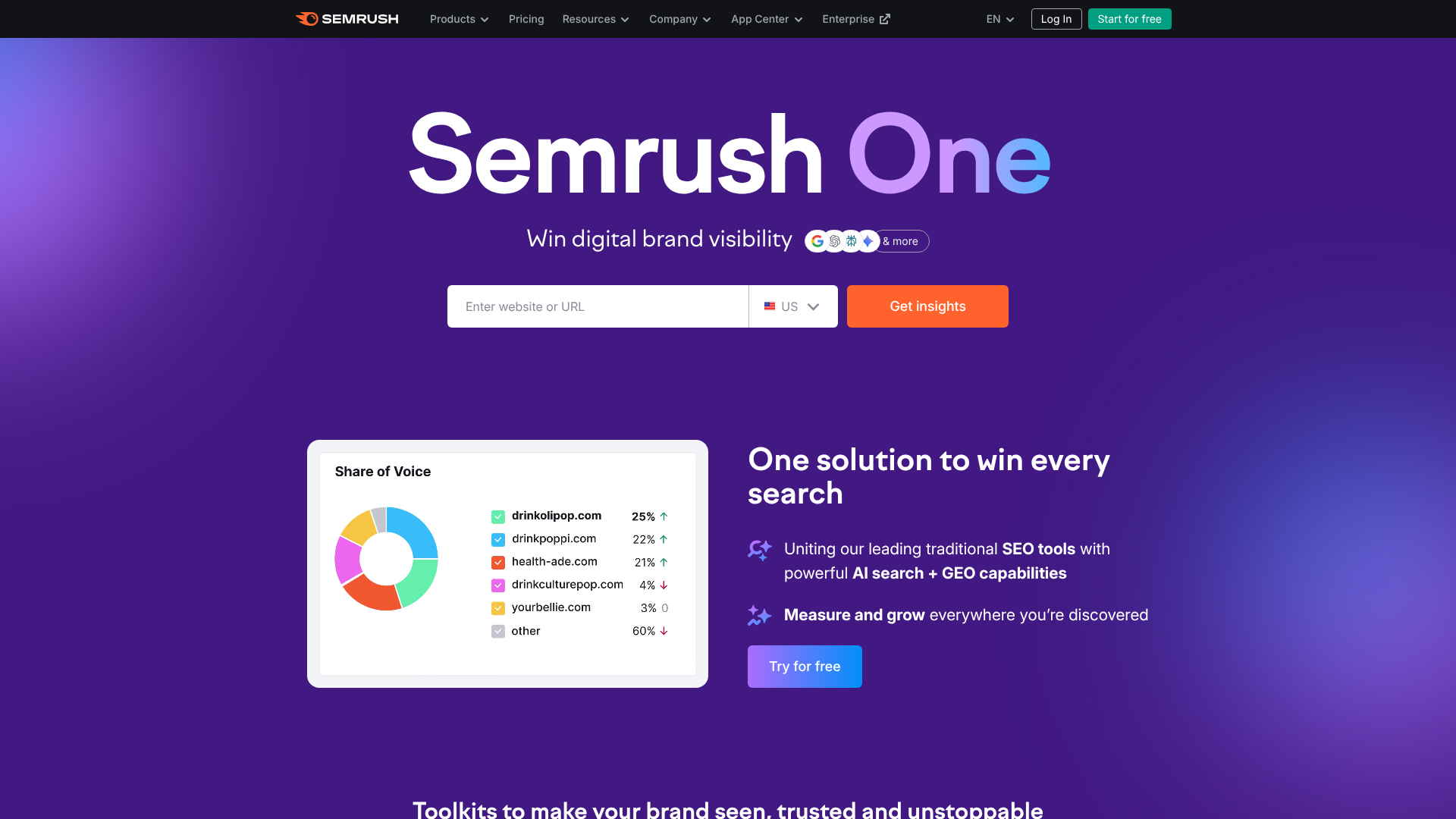
Semrush is not a single tool but a comprehensive suite of applications designed to work together. For effective competitive analysis, several key features provide the most valuable insights. Understanding what each one does is the first step to mastering the platform.
1. Domain Overview
This is your starting point. The Domain Overview report gives you a high-level snapshot of any domain's online visibility. You simply enter a competitor's URL, and Semrush provides key metrics like Authority Score, estimated monthly organic and paid traffic, and the number of backlinks. It's the quickest way to gauge a competitor's overall digital health and identify their top keywords, main organic competitors, and display advertising activity.
Use this to get a quick, comparative benchmark against your own site.
2. Traffic Analytics
While Domain Overview estimates traffic based on keyword positions, Traffic Analytics provides a more direct estimation of a website's traffic numbers and user behaviour. This tool shows you total visits, unique visitors, pages per visit, and bounce rate. Crucially, it breaks down their traffic sources: Direct, Referral, Search, Social, and Paid. This insight is invaluable for understanding how your competitors are acquiring their audience.
Are they heavily reliant on SEO, or do they have a strong social media or referral network.
3. Organic Research
This is where you dig into a competitor's SEO strategy. The Organic Research tool shows you every keyword a domain ranks for in Google's top 100 organic results. You can see their ranking positions, the estimated traffic each keyword generates, and the SERP features they've won (like featured snippets or image packs). You can also track their keyword position changes over time to see if their strategy is gaining or losing momentum.
This is a goldmine for discovering new keyword opportunities that your competitors are successfully targeting.
4. Keyword Gap
The Keyword Gap tool is one of the most powerful competitive analysis tools available. It allows you to compare the keyword profiles of up to five domains side-by-side. You can instantly see which keywords your competitors rank for that you don't (their strengths), keywords you rank for that they don't (your strengths), and keywords where you both compete. This analysis highlights specific content gaps on your site and provides a clear roadmap for your SEO and content creation efforts.
5. Backlink Gap
Similar to the Keyword Gap tool, the Backlink Gap tool compares the backlink profiles of multiple domains. Backlinks are a critical ranking factor, and this tool shows you which websites are linking to your competitors but not to you. These domains are prime targets for your own link-building outreach campaigns. Since they've already shown a willingness to link to a site in your niche, there's a higher probability they will link to your high-quality content as well.
6. Advertising Research
If your competitors are running paid search campaigns, the Advertising Research tool deconstructs their entire strategy. You can see the keywords they're bidding on, view the exact copy of their live ads, and analyse their landing pages. Semrush also provides an estimate of their monthly paid search traffic and budget. This allows you to understand their advertising angles, value propositions, and the offers they're using to convert visitors, providing inspiration for your own PPC campaigns.
A Practical Guide: How to Conduct a Semrush Competitive Analysis Step-by-Step
Knowing the tools is one thing; using them in a structured way is what produces results. Follow this step-by-step process to conduct a thorough and actionable Semrush competitive analysis.
Step 1: Identify Your True Digital Competitors
Your business competitors might not be your main digital competitors. A local shop's biggest online rival could be a national blog that dominates the search results for relevant topics. Start by entering your own domain into the Organic Research tool and navigating to the 'Competitors' tab. Semrush will generate a list of domains that rank for the same keywords as you.
These are your true SEO competitors. Select the top 3-5 most relevant ones for your analysis.
Step 2: Benchmark Overall Performance with Domain Overview
Once you have your list of competitors, run each one (and your own site) through the Domain Overview tool. Create a simple spreadsheet to track key metrics: Authority Score, Organic Search Traffic, Paid Search Traffic, and Backlinks. This initial benchmark gives you a high-level understanding of where you stand. Who is the market leader.
Who is the up-and-comer. This context is essential for the deeper analysis to follow.
Step 3: Analyse Traffic Sources and Audience Engagement
Next, use the Traffic Analytics tool for each competitor. Pay close attention to the 'Traffic Journey' chart. Where is their traffic coming from. A competitor with diverse traffic sources (e.g., strong search, social, and referral traffic) is generally more resilient than one who relies solely on SEO.
Also, look at their engagement metrics like bounce rate and average visit duration. High engagement suggests their content is meeting user needs effectively.
Step 4: Uncover Their Winning Keywords
This is the core of the SEO analysis. Use the Keyword Gap tool to compare your domain against your top 3 competitors. Focus on the 'Missing' and 'Weak' filters. 'Missing' shows you valuable keywords your competitors rank for, but you don't.
'Weak' shows keywords where they rank significantly higher than you. Export these lists. They represent your most immediate content and optimisation opportunities.
Pro Tip: When analysing keywords, don't just look at volume. Pay attention to keyword intent. Are your competitors ranking for informational keywords with blog posts, or transactional keywords with product pages? Understanding their intent strategy is key to replicating their success.
Step 5: Deconstruct Their Backlink Strategy
Using the Backlink Gap tool, compare your backlink profile to the same set of competitors. The tool will generate a list of domains linking to them but not to you. Don't just export the list; analyse it. Are they getting links from high-authority industry blogs, news sites, or directories.
This tells you what kind of content attracts links in your niche. Use this list to build a targeted outreach plan for your own link-building efforts.
Step 6: Investigate Their Top Performing Content
Go back to the Organic Research tool and enter a competitor's domain. Navigate to the 'Pages' tab. This will show you which of their URLs receive the most organic traffic. Analyse these top pages.
What topics do they cover. What is the format (e.g., blog post, guide, tool, video). How in-depth is the content. This analysis reveals what content formats and topics resonate most with your shared target audience and with Google's algorithm.
Step 7: Synthesise and Create an Action Plan
Finally, bring all your findings together. Your analysis should result in a clear, prioritised action plan. This might include:
- A list of 10 new content topics based on your keyword gap analysis.
- A list of 20 high-priority websites to target for backlinks.
- Recommendations to improve 5 existing pages on your site to better compete with a rival's top content.
- Insights into a new advertising angle discovered from their paid campaigns.
This final step turns your research into a tangible strategy for growth.

Choosing Your Arsenal: Which Semrush Plan is Right for You?
Semrush offers several subscription tiers, and the right choice depends on the scale and depth of your competitive analysis needs. While all plans provide access to the core tools, the differences lie in the volume of data you can access and the features available.
Pro Plan
The Pro plan is designed for freelancers, startups, and in-house marketers with a limited budget. It provides access to all the essential tools needed for a solid Semrush competitor research project. You can run Domain Overview, Organic Research, and Keyword Gap analyses. However, there are limitations on the number of reports you can pull per day and the number of keywords you can track in a project.
For a small business just starting to analyse one or two direct competitors, the Pro plan is often sufficient.
Guru Plan
The Guru plan is the most popular choice for small to medium-sized businesses and marketing agencies. It significantly increases the data limits and unlocks crucial features for deeper analysis. A key benefit of Guru is access to the Content Marketing Platform, which helps you analyse competitor content strategies more effectively. It also includes historical data, allowing you to track competitor performance trends over time, which is not available on the Pro plan.
If you're serious about ongoing competitive intelligence, the Guru plan is the recommended starting point.
Business Plan
The Business plan is built for large agencies and enterprises with extensive needs. It offers the highest limits on reports, tracked keywords, and projects. More importantly, it includes advanced features like API access, which allows you to integrate Semrush data into your own custom dashboards and reporting tools. It also includes Traffic Analytics API and product listing ad (PLA) analytics, which are essential for e-commerce businesses wanting to analyse competitor shopping campaigns.
This plan is for organisations that need to conduct large-scale, continuous competitive analysis across multiple websites or clients.
To choose the right option, consider the number of competitors you need to track, the depth of historical data you require, and whether you need specialised features like content marketing tools or API access. Start with the plan that fits your immediate needs; you can always upgrade as your business grows.
Semrush Pricing: Understanding the Investment
Investing in a powerful suite of competitive analysis tools like Semrush requires understanding its pricing structure. The cost reflects the immense value of the data and the breadth of features available. As of 2026, Semrush primarily operates on a subscription model with three main tiers: Pro, Guru, and Business.
- Pro Plan: This entry-level plan is typically priced around £100-£130 per month. It's ideal for individuals or small teams who are just beginning to explore competitor data and need to manage a few projects.
- Guru Plan: The mid-tier option usually falls in the range of £200-£250 per month. It's the best fit for growing businesses and marketing agencies that require more extensive data, historical trends, and content marketing features.
- Business Plan: The top-tier plan is aimed at large enterprises and agencies, with pricing often starting around £400-£450 per month. It provides the highest data limits, API access, and advanced e-commerce analytics.
It's important to note that these prices can change, and Semrush often offers a discount for annual billing, which can result in significant savings over a year. You should always visit the official Semrush website for the most current and accurate pricing information.
When comparing costs, consider the value beyond just the price tag. A single insight from a Semrush analysis—such as a high-value, low-competition keyword or a major gap in a competitor's content—can generate a return on investment that far exceeds the monthly subscription cost. The expense should be viewed as an investment in strategic intelligence that can directly influence revenue-generating activities.
The Honest Verdict: Pros and Cons of Using Semrush for Analysis
No tool is perfect, and a balanced view is essential when deciding if Semrush is the right fit for your needs. It offers incredible power, but it's important to be aware of its potential drawbacks.
Pros
- All-in-One Platform: The biggest advantage of Semrush is its comprehensive nature. It combines tools for SEO, PPC, content marketing, social media, and competitive research into a single interface. This eliminates the need to subscribe to multiple, disparate tools, saving both money and time.
- Massive Data Volume: Semrush boasts one of the largest keyword and backlink databases on the market. This means the data you get is generally robust and extensive, providing a more complete picture of the competitive landscape.
- Powerful Gap Analysis: The Keyword Gap and Backlink Gap tools are exceptionally effective. They provide a direct, actionable roadmap for closing the distance between you and your competitors, which is a feature many other tools lack or don't execute as well.
- Excellent User Interface: Despite its complexity, Semrush is relatively easy to navigate. The dashboards are well-organised, and data is visualised in clear charts and graphs, making it accessible even for those who aren't data scientists.
Cons
- Learning Curve: Because the platform is so feature-rich, it can be overwhelming for new users. While the interface is good, mastering all the tools and reports to get the maximum value takes time and dedication.
- Cost: Semrush is a premium tool, and its price point can be a significant barrier for small businesses or solo entrepreneurs. The investment can be substantial, especially for the higher-tier plans.
- Traffic Estimations are Not Exact: Like all third-party tools, the traffic data provided by Semrush (especially in Traffic Analytics) is an estimation, not an exact figure from Google Analytics. While it's excellent for trend analysis and comparison, it should not be treated as absolute truth. According to a study by Authority Hacker, Semrush is among the most accurate, but it's still an estimate.
Frequently Asked Questions
Does Semrush do competitor analysis?
Yes, absolutely. Competitor analysis is one of the core functions and greatest strengths of the Semrush platform. It offers a dedicated and extensive suite of tools specifically designed for this purpose, including Domain Overview, Organic Research, Advertising Research, Keyword Gap, and Backlink Gap. These tools allow you to deconstruct nearly every aspect of a competitor's online marketing strategy.
Using Semrush, you can identify who your main online competitors are, analyse their website traffic and audience engagement, discover the keywords they rank for, examine their backlink profile, and even see the ads they are running. This comprehensive capability makes it one of the leading competitive analysis tools in the digital marketing industry.
What are the 5 steps of a competitive analysis?
A standard competitive analysis framework typically involves five key steps, all of which can be executed using Semrush:
- Identify Your Competitors: Determine who you are actually competing with in the digital space. Semrush's Organic Research tool helps you find competitors based on shared keyword rankings.
- Gather Information: Collect data on your competitors' strategies. This involves using tools like Domain Overview, Traffic Analytics, and Organic Research to understand their performance metrics, traffic sources, and top keywords.
- Analyse Their Strengths and Weaknesses: Use tools like Keyword Gap and Backlink Gap to pinpoint where competitors are outperforming you (their strengths) and where you have an advantage (their weaknesses).
- Benchmark Your Performance: Compare your own metrics directly against the data you've gathered. This provides context and helps you set realistic goals for improvement.
- Formulate a Strategy: Turn your insights into an actionable plan. This final step involves deciding which keywords to target, what content to create, and which websites to approach for backlinks based on your findings.
Which tool is best for competitor analysis?
While several excellent tools exist, Semrush is widely regarded as one of the best all-in-one platforms for competitor analysis. Its primary advantage is the sheer breadth and depth of its toolkit. Instead of needing separate tools for SEO, PPC, and content analysis, Semrush integrates all these functions into a single subscription.
Other strong contenders include Ahrefs, which is particularly renowned for its powerful backlink index, and SpyFu, which excels specifically at PPC and keyword analysis. However, for a comprehensive, 360-degree view of a competitor's entire digital footprint, Semrush's integrated suite is arguably the most complete solution on the market.
How to use Semrush for competitor analysis?
To use Semrush for competitor analysis, you should follow a structured approach. Start with the Domain Overview tool to get a high-level snapshot of a competitor. Then, use the Organic Research tool to see their top keywords and pages. After that, run a Keyword Gap analysis to compare their keyword profile directly against yours to find content opportunities.
Next, use the Backlink Gap tool to identify their unique referring domains for link-building targets. Finally, if they run paid ads, use the Advertising Research tool to analyse their ad copy and keywords. By systematically moving through these tools, you can build a complete picture of their strategy and identify actionable insights to improve your own.
Is Semrush better than Google Analytics?
Semrush and Google Analytics are fundamentally different tools that serve different purposes, so one is not inherently 'better' than the other. Google Analytics provides first-party data about your own website's traffic and user behaviour. It tells you exactly how many people visit your site, where they come from, and what they do. It is the source of truth for your own performance.
Semrush, on the other hand, is a third-party competitive intelligence tool. It provides estimated data on any website, including your competitors'. You use Semrush to analyse the broader market and your rivals, whereas you use Google Analytics to analyse your own internal results. The two tools are most powerful when used together: use Semrush to inform your strategy and Google Analytics to measure its success.
Final Thoughts
Mastering Semrush competitive analysis is a transformative skill for any digital marketer. It elevates your strategy from being based on intuition to being guided by concrete data. By systematically dissecting what your competitors are doing right—and wrong—you can identify underserved areas of the market, create content that truly resonates, and build a more resilient and authoritative online presence.
The tools within the Semrush platform, from Domain Overview to the Keyword Gap analysis, provide a clear and detailed view of the competitive landscape. The key is not just to gather the data but to translate it into a prioritised action plan that drives your marketing efforts forward. This process allows you to stop chasing competitors and start leading your industry.
If you're ready to gain an unfair advantage and make more informed marketing decisions, exploring the capabilities of Semrush is your logical next step. The insights you uncover will not only shape your strategy for the next quarter but will build a foundation for sustainable, long-term growth.