



Creative Content Generation Explained: A 2026 Guide for Marketers
Effective creative content generation is the process of producing original, engaging media—from blog posts to videos—that captures audience attention and builds brand authority. It's no longer just about filling a calendar; it's about creating valuable assets that resonate with a specific audience and drive business goals. In a world saturated with information, mastering the art of generating creative content is what separates successful brands from the noise.
- What You'll Learn
- What is Creative Content Generation, Really?
- The Core Benefits of Mastering Creative Content Creation
- Boosting Audience Engagement and Retention
- Improving Brand Recall and Authority
- Driving SEO Performance and Organic Traffic
- A Framework for Generating Creative Content Ideas
- The 7 Steps of a Modern Content Creation Process
- Balancing Divergent and Convergent Thinking
- Overcoming Creative Blocks: Practical Tips
- Top Tools for Creative Content Generation in 2026
- 1. Jasper: Best for AI-Powered Writing and Copywriting
- 2. Synthesia: Best for AI Avatar Video Creation
- 3. Pictory: Best for Turning Text into Engaging Videos
- 4. Murf AI: Best for Realistic AI Voiceovers
- 5. Writesonic: A Versatile All-in-One Content Platform
- How to Choose the Right Content Generation Tools
- Define Your Primary Content Format
- Assess Your Technical Skill Level
- Consider Your Budget and Scalability Needs
- The Pros and Cons of AI-Assisted Content Creation
- Advantages: Speed, Scale, and Idea Generation
- Disadvantages: Lack of Nuance, Factual Inaccuracies, and Brand Voice Dilution
- Frequently Asked Questions about Creative Content
- What are the 5 C's of content creation?
- What is an example of creative content?
- What are the 7 steps of content creation?
- What is the best AI for content generation?
- What are the 4 pillars of content design?
- Final Thoughts: The Future of Creative Content Generation
This guide breaks down the entire process, from foundational strategies to the AI-powered tools that are reshaping how we create. You'll learn how to develop a sustainable system for producing high-quality content that not only ranks well but also builds a loyal following. Whether you're a solo creator or part of a large marketing team, these principles will help you refine your approach to content creation.
What You'll Learn
- The Core of Creativity: Creative content generation combines human strategy with technological efficiency to produce media that stands out and provides genuine value to an audience.
- AI's Evolving Role: Artificial intelligence is not a replacement for human creativity but a powerful assistant that can accelerate ideation, drafting, and the production of various content formats like text, video, and audio.
- A Strategic Framework is Key: A successful content process involves more than just writing. It includes structured steps like ideation, research, outlining, asset creation, editing, optimisation, and distribution.
- Choosing the Right Tools: Selecting the best software depends on your primary content format, budget, and technical skill. Tools like Jasper for writing, Synthesia for video, and Murf AI for voiceovers can significantly enhance your output.
What is Creative Content Generation, Really?
At its heart, creative content generation is the strategic production of original and imaginative material designed to inform, entertain, or persuade an audience. It moves beyond generic, formulaic articles and videos to deliver something with a unique perspective, a distinct voice, and genuine value. This process is the engine behind modern digital marketing, fuelling everything from social media campaigns to in-depth educational guides.
It's a blend of art and science. The 'creative' part involves human ingenuity, storytelling, and empathy for the audience's needs. The 'generation' part involves the structured processes and tools—including powerful AI—that turn those ideas into tangible assets like blog posts, podcasts, videos, and infographics.
The Human Element vs. AI-Powered Assistance
The rise of AI has sparked debate about its role in the creative process. However, the most effective approach isn't a battle between human and machine but a partnership. Human creativity is irreplaceable for high-level strategy, understanding emotional nuance, and establishing a truly authentic brand voice. We set the direction, define the goals, and provide the critical thinking that AI currently lacks.
AI tools act as powerful assistants, accelerating the more laborious parts of content creation. They can analyse vast amounts of data for topic ideas, generate first drafts in seconds, create realistic voiceovers, or even produce videos with digital avatars. This frees up human creators to focus on what they do best: strategy, refinement, and adding the final layer of polish and personality that makes content memorable.
Why Standard Content Isn't Enough Anymore
Audiences today are more discerning than ever. They are bombarded with thousands of marketing messages daily and have become adept at ignoring generic, low-value content. Simply publishing a blog post because you feel you 'should' is no longer a viable strategy. Your content must earn its place in your audience's attention span.
Creative content cuts through the clutter. It answers questions more thoroughly, tells more compelling stories, or presents information in a more engaging format. This is what builds trust, establishes authority, and encourages audiences to not only consume your content but to share it, subscribe, and ultimately become customers. Standard content fills a space; creative content builds a connection.


The Core Benefits of Mastering Creative Content Creation
Investing in a robust process for creative content generation delivers tangible returns that go far beyond simple page views. It's a foundational business activity that strengthens your brand, engages your audience, and drives sustainable growth. When done right, the impact is felt across the entire marketing funnel.
From building initial awareness to fostering long-term customer loyalty, high-quality creative content is the asset that keeps on giving. It works for you 24/7, attracting new prospects and nurturing existing relationships. Here are some of the most significant benefits.
Boosting Audience Engagement and Retention
Engaging content holds attention. When you create something genuinely interesting, useful, or entertaining, people spend more time with it. This increased dwell time signals to search engines that your content is valuable, which can improve your rankings.
Beyond SEO, high engagement builds a real relationship with your audience. People are more likely to comment, share, and return for more when they feel connected to your brand. This transforms passive viewers into an active community that trusts your expertise and looks forward to your next piece of content.
Improving Brand Recall and Authority
Consistently producing insightful and creative content positions your brand as a leader in its field. When you become the go-to source for reliable information or innovative ideas, you build authority. This authority makes it easier to earn trust, which is essential for converting prospects into customers.
Furthermore, a unique style, tone, and perspective make your brand more memorable. In a crowded market, strong brand recall is a significant competitive advantage. Creative content gives your brand a personality that people can connect with, making it more than just another faceless company.
Driving SEO Performance and Organic Traffic
Search engines like Google prioritise high-quality, comprehensive, and engaging content. A well-executed creative content strategy directly supports SEO goals. By covering topics in-depth and answering user questions thoroughly, you increase your chances of ranking for valuable keywords.
Creative formats like video, infographics, and interactive tools can also earn valuable backlinks from other websites, which is a powerful ranking signal. Over time, a library of high-quality content becomes a powerful engine for attracting consistent, free organic traffic from search engines, reducing your reliance on paid advertising.
A Framework for Generating Creative Content Ideas
Creativity isn't a lightning strike; it's a process. Relying on random moments of inspiration is not a sustainable strategy for a business. Instead, you need a reliable framework that helps you and your team generate, refine, and execute on creative ideas consistently. This involves structured brainstorming, leveraging data, and understanding the core principles of content development.
This framework combines traditional creative techniques with modern, AI-powered workflows to build an efficient and effective content engine. By following these steps, you can move from a blank page to a polished piece of content methodically, ensuring quality and relevance every time.
The 7 Steps of a Modern Content Creation Process
A successful piece of content is the result of a multi-stage journey. Skipping steps often leads to mediocre results. Here is a breakdown of the essential phases:
- Ideation & Research: This is the discovery phase. Use tools like Semrush to find what your audience is searching for, analyse competitor content, and monitor industry trends. Brainstorm a wide range of potential topics without judgment.
- Outlining & Structuring: Once you have an idea, create a detailed outline. This is your blueprint. It should map out the main sections (H2s), sub-points (H3s), key data to include, and the overall narrative flow. A strong outline ensures a logical and comprehensive final piece.
- Drafting: With your outline in hand, it's time to create the first draft. This can be done by a human writer or accelerated with an AI writing assistant like Jasper. The goal here is to get the core ideas down, not to achieve perfection.
- Visual Asset Creation: Content is more than just text. In this stage, you create or source supporting visuals. This could involve using a tool like Pictory to turn a script into a video, designing infographics, or finding relevant stock photography.
- Editing & Fact-Checking: This critical step is where you refine the draft. Check for clarity, grammar, and style using a tool like Grammarly. Crucially, verify all facts, statistics, and claims to ensure accuracy and build trust.
- Optimisation: Before publishing, optimise the content for its intended channel. For a blog post, this means ensuring proper use of keywords, meta descriptions, internal links, and image alt text for SEO.
- Distribution & Promotion: Hitting 'publish' is not the final step. You need to actively promote your content. Share it on social media, send it to your email list, and look for opportunities to syndicate or repurpose it.
Balancing Divergent and Convergent Thinking
Effective ideation relies on two distinct modes of thinking. Understanding when to use each is key to unlocking better ideas.
- Divergent Thinking: This is the brainstorming phase. The goal is to generate as many ideas as possible without criticism or evaluation. Think broad, be imaginative, and explore every possibility, no matter how unconventional. AI tools can be excellent partners here, suggesting dozens of angles on a single topic.
- Convergent Thinking: After you have a long list of ideas, you switch to convergent thinking. This is the logical, analytical phase. Here, you evaluate the ideas based on criteria like audience relevance, business goals, and feasibility. You filter, refine, and select the most promising concepts to move forward with.
Pro Tip: Dedicate separate, timed sessions for each type of thinking. For example, spend 25 minutes on pure divergent brainstorming, then take a break before spending another 25 minutes on convergent analysis and selection. This separation prevents your inner critic from shutting down good ideas too early.
Overcoming Creative Blocks: Practical Tips
Every creator faces the dreaded blank page. A creative block can feel daunting, but it's usually temporary and can be overcome with the right techniques. The key is to shift your perspective and break your routine.
One of the most effective methods is to simply change your environment. If you always work at your desk, try going to a coffee shop, a library, or even just a different room in your house. A new setting can stimulate new thought patterns.
Another powerful technique is to consume content instead of trying to create it. Read a book from a different genre, watch a documentary on an unfamiliar topic, or listen to a new podcast. Exposing your brain to fresh inputs can spark unexpected connections and ideas for your own work. Sometimes, the best way to move forward is to step away completely and allow your subconscious mind to work on the problem.
Top Tools for Creative Content Generation in 2026
Modern content creation is heavily supported by a growing ecosystem of AI-powered tools. These platforms can help you write faster, produce professional-quality video and audio without expensive equipment, and scale your output significantly. Choosing the right stack of tools can transform your workflow.
Here are some of the top recommendations across different categories, each designed to solve a specific challenge in the content generation process. We've focused on tools that offer a strong balance of power, ease of use, and value.
1. Jasper: Best for AI-Powered Writing and Copywriting
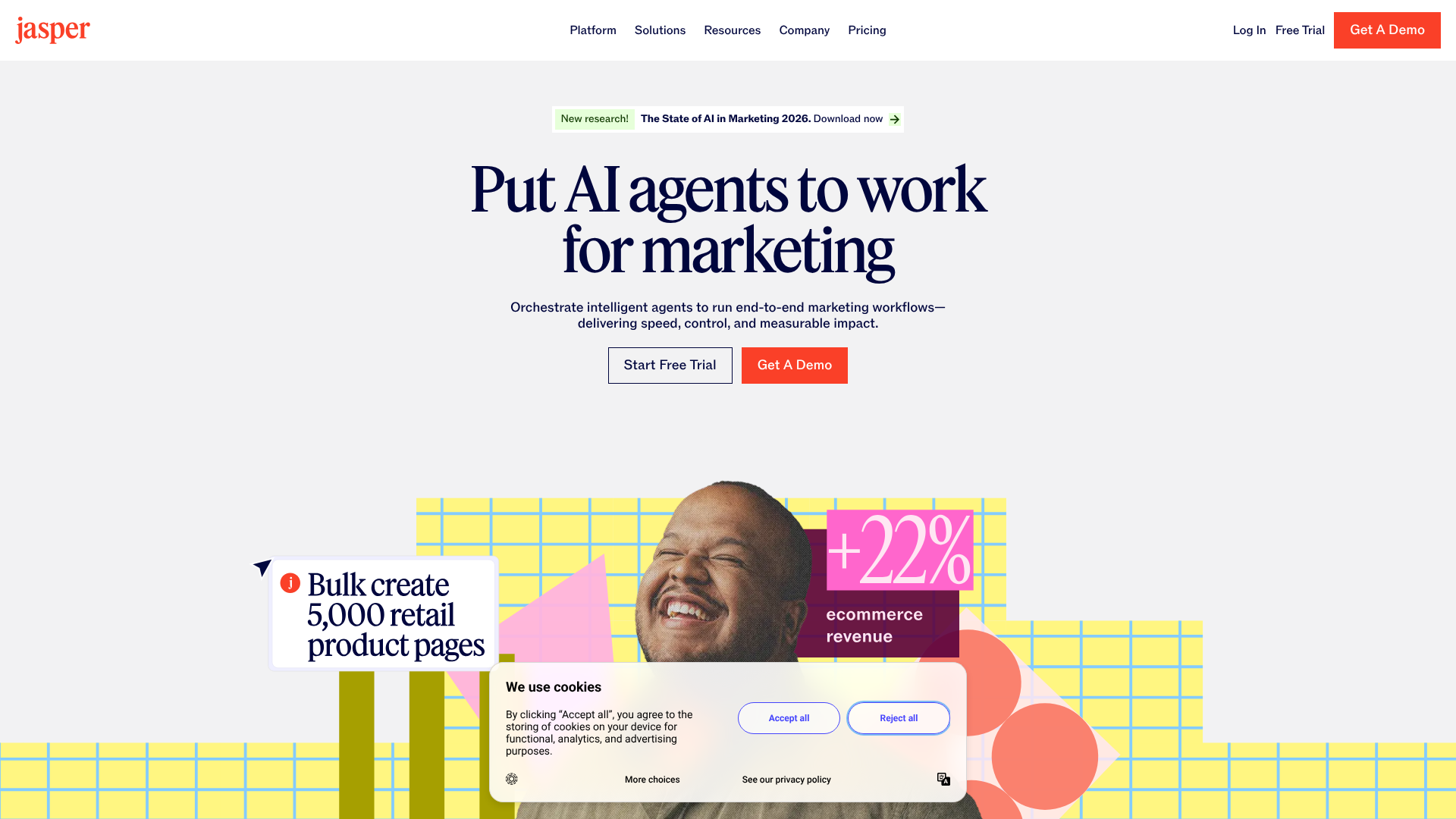
Jasper (formerly Jarvis) is one of the most established and powerful AI writing assistants on the market. It excels at generating high-quality, human-like text for a huge variety of formats, from long-form blog posts and marketing emails to social media captions and ad copy. Its 'Brand Voice' feature allows you to train the AI on your existing content to maintain stylistic consistency.
Jasper is particularly useful for overcoming writer's block and producing first drafts quickly. Its deep integration with SEO tools also helps you create content that is optimised for search from the start. It's an ideal choice for marketing teams, bloggers, and copywriters who need to produce a high volume of written content without sacrificing quality.
Pros:
- Excellent long-form content generation capabilities.
- 'Brand Voice' feature ensures content is on-brand.
- Strong focus on SEO and marketing-specific templates.
Cons:
- Can be more expensive than some competitors.
- Requires some learning to get the most out of its advanced features.
2. Synthesia: Best for AI Avatar Video Creation

Synthesia is a leading platform for creating professional videos using AI avatars. You simply type a script, choose an avatar and a background, and the platform generates a video with a realistic presenter. This is incredibly useful for creating training materials, corporate communications, and product explainers at a fraction of the cost and time of a traditional video shoot.
With support for over 120 languages and a wide selection of stock and custom avatars, Synthesia makes video production accessible to everyone. You don't need a camera, microphone, or studio. It's a powerful tool for businesses looking to scale their video content strategy efficiently.
Pros:
- Creates high-quality videos without any filming equipment.
- Supports a massive range of languages and accents.
- Option to create a custom digital twin of yourself.
Cons:
- Avatars, while realistic, may not be suitable for all types of brand messaging.
- Monthly plans are based on video duration, which can become costly for high-volume users.
3. Pictory: Best for Turning Text into Engaging Videos

Pictory offers a brilliant solution for repurposing existing content. It uses AI to automatically transform long-form text, such as blog posts or scripts, into engaging short-form videos for social media. The AI selects key sentences, finds relevant stock video clips and images, and adds captions and music automatically.
This tool is perfect for marketers who want to get more mileage out of their written content. It makes it easy to create a steady stream of video content for platforms like TikTok, Instagram Reels, and YouTube Shorts, significantly boosting your content's reach and engagement with minimal extra effort.
Pros:
- Extremely fast way to repurpose blog posts into videos.
- AI-powered selection of visuals is surprisingly accurate.
- Automatically adds captions, which is essential for social media.
Cons:
- The AI-selected footage sometimes needs manual tweaking for perfect relevance.
- Less customisation control compared to a full video editor.
4. Murf AI: Best for Realistic AI Voiceovers
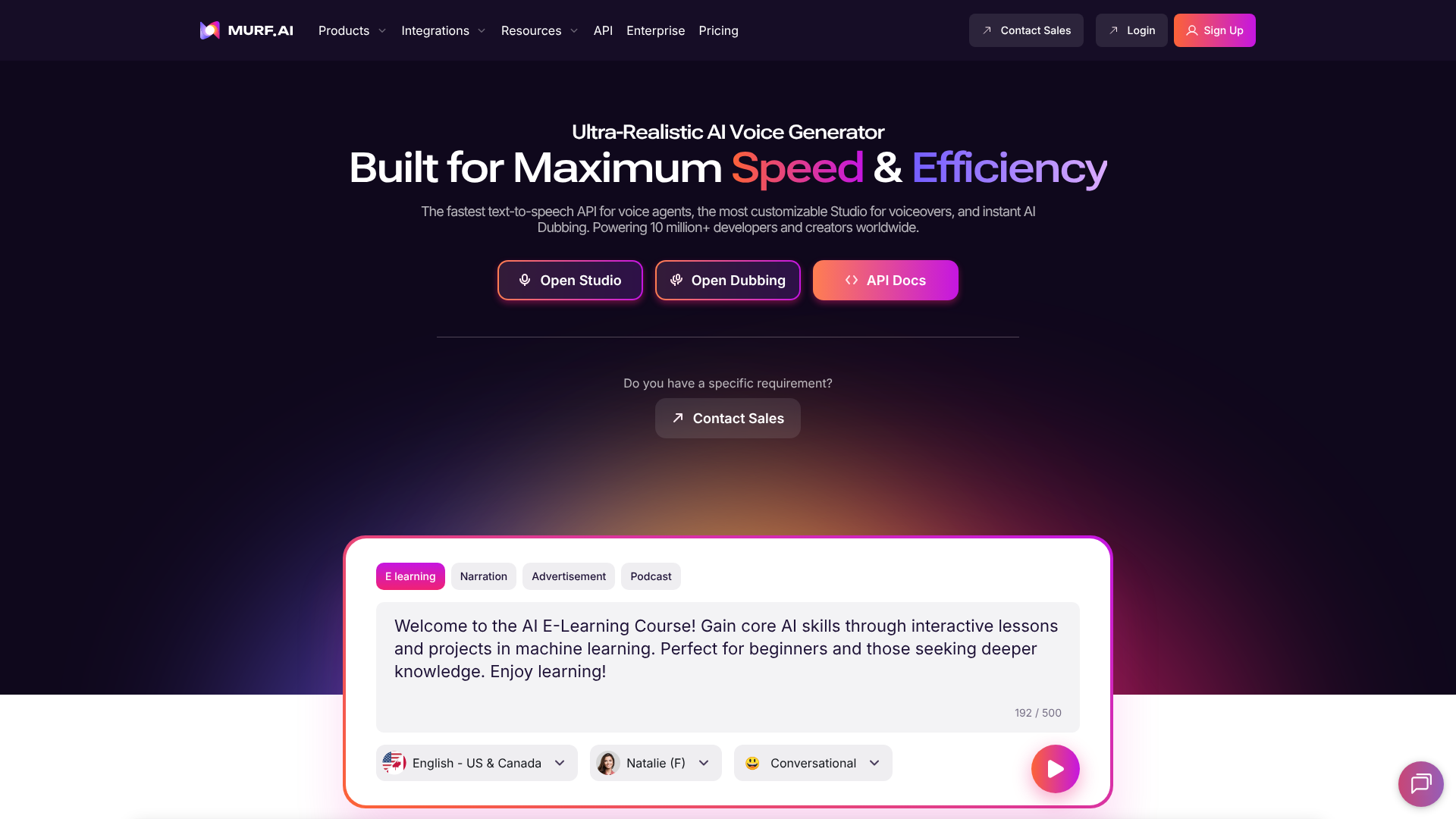
Murf AI specialises in generating studio-quality AI voiceovers. It offers a library of over 120 text-to-speech voices in more than 20 languages, with options to control pitch, tone, and speed. This allows you to create incredibly realistic and expressive narration for videos, podcasts, and e-learning courses.
Beyond simple text-to-speech, Murf includes a full voice studio with features for syncing voice to video and adding background music. It's an invaluable tool for creators who need professional narration but don't have the budget for voice actors or high-end recording equipment.
Pros:
- Highly realistic and emotionally expressive AI voices.
- Extensive library of voices, languages, and accents.
- Integrated studio for editing and syncing audio to video.
Cons:
- Pronunciation of niche or technical terms may occasionally need manual correction.
- The free plan is quite limited.
5. Writesonic: A Versatile All-in-One Content Platform
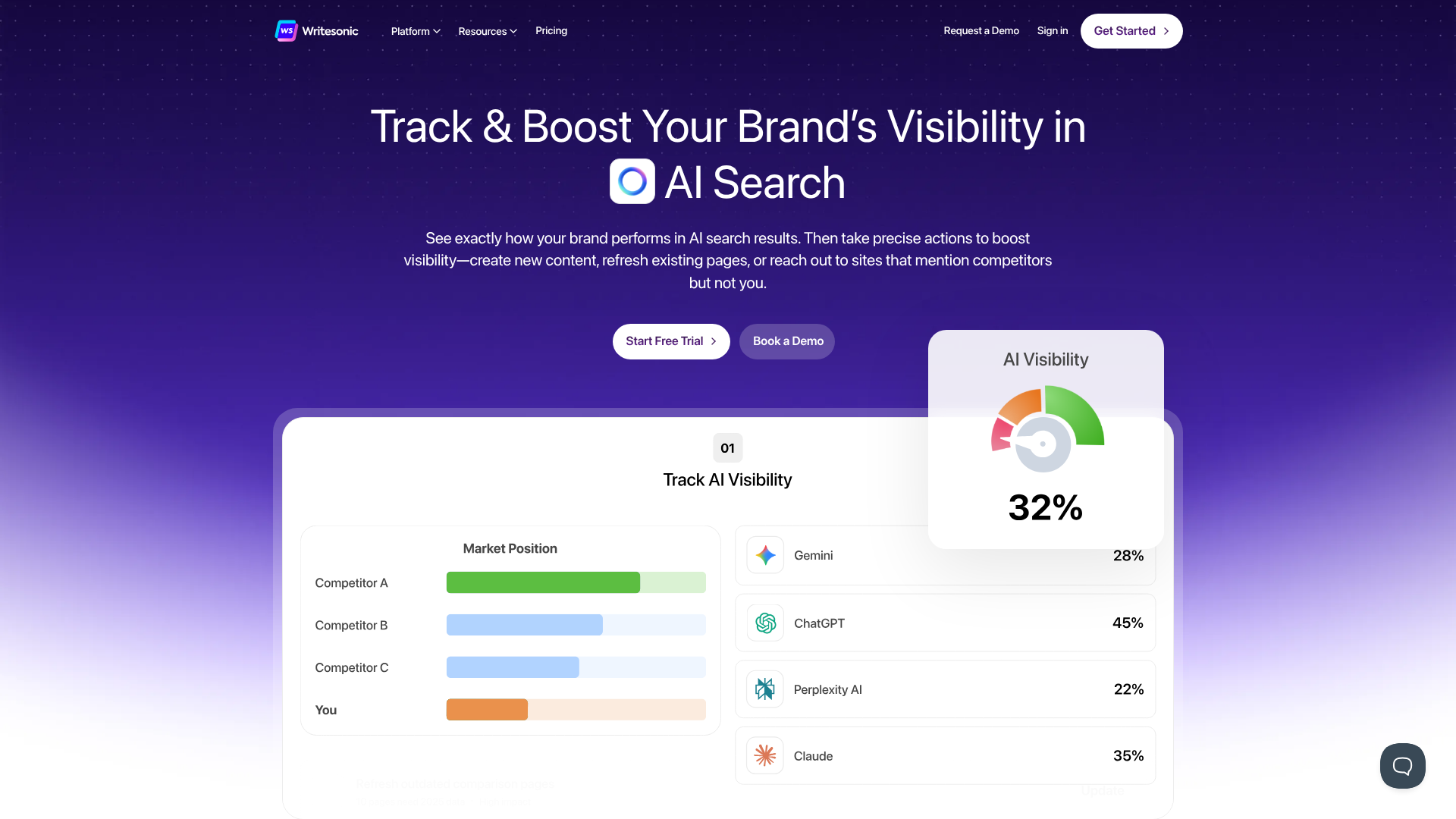
Writesonic positions itself as an all-in-one platform for content creation. It combines AI writing for articles and ads with tools for generating AI art and a chatbot builder called Chatsonic, which can pull real-time data from Google. This makes it a highly versatile option for marketers who need to create a variety of content types.
Its 'Audience' feature allows you to define your target persona, and its 'Tone' settings help ensure the output matches your brand's voice. For teams looking for a single tool that can handle writing, basic image creation, and research, Writesonic offers a compelling and cost-effective package.
Pros:
- Combines writing, AI art, and a research-capable chatbot in one platform.
- Often more affordable than specialised, single-purpose tools.
- Strong feature set for creating SEO-optimised articles.
Cons:
- As a jack-of-all-trades, its specialised functions (like art generation) may not be as advanced as dedicated tools.
- The user interface can feel busy with so many features.
How to Choose the Right Content Generation Tools
With so many options available, selecting the right software can feel overwhelming. The best tool for one person might be a poor fit for another. The key is to make a decision based on your specific needs, goals, and resources. By evaluating a few key factors, you can narrow down the choices and find the perfect tools for your workflow.
Define Your Primary Content Format
What type of content do you create most often? If your strategy is built around a blog and written materials, a powerful AI writer like Jasper is your top priority. If you're focused on video for social media or training, a tool like Synthesia or Pictory makes more sense.
Don't get distracted by tools with features you'll never use. Start by identifying your primary content format—text, video, audio, or images—and look for the best-in-class tool for that specific purpose. You can always add more tools to your stack later as your strategy evolves.
Assess Your Technical Skill Level
Be honest about your technical comfort level. Some tools are designed for beginners with intuitive, drag-and-drop interfaces, while others offer more advanced customisation that requires a steeper learning curve. Most modern AI tools are built to be user-friendly, but their complexity varies.
Look for tools that offer free trials or demos. Spend some time using the software to see if the workflow feels natural to you. A powerful tool is useless if you find it too complicated to use effectively. Choose something that empowers you, not frustrates you.
Consider Your Budget and Scalability Needs
Pricing for AI content tools can vary dramatically. Many operate on a subscription model with different tiers based on usage limits (e.g., words generated, video minutes, or user seats). Evaluate these tiers against your expected output. A cheaper plan might seem attractive, but if you constantly hit the limits, a higher-tier plan could be more cost-effective in the long run.
Think about your future needs as well. Will your team grow. Will your content output increase. Choose a platform that can scale with you.
Check if they offer team plans and what the cost implications are for adding users or increasing your usage.
The Pros and Cons of AI-Assisted Content Creation
Integrating AI into your creative workflow offers immense potential, but it's not a magic bullet. Understanding both the advantages and the potential pitfalls is crucial for using these tools effectively. The goal is to use AI to enhance human creativity, not to replace it entirely.
A balanced perspective allows you to maximise the benefits while being mindful of the limitations. This leads to a more sustainable and authentic content strategy that combines the best of both worlds.
Advantages: Speed, Scale, and Idea Generation
The most obvious benefit of AI is speed. It can generate a 1,500-word blog post draft in under a minute, a task that could take a human writer hours. This incredible velocity allows you to scale your content production dramatically, publishing more frequently and covering more topics.
AI is also a fantastic partner for brainstorming. If you're stuck for ideas, you can ask an AI tool for dozens of blog titles, video concepts, or social media angles in seconds. This can break through creative blocks and provide a solid starting point for your own unique spin on a topic.
Disadvantages: Lack of Nuance, Factual Inaccuracies, and Brand Voice Dilution
Despite their sophistication, AI models can lack a deep understanding of emotional nuance and context. They might produce text that is grammatically correct but emotionally flat or stylistically generic. Without careful editing, relying too heavily on AI can dilute your unique brand voice.
Another significant risk is the potential for factual errors, often called 'hallucinations'. AI models can confidently state incorrect information. This makes human oversight, fact-checking, and editing absolutely essential. Publishing AI-generated content without a thorough review is a major risk to your brand's credibility.
Pro Tip: Implement a strict 'human-in-the-loop' policy. Every piece of AI-generated content must be reviewed, edited, and fact-checked by a human expert before publication. Use AI for the first 80% (the draft) and a human for the final 20% (the polish and verification).
Frequently Asked Questions about Creative Content
As creative content generation becomes more central to marketing, many questions arise about best practices, definitions, and strategies. Here are answers to some of the most common queries.
What are the 5 C's of content creation?
The 5 C's provide a useful framework for creating effective content. They are:
- Clear: The content must have a clear purpose and be easy for the target audience to understand. 2.
Concise: It should deliver its message without unnecessary fluff or jargon, respecting the audience's time. 3. Compelling: The content needs to be interesting and engaging enough to capture and hold attention. 4.
Credible: It must be accurate, well-researched, and trustworthy. Citing sources and avoiding errors is key. 5. Consistent: The style, tone, and quality should be consistent with your brand identity across all pieces of content.
What is an example of creative content?
An excellent example of creative content is an interactive data visualisation. Instead of just writing a blog post with statistics about a topic, a brand could create a webpage where users can explore the data themselves by filtering, clicking on different elements, and seeing charts update in real-time. This is far more engaging and memorable than a static list of numbers and turns passive reading into an active experience.
Other examples include a well-produced podcast series featuring industry experts, an animated explainer video that simplifies a complex topic, or a deeply personal case study that tells a compelling customer story. The key is that it goes beyond a standard format to offer a richer, more engaging experience.
What are the 7 steps of content creation?
As covered earlier in this guide, the 7 essential steps of a modern content creation process are: Ideation & Research, Outlining & Structuring, Drafting, Visual Asset Creation, Editing & Fact-Checking, Optimisation, and Distribution & Promotion. Following these steps in order provides a structured workflow that ensures both quality and efficiency, preventing crucial elements like SEO or fact-checking from being overlooked.
What is the best AI for content generation?
There is no single 'best' AI, as the ideal tool depends entirely on your needs. For long-form written content and copywriting, Jasper is a top contender due to its quality and feature set. For creating videos with AI presenters, Synthesia is the industry leader. For transforming text into social videos, Pictory is excellent.
The best approach is to identify your primary content need and choose a specialised tool that excels in that area.
What are the 4 pillars of content design?
Content design focuses on making content useful, usable, and accessible to the user. Its four main pillars are:
User Need: All content must start with a deep understanding of what the user is trying to achieve. It should be designed to solve their problem or answer their question.
Clarity and Simplicity: Content should be written in plain language and structured logically. Use headings, lists, and short paragraphs to make it easy to scan and digest. 3.
Accessibility: The content must be accessible to everyone, including people with disabilities. This involves things like providing alt text for images and captions for videos. 4. Channel Appropriateness: The format and style of the content should be optimised for the channel where it will be consumed (e.g., short, visual content for Instagram vs.
long, in-depth content for a blog).
Final Thoughts: The Future of Creative Content Generation
The world of content creation is evolving rapidly, but its core principles remain the same. The goal is, and always will be, to connect with an audience by providing genuine value. The rise of AI doesn't change this; it simply provides us with more powerful tools to achieve it. The future of creative content generation belongs to those who can master the partnership between human insight and artificial intelligence.
By building a strategic framework, choosing the right tools, and never losing sight of your audience's needs, you can create a sustainable engine for growth. The tools mentioned here, like Jasper for writing or Synthesia for video, are excellent starting points for enhancing your workflow. Embrace them as assistants that free you up to focus on the high-level strategy and creativity that truly sets your brand apart.
Ultimately, technology is the 'how', but your human understanding of your audience is the 'why'. Combine them effectively, and you'll be well-equipped to create content that not only performs well but also builds lasting relationships.