




How to Master Blog Content Generation: A Step-by-Step Guide for Marketers
Creating a consistent stream of high-quality articles is one of the biggest challenges for any marketer or business owner. The process of blog content generation involves much more than just writing; it's a strategic cycle of research, outlining, drafting, and optimising that demands significant time and resources. Fortunately, the approach to this process has evolved, blending human creativity with the power of AI to make it faster and more scalable than ever before.
- What You'll Learn
- What Exactly is Blog Content Generation?
- The Core Benefits of Systemising Your Content Creation
- A Step-by-Step Guide to Modern Blog Content Generation
- Step 1: Ideation and Keyword Research
- Step 2: Structuring and Outlining
- Step 3: Drafting the Content (Human + AI)
- Step 4: Editing and Fact-Checking
- Step 5: Optimisation for SEO
- Step 6: Adding Visuals and Multimedia
- Choosing the Right Blog Writing Tools
- Understanding Pricing and Costs
- The Pros and Cons of AI-Assisted Article Generation
- Frequently Asked Questions
- Can Google detect AI-generated content?
- Is using AI for blog writing considered cheating?
- How long should a blog post be in 2026?
- Will AI completely replace human writers?
- Final Thoughts
This guide breaks down the modern workflow for generating blog content that ranks well and engages readers. We'll walk through a step-by-step process, from finding winning ideas to publishing a polished, SEO-friendly article. You'll learn how to integrate tools intelligently to overcome writer's block, increase your output, and maintain a high standard of quality without burning out.
What You'll Learn
- The Modern Workflow: Understand that blog content generation is a multi-stage process, from initial keyword research and ideation to final optimisation and publishing.
- Key Benefits: Discover how systemising your content creation can dramatically increase efficiency, ensure brand consistency, and help you scale your output.
- The Role of AI: Learn how AI writing assistants are not replacements for writers but powerful tools that can accelerate drafting, outlining, and overcoming creative blocks.
- A Step-by-Step Process: Follow a clear, actionable framework for generating high-quality blog posts, incorporating both human strategy and AI assistance.
- Tool Selection: Get recommendations on the best tools for different stages of the process, including research, writing, editing, and SEO.
What Exactly is Blog Content Generation?
Blog content generation is the end-to-end process of planning, creating, and publishing articles for a blog. It's a systematic approach that goes far beyond the simple act of writing. A complete generation cycle includes several critical stages: ideation, keyword research, outlining, drafting, editing, search engine optimisation (SEO), and finally, publishing and promotion.
Historically, this entire process was manual, relying solely on the creativity and discipline of a human writer. While effective, this traditional method is often slow and difficult to scale. A single, well-researched article could take days to produce, making it challenging for businesses to maintain the high-volume, high-quality output needed to compete in crowded digital spaces.
The modern definition of content generation now incorporates technology, particularly artificial intelligence. This doesn't mean handing over the entire process to a machine. Instead, it represents a hybrid model where AI tools assist humans at various stages. For example, AI can help generate topic ideas, create detailed outlines based on top-ranking competitors, or produce a rough first draft that a human writer then refines, fact-checks, and infuses with unique insights and experience.
This evolution marks a significant shift from pure article generation, which implies a fully automated output, to AI-assisted content creation, where technology serves as a powerful collaborator. The goal isn't to remove the human element but to augment it, allowing creators to focus on higher-level tasks like strategy, editing, and adding genuine expertise while automating the more repetitive parts of the workflow.
The Core Benefits of Systemising Your Content Creation

Adopting a structured process for your blog writing, especially one enhanced by modern tools, offers substantial advantages. It transforms content from a sporadic, creative effort into a reliable and predictable marketing engine. Here are the primary benefits of systemising your approach.
Boost Efficiency and Speed
A structured workflow eliminates guesswork and streamlines production. When you have a clear process for research, outlining, and drafting, you can move from a blank page to a finished article much faster. AI tools amplify this speed by handling initial drafts or generating outlines in minutes, tasks that could otherwise take hours. This efficiency allows your team to produce more content in less time, directly impacting your ability to attract and engage your audience.
Ensure Brand Consistency
Consistency in tone, style, and voice is crucial for building a strong brand identity. A documented content generation process, complete with style guides and templates, ensures that every piece of content aligns with your brand, regardless of who writes it. AI tools can be trained on your specific brand voice, helping to maintain that consistency even when scaling up your blog writing efforts across a larger team or with freelance contributors.
Scale Your Content Output
Scaling is one of the biggest hurdles in content marketing. A systematic approach is the only way to move from publishing one blog post a week to five or more without a corresponding drop in quality. By defining each step and using tools to handle heavy lifting, you create a repeatable model. This scalability is essential for businesses looking to establish topical authority in their niche and dominate search engine results for a wide range of keywords.
Overcome Writer's Block
Every writer faces the dreaded blank page. A systematic process provides a clear starting point, breaking down the monumental task of writing an article into smaller, manageable steps. AI-powered idea generators and outliners are particularly effective at overcoming this hurdle. By providing a list of relevant topics or a structured outline, they give writers the creative spark and framework needed to start writing with confidence.

A Step-by-Step Guide to Modern Blog Content Generation
Creating a high-quality blog post is a structured journey, not a single event. By following a clear, step-by-step process, you can ensure every article is well-researched, well-written, and optimised to perform. Here is a modern workflow that integrates human strategy with the efficiency of AI tools.
Step 1: Ideation and Keyword Research
Every successful blog post begins with a great idea backed by data. You need to write about topics your audience is actively searching for. This is where keyword research becomes essential.
Start by brainstorming broad topics relevant to your niche. Then, use a dedicated SEO tool to find specific long-tail keywords with a good balance of search volume and low competition. These tools show you what questions people are asking, allowing you to create content that directly answers their needs.
- Human Strategy: Define your target audience and the core problems you solve for them. Brainstorm pillar topics that align with your business goals.
- Tool Assistance: Use a tool like Semrush to perform in-depth keyword research, analyse competitor content, and identify content gaps. For quick inspiration, HubSpot's free Blog Ideas Generator can provide a list of potential titles based on your core topics.
Step 2: Structuring and Outlining
An outline is the skeleton of your article. A strong structure ensures a logical flow, makes the content easier for readers to scan, and helps search engines understand the key topics you're covering. Your outline should include your main H2 headings and the key points (H3s) you plan to cover under each.
Analyse the top-ranking articles for your target keyword to see what subtopics they cover and how they structure their content. Your goal is to create an outline that is more comprehensive and valuable than what already exists.
- Human Strategy: Determine the narrative arc of your post. What is the key takeaway you want readers to have? Organise your points logically to guide the reader from problem to solution.
- Tool Assistance: Many AI writing platforms can generate a detailed outline for you. Simply provide the title or target keyword, and the tool will analyse SERPs to suggest a structure. This saves time and ensures you cover all the essential points.
Step 3: Drafting the Content (Human + AI)
With a solid outline in place, it's time to start writing the first draft. This is where the hybrid human-AI model truly shines. You have two primary options: write the draft yourself using the outline as a guide, or use an AI writer to generate the initial text.
If you use an AI tool, treat its output as a starting point. The AI will flesh out the sections of your outline, but it's your job to refine the text, add personal anecdotes, insert unique insights, and ensure the information is accurate. This collaborative approach combines the speed of machine generation with the nuance and expertise of a human writer.
- Human Strategy: Inject your unique voice, experience, and examples into the text. Fact-check every claim and statistic, especially those generated by AI. The goal is to add value that a machine cannot replicate.
- Tool Assistance: Platforms like Jasper and Writesonic are designed for this. You can feed them your outline, and they will generate a full first draft, significantly speeding up the
content creationprocess.
Step 4: Editing and Fact-Checking
No first draft is perfect, whether written by a human or an AI. The editing stage is where you polish the text, correct errors, and improve readability. This is a non-negotiable step for maintaining quality and credibility.
Read the article aloud to catch awkward phrasing. Check for grammatical errors, spelling mistakes, and typos. Most importantly, verify every fact, statistic, or claim. AI models can sometimes "hallucinate" or present outdated information, so rigorous fact-checking is essential to build trust with your audience.
- Human Strategy: Focus on the flow and clarity of the argument. Does the article deliver on the promise of its headline? Is the tone appropriate for your brand?
- Tool Assistance: Use Grammarly to catch grammatical errors and improve sentence structure. For rephrasing clunky sentences or finding alternative wording, QuillBot is an excellent paraphrasing tool that can help refine your text.
Step 5: Optimisation for SEO
An amazing article is useless if no one can find it. SEO optimisation ensures your content is visible to search engines. This involves integrating your primary and related keywords naturally throughout the text, especially in headings, the introduction, and the conclusion.
Also, write compelling meta titles and descriptions that encourage clicks from the search results page. Add internal links to other relevant articles on your site to help users and search engines navigate your content. Finally, ensure your images have descriptive alt text.
- Human Strategy: Think about search intent. Does your content fully answer the user's query? Ensure the title and meta description accurately reflect the content and are enticing to a human reader.
- Tool Assistance: Tools like Semrush's SEO Writing Assistant provide real-time feedback on your content's readability, SEO, tone of voice, and originality, helping you optimise before you publish.
Step 6: Adding Visuals and Multimedia
Large blocks of text can be intimidating. Break up your content with relevant images, infographics, screenshots, and videos. Visuals make your content more engaging, easier to understand, and more shareable.
Create custom graphics or use high-quality stock photos. If you're explaining a process, screenshots can be incredibly helpful. Embedding a relevant YouTube video can also increase dwell time, a positive signal for SEO.
- Human Strategy: Choose visuals that support and enhance your text, not just decorate it. An infographic that summarises key data points is far more valuable than a generic stock photo.
- Tool Assistance: For creating unique visuals, AI image generators like OpenArt can produce custom images from a text prompt. To turn your blog post into a video, tools like Pictory can automatically create a video with stock footage and voiceover based on your article text.
Pro Tip: After publishing, don't forget the promotion stage. Share your new article on social media, in your email newsletter, and in relevant online communities to drive initial traffic and build momentum.
Choosing the Right Blog Writing Tools
With so many tools available, selecting the right ones for your workflow can feel overwhelming. The best choice depends on your specific needs, budget, and technical comfort level. Here are the key factors to consider and some top recommendations for 2026.
Key Factors to Consider
Before you commit to a platform, evaluate it based on the following criteria:
Quality of Output: This is the most important factor. Does the AI generate coherent, well-written, and contextually relevant text? Test it with topics from your niche. A good tool should produce content that requires editing for style and voice, not for basic sense.
Ease of Use: The interface should be intuitive and easy to navigate. You shouldn't need a technical degree to generate an article. Look for a clean dashboard, clear instructions, and helpful tutorials.
Features and Versatility: Does the tool specialise in one thing (e.g., paraphrasing) or offer a suite of features (e.g., drafting, SEO analysis, social media copy)? An all-in-one platform might be more cost-effective than subscribing to multiple single-purpose tools.
SEO Capabilities: Some advanced tools integrate SEO features directly. They can analyse keywords, suggest outlines based on SERP data, and score your content for optimisation. This can save a significant amount of time by combining the writing and optimisation steps.
Integration Options: Can the tool integrate with other software you use, such as WordPress, Google Docs, or SurferSEO? Smooth integrations can create a more efficient workflow.
Top Recommendations for 2026
Here are a few of the leading tools that excel in different areas of the blog content generation process:
1. Jasper (formerly Jarvis)

Jasper is widely regarded as one of the pioneers in AI writing and remains a top choice for producing high-quality, long-form content. Its strength lies in its ability to understand context and maintain a consistent tone over thousands of words. It offers various templates and a "Boss Mode" feature that gives users fine-grained control over the generation process.
- Best for: Marketers and content teams focused on producing premium, long-form blog posts, articles, and marketing copy.
- Key Feature: Excellent long-form content generation with strong contextual understanding.
2. Writesonic

Writesonic is a powerful and versatile all-in-one platform that caters to a wide range of content needs. It offers an AI Article Writer that can generate a 1,500-word blog post from a single topic, complete with an outline. It also includes features for creating everything from social media ads to landing page copy and has built-in tools for paraphrasing and summarising.
- Best for: Bloggers, freelancers, and marketing agencies looking for a versatile tool that handles various content types and includes SEO features.
- Key Feature: The AI Article Writer 5.0, which streamlines the entire blog post creation process.
3. QuillBot
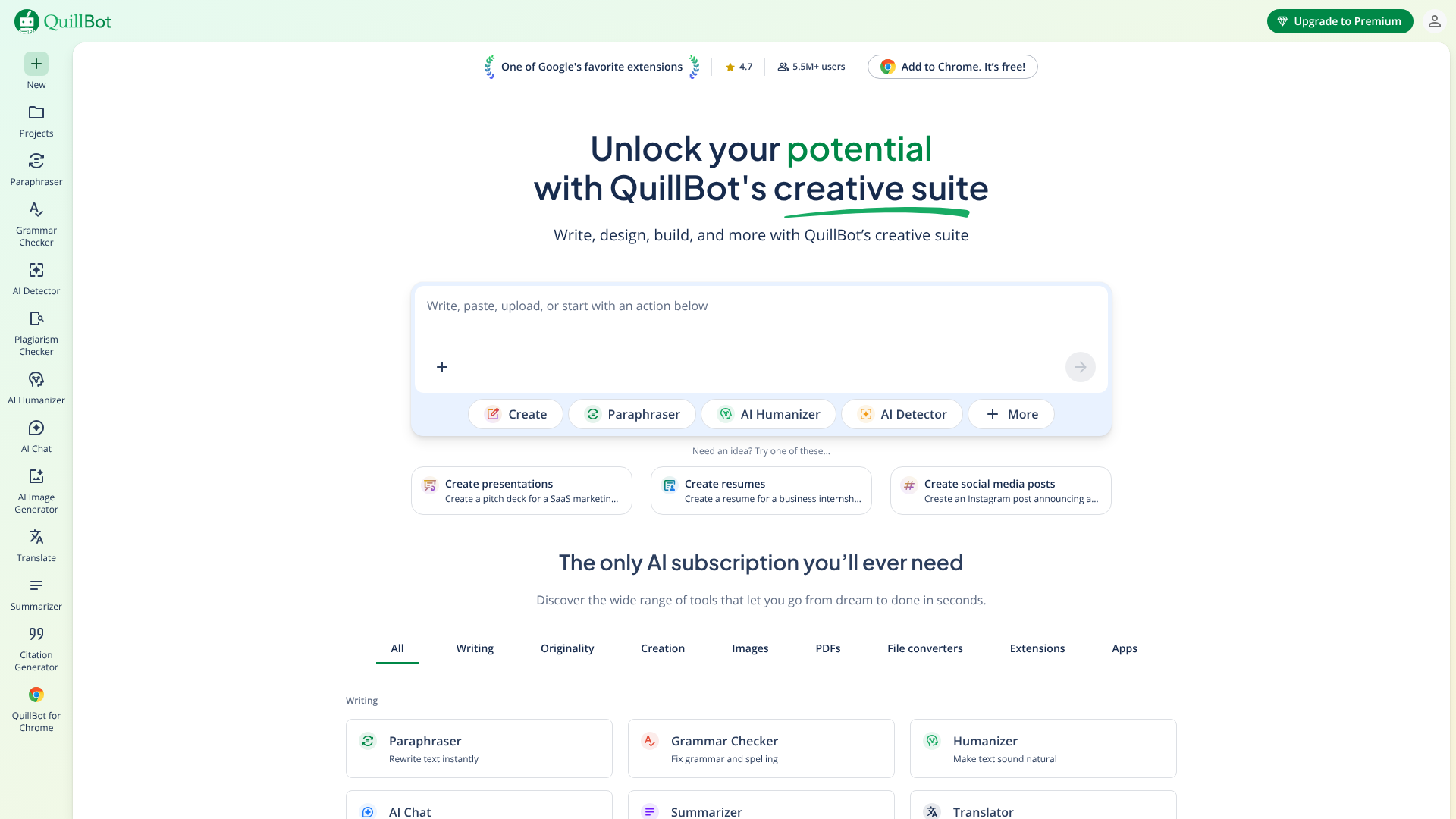
While not a full-fledged article generator, QuillBot is an indispensable tool for the editing and refining stage. Its core feature is a state-of-the-art paraphraser that helps you reword sentences to improve clarity, tone, and style. It also includes a grammar checker, summariser, and citation generator, making it a comprehensive writing assistant.
- Best for: Students, academics, and writers who need to refine and polish existing text rather than generate it from scratch.
- Key Feature: Advanced paraphrasing tool with multiple modes to adjust the tone and style.
Understanding Pricing and Costs
Investing in blog content generation tools requires understanding their pricing structures, which can vary significantly. Most platforms operate on a subscription model, but the way they measure usage differs. Knowing these models will help you choose a plan that offers the best value for your specific output needs.
Common pricing models include:
- Word-Based Subscriptions: Many services offer monthly or annual plans that give you a set number of words you can generate per month. This is straightforward and ideal if you have a predictable content volume. Tiers often range from 20,000 words for solo bloggers to millions of words for large agencies.
- Credit-Based Systems: Some platforms use a credit system where different actions consume a certain number of credits. For example, generating a short product description might cost one credit, while a full blog post could cost ten. This model offers flexibility but can be harder to predict your monthly spend.
- Feature-Tiered Plans: Plans are often differentiated by the features they include. A basic plan might only offer short-form content generation, while a premium plan unlocks long-form article writers, SEO tools, plagiarism checkers, and team collaboration features.
- Freemium Models: Many tools offer a free plan with limited functionality or a small monthly word count. This is a great way to test the platform's quality and interface before committing to a paid subscription.
Here’s a general comparison of the pricing approach for our recommended tools. Please note that pricing changes, so always check the official websites for the most current information.
| Feature | Jasper | Writesonic | QuillBot |
|---|---|---|---|
| Primary Model | Word-Based Subscription | Word-Based Subscription | Feature-Tiered Subscription |
| Free Trial/Plan | Yes, offers a free trial | Yes, offers a free plan | Yes, offers a free plan with limitations |
| Starting Price | Typically starts around £30-£40/month | Often has a lower entry point, around £15-£20/month | Very affordable, with premium plans often under £10/month |
| Best Value For | High-quality long-form content | All-in-one content versatility | Editing and paraphrasing |
When choosing, consider your expected monthly word count. If you only publish a few articles a month, a lower-tier plan may be sufficient. However, if you're running a content-heavy operation for multiple clients, an unlimited or high-volume plan will be more cost-effective in the long run.
The Pros and Cons of AI-Assisted Article Generation
Integrating AI into your content workflow can be transformative, but it's important to have a balanced perspective. These tools are incredibly powerful, but they also have limitations. Understanding both the advantages and disadvantages will help you use them effectively and responsibly.
Pros of Using AI in Blog Writing
- Unmatched Speed: The most significant advantage is speed. An AI can produce a 1,500-word first draft in minutes, a task that could take a human writer several hours. This acceleration allows you to scale content production dramatically.
- Increased Output and Scale: With AI handling the heavy lifting of drafting, content teams can increase their output by 5x or even 10x. This enables businesses to target more keywords, build topical authority faster, and keep their blog constantly updated with fresh content.
- Overcoming Writer's Block: AI tools are a fantastic remedy for creative blocks. They can generate ideas, create outlines, or write an opening paragraph to get the momentum going. This makes them an invaluable partner for any writer.
- Cost-Effectiveness: While there is a subscription cost, using AI can be more affordable than hiring a large team of writers, especially for businesses that need a high volume of content. It allows a single writer or a small team to produce the output of a much larger one.
Cons and Limitations to Consider
- Potential for Inaccuracies: AI models do not "know" things; they predict word sequences based on the data they were trained on. This means they can generate plausible-sounding but factually incorrect information, also known as "hallucinations." Rigorous fact-checking by a human is absolutely essential.
- Lacks Genuine Experience (E-E-A-T): Google's SEO guidelines emphasise Experience, Expertise, Authoritativeness, and Trustworthiness (E-E-A-T). An AI cannot have real-world experience. It can't share a personal story or a unique case study. This human element must be added during the editing process to create truly valuable content.
- Risk of Generic Content: If used without proper guidance and editing, AI can produce generic, soulless content that lacks a distinct point of view. The output often reflects the average of what's already on the internet, so human oversight is needed to add unique insights and a compelling brand voice.
- Requires Human Editing and Strategy: AI is a tool, not a replacement for a content strategist or editor. The best results come from a hybrid approach where humans guide the strategy, prompt the AI effectively, and heavily edit the output to ensure quality, accuracy, and originality.
Frequently Asked Questions
As AI-assisted content creation becomes more common, many questions arise about its effectiveness, ethics, and impact on SEO. Here are answers to some of the most frequently asked questions.
Can Google detect AI-generated content?
Google's official stance is that it rewards high-quality content, regardless of how it's produced. Their focus is on content that is helpful, reliable, and created for people, not for search engines. They are against using automation primarily to manipulate search rankings.
This means that low-quality, spammy content generated by AI will likely perform poorly, just like low-quality human-written content. However, high-quality, well-edited, and factually accurate content that has been enhanced by AI is perfectly acceptable and can rank well. The key is value, not the method of creation.
Is using AI for blog writing considered cheating?
Using AI for blog writing is not cheating; it's a matter of using a tool to improve efficiency. Think of it like a graphic designer using Photoshop or a developer using a code library. The AI is an assistant that helps with the more laborious parts of the process, freeing up the human creator to focus on strategy, creativity, and quality control.
The final product is still the responsibility of the human editor and publisher. The strategy, the unique insights, the fact-checking, and the final polish all come from a person. It's the intelligent use of a tool, not a shortcut to avoid work.
How long should a blog post be in 2026?
There is no single magic number for blog post length. The ideal length depends entirely on the topic and the user's search intent. The goal should always be to cover the topic comprehensively and answer the user's query more thoroughly than any competitor.
For simple questions, a short 800-word post might be sufficient. However, for complex, competitive topics, a comprehensive pillar page of 3,000 words or more is often necessary to rank. Use SEO tools to analyse the average word count of the top-ranking pages for your target keyword to get a good benchmark.
Will AI completely replace human writers?
It's highly unlikely that AI will completely replace human writers, especially for high-value content. While AI is excellent at synthesising information and drafting text, it cannot replicate human creativity, critical thinking, emotional intelligence, or real-world experience. These are the elements that create truly exceptional content.
The role of the writer is evolving from being a pure creator to becoming more of a content strategist, editor, and AI operator. The future of content creation is a collaboration between human and machine, where each plays to its strengths.
Final Thoughts
Modern blog content generation is a dynamic process that blends timeless strategic principles with cutting-edge technology. By adopting a structured, step-by-step workflow, you can transform your content production from a source of stress into a predictable and scalable engine for growth. The key is to view AI not as a replacement for human creativity but as a powerful assistant that can handle the heavy lifting.
From ideation and research to drafting and optimisation, tools can accelerate every stage of the process. However, the final layer of quality—the unique insights, personal stories, and rigorous fact-checking—must always come from you. This hybrid approach allows you to produce more content, maintain a high standard of quality, and ultimately, deliver more value to your audience.
If you're ready to streamline your workflow and scale your content output, consider exploring how these tools can fit into your process. Platforms like Writesonic offer a great all-in-one solution for drafting and optimising, while a tool like Semrush is indispensable for the critical research and SEO phases. Experiment with them to find the combination that best empowers your content strategy.