




Automated Content Generation: A Marketer's Guide to Scaling Content
Automated content generation uses artificial intelligence to produce text, images, audio, and video with minimal human input. For marketers and business owners, this technology offers a powerful way to scale content production, maintain a consistent publishing schedule, and free up creative teams to focus on strategy and high-level tasks. Instead of replacing human creators, these tools act as powerful assistants, capable of drafting articles, designing social media posts, or even producing entire marketing videos in minutes.
- What You'll Learn
- What is Automated Content Generation? A Deeper Look
- The Core Features and Strategic Benefits of Content Automation
- How to Choose the Right Automated Content Generation Tool
- Top Content Generation Tools for 2026
- For Written Content (Blogs, Articles, and Marketing Copy)
- For Automated Video Creation
- For AI Voice and Audio Generation
- Understanding Pricing Structures and Cost-Effectiveness
- The Pros and Cons of Automated Writing: A Balanced View
- Frequently Asked Questions About Content Automation
- How do you use AI to automate content creation?
- Is there a free AI content generator?
- What are the top automation tools for content?
- What is the 30% rule in AI?
- Final Thoughts
This guide explains exactly how content automation works, from the underlying technology to the practical tools you can use today. We'll cover the key benefits, how to select the right platform for your needs, and provide a balanced look at the pros and cons. Whether you're looking to overcome writer's block or build a content engine that runs 24/7, understanding this technology is essential for modern marketing.
What You'll Learn
- What It Is: Understand the core technology behind automated content generation, including AI models like GPT, and how it differs from simple templates.
- Key Benefits: Discover how content automation can dramatically increase efficiency, reduce costs, and ensure brand consistency across all channels.
- How to Choose a Tool: Learn the critical factors to consider when selecting content generation tools, such as content type, output quality, and integration capabilities.
- Top Tool Recommendations: Get a curated list of the best tools for generating written content, AI videos, and realistic voiceovers to support your marketing goals.
- The Human Element: Realise why human oversight, editing, and strategic direction remain essential for creating high-quality, effective content with AI.
What is Automated Content Generation? A Deeper Look
Automated content generation is the process of using software and algorithms, primarily driven by artificial intelligence (AI), to create content. This isn't just about filling in templates; modern systems use sophisticated AI models to understand context, mimic human writing styles, and produce original material across various formats. The goal is to streamline and accelerate the content creation process, which is often a significant bottleneck for marketing teams.
At its core, this technology relies on a few key components. The most prominent is Natural Language Processing (NLP) and Natural Language Generation (NLG). NLP allows the machine to read, understand, and interpret human language, while NLG enables it to write language that is coherent, contextually relevant, and stylistically appropriate. You've likely interacted with this technology through chatbots or virtual assistants.
Large Language Models (LLMs) like the GPT (Generative Pre-trained Transformer) series are the engines powering most modern automated writing tools. These models are trained on vast datasets of text and code from the internet, allowing them to learn patterns, grammar, facts, and reasoning abilities. When you provide a prompt—like "write a blog post intro about the benefits of email marketing"—the model uses its training to predict the most logical sequence of words to form a relevant and readable response. The same principles apply to generating images from text prompts (text-to-image models) or creating voiceovers from scripts (text-to-speech models).
It's important to distinguish between basic automation and AI-driven generation. Basic automation might involve using a template to auto-populate product descriptions with data from a spreadsheet. AI-driven generation, on the other hand, creates entirely new sentences, paragraphs, and ideas based on a simple input, offering a much higher degree of creativity and flexibility. This evolution is what has made automated content a viable strategy for businesses of all sizes.
The Core Features and Strategic Benefits of Content Automation
Adopting content automation isn't just about making things faster; it's a strategic move that can reshape your entire content workflow and deliver significant business advantages. The benefits extend beyond pure speed, impacting everything from budget allocation to brand perception. Understanding these advantages helps clarify the return on investment and how these tools can fit into your existing processes.
First and foremost is the massive increase in scalability and efficiency. A human writer can produce one or two high-quality articles per day. An AI tool can generate dozens of drafts in the same amount of time. This allows teams to scale their output exponentially, filling content calendars, populating social media channels, and creating ad variations without a proportional increase in headcount.
This is especially valuable for agencies managing multiple clients or businesses trying to establish a strong online presence quickly.
Another major benefit is cost reduction. While there is a subscription cost for most content generation tools, it's often significantly lower than hiring freelance writers, videographers, or voice actors for every project. For example, creating a single marketing video can cost thousands of pounds. A tool like Synthesia allows you to produce professional-looking AI avatar videos for a fraction of that cost, making video content accessible even for small businesses.
Brand consistency is also greatly improved through automation. You can often train AI models on your brand's voice, style guide, and existing content. This ensures that every piece of generated content—from a tweet to a white paper—adheres to the same tone and terminology. This consistency builds brand recognition and trust with your audience, eliminating the variations that can occur when working with multiple writers or agencies.
Finally, these tools are excellent for overcoming creative blocks and generating ideas. Instead of staring at a blank page, a marketer can input a topic and receive multiple outlines, headlines, or introductory paragraphs in seconds. This initial draft, even if imperfect, provides a starting point that can be refined and built upon, turning a daunting task into a manageable editing process. It shifts the creator's role from pure generation to strategic refinement.
How to Choose the Right Automated Content Generation Tool
With a rapidly growing market, selecting the best content generation tool can feel overwhelming. The right choice depends entirely on your specific goals, team structure, and the type of content you need to produce. Focusing on a few key criteria can help you navigate the options and find a platform that delivers real value for your business.
First, define your primary content needs. Are you looking to produce long-form blog posts and articles. Or is your focus on short-form social media copy and ad headlines. Perhaps you need to create video scripts or even the final video itself.
Different tools specialise in different formats. A platform like Jasper excels at written marketing copy and blog posts, while a tool like Pictory is designed specifically to turn text into video.
Next, evaluate the quality and customisation of the output. The best tools don't just produce generic content; they allow for significant customisation. Look for features that let you define a brand voice, specify a target audience, or input specific keywords and data points. Request a demo or sign up for a free trial to test the tool with your own prompts.
Assess whether the output is coherent, factually accurate (with verification), and requires minimal editing to meet your standards.
Consider integration capabilities. A content tool becomes exponentially more powerful when it connects with your existing workflow. Check if the platform integrates with tools you already use, such as WordPress for direct publishing, Semrush for SEO data, or HubSpot for marketing campaign management. Smooth integrations save time and reduce the friction of moving content between different applications, creating a more efficient production process.
Finally, assess the user interface (UI) and ease of use. A powerful tool is useless if your team finds it too complicated to operate. A clean, intuitive interface reduces the learning curve and encourages adoption. Look for platforms with good documentation, tutorials, and responsive customer support.
The goal is to find a tool that empowers your team, not one that adds another layer of complexity to their work.
Pro Tip: When testing tools, use the same set of 3-5 real-world prompts across different platforms. This allows you to make a direct, apples-to-apples comparison of output quality, style, and speed, giving you a much clearer picture of which tool best fits your specific needs.
Top Content Generation Tools for 2026
Navigating the landscape of content generation tools can be challenging. To help, we've broken down our top recommendations by content type, focusing on platforms that deliver quality, flexibility, and value. These tools a
re leaders in their respective categories and can serve as the foundation of a powerful content automation strategy.
For Written Content (Blogs, Articles, and Marketing Copy)
1. Jasper (formerly Jarvis)
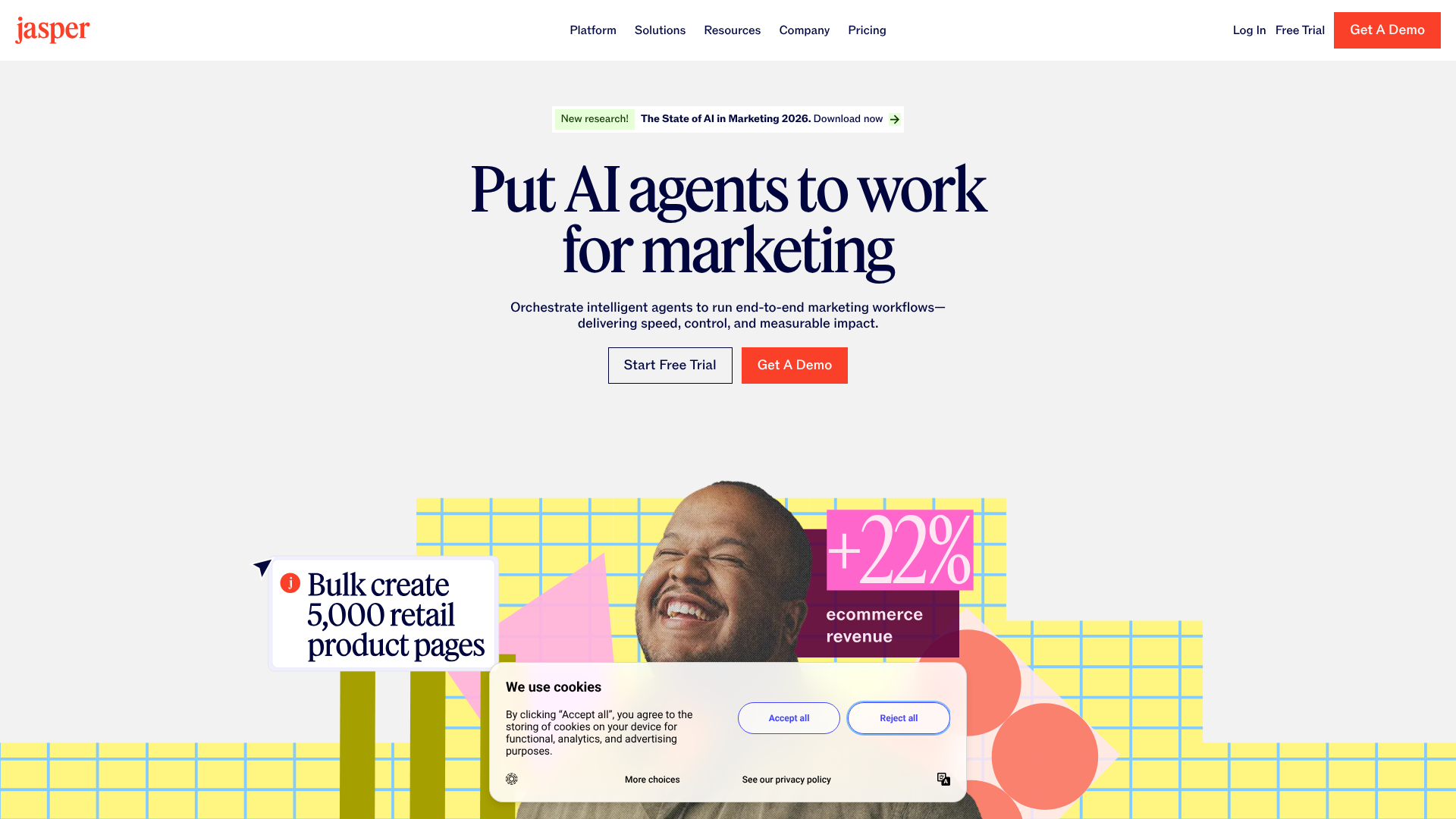
Jasper is one of the most well-known and powerful AI writing assistants on the market. It's designed for marketing teams and content creators who need high-quality copy at scale. Jasper offers over 50 templates for everything from blog post outlines and ad copy to video scripts and email newsletters.
Its standout feature is the Brand Voong brand voice and collaboration features. * Cons: Can be more expensive than some competitors, may have a steeper learning curve for beginners.
2. Writesonic
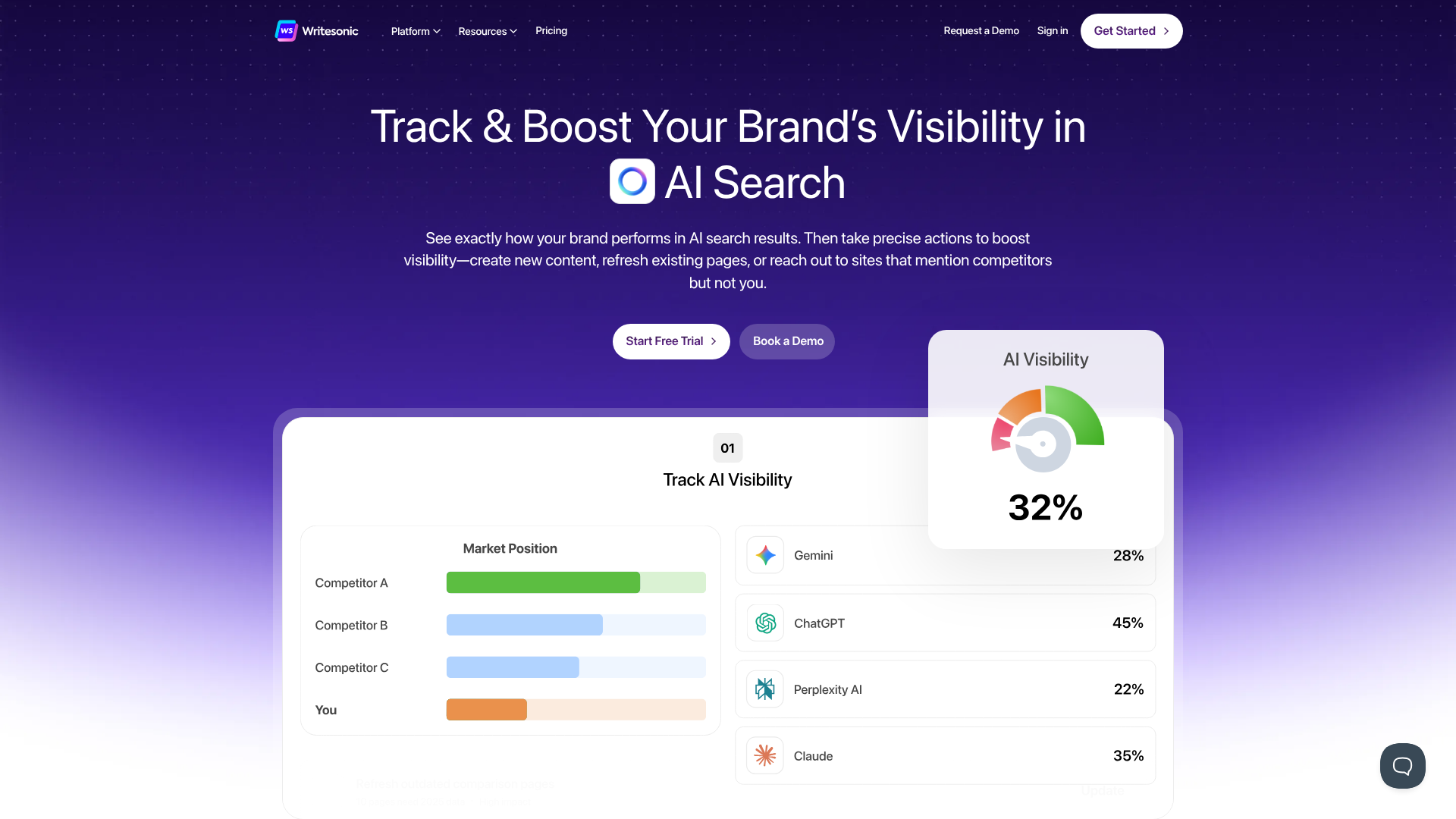
Writesonic is a versatile and user-friendly platform that caters to a wide range of content needs. It offers tools for AI article writing, paraphrasing, and summarising, as well as specialised features for creating landing pages and ads. Its integration with Surfer SEO makes it a strong choice for those focused on creating search-optimised blog content.
Writesonic often provides a good balance of features, quality, and affordability.
- Pros: User-friendly interface, strong SEO features via Surfer integration, offers a free trial to test capabilities.
- Cons: The quality of long-form content can sometimes require more editing than specialised competitors.
For Automated Video Creation
1. Synthesia
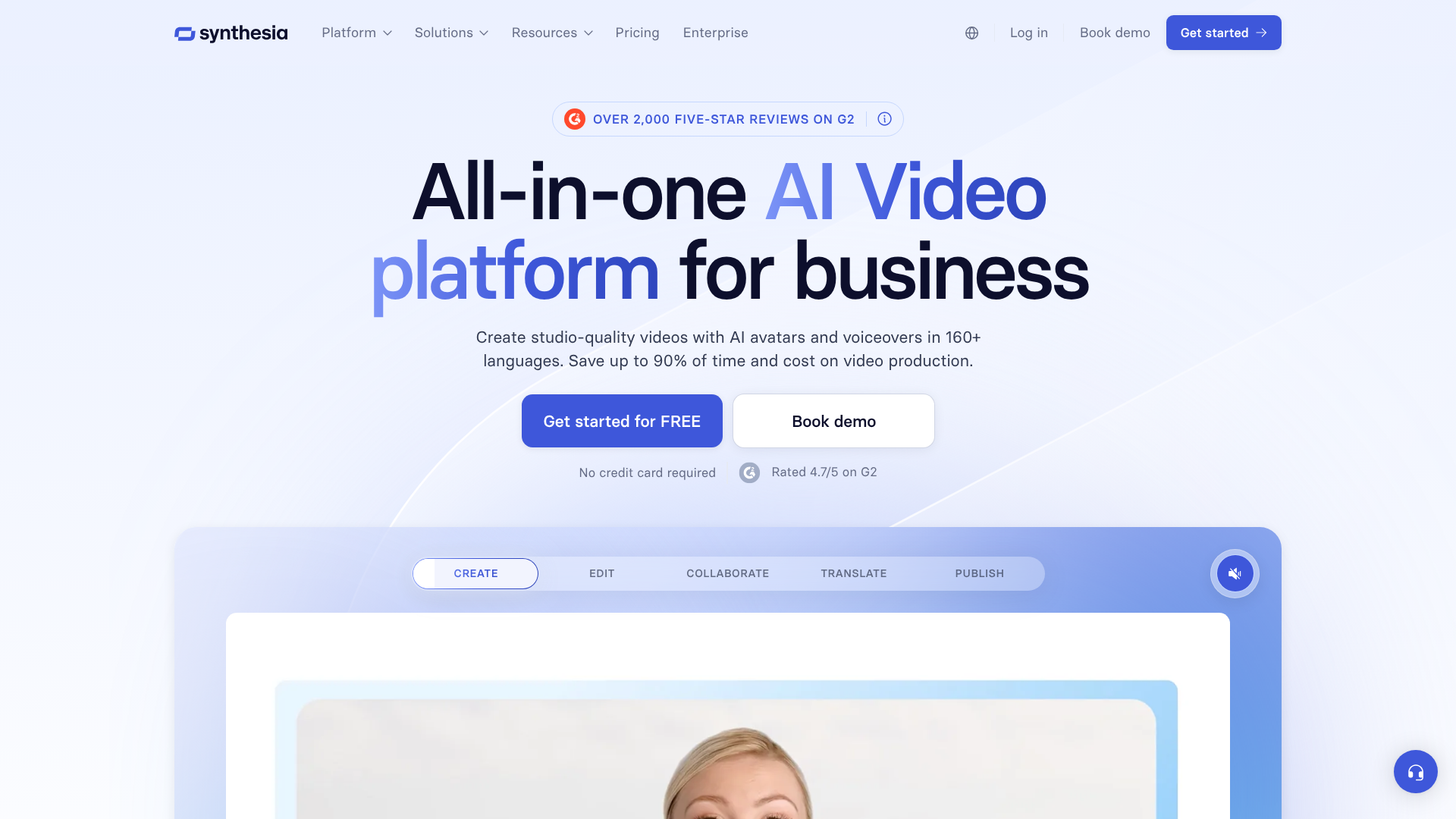
Synthesia is a leader in AI video generation, allowing you to create professional videos with realistic AI avatars. You simply type a script, choose an avatar and background, and the platform generates a video in minutes. It's ideal for creating training materials, corporate communications, and product explainers without

the cost and complexity of traditional video production. With support for over 120 languages, it's a powerful tool for global teams.
- Pros: Creates high-quality, professional videos quickly; wide selection of avatars and languages; eliminates the need for cameras or actors.
- Cons: Avatar-based videos may not be suitable for all types of marketing content (e.g., those requiring authentic human testimonials).
2. Pictory

Pictory specialises in turnir, creating a shareable video for social media in minutes. It's an exceptional tool for content repurposing, helping you get more mileage out of your existing articles and webinars.
- Pros: Excellent for repurposing content, fast and easy to use, automatically adds captions and visuals.
- Cons: Relies on stock footage, so it may lack the originality of custom-shot video.
For AI Voice and Audio Generation
1. Murf AI
Murf AI provides a suite of hyper-realistic AI voices for a variety of applications, from video voiceovers and podcasts to e-learning modules. The platform allows you to adjust pitch, tone, and speed to create a natural-sounding performance. It also includes a voice cloning feature, enabling you to create a digital version of your own voice for consistent branding across all audio content.
- Pros: Extremely realistic and high-quality voices, extensive customisation options, includes voice cloning.
- Cons: The most advanced features and best voices are reserved for higher-tier plans.
Understanding Pricing Structures and Cost-Effectiveness
When investing in automated content generation, understanding the different pricing models is key to finding a solution that fits your budget and usage patterns. Most tools have moved away from one-size-fits-all pricing, offering tiered plans that cater to everyone from solo creators to large enterprises. The primary goal is to match the cost to the value you receive.
The most common model is the monthly or annual subscription. These plans typically offer different tiers based on factors like the number of words or videos you can generate, the number of user seats, and access to premium features. For example, a basic plan might give you 20,000 words per month, while a business plan offers unlimited generation and advanced collaboration tools. Annual subscriptions usually come with a discount, making them a cost-effective choice for teams with consistent, long-term needs.
Another popular model is credit-based or pay-as-you-go. Instead of a flat monthly fee, you purchase credits that are consumed each time you generate content. The number of credits used often depends on the length and complexity of the content. This model is ideal for users with sporadic or project-based needs, as you only pay for what you actually use.
It offers flexibility but can become more expensive than a subscription for high-volume users.
Many platforms also offer a freemium model or a free trial. A free tier typically provides a limited number of credits or access to basic features, allowing you to test the platform's capabilities before committing. Free trials, like those offered by Writesonic, provide full access to premium features for a limited time. These are invaluable for evaluating whether a tool's output quality and workflow meet your requirements.
When evaluating cost-effectiveness, look beyond the price tag. Consider the time saved for your team, the cost of alternatives (like hiring freelancers), and the potential ROI from increased content output. A £100/month subscription might seem high, but if it saves 40 hours of work, the value is clear.
The Pros and Cons of Automated Writing: A Balanced View
While automated content generation offers transformative potential, it's crucial to approach it with a clear understanding of both its strengths and its limitations. It is a powerful tool, not a magic solution. Acknowledging the drawbacks allows you to build a workflow that maximises the benefits while mitigating the risks.
The Advantages
- Unmatched Speed and Scale: The most obvious benefit is the ability to produce content at a pace impossible for humans. This allows for rapid scaling of blogs, social media channels, and product descriptions.
- Significant Cost Savings: Automating content creation can be far more affordable than hiring a large team of writers, designers, and video producers, especially for businesses needing a high volume of content.
- Consistency in Voice and Style: AI tools can be trained to adhere strictly to a brand's style guide, ensuring a consistent voice across all platforms and publications, which is difficult to manage with multiple human creators.
- Data-Driven Content Ideas: Some tools can analyse data to suggest topics, keywords, and formats that are likely to perform well, removing some of the guesswork from content strategy.
The Disadvantages
- Lack of Genuine Creativity and Nuance: AI models generate content based on patterns in their training data. They cannot replicate true human creativity, emotional depth, or nuanced storytelling. The output can sometimes feel generic or formulaic.
- Potential for Factual Inaccuracies: AI models can "hallucinate"—that is, invent facts, statistics, or sources that sound plausible but are incorrect. All generated content must be rigorously fact-checked by a human expert.
- No Real-World Experience: An AI has never used a product, attended an event, or interviewed a source. It cannot provide the authentic, experience-based insights that build trust and authority with an audience.
- The Need for Human Oversight: Raw AI output is rarely ready for publication. It requires a human editor to refine the language, check for errors, add strategic insights, and ensure it aligns perfectly with the intended message and audience. The process is best described as AI-assisted, not fully automated.
Pro Tip: Use AI for the "80%" and humans for the "20%". Let the tool handle the heavy lifting of drafting, research, and structure. Then, have your human experts spend their time on the high-value tasks: adding unique insights, fact-checking, and refining the content to perfection.
Frequently Asked Questions About Content Automation
As this technology becomes more mainstream, many questions arise about its practical application and impact. Here are answers to some of the most common queries.
How do you use AI to automate content creation?
Automating content creation with AI is a multi-step process that works best when humans and technology collaborate. First, you define your content goals and strategy, identifying the topics and formats you need. Next, you select the appropriate AI tools for the job—one for writing, another for video, etc. You then provide the AI with a detailed prompt, including the topic, target audience, desired tone, and any key points or keywords to include.
The AI generates the initial draft, which serves as your starting point. This is the most critical phase for human intervention: a subject matter expert must review, edit, and fact-check the content. This step involves refining the language, adding unique insights, and ensuring the piece aligns with your brand's voice and quality standards. Finally, once the content is polished, you can use other automation tools to schedule and publish it across your channels.
Is there a free AI content generator?
Yes, many leading content generation tools offer a free version or a free trial. These are designed to let you experience the platform's capabilities before committing to a paid plan. For example, platforms like Writesonic and HubSpot's AI tools often have free tiers that provide a limited number of words or generations per month.
These free plans are excellent for occasional use or for testing different platforms. However, they typically come with limitations on features, output quality, and volume. For consistent, high-volume content creation, a paid subscription is almost always necessary to unlock the tool's full potential.
What are the top automation tools for content?
The "top" tools depend on your specific needs, but a strong content automation stack often includes a mix of platforms for different formats. For writing, leaders include Jasper for its quality and marketing focus, and Writesonic for its versatility. For video, Synthesia is a top choice for AI avatar videos, while Pictory excels at turning text into social videos.
For audio, Murf AI offers incredibly realistic text-to-speech voices. To tie everything together, workflow automation platforms like Zapier or Make can connect these tools, creating a chain where a new blog post in a document automatically triggers the creation of a social media video and a scheduled post.
What is the 30% rule in AI?
The "30% rule" is a general guideline suggesting that while AI can handle a significant portion of a task, the final 30%—involving nuance, critical thinking, final review, and strategic oversight—should be handled by a human. In content creation, this means letting AI generate the initial draft (perhaps 70% of the work), but reserving the crucial final 30% for human editing, fact-checking, and adding unique, experience-based insights.
This rule serves as a reminder that AI is an assistant, not a replacement. Relying on AI for 100% of the process often leads to mediocre, error-prone content that fails to connect with an audience. The real power comes from combining the speed of AI with the wisdom and creativity of human professionals.
Final Thoughts
Automated content generation is no longer a futuristic concept; it's a practical and accessible technology that is reshaping how businesses approach marketing. By using the power of AI, teams can overcome creative bottlenecks, scale their output dramatically, and maintain a consistent and professional brand presence across all digital channels.
However, the most successful content strategies will be those that blend the efficiency of machines with the irreplaceable insight, creativity, and strategic thinking of human professionals. These tools should be viewed as powerful collaborators, not autonomous creators. They handle the heavy lifting of drafting and ideation, freeing up marketers to focus on what truly matters: understanding their audience, telling compelling stories, and building genuine connections.
If you're ready to explore how these tools can enhance your workflow, consider trying a platform tailored to your primary content needs. For versatile written content, a tool like Jasper is a powerful starting point. For those looking to dive into video marketing without the high production costs, exploring a platform like Synthesia could be the right next step.