


The 2026 List of Smart Contract Platforms: 12 Top Choices for Developers
Choosing the right foundation for a decentralised application (dApp) is one of the most critical decisions a developer can make. The underlying blockchain dictates everything from transaction speed and cost to security and the size of the potential user base. This comprehensive list of smart contract platforms is designed to guide you through the complex landscape, helping you compare the leading options and make an informed choice for your next project.
- What You'll Learn
- What Exactly Are Smart Contract Platforms?
- Key Features to Look for in Smart Contract Solutions
- Scalability and Performance
- Security and Consensus Mechanism
- Developer Experience and Tooling
- Ecosystem and Interoperability
- Transaction Costs (Gas Fees)
- How to Choose the Right Smart Contract Platform for Your Project
- The Definitive List of Top Smart Contract Platforms for 2026
- 1. Ethereum (ETH)
- 2. Solana (SOL)
- 3. Cardano (ADA)
- 4. Avalanche (AVAX)
- 5. BNB Chain (BNB)
- 6. Polygon (MATIC)
- 7. Polkadot (DOT)
- 8. Cosmos (ATOM)
- 9. NEAR Protocol (NEAR)
- 10. Tezos (XTZ)
- 11. Algorand (ALGO)
- 12. Hyperledger Fabric
- Comparing the Costs: A Look at Transaction Fees
- Pros and Cons of Using Smart Contract Platforms
- Frequently Asked Questions (FAQ)
- Which smart contract platform is best?
- What are the top 10 blockchain platforms?
- Is Bitcoin a smart contract platform?
- What are the 4 types of Blockchain?
- Can XRP run smart contracts?
- Final Thoughts: The Future of Smart Contract Solutions
Smart contracts are no longer a niche concept; they are the engines driving decentralised finance (DeFi), non-fungible tokens (NFTs), and the next generation of the web. Whether you're building a high-frequency trading protocol or a community-governed digital organisation, the platform you build on matters immensely. We'll break down the top contenders, their unique features, and what makes each one suitable for different applications.
What You'll Learn
- Platform Fundamentals: Understand what smart contract platforms are and how they differ from traditional legal agreements and standard blockchains like Bitcoin.
- Key Selection Criteria: Discover the most important factors to consider when choosing a platform, including scalability, security, cost, and developer experience.
- Top 12 Platforms Compared: Get a detailed breakdown of the leading smart contract solutions, from the established giant Ethereum to high-speed challengers like Solana and Avalanche.
- Cost and Performance Insights: Learn how transaction fees and processing speeds vary across different networks and what it means for your application's user experience.
- Pros and Cons: Gain a balanced perspective on the overall advantages and inherent challenges of building with smart contract technology in 2026.
What Exactly Are Smart Contract Platforms?
At its core, a smart contract is just a program stored on a blockchain that runs when predetermined conditions are met. Think of it like a digital vending machine: you insert money (cryptocurrency), select an item, and the machine automatically dispenses your product and any change. There's no need for a cashier or intermediary; the rules are coded directly into the machine.
Smart contract platforms are the specialised blockchains that provide the environment for these programs to exist and execute. They are the operating systems for dApps. While Bitcoin's blockchain can process simple transactions, it wasn't designed for complex, programmable logic. Smart contract platforms were created to fill this gap, offering Turing-complete programming languages that allow developers to build almost any application imaginable.
This technology automates trust and enforcement. While traditional agreements are managed through legal frameworks and services like LegalContracts, smart contracts automate execution on a blockchain. Once a contract is deployed, it runs exactly as written, without the possibility of downtime, censorship, or third-party interference. This creates a trustless environment where parties can interact directly and securely.
Key Features to Look for in Smart Contract Solutions
Not all smart contract platforms are created equal. They differ significantly in their architecture, performance, and philosophy. When evaluating your options, focus on these critical features to ensure you choose a network that aligns with your project's goals.
Scalability and Performance
Scalability refers to a platform's ability to handle a growing number of transactions. It's often measured in transactions per second (TPS). A platform with low TPS will become slow and expensive during periods of high demand. Also, consider transaction finality—the time it takes for a transaction to be confirmed as permanent and irreversible. For applications like gaming or payments, fast finality is essential.
Security and Consensus Mechanism
Security is paramount in a world where digital assets are at stake. The platform's consensus mechanism—the method by which nodes agree on the state of the network—is the foundation of its security. Most modern platforms use a variation of Proof-of-Stake (PoS), which is more energy-efficient than the older Proof-of-Work (PoW) model used by Bitcoin. Evaluate the network's decentralisation and its history of resisting attacks.
Developer Experience and Tooling
A strong developer ecosystem can dramatically speed up development. Look for platforms with well-documented, easy-to-learn programming languages like Solidity or Rust. The availability of development frameworks (like Hardhat or Truffle), testing environments, and code libraries is also crucial. A supportive and active developer community is a valuable resource for troubleshooting and collaboration.
Ecosystem and Interoperability
An established platform has a large, active ecosystem of dApps, wallets, and users. Building on such a network can provide immediate access to a broad user base and liquidity. Interoperability, or the ability to communicate and share data with other blockchains, is also becoming increasingly important. Many platforms are Ethereum Virtual Machine (EVM) compatible, which means developers can easily migrate dApps from Ethereum.
Transaction Costs (Gas Fees)
Every operation on a smart contract platform costs a small fee, often called a "gas fee". These fees compensate the network's validators for processing transactions. On congested networks, gas fees can become prohibitively expensive, making certain applications unviable. Look for platforms with predictable and low transaction costs, especially if your dApp involves many small transactions.

How to Choose the Right Smart Contract Platform for Your Project

Selecting the best platform is less about finding a single "winner" and more about matching a platform's strengths to your specific needs. A systematic approach can help you narrow down the choices and avoid costly mistakes.
First, clearly define your use case. Are you building a DeFi protocol that requires high security and liquidity. An NFT marketplace that needs low-cost minting and high throughput. Or an enterprise solution that prioritises privacy and permissioned access.
The demands of a fast-paced blockchain game are very different from those of a supply chain management system.
Next, assess your technical requirements and your team's expertise. If your team is already proficient in Solidity, an EVM-compatible chain offers the smoothest path to deployment. If you're starting from scratch, you might consider a platform with a more modern language like Rust (used by Solana and NEAR) or Move (developed for Diem and used by Aptos/Sui). Don't underestimate the learning curve associated with a new programming language and toolset.
Finally, evaluate the long-term vision and health of the platform. A project's viability depends on its community, governance model, and funding. Is there a clear roadmap for future upgrades. Is the platform sufficiently decentralised to resist censorship or control by a single entity.
A vibrant and engaged community is often a leading indicator of a project's long-term health and potential for growth.
Pro Tip: Before committing to a platform, build and deploy a small proof-of-concept project on its testnet. This hands-on experience will give you invaluable insights into the development process, tooling, and actual performance that you can't get from reading documentation alone.
The Definitive List of Top Smart Contract Platforms for 2026
Here is our breakdown of the top smart contract platforms, each evaluated on its technology, ecosystem, and ideal use cases. This list provides a starting point for your research into the best blockchain for your project.
1. Ethereum (ETH)
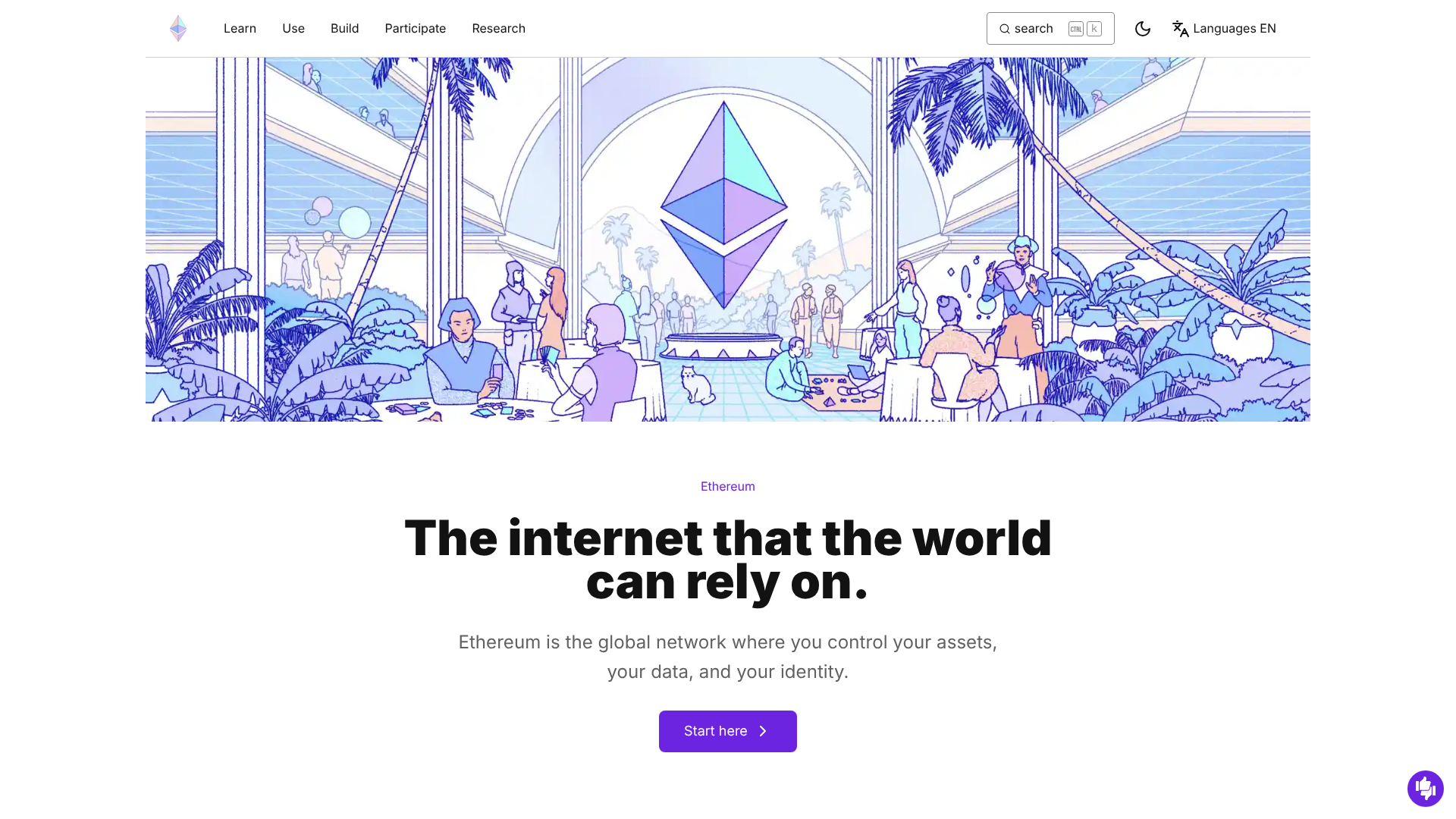
As the original smart contract platform, Ethereum remains the undisputed leader in terms of developer adoption, ecosystem size, and total value locked (TVL) in its DeFi applications. Its transition to a Proof-of-Stake consensus mechanism (The Merge) has made it more scalable and environmentally friendly. The Ethereum Virtual Machine (EVM) is the industry standard, making it a familiar environment for most blockchain developers.
- Consensus: Proof-of-Stake (PoS)
- Language: Solidity, Vyper
- Best For: DeFi, NFTs, DAOs, projects requiring maximum security and decentralisation.
Pros
- Largest Ecosystem: Unmatched network effects with the most users, developers, and dApps.
- Most Secure: Considered the most battle-tested and decentralised smart contract platform.
- Standardisation: The EVM and ERC token standards are the industry benchmark.
Cons
- High Gas Fees: Despite upgrades, transaction fees on the mainnet can still be high during peak times.
- Scalability Issues: Base layer scalability is still lower than many competitors, relying on Layer 2 solutions.
2. Solana (SOL)
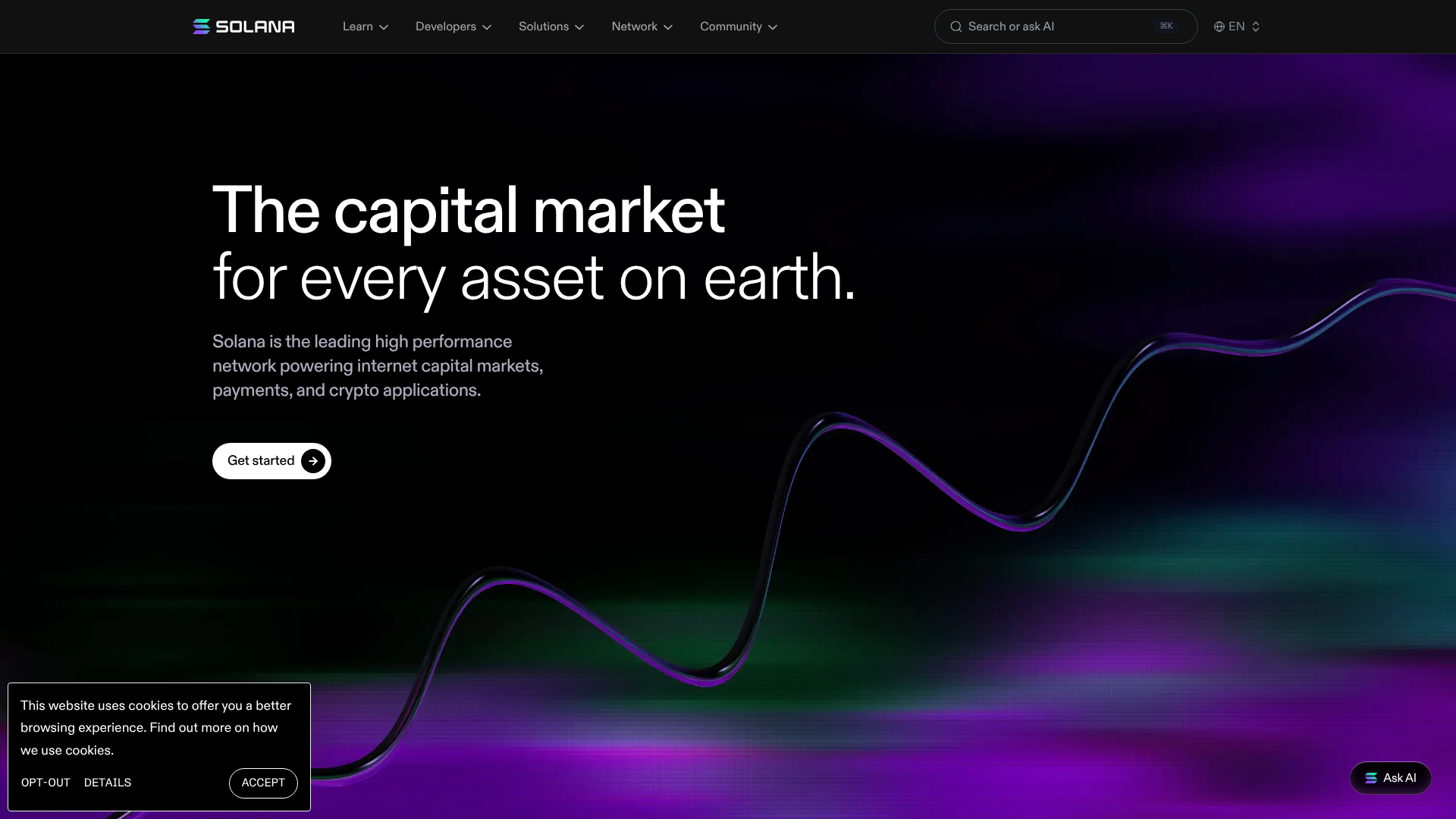
Solana is built for speed and low-cost transactions, capable of processing tens of thousands of TPS. It achieves this through a unique consensus mechanism called Proof-of-History (PoH), which works in conjunction with PoS. Its high performance has made it a popular choice for high-frequency applications like decentralised exchanges, NFT marketplaces, and blockchain gaming.
- Consensus: Proof-of-History (PoH) + Proof-of-Stake (PoS)
- Language: Rust, C, C++
- Best For: High-frequency DeFi, NFTs, Web3 gaming, payment systems.
Pros
- Extreme Speed: One of the fastest blockchains currently in operation.
- Low Costs: Transaction fees are typically fractions of a penny.
- Growing Ecosystem: A rapidly expanding community of developers and projects.
Cons
- Network Instability: Has experienced several network outages and periods of degraded performance.
- Less Decentralised: A higher barrier to entry for validators raises concerns about centralisation.
3. Cardano (ADA)
Cardano takes a research-driven, academic approach to blockchain development. It focuses on creating a highly secure and sustainable platform through peer-reviewed research. Its unique multi-layer architecture separates the settlement layer from the computation layer, which is designed to enhance flexibility and scalability. Smart contract functionality was introduced with the Alonzo hard fork.
- Consensus: Ouroboros (Proof-of-Stake)
- Language: Plutus, Marlowe
- Best For: Mission-critical applications, digital identity, supply chain, projects prioritising formal verification and security.
Pros
- Research-Driven: A strong emphasis on security and sustainability through academic rigour.
- Energy Efficient: Its PoS consensus mechanism is one of the most energy-efficient.
- Strong Community: A highly engaged and dedicated community.
Cons
- Slower Development: The methodical, peer-reviewed approach leads to a slower rollout of new features.
- Smaller Ecosystem: The dApp ecosystem is less developed compared to Ethereum and other rivals.
4. Avalanche (AVAX)
Avalanche is a platform known for its high throughput, near-instant transaction finality, and unique three-chain architecture. Its key innovation is the use of "Subnets," which allow projects to create custom, application-specific blockchains. This makes it highly scalable and customisable for both public and private blockchain deployments. It is fully EVM-compatible, making it easy for Ethereum developers to migrate.
- Consensus: Avalanche (Snowman) Consensus
- Language: Solidity
- Best For: DeFi, enterprise blockchain solutions, gaming, custom blockchains (Subnets).
Pros
- Fast Finality: Transactions are confirmed in under a second.
- Scalability via Subnets: Custom blockchains allow for massive horizontal scaling.
- EVM Compatibility: Easy migration for Ethereum projects and developers.
Cons
- Validator Hardware Requirements: Running a validator node can be resource-intensive.
- Complex Architecture: The three-chain system can be confusing for new users.
5. BNB Chain (BNB)
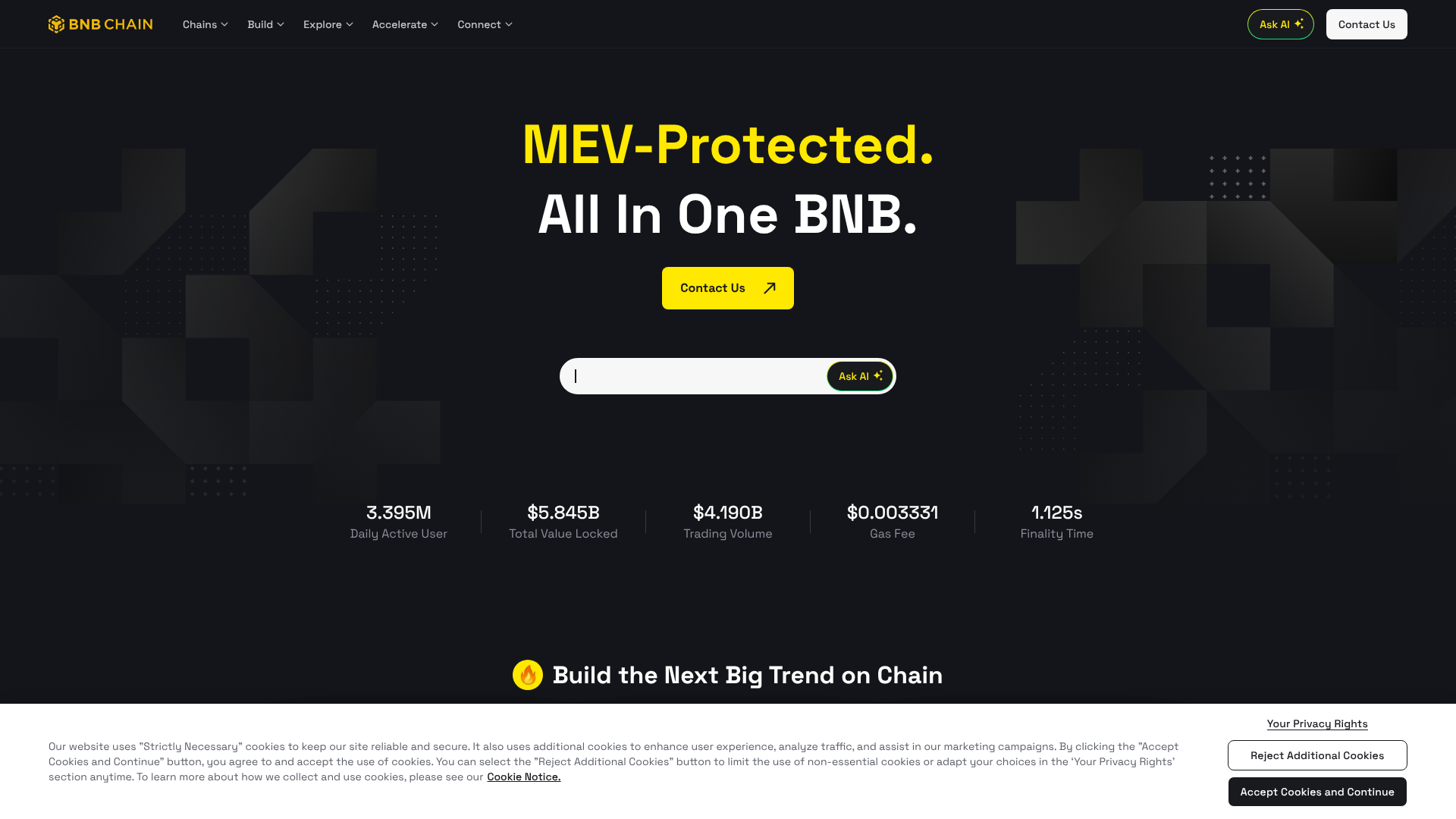
Originally created by the crypto exchange Binance, BNB Chain is an EVM-compatible blockchain optimised for high performance and low transaction fees. It uses a Proof-of-Staked-Authority (PoSA) consensus mechanism, which involves a smaller, permissioned set of validators. This trade-off results in faster and cheaper transactions but at the cost of some decentralisation.
- Consensus: Proof-of-Staked-Authority (PoSA)
- Language: Solidity
- Best For: High-volume dApps, gaming, projects needing low fees and fast transactions.
Pros
- Low Fees: Consistently low transaction costs.
- High Throughput: Capable of handling a large volume of transactions.
- Strong Backing: Supported by Binance, the world's largest crypto exchange.
Cons
- Centralisation Concerns: The small number of validators makes it more centralised than its competitors.
- Perceived as Less Secure: Often seen as less secure due to its centralised nature.
6. Polygon (MATIC)
Polygon is a multi-faceted platform designed to scale Ethereum. It's best known for its Proof-of-Stake sidechain, which runs parallel to Ethereum and offers faster, cheaper transactions. However, Polygon is evolving into a comprehensive suite of scaling solutions, including ZK-rollups (Polygon zkEVM), which provide higher security guarantees. It acts as a commit-chain, bundling transactions and confirming them on the Ethereum mainnet.
- Consensus: Proof-of-Stake (PoS)
- Language: Solidity
- Best For: Scaling existing Ethereum dApps, NFTs, gaming, enterprise applications.
Pros
- Ethereum-Centric: Deeply integrated with the Ethereum ecosystem.
- Variety of Solutions: Offers multiple scaling options to fit different needs.
- Low Transaction Costs: Significantly cheaper than the Ethereum mainnet.
Cons
- Security is Shared: The security of the PoS chain is not as robust as Ethereum's mainnet.
- Complexity: The growing number of Polygon solutions can be confusing.
7. Polkadot (DOT)

Polkadot is a multi-chain platform that enables different blockchains to interoperate and share security. Its core is the Relay Chain, which provides security to a network of connected, application-specific blockchains called "parachains". This sharded architecture allows for high scalability and enables blockchains to specialise in specific tasks while remaining connected to a wider ecosystem.
- Consensus: Nominated Proof-of-Stake (NPoS)
- Language: Rust (via Substrate framework)
- Best For: Projects requiring interoperability, custom blockchains, cross-chain applications.
Pros
- True Interoperability: Designed from the ground up for cross-chain communication.
- Shared Security: Parachains benefit from the security of the central Relay Chain.
- Forkless Upgrades: Can be upgraded without requiring a hard fork.
Cons
- Complex to Develop On: Building a parachain is a significant undertaking.
- Slot Auctions: Projects must win a competitive auction to secure a parachain slot.
8. Cosmos (ATOM)
Cosmos aims to be the "internet of blockchains," a network of independent, sovereign blockchains that can communicate with each other through the Inter-Blockchain Communication (IBC) protocol. Unlike Polkadot's shared security model, each chain in the Cosmos ecosystem (called a "zone") is responsible for its own security. This offers more flexibility and sovereignty to individual projects.
- Consensus: Tendermint BFT
- Language: Go (via Cosmos SDK)
- Best For: Sovereign blockchains, cross-chain DeFi, projects that need high customisation.
Pros
- Sovereignty and Flexibility: Developers have full control over their blockchain's governance and features.
- Interoperability: The IBC protocol is a powerful standard for cross-chain communication.
- Developer-Friendly: The Cosmos SDK makes it relatively easy to build custom blockchains.
Cons
- Fragmented Security: Each chain must secure itself, which can be a challenge for new projects.
- No Shared Security: Lacks the pooled security model of Polkadot.
9. NEAR Protocol (NEAR)
NEAR Protocol is a developer-friendly platform that focuses on usability for both developers and end-users. It uses a sharding technology called Nightshade to achieve scalability, which splits the network into smaller, manageable pieces. NEAR also features human-readable account names (e.g., yourname.near) and a simpler contract development model, aiming to onboard the next wave of Web3 users.
- Consensus: Thresholded Proof-of-Stake (TPoS)
- Language: Rust, AssemblyScript
- Best For: dApps focused on user experience, open web projects, creator economy platforms.
Pros
- User-Friendly: Features like named accounts make it more accessible for non-technical users.
- Scalable: Nightshade sharding provides a clear path to high throughput.
- Developer-Focused: Strong tooling and a focus on making development easier.
Cons
- Younger Ecosystem: The number of dApps and users is still growing.
- Sharding is Complex: The full implementation of its sharding roadmap is still in progress.
10. Tezos (XTZ)
Tezos is a self-amending smart contract platform, meaning it can upgrade itself through a formal, on-chain governance process without needing to hard fork. This feature is designed to promote stability and long-term evolution. Tezos has gained traction in the NFT art world and for institutional use cases due to its focus on formal verification and secure smart contracts.
- Consensus: Liquid Proof-of-Stake (LPoS)
- Language: Michelson, SmartPy
- Best For: High-value financial applications, NFTs, DAOs, projects requiring formal governance.
Pros
- On-Chain Governance: A robust system for proposing and implementing upgrades.
- Self-Amending: Avoids the community splits that can result from hard forks.
- Security Focus: Strong support for formal verification of smart contracts.
Cons
- Niche Programming Language: Michelson has a steeper learning curve than Solidity.
- Lower Adoption: Has not achieved the same level of mainstream adoption as some rivals.
11. Algorand (ALGO)
Founded by Turing Award-winning cryptographer Silvio Micali, Algorand is a permissionless, pure Proof-of-Stake blockchain. It is designed to solve the "blockchain trilemma" by offering decentralisation, scalability, and security simultaneously. Its consensus mechanism ensures that it can never fork, providing certainty and instant finality for transactions. It has a strong focus on real-world financial applications and institutional adoption.
- Consensus: Pure Proof-of-Stake (PPoS)
- Language: Python (PyTeal), Reach
- Best For: FinTech, Central Bank Digital Currencies (CBDCs), stablecoins, asset tokenisation.
Pros
- No Forking: The protocol design prevents forks, ensuring transaction certainty.
- Low Fees and High Speed: Designed for efficient and fast transactions.
- Strong Academic Foundations: Built on cutting-edge cryptographic research.
Cons
- Centralised Development: Development is heavily led by Algorand Inc. and the Algorand Foundation.
- Growing Ecosystem: Still building out its dApp ecosystem compared to larger players.
12. Hyperledger Fabric
Unlike the others on this list, Hyperledger Fabric is a private, permissioned blockchain framework hosted by the Linux Foundation. It's designed specifically for enterprise use cases where privacy and control are essential. Rather than a public network, businesses use Fabric to build their own private blockchain solutions for things like supply chain management, trade finance, and identity verification.
- Consensus: Pluggable (e.g., Raft)
- Language: Go, Java, JavaScript (Node.js)
- Best For: Enterprise applications, supply chain, finance, healthcare, government.
Pros
- Permissioned and Private: Offers fine-grained control over data privacy and access.
- Modular Architecture: Highly customisable to fit specific business needs.
- No Cryptocurrency Needed: Transactions do not require a native cryptocurrency.
Cons
- Not Decentralised: It is a distributed ledger but not a decentralised public network.
- Complex Setup: Requires significant expertise to deploy and manage.
Comparing the Costs: A Look at Transaction Fees
Transaction fees, or "gas," are a critical factor in the viability of any dApp. High fees can render an application unusable for its target audience. The cost of a transaction is determined by the platform's architecture, its current level of congestion, and the complexity of the operation being performed.
Here’s a comparative look at typical transaction fees across some of the top smart contract platforms. These are estimates and can fluctuate significantly based on network activity.
| Platform | Average Transaction Fee (USD) | Fee Structure | Notes |
|---|---|---|---|
| Ethereum | $2 – $20+ | Gas (Gwei) | Highly variable; Layer 2 solutions offer much lower fees. |
| Solana | < $0.001 | Lamports | Consistently very low due to high throughput. |
| Avalanche | $0.01 – $0.50 | Gas (nAVAX) | Generally low, but can spike during high demand. |
| BNB Chain | $0.05 – $0.20 | Gas (Gwei) | Stable and low fees are a key feature. |
| Polygon PoS | < $0.01 | Gas (Gwei) | Extremely low, designed as a cheap alternative to Ethereum. |
| Cardano | $0.10 – $0.30 | Lovelace | Predictable and relatively low fees. |
Ethereum's high fees have been its biggest challenge, which has led to the rise of both alternative Layer 1 blockchains (like Solana and Avalanche) and Layer 2 scaling solutions built on top of Ethereum (like Polygon, Arbitrum, and Optimism). For developers, this means you must decide whether to build on a cheaper but potentially less secure Layer 1 or to stay within the Ethereum ecosystem and use a Layer 2 solution.
Pros and Cons of Using Smart Contract Platforms
While smart contract solutions offer transformative potential, it's important to approach the technology with a clear understanding of both its strengths and weaknesses.
The Advantages
- Automation and Efficiency: Contracts execute automatically once conditions are met, removing the need for manual processing and reducing administrative overhead.
- Trust and Transparency: All transactions and contract terms are recorded on an immutable public ledger, creating a transparent and auditable system that doesn't require trust between parties.
- Security: The cryptographic nature of blockchain and the distributed network make transactions and records extremely difficult to alter or tamper with.
- Reduced Counterparty Risk: Smart contracts eliminate the need for intermediaries like banks or lawyers, reducing costs and the risk of one party failing to uphold their end of an agreement.
The Disadvantages
- Immutability is a Double-Edged Sword: Once a smart contract is deployed, its code cannot be changed. A bug or vulnerability in the code is permanent and can be exploited, leading to potentially massive financial losses.
- Scalability Challenges: Many popular blockchains still struggle to handle high transaction volumes, leading to network congestion and high fees.
- Security Risks: While the blockchain itself is secure, the smart contract code written by developers can have flaws. Smart contract auditing is essential but not foolproof.
- Legal and Regulatory Uncertainty: The legal status of smart contracts is still evolving globally. Enforceability and jurisdiction remain complex questions in many regions.
- Complexity: Developing, deploying, and interacting with smart contracts requires specialised technical knowledge, creating a barrier to entry for many users and businesses.
Frequently Asked Questions (FAQ)
Here are answers to some of the most common questions people have about smart contract platforms.
Which smart contract platform is best?
There is no single "best" platform; the ideal choice depends entirely on your project's specific needs. Ethereum is often considered the best for projects that require maximum security and access to the largest DeFi ecosystem. Solana is a top choice for applications needing high speed and low costs, like gaming. Cardano appeals to those who prioritise a research-driven, highly secure foundation. You should evaluate each platform based on your use case, performance requirements, and team expertise.
What are the top 10 blockchain platforms?
The top 10 smart contract platforms generally include Ethereum, Solana, Cardano, Avalanche, BNB Chain, Polygon, Polkadot, Cosmos, NEAR Protocol, and Tezos. This list is dynamic and can change based on market capitalisation, developer activity, and technological advancements. Each platform offers a unique set of trade-offs between speed, security, and decentralisation.
Is Bitcoin a smart contract platform?
Bitcoin is not considered a smart contract platform in the same way as Ethereum. While Bitcoin's scripting language allows for very simple, limited forms of programmable logic (like multi-signature wallets), it is not Turing-complete. This means it cannot support the complex, arbitrary code required for dApps and modern DeFi protocols. Platforms like Ethereum were created specifically to add this advanced programmability that Bitcoin lacks.
What are the 4 types of Blockchain?
Blockchains can be categorised into four main types based on their access permissions:
- Public Blockchains: Anyone can join, read data, and participate in the consensus process (e.g., Ethereum, Bitcoin). They are fully decentralised.
- Private Blockchains: Controlled by a single organisation. Participants require permission to join, and the central entity sets the rules. They are useful for internal enterprise applications.
- Consortium (or Federated) Blockchains: Governed by a group of organisations rather than a single one. It's a hybrid model that offers more decentralisation than a private chain but maintains a degree of control (e.g., Hyperledger Fabric).
- Hybrid Blockchains: Combine features of both public and private chains. They might use a private system for most operations but connect to a public chain to verify or record transactions, offering a mix of privacy and transparency.
Can XRP run smart contracts?
Historically, the XRP Ledger (XRPL) had very limited smart contract capabilities. However, recent developments have introduced this functionality. The "Hooks" amendment, which is available on a sidechain, allows developers to add custom logic and smart contracts to the XRPL. This is a significant upgrade, though the ecosystem for XRP smart contracts is still much less developed than on platforms like Ethereum or Solana.
Final Thoughts: The Future of Smart Contract Solutions
Navigating the list of smart contract platforms in 2026 reveals a vibrant and rapidly evolving ecosystem. The era of a single dominant platform is giving way to a multi-chain future, where different blockchains specialise in what they do best. Ethereum remains the heavyweight champion of decentralisation and security, but an array of powerful competitors now offer compelling alternatives focused on speed, cost, and unique architectural innovations.
For developers and businesses, this competition is a net positive. It provides a wealth of options to match the right technology to the right problem. The key takeaway is that there is no one-size-fits-all solution. A successful project begins with a deep understanding of your own needs, followed by a thorough evaluation of which platform's trade-offs best align with your goals.
As technologies like Layer 2 rollups mature and interoperability protocols like IBC become more widespread, the lines between these platforms will continue to blur. The future is likely one where value and data flow freely between networks, and the best smart contract solutions will be those that embrace collaboration and provide a seamless experience for both developers and users.