


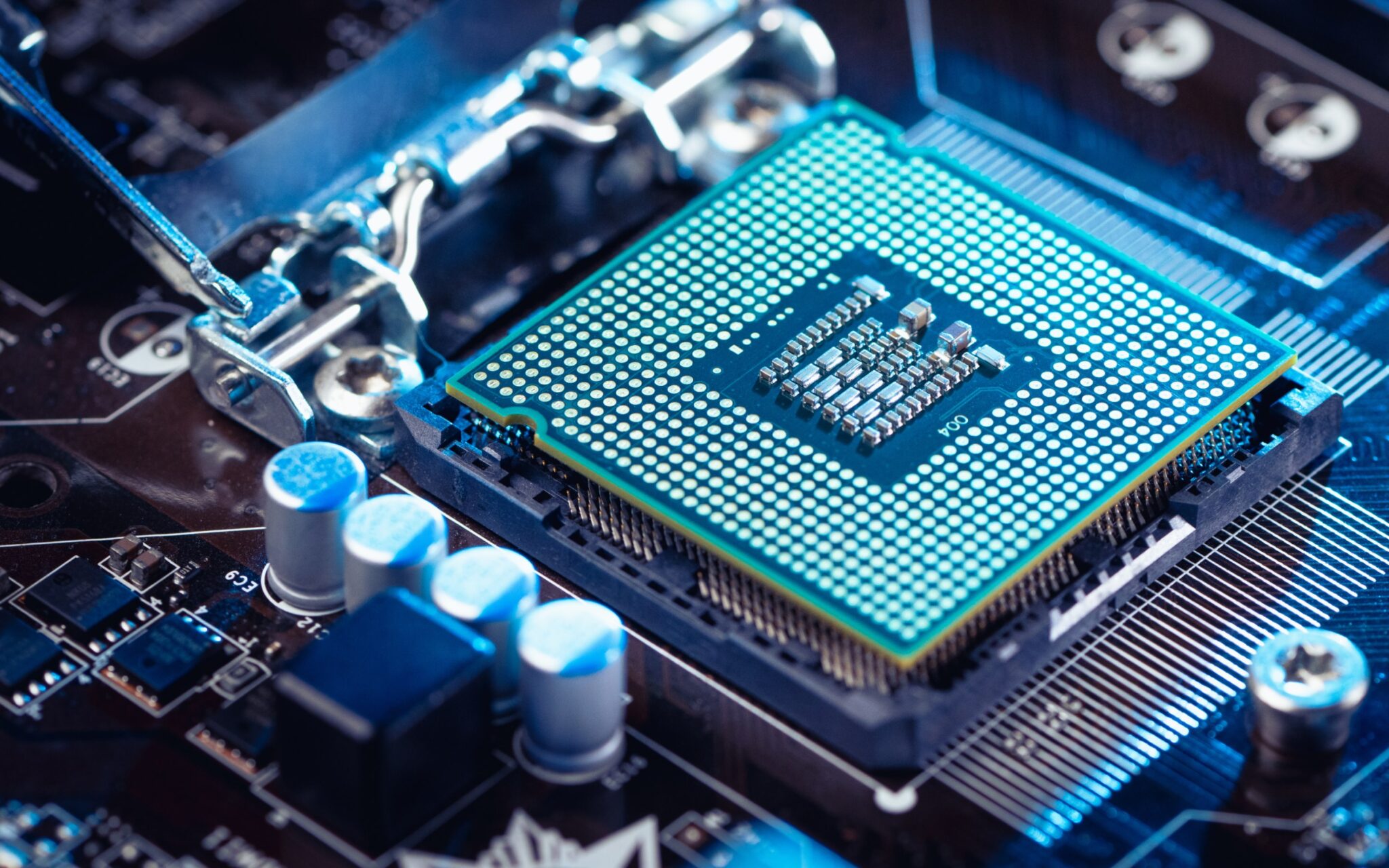

In the past decade, semiconductors have shifted from being a “quiet backbone” of digital progress to a frontline issue in global politics, economics, and security. What was once the concern of engineers and supply chain managers has become a top priority for presidents, prime ministers, and defense ministers.
From smartphones and data centers to fighter jets and satellites, the world’s most advanced systems depend on semiconductor chips. This dependency has transformed the industry into a matter of national security, sparking a race for technological independence and creating early-stage opportunities for startups, investors, and countries willing to innovate.
From Silicon Valley to geopolitics: the semiconductor industry started as a technological revolution in California in the mid-20th century, but today it is at the center of a geopolitical contest.
The global supply chain for chips is fragile and heavily concentrated: at the leading edge, Taiwan accounts for roughly 92% of global foundry capacity (largely TSMC) and South Korea most of the rest (Samsung); the U.S. leads in chip design, EDA tools, and research; while China, despite heavy investment, still trails at the most advanced nodes.
This interdependence means disruptions, whether through pandemics, trade restrictions, or potential conflict, can ripple across every sector of the global economy.
It is no surprise that the U.S. passed the CHIPS and Science Act (2022), allocating $52.7 billion for domestic semiconductor incentives and R&D plus a 25% investment tax credit for qualified manufacturing; the European Union launched its Chips Act, aiming to mobilize €43 billion in public and private investment through 2030.
For China, semiconductors are the “final bottleneck” in its tech ambitions, prompting tens of billions in state-backed funding. These policies reflect a broad recognition: whoever leads in semiconductors will shape defense systems, AI, cybersecurity, and the future economy.
Why Semiconductors Are a Security Risk
At the core of the issue is dependency. Modern weapons systems, from drones and missile defense to communications satellites, cannot function without chips. If a nation’s access to advanced semiconductors is cut off, its military capability is instantly weakened. The pivotal U.S. export controls arrived on October 7, 2022 (with significant updates in October 2023), restricting China’s access to advanced AI chips and key fabrication tools, tightening compute availability for Chinese AI labs and supercomputing programs.
But security risk is not just military. Economic security is equally at stake. The 2020–2021 global chip shortage cost the auto industry over $210 billion in lost revenue (AlixPartners). In the same period, consumers faced delays in everything from laptops to gaming consoles. For governments, that shortage was a wake-up call: chip supply is not just an economic issue, it is a matter of strategic resilience.

Early-Stage Opportunities Emerging from the Shift
While the national security angle may seem like a battle between superpowers, it has created a unique window for early-stage opportunities. Startups, research labs, and investors now find themselves at the edge of a new semiconductor frontier.
• Chip design innovation: With design still largely dominated by U.S. companies like NVIDIA, Qualcomm, and AMD, there is room for new entrants focusing on niche architectures and domain-specific accelerators. Open-standard ISAs such as RISC-V lower licensing barriers and broaden participation, though chip development still depends on export-controlled EDA tools, IP, and fabs, so “geopolitics-proof” is too strong a claim.
• Materials and manufacturing technologies: Current semiconductor production relies on extremely advanced lithography and specialized materials. Long-horizon work on alternatives, such as 2D materials, graphene, novel deposition methods, and new device architectures, could, over time, diversify the stack and reduce single-point bottlenecks. Frame these as R&D bets, not near-term fixes.
• Supply chain resilience: Software platforms that map, predict, and secure chip supply chains are in demand. As governments and industries seek to avoid future shortages, startups offering AI-driven logistics, traceability, and risk scoring stand to benefit.
• Talent and education: Semiconductor design and manufacturing require highly skilled engineers. With well-documented talent gaps projected this decade, startups that focus on training, simulation tools, and workforce development can become critical enablers in domestic chip ecosystems.
Related: Female-Led AI Semiconductor Startup SixSense Secures $8.5M Series A Funding
The Future Is Both Risk and Opportunity
The reality is that semiconductors will remain a flashpoint for years to come. Tensions over Taiwan, trade restrictions, and the race for AI supremacy will ensure that chips are not just about technology, they are about power. Yet within this high-stakes environment lies a remarkable opportunity for early movers.
As history shows, moments of disruption often give rise to new leaders. Just as Intel and Qualcomm rose in the PC and mobile eras, today’s shifting semiconductor landscape could give rise to the next generation of transformative companies.
Governments may provide the funding and policy frameworks, but it will be entrepreneurs, innovators, and investors who seize the moment to build new solutions. The question is no longer whether semiconductors are a national security issue, that is settled. The question is: who will turn this tension into opportunity?