

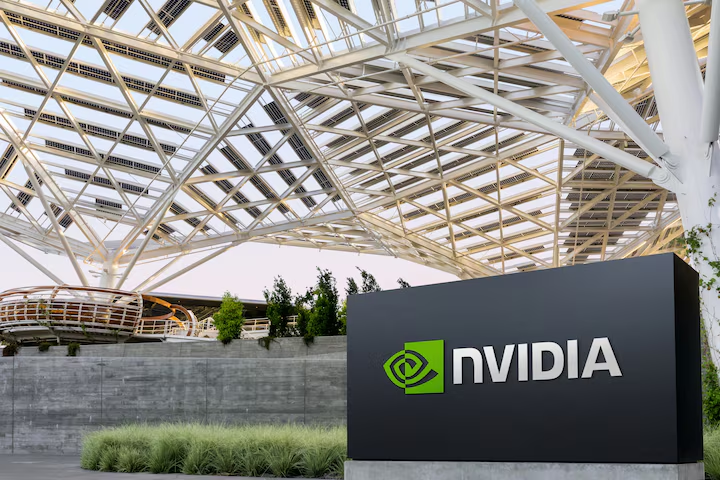

Nvidia has reportedly developed new location verification technology that can indicate which country its AI chips are operating in; a move aimed at preventing the smuggling of its processors into regions where U.S. export restrictions apply.
The feature, demonstrated privately in recent months but not yet released, will be offered as an optional software add-on for customers. It leverages the confidential computing capabilities built into Nvidia’s GPUs to verify performance data while using communication latency with Nvidia-run servers to approximate a chip’s location, similar to how other internet-based services determine regional activity.
“We’re in the process of implementing a new software service that empowers data center operators to monitor the health and inventory of their entire AI GPU fleet,” Nvidia said in a statement. “This customer-installed software agent leverages GPU telemetry to monitor fleet health, integrity, and inventory.”
The technology will debut on Nvidia’s newest Blackwell GPUs, which include enhanced security features such as advanced attestation. The company is also exploring ways to bring the feature to older chip generations like Hopper and Ampere.
If deployed, this location-checking system could satisfy growing demands from the White House and bipartisan members of the U.S. Congress, who have called for stronger safeguards to prevent high-end AI chips from being diverted to China or other restricted regions. The pressure intensified after the U.S. Department of Justice uncovered China-linked smuggling rings attempting to move more than $160 million worth of Nvidia hardware into the country.
However, these U.S. efforts have triggered concern in China. The country’s top cybersecurity regulator recently summoned Nvidia for questioning over fears that such features might constitute a “backdoor” allowing the U.S. to bypass onboard security protections. Nvidia has firmly denied this claim. Experts say it is technically feasible to implement geolocation verification without compromising chip security.
Read Also: NVIDIA and Qualcomm Join $1B Coalition Backing India’s Deep Tech Startups
The issue resurfaced this week when U.S. President Donald Trump said he would allow exports of Nvidia’s H200 chips, the predecessor to Blackwell, to China, though analysts doubt China will readily approve such purchases.
This story has been updated to clarify that the feature is a new software option, not an update.