


11 Best AI Writing Tools for Marketers & Creators (2026 Rankings)
Creating high-quality content consistently is a significant challenge for marketers, bloggers, and business owners. Finding the right words, optimising for search engines, and beating writer's block can consume countless hours. The best AI writing tools have emerged as powerful assistants, helping you generate ideas, draft articles, and refine your copy in a fraction of the time it would normally take.
- Quick Summary
- What Are AI Writing Tools and Why Should You Use Them?
- How to Choose the Right AI Writing Software for Your Needs
- The 11 Best AI Writing Tools Ranked for 2026
- 1. Jasper (formerly Jarvis)
- 2. Writesonic
- 3. ChatGPT
- 4. Claude
- 5. Grammarly
- 6. QuillBot
- 7. Semrush
- 8. Surfer SEO
- 9. Sudowrite
- 10. Pictory
- 11. Murf AI
- AI Writing Tools: A Quick Comparison
- The Pros and Cons of Relying on AI Writing Software
- Frequently Asked Questions (FAQ)
- Which AI writing tool is the best?
- Can I legally publish a book written by AI?
- What AI is better than ChatGPT?
- Is Claude or GPT better at writing?
- Can I use ChatGPT to write a book and sell it?
- Final Thoughts
These platforms are more than just spellcheckers; they are sophisticated partners that can write blog posts, social media updates, emails, and even creative fiction. Whether you need to scale your content production or simply want a helping hand to polish your prose, the right AI writing software can make a substantial difference to your workflow and results. This guide breaks down the top options available in 2026 to help you choose the perfect fit for your specific needs.
Quick Summary
- Best for Marketing Teams: Jasper is the top choice for businesses needing to create on-brand content at scale, thanks to its advanced Brand Voice and campaign features.
- Best for SEO Content: Writesonic excels at producing search-optimised articles and blog posts quickly, integrating factual data and SEO best practices directly into the content.
- Best for Versatility (Free): ChatGPT remains a powerful and flexible option for a wide range of tasks, from brainstorming and drafting to coding and summarising, with a very capable free version.
- Best for Editing & Polishing: Grammarly goes beyond basic grammar checks, offering AI-powered suggestions on tone, clarity, and style to elevate your existing writing.
- Best for Creative Writing: Sudowrite is specifically designed for fiction authors, providing unique tools to help with plot development, character descriptions, and overcoming creative hurdles.
What Are AI Writing Tools and Why Should You Use Them?
AI writing tools are applications that use artificial intelligence, specifically large language models (LLMs), to generate, edit, and optimise human-like text. These models are trained on vast datasets of text and code from the internet, allowing them to understand context, grammar, tone, and style. When you provide a prompt or instruction, the AI processes your request and produces text that matches your criteria.
Think of them not as replacements for human writers, but as incredibly advanced assistants. They can take a simple idea and expand it into a full blog post outline, or transform a list of bullet points into a persuasive sales email. The primary purpose of this AI writing software is to augment human creativity and efficiency, tackling the more repetitive and time-consuming aspects of writing.
The benefits are substantial. Firstly, they dramatically increase speed and efficiency. A task that might take a human writer several hours, like drafting a 1,500-word article, can be accomplished in minutes. This allows content teams to scale their output without a proportional increase in resources.
Secondly, they are excellent for overcoming writer's block. By providing a starting point or generating multiple ideas from a single prompt, they help kickstart the creative process when you're staring at a blank page.
Finally, many of the best writing tools AI offers come with built-in optimisation features. They can help you incorporate relevant keywords for SEO, adjust the tone of your message for a specific audience, and even check for plagiarism. This integration of tasks into a single platform streamlines the entire content creation workflow, from initial idea to final polished piece.

How to Choose the Right AI Writing Software for Your Needs

With so many options on the market, selecting the right AI writing tool can feel overwhelming. The best choice depends entirely on your specific goals, workflow, and budget. Focusing on a few key factors will help you narrow down the field and find a tool that genuinely enhances your productivity rather than complicating it.
First and foremost, consider your primary use case. Are you a blogger who needs help writing long-form, SEO-optimised articles. A tool like Writesonic or Surfer SEO would be a strong contender. Are you a marketing professional creating ad copy, social media posts, and email campaigns.
Jasper is built for that, with templates and brand voice features tailored to marketing teams. A fiction writer will have entirely different needs, making a specialised tool like Sudowrite the obvious choice.
Next, evaluate the quality and customisation of the output. The best AI writing tools produce content that sounds natural and requires minimal editing. Many platforms offer free trials, which you should use to test the output quality with your own prompts. Also, look for features that allow you to control the tone of voice, style, and target audience.
The ability to create a custom 'brand voice' is a powerful feature that ensures consistency across all your content.
Ease of use and workflow integration are also critical. A tool with a confusing interface will slow you down, defeating the purpose of using it. Look for a clean, intuitive dashboard and helpful tutorials. Consider how the tool will fit into your existing processes.
Does it offer integrations with platforms you already use, like WordPress, Google Docs, or SEO tools like Semrush. A seamless integration can save a significant amount of time.
Finally, assess the pricing structure. Plans can range from free with limitations to expensive enterprise-level subscriptions. Determine your budget and look at the features offered at each price point. Pay close attention to word count limits, user seats, and access to premium features.
Often, a mid-tier plan offers the best balance of functionality and cost for small businesses and individual creators.
The 11 Best AI Writing Tools Ranked for 2026
Here is our breakdown of the top AI writing tools, tested and reviewed for different needs, from professional marketing to creative writing.
1. Jasper (formerly Jarvis)
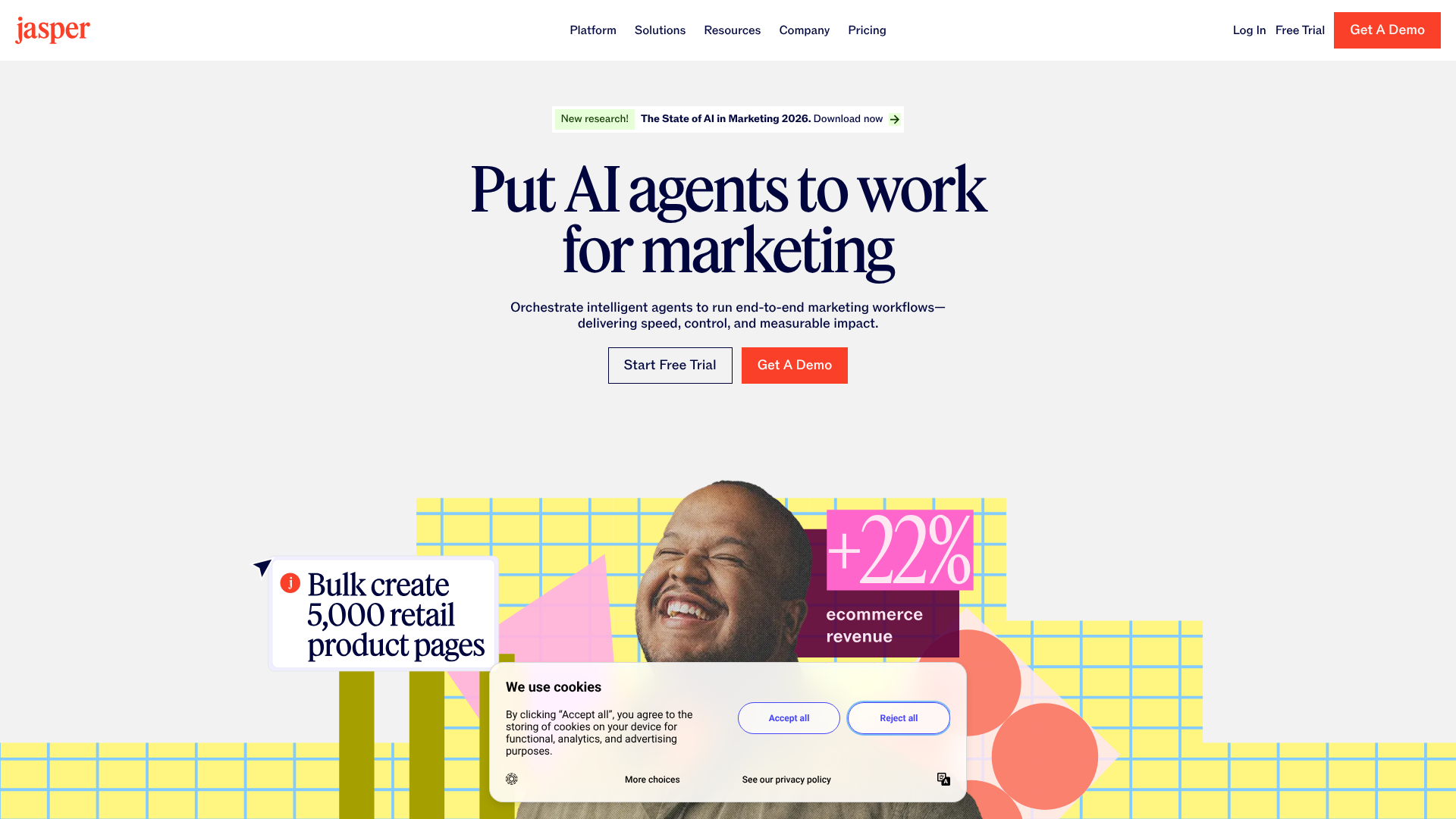
Jasper has established itself as a leader in the AI writing space, particularly for marketing teams and businesses. It offers a sophisticated suite of tools designed to create high-quality, on-brand content at scale. Its standout feature is the ability to learn your brand's specific tone of voice, style guide, and product catalogues to ensure every piece of content is consistent.
It's more than just a text generator; it's a content platform. You can create entire marketing campaigns, from initial ad copy to landing page text and follow-up emails, all within one cohesive environment. The platform includes over 50 templates for various content types, a long-form document editor, and powerful collaboration features for teams.
While it sits at a higher price point, the investment is often justified for businesses that need to produce a high volume of marketing content. Its integrations with tools like Grammarly and Surfer SEO further enhance its utility as an all-in-one content solution.
Best For: Marketing teams, agencies, and businesses focused on brand consistency.
Pros
- Excellent Brand Voice: Learns and applies your specific brand style for consistent output.
- Comprehensive Feature Set: Includes templates, campaign workflows, and team collaboration tools.
- High-Quality Output: Consistently produces well-written, coherent content that requires minimal editing.
Cons
- Higher Cost: Can be expensive for individual creators or small businesses.
- Learning Curve: The extensive features can take some time to master fully.
Pricing: Visit the Jasper website for current pricing information, as plans are tailored to team size and feature needs.
2. Writesonic
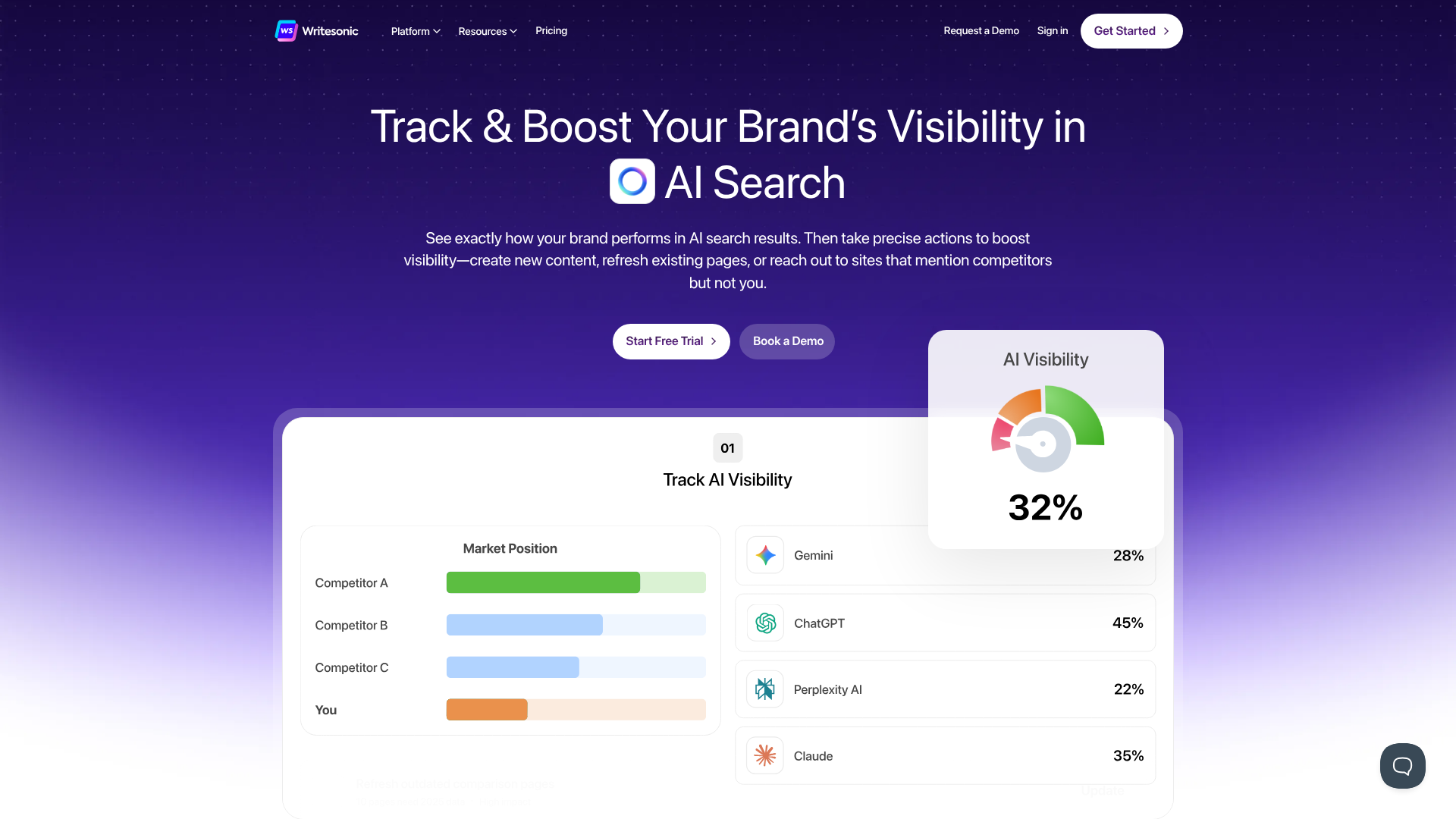
Writesonic is a powerful and versatile AI writer that excels at creating SEO-friendly long-form content like blog posts and articles. Its standout feature is Photosonic, which generates unique, royalty-free images to accompany your text, solving a common problem for content creators. The platform is designed for speed and efficiency, allowing you to go from a keyword to a fully-fledged, 1,500-word article in minutes.
One of its key advantages is its ability to integrate real-time data from Google Search. This means the content it produces is not only well-written but also factually current and topically relevant, which is crucial for creating authoritative articles. It also includes specific tools for different platforms, such as landing page copy generators, Google Ad writers, and social media post creators.
Writesonic offers a competitive pricing structure, including a generous free trial, making it accessible for freelancers and small businesses. Its balance of powerful features, ease of use, and affordability makes it one of the top AI writing tools available.
Best For: Bloggers, SEO specialists, and content marketers who need to produce articles quickly.
Pros
- SEO-Focused: Excellent for creating optimised articles that are designed to rank.
- Factual & Current: Integrates real-time Google data for up-to-date content.
- Built-in Image Generation: Creates custom images to accompany your articles.
Cons
- Output Can Be Formulaic: The structure of articles can sometimes feel repetitive without customisation.
- Credit System: Some users may find the word/credit-based system less straightforward than unlimited plans.
Pricing: Writesonic offers several tiers, including a free trial. Check their website for the latest plans.
3. ChatGPT

Developed by OpenAI, ChatGPT is the tool that brought AI writing into the mainstream. Its conversational interface makes it incredibly intuitive and versatile for a vast range of tasks. While it doesn't have the specialised templates of tools like Jasper, its power lies in its flexibility. You can use it for brainstorming ideas, creating outlines, drafting content, writing code, summarising complex documents, and much more.
The free version (using the GPT-3.5 model) is remarkably capable for many everyday tasks. The paid Plus subscription provides access to the more advanced GPT-4 model, which offers more nuanced, accurate, and creative responses, as well as the ability to browse the web, analyse data, and create images.
ChatGPT is an excellent all-rounder. It's the digital equivalent of a Swiss Army knife for anyone who works with text. For writers, it's a fantastic partner for brainstorming and creating first drafts that can then be refined and polished.
Best For: General-purpose writing, brainstorming, summarising, and users who want a powerful free tool.
Pros
- Extremely Versatile: Can handle a huge variety of writing and non-writing tasks.
- Powerful Free Version: The free offering is sufficient for many users' needs.
- Intuitive Interface: The simple chat-based format is very easy to use.
Cons
- Lacks Specialised Features: No built-in SEO tools, brand voice, or marketing templates.
- Potential for Inaccuracies: Like all LLMs, it can occasionally generate incorrect information, so fact-checking is essential.
Pricing: A free version is available. The Plus subscription offers access to more advanced models and features for a monthly fee.
4. Claude
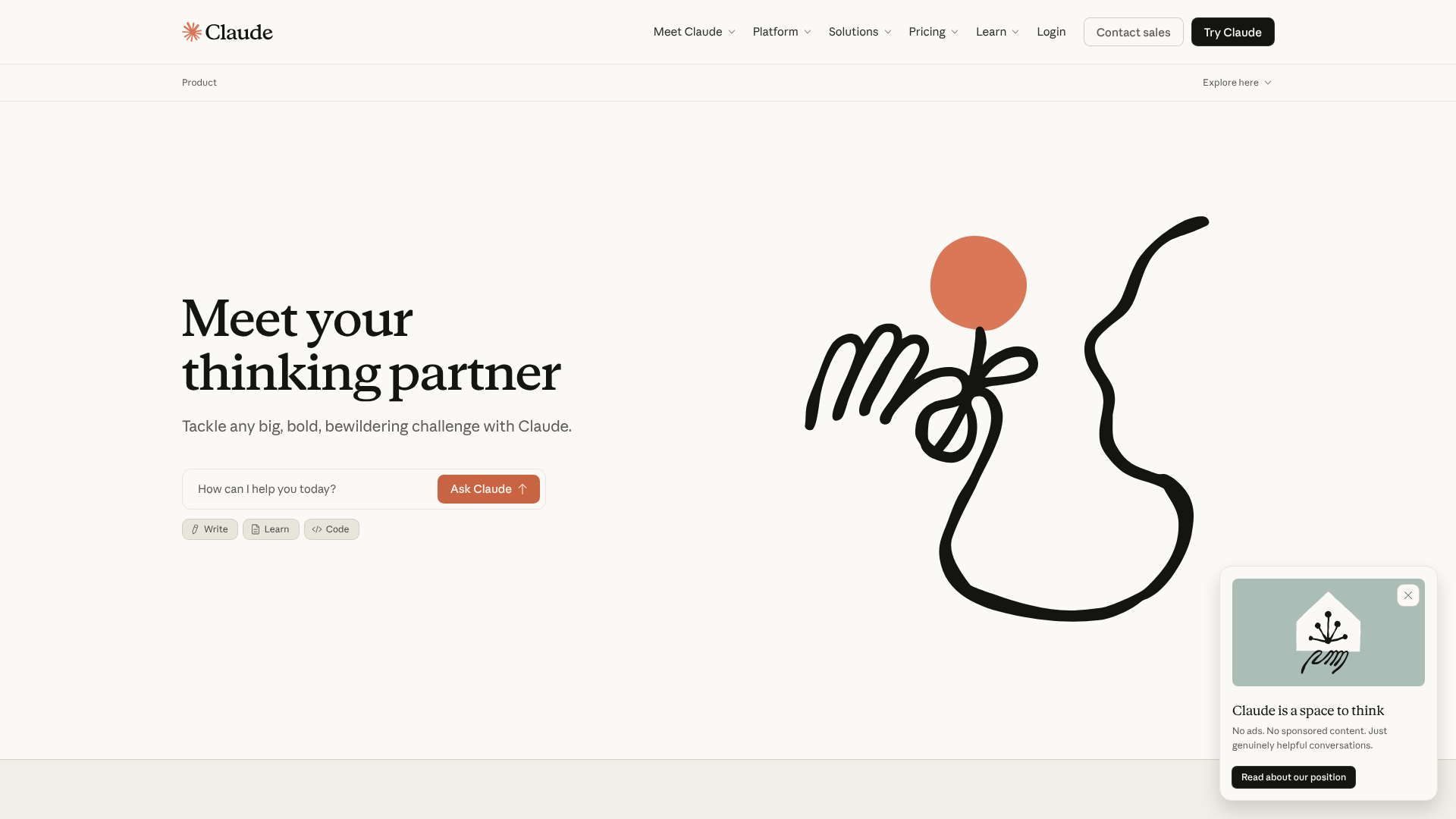
Claude, from the AI company Anthropic, has gained a reputation for producing text that feels more natural and human-like than many of its competitors. Users often report that its output is less robotic and requires less editing to match a conversational tone. This makes it particularly well-suited for tasks where nuance and a personal touch are important, such as writing emails, creative pieces, or engaging blog posts.
One of Claude's key strengths is its large context window, which means it can process and remember much larger amounts of text at once. This is incredibly useful for summarising long reports, analysing documents, or maintaining context throughout a lengthy conversation or writing project. You can upload files like PDFs or CSVs and ask Claude questions about them.
While it functions as a general-purpose chatbot similar to ChatGPT, its stylistic output sets it apart. For writers who find other AI tools produce content that sounds too generic, Claude is often the preferred alternative.
Best For: Creative writing, long-form content, and users who prioritise a natural, human-like tone.
Pros
- Natural Language Output: Excels at creating text that sounds less like AI.
- Large Context Window: Can process and analyse large documents effectively.
- Strong Free Offering: The free version is very generous and capable.
Cons
- Fewer Integrations: Not as widely integrated into other platforms as ChatGPT.
- Web Browsing is Limited: Its ability to access real-time information from the web is still developing.
Pricing: Offers a free tier with daily usage limits and a Pro version for heavier use.
5. Grammarly
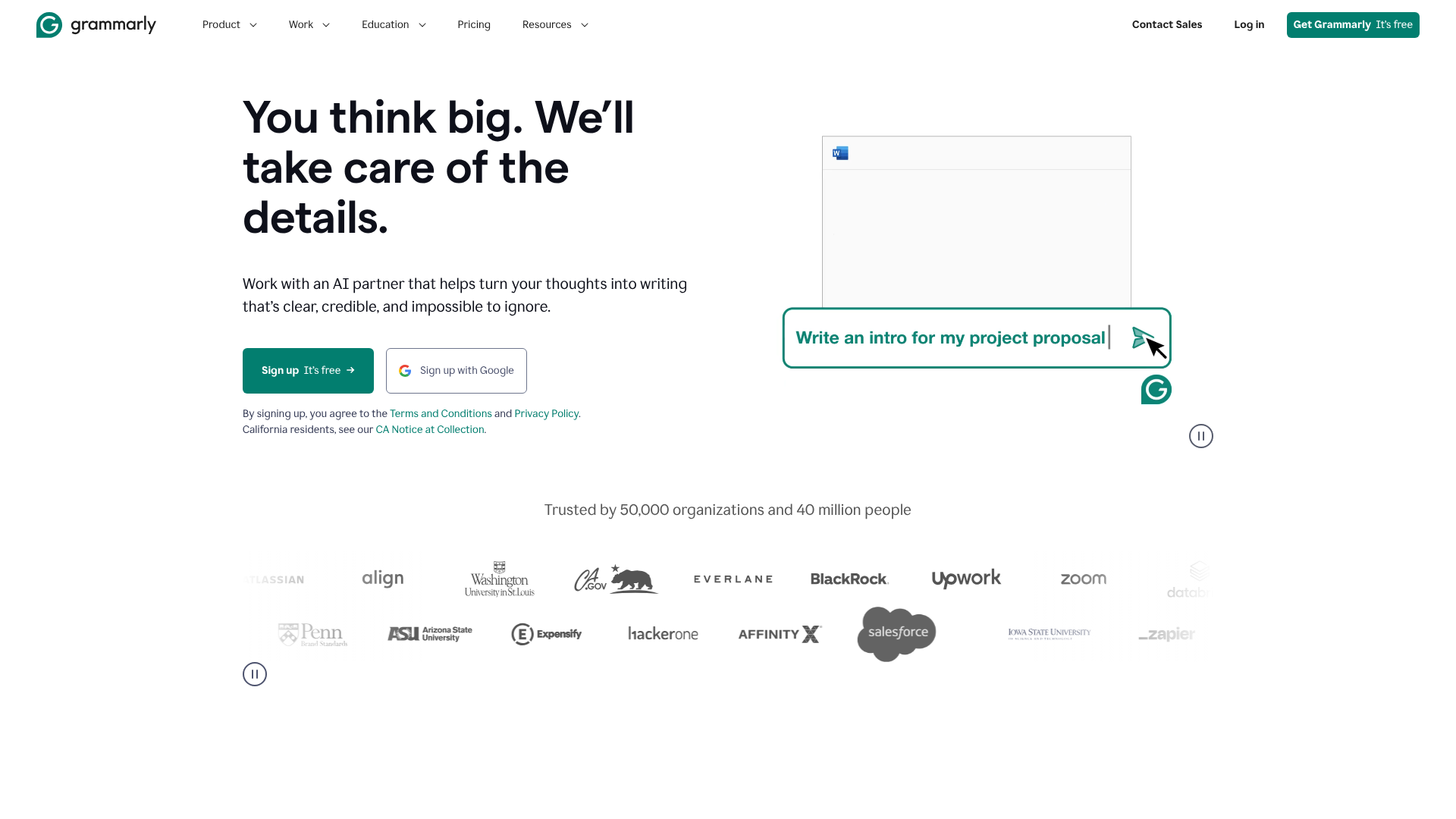
While many know Grammarly as a top-tier grammar and spell checker, it has evolved into a comprehensive AI writing assistant. It works wherever you write—in your browser, email client, or word processor—providing real-time feedback not just on correctness, but also on clarity, engagement, and tone.
Its generative AI features, known as GrammarlyGO, can help you brainstorm, compose, and rewrite text on the fly. You can highlight a passage and ask Grammarly to make it more concise, more professional, or more confident. This makes it an exceptional tool for polishing your own writing rather than generating content from scratch. It acts as an editor over your shoulder, helping you improve your skills while ensuring your final piece is flawless.
For professionals who write a lot of emails, reports, and documents, Grammarly is indispensable. It ensures your communication is always clear, professional, and error-free.
Best For: Professionals, students, and anyone who wants to improve and polish their own writing.
Pros
- Excellent Editing Capabilities: Goes far beyond basic spell-checking to improve overall writing quality.
- Works Everywhere: Integrates with most apps and websites where you write.
- Tone Detection: Provides valuable feedback on how your writing will be perceived by the reader.
Cons
- Not a Content Generator: Primarily focused on editing and improving existing text, not creating it from scratch.
- Suggestions Can Be Intrusive: Some users may find the constant real-time suggestions distracting.
Pricing: A robust free version is available. Premium and Business plans unlock advanced features. Visit Grammarly for details.
6. QuillBot
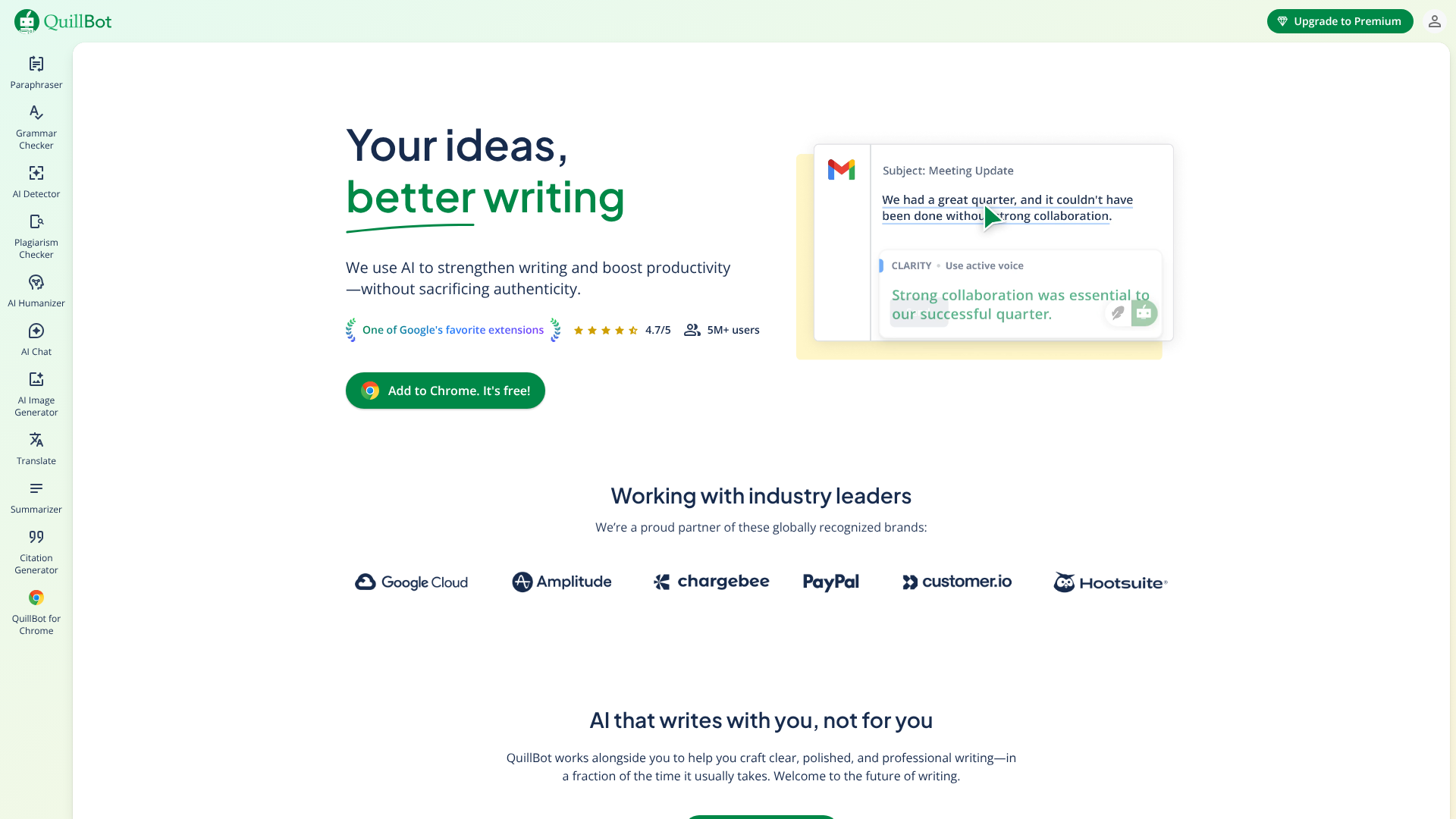
QuillBot is best known for its powerful paraphrasing tool, which allows you to rewrite sentences, paragraphs, or entire articles to improve clarity and avoid plagiarism. It offers several modes, such as 'Standard', 'Fluency', 'Formal', and 'Creative', to ensure the rephrased text matches your desired style. This makes it an invaluable tool for students, academics, and writers who need to reword source material.
Beyond paraphrasing, QuillBot has expanded its feature set to include a grammar checker, a summariser, and a citation generator. Its Co-Writer tool combines all these features into a single writing space, allowing you to research, write, and cite without switching between tabs. It's a focused suite of tools designed to assist with the academic and research writing process.
While it can't generate a full blog post from a single prompt like other tools, its ability to refine and restructure existing text is second to none. It's perfect for when you have the right ideas but are struggling to find the right words.
Best For: Students, academics, researchers, and anyone needing to paraphrase or summarise text.
Pros
- Best-in-Class Paraphraser: Offers multiple modes for high-quality text rewriting.
- Integrated Writing Tools: Includes a summariser, citation generator, and grammar checker.
- User-Friendly: The interface is clean, simple, and easy to navigate.
Cons
- Limited Generative Capabilities: Not designed for creating long-form content from scratch.
- Free Version is Limited: The free plan has strict character limits on the paraphraser.
Pricing: A free version is available with limitations. The Premium plan unlocks unlimited words and advanced features. Check QuillBot for current pricing.
7. Semrush
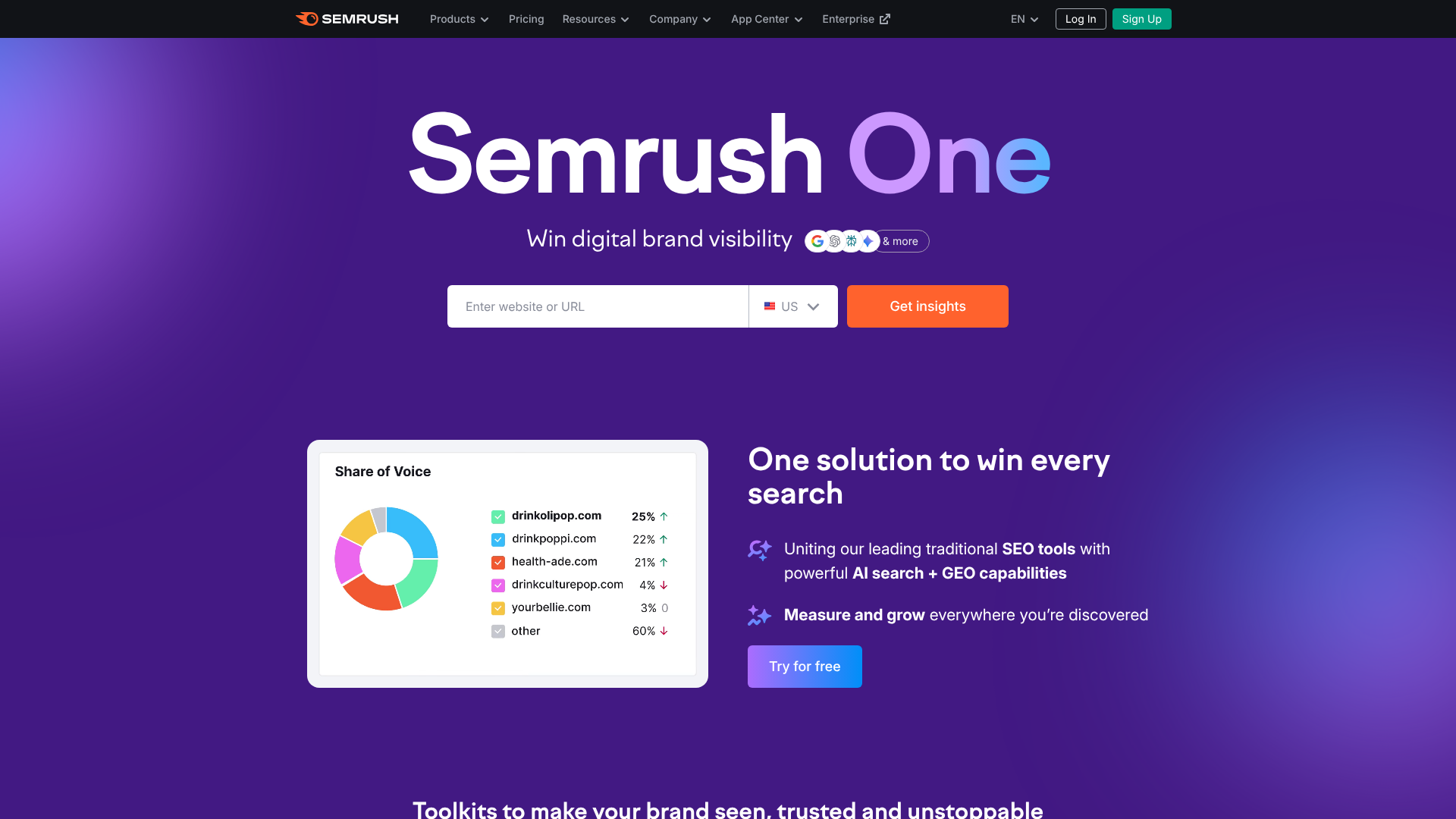
Semrush is a giant in the world of SEO, and its AI writing tools are seamlessly integrated into its broader marketing suite. The SEO Writing Assistant provides real-time feedback on your content's SEO potential as you write in Google Docs or WordPress. It analyses your text based on the top-ranking pages for your target keyword and gives actionable recommendations on readability, tone of voice, keyword usage, and more.
This tool is less about generating content from a blank page and more about optimising it to perfection. It helps you bridge the gap between writing great content and writing content that actually ranks on search engines. By providing data-driven insights, it takes the guesswork out of on-page SEO.
For businesses and marketers already invested in the Semrush ecosystem, the SEO Writing Assistant is an incredibly powerful addition. It connects your content creation process directly to your keyword research and competitor analysis data.
Best For: SEO professionals, content marketers, and businesses using the Semrush platform.
Pros
- Deep SEO Integration: Directly connects content writing with powerful SEO data.
- Actionable, Real-Time Feedback: Provides clear recommendations to improve your content's ranking potential.
- Competitor-Based Analysis: Bases its suggestions on what is already working for top-ranking pages.
Cons
- Requires a Semrush Subscription: It's part of a larger, more expensive marketing suite.
- Focus is on Optimisation, Not Generation: It's designed to improve content, not create it from scratch.
Pricing: Available as part of the Semrush subscription plans.
8. Surfer SEO
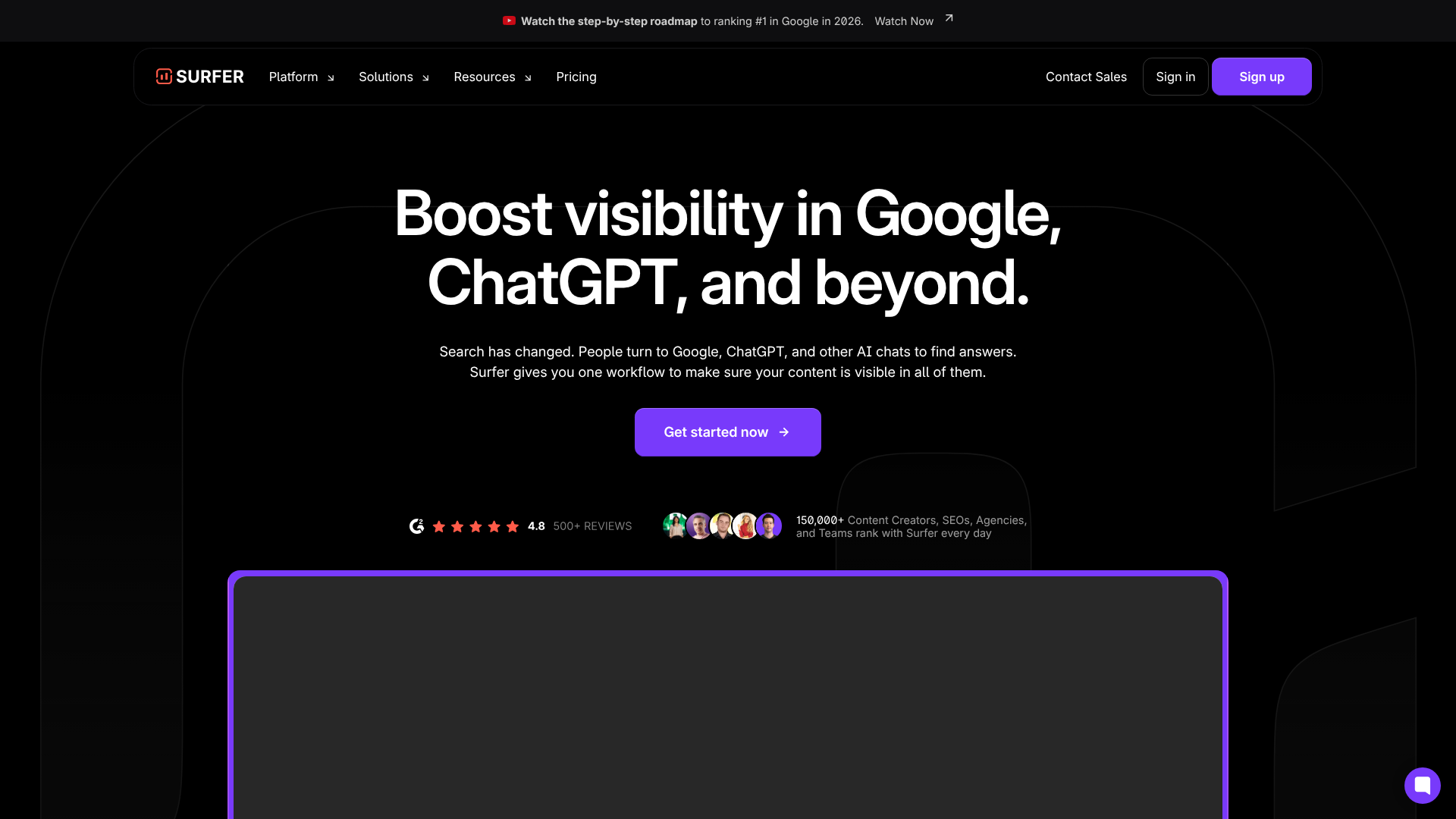
Surfer SEO is another top-tier tool dedicated to creating content that ranks. Its Content Editor is its flagship feature, providing a detailed brief based on an analysis of the top results for your target keyword. It gives you a 'Content Score' that updates in real-time as you write, guiding you on everything from ideal word count and heading structure to the specific terms and phrases you should include.
Surfer also has a built-in AI writer, Surfer AI, that can generate a full, optimised article based on your keyword in a single click. The articles it produces are structured to align with the Content Editor's recommendations, giving you a massive head start. It's designed to produce content that is not just well-written but also perfectly tailored to meet search intent.
While it's a specialised and often expensive tool, for SEO agencies and businesses where organic traffic is a primary goal, Surfer SEO provides an unmatched, data-driven approach to content creation.
Best For: SEO agencies, dedicated content teams, and anyone serious about ranking on Google.
Pros
- Data-Driven SEO Guidance: Provides extremely detailed, actionable SEO recommendations.
- Excellent AI-Generated Drafts: The one-click article generator creates a strong, optimised foundation.
- Comprehensive Content Briefs: The briefs it generates save hours of manual research.
Cons
- Expensive: One of the pricier options on the market, aimed at professionals.
- Can Lead to 'Writing by Numbers': Over-focusing on the score can sometimes stifle creativity.
Pricing: Subscription-based. Visit their website for current plans.
9. Sudowrite
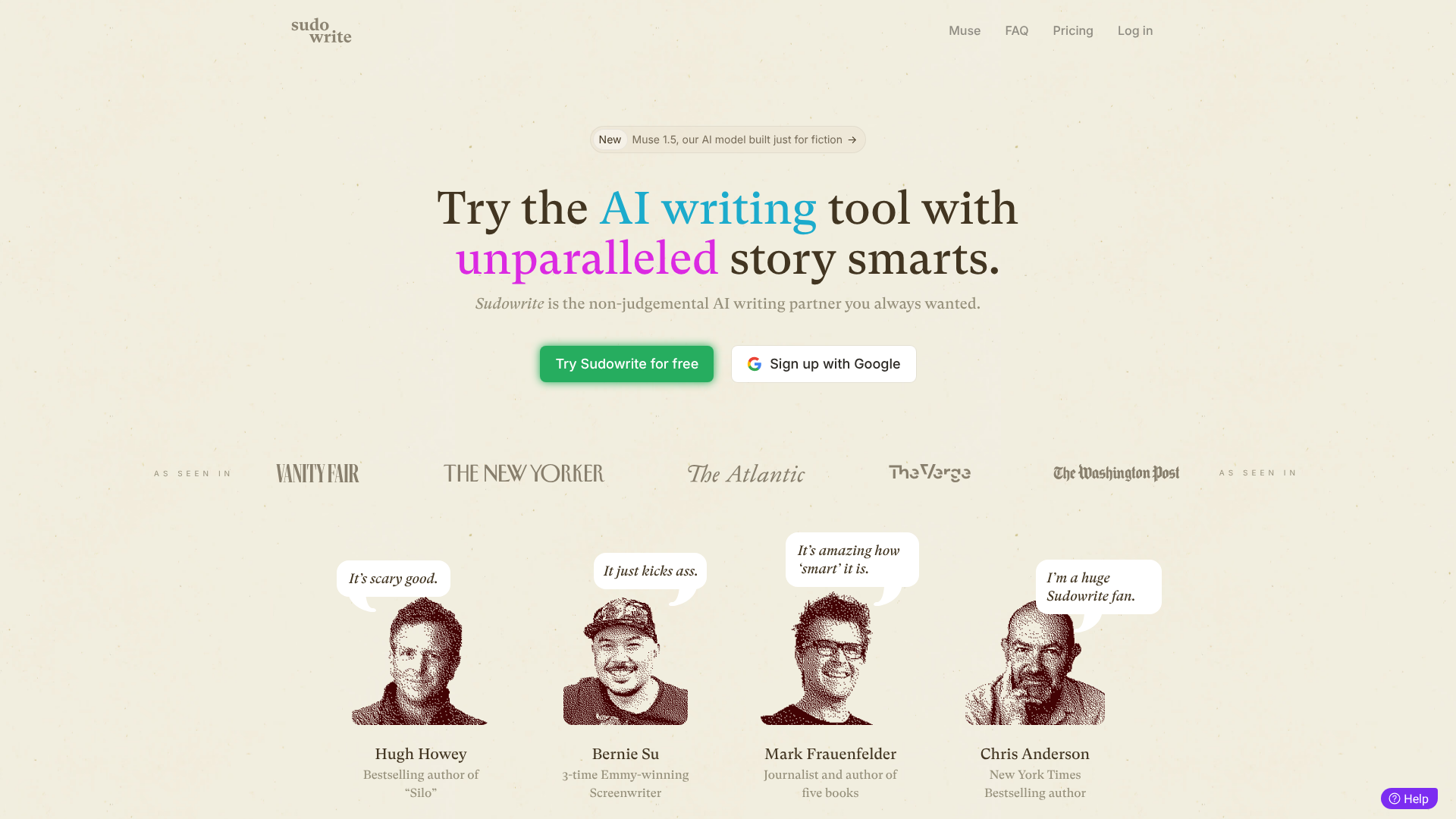
Sudowrite is a unique AI writing tool built specifically for fiction writers. It's not designed for marketing copy or blog posts; its entire feature set is tailored to the art of storytelling. It can help you brainstorm plot points, describe characters and scenes more vividly, and even rewrite passages in a different tone or style.
Features like 'Story Bible' allow you to keep track of all your characters, locations, and plot details in one place, and the AI can reference this information to maintain consistency. The 'Write' button doesn't just write for you; it analyses your existing text and continues in your style, acting as a true collaborator. Its 'Describe' feature can take a simple concept (e.g., 'a spooky forest') and generate rich, sensory descriptions to bring your scenes to life.
For novelists, screenwriters, and hobbyists, Sudowrite is an incredible partner for overcoming writer's block and enhancing creativity. It understands the mechanics of storytelling in a way that general-purpose AI tools do not.
Best For: Fiction writers, novelists, and screenwriters.
Pros
- Tailored for Storytelling: All features are designed to assist with creative writing.
- Enhances Creativity: Excellent for brainstorming, description, and exploring new plot directions.
- Maintains Your Voice: Aims to collaborate and write with you, not for you.
Cons
- Highly Niche: Not suitable for any other type of writing (e.g., marketing, business).
- Subscription Model: The cost may be a consideration for hobbyist writers.
Pricing: Offers subscription plans based on word usage. Check their website for details.
10. Pictory
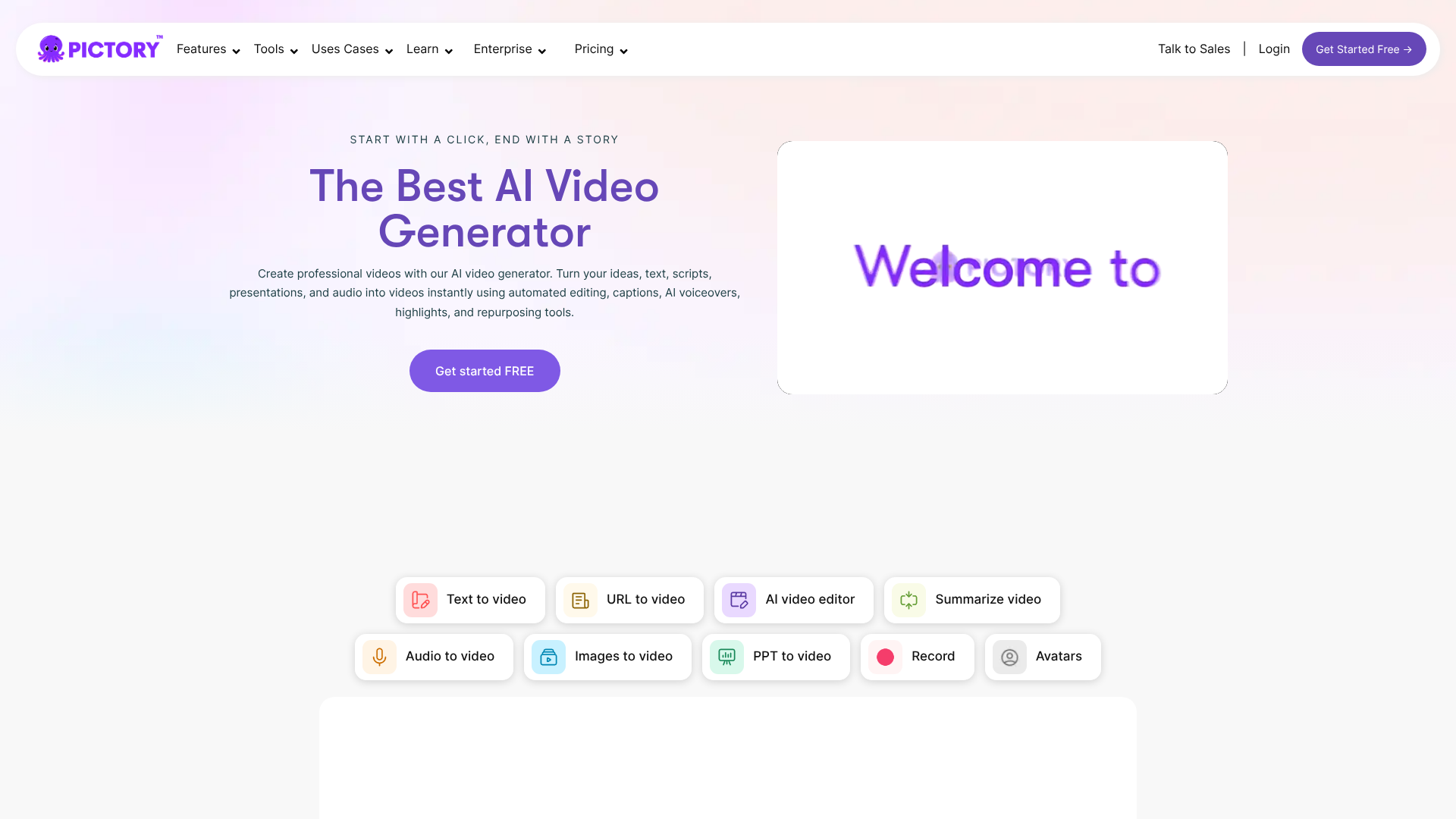
While not a traditional text writer, Pictory is an innovative AI tool that transforms text into engaging videos. In today's visually-driven world, repurposing content is key, and Pictory makes it incredibly easy. You can feed it a blog post, script, or any long-form text, and its AI will automatically create a video, complete with stock footage, music, and AI-generated voiceovers.
The process is remarkably simple. The AI analyses your text, selects relevant video clips from a vast library, and syncs them with the narration. You can then easily edit the video, change clips, add your own branding, and choose from a variety of AI voices. It's a perfect tool for turning articles into YouTube videos, creating social media clips, or producing video summaries of reports.
For content marketers looking to expand their reach into video without the steep learning curve of traditional video editing software, Pictory is an excellent solution.
Best For: Content marketers, YouTubers, and social media managers who want to repurpose text content into video.
Pros
- Effortless Text-to-Video Creation: Turns articles and scripts into videos in minutes.
- Large Stock Media Library: Access to millions of video clips, images, and music tracks.
- Realistic AI Voices: Offers a wide selection of natural-sounding AI narrators.
Cons
- Less Customisation than Pro Editors: Not as flexible as traditional video editing software like Adobe Premiere Pro.
- AI Clip Selection Can Be Hit-or-Miss: Sometimes requires manual changes to find the perfect visuals.
Pricing: Pictory offers several subscription tiers. Visit their site for current plans.
11. Murf AI

Murf AI specialises in creating studio-quality AI voiceovers from text. It addresses a major pain point for video creators, podcasters, and educators: the need for clear, professional narration without hiring a voice actor or investing in expensive recording equipment. Murf offers a huge library of over 120 AI voices in more than 20 languages, with options to control pitch, speed, and emphasis.
What sets Murf apart is the quality and emotional range of its voices. They sound far less robotic than older text-to-speech technologies. You can create voiceovers for presentations, advertisements, audiobooks, and e-learning modules. The platform also includes a simple video editor, allowing you to sync your voiceover with visuals directly within the app.
For anyone creating content that requires narration, Murf AI provides a cost-effective and high-quality solution that can elevate the production value of your projects significantly.
Best For: Video creators, podcasters, educators, and marketers needing high-quality voiceovers.
Pros
- Hyper-Realistic AI Voices: A massive library of natural-sounding voices with emotional range.
- Extensive Customisation: Control over pitch, tone, speed, and emphasis.
- All-in-One Platform: Includes a voice changer, transcription service, and basic video editor.
Cons
- Can Be Expensive: The plans with the best voices and features come at a premium price.
- Rendering Times: Generating longer audio files can sometimes take a few minutes.
Pricing: Murf AI has a free plan and several paid tiers. Check their website for the latest details.
AI Writing Tools: A Quick Comparison
To help you decide at a glance, here’s how our top picks stack up against each other.
| Tool | Best For | Free Plan Available? | Key Feature |
|---|---|---|---|
| Jasper | Marketing Teams | No (Offers Trial) | Brand Voice & Campaigns |
| Writesonic | SEO & Blogging | Yes | Factual, SEO-optimised Articles |
| ChatGPT | General Versatility | Yes | Conversational Flexibility |
| Claude | Human-like Tone | Yes | Natural Language Output |
| Grammarly | Editing & Polishing | Yes | Real-time Writing Feedback |
| QuillBot | Paraphrasing | Yes | Advanced Rephrasing Modes |
The Pros and Cons of Relying on AI Writing Software
While AI writing tools offer incredible benefits, it's important to approach them with a balanced perspective. Understanding both their strengths and weaknesses allows you to use them effectively as part of a healthy content workflow, rather than relying on them as a crutch.
On the positive side, the advantages are clear. The most significant is the massive boost in efficiency and speed. AI can generate drafts, outlines, and ideas in seconds, freeing up human writers to focus on more strategic tasks like editing, fact-checking, and adding unique insights. This can lead to significant cost savings, as content production can be scaled without hiring a large team.
They are also fantastic tools for breaking through creative blocks and exploring different angles for a topic.
However, there are notable downsides. The output can sometimes be generic or lack the nuanced understanding and emotional depth that a human writer brings. AI models are trained on existing internet data, so they can't create truly original, thought-provoking ideas or share personal experiences. There is also a risk of factual inaccuracies or 'hallucinations', where the AI confidently states incorrect information.
Rigorous fact-checking by a human is non-negotiable.
Furthermore, over-reliance on AI can lead to a homogenisation of content across the web, where everything starts to sound the same. Search engines like Google have clarified that high-quality, helpful AI-generated content is acceptable, but spammy, low-quality content created solely to manipulate rankings is not. The key is to use AI as a collaborator, not a replacement. The best results always come from a human-AI partnership, where technology handles the heavy lifting and a human provides the final layer of creativity, verification, and polish.
Pro Tip: The most effective way to use AI writing tools is to treat them as a first-draft assistant. Use them to generate a structured, well-researched outline and initial draft. Then, spend your time enriching the content with your own expertise, unique examples, and personal voice. This combination produces high-quality content efficiently without sacrificing authenticity.
Frequently Asked Questions (FAQ)
Here are answers to some of the most common questions about using AI writing tools.
Which AI writing tool is the best?
There is no single 'best' AI writing tool for everyone, as the ideal choice depends on your specific needs. For marketing teams and businesses, Jasper is often considered the best due to its brand voice features and campaign tools. For bloggers and SEO specialists, Writesonic or Surfer SEO are top contenders. For general versatility and a powerful free option, ChatGPT and Claude are excellent choices.
Finally, for editing and polishing your own work, Grammarly is unmatched.
Can I legally publish a book written by AI?
Yes, you can legally publish a book written with the assistance of AI, but the copyright situation is complex. In many jurisdictions, including the US, copyright protection is only granted to works created by humans. This means that while you can publish and sell the book, you may not be able to claim copyright ownership over the purely AI-generated portions. It's crucial to be transparent about the use of AI, especially on platforms like Amazon KDP, which have specific policies regarding AI-generated content.
The most common and legally safest approach is to use AI as a tool to assist your own writing, ensuring the final work is substantially modified and authored by you.
What AI is better than ChatGPT?
'Better' is subjective and depends on the task. For producing a more natural, human-like tone, many users find Claude to be superior to ChatGPT. For creating structured, on-brand marketing copy, a specialised tool like Jasper is significantly better because of its templates and brand voice features. While ChatGPT is an incredible all-rounder, these specialised tools often outperform it in their specific niches by being purpose-built for those tasks.
Is Claude or GPT better at writing?
Both Claude and models like GPT-4 (which powers the paid version of ChatGPT) are exceptionally good at writing, but they have different strengths. Claude is often praised for its ability to generate text that is more creative, nuanced, and less 'robotic'. It excels at long-form content and maintaining a consistent, conversational tone. GPT-4, on the other hand, is often seen as being slightly stronger in technical accuracy, coding, and complex reasoning.
For creative or stylistic writing, many prefer Claude; for technical or logic-based tasks, GPT-4 may have the edge.
Can I use ChatGPT to write a book and sell it?
Yes, you can use ChatGPT to help you write a book that you then sell. Many authors use it for brainstorming plot ideas, developing characters, writing first drafts of chapters, and overcoming writer's block. However, it is highly recommended that you do not simply copy and paste the output. The best practice is to use the AI-generated text as a foundation and then heavily edit, rewrite, and add your own unique voice and ideas to ensure the final product is high-quality and original.
You must also comply with the terms of service of the platform where you sell the book, such as Amazon's disclosure requirements for AI-assisted content.
Final Thoughts
The world of AI writing software is evolving at an incredible pace, offering powerful new ways to create content more efficiently. These tools are no longer a novelty; they are becoming an essential part of the modern writer's and marketer's toolkit. By handling the repetitive and time-consuming aspects of writing, they free up creators to focus on what truly matters: strategy, creativity, and adding unique human insight.
Choosing the right tool comes down to understanding your primary needs. Whether you're a marketer needing to maintain a consistent brand voice with Jasper, a blogger aiming for the top of Google with Writesonic, or a professional looking to perfect your prose with Grammarly, there is a solution designed for you.
Ultimately, the most successful approach is a partnership. Use these powerful tools to augment your skills, break through creative barriers, and scale your efforts, but always be the final editor who ensures accuracy, authenticity, and quality. By doing so, you can harness the power of AI to produce better content, faster than ever before.