
9 Best AI for Content Generation in 2026 (For Marketers & Creators)
Finding the best AI for content generation can feel overwhelming, but it's a critical step for any marketer or creator looking to scale their output without sacrificing quality. These tools are no longer just for drafting simple copy; they are sophisticated assistants that can help with everything from long-form blog posts and SEO optimisation to creating engaging video scripts and social media campaigns. The right platform can significantly reduce research time, overcome writer's block, and help you produce a higher volume of content faster than ever before.
- What You'll Learn
- What Exactly is AI Content Generation?
- Key Features to Look For in the Best AI Writing Software
- 1. High-Quality Long-Form Content Editor
- 2. Variety of Templates and Use Cases
- 3. SEO Integration and Optimisation
- 4. Brand Voice and Tone Control
- 5. Plagiarism Checker
- How to Choose the Right AI Content Tool for You
- The 9 Best AI Tools for Content Generation (2026 Review)
- 1. Jasper (formerly Jarvis)
- 2. Writesonic
- 3. Copy.ai (Non-Affiliate)
- 4. Synthesia
- 5. Pictory
- 6. Murf AI
- 7. QuillBot
- 8. Grammarly
- 9. Semrush
- AI Content Tools: At a Glance Comparison
- The Pros and Cons of Using AI for Content Creation
- Frequently Asked Questions (FAQ)
- Which AI is the best for content creation?
- Which AI tool is best for social media content?
- Which AI is used to generate content?
- What AI is better than ChatGPT?
- What is the 30% rule in AI?
- Is there a free AI to generate content?
- Final Thoughts
This guide breaks down the top AI content tools available today. We've tested and reviewed the leading options to help you understand their unique strengths, weaknesses, and ideal use cases. Whether you're a solo blogger, part of a large marketing team, or a social media manager, you'll find a solution here to streamline your workflow and enhance your creative process.
What You'll Learn
- Top Overall Picks: Jasper is our top choice for its advanced marketing features and brand voice consistency, while Writesonic excels in creating SEO-optimised articles.
- Content Is More Than Text: The best AI for content generation now includes powerful tools for video, like Synthesia for AI avatars and Pictory for turning scripts into videos, as well as voice generation with tools like Murf AI.
- How to Choose: Selecting the right tool depends on your primary goal. Consider your main content type (blogs, ads, video), budget, and whether you need strong SEO integration or brand voice features.
- It's an Assistant, Not a Replacement: AI content creators are powerful but require human oversight. Always fact-check, edit for tone, and add your unique expertise to ensure the final output is accurate and original.
What Exactly is AI Content Generation?
AI content generation refers to the use of artificial intelligence, specifically large language models (LLMs), to create written, visual, or audio content. Think of it as a highly advanced assistant that has been trained on a massive dataset of text and information from the internet. When you provide a prompt or a command, the AI uses its training to predict the most logical sequence of words or pixels to generate a response that meets your request.
At its core, the process relies on complex algorithms to understand context, tone, style, and factual information. Early versions were often clunky and produced robotic-sounding text. However, modern platforms can generate surprisingly nuanced and human-like content, from technical articles and creative stories to marketing copy and email newsletters.
But the field has expanded far beyond just text. Today, the best AI for content generation encompasses a wide array of media types. AI video generators can create professional-looking videos with AI avatars from just a script. AI image generators can produce stunning visuals from a simple text description.
And AI voice tools can create realistic voiceovers in multiple languages, saving hours of recording and editing time.
Key Features to Look For in the Best AI Writing Software
When comparing different AI content tools, certain features stand out as essential for quality and efficiency. Looking beyond the basic ability to generate text will help you find a platform that truly integrates into your workflow and delivers a return on your investment. Here are the key features you should evaluate.
1. High-Quality Long-Form Content Editor
A basic text box isn't enough for serious content creation. The best tools offer a dedicated long-form editor, similar to Google Docs, that allows you to write, edit, and command the AI within the same interface. This enables a collaborative process where you can write a paragraph, ask the AI to expand on it, and then refine the output without switching screens. Look for features like formatting options, word count, and integrated AI commands.
2. Variety of Templates and Use Cases
An excellent AI tool should be versatile. Top platforms offer a library of pre-built templates for specific tasks, such as 'Facebook Ad Copy', 'Blog Post Intro', 'YouTube Video Script', or 'Product Description'. These templates are designed with optimised prompts to give you better results for that specific format, saving you the time and effort of figuring out the perfect command.
3. SEO Integration and Optimisation
For content marketers, SEO is non-negotiable. Some of the best AI writing software includes built-in SEO features. This can range from suggesting relevant keywords to include in your article to analysing top-ranking competitor content. Tools like Semrush or Surfer SEO offer powerful integrations that guide you to create content that is not only well-written but also structured to rank on search engines.
4. Brand Voice and Tone Control
Generic content doesn't connect with an audience. Advanced AI content creators now offer 'Brand Voice' features. You can upload your existing content, style guides, or even website URL, and the AI will learn your specific tone, terminology, and style. This ensures that all generated content remains consistent with your brand identity, which is crucial for building trust and recognition.
5. Plagiarism Checker
Originality is paramount. Reputable AI tools include a built-in plagiarism checker to ensure the content they generate is unique. While AI models are designed to create new sentences, there's always a small risk of generating text that is too similar to existing content from their training data. A plagiarism checker provides an essential final check for peace of mind before you hit publish.
How to Choose the Right AI Content Tool for You
With so many options on the market, selecting the perfect tool can be a challenge. The 'best' option is subjective and depends heavily on your specific needs, workflow, and budget. Instead of looking for a one-size-fits-all solution, focus on finding the platform that best aligns with your goals. Here’s a step-by-step approach to making the right choice.
First, clearly define your primary use case. What type of content will you be creating most often? If you're a blogger, a tool with a strong long-form editor and SEO features is essential. If you're a social media manager, you'll want a platform with excellent templates for short-form copy, ads, and image captions.
Next, consider your technical comfort level and desired workflow. Some tools are incredibly simple and designed for beginners, while others offer a vast array of advanced features that might be overwhelming for a new user. Many platforms offer free trials, which are an excellent way to test the user interface and see if it feels intuitive to you. Spend time with a few different options to see which one 'clicks'.
Finally, evaluate the cost against the value it provides. Pricing models vary widely, from monthly subscriptions with unlimited words to credit-based systems. Calculate how much content you plan to generate and determine which plan offers the best value. Remember that the cheapest option isn't always the best; investing in a slightly more expensive tool with features that save you hours each week can provide a much higher return.
The 9 Best AI Tools for Content Generation (2026 Review)
Here are our top picks for the best AI for content generation, covering everything from writing and SEO to video and voice creation.
1. Jasper (formerly Jarvis)
Best For: Marketing teams and businesses focused on brand consistency.
Jasper is one of the most well-known and respected names in AI content generation, and for good reason. It offers a sophisticated suite of tools designed specifically for marketers. Its standout feature is the 'Brand Voice', which allows you to train the AI on your company's style guide, product catalogues, and existing content to ensure everything it produces sounds authentically like your brand.
The platform includes over 50 templates for various marketing needs, a powerful long-form document editor, and a browser extension that lets you use Jasper across different platforms like your email client or CMS. It also has a built-in plagiarism checker and grammar correction powered by Grammarly. While it's one of the more premium options, its advanced features and high-quality output make it a top choice for teams serious about scaling their content marketing.
Pros
- Excellent Brand Voice Feature: Creates highly consistent, on-brand content.
- High-Quality Output: Often requires less editing than other tools.
- Great for Marketing Copy: Strong templates for ads, social media, and emails.
Cons
- Higher Price Point: Can be expensive for solo creators or small businesses.
- Learning Curve: The sheer number of features can be overwhelming for new users.
2. Writesonic
Best For: SEO-focused content and creating long-form articles quickly.
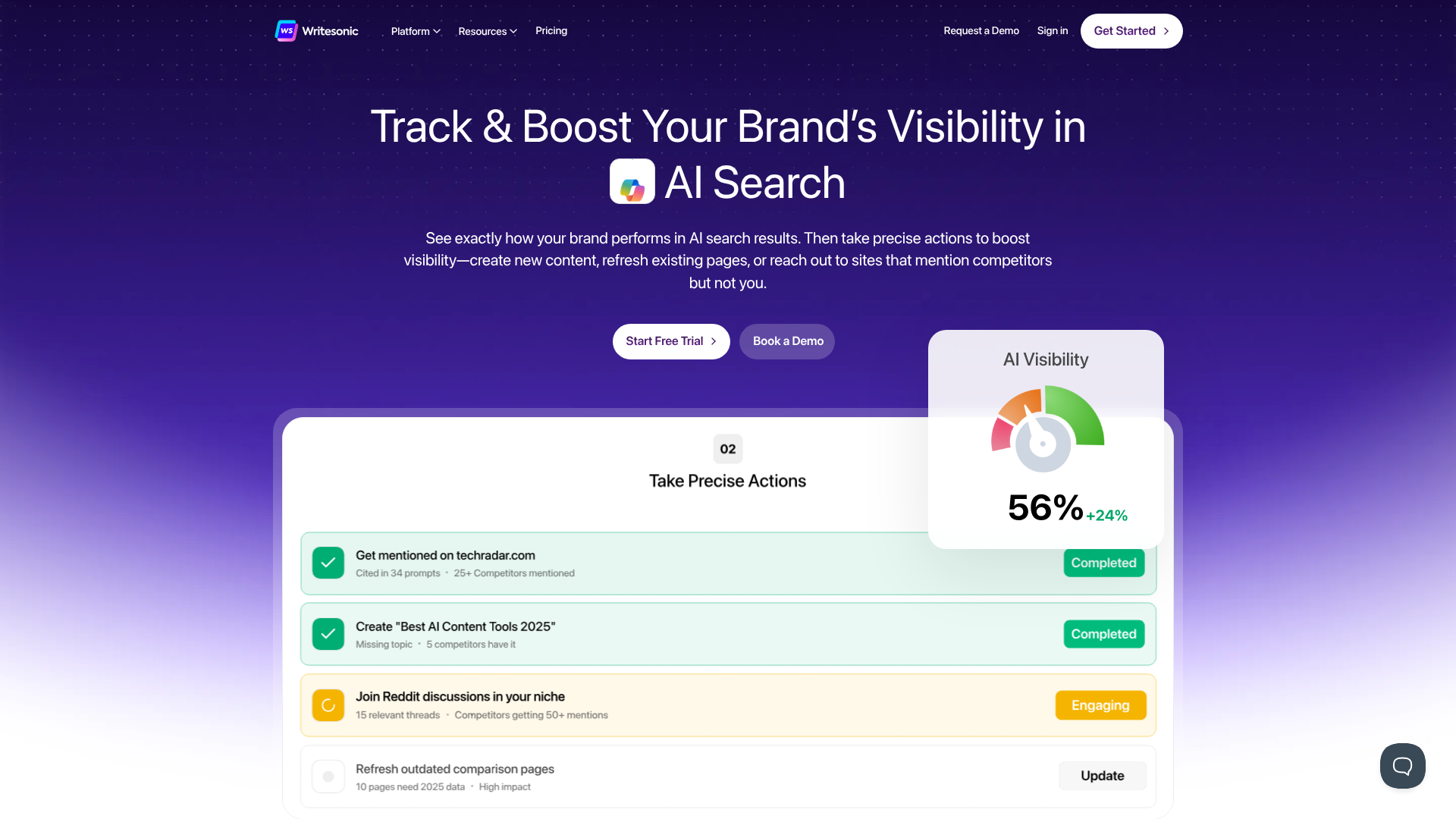
Writesonic positions itself as an all-in-one platform for content creation, with a particular strength in SEO. Its Article Writer 5.0 feature is designed to create 1,500+ word, fact-checked, and SEO-optimised blog posts in minutes. It can analyse top-ranking competitors for your target keyword and structure your article to compete effectively.
Beyond articles, Writesonic offers a wide range of tools, including Photosonic for AI image generation, Audiosonic for voiceovers, and a chatbot builder called Botsonic. This makes it a very versatile option. Its pricing is often more accessible than Jasper's, offering different quality tiers for word generation to fit various budgets. This balance of power, versatility, and affordability makes it one of the best AI writing software options available.
Pros
- Strong SEO Features: Excellent for creating content designed to rank.
- All-in-One Platform: Includes AI writing, image, and audio tools.
- Factual & Up-to-Date Content: Cites sources and integrates with Google Search.
Cons
- Output Can Be Repetitive: Long-form articles may sometimes require editing to improve flow.
- Credit System Can Be Confusing: Word counts vary based on the quality setting you choose.
3. Copy.ai (Non-Affiliate)
Best For: Brainstorming, short-form copy, and sales teams.
Copy.ai is another major player that excels at generating creative copy quickly. It offers a clean, user-friendly interface with over 90 templates for everything from social media posts to sales emails. One of its strengths is its ability to generate multiple variations of copy at once, making it ideal for A/B testing ad headlines or exploring different angles for a product description.
While it has a long-form editor, its primary strength lies in short-form content. It also offers powerful workflow automation features, which are particularly useful for sales and marketing teams looking to automate outreach sequences. Copy.ai offers a generous free plan, making it an excellent entry point for those new to AI content creators.
Pros
- Generous Free Plan: A great way to get started with AI writing.
- User-Friendly Interface: Very easy to learn and use.
- Excellent for Short-Form Copy: Quickly generates creative options for ads and social media.
Cons
- Long-Form Editor is Less Advanced: Not as powerful as dedicated editors in Jasper or Writesonic.
- Factual Accuracy Can Vary: Requires careful fact-checking for technical or data-heavy topics.
4. Synthesia
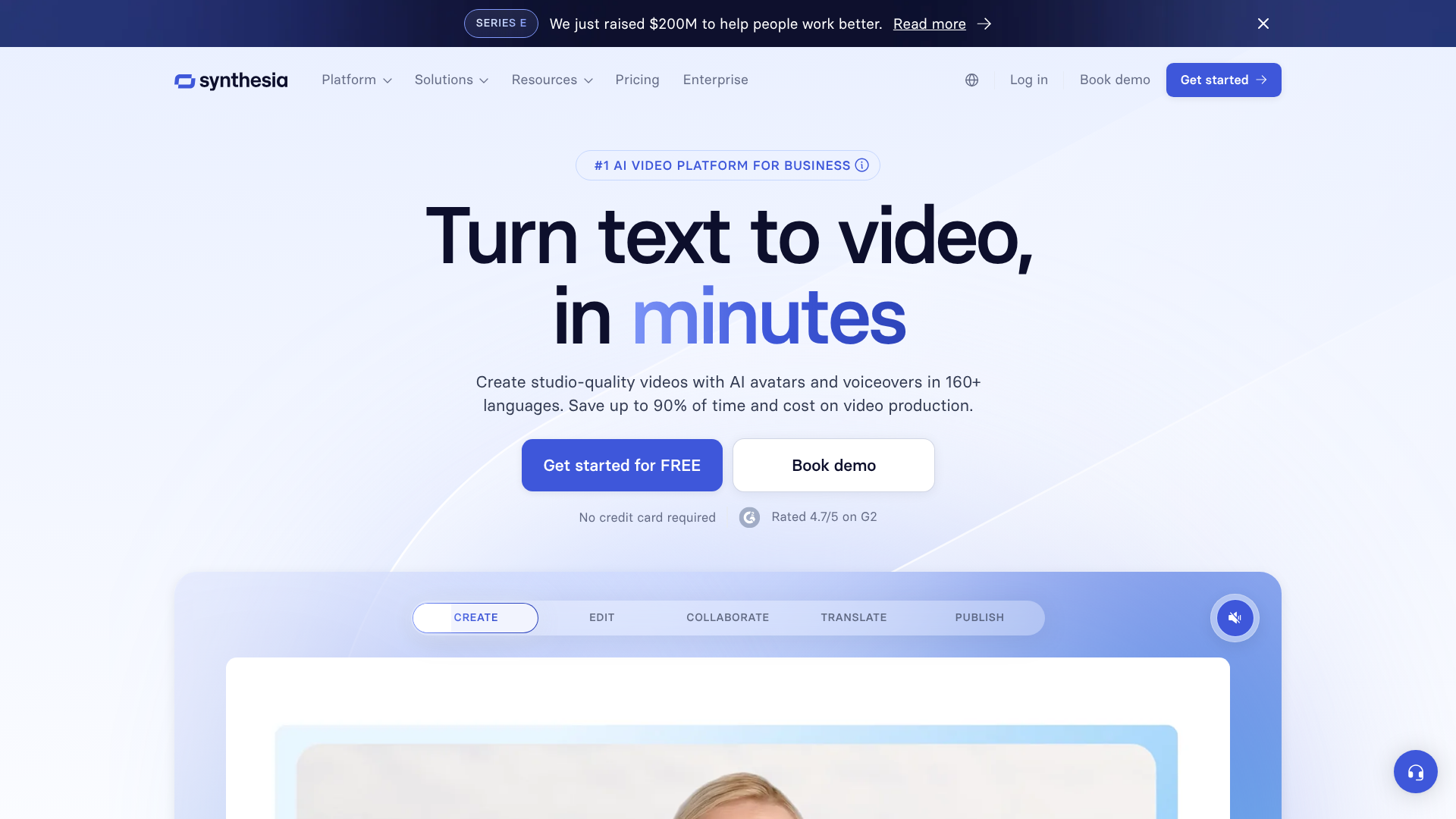
Best For: Creating training videos, corporate communications, and product tutorials.
Moving beyond text, Synthesia is a leader in AI video generation. It allows you to create professional-looking videos featuring realistic AI avatars from just a text script. You can choose from over 140 diverse avatars, type your script in one of over 120 languages, and the platform will generate a video with a talking presenter in minutes.
This technology is ideal for creating scalable video content without the need for cameras, microphones, or actors. It's widely used for corporate training, internal communications, and how-to videos. You can upload your own brand assets, create custom templates, and easily update videos by simply editing the text script. It represents a major shift in how video content can be produced efficiently.
Pros
- Saves Time and Money: Eliminates the need for traditional video production.
- Highly Scalable: Create and update hundreds of videos with ease.
- Wide Range of Avatars and Languages: Excellent for global companies.
Cons
- Avatars Can Lack Emotion: While realistic, they may not convey deep emotion for certain topics.
- Subscription Cost: Can be a significant investment for smaller users.
5. Pictory
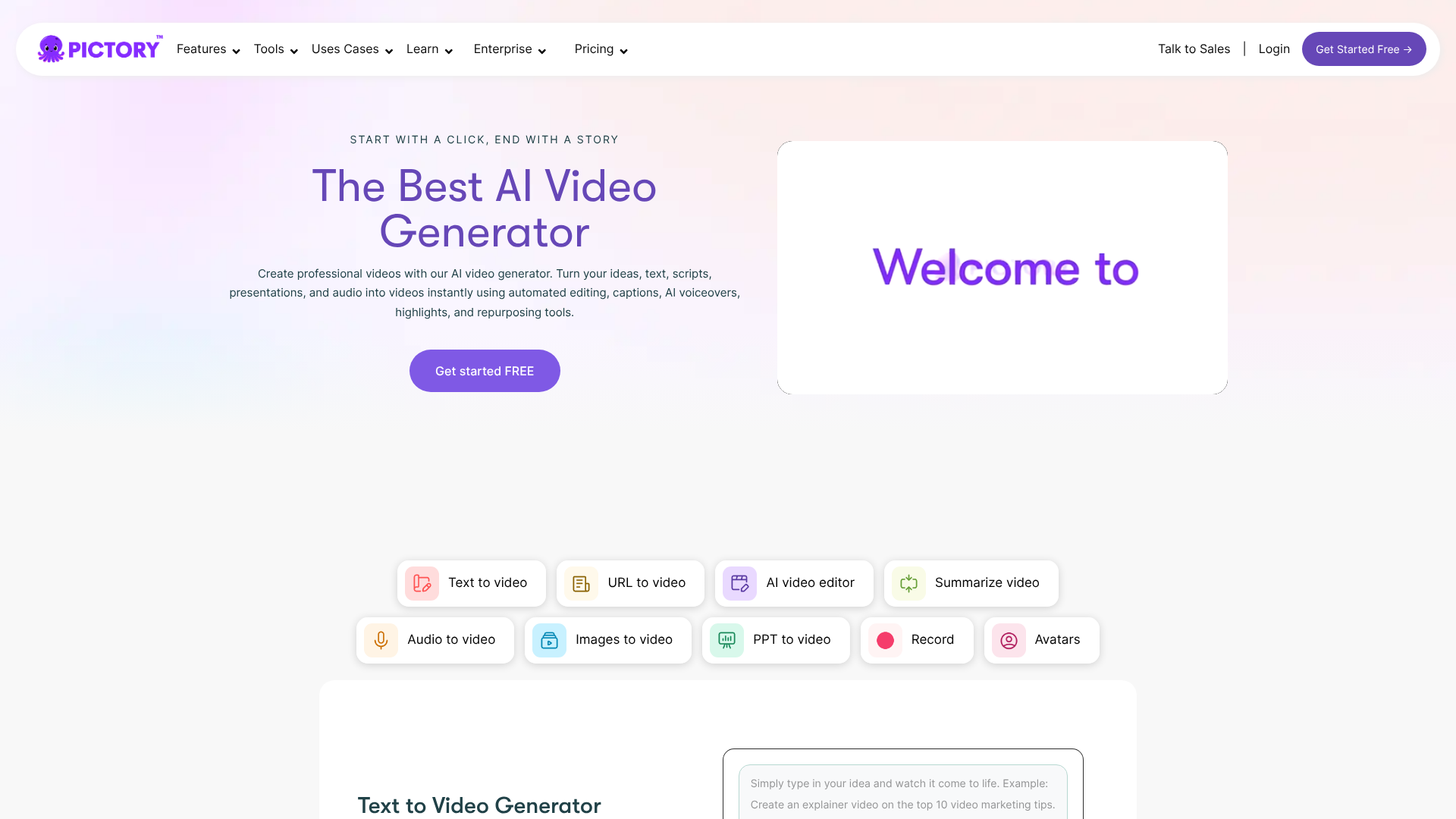
Best For: Turning blog posts and long-form text into engaging social videos.
Pictory is an AI video generator that specialises in repurposing existing content. Its most popular feature allows you to paste the URL of a blog post, and Pictory's AI will automatically analyse the text, select key highlights, and create a summary video with stock footage, music, and captions.
This is an incredibly efficient way to breathe new life into your written content and reach audiences on video-first platforms like YouTube, TikTok, and Instagram. It also has features for creating videos from scripts, adding captions to existing videos, and editing videos using text. It's a simple yet powerful tool for any content marketer looking to expand their video strategy without a steep learning curve.
Pros
- Effortless Content Repurposing: Turns articles into videos in minutes.
- Huge Stock Media Library: Access to millions of licensed images and video clips.
- Very Easy to Use: Intuitive interface suitable for beginners.
Cons
- AI Scene Selection Can Be Hit-or-Miss: Sometimes requires manual adjustment of stock footage.
- Limited Customisation Options: Not as flexible as a full-featured video editor.
6. Murf AI
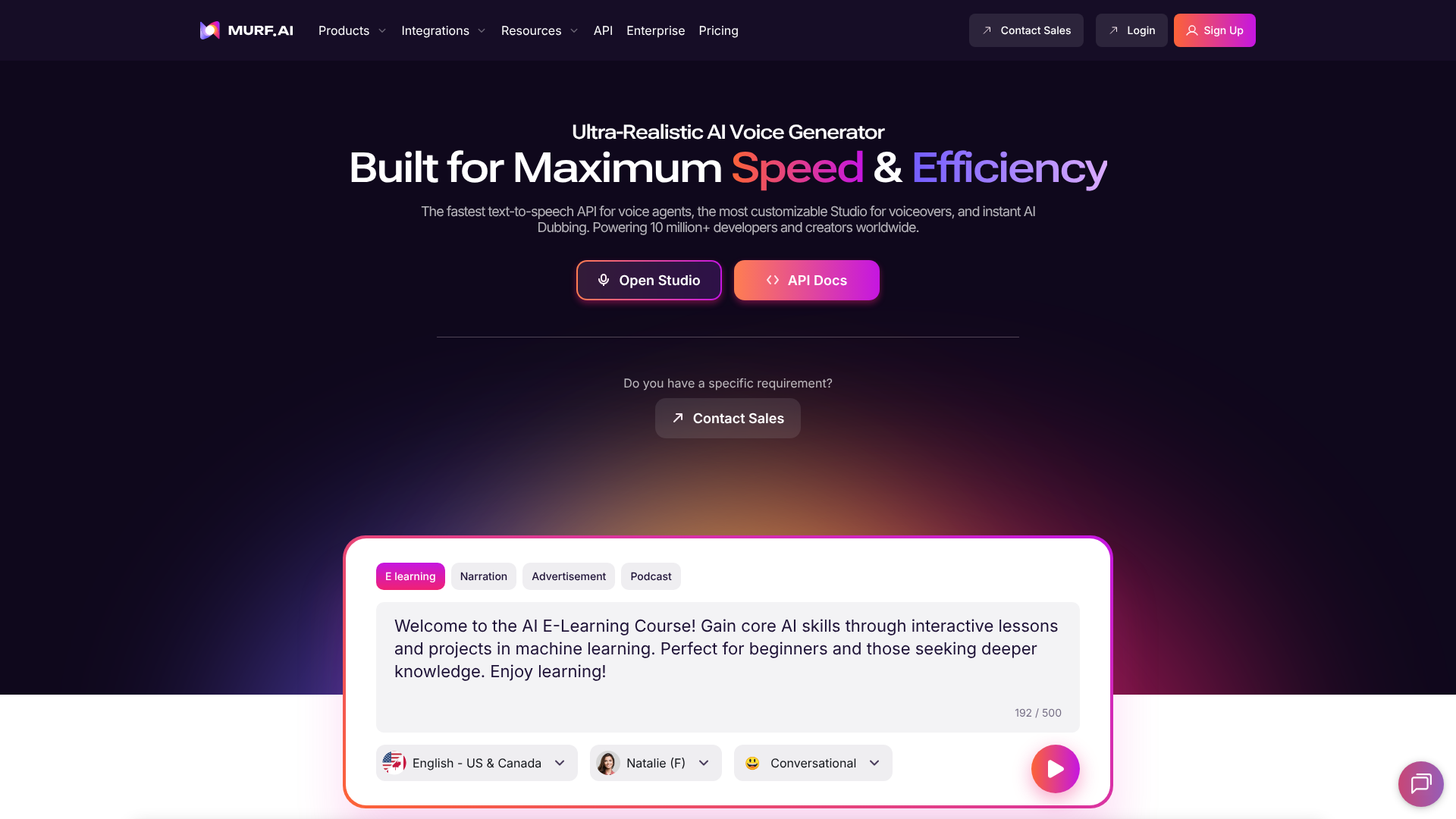
Best For: Creating high-quality voiceovers for videos, podcasts, and e-learning.
Murf AI is a top-tier AI voice generator that provides realistic text-to-speech (TTS) capabilities. It offers a vast library of AI voices across different ages, genders, and accents. Unlike robotic-sounding TTS of the past, Murf's voices are rich with emotion and intonation, making them suitable for professional projects.
You can adjust the pitch, speed, and emphasis of the voice to perfectly match your content. The platform also includes a full suite of tools, allowing you to sync voiceovers with video, add background music, and collaborate with team members. It's an excellent solution for creators who need consistent, high-quality voiceovers without hiring voice actors.
Pros
- Extremely Realistic Voices: A wide selection of high-quality, natural-sounding voices.
- Full Voiceover Production Suite: More than just a text-to-speech tool.
- Fine-Tuning Controls: Allows for detailed customisation of voice delivery.
Cons
- Can Be Expensive: Pricing is based on voice generation hours, which can add up.
- Some Voices Sound More Realistic Than Others: Quality can vary across the library.
7. QuillBot
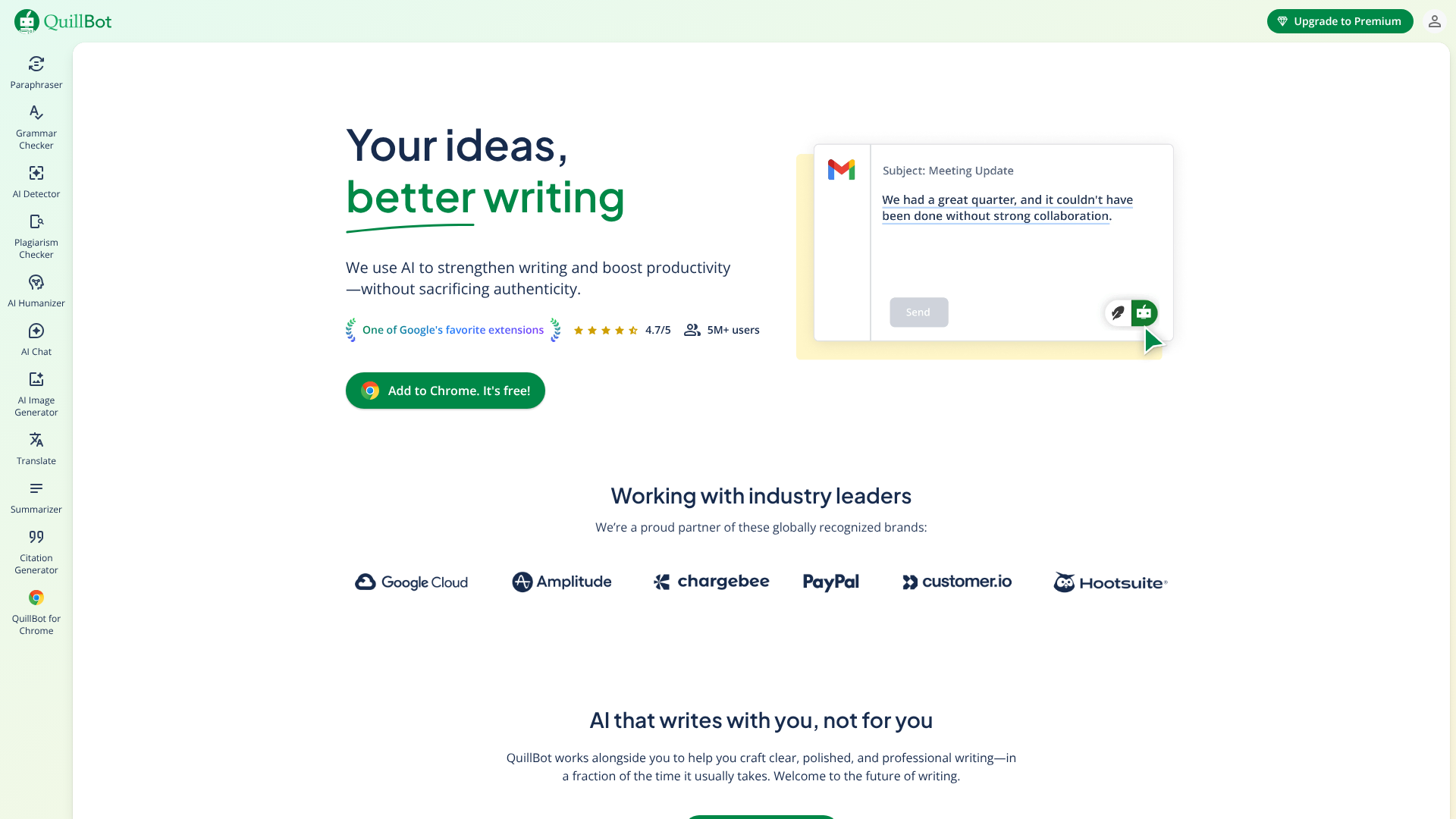
Best For: Paraphrasing, summarising, and improving the clarity of existing text.
While not a full content generator in the same vein as Jasper, QuillBot is an indispensable AI writing assistant. Its core function is a state-of-the-art paraphrasing tool that can rewrite sentences, paragraphs, or entire articles in various modes, such as 'Fluent', 'Formal', or 'Creative'. This is incredibly useful for rephrasing content to avoid plagiarism or simply to find a better way to express an idea.
QuillBot also includes a grammar checker, a summariser, and a citation generator. It's a fantastic tool for students, academics, and writers who need to refine and polish their work. Its Co-Writer feature combines all these tools into a single editor, allowing you to research, write, and rephrase all in one place.
Pros
- Best-in-Class Paraphrasing: Excellent for rewriting text while preserving meaning.
- Multiple Writing Modes: Offers flexibility in the tone and style of the output.
- Affordable and Easy to Use: Simple interface with a strong free version.
Cons
- Not a Content Generator: It primarily works with existing text, rather than creating from scratch.
- Paraphrasing Can Sometimes Lose Nuance: Always requires a human review.
8. Grammarly
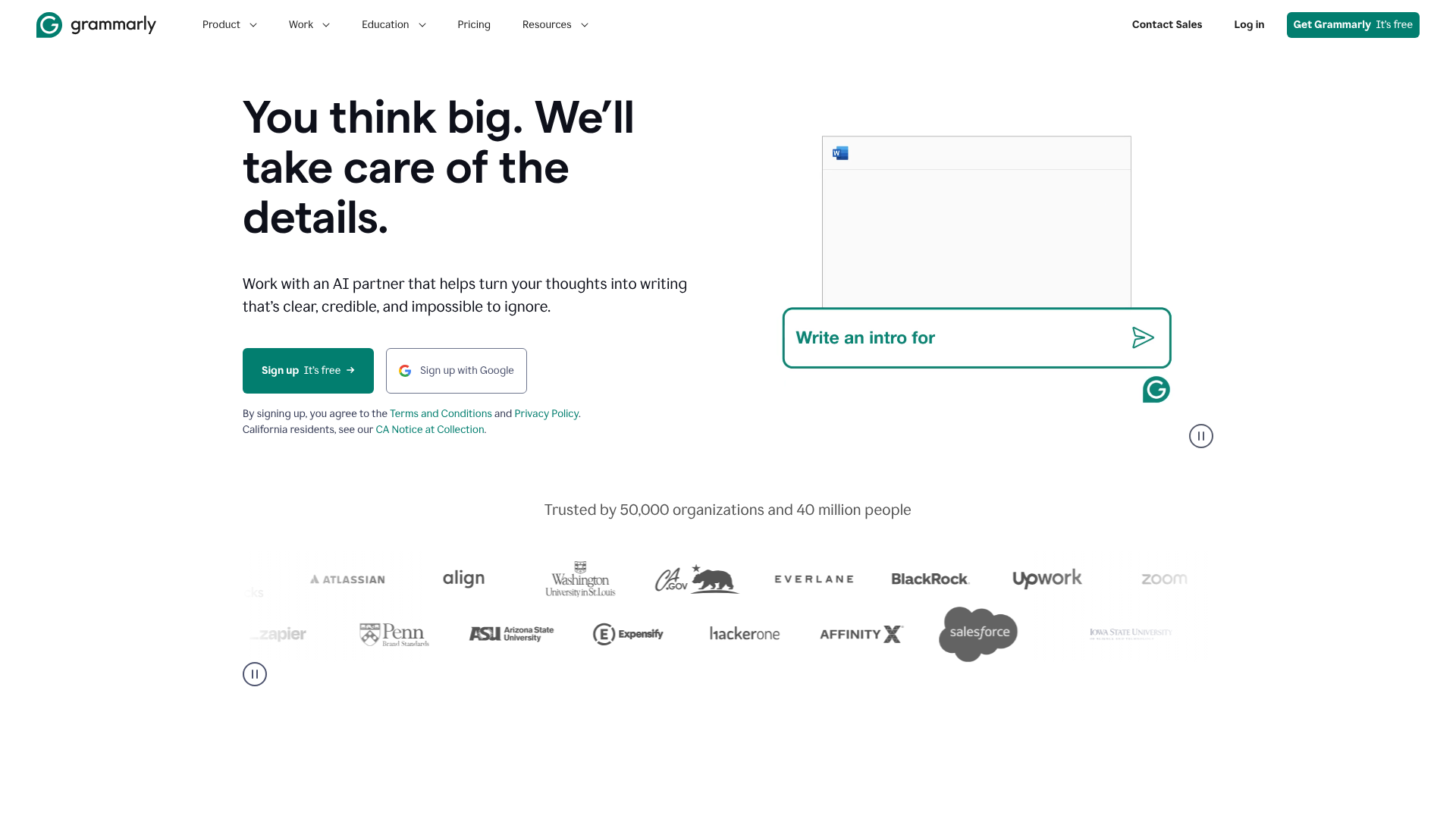
Best For: Editing, proofreading, and improving writing style for all users.
Grammarly is perhaps the most famous AI writing assistant on the planet. While its primary function is to correct spelling and grammar mistakes, its premium version offers a host of advanced AI features. It provides suggestions on clarity, engagement, and delivery, helping you make your writing more concise and impactful.
Recently, Grammarly has integrated generative AI features, allowing you to compose, rewrite, and ideate directly within the editor. This makes it a powerful tool for both correcting and creating content. Its browser extension is a must-have for anyone who writes online, providing real-time feedback in emails, social media, and documents.
Pros
- Excellent Grammar and Spelling Correction: The industry standard for proofreading.
- Provides Actionable Writing Feedback: Helps improve clarity and style, not just fix errors.
- Seamless Integration: Works across almost every platform where you write.
Cons
- Generative AI is a Newer Feature: Not as advanced as dedicated generation tools.
- Suggestions Can Sometimes Be Overly Prescriptive: May not always fit the desired tone.
9. Semrush
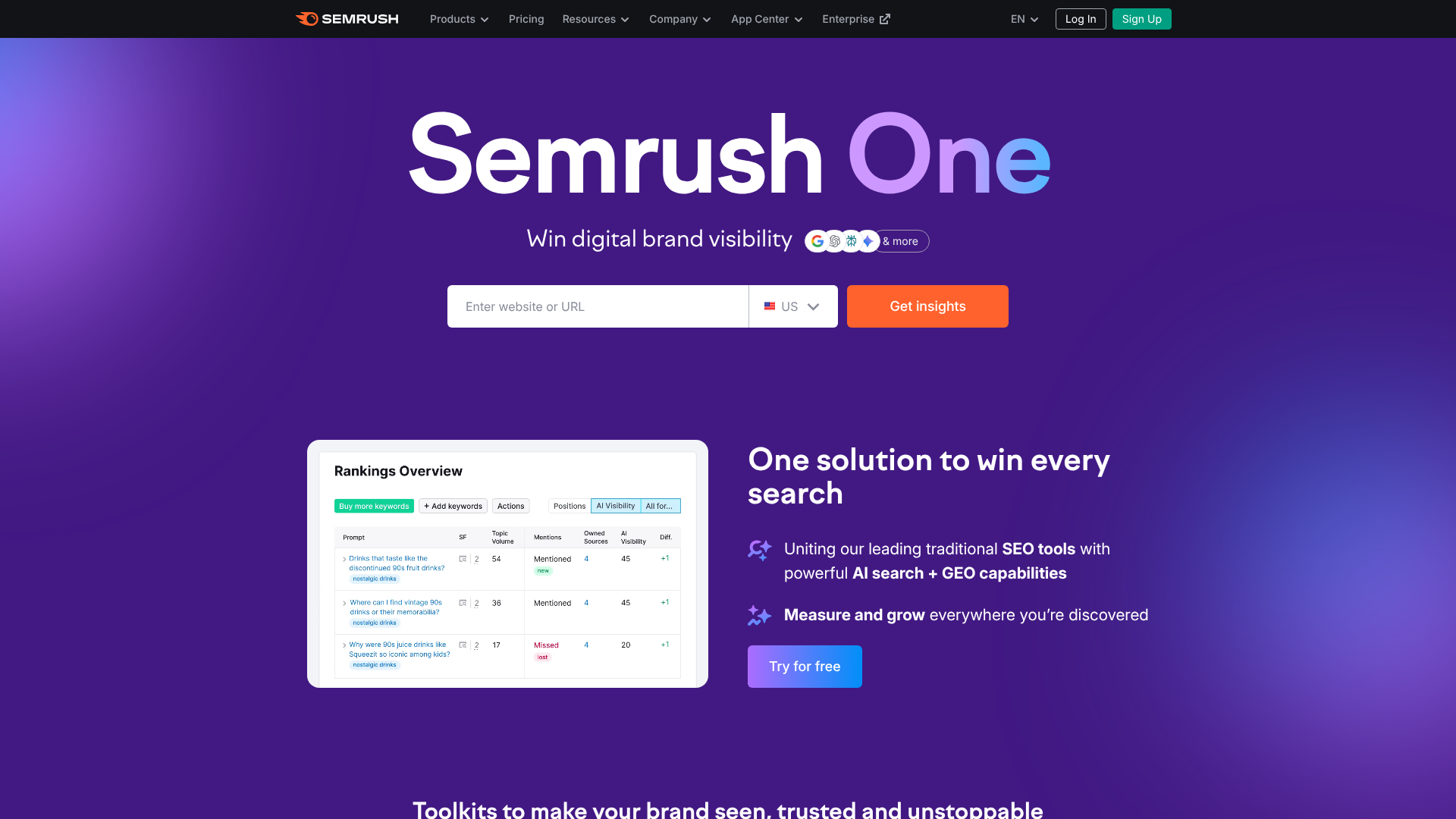
Best For: SEO professionals and content marketers who need data-driven insights.
Semrush is a comprehensive SEO and marketing toolkit, not just an AI writer. However, its content marketing features are deeply integrated with AI and are incredibly powerful. The SEO Writing Assistant provides real-time feedback on your content's readability, tone of voice, and SEO optimisation as you write in Google Docs or WordPress.
It analyses the top 10 ranking pages for your target keyword and gives you specific recommendations on which related keywords to include, what your word count should be, and how to improve your text. While you would use another tool to generate the initial draft, Semrush is the best platform for optimising that draft to ensure it has the best possible chance of ranking.
Pros
- Data-Driven SEO Recommendations: Based on real-time competitor analysis.
- Comprehensive Marketing Toolkit: Integrates with keyword research, rank tracking, and more.
- Improves Content Quality and Rank Potential: A vital tool for serious SEO.
Cons
- Not a Primary Content Generator: It's for optimising, not creating from scratch.
- Expensive: It's a professional-grade tool with a corresponding price tag.
AI Content Tools: At a Glance Comparison
To help you decide, here’s a quick comparison of our top AI writing platforms.
| Feature | Jasper | Writesonic | Copy.ai |
|---|---|---|---|
| Best For | Brand Consistency & Marketing Teams | SEO Content & All-in-One Features | Short-Form Copy & Brainstorming |
| SEO Tools | Good (Surfer Integration) | Excellent (Built-in) | Basic |
| Free Trial | Yes (Free credits) | Yes (Free credits) | Yes (Generous free plan) |
| Brand Voice | Yes (Advanced) | Yes | Yes (Newer feature) |
| Pricing Model | Subscription | Subscription / Credits | Subscription |
The Pros and Cons of Using AI for Content Creation

AI content generators are powerful, but they are not a magic bullet. Understanding their strengths and limitations is key to using them effectively. A balanced perspective will help you integrate these tools into your workflow in a way that enhances, rather than hinders, your creative process.
The Advantages
The most significant benefit is speed and efficiency. An AI can produce a first draft of a 1,500-word article in the time it takes a human to write the introduction. This allows content teams to scale their output dramatically. They are also fantastic for overcoming writer's block.
When you're staring at a blank page, asking an AI for a few intro ideas or a blog post outline can be the spark you need to get started.
Cost-effectiveness is another major advantage. While the subscription fees may seem high, they are often a fraction of the cost of hiring freelance writers or a full-time content team, especially for businesses that need a high volume of content. Finally, AI tools can help maintain consistency in tone and style across a large volume of content, which is especially important for larger brands.
The Disadvantages
The biggest drawback is the potential for factual inaccuracies. AI models can 'hallucinate' or confidently state incorrect information. All facts, statistics, and important claims must be rigorously checked by a human expert. The output can also be generic or lack the unique perspective and emotional depth that a human writer brings.
It can tell you what something is, but it often struggles to explain why it matters.
There is also a risk of over-reliance, which can lead to a decline in a writer's own skills. It's crucial to use AI as a collaborator, not a crutch. Finally, search engines like Google have made it clear that while they don't penalise AI-generated content, they prioritise high-quality, helpful, and people-first content. Low-effort, unedited AI content is unlikely to rank well in the long term.
Pro Tip: The best workflow is a human-AI partnership. Use the AI to generate the first 70-80% of the draft, including research, structure, and basic paragraphs. Then, a human editor should spend their time on the final 20-30%, focusing on fact-checking, adding unique insights, refining the tone, and ensuring the content provides genuine value.
Frequently Asked Questions (FAQ)
Here are answers to some of the most common questions about using AI for content generation.
Which AI is the best for content creation?
The 'best' AI depends on your specific needs. For all-around marketing content with a focus on brand consistency, Jasper is often considered a top contender. For creating SEO-optimised blog posts and articles quickly, Writesonic is an excellent choice. If your focus is on video, tools like Synthesia for AI avatar videos or Pictory for repurposing text are leading the way.
Which AI tool is best for social media content?
For social media content, you need a tool that excels at short, punchy, and creative copy. Jasper and Copy.ai are both excellent for this. They offer a wide range of templates specifically for social media platforms like Instagram captions, Facebook ads, LinkedIn posts, and Twitter threads. They can help you quickly generate multiple variations to find the most engaging message.
Which AI is used to generate content?
Most modern AI content generation tools are powered by large language models (LLMs). The most famous of these is the GPT (Generative Pre-trained Transformer) series from OpenAI, such as GPT-3.5 and GPT-4. Other models include Google's LaMDA and Anthropic's Claude. The content generation platforms you use build their features and user interfaces on top of these foundational models, often fine-tuning them for specific tasks like marketing copy or technical writing.
What AI is better than ChatGPT?
While ChatGPT is incredibly powerful and versatile, several specialised tools can be 'better' for specific tasks. For example, Jasper is often better for creating on-brand marketing copy because of its Brand Voice feature. Writesonic is better for SEO articles due to its built-in competitor analysis and optimisation tools. ChatGPT is a fantastic generalist, but dedicated platforms often provide a more refined workflow and higher-quality output for their specific use case.
What is the 30% rule in AI?
The '30% rule' is a general guideline suggesting that you should aim to edit or add at least 30% unique human value to any content generated by AI. This ensures the final piece is original, contains your unique expertise, and isn't just a generic output. It involves fact-checking, adding personal anecdotes or examples, refining the tone, and ensuring the content is genuinely helpful to the reader, moving it from 'AI-generated' to 'AI-assisted'.
Is there a free AI to generate content?
Yes, there are several ways to generate content for free. Many premium tools, like Copy.ai and Writesonic, offer free plans with a limited number of words or credits per month, which is great for testing them out. General-purpose tools like ChatGPT and Google Gemini also have powerful free versions that can be used for a wide range of content creation tasks.
Final Thoughts
Choosing the best AI for content generation is about finding the right partner for your creative workflow. These tools are not here to replace human creativity but to augment it, handling the heavy lifting of research and drafting so you can focus on strategy, editing, and adding the unique insights that only you can provide.
For marketing teams looking for a powerful, all-in-one solution with exceptional brand voice capabilities, Jasper remains a top-tier choice. If your primary goal is to produce high-quality, SEO-optimised blog content at scale, Writesonic offers an incredible set of features tailored for that exact purpose.
Ultimately, the most effective approach is to experiment. Use the free trials, test the features that matter most to you, and discover which platform empowers you to create your best work, faster. The world of AI content creation is evolving rapidly, and by embracing these tools thoughtfully, you can stay ahead of the curve and unlock new levels of productivity.