

11 Best AI Content Generation Tools for Marketers in 2026 (Ranked)
The demand for high-quality content is relentless, but resources, time, and creative energy are finite. For marketers and business owners, this creates a significant bottleneck. Finding the best AI content generation tool isn't just about speeding up writing; it's about scaling your entire content strategy, from blog posts and social media updates to professional-quality videos and voiceovers, without sacrificing quality. These tools are designed to be your co-pilot, helping you brainstorm ideas, draft copy, and even produce multimedia assets in a fraction of the time it would normally take.
- What You'll Learn
- What is an AI Content Generation Tool? (And Why You Need One)
- How to Choose the Right AI Writing Software for Your Needs
- Define Your Primary Use Case
- Evaluate Content Quality and Originality
- Consider Ease of Use and Learning Curve
- Check for Integrations and SEO Features
- Compare Pricing Models
- The Best AI Content Generation Tools: A Detailed Breakdown
- AI Writing & SEO Tools
- 1. Jasper (formerly Jarvis): Best All-Round AI Writer for Marketing Teams
- 2. Writesonic: Best for High-Quality SEO Articles and Blog Posts
- 3. Semrush: Best for SEO-Driven Content Strategy and Optimisation
- 4. QuillBot: Best for Paraphrasing and Improving Existing Content
- 5. Grammarly: Best for AI-Powered Editing and Proofreading
- Comparison of Top AI Writing Tools
- AI Video Generation Tools
- 6. Synthesia: Best for Professional AI Avatar Videos at Scale
- 7. Pictory: Best for Turning Text and Blogs into Engaging Videos
- 8. HeyGen: Best for Personalised AI Avatar Messaging
- AI Audio & Voice Tools
- 9. Murf AI: Best for Realistic Text-to-Speech Voiceovers
- 10. ElevenLabs: Best for Lifelike AI Voices and Dubbing
- All-in-One Content Platform
- A Deeper Look at Pricing and Cost-Effectiveness
- The Pros and Cons of Using a Content Generator AI
- Frequently Asked Questions (FAQ)
- Which is the best AI for content generation?
- What is the best AI tool to create video content?
- What is the best AI platform for content creators?
- Does Google punish AI content SEO?
- What is the best tool to check for AI generated content?
- Is it illegal to publish a book written by AI?
- Final Thoughts: Choosing Your Top AI Content Tool
This guide breaks down the top AI-powered tools available today. We've tested and ranked them based on their primary use case, content quality, ease of use, and overall value. Whether you're a solo creator looking to automate social media or a marketing team aiming to dominate search engine results, you'll find a solution here to fit your workflow and budget.
What You'll Learn
- Diverse Capabilities: AI content tools span writing, video, audio, and images, each with specialised strengths for different marketing needs.
- Informed Choices: Choosing the right tool depends on your primary content format, budget, and necessary integrations with your existing software.
- Top Contenders: Leading writing tools like Jasper and Writesonic excel at SEO content, while video platforms such as Synthesia and Pictory automate visual production.
- Human-in-the-Loop: Always edit and fact-check AI-generated content to ensure quality, accuracy, and perfect alignment with your brand's unique voice.
What is an AI Content Generation Tool? (And Why You Need One)
An AI content generation tool is a piece of software that uses artificial intelligence, specifically large language models (LLMs) and other machine learning algorithms, to create human-like text, images, video, or audio. Think of it as an advanced assistant that can understand your prompts and generate original content based on the data it was trained on. You provide an input—a topic, a keyword, a description, or a full script—and the AI produces a draft for you to refine.
The core purpose of a content generator AI is to augment human creativity, not replace it entirely. It excels at handling the repetitive and time-consuming aspects of content creation. For example, it can generate ten different social media captions in seconds, outline a 3,000-word blog post in minutes, or produce a voiceover for a training video without booking a studio. This frees up creators to focus on higher-level tasks like strategy, editing, and adding their unique perspective.
The primary benefits are clear. First is speed; what might take hours of manual work can often be drafted in minutes. Second is scale, allowing a small team or individual to produce the volume of content typically associated with a much larger organisation. Finally, it helps overcome creative hurdles like writer's block by providing a starting point or a fresh set of ideas when you're feeling stuck.
How to Choose the Right AI Writing Software for Your Needs
With dozens of options on the market, selecting the right AI writing software can feel overwhelming. The key is to move beyond the hype and focus on the features that directly address your specific challenges and goals. A tool that's perfect for a social media manager might be a poor fit for an SEO specialist. Here’s a breakdown of the critical factors to consider to make an informed decision.
Define Your Primary Use Case
Before you even look at a feature list, identify what you'll use the tool for most often. Are you writing long-form, SEO-optimised blog posts. Do you need to generate short, snappy copy for social media ads. Or perhaps your main goal is to create video scripts for marketing campaigns.
Different tools are optimised for different formats. For instance, Jasper has excellent templates for marketing copy, while Writesonic is highly regarded for its long-form article writer.
Evaluate Content Quality and Originality
The output quality is paramount. A good AI tool should produce content that is coherent, grammatically correct, and contextually relevant. Most platforms offer free trials or a limited number of free credits, which you should use to test the tool with prompts similar to your actual work. Pay attention to how well it maintains a consistent tone and whether the information it generates is accurate.
Additionally, ensure the tool has a built-in plagiarism checker or produces content that consistently passes external checks.
Consider Ease of Use and Learning Curve
A powerful tool is useless if it's too complicated to operate. The best platforms have intuitive interfaces, clear instructions, and helpful tutorials. Look for a clean dashboard, logical workflows, and pre-built templates that simplify the content creation process. If you're part of a team, consider how easy it will be to onboard other members.
A steep learning curve can negate the time-saving benefits you're hoping to gain.

Check for Integrations and SEO Features
To maximise efficiency, your chosen AI tool should fit into your existing workflow. Check for integrations with platforms you already use, such as WordPress, Google Docs, or SEO tools like Surfer SEO or Semrush. For content marketers, built-in SEO functionality is a massive advantage. Features like keyword integration, content brief generation, and on-page optimisation suggestions can save hours of manual research and ensure your content is primed to rank from the moment it's written.
Compare Pricing Models
AI content tools typically use a few different pricing structures. The most common is a monthly or annual subscription that offers a certain number of words or credits per month. Some offer usage-based, pay-as-you-go plans, which can be cost-effective for infrequent users. Carefully evaluate the tiers to understand what you get for your money—word limits, user seats, and access to premium features often vary significantly between plans.
Always calculate the cost per word to make a true apples-to-apples comparison.
The Best AI Content Generation Tools: A Detailed Breakdown
We've categorised our top picks based on their core strengths, from comprehensive writing suites to specialised video and audio generators. This breakdown will help you find the perfect tool for your specific content needs.
AI Writing & SEO Tools
These platforms are the workhorses of digital marketing, designed to produce high-quality written content at scale.
1. Jasper (formerly Jarvis): Best All-Round AI Writer for Marketing Teams
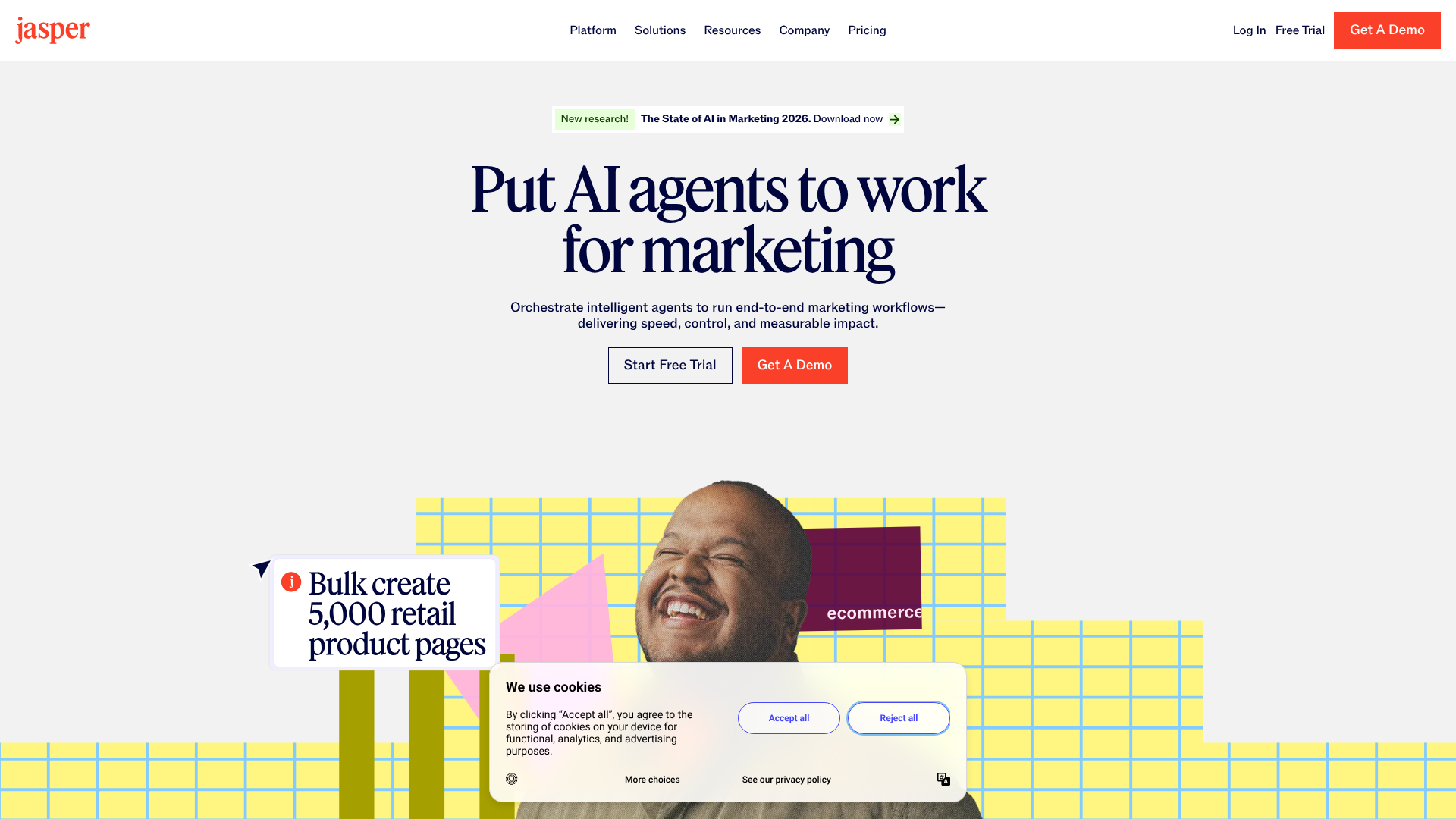
Jasper has long been a favourite in the AI writing space, and for good reason. It's a polished, versatile platform with over 50 templates for virtually any marketing task, from writing Google Ad copy and product descriptions to crafting entire blog posts. Its standout feature is 'Brand Voice', which allows you to upload documents or scan your website to teach Jasper your specific style, tone, and product knowledge. This ensures the content it generates sounds like it truly came from your brand.
Another major advantage is its deep integration with Surfer SEO, which makes creating rank-worthy content a more streamlined process. The user interface is clean and collaborative, making it an excellent choice for marketing teams. While it sits at a higher price point, its combination of quality output, brand consistency features, and powerful integrations provides a strong return on investment for serious content producers.
Pros
- Brand Voice: Creates highly consistent, on-brand content.
- Extensive Templates: Over 50 templates cover a wide range of marketing needs.
- Strong Integrations: Works well with Surfer SEO, Grammarly, and offers a Chrome extension.
Cons
- Higher Cost: Can be more expensive than some competitors, especially for teams.
- Fact-Checking Required: Like all AI, it can occasionally generate incorrect information that needs verification.
2. Writesonic: Best for High-Quality SEO Articles and Blog Posts
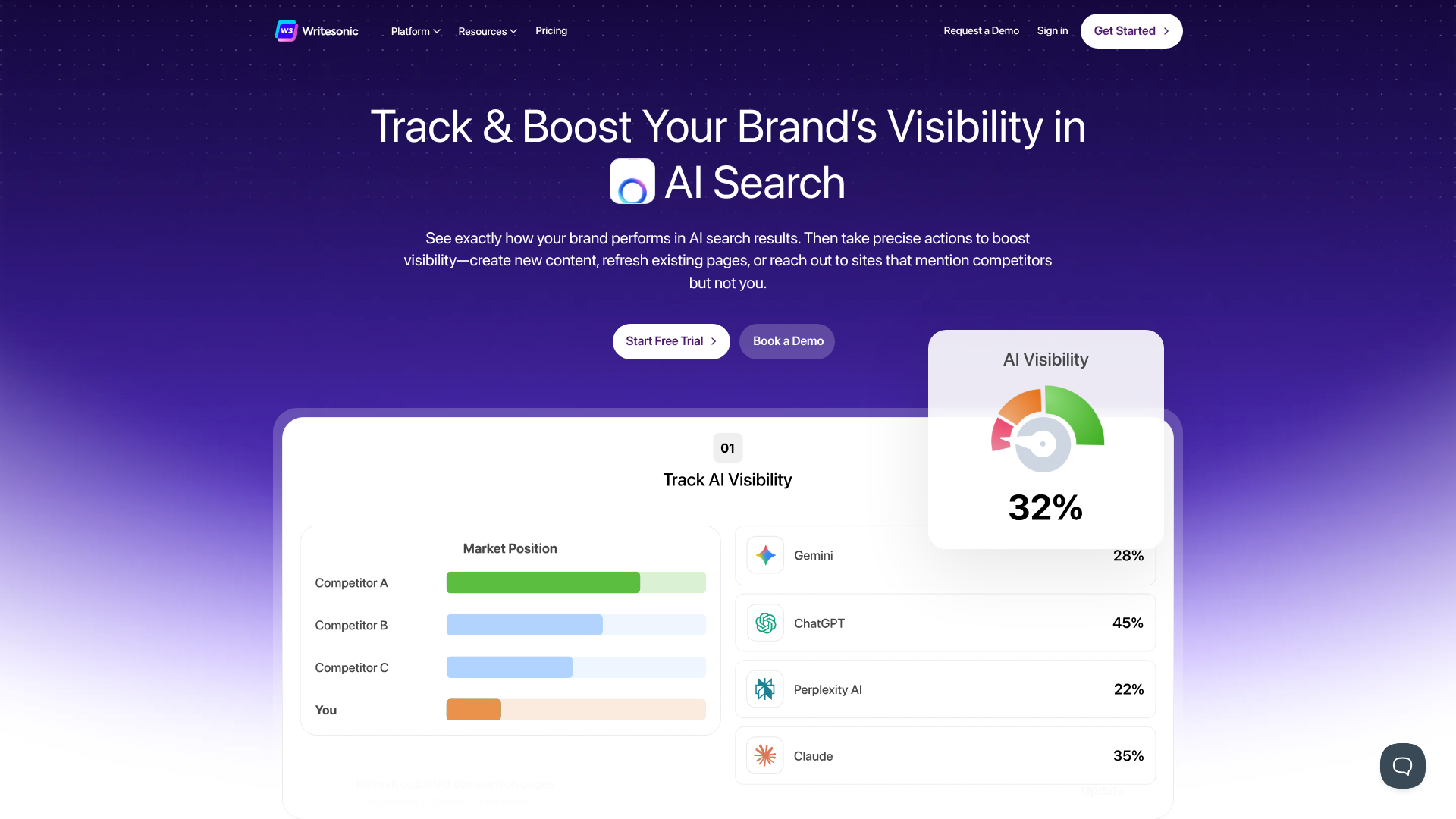
Writesonic is a powerful competitor to Jasper, often praised for its ability to generate factually accurate and well-structured long-form content. It offers a suite of tools, including an AI Article Writer that can produce a 1,500-word, SEO-optimised blog post from a single topic idea. It connects to Google Search in real-time to pull in current information, reducing the risk of generating outdated or inaccurate content.
Beyond writing, Writesonic is expanding into a multi-modal platform with Photosonic for AI image generation and Audiosonic for text-to-speech. This makes it a great all-in-one solution for creators who need both written and visual assets. Its pricing is often seen as more accessible than Jasper's, offering a compelling balance of power and affordability.
Pros
- Factual Accuracy: Connects to Google Search for up-to-date information.
- All-in-One Platform: Includes tools for writing, image generation, and audio.
- Excellent Long-Form Content: The AI Article Writer is efficient and produces well-structured posts.
Cons
- Credit System Can Be Confusing: Different features consume credits at different rates.
- Interface Less Polished: Some users find the user interface slightly less intuitive than top competitors.
3. Semrush: Best for SEO-Driven Content Strategy and Optimisation
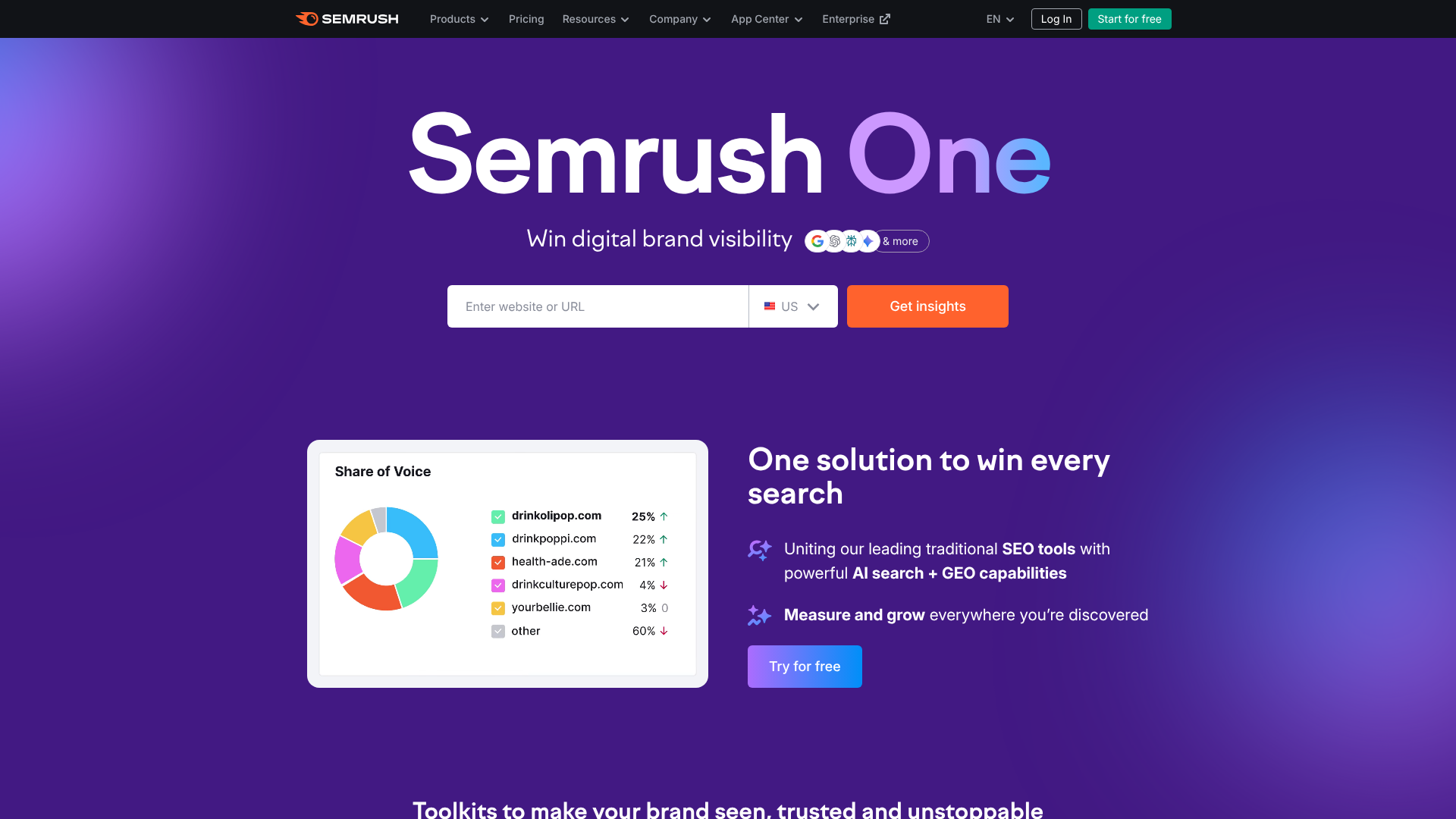
While Semrush is primarily known as a comprehensive SEO toolkit, its content marketing features are powered by sophisticated AI. It's the best choice for users whose primary goal is to create content that ranks on search engines. The platform doesn't just write for you; it guides your entire content strategy. It helps you find high-opportunity keywords, generate topic ideas based on what your audience is searching for, and create detailed content briefs for writers.
Its SEO Writing Assistant is a standout feature. It functions like a real-time editor within Google Docs or WordPress, analysing your text for SEO, readability, tone of voice, and originality. It provides actionable recommendations to improve your content before you even hit publish. While not a pure 'content generator' in the same vein as Jasper, it's an indispensable AI tool for any serious SEO or content marketer.
Pros
- Data-Driven Strategy: Uses powerful SEO data to guide content creation.
- Comprehensive Optimisation: The SEO Writing Assistant provides real-time feedback.
- End-to-End Workflow: Covers everything from topic research to performance tracking.
Cons
- Not a Standalone Writer: It's designed to assist and optimise human writing, not generate full articles from scratch.
- High Price Point: As a full SEO suite, it's a significant investment.
4. QuillBot: Best for Paraphrasing and Improving Existing Content
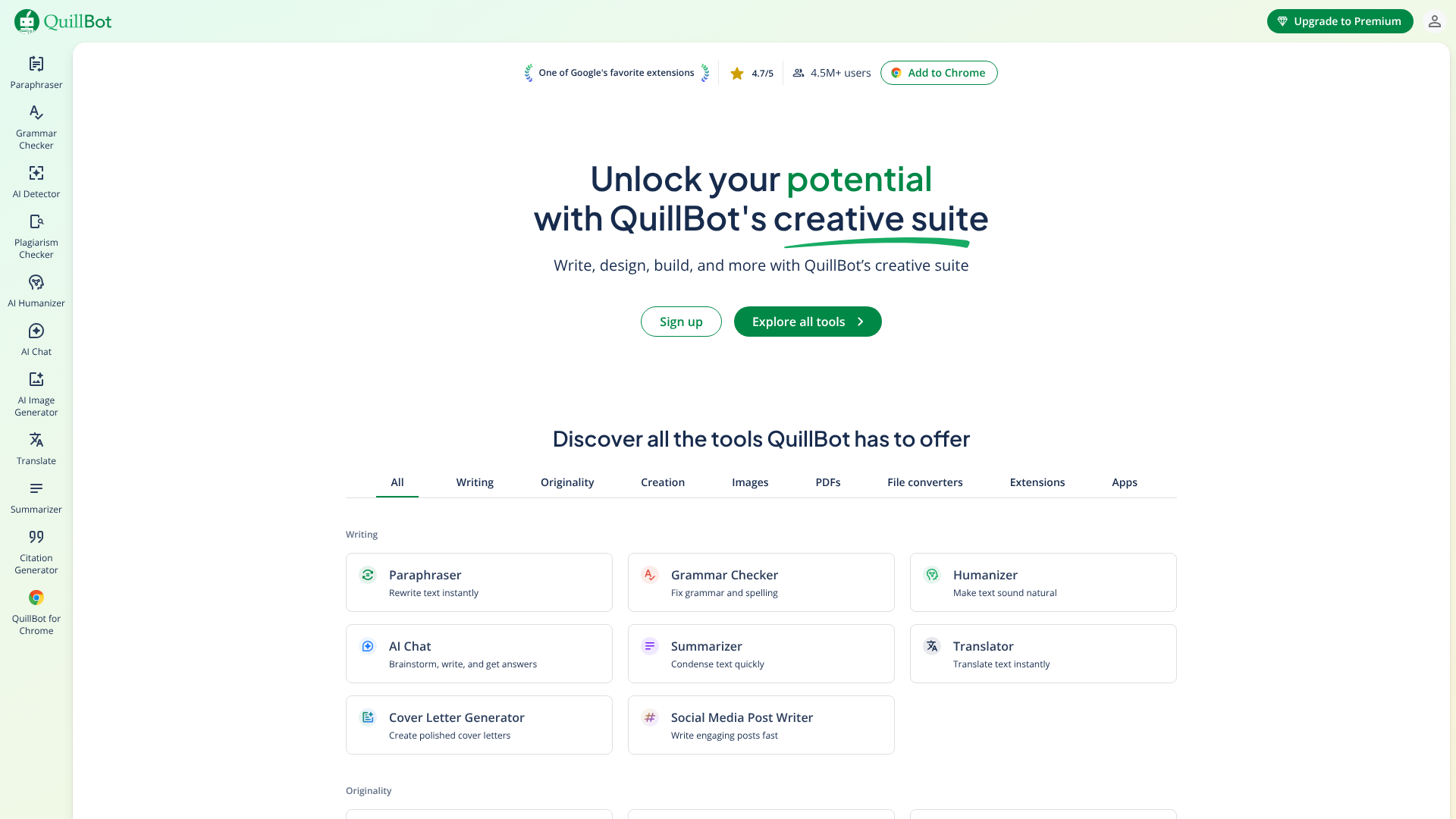
QuillBot started as a paraphrasing tool and has evolved into a full-fledged AI writing assistant. It's an excellent choice for students, academics, and marketers who need to rephrase, summarise, or improve existing text. Its Paraphraser offers multiple modes (e.g., Formal, Simple, Creative) to help you find the perfect wording, making it great for repurposing content across different platforms.
The Co-Writer feature combines research, writing, and citation tools into one seamless interface. You can search the web for sources, generate text, and get instant citations without leaving your document. While it may not have the extensive marketing templates of other tools, its focus on refining and perfecting text makes it an invaluable asset for ensuring clarity and originality.
Pros
- Powerful Paraphrasing: Excellent for rephrasing sentences or entire documents.
- User-Friendly: Simple, clean interface that is very easy to use.
- Affordable: Offers a generous free plan and a very reasonably priced premium version.
Cons
- Limited Generative Capabilities: Less focused on creating new content from scratch compared to others.
- Fewer Marketing Templates: Not designed specifically for marketing copy.
5. Grammarly: Best for AI-Powered Editing and Proofreading
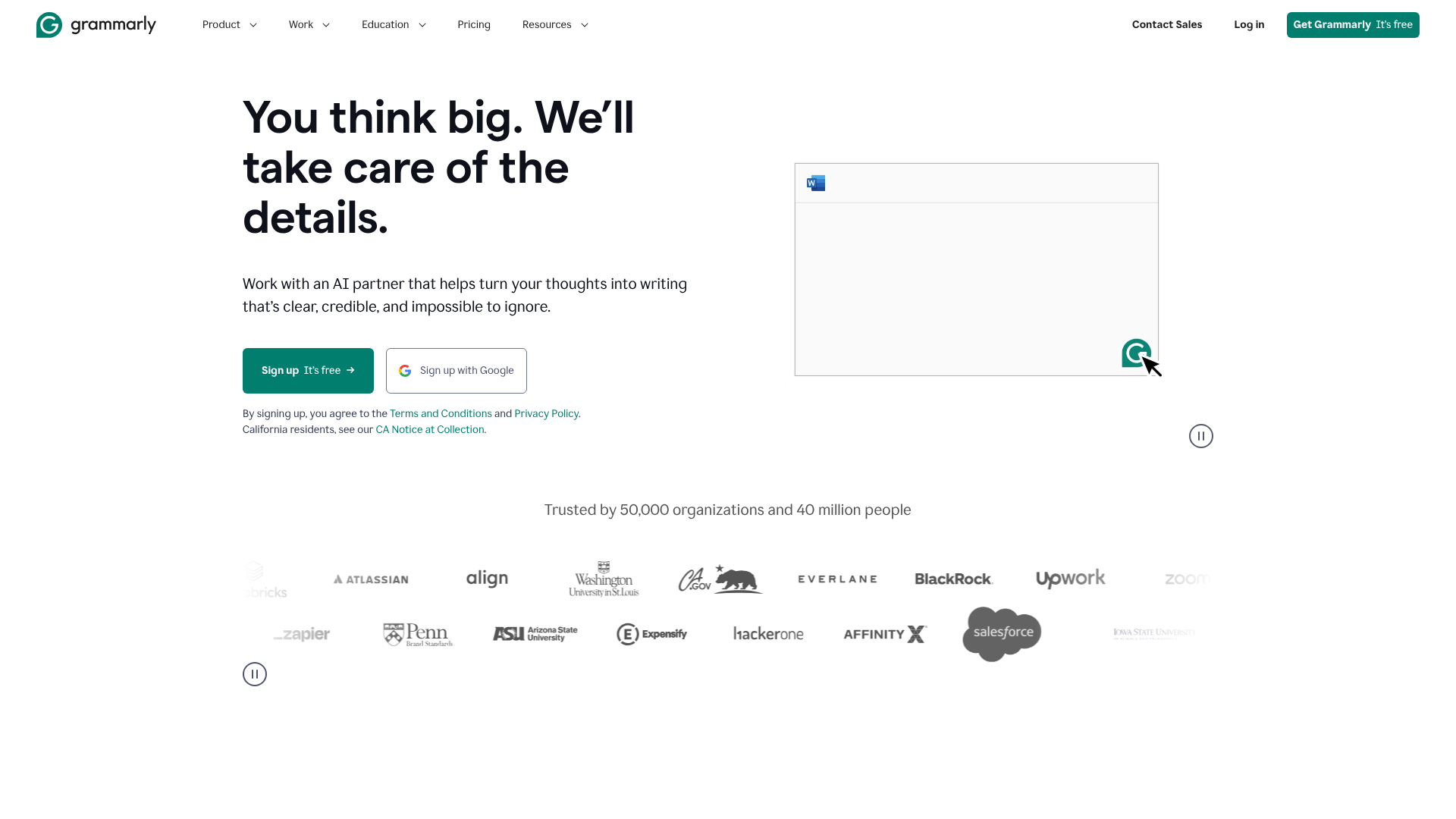
Everyone knows Grammarly as a world-class spelling and grammar checker, but its capabilities now extend far beyond that. With the introduction of GrammarlyGO, it has become a powerful generative AI tool that works wherever you do—in your email, social media, or documents. It can help you compose, ideate, and reply with just a few clicks, all while maintaining your preferred tone.
Grammarly's strength lies in its ability to improve the quality and professionalism of your writing. It provides suggestions on clarity, engagement, and delivery, helping you communicate more effectively. While other tools focus on generating the first draft, Grammarly excels at the crucial final step: polishing your content to perfection. It's an essential tool for anyone who publishes content online.
Pros
- Works Everywhere: Browser extensions and app integrations make it universally accessible.
- Advanced Editing: Goes beyond grammar to suggest improvements for tone and clarity.
- Integrated Generative AI: GrammarlyGO adds brainstorming and drafting capabilities.
Cons
- Not a Long-Form Generator: Best for editing and short-form generation, not writing full articles.
- Suggestions Can Be Intrusive: The free version can have frequent prompts to upgrade.
Pro Tip: Combine tools for the best results. Use a generator like Writesonic to create your first draft, then use Grammarly to polish the grammar and tone, and finally, run it through Semrush's SEO Writing Assistant to optimise it for search engines.
Comparison of Top AI Writing Tools
To help you decide, here's a quick comparison of our top writing-focused platforms:
| Feature | Jasper | Writesonic | Semrush | QuillBot |
|---|---|---|---|---|
| Best For | Marketing Teams & Copywriting | SEO Articles & Blogs | SEO Strategy & Optimisation | Paraphrasing & Editing |
| Standout Feature | Brand Voice & Integrations | Factual, Up-to-Date Articles | SEO Writing Assistant | Multiple Paraphrasing Modes |
| SEO Focus | Strong (via Surfer integration) | Very Strong (built-in) | Core Functionality | Minimal |
| Pricing Model | Subscription | Subscription (Credit-based) | Subscription | Freemium & Subscription |
AI Video Generation Tools
Creating video content is traditionally expensive and time-consuming. These AI tools are changing that, making it possible to produce high-quality videos from text in minutes.
6. Synthesia: Best for Professional AI Avatar Videos at Scale
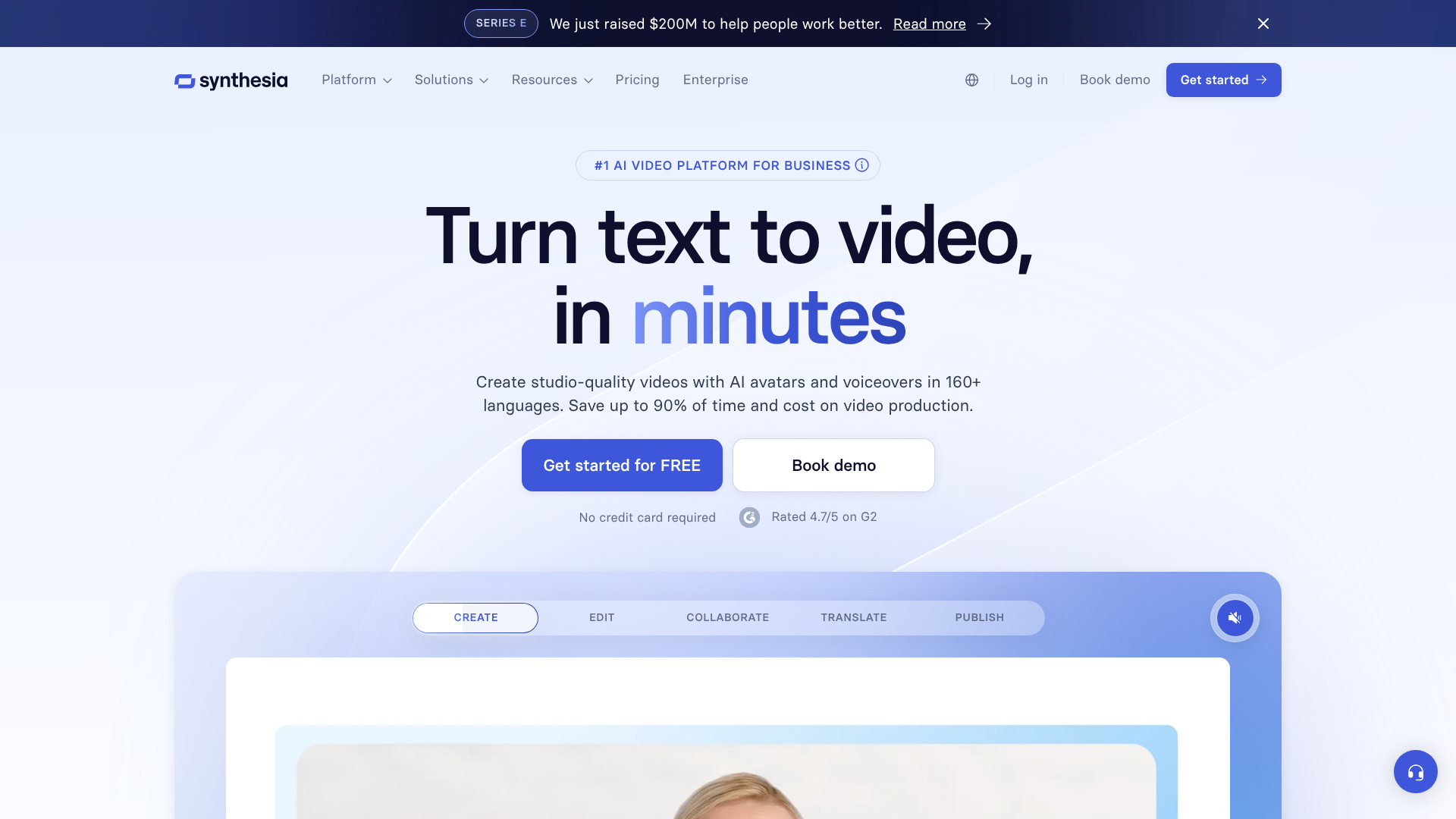
Synthesia is a leader in AI video generation, allowing you to create professional-looking videos featuring realistic AI avatars. You simply type your script, choose an avatar from over 150 options (or create your own), and the platform generates a video with the avatar speaking your text. It supports over 120 languages and accents, making it an incredible tool for creating global training materials, corporate communications, and marketing videos.
The platform is incredibly easy to use, with a drag-and-drop interface and a library of templates. This eliminates the need for cameras, microphones, or actors, drastically reducing the cost and complexity of video production. For businesses that need to produce instructional or informational videos at scale, Synthesia is a top-tier solution.
Pros
- Realistic AI Avatars: A large and diverse library of high-quality avatars.
- Multi-Language Support: Create videos in over 120 languages with ease.
- Scalable: Perfect for creating large volumes of training or marketing content.
Cons
- Can Feel Impersonal: The avatar-based approach may not be suitable for all types of brand messaging.
- No Stock Video Library: Focused on avatar presentations rather than B-roll-heavy videos.
7. Pictory: Best for Turning Text and Blogs into Engaging Videos
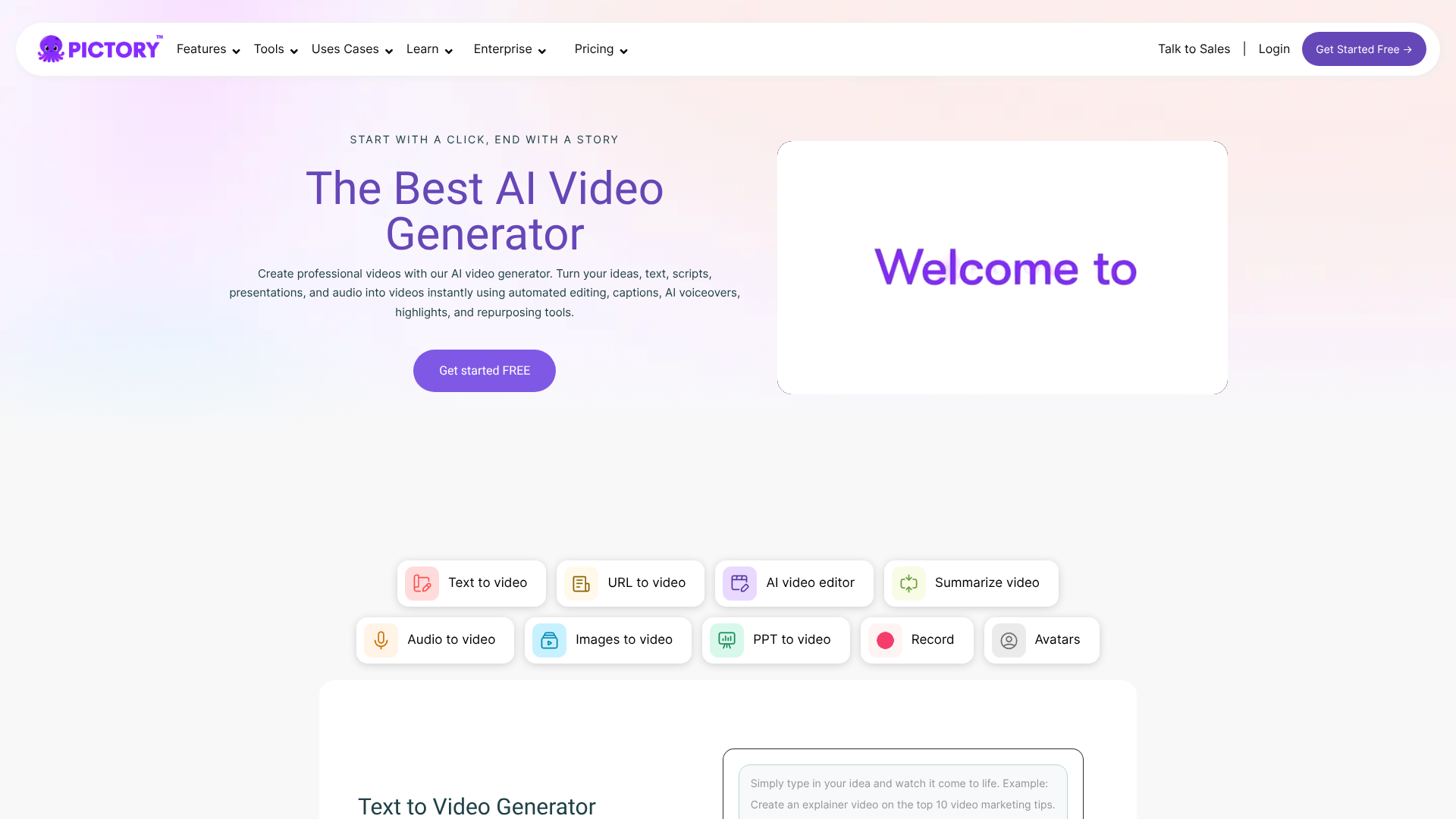
Pictory takes a different approach to AI video. Its specialty is repurposing existing content. With its 'Article-to-Video' feature, you can paste a link to a blog post, and Pictory's AI will automatically summarise it, select relevant stock video clips from its extensive library, and add captions and music. This is a powerful way to breathe new life into your written content and reach audiences on video-first platforms like YouTube and TikTok.
It also offers 'Script-to-Video' and 'Visuals-to-Video' functionalities, making it a versatile tool for social media marketers. The process is fast and intuitive, allowing you to create short, engaging videos in minutes. If your goal is to quickly turn text into dynamic visual content, Pictory is an outstanding choice.
Pros
- Excellent for Repurposing: Easily turns blog posts and scripts into videos.
- Huge Stock Media Library: Access to millions of premium video clips and images.
- Automatic Captions: Adds subtitles to all videos, which is crucial for social media.
Cons
- AI Voiceovers are Robotic: While functional, the text-to-speech voices lack the quality of specialised tools.
- Less Customisation: The editing interface is simpler and offers fewer advanced controls.
8. HeyGen: Best for Personalised AI Avatar Messaging
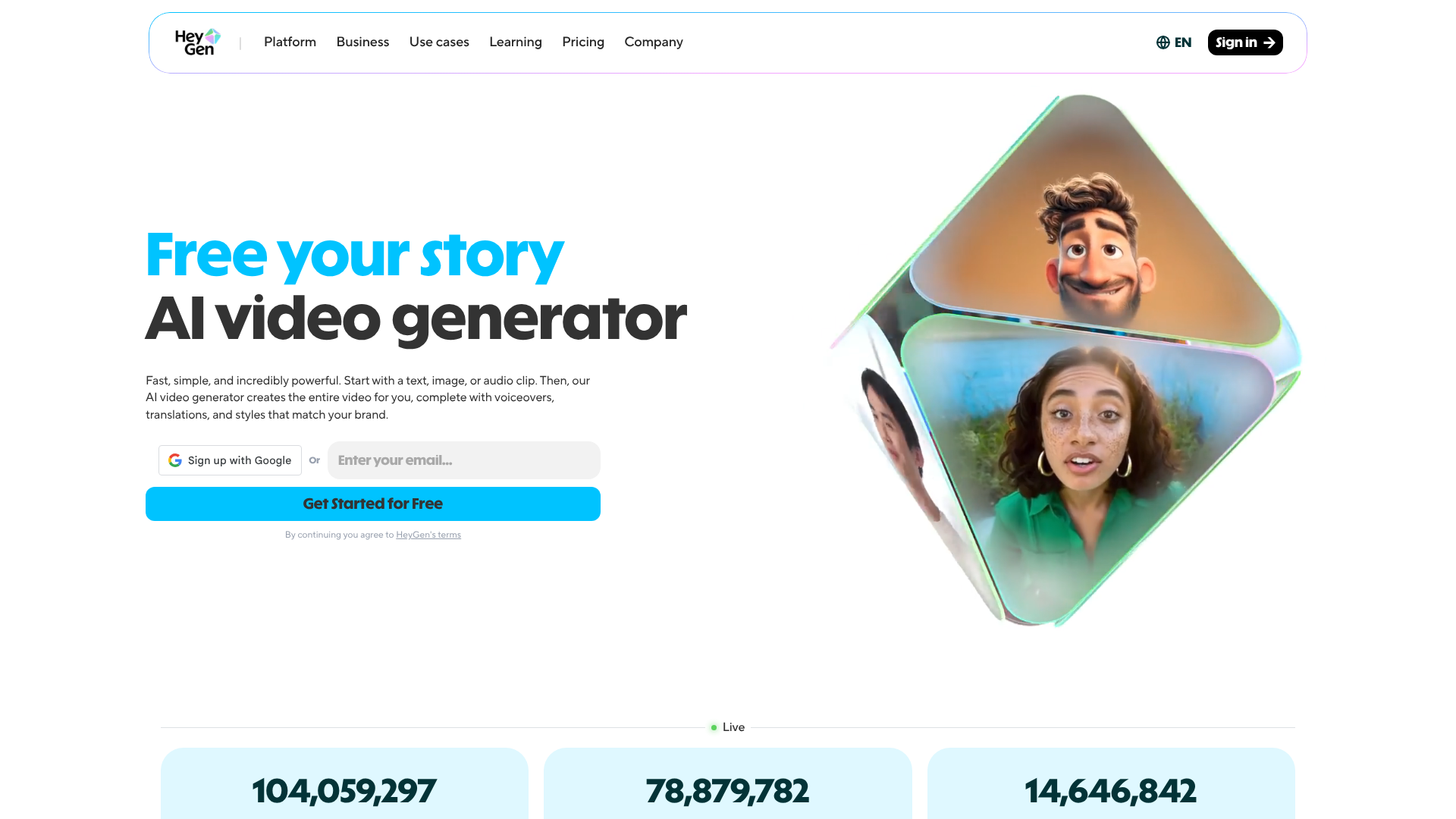
HeyGen is another strong player in the AI avatar video space, with a focus on personalised and business-centric communication. Like Synthesia, it allows you to create videos from text using AI avatars. However, HeyGen stands out with features like instant avatar creation (upload a short video of yourself to create a digital twin) and video translation, which can dub your video into different languages while maintaining your voice and lip movements.
This makes it ideal for sales outreach, personalised marketing messages, and creating content for international audiences. The platform is designed for quick, easy video creation and offers a wide range of templates for different business use cases. It's a fantastic tool for adding a human touch to digital communications without the hassle of filming.
Pros
- Custom Avatars: Easily create a digital version of yourself.
- Video Translation: A powerful feature for reaching global audiences.
- User-Friendly Interface: Designed for speed and ease of use.
Cons
- Avatar Quality Varies: Custom avatars can sometimes look less polished than the stock options.
- Credit-Based System: Can become costly for high-volume video production.
AI Audio & Voice Tools
For podcasts, video voiceovers, and audiobooks, these AI tools provide stunningly realistic voices from text.
9. Murf AI: Best for Realistic Text-to-Speech Voiceovers
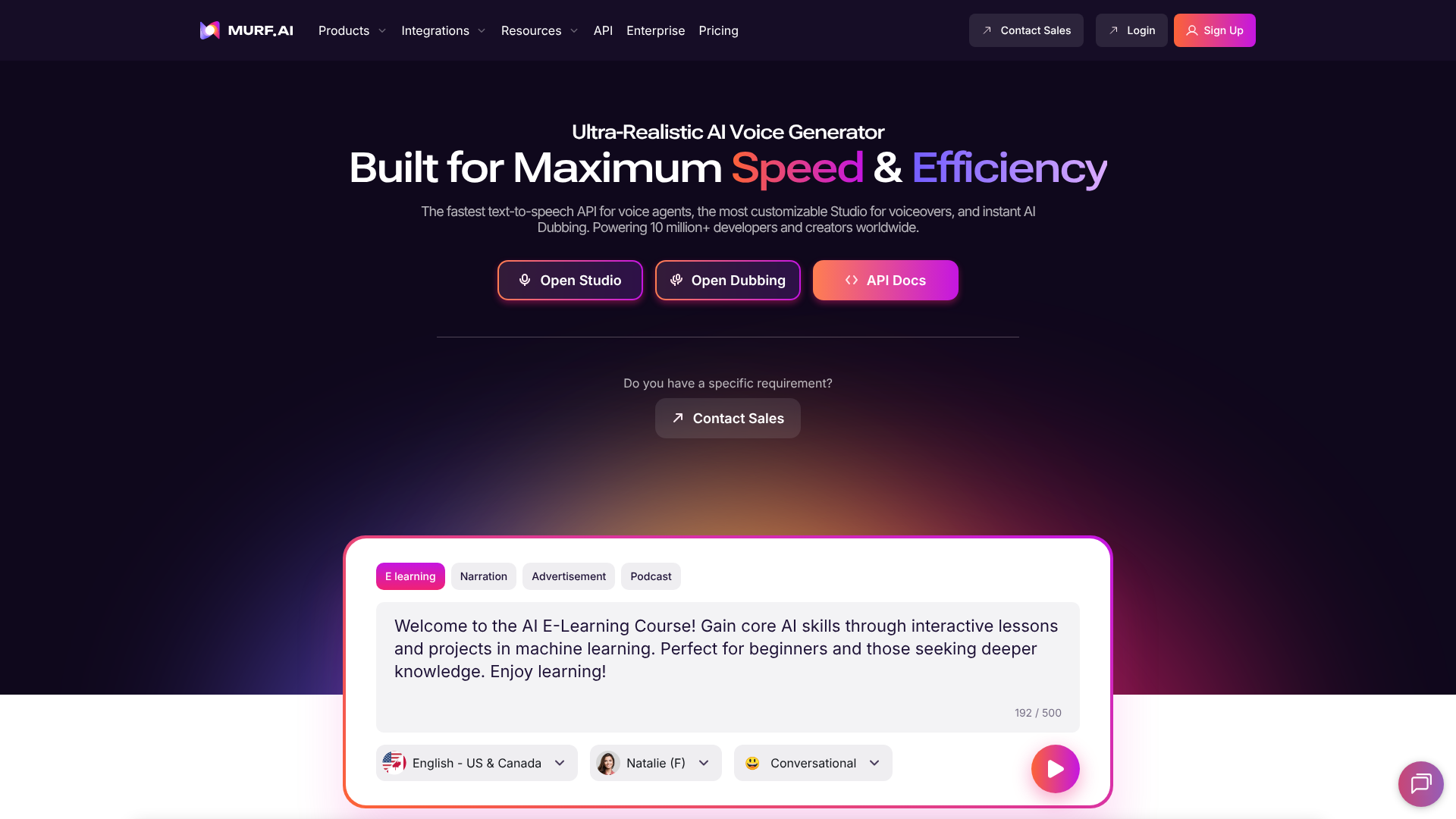
Murf AI offers a studio-quality text-to-speech generator with a vast library of over 120 AI voices in more than 20 languages. What sets Murf apart is the level of control it gives you over the voice's performance. You can adjust pitch, speed, and emphasis, and even add pauses to make the delivery sound incredibly natural and human-like.
It also includes a voice cloning feature, allowing you to create a digital replica of your own voice for consistent branding. The platform includes a simple video editor, so you can sync your voiceover to videos or images directly within Murf. It's an excellent solution for e-learning modules, YouTube videos, podcasts, and corporate presentations.
Pros
- High-Quality Voices: Extremely realistic and customisable AI voices.
- Voice Cloning: Create a custom voice model for your brand.
- Integrated Editor: Sync voiceovers with video and images within the app.
Cons
- Expensive for Advanced Features: Voice cloning and collaboration are on higher-tier plans.
- Cloning Requires Clear Audio: The quality of the cloned voice depends heavily on the input recording.
10. ElevenLabs: Best for Lifelike AI Voices and Dubbing
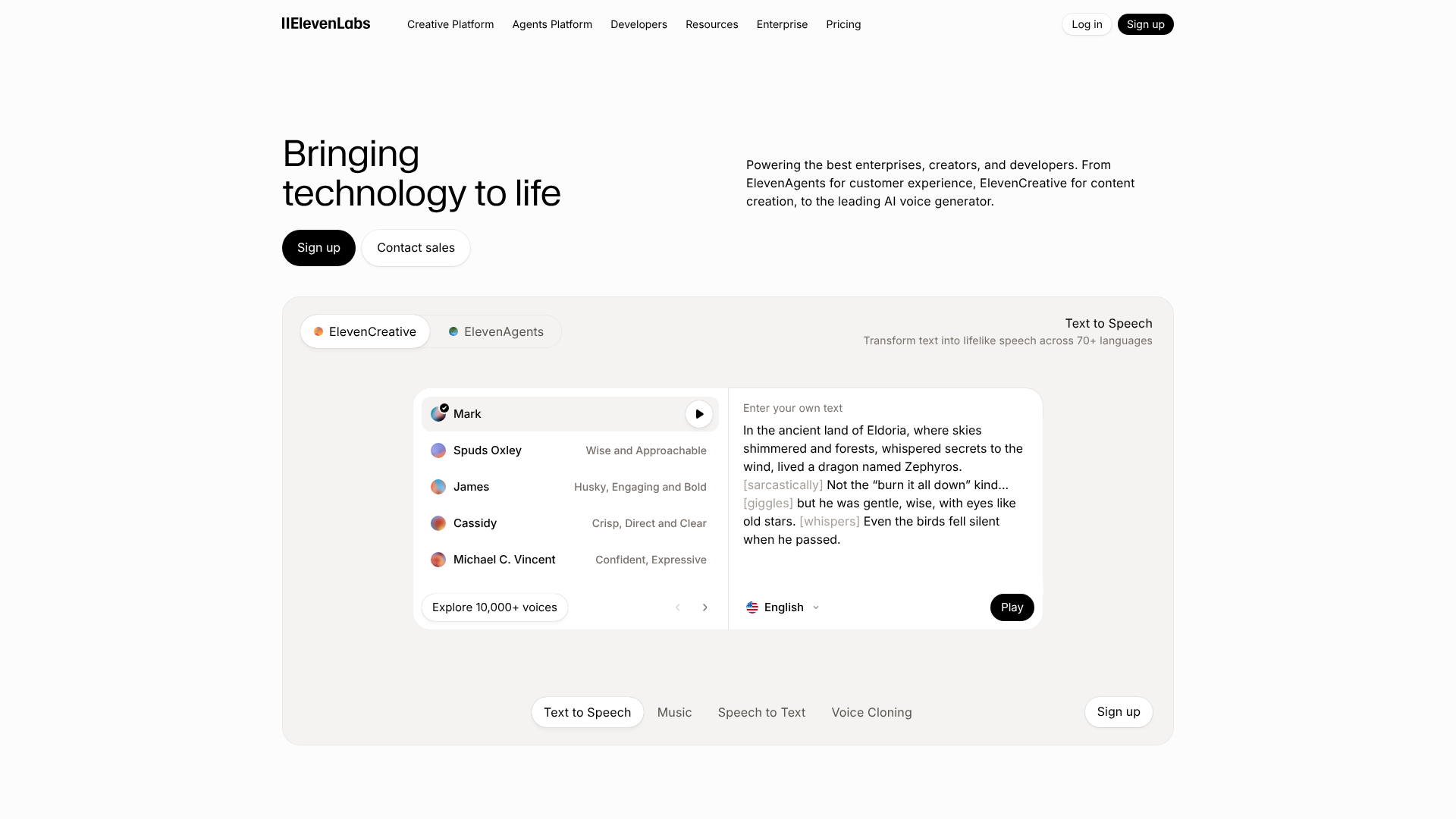
ElevenLabs has gained a reputation for producing some of the most emotionally resonant and lifelike AI voices available. Its technology is capable of capturing subtle human intonations, making it ideal for storytelling, audiobooks, and character voices in games. The platform's 'VoiceLab' allows you to design entirely new synthetic voices or create a perfect clone of an existing voice from just a few minutes of audio.
Its AI dubbing feature is also remarkable, automatically translating audio or video into another language while preserving the original speaker's voice. For creators who prioritise the absolute highest quality in voice synthesis, ElevenLabs is at the forefront of the industry.
Pros
- Unmatched Realism: Voices are rich with emotion and human-like inflection.
- Powerful Voice Design: Create unique synthetic voices or perfect clones.
- Generous Free Tier: Allows you to generate a significant amount of audio for free.
Cons
- Fewer Collaboration Tools: More focused on individual creators than enterprise teams.
- Potential for Misuse: The high-quality cloning technology raises ethical considerations.
All-in-One Content Platform
For businesses that want AI integrated directly into their marketing ecosystem.
11. HubSpot: Best for Integrated AI Marketing and Sales Content

HubSpot has woven AI into nearly every part of its celebrated CRM platform. Its 'Content Assistant' is not a standalone tool but a powerful feature integrated across the Marketing Hub and Sales Hub. It can help you draft blog posts, generate marketing emails, create social media copy, and even write prospecting messages, all within the context of your customer data.
This integration is its biggest strength. The AI can pull information from your CRM to help personalise content, and because it's part of the HubSpot ecosystem, the entire workflow from creation to distribution and analysis is connected. If you're already a HubSpot user or are looking for an all-in-one platform to manage your marketing, its AI features are a massive value-add.
Pros
- Seamless Integration: AI tools are built directly into the HubSpot CRM.
- Context-Aware: Can use your CRM data to help personalise content.
- Comprehensive Solution: Covers a wide range of marketing and sales content needs.
Cons
- Not a Standalone Product: You need to be a HubSpot customer to use its AI tools.
- Less Specialised: The generative features may not be as advanced as dedicated, standalone AI writers.
A Deeper Look at Pricing and Cost-Effectiveness
Understanding the financial commitment is crucial when choosing a top AI content tool. Pricing structures can vary widely, and what seems cheap initially might become expensive as your usage grows. Most tools operate on a tiered monthly or annual subscription model. A basic plan might cost around £15-£40 per month and offer a limited number of words (e.g., 20,000) and access to standard features.
Mid-tier and business plans can range from £40 to £100+ per month, providing higher word counts, more user seats, and access to premium features like brand voice or API access.
Another common model is credit-based. Instead of a word count, you get a monthly allowance of credits. Different actions consume different amounts of credits; for example, generating a long-form article might use 10 credits, while generating a social media post uses just one. This can be flexible but also harder to predict your monthly spend.
A few platforms offer freemium models, with a generous free plan that's perfect for testing the waters before committing.
To determine cost-effectiveness, calculate the return on investment (ROI). Consider how many hours the tool saves you or your team each month. If a £50/month subscription saves you 10 hours of work, and your time is valued at £30/hour, you're getting £300 of value for a £50 investment. That's a clear win.
Always start with a free trial to ensure the tool's output meets your quality standards before making a financial commitment.
The Pros and Cons of Using a Content Generator AI
While AI content tools offer incredible advantages, it's important to approach them with a clear understanding of both their strengths and their limitations. They are powerful assistants, but they require human strategy and oversight to be truly effective. A balanced perspective will help you integrate these tools into your workflow responsibly and successfully.
Advantages of AI Content Tools
- Speed and Efficiency: The most obvious benefit is the dramatic reduction in time spent on content creation. Drafting articles, scripts, and social copy can be done in minutes instead of hours, freeing up valuable time for other strategic tasks.
- Scaling Content Production: AI allows you to increase your content output exponentially without needing to hire more staff. This is ideal for businesses looking to build topical authority or maintain a consistent presence on multiple platforms.
- Cost Savings: Compared to hiring freelance writers, videographers, or voice actors for every piece of content, an AI subscription can be significantly more affordable, especially for producing content at scale.
- Overcoming Creative Blocks: AI is an excellent brainstorming partner. When you're stuck for ideas or don't know how to start a piece, it can provide outlines, headlines, and opening paragraphs to get your creative momentum going.
Limitations and Risks to Consider
- Potential for Inaccuracy: AI models can sometimes 'hallucinate' or generate information that sounds plausible but is factually incorrect. All statistics, facts, and important claims must be rigorously fact-checked by a human expert.
- Lack of Originality and Human Nuance: AI learns from existing data, so it can struggle to produce truly novel ideas or capture the subtle nuances of human emotion and experience. Your unique perspective and storytelling ability are still your most valuable assets.
- SEO Risks if Used Improperly: Google's stance is clear: they reward high-quality, helpful content, regardless of how it's produced. However, using AI to generate low-quality, spammy content at scale can harm your search rankings. The focus must always be on creating value for the reader.
- Requires Human Oversight: AI-generated content should always be considered a first draft. It needs a human editor to refine the tone, check for errors, add personal insights, and ensure it aligns perfectly with the brand's voice and strategy.
Frequently Asked Questions (FAQ)
Here are answers to some of the most common questions people ask when looking for the best AI content generation tools.
Which is the best AI for content generation?
There is no single 'best' AI, as the ideal tool depends entirely on your needs. For all-around marketing copy and blog writing, Jasper is often considered a top contender due to its Brand Voice feature and extensive templates. For creating high-quality, fact-checked SEO articles, Writesonic is an excellent choice. The best approach is to identify your primary content format (e.g., text, video, audio) and choose a specialised tool that excels in that area.
What is the best AI tool to create video content?
For creating videos with AI avatars, Synthesia is a market leader, known for its professional quality and scalability, making it great for corporate training and communication. If your goal is to repurpose existing blog posts or text scripts into engaging social media videos, Pictory is arguably the best tool due to its powerful article-to-video engine and extensive stock media library.
What is the best AI platform for content creators?
Content creators often need a versatile tool that can handle multiple formats. A platform like Writesonic is a strong candidate because it combines an excellent AI writer with Photosonic for image generation and Audiosonic for text-to-speech, offering an all-in-one solution. For creators focused heavily on video, a combination of a writing tool like Jasper for scripts and a video tool like Pictory or HeyGen for production creates a powerful workflow.
Does Google punish AI content SEO?
No, Google does not inherently punish content simply because it was created using AI. Google's official guidance, as stated on their Search Central blog, is that they focus on the quality of content, not the method of its production. As long as the content is high-quality, original, accurate, and demonstrates experience, expertise, authoritativeness, and trustworthiness (E-E-A-T), it can rank well. Using AI to produce low-quality, spammy, or unhelpful content will negatively impact your SEO.
What is the best tool to check for AI generated content?
Several tools claim to detect AI-generated content, but their accuracy can be inconsistent. Tools like Originality.ai are popular and often used by content managers. However, as AI models become more sophisticated, distinguishing their output from human writing becomes increasingly difficult. Instead of focusing solely on detection, it's more productive to establish a workflow that requires human editing, fact-checking, and the addition of unique insights to all AI-generated drafts.
Is it illegal to publish a book written by AI?
It is not illegal to publish a book written by AI. However, copyright law is a complex and evolving area. In many jurisdictions, including the United States, copyright protection is only granted to works created by a human author. This means a book generated entirely by AI with no human input may not be eligible for copyright protection.
Most authors use AI as a tool for assistance—for brainstorming, outlining, or drafting—while providing significant creative input, which is a much clearer path to securing copyright.
Final Thoughts: Choosing Your Top AI Content Tool
Selecting the best AI content generation tool is a strategic decision that can profoundly impact your marketing efficiency and output. The key is to remember that these platforms are not magic wands but powerful assistants. The best results come from a partnership between human creativity and artificial intelligence, where the AI handles the heavy lifting of drafting and the human provides the strategy, nuance, and final polish.
Your choice should be guided by your specific needs. If you're focused on producing high-volume, SEO-optimised written content, a tool like Jasper or Writesonic is an excellent investment. If your strategy is video-centric, Synthesia offers unparalleled scalability for avatar-based videos, while Pictory is the champion of repurposing text into dynamic visuals.
Start by taking advantage of free trials. Test a few top contenders with real-world tasks from your daily workflow. The right tool will not only save you time but will also empower you to create more ambitious, effective, and engaging content than ever before.