


AI Writing Generator Explained: A 2026 Guide for Marketers
An AI writing generator can transform your content creation process, helping you produce high-quality articles, emails, and social media posts in a fraction of the time. These tools are no longer a futuristic concept; they are practical solutions for marketers, business owners, and writers facing tight deadlines and the constant demand for fresh content. By understanding how this technology works, you can choose the right platform to overcome writer's block, scale your output, and focus on strategy rather than just production.
- What You'll Learn
- What Exactly Is an AI Writing Generator?
- The Core Features and Powerful Benefits of Writing AI Tools
- How to Choose the Right AI Writing Generator for Your Needs
- Top AI Writing Generator Recommendations for 2026
- 1. Writesonic: The All-in-One Content Marketing Platform
- 2. Jasper: Best for Teams and Brand Consistency
- 3. QuillBot: The Ultimate Rewriting and Paraphrasing Tool
- Pricing Structures and Cost Comparison
- The Pros and Cons of Using an AI Writing Generator
- Frequently Asked Questions (FAQ)
- Can AI-generated writing be detected?
- Is AI-generated content good for SEO?
- What is the best free AI writing generator?
- How do I use an AI text generator effectively?
- Final Thoughts
This guide breaks down everything you need to know about automated writing software. We'll explore what it is, the key features to look for, and how to select the best option for your specific goals. Whether you're a solo creator or part of a large marketing team, integrating a writing AI tool can significantly enhance your workflow and results.
What You'll Learn
- What an AI Writer Is: Understand the core technology (like Large Language Models) behind these tools and how they generate human-like text.
- Key Features and Benefits: Discover the essential features that make these tools powerful and the direct benefits they bring, such as saving time and improving content quality.
- How to Choose the Right Tool: Learn a practical framework for selecting the best AI writing generator based on your specific needs, from use case to budget.
- Top Recommendations for 2026: Get an overview of the leading tools on the market, including their unique strengths, weaknesses, and ideal users.
- The Human Element: Realise why human oversight, editing, and fact-checking remain critical for producing accurate, authentic, and effective content with AI.
What Exactly Is an AI Writing Generator?
An AI writing generator is a software application that uses artificial intelligence, specifically natural language processing (NLP) and natural language generation (NLG), to create written content. Think of it as a highly advanced assistant that has been trained on a massive dataset of text from the internet, including books, articles, and websites. This training allows it to understand grammar, context, style, and nuance, enabling it to produce text that is often indistinguishable from human writing.
The engine behind most modern AI text generator tools is a Large Language Model (LLM), such as OpenAI's GPT-4. These models work by predicting the next most likely word in a sequence based on the input they receive. When you provide a prompt—like "write a blog post introduction about the benefits of remote work"—the AI analyses your request and begins generating text, word by word, based on the patterns it has learned.
It's not simply copying and pasting information. The AI is synthesising knowledge and constructing new sentences to fulfil your request. This process allows it to draft entire articles, write compelling marketing copy, generate creative story ideas, or even produce code. The quality and relevance of the output depend heavily on the sophistication of the underlying model and the clarity of the user's instructions.
The Core Features and Powerful Benefits of Writing AI Tools
While the core function of any writing AI tool is to generate text, the best platforms offer a suite of features designed to streamline the entire content creation workflow. Understanding these features is key to unlocking their full potential and realising the significant benefits they offer.
Key Features to Look For
- Template Libraries: Most tools come with pre-built templates for specific content types, such as blog posts, social media captions, ad copy, and email newsletters. These templates guide the AI to produce content in the correct format and tone for the intended channel.
- Tone and Style Adjustment: A crucial feature is the ability to define the tone of voice. You can instruct the AI to write in a formal, casual, witty, or professional style, ensuring the output aligns with your brand's personality.
- Multi-Language Support: For global businesses, the ability to generate and translate content into multiple languages is invaluable. This allows you to scale your marketing efforts across different regions without hiring a team of translators.
- SEO Integration: Advanced platforms often integrate with SEO tools like Surfer SEO or provide built-in optimisation features. They can help you generate content based on target keywords, analyse competitor articles, and ensure your text is structured for search engine visibility.
- Plagiarism Checker: To ensure originality, a built-in plagiarism checker is essential. This feature scans the generated text against existing online content to flag any potential duplicate passages, protecting your site's SEO integrity.
- Brand Voice and Knowledge Base: Top-tier tools like Jasper allow you to create a 'Brand Voice' profile. You can upload your style guides, product information, and existing content, training the AI to write in your specific style and with accurate knowledge of your business.

The Tangible Benefits
Using this technology provides more than just convenience; it delivers measurable advantages for content creators and businesses.
- Overcome Writer's Block: Staring at a blank page is a common struggle. An AI writing generator can provide instant inspiration by generating outlines, first drafts, or a list of ideas, giving you a starting point to build upon.
- Dramatically Increase Content Velocity: The most significant benefit is speed. A task that might take a human writer hours, like drafting a 1,500-word article, can be completed in minutes. This allows you to scale your content production exponentially.
- Improve Content Quality and Consistency: By setting a consistent tone and style, you ensure all your content, from your website to your social media, feels cohesive. Many tools also include grammar and spelling checks, improving the overall quality of the final piece.
- Reduce Content Creation Costs: While these tools have a subscription fee, they are often far more cost-effective than hiring additional writers or outsourcing to agencies, especially for businesses needing a high volume of content.
- Enhance Creativity: Contrary to the belief that AI stifles creativity, it can actually enhance it. By handling the repetitive aspects of writing, it frees up your time to focus on higher-level strategy, unique insights, and creative storytelling.
How to Choose the Right AI Writing Generator for Your Needs
With a growing number of options available, selecting the right automated writing software can feel overwhelming. The best tool for a solo blogger is likely different from the ideal solution for a large marketing agency. By evaluating your specific requirements against a few key criteria, you can make an informed decision.
Define Your Primary Use Case: What type of content will you be creating most often? If your focus is on long-form SEO articles, you'll need a tool with strong blog post wizards and keyword integration. If you primarily need short-form copy for social media and ads, a tool with a robust library of copywriting templates is more suitable. Be clear about your main goal.
Evaluate the Quality of Output: The quality of the generated text is paramount. Most platforms offer a free trial or a free plan. Use this opportunity to test the tool with a variety of prompts relevant to your niche. Does the output sound natural? Is it factually accurate? Does it require heavy editing, or is it close to publish-ready?
Consider Ease of Use and Workflow: The user interface should be intuitive and easy to navigate. A complicated platform will slow you down, defeating the purpose of using an AI tool. Look for a clean dashboard, logical workflow, and helpful tutorials or onboarding guides. Can you easily organise your documents and collaborate with team members if needed?
Check for Integrations: How well does the tool fit into your existing tech stack? Look for integrations with platforms you already use, such as WordPress, Google Docs, Shopify, or SEO tools like Semrush. Seamless integrations save time by reducing the need to copy and paste content between different applications.
Review Pricing and Scalability: AI writing tools typically use a subscription model, often tiered by word count or feature access. Assess the plans carefully. A cheap plan with a low word limit may not be cost-effective if you constantly have to upgrade. Choose a plan that matches your current output needs but also offers the flexibility to scale as your content demands grow.
Pro Tip: Don't just test generic prompts. Give the AI a complex task specific to your industry. For example, instead of "write about marketing," try "write a paragraph comparing the pros and cons of programmatic advertising versus native advertising for a B2B SaaS company." This will give you a much better sense of its true capabilities.
Top AI Writing Generator Recommendations for 2026
After evaluating the market, a few platforms consistently stand out for their features, quality of output, and user experience. Here are our top recommendations.
1. Writesonic: The All-in-One Content Marketing Platform
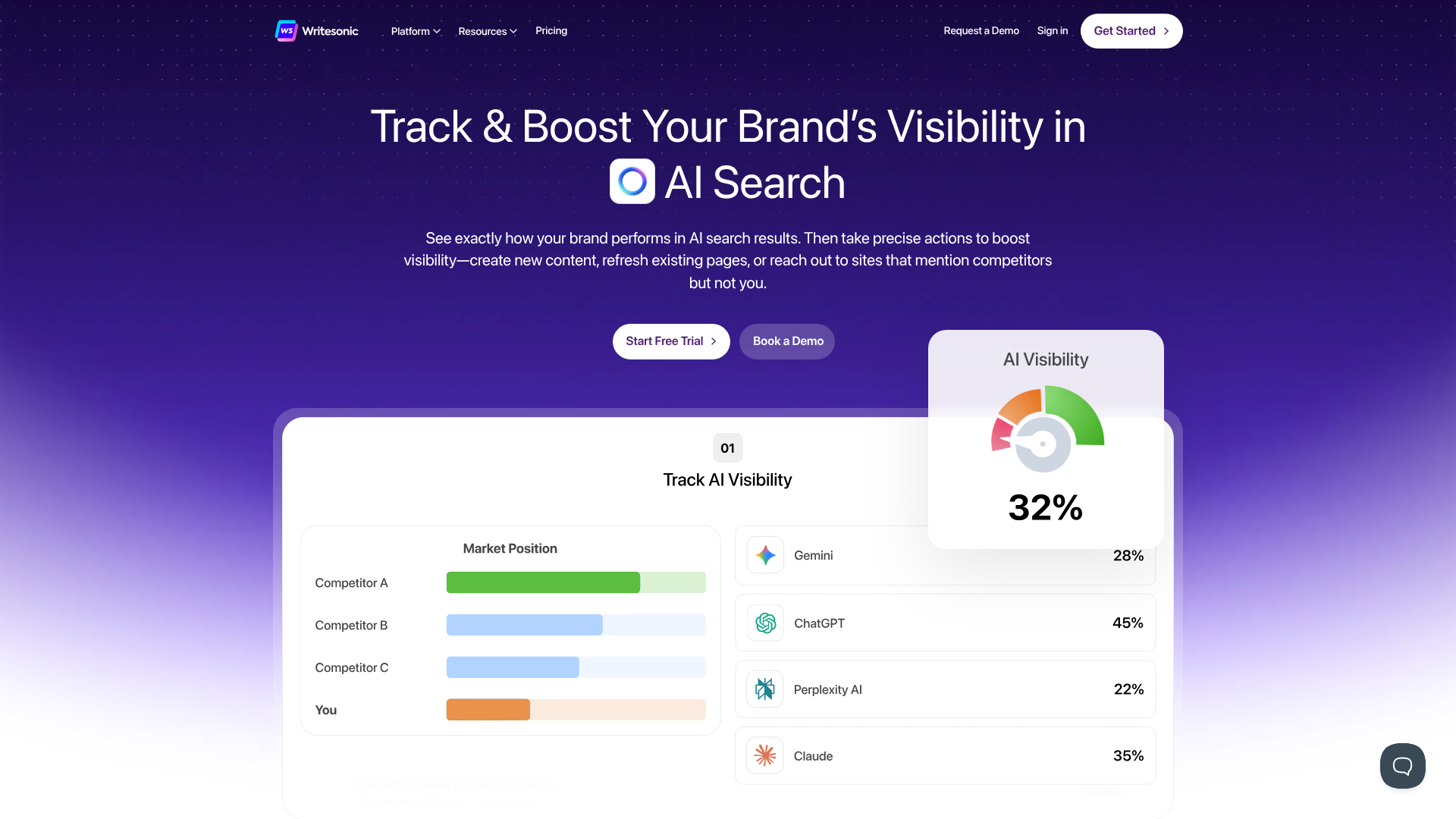
Writesonic positions itself as more than just a writer; it's a comprehensive content suite. It excels at creating SEO-optimised articles and blog posts, thanks to its deep integration with Surfer SEO. Its AI Article Writer 5.0 can generate a 1,500-word, fact-checked article from a single keyword, making it incredibly efficient for bloggers and content marketers.
Beyond articles, it offers over 100 templates for everything from Google Ads to landing pages. Unique features like Photosonic (an AI image generator) and Chatsonic (a conversational AI assistant with real-time data from Google) make it a versatile choice for creators who need both text and visuals. It's an excellent option for those looking for an all-in-one solution to handle diverse content needs.
Pros
- Excellent for creating long-form, SEO-optimised content.
- Chatsonic provides up-to-date information, unlike standard ChatGPT.
- Includes an AI image generator (Photosonic).
Cons
- The user interface can feel a bit cluttered with so many features.
- Word limits on lower-tier plans can be restrictive for high-volume users.
2. Jasper: Best for Teams and Brand Consistency
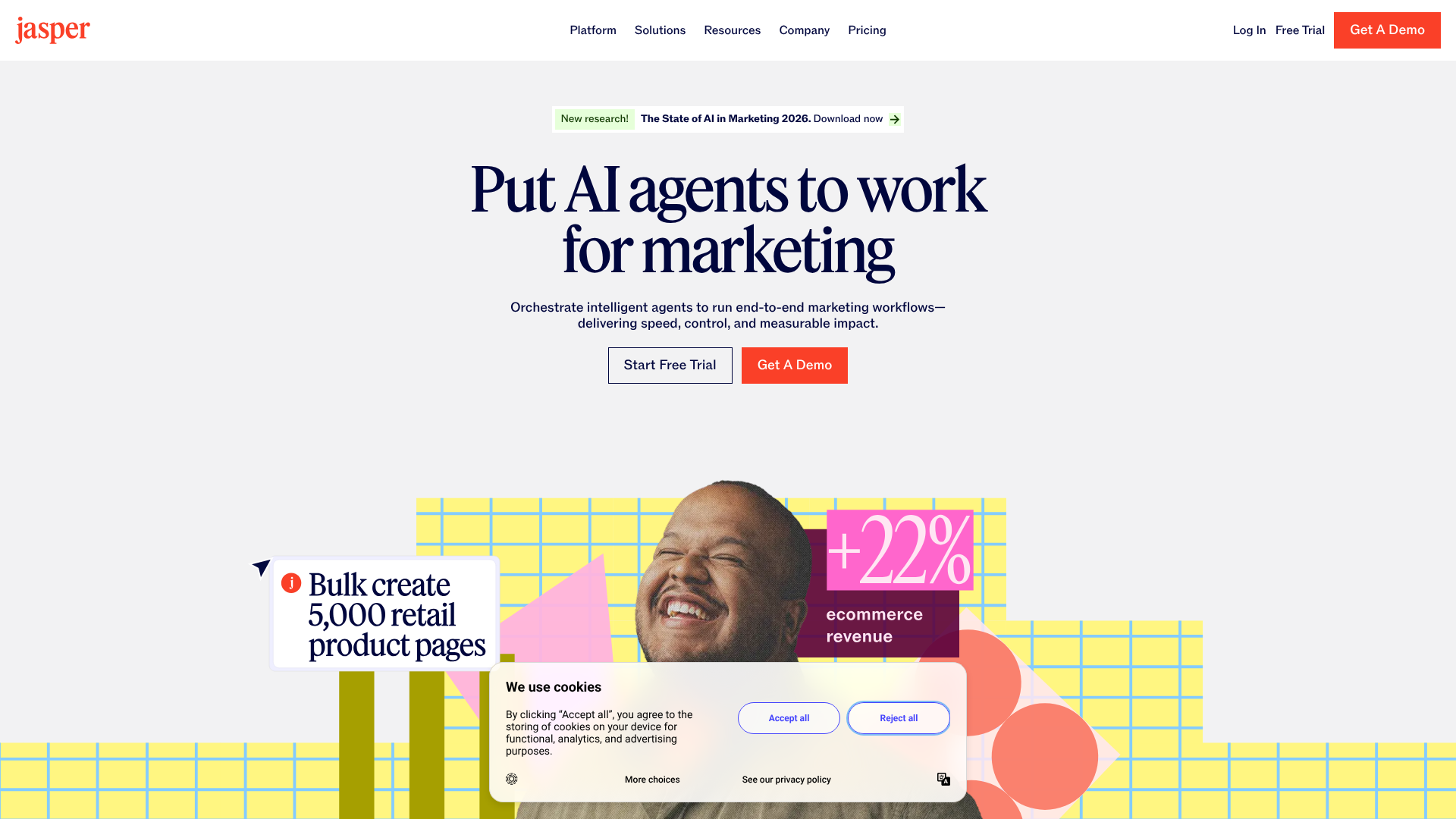
Jasper (formerly Jarvis) is one of the most well-known and respected names in the AI writing space. It is particularly powerful for marketing teams and businesses that need to maintain a consistent brand voice across all their content. Its standout feature is the ability to create a 'Brand Voice' by scanning your website or uploading documents, ensuring all generated content aligns with your style.
Jasper also offers 'Campaigns,' a feature that allows you to generate a suite of marketing assets for a single initiative from one brief. This is a massive time-saver for product launches or promotions. While it comes at a premium price, its collaboration features and focus on brand consistency make it a top choice for professional teams.
Pros
- Superior brand voice and memory features for consistent output.
- Excellent collaboration tools for teams.
- High-quality output that often requires minimal editing.
Cons
- One of the more expensive options on the market.
- The learning curve can be slightly steeper than simpler tools.
3. QuillBot: The Ultimate Rewriting and Paraphrasing Tool
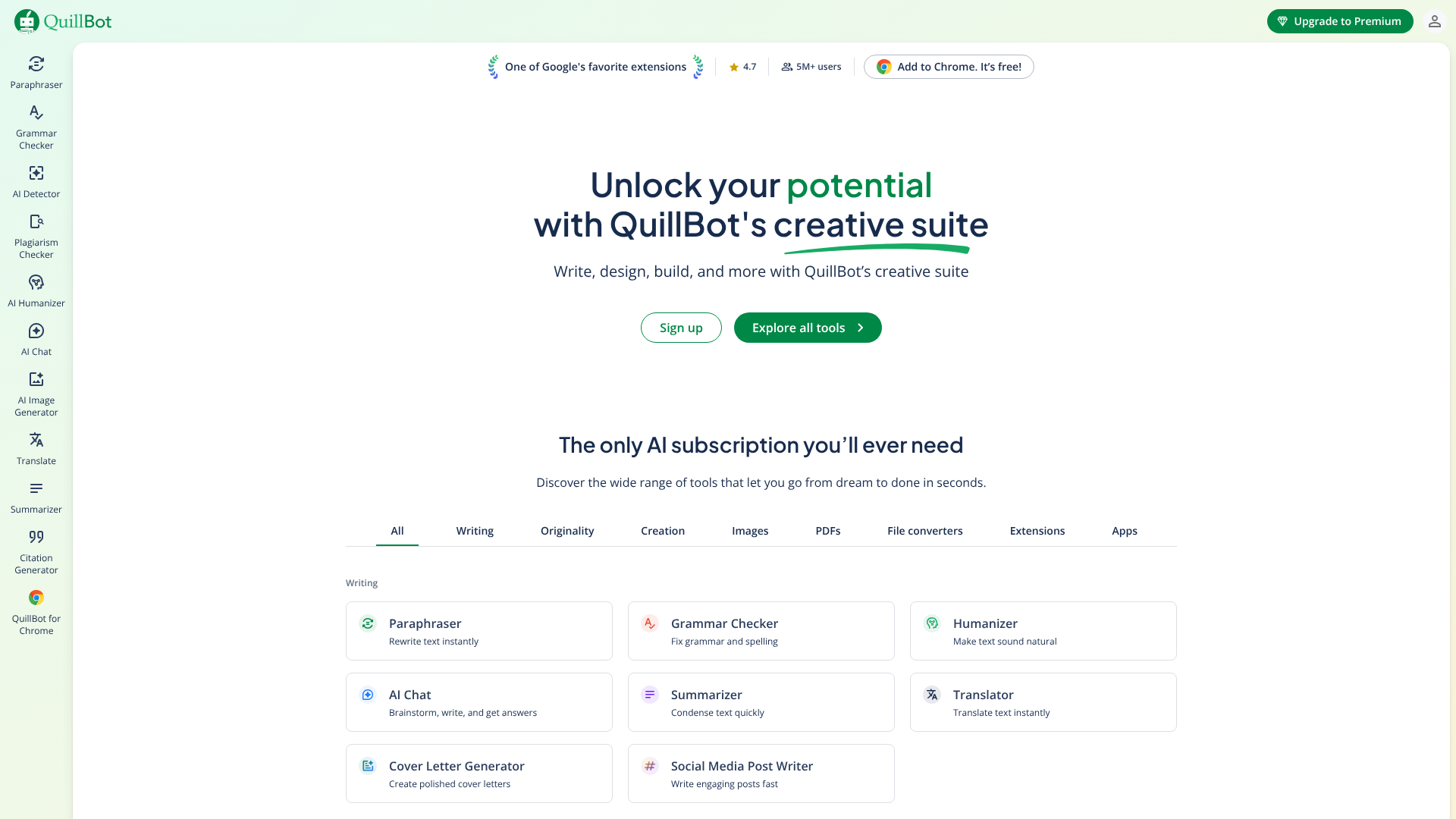
While many tools focus on generating content from scratch, QuillBot shines in its ability to refine and repurpose existing text. Its Paraphraser is arguably the best in the industry, allowing you to rewrite sentences, paragraphs, or entire articles to improve clarity, change the tone, or avoid plagiarism. This makes it an indispensable tool for students, academics, and writers who need to rephrase source material.
QuillBot has expanded to include a full 'Co-Writer' environment, which combines its paraphrasing, summarising, and grammar-checking tools with an AI-powered generator. It's an excellent choice for users whose workflow involves more editing and rewriting than pure generation. Its affordability and strong focus on academic and professional writing give it a unique position in the market.
Pros
- Best-in-class paraphrasing and summarising capabilities.
- Very affordable, with a generous free plan.
- Integrates directly into Word and Google Docs via extensions.
Cons
- Its from-scratch generation is not as advanced as Jasper or Writesonic.
- Primarily focused on improving existing text rather than creating long-form content.
Pricing Structures and Cost Comparison
Navigating the pricing of AI writing tools can be complex, as different companies use different models. Understanding these structures is key to finding a plan that offers the best value for your investment.
Most platforms use a tiered subscription model based on a monthly or annual fee. The primary differences between tiers are typically the number of words you can generate per month and access to advanced features. For example, a basic plan might give you 20,000 words and standard templates, while a premium plan could offer unlimited words, team collaboration, and API access.
Another common model is credit-based. Instead of a word count, you purchase or are allotted a certain number of credits each month. Different actions, like generating a paragraph or a full article, consume a different number of credits. This can be flexible but sometimes makes it harder to predict monthly costs.
Here’s a simplified comparison of the tools we've discussed:
| Tool | Best For | Starting Price | Free Trial/Plan |
|---|---|---|---|
| Writesonic | All-in-one content marketing | Plans often start around £13/month | Yes, offers a free trial with a word limit |
| Jasper | Marketing teams & brand voice | Premium pricing, often starting at £39/month | Yes, offers a free trial |
| QuillBot | Paraphrasing & academic writing | Premium plans are very affordable | Yes, a robust free plan is available |
Pricing is subject to change. Please visit the respective websites for the most current information.
When evaluating cost, think about the return on investment (ROI). If a £50/month subscription saves you 20 hours of writing time, and you value your time at more than £2.50/hour, the tool is already paying for itself. The true value lies in the time and mental energy you reclaim to focus on more strategic tasks.
The Pros and Cons of Using an AI Writing Generator
Like any technology, automated writing software comes with a set of advantages and disadvantages. A balanced perspective is crucial for integrating these tools into your workflow effectively and ethically.
The Major Advantages
- Unmatched Speed and Efficiency: The ability to generate drafts in minutes instead of hours is the single biggest advantage. This allows for a level of content production that is simply not possible for human writers alone.
- Scalability: AI allows you to scale your content strategy without proportionally scaling your team. You can launch new blogs, expand to new social platforms, or create more marketing materials without a linear increase in headcount.
- Idea Generation: AI is a brilliant brainstorming partner. It can generate hundreds of blog post titles, ad copy variations, or topic ideas in seconds, helping you break through creative barriers.
- Consistency: It ensures a consistent tone, style, and quality across all your written communications, which is vital for building a strong brand identity.
The Critical Disadvantages and Limitations
- Factual Inaccuracies (Hallucinations): AI models can sometimes generate incorrect information or "hallucinate" facts, sources, and statistics. Fact-checking every piece of AI-generated content is non-negotiable, especially for topics requiring accuracy.
- Lack of True Creativity and Emotion: While AI can mimic human writing styles, it cannot replicate genuine human experience, emotion, or deep, original insight. The best content often comes from personal stories and unique perspectives, which AI cannot create.
- Potential for Generic Content: If used without careful guidance and editing, AI can produce content that is bland, repetitive, and lacks a distinct voice. Your prompts and editing are what make the content unique.
- Ethical and SEO Concerns: Over-reliance on unedited AI content can lead to low-quality output that may be penalised by search engines. Google's guidelines state that high-quality, helpful content is what matters, regardless of how it's produced. The key is to use AI to create valuable content, not to spam.
Pro Tip: Adopt a "human-in-the-loop" approach. Use the AI to generate the first 80% of a draft, including the structure, research, and basic points. Then, a human editor should step in to add the final 20%—the unique insights, personal anecdotes, fact-checking, and final polish that make the content truly great.
Frequently Asked Questions (FAQ)
Here are answers to some of the most common questions people have about using an AI text generator.
Can AI-generated writing be detected?
Yes, there are AI detection tools that analyse text for patterns commonly found in machine-generated content, such as predictable sentence structures and low linguistic variation. However, as AI models become more sophisticated, their output becomes harder to detect. Furthermore, content that has been heavily edited and refined by a human is much less likely to be flagged by these detectors.
Is AI-generated content good for SEO?
Google's official stance is that high-quality content is rewarded, regardless of its origin. AI-generated content can be excellent for SEO if it is accurate, helpful, and satisfies user intent. Conversely, low-quality, unedited AI content used to manipulate search rankings can violate Google's spam policies. The focus should always be on using the AI writing tool to create the best possible resource for the reader, not just to produce content at scale.
What is the best free AI writing generator?
Many top-tier platforms offer a free plan or a free trial. For general use, the free versions of tools like Grammarly's AI writer or Writesonic provide a good starting point to experiment with the technology. For paraphrasing and rewriting, QuillBot has an excellent free plan that is highly functional for students and writers. The "best" free option depends on your specific needs, but these are great places to start.
How do I use an AI text generator effectively?
Effective use comes down to three things: providing clear and detailed prompts, fact-checking and editing the output, and adding your own unique voice. Don't just give a one-word command. Provide context, specify the target audience, define the tone, and include key points you want to cover. Always treat the AI's output as a first draft that requires your expertise to perfect.
Final Thoughts
An AI writing generator is no longer a novelty; it's a powerful and practical tool for anyone involved in content creation. By handling the heavy lifting of drafting and ideation, these platforms free up valuable time and mental energy, allowing you to focus on strategy, creativity, and building a deeper connection with your audience.
The key to success is to view these tools not as a replacement for human writers, but as a collaborator. The combination of AI's speed and scale with human insight, empathy, and critical thinking is what produces truly exceptional content. By choosing the right tool for your needs and mastering the art of the prompt, you can significantly enhance your productivity and elevate your content strategy.
If you're looking for an all-in-one platform to handle everything from SEO articles to social media, Writesonic is a fantastic starting point. For teams that prioritise brand consistency above all else, the advanced features of Jasper are well worth the investment.