


Semrush vs Ahrefs: Which SEO Toolkit is Best for Your Business in 2026?
Choosing the right SEO software is one of the most critical decisions for any business aiming to grow its online presence. In the world of digital marketing, two names consistently dominate the conversation: Semrush and Ahrefs. A detailed semrush vs ahrefs comparison reveals two powerful platforms, each with a unique philosophy and feature set. Making the wrong choice can mean wasted budget and missed opportunities, while the right one can provide the data-driven insights needed to dominate search engine results.
- Quick Summary
- What Are Semrush and Ahrefs? An Introduction to the SEO Titans
- Semrush vs Ahrefs: A Head-to-Head Feature Comparison
- Keyword Research: Semrush's Breadth vs Ahrefs' Depth
- Backlink Analysis: The Classic Ahrefs vs Semrush Showdown
- Site Audit & Technical SEO: Finding and Fixing Flaws
- Content and PPC Tools: Where Semrush Pulls Ahead
- User Experience and Interface: Which Tool is Easier to Use?
- Pricing and Cost Comparison: What's the Investment?
- Pros and Cons: The Semrush and Ahrefs Review at a Glance
- How to Choose: Ahrefs or Semrush for Your Needs?
- Frequently Asked Questions (FAQ)
- Why is Ahrefs better than Semrush?
- Is Semrush Russian owned?
- Which SEO tool is best?
- What are the cons of Ahrefs?
- Which SEO tool is best for beginners?
- Final Thoughts: The Verdict in the Semrush vs Ahrefs Debate
This guide cuts through the noise. We will break down every key aspect of these tools, from keyword research and backlink analysis to pricing and user experience. By the end, you'll have a clear understanding of which platform aligns best with your specific business goals, whether you're an SEO specialist, a content marketer, or a business owner wearing multiple hats.
Quick Summary
- For All-in-One Marketing: Semrush is a comprehensive digital marketing suite that extends far beyond SEO, offering robust tools for PPC, content marketing, social media management, and competitive intelligence.
- For Core SEO Focus: Ahrefs is a highly specialised SEO tool, celebrated for its best-in-class backlink database, intuitive user interface, and powerful site auditing capabilities.
- The Deciding Factor: Your choice ultimately depends on your primary needs. If you require a single platform to manage a broad marketing strategy, Semrush is likely your answer. If your work revolves purely around deep SEO analysis, Ahrefs is a formidable contender.
- Investment Level: Both platforms are premium-priced and represent a significant investment. They are designed for professionals, agencies, and businesses serious about achieving and maintaining high search visibility.
What Are Semrush and Ahrefs? An Introduction to the SEO Titans
Before diving into a feature-by-feature breakdown, it's important to understand the core identity of each platform. While they have many overlapping features, their origins and primary focus areas are quite different, which influences their overall approach to digital marketing data.
What is Semrush? The All-in-One Marketing Toolkit
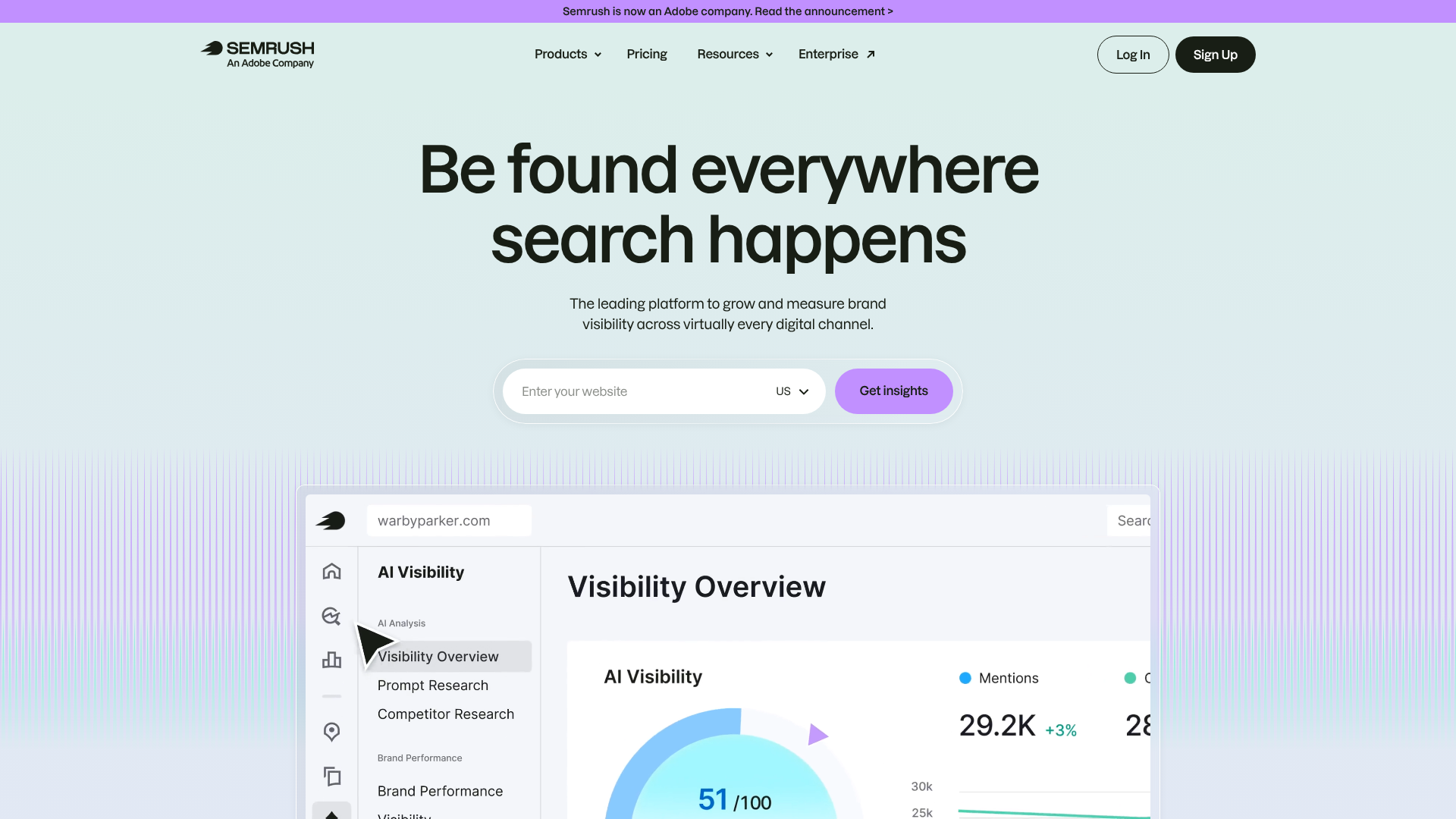
Semrush started in 2008 as a keyword research and competitor analysis tool. Over the years, it has evolved into a vast, all-encompassing digital marketing platform. It's often described as a Swiss Army knife for marketers because it provides tools for nearly every aspect of online visibility.
Its suite covers more than 55 tools organised into toolkits for SEO, Content Marketing, Advertising, Social Media, and Competitive Research. This makes it an attractive option for marketing generalists, small business owners, and agencies that offer a wide range of services. The platform's goal is to provide a single source of truth for an entire marketing department, from the SEO specialist to the PPC manager and content strategist.
What is Ahrefs? The SEO Powerhouse
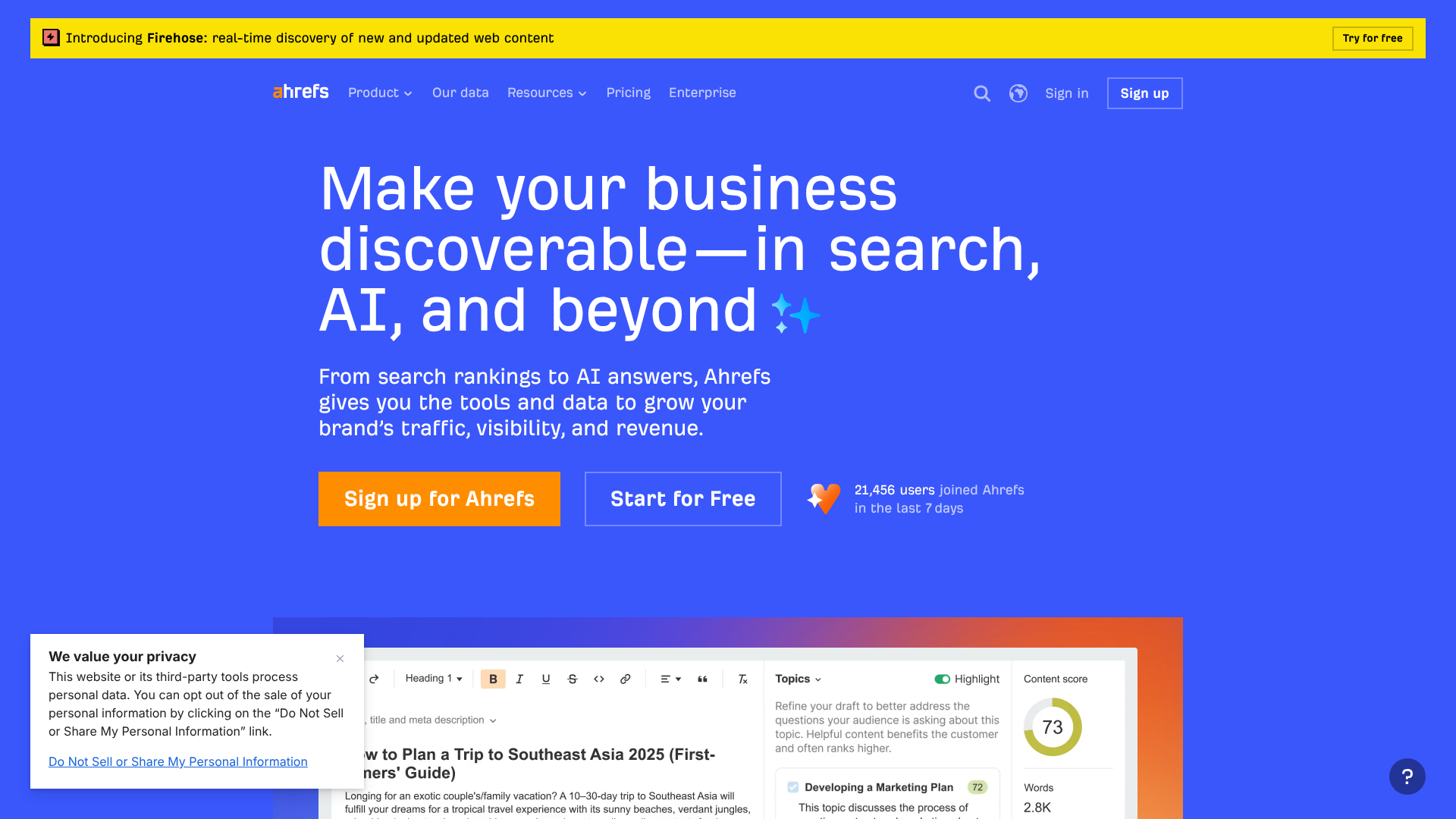
Ahrefs launched in 2011 with a singular focus: to build the best backlink analysis tool on the market. It quickly gained a reputation for having the fastest backlink crawler and the most comprehensive index of live links. This foundation in backlink data remains its core strength today.
While Ahrefs has since expanded to include a full suite of SEO tools—including keyword research, site audits, and rank tracking—its heart is still in deep SEO analysis. The platform is widely praised by SEO purists for its clean, fast user interface and the quality of its data. It's built for SEO professionals who need to perform in-depth technical analysis, competitor research, and link building campaigns with precision.
Semrush vs Ahrefs: A Head-to-Head Feature Comparison
To help you decide between ahrefs or semrush, a direct comparison of their core features is essential. Both platforms are incredibly capable, but they shine in different areas. The table below provides a high-level overview of their key functionalities.
| Feature | Semrush | Ahrefs |
|---|---|---|
| Primary Focus | All-in-one Digital Marketing | Core SEO & Backlink Analysis |
| Keyword Database | Over 25 billion keywords | Over 24 billion keywords |
| Backlink Analysis | Excellent, with a huge database | Industry-leading, known for speed and live links |
| Site Audit | Comprehensive with thematic reports | Powerful, with high crawl limits on standard plans |
| Rank Tracking | Daily updates, postcode-level tracking | Updates every 1-7 days depending on plan |
| PPC/Ad Research | Extensive, a core strength | Basic, not a primary focus |
| Content Marketing | Full suite (Topic Research, SEO Writing Assistant) | Strong Content Explorer tool |
| User Interface | Feature-rich, can be complex | Clean, intuitive, and fast |
| Reporting | Highly customisable and extensive | Clean and easy to understand |
Keyword Research: Semrush's Breadth vs Ahrefs' Depth
Keyword research is the foundation of any successful SEO strategy. Both tools offer world-class features, but they approach the task differently.
Semrush's Keyword Magic Tool is a standout feature, giving users access to a massive database of over 25 billion keywords. It provides extensive filtering options, allowing you to group keywords by topic, search intent (informational, navigational, commercial, transactional), and question type. This integration of intent data is particularly useful for content strategists trying to map keywords to the buyer's journey. Furthermore, its deep integration with PPC data provides cost-per-click (CPC) and competition metrics that are invaluable for paid search campaigns.
Ahrefs' Keywords Explorer is known for its simplicity and the quality of its data presentation. A unique and highly valued metric is "Traffic Potential," which estimates the total organic traffic the top-ranking page for a keyword receives from all the keywords it ranks for. This gives a more realistic view of a topic's value than search volume alone. Ahrefs also provides excellent data on clicks and "clicks per search," helping you identify keywords that may have high volume but low click-through rates due to SERP features like featured snippets or ad carousels.
Verdict: For breadth of data, PPC integration, and advanced filtering, Semrush has a slight edge. For a clean interface and unique, actionable metrics like Traffic Potential, Ahrefs is superb.
Backlink Analysis: The Classic Ahrefs vs Semrush Showdown
This is the battleground where Ahrefs originally made its name. A semrush and ahrefs review would be incomplete without a deep look at their backlink capabilities.
Ahrefs is renowned for its backlink index. Its crawler is one of the most active on the web, second only to Google's. This means it often discovers and reports new and lost backlinks faster than its competitors. Its Site Explorer tool presents backlink data in an incredibly intuitive way, making it easy to see referring domains, anchor text distribution, and the growth of a site's link profile over time.
However, Semrush has invested heavily in its backlink tools and is no longer far behind. Its database is enormous, and its Backlink Analytics and Backlink Audit tools are very powerful. The Backlink Audit tool is particularly useful, as it automatically assesses the toxicity of your backlink profile and helps you identify potentially harmful links that may need to be disavowed. This proactive risk management is a significant plus.
Verdict: Ahrefs still holds the crown for many SEO professionals due to the speed of its index and the clarity of its interface. However, Semrush is now a top-tier competitor, and its integrated audit tool offers unique value.
Site Audit & Technical SEO: Finding and Fixing Flaws
Both platforms offer robust site audit tools that crawl your website to identify technical SEO issues, such as broken links, slow page speed, missing meta tags, and crawlability problems.
Semrush's Site Audit tool categorises issues into Errors, Warnings, and Notices, making it easy to prioritise fixes. It provides thematic reports that group issues by area (e.g., Crawlability, Performance, Internal Linking), which helps in systematically addressing problems. It also integrates with Google Analytics to provide more context.
Ahrefs' Site Audit is known for its speed and customisation. One key advantage is its more generous crawl limits on its standard plans compared to Semrush. This can be a deciding factor for agencies or businesses managing very large websites with hundreds of thousands of pages. The tool provides a clear health score and detailed explanations for each issue it finds.
Verdict: Both tools are excellent for technical SEO. Ahrefs' higher page crawl limits on its mid-tier plan give it an edge for larger sites, but Semrush's thematic reports are very user-friendly.

Content and PPC Tools: Where Semrush Pulls Ahead
This is where the "all-in-one" nature of Semrush truly becomes apparent. While Ahrefs is primarily an SEO tool, Semrush is a full marketing platform.
Semrush offers a comprehensive Content Marketing Toolkit. This includes a Topic Research tool that generates content ideas based on a seed keyword, an SEO Content Template that analyses top-ranking competitors to give you recommendations for your content, and the SEO Writing Assistant, a real-time content checker that integrates with Google Docs and WordPress.
For pay-per-click (PPC) advertising, Semrush is in a league of its own. Its Advertising Toolkit allows you to analyse competitors' ad copy, budgets, and keyword strategies. You can uncover their top-performing ads and find new keywords for your own campaigns. Ahrefs has minimal features in this area, reflecting its focus on organic search.
Verdict: If content marketing and PPC are significant parts of your strategy, Semrush is the clear winner. It provides an integrated workflow that Ahrefs cannot match.
Pro Tip: When evaluating these tools, map your daily and weekly marketing tasks. If more than 50% of your tasks involve activities outside of core SEO (like managing ad campaigns or creating content briefs), Semrush's integrated suite will likely save you more time and money than using multiple specialised tools.
User Experience and Interface: Which Tool is Easier to Use?
How a tool presents its data is just as important as the data itself. A confusing interface can hide valuable insights and slow down your workflow.
Ahrefs is almost universally praised for its user interface (UI) and user experience (UX). It's clean, modern, and incredibly fast. Data is presented in clear charts and graphs, and navigating between different reports feels seamless. This simplicity makes it less intimidating for newcomers and more efficient for power users.
Semrush, with its vast array of over 55 tools, can feel more overwhelming. The interface is organised into logical toolkits, but finding a specific report can sometimes require a few extra clicks. While it's not difficult to use, there is a steeper learning curve simply due to the sheer volume of features available. However, once you become familiar with its layout, its power is undeniable.
This video provides a great visual walkthrough of the key differences in their interfaces and workflows:
Pricing and Cost Comparison: What's the Investment?
Both Semrush and Ahrefs are premium tools with pricing to match. They are investments for businesses that are serious about digital marketing, and their costs should be factored into your marketing budget.
Semrush Pricing Tiers
Semrush typically offers three main plans, aimed at different user types:
- Pro: Designed for freelancers, startups, and in-house marketers with a limited budget. It provides access to all the core tools but with lower limits on projects, keywords to track, and reports per day.
- Guru: A popular choice for small to medium-sized businesses and growing marketing agencies. It includes all Pro features plus access to the Content Marketing Toolkit, historical data, and higher limits across the board.
- Business: Built for large agencies, e-commerce sites, and enterprises. It offers the highest limits, API access, and advanced features like Share of Voice metrics.
Pricing can change, so it's always best to visit the Semrush website for the most current pricing information and to see if they are offering a free trial.
Ahrefs Pricing Tiers
Ahrefs also offers several plans, structured similarly:
- Lite: Aimed at hobbyists and small businesses just starting with SEO. It provides access to all key tools but with significant limitations on usage.
- Standard: The most popular plan, suitable for SEO professionals and marketing consultants. It offers a good balance of features and usage limits.
- Advanced & Enterprise: For larger teams and agencies that need higher limits, more projects, and access to historical data.
Ahrefs has moved towards a credit-based system for certain reports and features, which can sometimes make it harder to predict monthly costs if your usage fluctuates. Always check the Ahrefs website for the latest pricing details.
Which Offers Better Value?
Value is subjective and depends entirely on your needs. If you need a tool for SEO, PPC, social media, and content marketing, Semrush offers incredible value by consolidating the cost of multiple tools into one subscription. If your only need is best-in-class SEO data, particularly for backlinks, Ahrefs provides immense value in its specialised area.
Pros and Cons: The Semrush and Ahrefs Review at a Glance
To simplify your decision, here’s a straightforward breakdown of the strengths and weaknesses of each platform.
Semrush: The Good and The Bad
Pros:
- True All-in-One Platform: Covers SEO, PPC, content, and social media, providing a holistic view of your marketing efforts.
- Superior Keyword Data: Excellent keyword research tools with valuable intent and PPC data.
- Powerful Rank Tracking: Daily updates and detailed local tracking capabilities are top-notch.
- Extensive Competitor Analysis: Deep insights into competitors' organic and paid strategies.
Cons:
- Overwhelming Interface: The sheer number of tools can be intimidating for new users.
- Steeper Learning Curve: It takes time to master the full capabilities of the platform.
- Backlink Data: While now excellent, it is still considered slightly behind Ahrefs by some SEO purists.
Ahrefs: The Good and The Bad
Pros:
- Best-in-Class Backlink Data: Widely regarded as having the fastest and most accurate backlink index.
- Intuitive User Interface: Exceptionally clean, fast, and easy to navigate.
- Strong Technical SEO Tools: The Site Audit tool is fast, powerful, and has generous crawl limits.
- Unique Metrics: Features like "Traffic Potential" offer actionable insights you won't find elsewhere.
Cons:
- Narrower Focus: Lacks the comprehensive PPC, social media, and content creation tools of Semrush.
- Credit-Based System: Can lead to unpredictable costs and usage limitations.
- Less Frequent Rank Tracking: Rank tracking updates are not always daily on lower-tier plans.
How to Choose: Ahrefs or Semrush for Your Needs?
So, how do you make the final call? The decision comes down to your role, your goals, and your budget. Here are some clear scenarios to guide you.
Choose Semrush if…
- You are a digital marketing manager or generalist. You need a single tool to oversee SEO, PPC, and content strategy without juggling multiple subscriptions.
- Paid advertising is a core part of your business. Semrush's competitor ad research tools are far superior and can provide a significant competitive advantage.
- You run a content-heavy website. The Content Marketing Toolkit provides an end-to-end workflow from idea generation to performance analysis.
- You need detailed local SEO tracking. Semrush's ability to track rankings at a postcode level is a major benefit for local businesses.
Choose Ahrefs if…
- You are a dedicated SEO specialist or consultant. Your primary focus is on organic search, and you need the most precise data for link building, technical SEO, and keyword analysis.
- Backlink analysis is your top priority. If your job revolves around building and analysing link profiles, Ahrefs remains the industry standard.
- You value speed and simplicity. You prefer a clean, fast interface that allows you to find the data you need without distractions.
- You manage very large, complex websites. The higher crawl limits in Ahrefs' Site Audit can be a crucial factor for enterprise-level SEO.
Frequently Asked Questions (FAQ)
Why is Ahrefs better than Semrush?
Ahrefs isn't necessarily "better" overall, but it excels in specific areas. It is widely considered superior for backlink analysis due to its incredibly fast web crawler and extensive live link index. Many users also strongly prefer its cleaner, more intuitive user interface, which can make complex SEO analysis feel more straightforward and efficient. For SEO professionals who prioritise these two aspects, Ahrefs is often the preferred choice.
Is Semrush Russian owned?
This is a common question due to the founders' origins. Semrush was founded by Oleg Shchegolev and Dmitri Melnikov, who are from Russia. However, the company is now a global entity, headquartered in Boston, Massachusetts, USA. It is a publicly traded company on the New York Stock Exchange (NYSE: SEMR), with offices and employees all over the world.
Its operations and data are managed under US jurisdiction.
Which SEO tool is best?
There is no single "best" SEO tool for everyone. The best tool is the one that aligns with your specific needs, workflow, and budget. For a comprehensive marketing toolkit, Semrush is often the top choice. For a pure, powerful SEO focus, Ahrefs is a leading contender.
Other tools like Moz, SE Ranking, and Ubersuggest also have their own strengths and are suitable for different use cases, particularly for those with smaller budgets.
What are the cons of Ahrefs?
The main disadvantages of Ahrefs are its relatively narrow focus compared to Semrush. It lacks deep PPC, social media, and content creation tools. Its pricing can be high for a tool that is primarily focused on SEO, and its credit-based system for certain reports can be restrictive and lead to unexpected limitations if you are a heavy user. Finally, its rank tracking is generally considered less flexible than Semrush's, with less frequent updates on lower-tier plans.
Which SEO tool is best for beginners?
This is debatable. Ahrefs' simple and clean interface can make it less intimidating for a beginner to start exploring SEO data. The clear presentation helps in understanding core concepts. On the other hand, Semrush offers more guided toolkits and a wealth of educational resources, including the Semrush Academy, which can be invaluable for someone learning the ropes of digital marketing as a whole.
A beginner might find Ahrefs easier to navigate initially, but Semrush provides a broader learning platform.
Final Thoughts: The Verdict in the Semrush vs Ahrefs Debate
After an extensive semrush vs ahrefs comparison, it's clear that both are exceptional platforms that can deliver massive value to any digital marketing campaign. The debate over which is superior is less about a definitive winner and more about a difference in philosophy. You aren't choosing between a good tool and a bad one; you're choosing between a multi-tool and a specialist's scalpel.
Semrush is the undisputed champion for those who need an integrated, all-in-one marketing suite. Its power lies in its ability to connect the dots between SEO, PPC, content, and social media, providing a holistic view of your digital footprint. It's the command centre for the modern marketing team.
On the other hand, Ahrefs is the purist's choice for deep SEO analysis. It does fewer things than Semrush, but what it does, it does with incredible precision and elegance. Its best-in-class backlink data and beautifully designed interface make it a joy to use for any serious SEO professional.
Your final decision should come back to your primary role and goals. Analyse your daily tasks, identify your biggest challenges, and choose the tool that provides the most direct solution. Ready to explore a platform that can manage your entire digital strategy? Explore what Semrush has to offer and see how its all-in-one toolkit can streamline your workflow and drive growth.