

Lead Generation vs Lead Nurturing: A Marketer's Guide to Choosing Your Focus
In the world of marketing, the terms 'lead generation' and 'lead nurturing' are often mentioned in the same breath. While they are deeply connected, they represent two distinct and equally critical stages of the customer journey. Understanding the debate of lead generation vs lead nurturing isn't just about semantics; it's about knowing how to build a marketing machine that not only attracts potential customers but also effectively converts them into loyal advocates for your brand.
- In a Nutshell
- What is Lead Generation vs Lead Nurturing? The Core Distinction
- Defining Lead Generation: The Art of Attraction
- Defining Lead Nurturing: The Science of Relationship Building
- Key Features and Benefits: A Side-by-Side Comparison
- Lead Generation and Nurturing: A Symbiotic Relationship
- Top Tools and Software for Your Marketing Funnel
- Understanding the Costs: Pricing and ROI Comparison
- Pros and Cons: Focusing on One Strategy Over the Other
- Frequently Asked Questions (FAQ)
- What is the difference between lead generation and nurturing leads?
- What are the 4 stages of the lead generation process?
- What are the three different types of leads?
- Why is lead generation so hard?
- What are common lead generation mistakes?
- Is lead generation illegal?
- Final Thoughts: Building a Cohesive Growth Engine
Many businesses pour resources into filling the top of their sales funnel, only to see potential customers leak out before making a purchase. Others spend time trying to cultivate relationships with an empty contact list. The key to sustainable growth lies in mastering both disciplines and understanding when to shift your focus from one to the other. This guide will break down their differences, highlight their unique benefits, and help you build a cohesive strategy that turns initial interest into lasting revenue.
In a Nutshell
- Lead Generation is Attraction: Its primary goal is to capture the interest of potential customers and collect their contact information. Think of it as casting a wide net to bring prospects into your ecosystem.
- Lead Nurturing is Cultivation: This is the process of building relationships with the leads you've generated. It involves providing value and guidance to move them closer to a purchasing decision.
- They Are a Team: You cannot have one without the other. Lead generation provides the raw material (leads), while lead nurturing refines that material into paying customers. An effective strategy requires a seamless handover between the two.
- Focus Depends on Your Funnel: If your pipeline is empty, your priority is generation. If it's full of leads that aren't converting, it's time to double down on nurturing.
- Tools Are Essential: Success in both areas is amplified by the right technology, from landing page builders that capture leads to email automation platforms that nurture them at scale.
What is Lead Generation vs Lead Nurturing? The Core Distinction
At its heart, the difference between lead generation and lead nurturing comes down to timing and intent. One is focused on the initial introduction, while the other is focused on the ongoing conversation. Let's break down each concept to clarify its unique role in your marketing funnel.
Defining Lead Generation: The Art of Attraction
Lead generation is the process of identifying and attracting potential customers for your business's products or services. It’s the very first step in building a relationship. The main objective is to spark interest and persuade a person to provide their contact information, such as an email address or phone number, in exchange for something of value.
Think of it as opening a new shop on the high street. Your lead generation efforts are the attractive window display, the welcoming sign, and the special offer that entices people to step inside for the first time. In the digital world, these tactics include creating valuable blog posts optimised for search engines, running targeted social media ads, or offering a downloadable e-book. The focus is squarely on the Top of the Funnel (TOFU), where awareness and interest are born.
Common lead generation strategies include:
- Content Marketing: Creating blogs, videos, and guides that answer your audience's questions.
- Lead Magnets: Offering free resources like whitepapers, checklists, or templates in exchange for an email.
- Paid Advertising: Using platforms like Google Ads or Facebook Ads to reach a targeted audience.
- Webinars: Hosting live events that provide educational value and capture attendee information.
Defining Lead Nurturing: The Science of Relationship Building
Once a lead has entered your world, the job is far from over. In fact, research consistently shows that most new leads are not yet ready to buy. This is where lead nurturing comes in. Lead nurturing is the strategic process of building and maintaining relationships with leads throughout every stage of the sales funnel.
If lead generation gets people in the door, lead nurturing is the helpful conversation you have with them once they're inside. It's about understanding their needs, answering their questions, and providing relevant information that builds trust and demonstrates your expertise. The goal is to guide them from initial interest to purchase-readiness. This process is crucial for the Middle of the Funnel (MOFU) and Bottom of the Funnel (BOFU), where consideration and decision-making happen.
Effective lead nurturing tactics often involve:
- Email Drip Campaigns: A series of automated emails that deliver targeted content over time.
- Personalisation: Tailoring content and offers based on a lead's behaviour, interests, and demographics.
- Retargeting Ads: Showing specific ads to people who have previously visited your website.
- Multi-Channel Communication: Engaging leads on different platforms, including email, social media, and SMS.
Key Features and Benefits: A Side-by-Side Comparison

While lead generation and nurturing work together, they operate with different goals, metrics, and timescales. Understanding these distinctions is key to allocating your resources effectively. Here’s a direct comparison of their core characteristics.
| Feature | Lead Generation | Lead Nurturing |
|---|---|---|
| Primary Goal | Capture new leads and fill the pipeline. | Build relationships and convert leads into customers. |
| Key Metrics | Cost Per Lead (CPL), Marketing Qualified Leads (MQLs), Click-Through Rate (CTR). | Conversion Rate, Sales Cycle Length, Customer Lifetime Value (LTV). |
| Target Audience | Broad audience segment based on ideal customer profile. | Specific leads already in your database. |
| Communication | One-to-many, broad appeal, focused on a single call-to-action. | One-to-one (or segmented), personalised, and contextual. |
| Timescale | Short-term, focused on immediate action (e.g., a download). | Long-term, focused on building a relationship over time. |
| Funnel Stage | Top of the Funnel (TOFU). | Middle and Bottom of the Funnel (MOFU & BOFU). |

The Benefits of a Strong Lead Generation Strategy
A robust lead generation engine is the lifeblood of any growing business. Without a consistent flow of new prospects, even the most sophisticated sales team will eventually run out of opportunities. The primary benefit is, of course, filling your sales pipeline with potential customers who have shown an initial interest in what you offer.
Beyond this, a strong lead gen strategy builds significant brand awareness, positioning your company as a go-to resource in your industry. Every piece of content you create and every ad you run introduces your brand to a new audience. This process also provides invaluable market data. By analysing which offers and messages resonate most, you gain deep insights into your customers' pain points and priorities, allowing you to refine your products and marketing efforts over time.
The Power of Effective Lead Nurturing
Simply generating a lead doesn't guarantee a sale. The true power of your marketing efforts is unlocked through effective nurturing. Companies that excel at lead nurturing generate 50% more sales-ready leads at a 33% lower cost, according to Forrester Research. This is because nurturing focuses on building trust and providing value, making the final sales conversation much smoother.
Effective nurturing directly increases conversion rates by guiding uncertain prospects towards a confident decision. It can also significantly shorten the sales cycle by delivering the right information at the right time, pre-emptively answering questions and overcoming objections. Furthermore, this process builds the foundation for long-term customer loyalty. A customer who has been educated and supported throughout their buying journey is far more likely to become a repeat buyer and a vocal advocate for your brand, dramatically increasing their lifetime value.
Lead Generation and Nurturing: A Symbiotic Relationship
One of the biggest mistakes marketers make is viewing the lead nurturing vs generation debate as a choice. It's not about picking one over the other; it's about creating a seamless, integrated system where one feeds the other. Lead generation without nurturing is like collecting phone numbers at a party but never calling anyone. Lead nurturing without generation is like waiting by the phone for a call that never comes.
Your marketing strategy needs both to function as a cohesive growth engine. Generation casts the net and brings in the fish (leads). Nurturing sorts, qualifies, and prepares those fish for the final sale. The real question isn't which one to do, but when to prioritise each one based on the health and needs of your business.
When to Prioritise Lead Generation
There are specific moments in a business's lifecycle when putting more energy and budget into lead generation makes the most sense. If your sales team is complaining about a lack of opportunities or your pipeline looks sparse, it's a clear signal to ramp up your top-of-funnel activities.
Consider prioritising lead generation when:
- You're a new business or launching a new product. You need to build initial awareness and populate your database from scratch.
- Your sales pipeline is empty or moving too slowly. You need a fresh injection of prospects to create momentum.
- You are expanding into a new market or territory. You must establish a foothold and introduce your brand to an entirely new audience.
- Your Ideal Customer Profile (ICP) has changed. If you've pivoted your business, you need to attract a different type of lead that aligns with your new direction.
When to Double Down on Lead Nurturing
Conversely, there are times when the most significant growth opportunity lies within your existing database. If you're generating plenty of leads but your conversion rates are disappointingly low, it's time to focus on improving your nurturing process. Pouring more leads into a leaky bucket is an expensive and inefficient strategy.
Consider doubling down on lead nurturing when:
You have a large database of cold or inactive leads. There is untapped revenue potential sitting right in your CRM. * Your sales cycle is long and complex. For B2B or high-ticket B2C sales, leads require extensive education and multiple touchpoints before they are ready to buy. * Lead quality is a concern. If your sales team reports that leads are unqualified or not ready for a sales conversation, better nurturing can help qualify and warm them up.
Your customer acquisition cost (CAC) is too high. It's almost always cheaper to convert an existing lead than to acquire a new one. Improving nurturing maximises the ROI of your initial acquisition spend.
Pro Tip: Conduct a 'funnel audit' every quarter. Analyse your conversion rates at each stage, from initial lead capture to final sale. The stage with the biggest drop-off is where you should focus your efforts next.
Top Tools and Software for Your Marketing Funnel
Executing both lead generation and nurturing strategies at scale is nearly impossible without the right technology stack. The right tools can automate repetitive tasks, provide deep analytics, and enable a level of personalisation that would be unmanageable manually.
Essential Lead Generation Tools
These tools are designed to help you attract visitors and effectively capture their information.
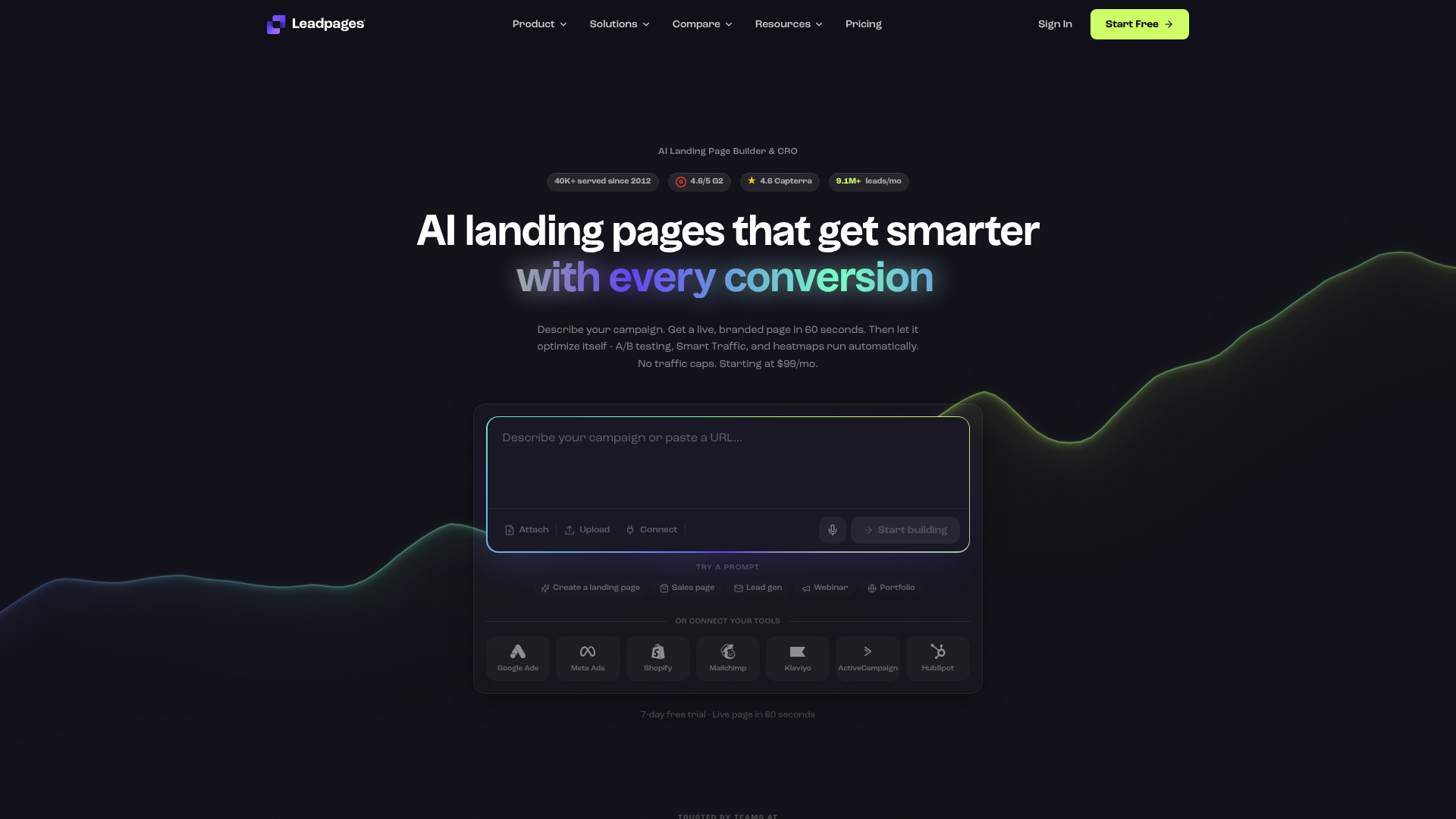
- Landing Page Builders: A dedicated, distraction-free landing page is one of the most effective ways to convert visitors into leads. Tools like Leadpages and Unbounce allow you to quickly build and test high-converting pages without needing a developer. They offer templates optimised for various goals, from webinar registrations to e-book downloads.
- Form Builders: The form is the final gateway to capturing a lead. It needs to be simple, clear, and easy to use. Jotform provides powerful and customisable forms that can be embedded anywhere, helping you reduce friction and increase submission rates.
- SEO & Content Tools: To generate organic leads, you need to rank in search engines. Platforms like Semrush and Surfer SEO help you with keyword research, competitor analysis, and on-page optimisation to attract the right kind of traffic to your content.
- Webinar Platforms: Webinars are a fantastic way to generate high-intent leads. A platform like EasyWebinar makes it simple to host live or automated events, engage your audience, and seamlessly capture lead data.
Powerful Lead Nurturing Platforms
Once you have the leads, these tools help you build the relationship and guide them towards a purchase.
- Email Marketing & Automation: This is the cornerstone of most nurturing strategies. Platforms like ActiveCampaign and GetResponse are more than just email senders. They allow you to segment your audience, create complex automated workflows based on user behaviour, and deliver highly personalised messages that resonate with each lead.
- Social Media Management: Nurturing doesn't just happen in the inbox. Tools like Hootsuite and Buffer help you schedule content and engage with leads across multiple social platforms, keeping your brand top-of-mind.
- CRM (Customer Relationship Management): A CRM is your central hub for all lead data. It tracks every interaction a lead has with your company, from website visits to email opens. Many automation platforms, including ActiveCampaign, have built-in CRM functionalities, providing your sales team with the full context they need to have effective conversations.
Understanding the Costs: Pricing and ROI Comparison
Budgeting for growth requires understanding the financial implications of both lead generation and nurturing. While their costs are structured differently, their true value is realised when you analyse their combined return on investment (ROI).
The Cost of Lead Generation
The cost of acquiring a new lead can vary dramatically depending on your industry and chosen channels. Common pricing models include paying per click (PPC) on platforms like Google Ads, where costs can range from under £1 to over £50 per click for competitive terms. Other models include paying a fixed cost per lead (CPL) to an agency or investing in software subscriptions for tools like landing page builders or SEO platforms.
Don't forget the cost of content creation. Whether you're hiring a freelance writer for a blog post or producing a high-quality video, this is a direct investment in your lead generation efforts. The key is to track your CPL for each channel to understand which ones are most efficient. While the upfront cost can seem high, this is the necessary investment to fuel your entire sales process.
The Investment in Lead Nurturing
The costs associated with lead nurturing are typically more predictable. The primary expense is usually the monthly or annual subscription for your marketing automation or CRM software. Pricing for these platforms often depends on the number of contacts in your database and the complexity of the features you require.
Beyond software, there is a time investment required to create the content for your nurturing sequences. This includes writing email copy, designing graphics, or creating targeted case studies. However, because you are marketing to an existing list of contacts you've already paid to acquire, the incremental cost to convert a nurtured lead is often significantly lower than acquiring a brand new one from scratch. This makes nurturing a highly efficient, ROI-positive activity.
Pros and Cons: Focusing on One Strategy Over the Other
While the ideal approach is a balanced one, understanding the potential upsides and downsides of temporarily prioritising one strategy can help you make informed decisions, especially when resources are limited.
Pros and Cons of a "Generation-First" Approach
Focusing heavily on lead generation is often the default mode for ambitious companies looking for rapid growth. It's an exciting strategy focused on expansion and market capture.
- Pros: This approach quickly fills your sales pipeline, providing immediate opportunities for your sales team. It's excellent for building brand awareness and can provide rapid feedback from the market on your messaging and offers.
- Cons: Without a solid nurturing process in place, this is a recipe for a leaky bucket. You risk high lead attrition, leading to a poor return on your ad spend. Your sales team may also waste valuable time chasing down cold, unqualified leads who aren't ready for a sales conversation.
Pros and Cons of a "Nurturing-First" Approach
A nurturing-first mindset focuses on maximising the value of every single lead you already have. It's a strategy built on efficiency and relationship-building.
- Pros: This approach maximises the ROI from your existing database and builds strong, trust-based relationships with potential customers. It often leads to higher conversion rates and a more loyal customer base.
- Cons: This strategy is completely ineffective if you don't have a consistent flow of new leads coming in. It can be slow to show results, as it takes time to warm up cold leads. It also requires a higher level of sophistication in terms of segmentation, personalisation, and content creation.
Pro Tip: Start with a simple nurturing sequence. Even a basic 3-5 email welcome series for new leads can dramatically improve engagement and is far better than letting them go cold. You can build more complex workflows as you grow.
Frequently Asked Questions (FAQ)
Here are answers to some of the most common questions about the relationship between lead gen vs lead nurture.
What is the difference between lead generation and nurturing leads?
In simple terms, lead generation is the process of attracting and capturing contact information from potential customers. Lead nurturing is the process of building a relationship with those captured leads to guide them towards a sale. Generation is the first handshake; nurturing is the ongoing conversation that follows.
What are the 4 stages of the lead generation process?
While models vary, a common framework follows the AIDA principle: Awareness, Interest, Decision, and Action. First, you make a prospect aware of a problem or solution. Then, you generate interest in your specific offer. You help them through the decision-making process with more detailed information.
Finally, you call them to action to become a lead (e.g., download a guide).
What are the three different types of leads?
Leads are often categorised by their level of readiness. An Information Qualified Lead (IQL) has just begun their research and exchanged their contact info for content. A Marketing Qualified Lead (MQL) has shown deeper engagement, like attending a webinar or visiting a pricing page, and is deemed ready for nurturing. A Sales Qualified Lead (SQL) has indicated a clear intent to purchase and is ready for a direct conversation with the sales team.
Why is lead generation so hard?
Lead generation has become more challenging due to increased digital competition, audience ad fatigue, and more empowered buyers. Today's customers are better informed and more sceptical of marketing messages. To succeed, you must provide genuine value and build trust from the very first interaction, which requires a deep understanding of your audience's pain points and a commitment to creating high-quality content.
What are common lead generation mistakes?
Common mistakes include not having a clear and compelling offer (your lead magnet), creating a poor user experience on your landing page, failing to follow up with leads promptly, and targeting the wrong audience with your campaigns. Another major error is having no lead nurturing plan, which means most of the leads you generate will never convert.
Is lead generation illegal?
No, legitimate lead generation is a standard and legal business practice. However, it must be conducted in compliance with data protection and privacy laws like the GDPR in Europe. This means you must have a legal basis for collecting and processing personal data, be transparent about how you will use it, and provide clear options for people to opt-out of communications. Unsolicited commercial email (spam) is illegal.
Final Thoughts: Building a Cohesive Growth Engine
The debate over lead generation vs lead nurturing is ultimately a false choice. They are not competing priorities but two essential, sequential components of a single, powerful growth engine. Lead generation is the fuel, and lead nurturing is the engine that converts that fuel into forward motion. A weakness in one will inevitably cripple the other.
True marketing success is found in the seamless integration of both. It's about creating a customer journey that feels helpful, logical, and valuable from the first click to the final purchase and beyond. The best marketing teams don't just generate leads; they cultivate relationships.
To move forward, audit your current funnel. Where is the biggest bottleneck. Is your pipeline empty, or is it full of leads going nowhere. Identify your weakest link and focus your resources there first.
By building strength in both generation and nurturing, you create a resilient and predictable system for sustainable business growth.
To build your funnel, consider tools like Leadpages for capturing leads with high-converting landing pages and ActiveCampaign for nurturing them into loyal customers with powerful automation.