


Creative Content Generation: A Guide for Marketers to Scale Content with AI
Creative content generation is the process of producing original, engaging material—from blog posts and videos to images and audio—that captures an audience's attention. For years, this was a purely human endeavour, relying on brainstorming sessions and individual creativity. Today, artificial intelligence has fundamentally changed the game, offering powerful tools that act as creative partners, helping marketers and creators to generate content faster, scale production, and overcome creative blocks.
- Quick Summary
- What Exactly is Creative Content Generation?
- The Core Benefits of Modern Content Creation
- 1. Overcoming Creative Blocks
- 2. Scaling Content Production
- 3. Maintaining Brand Consistency
- 4. Enabling Personalisation at Scale
- 5. Unlocking New Content Formats
- Key Strategies for Generating Creative Content
- Top Tools for Creative Content Generation
- For Written Content: AI Writing Assistants
- For Video Content: AI Video Generators
- For Audio & Voiceovers: AI Voice Generators
- How to Choose the Right Content Generation Tools
- Comparing Pricing and Features
- The Pros and Cons of Using AI for Creative Content
- Frequently Asked Questions
- What is an example of creative content?
- What are the 4 types of content?
- Can I legally publish a book written by AI?
- Final Thoughts
This guide explains the entire process, from traditional strategies to the most effective AI tools available. You'll learn how to blend human ingenuity with machine efficiency to create compelling content that resonates with your audience and achieves your business goals. We will explore the what, why, and how of modern content creation, providing a clear roadmap for anyone looking to improve their output.
Quick Summary
- What It Is: Creative content generation involves producing original text, visuals, and audio. It has evolved from a manual process to one augmented by AI, which helps automate, enhance, and scale creation.
- Key Benefits: Using modern tools for content creation saves significant time, ensures brand consistency across channels, breaks through creative hurdles, and allows for personalisation at a scale previously unimaginable.
- Core Strategies: Effective content generation combines human creativity with AI efficiency. Techniques like brainstorming and social listening identify what audiences want, while AI tools help produce the content quickly.
- Top AI Tools: Different tools excel at different formats. Platforms like Jasper and Writesonic are excellent for text, while Synthesia and Pictory specialise in video, and ElevenLabs leads in realistic voice generation.
- The Human Element is Crucial: AI is a powerful assistant, but it cannot replace human strategy, editing, and emotional intelligence. The best results come from a partnership where AI handles the heavy lifting and humans provide the final polish and strategic direction.
What Exactly is Creative Content Generation?
At its core, creative content generation is the act of ideating, producing, and distributing materials that inform, entertain, or persuade a specific audience. This isn't a new concept; it's the foundation of marketing, communication, and art. The 'creative' part signifies that the content is original, imaginative, and designed to connect with people on an emotional or intellectual level.
Traditionally, this process was entirely manual. A marketing team might spend weeks brainstorming a campaign, writing copy, designing graphics, and shooting videos. While effective, this approach is often slow, expensive, and difficult to scale. A single creative block from a key team member could delay an entire project.
Today, the term has expanded to include the use of technology, particularly generative AI. This technology doesn't just analyse data; it creates something new based on the prompts it receives. This could be a draft for a blog post, a script for a video, a unique image for a social media campaign, or a voiceover for a podcast. The process of using these tools to generate content is what we now often refer to as modern creative content generation.
It's a collaborative process between human and machine. The human provides the strategy, the core idea, the brand voice, and the final review. The AI provides the speed, the scale, and often, a starting point that helps overcome the dreaded 'blank page' syndrome. This partnership allows a single creator or a small team to produce the volume and quality of content that once required a large agency.

The Core Benefits of Modern Content Creation
Integrating AI and modern tools into your content creation workflow offers more than just speed. It provides a set of strategic advantages that can significantly impact your marketing efforts and business growth. These benefits address some of the most persistent challenges in the content marketing world.
1. Overcoming Creative Blocks
Every writer, designer, and marketer knows the feeling of staring at a blank screen. AI tools are exceptionally good at breaking this inertia. By providing a simple prompt, you can get outlines, topic ideas, draft paragraphs, or visual concepts in seconds. This initial output serves as a creative launchpad, giving you material to react to, refine, and build upon, rather than starting from zero.
2. Scaling Content Production
Scaling is one of the biggest hurdles in content marketing. AI allows you to move from creating one piece of content at a time to generating multiple variations for different platforms simultaneously. For example, a single long-form article can be repurposed into a video script, a series of social media posts, an email newsletter, and a podcast episode with the help of different AI tools. This allows you to maintain a consistent presence across all your channels without burning out your team.
3. Maintaining Brand Consistency
When multiple people are creating content, maintaining a consistent brand voice, tone, and style can be difficult. AI tools can be 'trained' on your existing content, style guides, and brand messaging. For instance, a tool like Jasper has a Brand Voice feature that learns your style, ensuring that every piece of generated text aligns with your brand's personality. This is invaluable for larger teams or businesses looking to maintain a cohesive identity.
4. Enabling Personalisation at Scale
Personalisation is key to effective marketing, but it's historically been resource-intensive. Generative AI can create personalised content variations for different audience segments. Imagine generating slightly different email subject lines for customers based on their past purchase history or creating ad copy that speaks directly to the pain points of a specific demographic. This level of customisation was once only possible for large corporations with huge budgets.
5. Unlocking New Content Formats
A small team might have a great writer but no video editor or graphic designer. AI tools democratise content creation by making different formats more accessible. A writer can use a tool like Pictory to turn their article into an engaging video, or a marketer can use OpenArt to generate custom images for their blog posts without needing any design skills. This allows teams to diversify their content strategy and engage audiences on platforms like YouTube or Instagram, even with limited in-house expertise.
Key Strategies for Generating Creative Content
Having powerful tools is only half the battle. A successful content strategy relies on a repeatable process for generating fresh, relevant ideas. The best approach combines timeless human creativity techniques with the efficiency of modern technology. This hybrid model ensures your content is both imaginative and strategically sound.
Start with Human-Centric Ideation
Before you even open an AI tool, you need to understand your audience. What are their problems? What questions are they asking? What topics are they interested in? Use these classic methods to build a foundation for your ideas.
- Social Listening: Monitor conversations on social media, forums like Reddit, and Q&A sites like Quora. What are the recurring themes and pain points in your industry? Tools like Semrush have features that can help you track brand mentions and keyword trends, giving you a direct line into your audience's mind.
- Brainstorming & Mind Mapping: Gather your team and map out ideas visually. Start with a central topic and branch out into related subtopics. This helps you see connections and uncover new angles that you might miss in a linear list.
- The SCAMPER Method: This is a classic creativity technique that the AI Overview from Google often highlights. It's a checklist for thinking about how you can improve existing ideas or create new ones:
- Substitute: What can you replace in your current content (e.g., swap a blog post format for a video)?
- Combine: Can you merge two ideas (e.g., an expert interview with a how-to guide)?
- Adapt: How can you adapt an idea from another industry to yours?
- Modify: Can you change the scale or form of an idea (e.g., turn a long guide into a short, daily tip series)?
- Put to another use: Can you use your content in a new way (e.g., turn internal training docs into a public course)?
- Eliminate: What can you remove to simplify your content (e.g., create a 'just the facts' version of a complex article)?
- Reverse: Can you reorder the process or do the opposite of what's expected (e.g., write an article on 'Mistakes to Avoid' instead of 'Best Practices')?
Use AI as a Creative Partner
Once you have a solid idea, it's time to bring in your AI assistant. The key is effective prompt engineering—giving the AI clear, detailed instructions. Instead of asking it to "write a blog post about marketing," you would provide a prompt like: "Act as a senior content strategist. Write a 1,500-word blog post outline for an audience of small business owners. The topic is 'How to Use Email Marketing to Increase Customer Retention.' Include sections on segmentation, personalisation, and measuring success. The tone should be helpful and authoritative."
This is where you can use AI to execute the ideas from your brainstorming session. Feed it your SCAMPER ideas, your mind map topics, or the questions you found during social listening. The AI will handle the initial drafting, research, and structuring, saving you hours of work.
Pro Tip: Use AI to play devil's advocate. After generating an outline or a draft, ask the tool to critique it. Prompts like "What are the weaknesses of this argument?" or "What counter-arguments might a reader have?" can help you strengthen your content and make it more comprehensive.
Top Tools for Creative Content Generation
The market for AI content tools is vast, with platforms specialising in every conceivable format. Choosing the right one depends on your primary needs. Here’s a breakdown of some of the best-in-class options for different types of content creation.
For Written Content: AI Writing Assistants
These tools are designed to help you write everything from social media posts to full-length books. They are excellent for drafting, outlining, and refining text.
1. Jasper (formerly Jarvis)
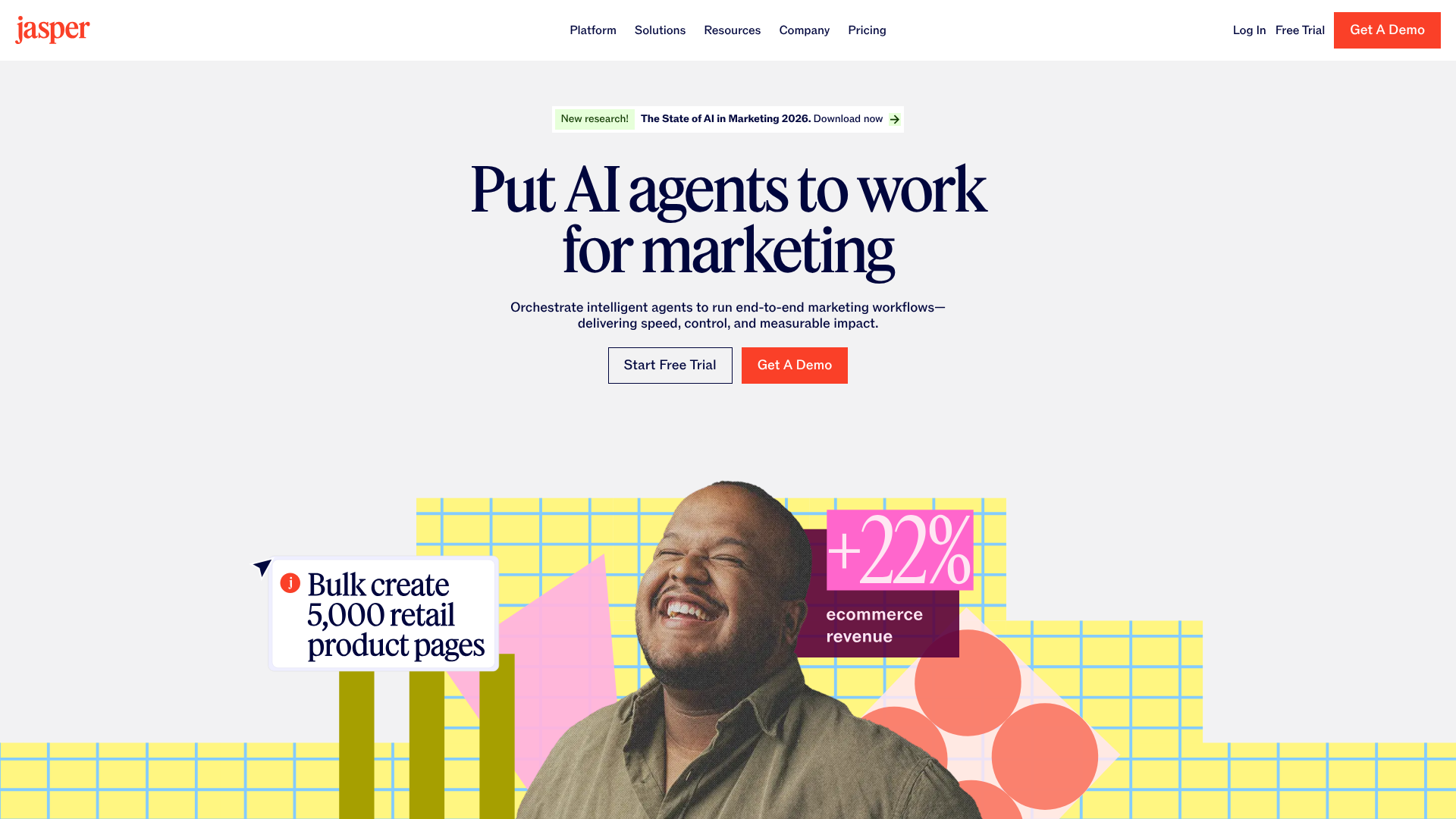
Jasper is one of the most well-known AI writing assistants, praised for its high-quality output and extensive feature set. It's particularly strong at long-form content like blog posts and marketing copy. Its Brand Voice and Memory features allow it to learn your style and specific company details, ensuring content is consistent and on-brand.
- Best for: Content marketers, bloggers, and agencies who need to produce high-quality written content at scale.
- Key Features: Long-form content editor, 50+ templates, Brand Voice training, and browser extension.
Pros:
- Excellent output quality that often requires minimal editing.
- Powerful features for maintaining brand consistency.
- Strong community and support resources.
Cons:
- Can be more expensive than some competitors.
- The sheer number of features can have a slight learning curve for new users.
2. Writesonic
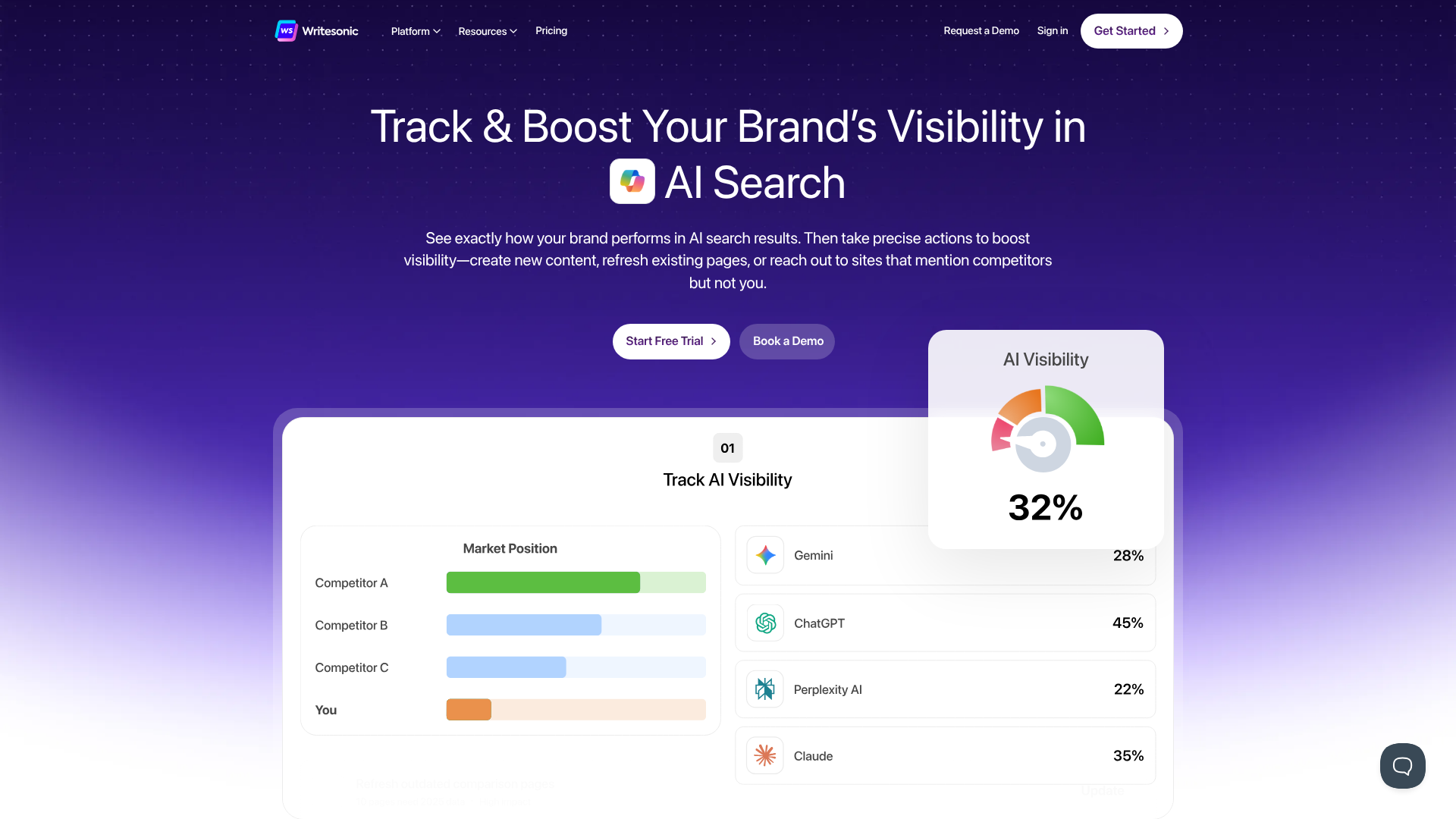
Writesonic is a versatile AI writer that offers a broad range of tools, including an AI article writer, a paraphrasing tool, and even an AI image generator called Photosonic. It's a great all-in-one solution for creators who need to produce both text and simple visuals. Its user interface is clean and easy to navigate, making it a good choice for beginners.
- Best for: Freelancers, small business owners, and marketers looking for a versatile, user-friendly tool.
- Key Features: AI article writer, paraphraser, landing page generator, and Photosonic AI art generator.
Pros:
- Offers a generous free trial and affordable pricing plans.
- All-in-one platform for text and image creation.
- Very intuitive and easy to use.
Cons:
- Long-form content quality can sometimes be less consistent than specialised tools like Jasper.
- The credit system can be confusing for some users.
For Video Content: AI Video Generators
Video is dominant on social media and websites, but production can be complex. These tools simplify the process, allowing you to create professional-looking videos from text.
1. Synthesia
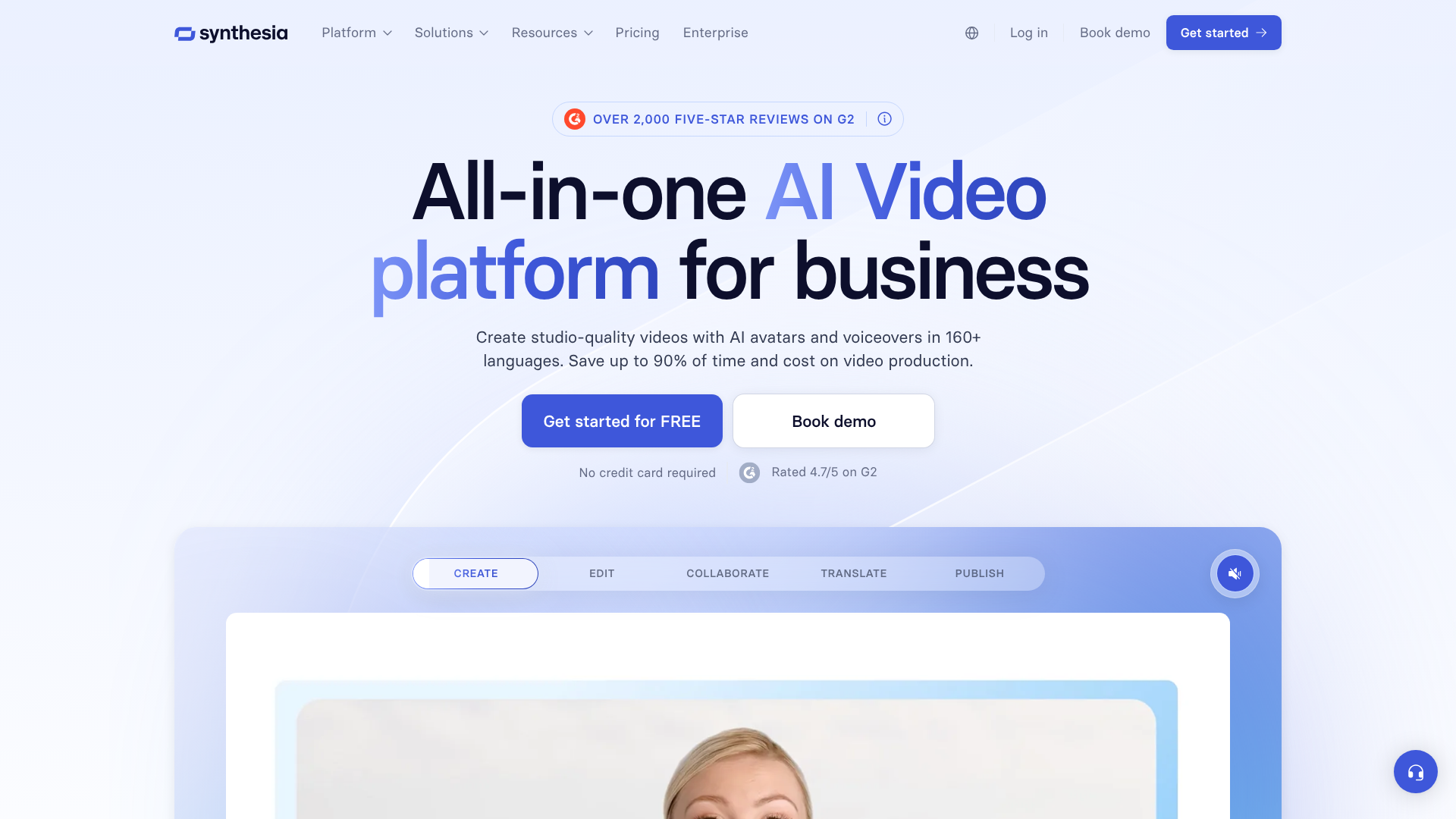
Synthesia is a leading platform for creating videos with AI avatars. You simply type a script, choose an avatar and a background, and the platform generates a video of the avatar speaking your text. It supports over 120 languages and offers a wide range of stock and custom avatars. It's perfect for creating training videos, corporate communications, and product explainers without needing cameras or actors.
- Best for: Businesses, educators, and HR departments creating training and informational videos.
- Key Features: 140+ AI avatars, 120+ languages and voices, custom avatars, and screen recording.
Pros:
- Creates highly professional and polished videos.
- Saves enormous costs on actors, studios, and filming.
- Easy to update videos by simply editing the text script.
Cons:
- The avatars, while realistic, may not be suitable for content requiring deep emotional connection.
- Pricing is geared more towards business users than individual creators.
2. Pictory
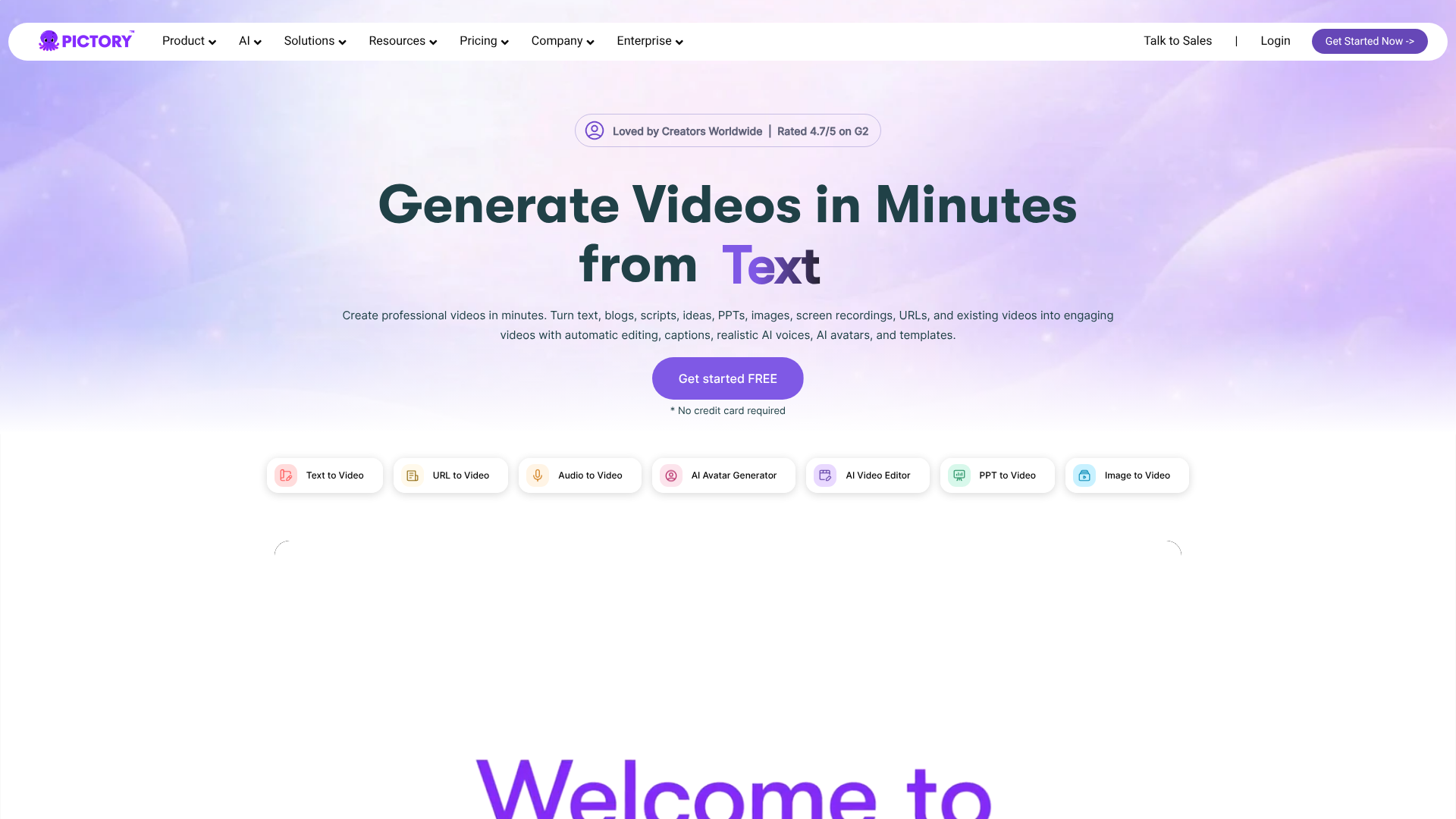
Pictory is designed to turn long-form content, like blog posts, scripts, or webinars, into short, engaging videos perfect for social media. The AI automatically selects relevant stock video clips and images to match your text and adds captions. It's an incredibly fast way to repurpose your existing content into a new format.
- Best for: Content marketers, bloggers, and social media managers who want to repurpose content into video.
- Key Features: Script-to-video, article-to-video, automatic video highlights, and auto-captioning.
Pros:
- Extremely fast and easy to use.
- Excellent for creating social media videos from existing assets.
- Affordable pricing plans make it accessible for small businesses.
Cons:
- The AI's choice of stock footage can sometimes be repetitive or require manual changes.
- Less customisation available compared to traditional video editors.
For Audio & Voiceovers: AI Voice Generators
Creating high-quality voiceovers used to require expensive recording equipment and voice actors. AI voice generators can produce realistic, human-sounding audio from text in minutes.
1. ElevenLabs
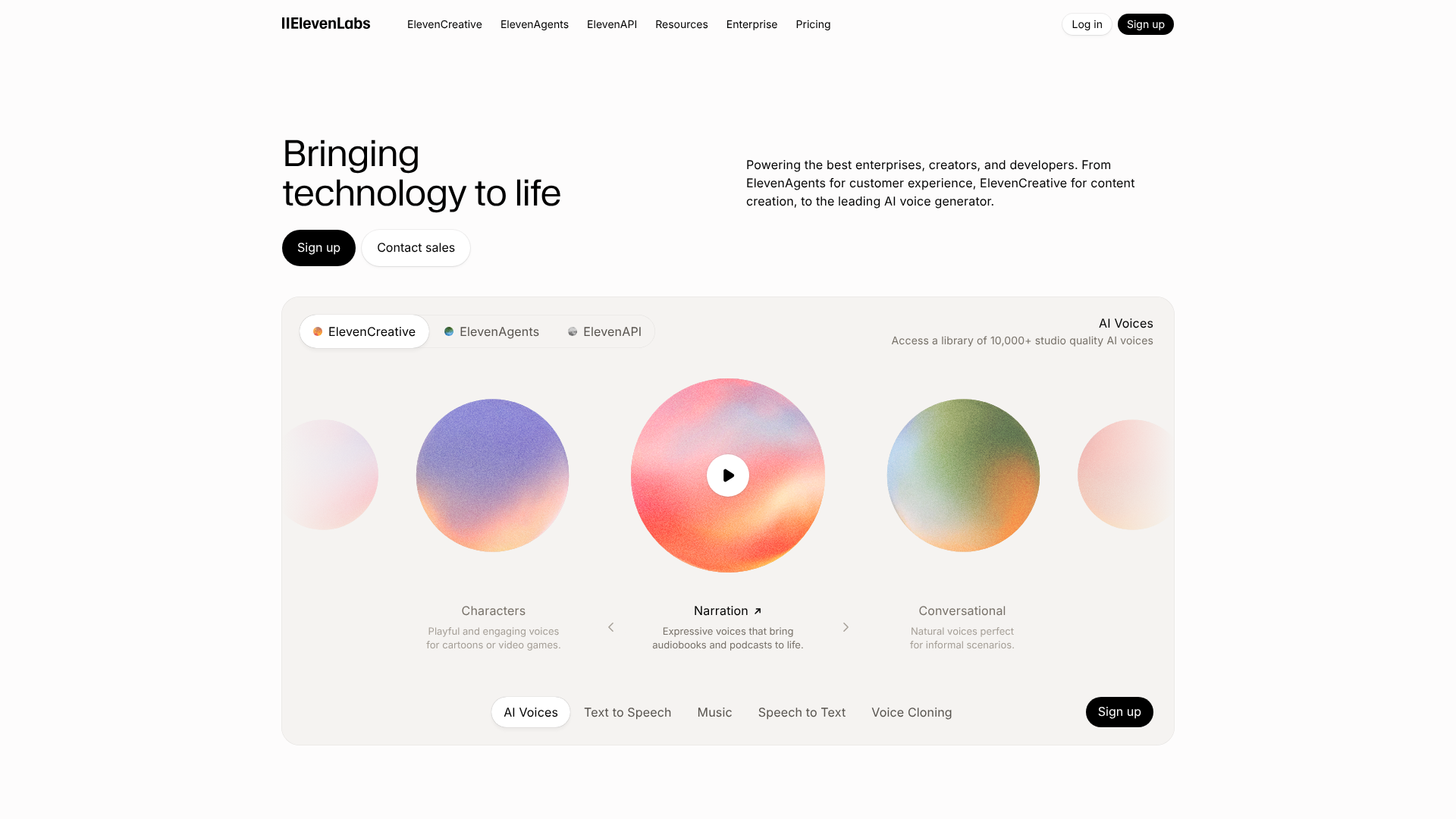
ElevenLabs is widely regarded as the leader in realistic AI voice generation. Its technology captures human intonation and emotion with remarkable accuracy, making it difficult to distinguish from a real person. You can choose from a library of voices or clone your own voice to create a unique audio identity for your brand.
- Best for: Podcasters, video creators, and authors who need top-tier, natural-sounding voiceovers.
- Key Features: Lifelike text-to-speech, voice cloning, and a library of pre-made voices.
Pros:
- Incredibly realistic and emotionally expressive voices.
- The voice cloning feature is powerful and accurate.
- Simple and straightforward user interface.
Cons:
- Can be more expensive for high-volume usage.
- Ethical considerations around voice cloning require responsible use.
How to Choose the Right Content Generation Tools
With so many options available, selecting the right tool can feel overwhelming. The best choice depends entirely on your specific goals, workflow, and budget. Use this framework to guide your decision-making process.
Identify Your Primary Content Format: What type of content do you create most often? If you're a blogger, a powerful AI writer like Jasper is your priority. If your strategy is video-first, a platform like Synthesia makes more sense. Don't pay for an all-in-one tool if you'll only use 20% of its features.
Assess Your Technical Skill Level: Be honest about your comfort with technology. Some tools are built for simplicity and speed (like Pictory), while others offer deep customisation that requires more of a learning curve. Many platforms offer free trials, so take advantage of them to see which interface feels most intuitive to you.
Define Your Budget: AI tools range from free or low-cost monthly plans to expensive enterprise subscriptions. Determine how much you can realistically invest. A free tool like Grammarly's basic version can improve your writing, while a premium subscription to an AI writer is a more significant investment that should be justified by the time it saves you.
Consider Your Scalability Needs: Are you a solo creator or part of a growing team? If you're on a team, look for tools with collaboration features, like shared workspaces and brand asset libraries. Platforms like HubSpot's AI tools are built into a larger CRM, which is ideal for teams that need content creation to be integrated with their sales and marketing workflows.
Check for Integration Capabilities: Does the tool need to work with other software you already use? For example, some AI writers have integrations with WordPress or Google Docs, which can streamline your publishing process. Check the tool's integration library to ensure it fits smoothly into your existing tech stack.
Comparing Pricing and Features
Pricing for creative content generation tools varies widely based on their features, target audience, and usage limits. Here is a general comparison of the tools mentioned. Please note that prices and plans change frequently, so it's always best to check the official websites for the most current information.
| Tool | Primary Use | Typical Starting Price (Monthly) | Free Trial/Plan Available? | Best For |
|---|---|---|---|---|
| Jasper | AI Writing | ~$39/month | Yes, 7-day trial | High-quality long-form content |
| Writesonic | AI Writing & Images | ~$16/month | Yes, free plan with limited credits | All-in-one text and image creation |
| Synthesia | AI Video Avatars | ~$22/month (Personal) | No, but demo available | Corporate and training videos |
| Pictory | Text-to-Video | ~$19/month | Yes, free trial to create 3 videos | Repurposing content for social media |
| ElevenLabs | AI Voice Generation | ~$5/month | Yes, free plan with limited characters | Realistic voiceovers and audiobooks |
Most platforms use a subscription model, often with tiers based on the number of words, video minutes, or images you can generate per month. When comparing, look beyond the price and consider the value. A more expensive tool might save you so much time that it provides a better return on investment than a cheaper, less effective one.
The Pros and Cons of Using AI for Creative Content
While AI offers incredible opportunities, it's important to approach it with a balanced perspective. It is a tool, and like any tool, it has strengths and weaknesses. Understanding these is key to using it effectively and responsibly.
The Pros
- Efficiency and Speed: This is the most obvious benefit. AI can produce a first draft of an article or a video script in a fraction of the time it would take a human. This frees up creators to focus on higher-level tasks like strategy, editing, and promotion.
- Cost Reduction: AI can significantly lower content production costs. It reduces the need to hire freelance writers, voice actors, or video production crews for certain types of content, making high-quality production more accessible to smaller businesses.
- Idea Generation: AI is a fantastic brainstorming partner. It can analyse vast amounts of data to suggest topics, headlines, and angles you might not have considered, helping you keep your content calendar full and your ideas fresh.
The Cons
- Risk of Generic Content: If used without care, AI can produce content that is bland, repetitive, and lacks a unique voice. Many users feeding it similar prompts can lead to a sea of lookalike content. Human oversight is essential to inject personality and originality.
- Potential for Inaccuracies: AI models can 'hallucinate'—that is, they can invent facts, statistics, or sources that sound plausible but are completely false. All AI-generated content, especially content dealing with factual topics, must be rigorously fact-checked by a human expert.
- Lack of Emotional Nuance: While AI is getting better at mimicking human tone, it cannot replicate genuine emotion, personal experience, or deep empathy. Content that requires a strong emotional connection, like personal stories or sensitive opinion pieces, is still best left to human writers.
- Ethical and Copyright Concerns: The legal landscape around AI-generated content is still evolving. There are ongoing debates about copyright ownership of AI creations and the ethics of using AI to replicate the styles of human artists or writers without permission.
Frequently Asked Questions
Here are answers to some common questions people have about creative content generation, especially concerning AI.
What is an example of creative content?
Creative content is any material designed to engage an audience through originality and imagination. An excellent example is a well-crafted blog post that doesn't just list facts but tells a story to illustrate a point. For instance, instead of an article titled "5 Benefits of Good Customer Service," a more creative piece might be titled "How a Single £5 Refund Turned a Grumpy Customer into a Lifelong Fan." This piece would use storytelling, emotional language, and a personal touch to make the information more memorable and impactful.
Other examples include an animated explainer video that simplifies a complex topic, an infographic that visualises data in a beautiful and easy-to-understand way, or a podcast series that features in-depth interviews with industry experts. The key element is that it goes beyond dry information and provides a unique, engaging experience for the consumer.
What are the 4 types of content?
Content is often categorised into four main types based on its purpose, though many pieces of content blend these categories. The four primary types are:
- Entertaining Content: This content aims to delight the audience and create a positive emotional connection with the brand. Examples include viral videos, memes, quizzes, and contests.
- Educational Content: This content seeks to inform and teach the audience something new. It positions the brand as a helpful expert. Examples include how-to guides, tutorials, webinars, and in-depth articles.
- Inspirational Content: This content is designed to evoke strong emotions and motivate the audience. It often involves success stories, case studies, and user-generated content showcasing positive outcomes.
- Persuasive Content: This content aims to convince the audience to take a specific action, such as making a purchase or signing up for a newsletter. Examples include product reviews, comparisons, sales pages, and free trial offers.
Can I legally publish a book written by AI?
The legality of publishing and copyrighting AI-written work is a complex and evolving area of law. As of 2026, the general consensus, particularly from bodies like the U.S. Copyright Office, is that works created entirely by AI without any human authorship cannot be copyrighted. Copyright law is designed to protect original works of human authorship.
However, if a human author uses AI as a tool to assist in their creative process—for example, to generate ideas, draft sections, or edit text—the resulting work may be eligible for copyright, provided there is sufficient human creative input. The author must be the one making the creative decisions, arranging the material, and editing the final text. It's crucial to be transparent about the use of AI, as some publishing platforms have specific policies. Always consult with a legal professional for advice specific to your situation.
Final Thoughts
Creative content generation has entered a new era. The partnership between human creativity and artificial intelligence is no longer a futuristic concept; it's a practical reality for thousands of marketers and creators worldwide. By embracing AI tools, you can break through creative barriers, scale your production, and reach your audience in new and exciting ways.
However, the most important takeaway is that technology is a facilitator, not a replacement for strategy and imagination. The most compelling content will always be born from a deep understanding of the human experience—something that, for now, remains our unique domain. Use these tools to handle the repetitive tasks so you can focus on what truly matters: creating authentic, valuable, and memorable content.
If you're ready to explore how AI can enhance your workflow, consider trying out a versatile writing assistant like Jasper for your text-based content or a tool like Pictory to begin repurposing your articles into engaging videos. Experimenting with these platforms is the best way to discover how they can fit into your unique creative process.