
Sales Engagement Platform vs CRM: Choosing the Right Tool for Sales Teams
Deciding on the right technology for your sales team can feel overwhelming. Two terms that frequently cause confusion are Customer Relationship Management (CRM) and Sales Engagement Platforms (SEPs). While both are essential for modern sales operations, they serve fundamentally different purposes. Understanding the distinction in the sales engagement platform vs CRM debate is crucial for building an efficient, scalable, and successful sales process.
- Essential Points
- The Core Difference: System of Record vs. System of Action
- A Head-to-Head Comparison: CRM vs Sales Engagement Platform Features
- Deep Dive: What is a CRM and Who Needs It?
- Deep Dive: What is a Sales Engagement Platform and Who Needs It?
- Pros and Cons: Weighing Your Options
- The Power of Integration: Why You Ultimately Need Both
- How to Choose: A Practical Framework for Your Business
- Pricing and Cost Comparison: What to Expect
- Frequently Asked Questions
- Can a CRM replace a sales engagement platform?
- Do I need a CRM before getting an SEP?
- What's the difference between sales engagement and marketing automation?
- Final Thoughts
Many sales leaders mistakenly believe these tools are interchangeable or that one can fully replace the other. This misconception can lead to wasted investment, frustrated sales reps, and missed revenue targets. A CRM is your database of customer knowledge, while an SEP is your engine for customer interaction. One stores the 'who' and 'what'; the other powers the 'how' and 'when'.
This guide will break down the core differences between CRMs and SEPs, explore their key features, and provide a clear framework to help you decide which tool your team needs now—and why you'll likely need both to truly thrive.
Essential Points
- Core Distinction: A CRM is a 'system of record', acting as a central database for all customer information, history, and deal stages. A Sales Engagement Platform (SEP) is a 'system of action', designed to help reps execute, automate, and analyse their sales outreach across multiple channels.
- Primary Function: CRMs focus on managing relationships, tracking pipeline health, and forecasting. SEPs focus on increasing the quantity and quality of seller activity, such as sending email sequences, making calls, and connecting on social media.
- Who Needs Which First: If you're just starting, a CRM is your foundational tool for organising customer data. If your team is established but struggling with productivity and manual outreach tasks, an SEP is your next critical investment.
- The Power Couple: The true magic happens when you integrate them. An SEP uses the data from your CRM to power personalised outreach, and then automatically logs all activity back into the CRM, creating a perfect loop of data and action.
The Core Difference: System of Record vs. System of Action

To truly grasp the 'sales engagement vs crm' comparison, it’s best to use an analogy. Think of your sales process as building a house. Your CRM is the blueprint and the inventory list of all your materials. It tells you exactly what you have, where it is, and what stage of construction each part of the house is in.
It’s the single source of truth for the entire project.
Your CRM, like HubSpot CRM, stores every piece of data you have on a prospect or customer. This includes their contact information, company details, every past interaction, support tickets, deal stage, and potential revenue. It answers critical questions like, "Who are our top customers?" or "What does our sales pipeline look like for this quarter?". It is fundamentally a passive database designed for organisation and analysis.
Now, enter the Sales Engagement Platform. If the CRM is the blueprint, the SEP is the set of power tools your construction crew uses to actually build the house. Tools like Outreach or Reply.io are the nail guns, power drills, and saws that enable your team to work faster, more efficiently, and with greater precision. An SEP takes the information from the blueprint (the CRM) and puts it into motion.
An SEP is a 'system of action'. It helps your sales development representatives (SDRs) and account executives (AEs) execute their daily tasks. It automates email sequences, provides templates, facilitates call dialling, and tracks every engagement—opens, clicks, replies—in real time. It answers the question, "How can we most effectively reach out to 100 prospects today and know which approach is working best?".
It is an active tool designed for execution and optimisation.

A Head-to-Head Comparison: CRM vs Sales Engagement Platform Features
While there can be some overlap, the core functionalities of each platform are distinct. A CRM's features are built around data management and reporting, whereas an SEP's features are built around workflow automation and communication. Here’s a breakdown of their primary features.
| Feature | Customer Relationship Management (CRM) | Sales Engagement Platform (SEP) |
|---|---|---|
| Primary Goal | Store and manage customer data; track relationships. | Automate and scale sales outreach; increase rep activity. |
| Core Function | Database Management, Pipeline Tracking, Reporting. | Multi-channel Cadences, Email Automation, Call Dialling. |
| Data Handling | Central repository for all contact, company, and deal info. | Syncs data from CRM to execute tasks; logs activity back to CRM. |
| Communication | Logs manual communication; may have basic email templates. | Advanced email automation, A/B testing, and call analytics. |
| Workflow | Manages deal stages and sales process from a high level. | Manages the micro-steps and daily tasks reps take to move deals. |
| Analytics | Focuses on pipeline health, forecasting, and team performance. | Focuses on outreach effectiveness (open/reply rates), sequence performance. |
| Typical User | Sales Managers, Account Executives, Customer Support. | Sales Development Reps (SDRs), Business Development Reps (BDRs), AEs. |
Data Management vs. Actionable Intelligence
A CRM is the master of data management. Its entire structure is designed to provide a 360-degree view of the customer. It ensures that anyone in your organisation can access a contact's history and understand the relationship. This is vital for long-term strategy and customer retention.
An SEP, on the other hand, makes that data actionable. It pulls a list of contacts from the CRM and enrols them in a 'cadence' or 'sequence'—a pre-defined series of emails, calls, and social media touchpoints. The SEP then provides intelligence on which messages are resonating, which subject lines get the most opens, and which call scripts lead to more meetings booked. This is tactical, real-time feedback for the sales rep.
Deep Dive: What is a CRM and Who Needs It?
A Customer Relationship Management (CRM) system is software that helps businesses organise, track, and manage all their customer-facing interactions and relationships. It’s the foundational piece of technology for any sales, marketing, or service team. Without a CRM, customer data lives in disparate spreadsheets, inboxes, and notepads, making it impossible to get a coherent view of your business.
At its core, a CRM solves the problem of data chaos. It ensures that every lead, prospect, and customer is accounted for and that their journey with your company is documented. This allows for smoother handoffs between team members, more accurate sales forecasting, and a better overall customer experience. Any business, from a solo freelancer to a multinational corporation, benefits from a centralised system for customer data.
Top CRM Recommendations
1. HubSpot CRM
HubSpot CRM is renowned for its user-friendly interface and its powerful free-forever plan. It’s an excellent starting point for small and medium-sized businesses that need a central place to track contacts, deals, and tasks. The platform is part of a larger ecosystem that includes marketing, sales, and service hubs, allowing it to scale with your business.
- Best for: Startups and SMBs looking for a free, easy-to-use, and scalable CRM.
- Key Features: Contact management, deal pipeline visualisation, email tracking, meeting scheduling, and reporting dashboards.
2. Zoho CRM
Zoho CRM is a robust platform known for its extensive customisation options and affordability. It's part of the broader Zoho suite of business apps, offering deep integration possibilities. Zoho is ideal for businesses that have unique sales processes and need a CRM that can be tailored to their specific workflows.
- Best for: Businesses of all sizes that require deep customisation and a comprehensive feature set at a competitive price.
- Key Features: Advanced workflow automation, detailed analytics, AI-powered sales assistant, and integrations with over 500 other applications.
Deep Dive: What is a Sales Engagement Platform and Who Needs It?
A Sales Engagement Platform (SEP) is a layer of technology that sits on top of your CRM and your communication tools (like email and phone). Its purpose is to make sales reps more efficient and effective by automating manual tasks, guiding them on their next best action, and providing analytics on what works.
SEPs solve the problem of sales productivity. Modern sales requires a high volume of personalised outreach across multiple channels. Doing this manually is incredibly time-consuming and prone to error. An SEP streamlines this entire process, allowing a single rep to manage hundreds of prospects simultaneously without sacrificing personalisation.
It’s a must-have for any team focused on outbound prospecting or managing a high volume of inbound leads.
Top SEP Recommendations
1. Outreach
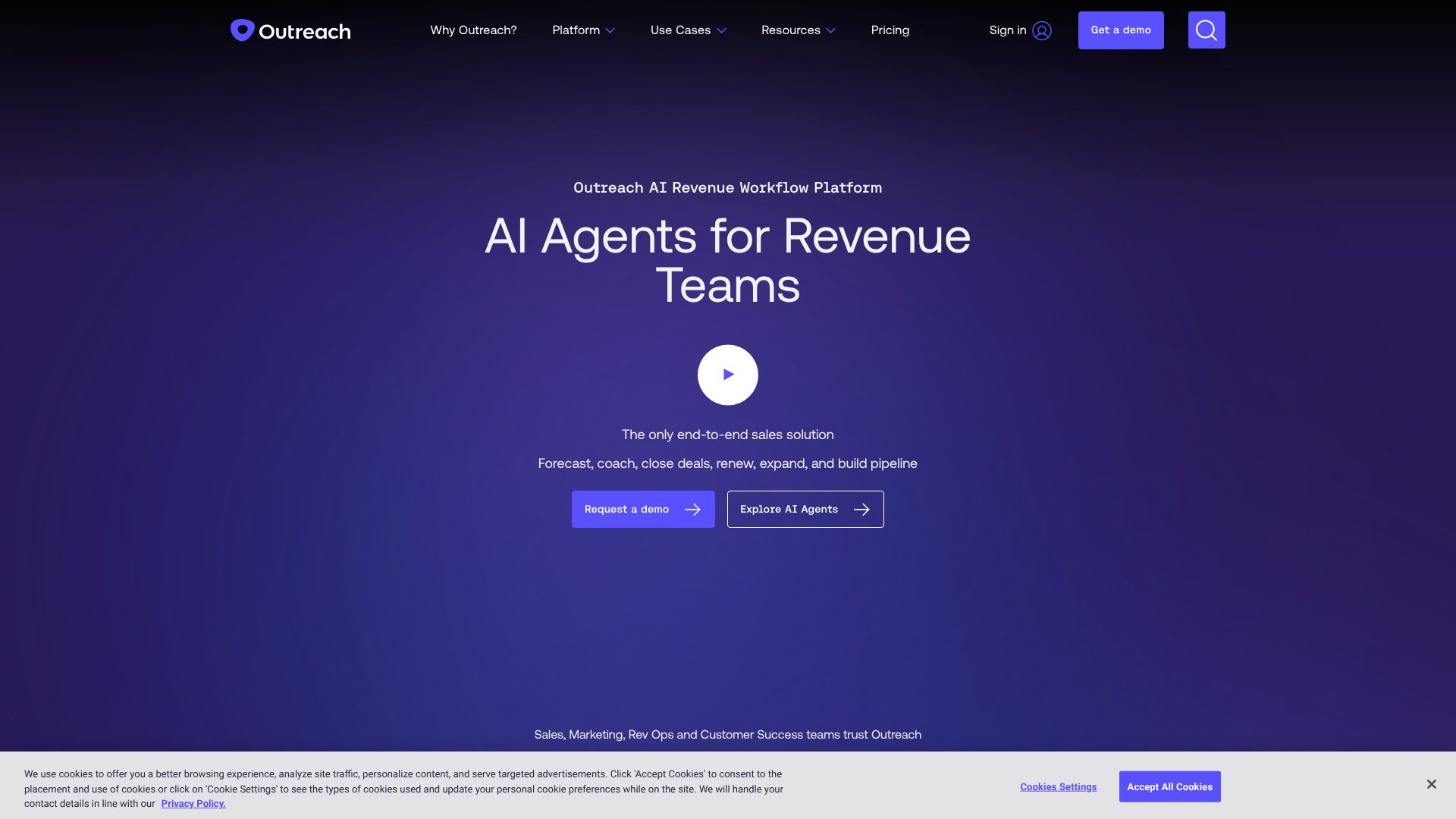
Outreach is a market leader in the sales engagement space, particularly for mid-market and enterprise companies. It offers a comprehensive suite of tools for creating, managing, and analysing sales sequences. Its AI-powered features provide insights to help managers coach their teams and optimise sales strategies.
- Best for: Established sales teams that need a powerful, data-driven platform for optimising their entire sales cycle.
- Key Features: Multi-channel sequences, AI-driven insights ('Kaia'), call recording and transcription, and deep Salesforce integration.
2. Reply.io

Reply.io is a versatile SEP that is popular with SMBs and startups. It provides a strong balance of features, ease of use, and affordability. Reply excels at multi-channel outreach, allowing you to combine emails, calls, LinkedIn tasks, and SMS messages into a single, automated sequence.
- Best for: SMBs and sales teams looking for a powerful yet user-friendly platform to automate their outbound and inbound sales processes.
- Key Features: Automated email sequences, a built-in phone dialler, LinkedIn automation, and a Chrome extension for easy prospecting.
3. Apollo.io
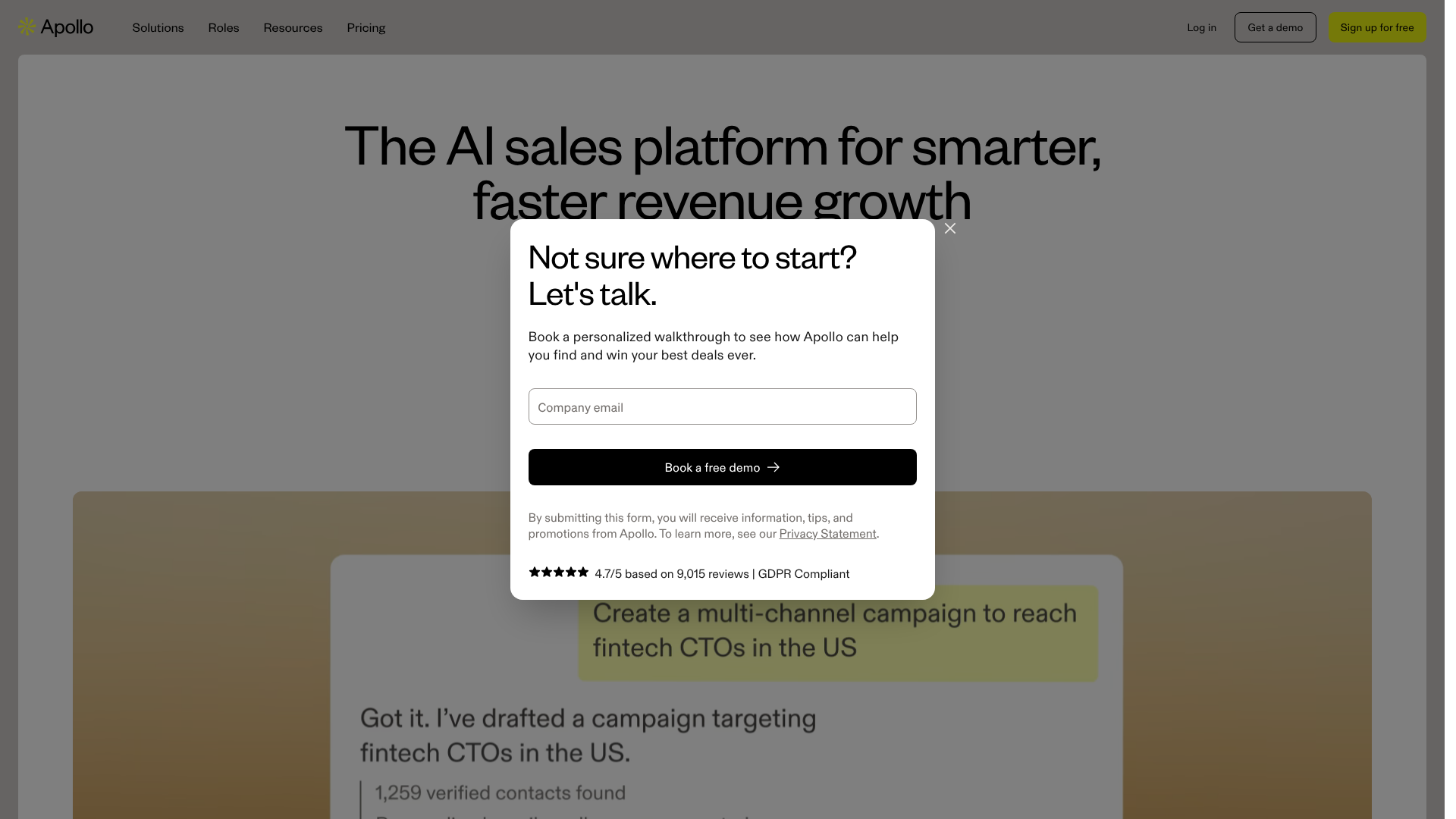
Apollo.io is unique because it combines a massive B2B contact database with sales engagement functionality. This makes it an all-in-one platform for prospecting and outreach. Teams can find verified contact information and immediately enrol those prospects into automated sequences without needing a separate data provider.
- Best for: Sales teams that want an integrated solution for lead generation and outreach, especially those in the SMB space.
- Key Features: A database of over 275 million contacts, email and call sequencing, analytics, and a scoring engine to prioritise leads.
Pros and Cons: Weighing Your Options
When considering a sales platform vs CRM, it's important to understand the inherent strengths and weaknesses of each category. Neither tool is a silver bullet; they are designed for specific jobs.
CRM: Pros and Cons
Pros:
- Centralised Data: Provides a single source of truth for all customer information, eliminating data silos.
- Pipeline Visibility: Offers clear visualisation of the sales funnel, helping managers forecast revenue and identify bottlenecks.
- Long-Term Relationship Management: Tracks the entire customer lifecycle, which is crucial for retention and upselling.
- Company-Wide Alignment: Can be used by marketing, sales, and service teams to create a cohesive customer experience.
Cons:
- Requires Manual Data Entry: Reps often see updating the CRM as an administrative burden, leading to incomplete or outdated information.
- Passive by Nature: A CRM stores data but doesn't actively help reps execute their daily outreach tasks.
- Can Become Bloated: Without proper governance, CRMs can become cluttered with bad data, reducing their usefulness.
Sales Engagement Platform: Pros and Cons
Pros:
- Increased Productivity: Automates repetitive tasks, allowing reps to focus on high-value activities like talking to prospects.
- Improved Effectiveness: Provides data on which messaging and strategies are working, enabling continuous optimisation.
- Enforces Best Practices: Cadences ensure a consistent and persistent follow-up process for every lead.
- Better Coaching: Managers can use analytics to identify where reps are struggling and provide targeted coaching.
Cons:
- Not a Database: An SEP is not designed to be the primary storage system for customer data; it relies on a CRM for that.
- Risk of Impersonal Automation: If not used thoughtfully, the automation features can lead to generic, spammy outreach.
- Can Be Expensive: SEPs are typically priced per user and can represent a significant investment for a sales team.
The Power of Integration: Why You Ultimately Need Both
The debate of 'CRM vs sales engagement' often misses the most important point: these tools are not competitors; they are partners. The most successful sales organisations use them together, creating a seamless flow of information and action that empowers their entire team.
Here’s how the integration typically works:
- Data Foundation: Your CRM (HubSpot CRM or Zoho CRM) acts as the master database. All new leads, whether from marketing or manual prospecting, are created here.
- Action Layer: A sales rep identifies a list of prospects in the CRM they want to target. With a single click, they sync this list to their SEP (Outreach or Reply.io).
- Automated Execution: The rep enrols the prospects into a pre-built, multi-step sequence. The SEP automatically sends personalised emails, creates call tasks, and reminds the rep to connect on LinkedIn over several days or weeks.
- Perfect Data Sync: This is the critical part. Every single action taken by the SEP is automatically logged back to the contact's record in the CRM in real-time. Every email sent, every call made, every link clicked—it’s all there. This eliminates the manual data entry that reps hate and ensures the CRM is always up-to-date.
This synergy solves the biggest weakness of each platform. The SEP breathes life into the static data within the CRM, while the CRM provides the clean, organised foundation the SEP needs to function effectively. Without the integration, you have a team that is either data-rich but action-poor (CRM only) or action-heavy but data-chaotic (SEP only).
Pro Tip: When evaluating tools, prioritise the quality of the integration. A deep, bi-directional sync between your CRM and SEP is non-negotiable. Look for features like automatic data logging, field mapping, and the ability to trigger actions in one platform based on updates in the other.
How to Choose: A Practical Framework for Your Business
So, which should you invest in first? And when is it time to add the other? Your decision should be based on your team's current stage, primary challenges, and sales motion.
Scenario 1: You're a New Business or Startup
- Your Priority: Organisation.
- Start With: A CRM.
- Reasoning: Before you can think about scaling outreach, you need a place to store and manage your first contacts and deals. A spreadsheet will quickly become unmanageable. Start with a free or low-cost CRM like HubSpot to build a solid data foundation from day one.
Scenario 2: You Have a CRM, but Rep Productivity is Low
- Your Priority: Activity and Efficiency.
- Add: A Sales Engagement Platform.
- Reasoning: Your reps are spending too much time on manual emails, logging calls, and figuring out who to follow up with. Their activity levels are inconsistent, and you have no insight into what messaging is effective. An SEP will automate these tasks and provide the data you need to improve.
Scenario 3: You Have a High-Volume Outbound Sales Team
- Your Priority: Scale and Optimisation.
- You Need: Both, tightly integrated.
- Reasoning: An outbound team lives and dies by its ability to execute a high volume of personalised outreach. A CRM alone cannot support this workflow. An SEP is essential for managing complex cadences, and the integration is critical for ensuring all that activity data is captured correctly for reporting and analysis.
Scenario 4: Your Sales Process Involves Complex, Long-Term Deals
- Your Priority: Relationship Management and Process Tracking.
- You Need: A powerful, customisable CRM is paramount. An SEP is a valuable addition.
- Reasoning: For long sales cycles with multiple stakeholders, the CRM's ability to track every interaction and relationship is key. An SEP can still be very useful for ensuring consistent, long-term follow-up and nurturing prospects over many months, but the CRM remains the central hub of the operation.
Pricing and Cost Comparison: What to Expect
Pricing structures for CRMs and SEPs differ, reflecting their distinct roles in the sales tech stack. It's important to budget accordingly and understand the value you're getting from each investment.
CRM Pricing
CRM pricing is incredibly varied. Many providers, including HubSpot, offer a free-forever tier with basic functionality, which is perfect for new businesses. Paid plans typically scale based on the number of users and the depth of features required.
- Models: Often tiered (e.g., Starter, Professional, Enterprise), with costs calculated per user, per month.
- Typical Range: Can range from free to £20-£40 per user/month for basic plans, and up to £150+ per user/month for advanced, enterprise-grade platforms.
- What You Pay For: More advanced plans unlock features like deeper automation, advanced reporting, API access, and higher contact limits. Always check the official websites for the most current pricing information.
Sales Engagement Platform Pricing
SEPs are generally considered a more specialised and premium tool, and their pricing reflects this. There are very few free options, and the cost is almost always on a per-user, per-month basis. The return on investment comes from the significant productivity gains for your sales reps.
- Models: Almost exclusively per user, per month, often with an annual contract requirement.
- Typical Range: Expect to pay between £60 and £120 per user/month. Enterprise platforms with advanced AI features can be higher.
- What You Pay For: You're paying for the automation engine, the analytics, the dialler, and the integrations that allow your reps to perform at a higher level. When evaluating, consider how many more meetings a rep needs to book per month to justify the cost.
Frequently Asked Questions
Here are some common questions that arise when comparing sales engagement platforms and CRMs.
Can a CRM replace a sales engagement platform?
For the most part, no. While some modern CRMs are adding basic sequencing features, they lack the depth and specialisation of a dedicated SEP. A true SEP offers multi-channel capabilities (email, phone, social), advanced A/B testing, detailed engagement analytics, and AI-powered coaching tools that are not found in a standard CRM. Trying to use a CRM for high-volume outreach is like trying to use a family car for a Formula 1 race—it just isn't built for that purpose.
Do I need a CRM before getting an SEP?
Yes, absolutely. A sales engagement platform is designed to work with a CRM, not replace it. The SEP needs a clean source of data to pull from, and the CRM is that source. Implementing an SEP without a CRM in place first would lead to data chaos, as you'd have no central repository to store long-term customer information and track deal progress.
Always establish your CRM as your system of record first.
What's the difference between sales engagement and marketing automation?
This is another common point of confusion. Marketing automation platforms (like HubSpot's Marketing Hub or Marketo) are designed for one-to-many communication. They nurture thousands of leads at scale with automated email drips and campaigns. The communication is typically from the brand, not an individual.
Sales engagement platforms are designed for one-to-one communication, at scale. The outreach comes from an individual sales rep and is meant to feel personal. While automated, the goal is to elicit a direct response and start a human conversation. Marketing automation nurtures leads until they are 'sales-ready'; sales engagement helps reps convert those sales-ready leads into meetings.
Final Thoughts
The 'sales engagement platform vs crm' discussion isn't about choosing a winner. It’s about understanding that you're comparing two different, yet equally vital, players on the same team. Your CRM is your strategic centre—the brain of your sales operation that holds all the knowledge. Your SEP is your tactical execution engine—the muscle that carries out the plan with speed and precision.
For any business serious about growth, the question isn't if you need both, but when you should implement each one. Start with a solid CRM foundation to organise your data. As your team grows and your focus shifts to proactive outreach and productivity, integrating a powerful SEP is the logical next step to building a truly modern and unstoppable sales machine.
If you're ready to build your sales stack, consider starting with a flexible and scalable CRM. Both HubSpot CRM and Zoho CRM offer excellent starting points. Once that's in place, you can supercharge your team's productivity with an SEP like Outreach or Reply.io.