


Ahrefs vs Semrush vs Moz: Which SEO Tool is Right for Your Business in 2026?
Choosing the right SEO software can feel like a monumental task. You're not just buying a tool; you're investing in a platform that will shape your digital marketing strategy. The debate over Moz vs Semrush vs Ahrefs is at the heart of this decision, as these three platforms represent the gold standard in the industry. Each offers a powerful suite of features for keyword research, backlink analysis, and site audits, but they excel in different areas and cater to different types of users.
- Quick Summary
- The Titans of SEO: What Are Ahrefs, Semrush, and Moz?
- Ahrefs: The Backlink Authority
- Semrush: The Complete Digital Marketing Toolkit
- Moz: The SEO Pioneer and Educator
- Core Feature Showdown: A Side-by-Side Comparison
- User Experience and Interface
- Pricing and Value for Money: A Cost Comparison
- Pros and Cons of Each Platform
- How to Choose: Which SEO Tool is Right for You?
- FAQ: Answering Your Top Questions
- Who is better, Semrush or Ahrefs?
- What is the difference between Moz and Semrush?
- Is Moz or Ahrefs better?
- What is the most accurate SEO tool?
- Is Semrush a Russian company?
- Which SEO tool is best for beginners?
- Final Thoughts
This guide cuts through the noise. We'll provide a detailed, side-by-side breakdown of their core functionalities, pricing structures, and unique strengths. Whether you're an SEO professional, a small business owner, or a marketing manager, this comparison will give you the clarity needed to select the platform that best aligns with your goals, budget, and expertise.
Quick Summary
- Ahrefs is for Data-Driven SEOs: If your primary focus is on deep backlink analysis, competitor research, and organic traffic insights, Ahrefs is the undisputed leader. Its backlink index is widely considered the best in the business.
- Semrush is the All-in-One Marketing Suite: For those who need a single platform to manage SEO, PPC, content marketing, and social media, Semrush offers the most comprehensive toolkit. It's a versatile choice for marketing teams and agencies.
- Moz is for Accessibility and Local SEO: Moz provides a user-friendly interface, excellent educational resources, and strong local SEO features, making it a great starting point for beginners, small businesses, and those focused on local search visibility.
The Titans of SEO: What Are Ahrefs, Semrush, and Moz?
Before we dive into a feature-by-feature analysis, it's important to understand the philosophy and history behind each tool. Their origins often explain their current strengths and where they place their focus.
Ahrefs: The Backlink Authority
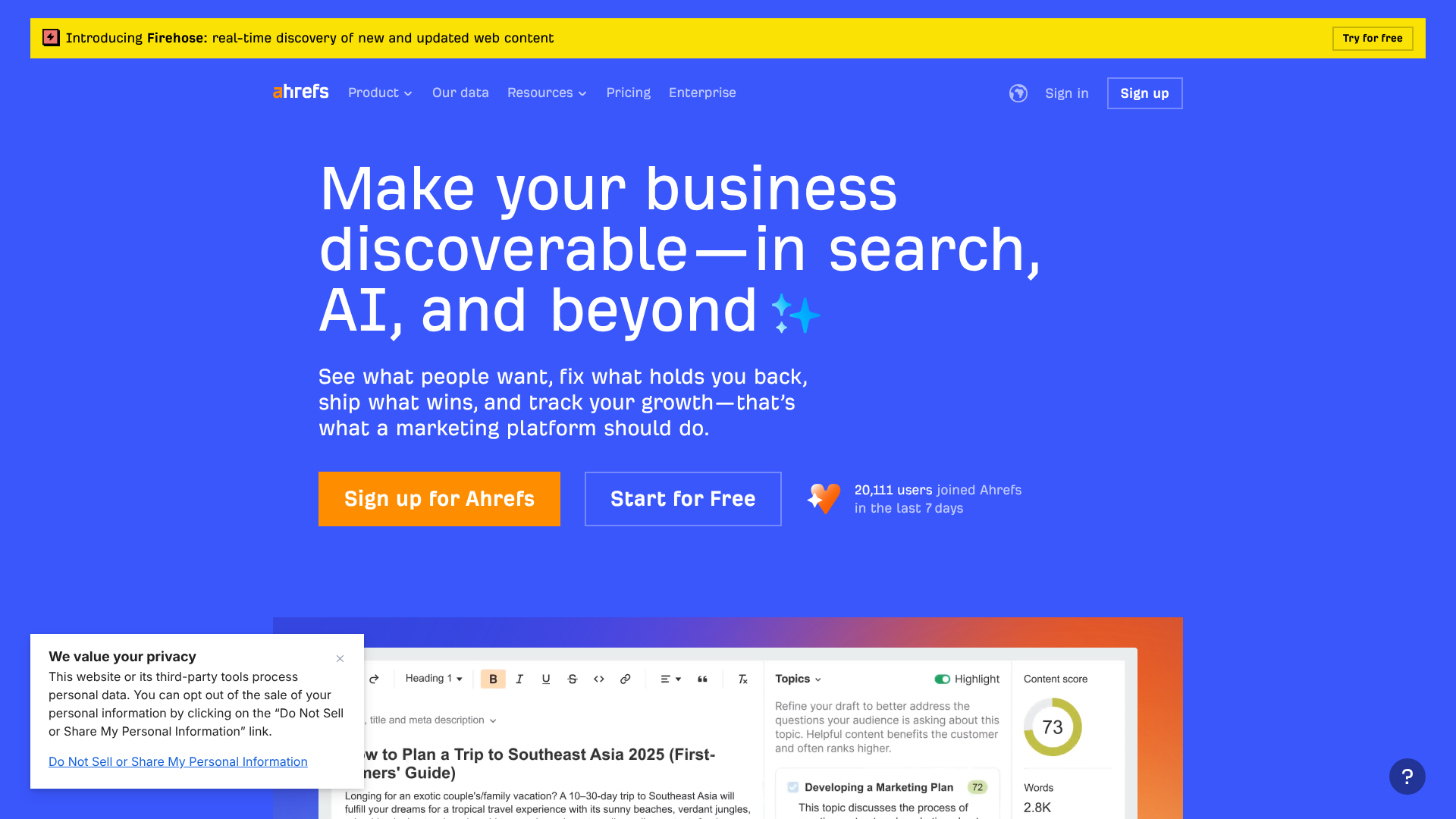
Launched in 2011, Ahrefs started with a singular mission: to build the world's best backlink analysis tool. It quickly achieved this goal, creating a crawler second only to Google's in size and speed. This foundation in link data is still its core strength today.
Over the years, Ahrefs has expanded into a full SEO suite, adding powerful tools for keyword research, content analysis, rank tracking, and site audits. However, its identity remains rooted in providing the most accurate and extensive data for serious SEO professionals who need to understand the competitive landscape on a granular level.
Semrush: The Complete Digital Marketing Toolkit
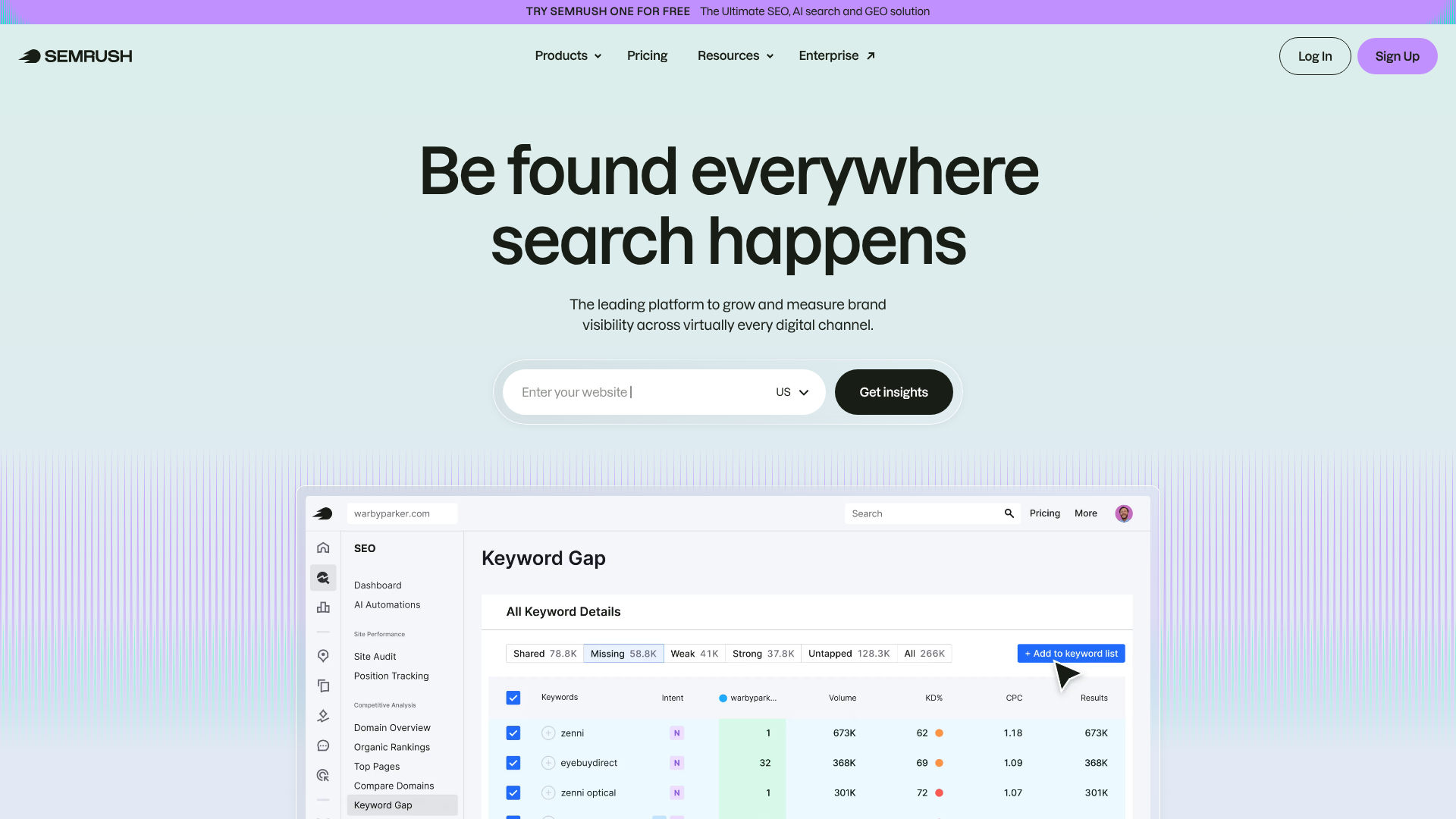
Semrush began in 2008 as a tool focused on competitor research, particularly for paid search (PPC). This broader marketing perspective has defined its evolution. It has grown into a true all-in-one digital marketing platform, covering everything from SEO and content marketing to social media management and advertising.
Semrush's strength lies in its sheer breadth of features. It aims to be the central hub for a company's entire online marketing efforts. This makes it incredibly valuable for marketing managers and agencies that need to see the bigger picture and manage multiple channels from one dashboard.
Moz: The SEO Pioneer and Educator
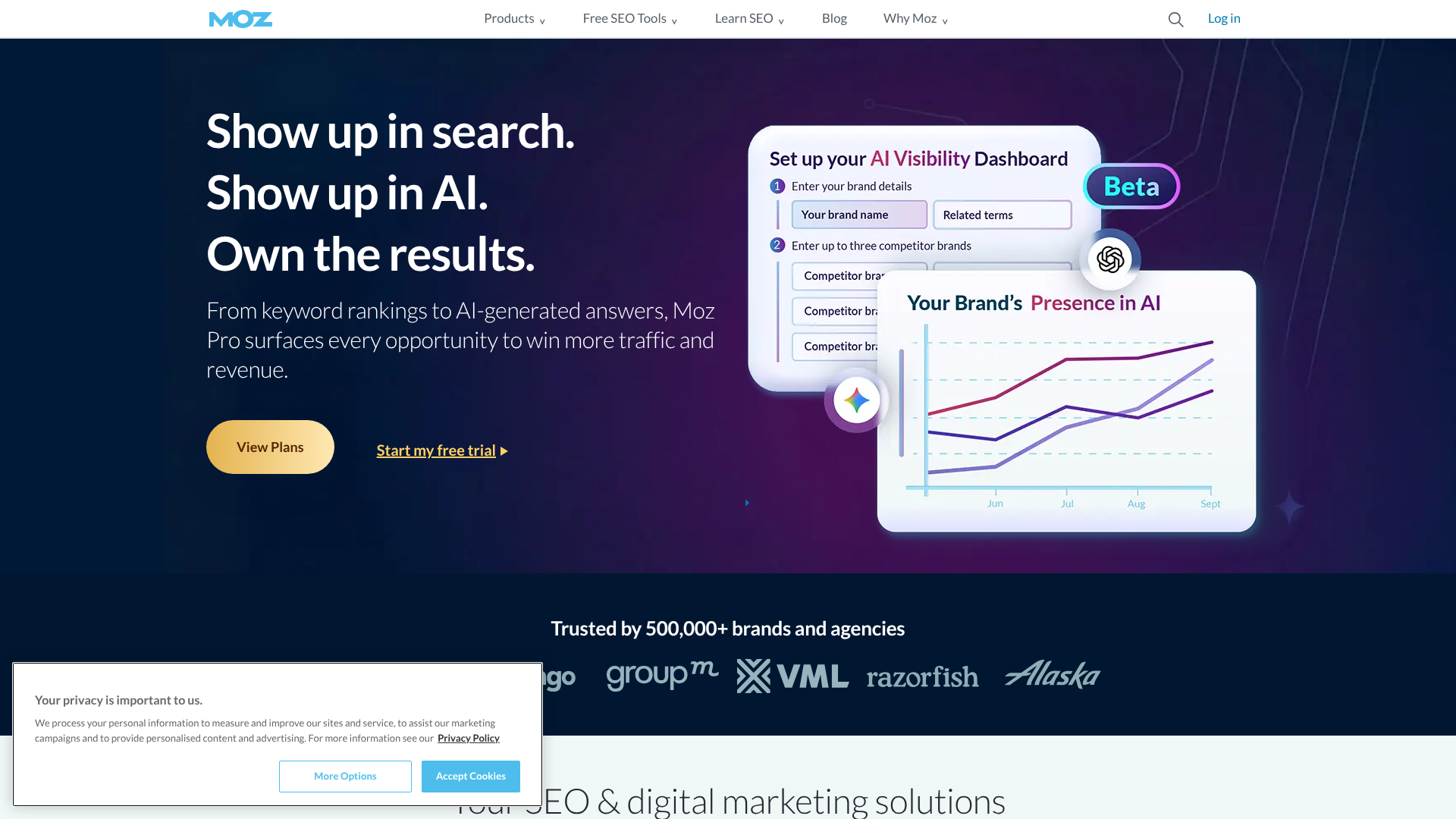
Moz is one of the original players in the SEO space, founded as SEOmoz in 2004. It started as a blog and community, and this educational DNA is still a core part of its brand. Moz is famous for creating foundational SEO metrics like Domain Authority (DA) and Page Authority (PA), which have become industry standards.
Moz Pro, its main software offering, is designed to make SEO accessible. It focuses on providing actionable insights in a user-friendly interface, supported by a wealth of tutorials and guides. It also has a strong focus on local SEO, making it a favourite among small businesses and agencies managing local clients.
Core Feature Showdown: A Side-by-Side Comparison
Now, let's get into the details. Here’s how the three platforms stack up across the most critical SEO functions. We'll look at the semrush vs ahrefs data battle, the ahrefs vs moz usability differences, and the moz vs semrush feature sets.
| Feature | Ahrefs | Semrush | Moz Pro |
|---|---|---|---|
| Primary Strength | Backlink Analysis & Competitor Data | All-in-One Marketing Suite | User-Friendliness & Local SEO |
| Keyword Database | 24.3 Billion Keywords | 25.5 Billion Keywords | 500 Million Keywords |
| Backlink Index | Largest and fastest-updating | Very large, extensive data | Smaller, but high-quality index |
| Site Audit | Comprehensive, good prioritisation | Most detailed, includes thematic reports | Solid, easy to understand |
| Rank Tracking | Daily updates, great reporting | Daily updates, includes local tracking | Weekly updates (standard), good UI |
| Unique Metric | Domain Rating (DR) | Authority Score | Domain Authority (DA) |
| Free Tools | Generous suite of free tools | Limited free tools, more in free account | Limited free tools (e.g., Link Explorer) |

Keyword Research
Effective SEO starts with understanding what your audience is searching for. All three tools offer powerful keyword research capabilities, but with different approaches.
Ahrefs' Keywords Explorer is a data powerhouse. It boasts a massive database and provides incredibly detailed information for each keyword, including clicks, click-through rates, and return rate. Its keyword difficulty score is considered one of the most reliable in the industry. The tool also excels at generating keyword ideas through various reports like "Matching terms," "Related terms," and "Search suggestions."
Semrush's Keyword Magic Tool is a fan favourite for its workflow. You can start with a broad topic and use its advanced filters to drill down into long-tail keywords, questions, and specific intents (informational, transactional, etc.). Semrush provides excellent data on keyword trends, cost-per-click (CPC), and competitive density, making it particularly useful for campaigns that integrate both SEO and PPC.
Moz's Keyword Explorer is the most straightforward of the three. It presents data in a very clean and understandable way, making it perfect for beginners. Its "Priority" score combines volume, difficulty, and organic CTR into a single metric to help you quickly identify the best opportunities. While its database is smaller than its competitors, it provides solid, reliable data for most use cases.
Backlink Analysis
This is where the semrush vs ahrefs debate gets most intense, and where Ahrefs truly shines.
Ahrefs' Site Explorer is the gold standard for backlink analysis. It uses a massive, constantly updated index of live links, giving you the freshest data possible. You can analyse any domain's backlink profile, see new and lost links, identify top-linking pages, and dissect anchor text distribution. The level of detail and the speed at which you can access it are unmatched.
Semrush's Backlink Analytics is a very strong competitor. Its index is huge, and it offers powerful features like the Backlink Audit Tool, which helps you identify and disavow toxic links. It also provides an "Authority Score" to gauge the quality of a linking domain. While it's excellent, most SEO professionals agree that Ahrefs still has a slight edge in the freshness and completeness of its link data.
Moz's Link Explorer is powered by its well-known Domain Authority (DA) metric. While DA is a valuable comparative metric, Moz's link index is smaller and updates less frequently than Ahrefs or Semrush. It’s great for getting a high-level view of a site's authority and for tracking your link-building progress over time, but it may miss some of the newer links that Ahrefs would catch.
Technical SEO & Site Audits
A healthy website is crucial for SEO success. All three platforms offer tools to crawl your site and identify technical issues.
Semrush's Site Audit is arguably the most comprehensive. It checks for over 140 technical and on-page SEO issues, grouping them into errors, warnings, and notices. It provides clear explanations and recommendations for fixing each issue. Its thematic reports and progress tracking make it easy to monitor your site's technical health over time.
Ahrefs' Site Audit is also very powerful. It's fast, cloud-based, and provides a clear health score. It excels at visualising data, helping you understand your site's structure, link depth, and potential issues with internal linking. It gives you full access to your raw crawl data, which is a huge plus for advanced technical SEOs.
Moz Pro's Site Crawl identifies common technical SEO issues like broken links, missing title tags, and redirect errors. Like the rest of the Moz platform, its reports are easy to digest and prioritise issues effectively. It may not be as exhaustive as Semrush's audit, but it covers all the essential bases and is perfect for users who don't want to get lost in technical jargon.
Pro Tip: Use your chosen tool's site audit feature to run a crawl on your top competitors. This can reveal their site structure strategies, how they handle internal linking for important pages, and uncover technical weaknesses you can exploit.
User Experience and Interface
How a tool presents its data is just as important as the data itself. A confusing interface can hide valuable insights.
When comparing ahrefs vs moz, the difference in user experience is stark. Moz is the clear winner for beginners. Its dashboard is clean, intuitive, and designed to guide you through your SEO workflow. It uses simple language and provides helpful "learn more" links throughout the platform.
Semrush sits in the middle. With so many tools available, its navigation can feel a bit overwhelming at first. However, once you get your bearings, the interface is logical and well-organised. Its dashboards are highly customisable, allowing you to create reports that show only the data you care about.
Ahrefs is built for data analysts. The interface is clean and incredibly fast, but it presents a vast amount of information. It prioritises data density over simplicity, which is perfect for experienced SEOs who want to slice and dice information in multiple ways. For a newcomer, it can have a steeper learning curve.
Pricing and Value for Money: A Cost Comparison
Pricing is often the deciding factor. It's important to note that pricing for these tools changes, so you should always check their official websites for the most current information. Here’s a general overview of their structures as of early 2026.
Ahrefs Pricing
Ahrefs typically offers four main tiers: Lite, Standard, Advanced, and Enterprise. The plans are primarily differentiated by the number of projects, tracked keywords, crawl credits, and user seats.
- Lite: Aimed at freelancers and small businesses, offering a good entry point to the core features.
- Standard: The most popular plan, suitable for most SEO professionals and marketing teams. It unlocks more historical data and increases most limits.
- Advanced & Enterprise: Designed for large agencies and enterprises with extensive data needs.
Ahrefs' pricing can feel high, especially since some features are tied to usage credits. However, for those who need its best-in-class data, the cost is often justified.
Semrush Pricing
Semrush offers three main plans: Pro, Guru, and Business. Like Ahrefs, these are separated by limits on projects, keywords, and reporting.
- Pro: Great for freelancers, startups, and in-house marketers with a limited budget.
- Guru: Unlocks more features, including the Content Marketing Platform, historical data, and branded reports.
- Business: The top-tier plan with the highest limits, API access, and advanced analytics.
Semrush often provides more features for a similar price point compared to Ahrefs, making it a strong value proposition for those who will use its full marketing toolkit.
Moz Pro Pricing
Moz Pro also has four tiers: Standard, Medium, Large, and Premium. The key differences are the number of keyword queries, pages crawled, and campaigns you can run.
- Standard: A very accessible entry point for small businesses and SEO beginners.
- Medium: The most popular choice, offering a good balance of features and limits for growing businesses.
- Large & Premium: For larger agencies and businesses that need to track many campaigns and keywords.
Generally, Moz is the most budget-friendly of the three, especially at the lower tiers. This makes the moz vs semrush decision easier for those just starting out.
Pros and Cons of Each Platform
No tool is perfect. Here is an honest look at the strengths and weaknesses of each platform to help you make a balanced decision.
Ahrefs
Pros:
- Unbeatable Backlink Data: The most comprehensive and up-to-date backlink index on the market.
- Excellent Keyword Research Tool: Provides deep insights beyond just search volume, including clicks data.
- Fast and Intuitive UI: The interface is designed for efficient data analysis and exploration.
- Great Content Explorer: A powerful tool for discovering popular content and link opportunities.
Cons:
- Higher Price Point: Can be one of the more expensive options, especially for smaller businesses.
- Steeper Learning Curve: The data-heavy nature of the tool can be intimidating for beginners.
Semrush
Pros:
- True All-in-One Platform: Covers SEO, PPC, content, social media, and market research.
- Powerful Site Audit Tool: Offers incredibly detailed and actionable technical SEO reports.
- Strong Content Marketing Features: The SEO Writing Assistant and Topic Research tools are excellent.
- Great Value for Money: You get a huge number of tools for the price of your subscription.
Cons:
- Can Be Overwhelming: The sheer number of features can make the platform difficult to navigate initially.
- Backlink Data Isn't Quite Ahrefs-Level: While very good, its backlink index is generally considered second to Ahrefs.
Moz Pro
Pros:
- Extremely User-Friendly: The best choice for beginners or those who want a simple, clear interface.
- Strong Educational Resources: Moz's blog, guides, and community are invaluable learning tools.
- Excellent Local SEO Features: Integrates well with Moz Local for managing local business listings.
- Industry-Standard Metrics: Domain Authority (DA) is a widely recognised and useful metric.
Cons:
- Smaller Data Indexes: Its keyword and backlink databases are not as large as its competitors'.
- Slower Data Updates: The link index and rank tracking can update less frequently than Ahrefs or Semrush.
How to Choose: Which SEO Tool is Right for You?
Ultimately, the best tool depends entirely on your specific needs, role, and budget. Here are our final recommendations based on common user profiles.
Choose Ahrefs if…
- You are a dedicated SEO professional, consultant, or part of an in-house SEO team.
- Your primary tasks involve deep competitor analysis, link building, and organic traffic strategy.
- You value data accuracy and freshness above all else and are comfortable working with large datasets.
Choose Semrush if…
- You are a digital marketing manager, a full-service agency, or a business owner wearing multiple hats.
- You need a single, integrated platform to manage SEO, content marketing, PPC, and social media.
- You want the best all-around feature set and value for a comprehensive marketing toolkit.
Choose Moz Pro if…
- You are new to SEO, a small business owner, or a blogger.
- You prioritise ease of use and clear, actionable recommendations over data overload.
- Your business has a local focus, and you need tools to manage your local search presence.
FAQ: Answering Your Top Questions
Here are answers to some of the most frequently asked questions when comparing these three SEO giants.
Who is better, Semrush or Ahrefs?
This is the most common question. Ahrefs is generally considered better for pure SEO tasks, especially backlink analysis and organic competitor research. Semrush is better if you need an all-in-one marketing platform that includes robust tools for PPC, content marketing, and social media alongside its strong SEO features.
What is the difference between Moz and Semrush?
The main difference lies in their target audience and scope. Moz is focused on making core SEO tasks accessible and understandable, especially for beginners and small businesses. Semrush is a much broader platform with a more extensive toolkit designed for marketing professionals who manage multiple channels.
Is Moz or Ahrefs better?
Ahrefs is better for data depth and analysis. Its keyword and backlink databases are significantly larger, and its tools are built for SEO specialists. Moz is better for usability and learning. Its interface is more intuitive, and its metrics like Domain Authority are easier for stakeholders to understand.
What is the most accurate SEO tool?
Accuracy can be subjective. For backlink data, Ahrefs is widely regarded as the most accurate and up-to-date. For keyword difficulty, both Ahrefs and Semrush have highly respected algorithms. No tool is 100% accurate, as they are all estimating data from Google, but Ahrefs and Semrush are generally considered the top tier for data reliability.
Is Semrush a Russian company?
Semrush was founded in 2008 by Oleg Shchegolev and Dmitri Melnikov, who are from Russia. However, the company is now headquartered in Boston, Massachusetts, USA. It became a publicly traded company on the New York Stock Exchange (NYSE: SEMR) in 2021.
Which SEO tool is best for beginners?
Moz Pro is almost universally recommended as the best SEO tool for beginners. Its clean interface, guided workflows, and extensive educational resources create a much gentler learning curve than Ahrefs or Semrush.
Final Thoughts
There is no single winner in the moz vs semrush vs ahrefs showdown. Each platform is a leader in its own right, and the best choice is the one that aligns with your specific needs. Ahrefs is the specialist's choice for deep SEO data, Semrush is the versatile all-rounder for comprehensive marketing campaigns, and Moz is the accessible entry point for those starting their SEO journey.
Evaluate your primary goals, your team's expertise, and your budget. All three platforms are powerful investments that can drive significant growth. If your strategy is heavily reliant on understanding the competitive landscape through link data and organic search, then the depth and accuracy of Ahrefs make it an exceptional choice.