




Non Compete Agreement Templates: A UK Employer's Buying Guide (2026)
Protecting your company's trade secrets, client relationships, and specialised training is crucial for long-term success. When a key employee leaves, the risk of them taking valuable information to a competitor is a significant concern for any business owner. This is where using well-drafted non compete agreement templates becomes an essential part of your employment strategy, providing a legal framework to safeguard your competitive edge. However, finding a template that is both comprehensive and legally enforceable in the UK can be a challenge, as a poorly constructed document is often not worth the paper it's written on.
- What to Know
- Understanding Non-Compete Agreements: More Than Just a Form
- Key Features of an Enforceable Non-Compete Template
- 1. Legitimate Business Interest
- 2. Reasonable Scope (Duration)
- 3. Reasonable Geographical Area
- 4. Scope of Restricted Activities
- 5. Consideration
- How to Choose the Right Non-Compete Template for Your Business
- Top Recommendations for Non-Compete Agreement Templates
- 1. Professional Legal Template Services (Recommended for Reliability)
- 2. Free Online Templates (Use with Caution)
- 3. Solicitor-Drafted Agreements (The Gold Standard)
- Pricing and Cost: Free vs. Paid Non-Compete Forms
- The Pros and Cons of Using Non-Compete Templates
- Frequently Asked Questions (FAQ)
- Are non-compete agreements enforceable in the UK?
- How long can a non-compete agreement last in the UK?
- What happens if an employee violates a non-compete agreement?
- Do I need a solicitor to create a non-compete agreement?
- Final Thoughts
This guide will walk you through everything you need to know about choosing and using non-compete agreements. We'll explore the critical clauses that determine their enforceability, compare the pros and cons of free versus paid options, and provide a clear framework for selecting the right solution for your business. The goal is to equip you with the knowledge to protect your assets effectively without overstepping legal boundaries.
What to Know
- Enforceability is Key: A non-compete agreement is only useful if it's legally enforceable. UK courts require them to be reasonable in scope, duration, and geographical area to protect a legitimate business interest, not just to stifle competition.
- Templates are a Starting Point: Whilst non-compete templates provide a solid foundation, they often require customisation to fit your specific industry, the employee's role, and the unique risks your business faces.
- Free vs. Paid Options: Free templates can be a good starting point for very simple situations, but they carry the risk of being generic and unenforceable. Paid services like LegalContracts offer professionally drafted, customisable documents that provide greater legal protection.
- Legitimate Business Interest: You must be able to prove you are protecting a genuine business interest, such as trade secrets, confidential information, or key client relationships. A non-compete cannot be used simply to prevent someone from working.
- Legal Advice is Recommended: For high-stakes roles or complex industries, consulting with a solicitor to review or draft your non-compete agreement is the safest approach to ensure maximum protection and legal compliance.
Understanding Non-Compete Agreements: More Than Just a Form

A non-compete agreement, often referred to as a restrictive covenant, is a legal contract between an employer and an employee. Its primary purpose is to prevent the employee from engaging in business activities that would be in direct competition with the employer for a specified period after their employment ends. This isn't about preventing someone from earning a living; it's about protecting the employer's legitimate business interests that the employee had access to.
These interests can include a wide range of assets. For example, if you've spent years developing a unique software algorithm, you wouldn't want an employee who helped build it to immediately join a rival and replicate it. Similarly, if a sales director has built strong relationships with your most valuable clients, a non-compete can prevent them from taking that business to a new company overnight. The core idea is to create a temporary buffer that allows the business to protect its position after a key team member departs.
It's important to distinguish non-compete agreements from other common restrictive covenants. A non-solicitation clause specifically prevents an ex-employee from poaching clients or staff, whilst a non-disclosure agreement (NDA) or confidentiality clause protects specific information. A non-compete is broader, restricting the type of work an individual can do and where they can do it. Because they are the most restrictive, they face the highest level of scrutiny from UK courts.

Key Features of an Enforceable Non-Compete Template
The effectiveness of any non-compete form hinges on its enforceability. UK courts are cautious about restricting an individual's right to work and will only uphold a non-compete clause if it is carefully drafted to be no wider than reasonably necessary. A generic, overly broad template downloaded from the internet is likely to be struck down if challenged. Here are the essential components you must get right.
1. Legitimate Business Interest
This is the foundation of your agreement. You must clearly define what you are trying to protect. Vague statements like "protecting the business" are insufficient. You need to be specific. Examples of legitimate interests include:
- Trade Secrets and Confidential Information: This includes proprietary formulas, manufacturing processes, software code, and business strategies.
- Customer Connections: Protecting relationships with clients that the employee personally managed or had significant influence over.
- Stability of the Workforce: Preventing senior employees from leaving and taking a team of skilled staff with them.
2. Reasonable Scope (Duration)
The time limit of the restriction must be fair. A 5-year ban would almost certainly be deemed unreasonable. Typically, for most roles, a restriction of 3 to 6 months is considered standard. For very senior executives with deep access to strategic information, a period of up to 12 months might be justifiable, but this is often the absolute maximum the courts will entertain.
3. Reasonable Geographical Area
The geographical scope must be limited to the area where the employee's competition could genuinely harm your business. If you run a local bakery in Manchester, a clause preventing an ex-employee from opening a bakery anywhere in the UK would be unenforceable. The restriction should be limited to the city or even a specific radius where your customer base is located. For online businesses, defining geography can be more complex and may focus on specific market segments rather than physical locations.
4. Scope of Restricted Activities
The agreement must clearly state which activities are prohibited. It should not be a blanket ban on working within an entire industry. For instance, if an employee was a software developer for a healthcare tech company, the clause should restrict them from developing similar healthcare software for a competitor, not from working as a developer in an unrelated sector like finance or gaming.
5. Consideration
For a contract to be valid, both parties must receive something of value (known as 'consideration'). When a non-compete is signed at the start of employment, the job offer itself is the consideration. However, if you introduce a non-compete agreement for an existing employee, you must provide new consideration. This could be a pay rise, a bonus, a promotion, or participation in a share option scheme. Without new consideration, the agreement is often unenforceable.
How to Choose the Right Non-Compete Template for Your Business
Selecting the right template isn't a one-size-fits-all process. The needs of a tech start-up are vastly different from those of a local construction firm. Making the wrong choice can lead to a false sense of security, leaving your business exposed. Here’s a framework to guide your decision.
First, consider the employee's role and level of access. A junior employee with limited access to sensitive information may not need a non-compete at all; a simple confidentiality clause might suffice. In contrast, a senior executive, lead engineer, or top salesperson with access to strategic plans, client lists, and proprietary technology warrants a much more robust and carefully customised agreement. The more critical the employee is to your competitive advantage, the more you need to invest in a high-quality, specific document.
Second, analyse your industry. In fast-moving sectors like technology or digital marketing, a 12-month restriction could be seen as unreasonable because the landscape changes so quickly. In more traditional industries like manufacturing or professional services, a longer duration might be justifiable. Your template should reflect these industry norms.
A generic template won't account for these nuances.
Third, evaluate your need for customisation. Does the template allow you to easily adjust the duration, geographical scope, and definition of competing activities. A good template service will provide guided questionnaires that help you tailor the document to your specific circumstances. This is a significant advantage over a static PDF form, which may be difficult to alter correctly without introducing legal errors.
The ability to create different versions for different roles is also a key feature to look for.
Pro Tip: Document the reasoning behind your chosen restrictions. If you ever need to enforce the agreement in court, having a record of why you deemed a 6-month duration and a 20-mile radius necessary for a specific role can significantly strengthen your case. It shows that you thoughtfully considered what was reasonable rather than applying a blanket policy.
Top Recommendations for Non-Compete Agreement Templates
When sourcing non-compete forms, you generally have three options, each with its own balance of cost, convenience, and legal reliability. Your choice will depend on your budget, risk tolerance, and the complexity of your business.
1. Professional Legal Template Services (Recommended for Reliability)
For most small to medium-sized businesses, online legal document services offer the best combination of quality and affordability. These platforms provide templates that are drafted and reviewed by legal professionals, ensuring they are up-to-date with current legislation.
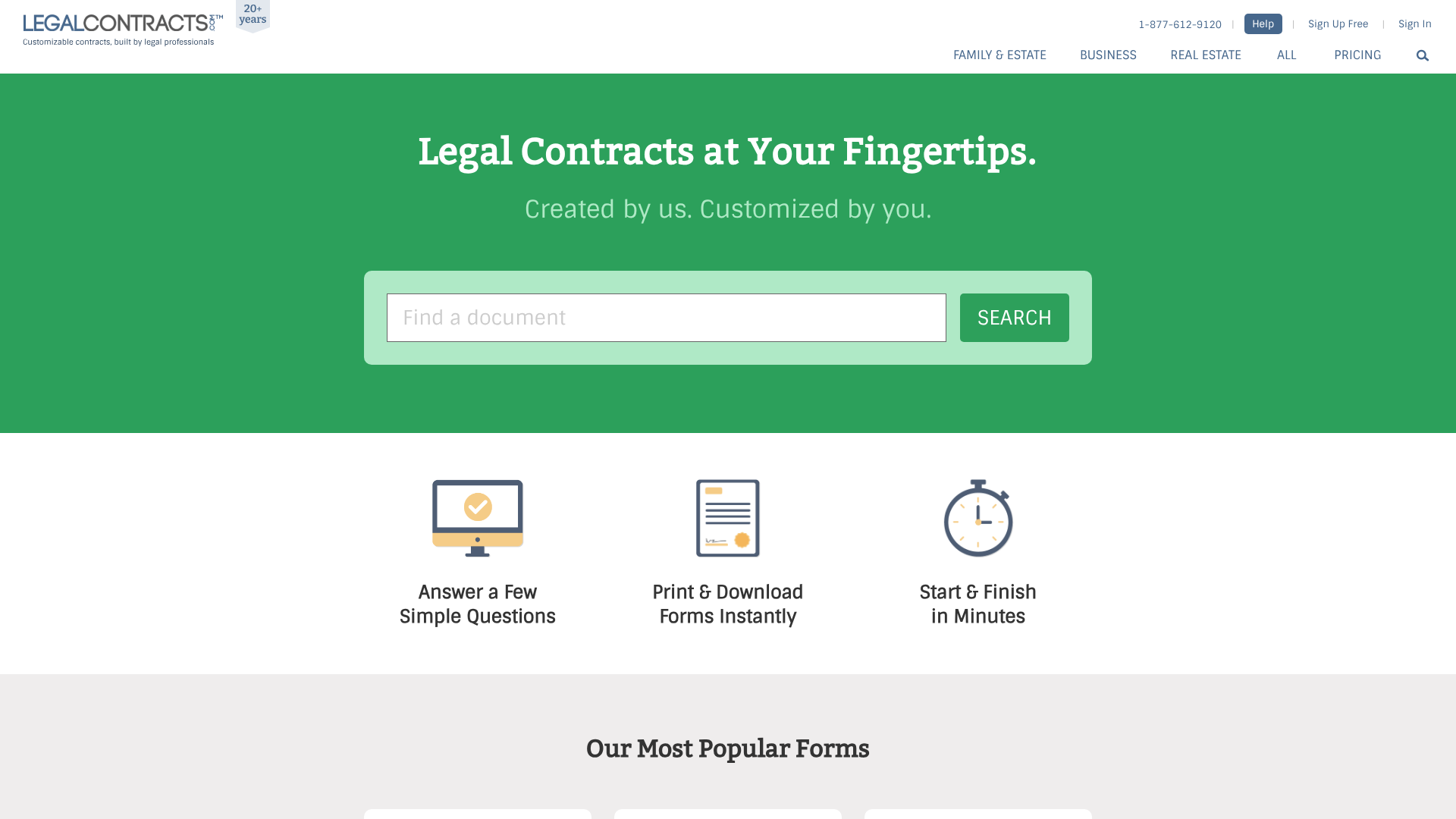
One of the leading providers in this space is LegalContracts. Their platform guides you through a step-by-step process, asking relevant questions about your business, the employee's role, and the specific interests you need to protect. Based on your answers, it generates a customised non-compete agreement tailored to your needs. This approach helps ensure the clauses are reasonable and more likely to be enforceable than a generic document.
Pros
- Legally Vetted: Documents are created by legal experts, reducing the risk of using outdated or flawed clauses.
- Customisable: The interactive process allows for a high degree of personalisation to fit different roles and situations.
- Cost-Effective: Significantly cheaper than hiring a solicitor to draft a document from scratch.
- Convenient: You can create, download, and manage your legal forms online at any time.
Cons
- Not a Substitute for Legal Advice: While excellent, these services don't replace tailored advice from a solicitor for highly complex or high-risk situations.
2. Free Online Templates (Use with Caution)
Numerous websites offer free non compete templates. These can be tempting for start-ups and small businesses operating on a tight budget. Sources can range from government business portals to general document-sharing sites. Whilst they can be useful for understanding the basic structure of an agreement, relying on them for legal protection is risky.
Many free templates are overly generic, and some may not even be compliant with UK law, often being based on US legislation. They typically use broad, sweeping language that is likely to be deemed unreasonable by a court, rendering the entire agreement void. If you choose this route, you must be prepared to heavily scrutinise and edit the document, ideally with input from someone with legal knowledge.
Pros
- No Cost: The most obvious benefit is that they are completely free to download and use.
- Accessible: They are readily available with a simple online search.
Cons
- High Risk of Unenforceability: Often too broad or not tailored to specific UK legal standards.
- Lack of Support: There is no guidance on how to fill them out correctly or what the clauses mean.
- Outdated: They may not reflect recent changes in employment law.
3. Solicitor-Drafted Agreements (The Gold Standard)
For maximum protection, especially for key executives or employees with access to highly sensitive trade secrets, the best option is to hire a solicitor. A solicitor will conduct a thorough analysis of your business and the specific risks associated with the role, then draft a completely bespoke non-compete agreement. This is the most expensive option by a significant margin, but it provides the highest level of assurance that the agreement is robust, reasonable, and enforceable.
Pricing and Cost: Free vs. Paid Non-Compete Forms
Understanding the cost implications of each option is crucial for making an informed decision. The price of a non-compete agreement isn't just the upfront cost but also the potential cost of it failing when you need it most. A free template that gets thrown out of court can cost you far more in lost business than a professionally drafted document.
Here’s a comparison of the typical costs and value associated with each approach:
| Feature | Free Templates | Online Legal Services (e.g., LegalContracts) | Solicitor |
|---|---|---|---|
| Upfront Cost | £0 | £10 – £50 (approx. per document or subscription) | £300 – £1,500+ |
| Customisation | Low (Static document) | High (Guided questionnaire) | Bespoke (Fully tailored) |
| Legal Reliability | Low | Medium to High | Very High |
| Time to Create | Minutes | 15-30 Minutes | Days to Weeks |
| Best For | Basic understanding, very low-risk roles | SMEs, start-ups, standard employee roles | Key executives, high-risk roles, complex industries |
As the table illustrates, free non compete forms are only suitable for the most basic, low-risk scenarios. The real value comes from investing a small amount in a service like LegalContracts, which bridges the gap between unreliable free resources and expensive legal fees. For a modest outlay, you get a document that is far more likely to stand up to legal scrutiny, providing genuine protection for your business.
The Pros and Cons of Using Non-Compete Templates
Using templates to create legal documents like non-compete agreements offers clear advantages, but it's essential to be aware of the potential drawbacks as well. A balanced understanding will help you use them effectively and know when you might need to seek further professional help.
Advantages of Using Templates
- Cost-Effectiveness: This is the most significant benefit. Drafting a legal document from scratch with a solicitor can be expensive. Templates, especially from online services, provide a professional-grade starting point for a fraction of the cost.
- Speed and Convenience: You can generate a non-compete agreement in minutes, allowing you to quickly onboard new employees with the necessary protections in place. There's no need to schedule appointments or wait for a solicitor to draft a document.
- Standardisation: Templates help you maintain consistency across your organisation. Using a standard, approved template for all employees in similar roles ensures that everyone is subject to the same terms, which can simplify contract management.
- Educational Value: For business owners unfamiliar with legal contracts, reviewing a well-structured template can be an excellent way to learn about the key clauses and concepts involved in non-compete agreements.
Disadvantages and Risks
- Risk of Unenforceability: The biggest danger, particularly with free templates, is that the agreement won't hold up in court. If the clauses are too broad, unreasonable, or not compliant with current UK law, a judge can invalidate the entire covenant.
- Lack of Specificity: A template is, by its nature, generic. It cannot account for the unique circumstances of your business, your industry, or the specific role of the employee. This lack of tailoring can create loopholes or result in clauses that don't adequately protect your specific interests.
- False Sense of Security: Having a signed document can make you feel protected, but if the document is flawed, that security is an illusion. This can lead to costly litigation and potential loss of business down the line when you discover your agreement is worthless.
- Evolving Laws: Employment law changes. A template you downloaded a year ago might not reflect the latest legal precedents or statutory changes. Reputable online services update their documents regularly, but static, free templates do not.
Pro Tip: When using any template, always read every clause carefully. Don't assume the default settings are right for you. Pay close attention to the definitions of "competitor," the geographical scope, and the duration. If a term seems vague or overly broad, it probably is.
Frequently Asked Questions (FAQ)
Here are answers to some of the most common questions employers have about non-compete agreements in the UK.
Are non-compete agreements enforceable in the UK?
Yes, they can be, but they are subject to strict legal tests. A UK court will only enforce a non-compete clause if the employer can demonstrate that it protects a legitimate business interest and is no wider than reasonably necessary in terms of duration, geographical scope, and the activities it restricts. Clauses designed purely to prevent competition will be struck down.
How long can a non-compete agreement last in the UK?
There is no fixed legal maximum, but reasonableness is the guiding principle. For most employees, a restriction of three to six months is often considered reasonable. For senior executives with access to highly sensitive information, a period of up to 12 months may be justifiable. Anything longer than 12 months is highly unlikely to be enforced by a UK court.
What happens if an employee violates a non-compete agreement?
If an employee breaches a valid non-compete agreement, the employer can take legal action. The most common remedy is to seek an injunction from the court, which is an order that forces the employee to stop the competing activity. The employer may also be able to sue the former employee and their new employer for financial damages resulting from the breach, such as lost profits.
Do I need a solicitor to create a non-compete agreement?
While it's not legally required, it is highly recommended, especially for protecting high-value business assets or for senior-level employees. A solicitor can draft a bespoke agreement that is tailored to your specific needs and has the best chance of being enforced. For many small businesses, using a reputable online legal document service like LegalContracts can be a very effective and affordable alternative.
Final Thoughts
Navigating the world of non compete agreement templates requires a careful balance between protecting your business and respecting the rights of your employees. While the convenience and low cost of templates are appealing, their true value lies in their enforceability. A generic, poorly considered agreement offers little more than a false sense of security and can crumble under legal scrutiny precisely when you need it most.
For most UK businesses, the most practical approach is to use a professional, customisable template service. These platforms provide a legally sound foundation that you can tailor to the specific roles within your company, offering a significant upgrade in protection over generic free forms without the high cost of a solicitor.
Ultimately, a non-compete agreement is a strategic tool. By investing the time to choose the right template and customise it thoughtfully, you create a powerful deterrent that safeguards your client relationships, trade secrets, and the overall stability of your business. If your needs are straightforward, a service like LegalContracts provides an excellent, reliable solution to create the documents you need to protect your hard-earned success.