


Ahrefs vs Moz vs Semrush (2026): Which SEO Tool is Best for You?
Choosing the right SEO software can feel like a monumental task. With so many powerful options available, it’s difficult to know which one truly fits your workflow, budget, and goals. A detailed comparison of Ahrefs vs Moz vs Semrush is essential because these three platforms represent the gold standard in the industry, yet they each cater to slightly different users. Whether you're a freelance SEO, a small business owner, or part of a large marketing agency, your choice will significantly impact your digital marketing success.
- Quick Summary
- What Are Ahrefs, Moz, and Semrush? A Quick Introduction
- Ahrefs: The Data Powerhouse
- Semrush: The All-in-One Marketing Toolkit
- Moz: The SEO Pioneer for All Skill Levels
- Feature Face-Off: Ahrefs vs Moz vs Semrush
- Keyword Research: Finding Your Golden Nuggets
- Backlink Analysis: The Core of Off-Page SEO
- Site Auditing: Uncovering Technical SEO Issues
- User Experience and Ease of Use
- Pricing and Value for Money: A Cost Comparison
- Pros and Cons: The Honest Breakdown
- Who Should Choose Which Tool? Top Recommendations
- Frequently Asked Questions (FAQ)
- Is Moz or Ahrefs better?
- Who is better, Semrush or Ahrefs?
- What is the most accurate SEO tool?
- Is Semrush a Russian company?
- Which SEO tool is best for beginners?
- Final Thoughts: Making Your Decision
This guide breaks down the key differences in features, data accuracy, user experience, and pricing. We'll move beyond the marketing claims to give you a clear, honest look at what each tool does best. By the end, you'll have the confidence to select the platform that will give you the biggest competitive advantage.
Quick Summary
- Ahrefs is for Data-Driven SEOs: It offers the industry's leading backlink database and technical audit tools, making it the top choice for professionals who prioritise deep data analysis and link building.
- Semrush is the All-in-One Marketing Suite: It goes beyond SEO to include robust toolkits for PPC, content marketing, social media, and market research, ideal for agencies and marketing teams with diverse needs.
- Moz is Best for Beginners and Core SEO: With its user-friendly interface and strong educational focus, Moz is perfect for those new to SEO or businesses that need to master the fundamentals without being overwhelmed.
- The Right Choice Depends on Your Focus: Your decision should be based on your primary goals. If link building is your main task, lean towards Ahrefs. If you need a comprehensive marketing tool, Semrush is likely your best bet. If you value simplicity and learning, start with Moz.
What Are Ahrefs, Moz, and Semrush? A Quick Introduction
Before we compare features side-by-side, it's important to understand the philosophy and core strengths of each platform. They all started with a specific focus and have since expanded, but their origins still influence their strongest capabilities today.
Ahrefs: The Data Powerhouse
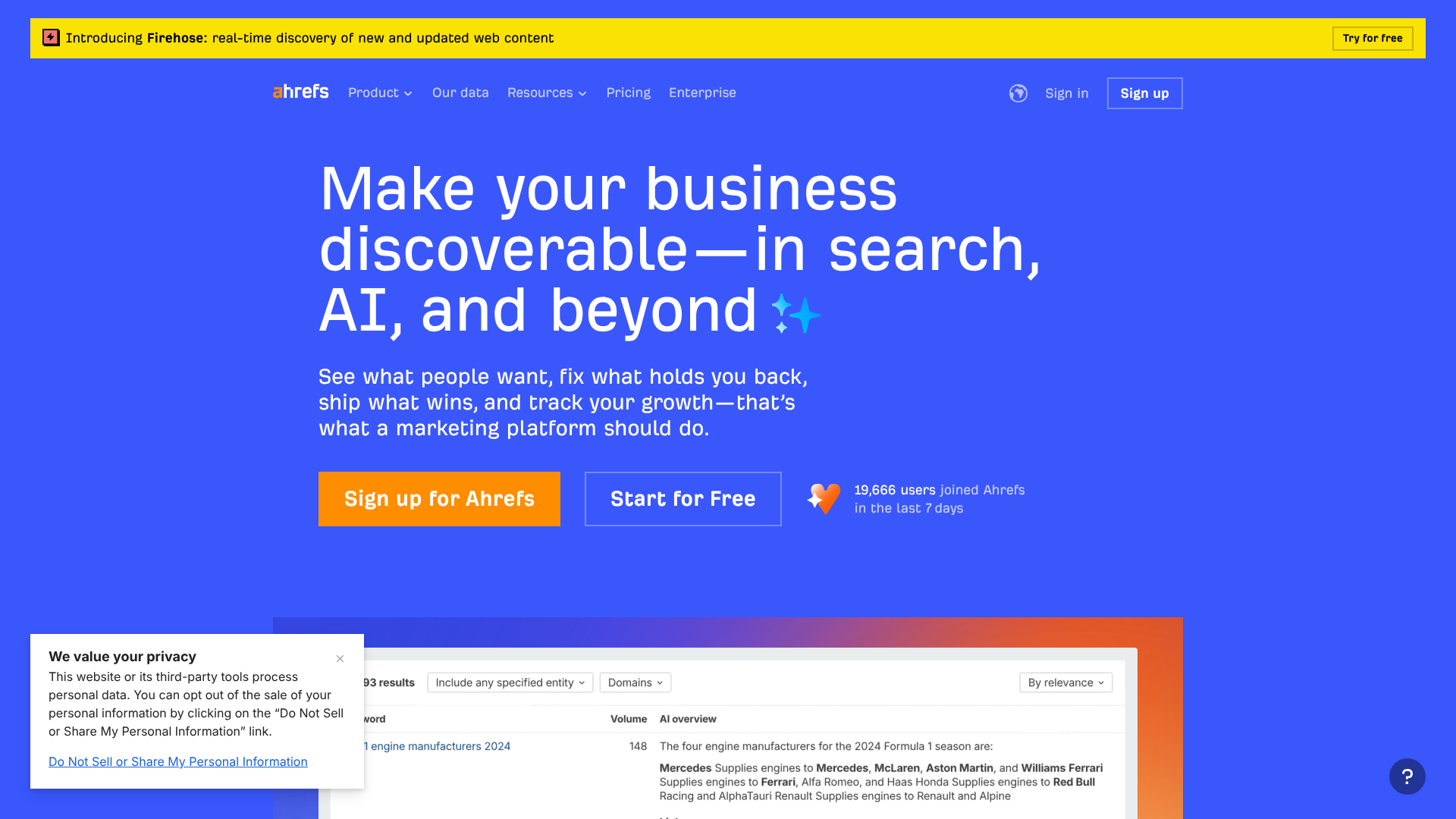
Ahrefs began its journey as a backlink analysis tool and quickly built a reputation for having the largest and most accurate index of live backlinks on the web. Its web crawler is second only to Google's in terms of size and speed, which means it often finds new links and website changes before its competitors.
While its foundation is in backlinks, Ahrefs has evolved into a complete SEO toolkit. It now includes powerful features for keyword research, site audits, rank tracking, and content analysis. However, its identity remains rooted in providing deep, granular data for SEO professionals who need to perform in-depth competitor analysis and build effective link-building campaigns.
Semrush: The All-in-One Marketing Toolkit
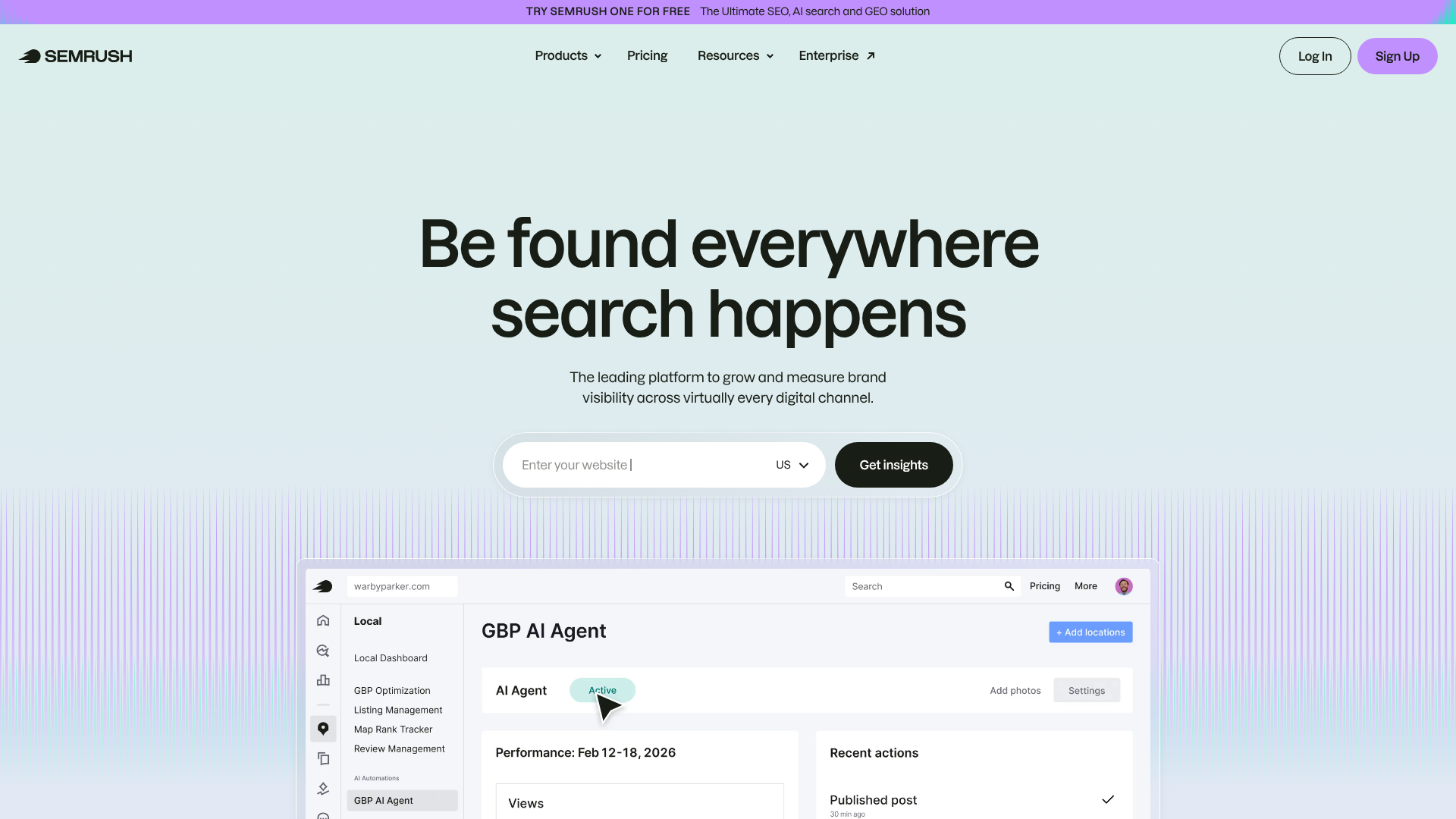
Semrush has always positioned itself as more than just an SEO tool; it's a complete digital marketing intelligence platform. While its SEO features are comprehensive and highly competitive, its true unique selling proposition is the breadth of its toolkit. It offers dedicated modules for advertising (PPC), social media management, content marketing, and competitive market research.
This makes Semrush an excellent choice for marketing agencies and in-house teams that manage multiple aspects of a company's online presence. The ability to analyse a competitor's SEO strategy, PPC ad copy, and social media engagement all within one dashboard provides a holistic view that standalone SEO tools can't match.
Moz: The SEO Pioneer for All Skill Levels
Moz has been a cornerstone of the SEO community for years, known as much for its educational resources (like the Whiteboard Friday series) as for its software. It pioneered metrics like Domain Authority (DA) and Page Authority (PA), which have become industry standards for gauging a website's ranking potential.
Moz Pro is designed with usability in mind. Its interface is clean, its data is presented clearly, and its features are geared towards helping users understand and act on core SEO principles. While it may not have the sheer data volume of Ahrefs or the feature breadth of Semrush, it provides a solid, reliable, and accessible platform for small businesses, bloggers, and SEO newcomers.
Feature Face-Off: Ahrefs vs Moz vs Semrush
Now, let's get into the specifics. While all three tools cover the same basic SEO functions, the depth, accuracy, and approach of each feature set vary significantly. Here’s a high-level look at how they stack up.
| Feature | Ahrefs | Semrush | Moz Pro |
|---|---|---|---|
| Best For | Backlink Analysis & Technical SEO | All-in-One Marketing (SEO, PPC, Content) | Beginners & Core SEO Fundamentals |
| Backlink Database | Largest & Fastest | Very Large | Large |
| Keyword Database | 24.3 Billion Keywords | 25.5 Billion Keywords | 500 Million Keywords |
| Site Audit | In-depth, cloud-based crawler | Comprehensive, 140+ checks | User-friendly, prioritised issues |
| Unique Metric | Domain Rating (DR) | Authority Score | Domain Authority (DA) |
| Beyond SEO | No | Yes (PPC, Social, Content Marketing) | Yes (Moz Local) |
| Free Trial | No (Offers free limited tools) | Yes (7-day trial) | Yes (30-day trial) |
Keyword Research: Finding Your Golden Nuggets
Effective keyword research is the foundation of any successful SEO campaign. All three platforms offer powerful tools, but they excel in different areas.
In the ahrefs vs semrush comparison for keyword research, Ahrefs' Keywords Explorer stands out for its massive database and excellent filtering options. It provides data from 10 different search engines (including Google, YouTube, and Amazon) and offers unique metrics like "Clicks" and "Clicks Per Search" to help you gauge the true traffic potential of a keyword, not just its search volume. Its interface is built for power users who want to slice and dice data in countless ways.
Semrush's Keyword Magic Tool is fantastic for brainstorming and topic discovery. It organises millions of keywords into topic-based subgroups, making it easy to find long-tail variations and related questions. Its intent analysis and question filters are particularly useful for content creators looking to build comprehensive articles that cover a topic in its entirety.
Moz's Keyword Explorer is the most straightforward of the three. It introduces a unique "Priority" score that combines volume, difficulty, and organic click-through rate (CTR) into a single metric, helping you quickly identify the best opportunities. While its database is smaller, its focus on simplicity and actionable insights makes it great for those who don't want to get lost in endless data tables.
Backlink Analysis: The Core of Off-Page SEO
This is where the ahrefs vs moz battle really heats up, and where Ahrefs traditionally shines brightest. Ahrefs' Site Explorer boasts the largest index of live backlinks, updated constantly by its hyperactive web crawler. This means you see new and lost backlinks faster than with any other tool.
The platform provides incredibly detailed reports on referring domains, anchor text, and link growth over time. Its ability to analyse outgoing links and broken links on a competitor's site is also a powerful feature for finding new link-building opportunities.
Semrush's Backlink Analytics is a strong contender. It has a substantial database and offers great features like Authority Score to judge a link's quality and a Backlink Audit tool to identify and disavow toxic links. However, in head-to-head tests, its index is generally found to be slightly smaller and slower to update than Ahrefs'.
Moz's Link Explorer is the tool that introduced the world to Domain Authority (DA). While DA is a valuable and widely used metric, Moz's backlink index is smaller than both Ahrefs' and Semrush's. It's perfectly adequate for general analysis and tracking your own link profile, but for deep, competitive link-building research, Ahrefs holds the edge.
Pro Tip: Don't rely on a single metric like DR or DA. Use them as a guide, but always manually review a website's relevance, traffic, and content quality before pursuing a backlink.
Site Auditing: Uncovering Technical SEO Issues
A healthy website is a prerequisite for ranking well. All three tools offer robust site audit features to find and fix technical problems.
Ahrefs' Site Audit is a cloud-based crawler, which means it doesn't use your computer's resources. It crawls your site and provides over 100 pre-configured issue checks, from critical errors like broken pages to minor warnings about missing meta descriptions. Its data visualisation is excellent, helping you understand your site's structure and identify problem areas quickly.
Semrush's Site Audit is equally comprehensive, checking for over 140 different SEO issues. It organises findings into thematic reports (Crawlability, Performance, Internal Linking), which makes it easy to prioritise your fixes. It also integrates with project management tools like Trello, allowing you to send tasks directly to your development team.
Moz Pro's Site Crawl feature is simpler but effective. It crawls your site on a weekly basis and categorises issues by impact, helping you focus on what matters most. While it may not be as exhaustive as the others, it's more than capable of catching the most common and critical technical SEO errors, making it perfect for beginners.
User Experience and Ease of Use
A tool is only useful if you can figure out how to use it. The user experience (UX) is a key differentiator between these three platforms.
Moz is the clear winner for beginners. Its interface is clean, uncluttered, and designed to guide you. Dashboards are easy to understand, and helpful tooltips explain complex metrics. The platform feels less like a raw data tool and more like an SEO advisor.
Semrush strikes a balance. Given its vast number of features, the dashboard is surprisingly well-organised. However, the sheer volume of tools and reports can be overwhelming for a new user. It takes time to explore and understand everything it has to offer, but navigation becomes intuitive with practice.
Ahrefs is built for the data analyst. Its interface is dense with charts, tables, and filters. This is a huge advantage for experienced SEOs who want to dig deep and customise their views. For a newcomer, however, it can feel intimidating and present a steep learning curve.
Pricing and Value for Money: A Cost Comparison
Pricing for these tools is a significant investment, so it's crucial to understand what you get for your money. Please note that pricing changes, so you should always visit the official websites for the most current information.
Ahrefs Pricing Structure
Ahrefs typically offers four main tiers: Lite, Standard, Advanced, and Enterprise. A key aspect of their pricing is the use of a credit system. Each report you run or filter you apply consumes credits, and your monthly plan determines your credit allowance. This can be a drawback for heavy users on lower-tier plans.
- Lite: Aimed at hobbyists and small projects.
- Standard: The most popular plan, suitable for SEO professionals and marketing consultants.
- Advanced: Designed for larger teams and agencies with more extensive needs.
- Ahrefs does not offer a traditional free trial, but they do have a suite of free tools with limited functionality.
Semrush Pricing Structure
Semrush offers three core plans: Pro, Guru, and Business. Each plan unlocks more features and increases limits on projects, keywords to track, and reports per day.
- Pro: Great for freelancers, startups, and in-house marketers with a limited budget.
- Guru: Best for small to medium-sized businesses and growing marketing agencies, with access to the Content Marketing Platform.
- Business: Built for large agencies, e-commerce projects, and businesses with an extensive web presence.
- Semrush offers a free trial, which is a great way to test its full capabilities.
Moz Pro Pricing Structure
Moz Pro's plans are named Standard, Medium, Large, and Premium. The main differences between them are the limits on keyword tracking, pages crawled, and keyword reports.
- Standard: A good starting point for bloggers and small businesses learning SEO.
- Medium: The most popular choice, offering a balanced set of limits for growing businesses.
- Large & Premium: Catered to larger businesses and agencies with high-volume needs.
- Moz offers a generous 30-day free trial, providing ample time to explore the platform.
Pros and Cons: The Honest Breakdown
No tool is perfect. Here's a straightforward look at the strengths and weaknesses of each platform to help you make a balanced decision.

Ahrefs: The Good and The Bad
Pros:
- Unmatched Backlink Data: The most comprehensive and up-to-date backlink index in the industry.
- Powerful Site Explorer: In-depth analysis of any website's organic traffic, keywords, and link profile.
- Excellent User Interface for Data: While complex, the UI is perfect for deep data analysis and filtering.
- Innovative Features: Tools like Content Explorer are unique and highly valuable for content strategy.
Cons:
- High Price Point: It's one of the more expensive options on the market.
- Steep Learning Curve: Not ideal for beginners who may feel overwhelmed by the data.
- Confusing Credit System: The credit-based usage on lower plans can be restrictive.
Semrush: The Good and The Bad
Pros:
- True All-in-One Platform: Covers nearly every aspect of digital marketing, not just SEO.
- Strong Competitor Analysis: Excellent tools for analysing competitors' PPC, content, and social strategies.
- User-Friendly Dashboard: Manages to keep a vast feature set relatively easy to navigate.
- Great for Content Marketing: The SEO Writing Assistant and topic research tools are top-notch.
Cons:
- Backlink Data Lag: Its backlink index, while large, is generally not as current as Ahrefs'.
- Can Be Overwhelming: The sheer number of features can be a distraction if you only need core SEO.
Moz: The Good and The Bad
Pros:
- Extremely Beginner-Friendly: The easiest platform to learn and use effectively.
- Excellent Educational Support: Access to a wealth of guides, tutorials, and community support.
- Reliable Core Metrics: Domain Authority is a trusted industry benchmark.
- Generous Free Trial: A 30-day trial gives you plenty of time to evaluate the tool.
Cons:
- Smaller Data Indexes: Its keyword and backlink databases are not as extensive as its competitors'.
- Slower Updates: The crawler and data refreshes can be less frequent.
- Lacks Advanced Features: Power users may find the toolset limiting for complex analysis.
Who Should Choose Which Tool? Top Recommendations
Your choice in the ahrefs vs moz vs semrush debate comes down to who you are and what you need to accomplish.
Choose Ahrefs If…
You are a dedicated SEO professional, a link-building specialist, or an agency where data accuracy is non-negotiable. You live and breathe competitor analysis and need the most powerful backlink tool on the market. You're comfortable with a data-heavy interface and are willing to invest time in mastering a complex tool to gain a competitive edge. Visit Ahrefs to see their full feature list.
Choose Semrush If…
You are a digital marketing manager, a full-service agency, or a business owner who wears multiple hats. Your strategy involves a mix of SEO, content marketing, PPC, and social media, and you want a single, integrated platform to manage it all. You value a holistic view of your digital footprint and that of your competitors.
Choose Moz If…
You are a small business owner, a blogger, or someone new to the world of SEO. You want a tool that can help you master the fundamentals without overwhelming you. You value clear, actionable insights, a supportive community, and an intuitive user experience over having the largest possible dataset.
Frequently Asked Questions (FAQ)
Is Moz or Ahrefs better?
This depends entirely on your needs. Ahrefs is better for deep, technical SEO and link building due to its superior backlink database and data-rich interface. Moz is better for beginners and those who need a more guided, user-friendly experience to manage core SEO tasks. If your job is 100% SEO, Ahrefs is likely the more powerful choice.
If you're learning or managing SEO as part of other duties, Moz is more accessible.
Who is better, Semrush or Ahrefs?
The ahrefs vs semrush debate is common among professionals. Ahrefs is generally considered better for pure SEO tasks, specifically backlink analysis and technical site audits, due to its data quality. Semrush is better as an all-around digital marketing platform. If you also manage PPC campaigns, content strategy, and social media, Semrush provides more value by consolidating all those functions into one tool.
What is the most accurate SEO tool?
Accuracy can be measured in different ways. For backlink data (the number of live links and the speed of discovery), Ahrefs is widely regarded as the most accurate. For keyword search volume, all top-tier tools use different data sources and algorithms, leading to variations. No tool is 100% accurate, but Ahrefs, Semrush, and Moz are all trusted sources that provide reliable data for strategic decision-making.
Is Semrush a Russian company?
Semrush was founded in 2008 by Oleg Shchegolev and Dmitri Melnikov, who are of Russian origin. However, the company is now a global entity. It is headquartered in Boston, Massachusetts, USA, and became a publicly traded company on the New York Stock Exchange (NYSE) in 2021. It operates as a US company.
Which SEO tool is best for beginners?
Moz Pro is widely considered the best SEO tool for beginners. Its interface is the most intuitive, its reports are easy to understand, and the company provides extensive educational resources to help new users learn SEO principles. The platform focuses on guiding users toward making impactful changes without burying them in complex data.
Final Thoughts: Making Your Decision
Choosing between Ahrefs, Moz, and Semrush isn't about finding the single "best" tool, but about finding the right tool for you. Each platform is a leader in the space for good reason, and each offers immense value to its target audience.
To summarise:
- Go with Ahrefs for unparalleled data depth, especially for backlinks and technical SEO.
- Go with Semrush for a comprehensive, all-in-one marketing suite that covers everything from SEO to PPC.
- Go with Moz for a user-friendly, educational experience perfect for mastering SEO fundamentals.
Your best next step is to take advantage of the free trials offered by Moz and Semrush. Spend time with the platforms, run reports on your own website, and see which workflow feels most natural to you. For Ahrefs, explore their free tools to get a sense of their data quality. An informed decision today will set your SEO strategy up for success for years to come.