




50+ Cold Email Subject Lines That Get Opened (For Sales Teams)
Your cold email could contain the most compelling offer in the world, but it means nothing if it never gets opened. The single line of text standing between you and a potential customer is the subject line. Crafting effective cold email subject lines is less of an art and more of a science—a blend of psychology, brevity, and relevance that convinces a busy professional to click instead of delete.
- What You'll Learn
- The Psychology Behind a High-Performing Cold Email Subject Line
- Core Frameworks for Writing Effective Email Headers
- 1. The Personalisation Framework
- 2. The Pain Point Framework
- 3. The Curiosity Gap Framework
- 4. The Social Proof Framework
- 50+ Proven Cold Email Subject Lines to Test
- For Creating Curiosity
- For Highlighting a Pain Point
- For Personalised Outreach
- For Follow-Up Emails
- For Value-Driven and Benefit-Oriented Topics
- The Don'ts: Subject Line Mistakes That Kill Your Open Rates
- Tools for Testing and Optimising Your Cold Email Topics
- FAQ: Your Questions on Cold Email Subject Lines Answered
- What is a good subject line for a cold email?
- What is the 30/30/50 rule for cold emails?
- What subject line gets the most opens?
- How long should a cold email subject line be?
- Is cold emailing illegal in the UK?
- Final Thoughts
Getting this right is the highest-leverage activity in any cold outreach campaign. A great subject line can double your open rates, which in turn doubles the number of conversations you start. This guide breaks down the science, provides proven frameworks, and gives you over 50 examples you can adapt for your own campaigns to stop being ignored and start getting replies.
What You'll Learn
- Brevity is Key: The most effective subject lines are often short (1-4 words), personal, and designed to spark curiosity rather than sell.
- Avoid the Spam Folder: Steer clear of overly salesy language, excessive punctuation like exclamation marks, and using all capital letters, as these are common spam triggers.
- Proven Strategies Work: Personalisation, referencing a specific pain point, asking a direct question, or mentioning a mutual connection are reliable tactics for boosting open rates.
- Testing is Non-Negotiable: The only way to know what truly works for your audience is to consistently A/B test your email subject lines using outreach tools to optimise performance.
The Psychology Behind a High-Performing Cold Email Subject Line

A cold email subject line has one job: to earn the click. It's the digital equivalent of a knock on the door. If it sounds like a sales pitch, the door stays shut. If it sounds like a genuine, relevant message from another human, the recipient is far more likely to see what's inside.
Understanding the psychology behind this interaction is crucial for writing effective email headers that consistently perform well.
The core principles are rooted in basic human behaviour. People are naturally curious, they prioritise messages that seem relevant to them, and they are overwhelmed with information. Your subject line must cut through this noise by appealing to one of several key psychological triggers. It's not about tricking someone into opening your email; it's about signalling that the content inside is worth their limited time and attention.
Data consistently shows that subject lines that mimic internal company emails perform best. Think about the emails you get from colleagues. They are often short, lowercase, and direct, like "meeting notes" or "quick question about the project". These formats feel familiar and safe, lowering the recipient's natural defence against unsolicited messages.
Adopting this style makes your cold email feel less like an advertisement and more like a personal communication.
Key Features of a Subject Line That Gets Opened
Certain characteristics are common among the most successful cold email topics. These aren't rigid rules but guiding principles that increase your probability of success. By incorporating these features, you align your message with the recipient's mindset and inbox habits.
First, relevance is paramount. The subject line must signal that the email is specifically for the recipient, not part of a mass blast. This can be achieved by mentioning their name, company, or a specific goal or challenge relevant to their role. A subject line like "idea for [Company Name]" is far more compelling than "A revolutionary new solution".
Second, curiosity is a powerful motivator. A subject line that creates a small information gap can be irresistible. For example, "Strange question" or "Your thoughts?" makes the recipient wonder what the email is about, compelling them to click to satisfy their curiosity. The key is to be intriguing without being misleading or devolving into clickbait.
Finally, simplicity and clarity often outperform cleverness. A straightforward subject line that clearly states the topic, such as "content marketing strategy" or "question about your recent post", can be very effective. It sets a clear expectation and shows respect for the recipient's time. They know exactly what they are opening, which builds a small amount of trust from the very beginning.
Core Frameworks for Writing Effective Email Headers
Instead of randomly guessing what might work, you can use proven frameworks to structure your cold email subject lines. These models are based on the psychological principles that drive opens. Mastering a few of these will give you a reliable toolkit for any outreach scenario.
Think of these not as rigid templates but as flexible starting points. You can combine elements from different frameworks and adapt the language to fit your brand voice and the specific context of your outreach. The goal is to develop a system for creating compelling subject lines quickly and efficiently.
1. The Personalisation Framework
This is the most fundamental and effective framework. People are hardwired to respond to their own name and things that are directly related to them. Basic personalisation involves using the recipient's first name or company name.
- Example:
[Name], quick question - Why it works: It's direct, personal, and feels like a one-to-one communication. The phrase "quick question" implies it will be easy to read and respond to.
Advanced personalisation goes deeper. It might reference a recent company achievement, a piece of content they published, or a shared interest. This shows you've done your research and aren't just sending a generic template.
- Example:
Loved your article on LinkedIn - Why it works: It's a genuine compliment that shows you've engaged with their work. It immediately builds rapport before they've even read your email body.
2. The Pain Point Framework
This framework addresses a specific problem you know your prospect is likely facing. It works because it immediately signals that your email contains a potential solution to a real business challenge. To use this effectively, you must have a deep understanding of your ideal customer profile.
- Example:
fixing your sales team's pipeline - Why it works: It's direct and speaks to a high-priority business need. A sales leader struggling with pipeline issues is almost certain to open this email.
This approach positions you as a problem-solver from the very first interaction. It frames the conversation around their needs, not your product. The subject line promises value by focusing on a solution, making it highly relevant.
- Example:
a better way to handle [Specific Task] - Why it works: It identifies a process they are familiar with and suggests an improvement. This is less aggressive than pointing out a problem but still highlights an opportunity for optimisation.
3. The Curiosity Gap Framework
This framework leverages the human desire to close an information loop. You provide just enough information to make the recipient curious, forcing them to open the email to get the full picture.
- Example:
idea for [Company Name] - Why it works: It's vague but highly relevant. Anyone who cares about their company will want to know what the idea is. It feels collaborative rather than salesy.
According to a perspective shared on LinkedIn by sales expert Yurii Veremchuk, the best subject lines are boring, 1-3 words long, and look like they came from inside the company. This approach aligns perfectly with the curiosity gap, as internal emails often have simple, context-dependent subjects.
- Example:
Did you see this? - Why it works: It creates a sense of urgency and implies that the content is important or timely. The recipient's fear of missing out (FOMO) can be a powerful driver for an open.
4. The Social Proof Framework
Using the name of a mutual connection, a competitor, or a well-known company in your industry can significantly increase your open rates. This framework borrows credibility and establishes an immediate connection.
- Example:
[Mutual Connection] recommended I get in touch - Why it works: This is the warmest possible cold email. The referral from a trusted source bypasses the usual skepticism associated with cold outreach.
Even without a direct referral, you can use social proof. Mentioning a competitor they respect or a client you've helped in their industry can achieve a similar effect.
- Example:
[Competitor Name] question - Why it works: It piques their interest and makes them wonder what you know about their competitor. It positions you as an industry insider with valuable information.
50+ Proven Cold Email Subject Lines to Test
Here is a comprehensive list of cold email subject lines, organised by the strategy they use. Remember to adapt these with your prospect's specific details. The best results come from testing what resonates most with your audience.
For Creating Curiosity
These subject lines are intentionally vague to make the recipient want to learn more. They work best when your initial research suggests the prospect is open to new ideas.
quick questionYour thoughts?idea for [Company Name]Strange questionHoping to helpA suggestion for youThis might be usefulChecking in[Your Company] / [Their Company](A tactic mentioned by Jesse Itzler on TikTok)Just a thoughtCan you help me with this?Am I on the right track?
For Highlighting a Pain Point
These are direct and focus on a problem you can solve. They are most effective when you have a clear understanding of your target audience's challenges.
a better way to handle [Specific Task]fixing your [Department] problemOne problem: [Pain Point]Tired of [Common Frustration]?The issue with [Current Process]Stop wasting time on [Inefficient Task]Is [Specific Challenge] a priority?A new strategy for [Business Goal][Pain Point] solutionreducing your [Specific Cost]improving your [Specific Metric]
For Personalised Outreach
These subject lines show you've done your homework. They reference something specific to the prospect, their company, or their recent activity.
Congrats on the [Recent Achievement]Loved your post on [Platform][Name], saw you're hiring for [Role]Your comment about [Topic][Mutual Connection] suggested we connectFellow [University/Group] alumInspired by your work at [Company Name]question about your [Project/Initiative]following up on your new role[Name], I thought of you
For Follow-Up Emails
Persistence is key in cold emailing, but your follow-up subject lines need to add value, not just repeat the first message.
next stepsJust left you a voicemailOur conversation last weekA few more thoughts on [Topic]Is this still a priority?Any update on this?Let me know if I can helpPermission to close your file?(Use with caution, can be very effective)Here's that resource I mentioned
For Value-Driven and Benefit-Oriented Topics
These subject lines promise tangible value or a specific, desirable outcome. They answer the prospect's unspoken question: "What's in it for me?"
10x your [Metric] in 10 minutes?A new way to achieve [Goal]Free resource for [Company Name]Save 20 hours/week on [Task]The [Benefit] you're looking for[Result] for companies like yoursA proven path to [Desired Outcome]How [Similar Company] achieved [Result]Your next [Job Title]—here's why!
Pro Tip: Keep a "swipe file" of subject lines you receive that make you want to open them. Analyse why they worked on you and adapt the underlying principles for your own campaigns. This is a great way to stay current with what's working in the real world.
The Don'ts: Subject Line Mistakes That Kill Your Open Rates
Knowing what to do is only half the battle. It's equally important to know what to avoid. Certain common mistakes can get your email sent straight to the spam folder or immediately deleted by the recipient, no matter how good your offer is.
First and foremost, avoid anything that sounds like traditional marketing copy. Words like "sale," "discount," "free," "limited time," and "exclusive offer" are massive red flags for both spam filters and human recipients. According to data from the CAN-SPAM Act, misleading subject lines are not only ineffective but can also be illegal. You can find more details on compliance at the Federal Trade Commission's website.
Using excessive punctuation or unconventional formatting is another common error. Multiple exclamation marks (!!!), using all capital letters (URGENT MESSAGE), or adding unnecessary symbols can make your email look unprofessional and desperate. These tactics scream "advertisement" and trigger the recipient's internal spam filter, leading to an instant delete.
Finally, be wary of clickbait. A subject line that makes a bold promise that the email body can't deliver on will destroy any trust you might have built. For example, a subject line like "Your account" or "Payment issue" might get a high open rate out of fear, but the recipient will feel deceived and angry once they see it's a sales pitch. This burns the bridge not just for this email, but for any future communication.
Tools for Testing and Optimising Your Cold Email Topics
Crafting great cold email subject lines is a process of continuous improvement. What works today might not work tomorrow, and what works for one audience might fail with another. The only way to truly know what resonates is to test. This is where sales engagement and cold email software become invaluable.
These platforms allow you to run A/B tests on your subject lines automatically. You can send one version of your subject line to a portion of your list and a second version to another portion. The software then tracks the open rates for each and provides clear data on which one performed better. This data-driven approach removes guesswork and allows you to systematically improve your campaign performance over time.
Modern tools go beyond simple A/B testing. Many use AI to analyse your subject lines and predict their performance, suggesting improvements before you even hit send. They also provide detailed analytics on open rates, click-through rates, and reply rates, giving you a complete picture of how your messaging is landing. Here are a few top recommendations for managing this process.
1. Instantly.ai
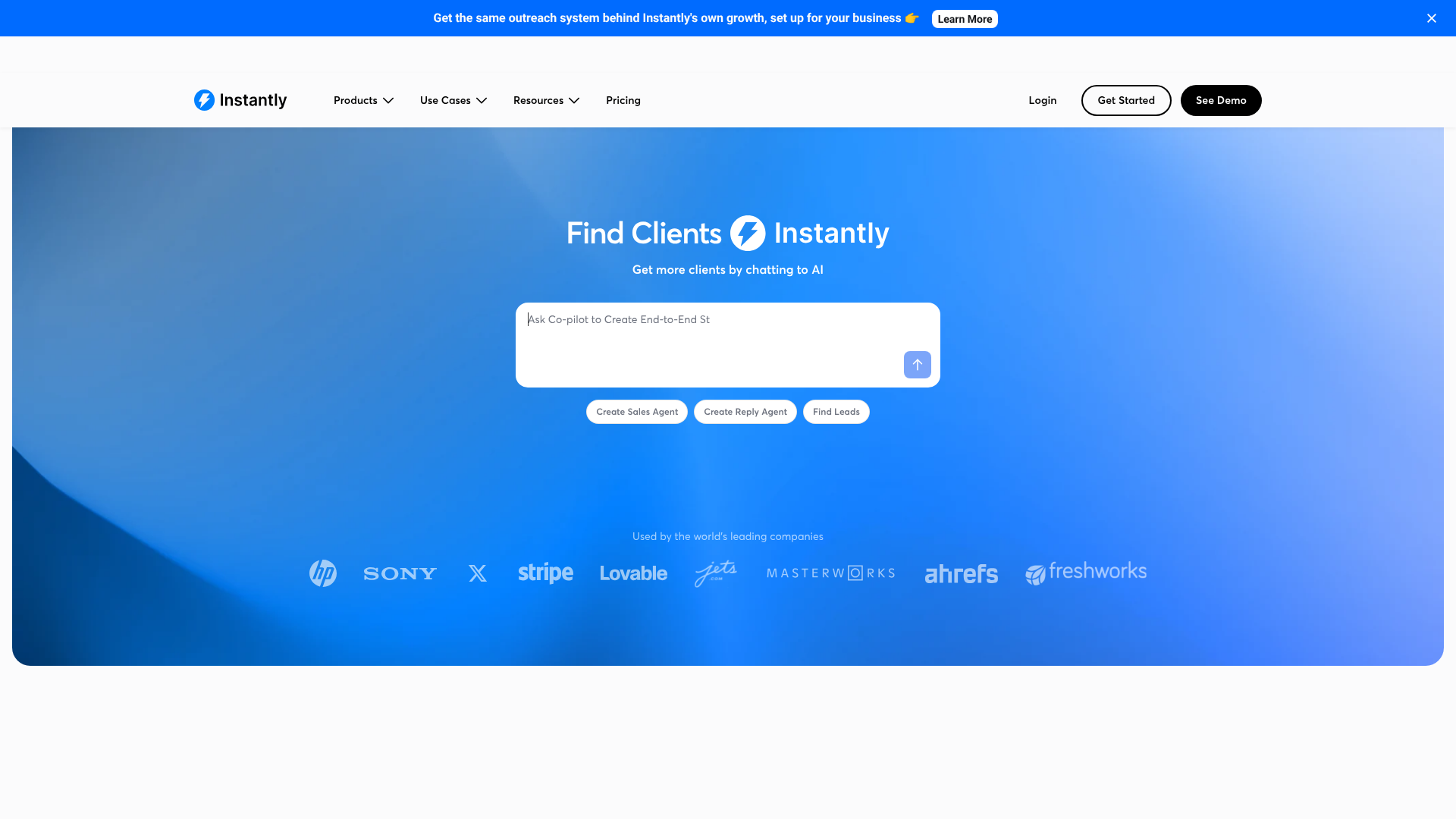
Instantly.ai is a powerful cold emailing platform built for scale. It's particularly strong in its campaign setup and testing capabilities. You can easily create multiple variations of your emails, including different subject lines, and let the platform automatically test them to find the winning combination.
Its features are designed to maximise deliverability, with unlimited email account warm-ups and smart sending schedules. This ensures your carefully crafted emails actually land in the primary inbox, giving your subject lines a chance to work their magic.
Pros
- Excellent for A/B testing multiple variables at scale.
- Unlimited email warming helps maintain high deliverability.
- Simple and intuitive interface for campaign management.
Cons
- Primarily focused on cold email, so it may lack the broader CRM features of other platforms.
- The sheer number of features can be overwhelming for absolute beginners.
If you're serious about optimising your cold outreach, Instantly.ai provides the tools you need to test and refine your approach. You can visit their website to check current pricing and features.
2. Reply.io
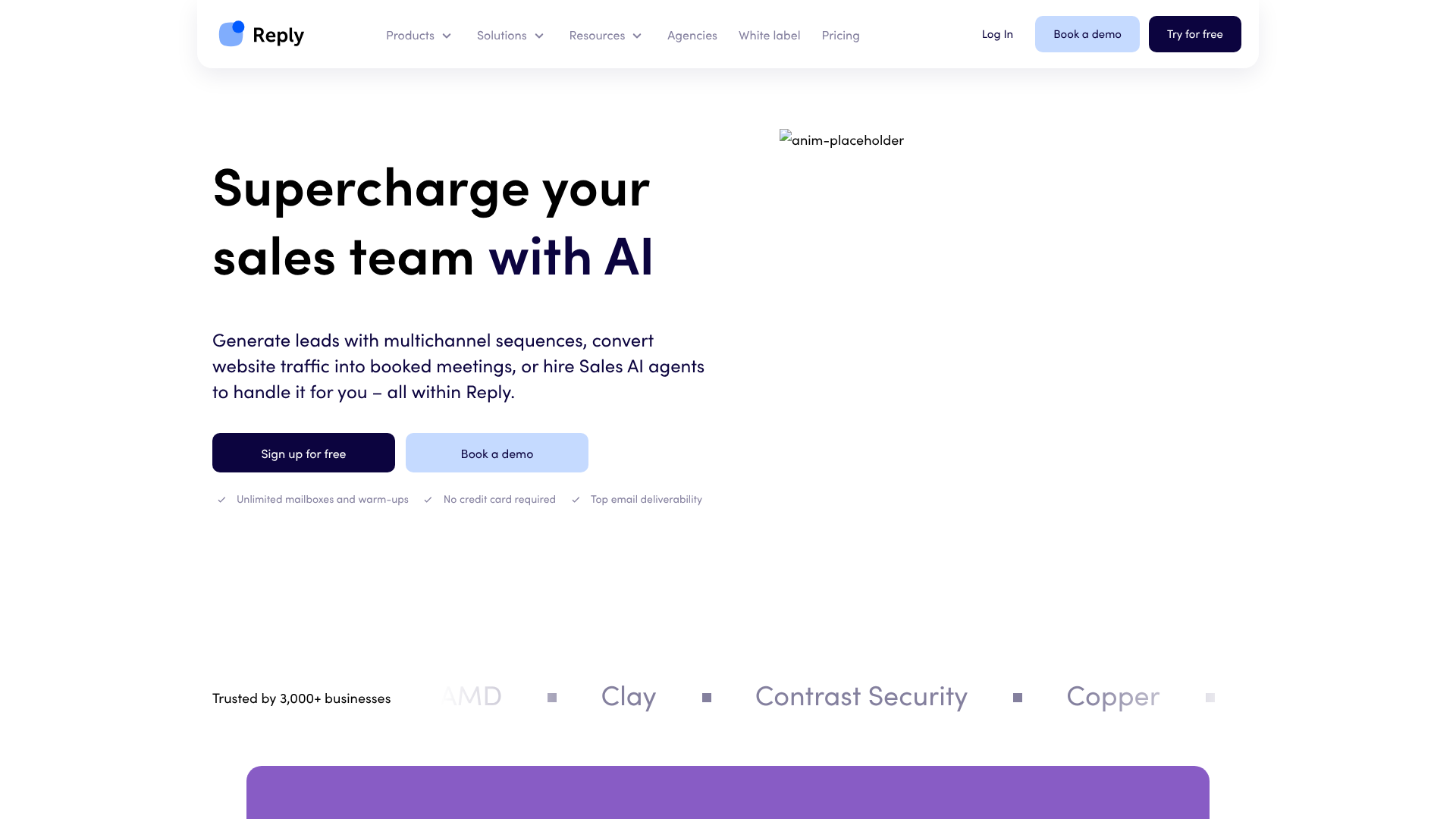
Reply.io is a comprehensive sales engagement platform that uses AI to enhance your outreach efforts. One of its standout features is an AI-powered subject line generator and quality checker. It can suggest effective email headers based on your email body and score your own ideas based on their likelihood of getting opened.
Beyond subject lines, Reply.io helps you build multi-channel sequences that can include emails, phone calls, and social media touchpoints. Its robust analytics dashboard makes it easy to track the performance of your campaigns and identify areas for improvement.
Pros
- AI-driven suggestions and scoring for subject lines.
- Multi-channel sequencing capabilities (email, phone, LinkedIn).
- Deep integration with popular CRMs like HubSpot and Zoho.
Cons
- Can be more expensive than simpler, email-only tools.
- The learning curve can be steep due to its extensive feature set.
For sales teams looking for an all-in-one solution to manage and optimise their entire outreach process, Reply.io is a strong contender. You can learn more about its plans on their official site.
3. Hunter Campaigns (Hunter.io)
Many know Hunter for its email verification and finding tools, but it also offers a simple yet effective cold email outreach tool called Hunter Campaigns (Hunter.io). It's an excellent choice for those who want a straightforward way to send personalised cold email sequences without a lot of complexity.
You can schedule emails, create custom follow-ups, and track performance with clear, easy-to-understand metrics. While it may not have the advanced AI features of other platforms, its simplicity is a major strength, allowing you to focus on the fundamentals of good copy and consistent follow-up.
Pros
- Very easy to use and set up.
- Integrates directly with Hunter's email finding and verification tools.
- Affordable pricing structure, especially for smaller teams or individuals.
Cons
- Lacks advanced A/B testing features.
- Fewer customisation options compared to more robust platforms.
If you're just getting started with cold outreach or prefer a no-frills tool that gets the job done, Hunter Campaigns is a fantastic option to explore.
FAQ: Your Questions on Cold Email Subject Lines Answered
Here are answers to some of the most common questions people have about writing effective subject lines for cold emails. These insights can help you refine your strategy and avoid common pitfalls.
What is a good subject line for a cold email?
A good subject line for a cold email is short (ideally 1-4 words), personalised, and creates curiosity. It should feel like it was written by a human, not a marketing robot. Examples like quick question, idea for [Company Name], or [Mutual Connection] referral work well because they are relevant and non-threatening, encouraging the recipient to open the message to learn more.
The key is to avoid selling in the subject line. Its only goal is to get the email opened. The persuasion and the offer should be in the body of the email. A good subject line lowers the recipient's guard, while a bad one raises it immediately.
What is the 30/30/50 rule for cold emails?
The 30/30/50 rule is a guideline for structuring the content of a cold email, not the subject line itself, but it's a useful concept for overall strategy. It suggests that your email should be roughly 30% about you/your company, 30% about them/their company, and 50% about the value or solution you can provide to them.
This framework ensures your email is customer-centric. By dedicating half of the message to the value proposition, you focus on their needs and potential benefits. This approach helps you move away from self-centred emails that only talk about your product's features and instead craft a message that resonates with the prospect's challenges and goals.
What subject line gets the most opens?
There is no single subject line that gets the most opens in every situation. Performance is highly dependent on the industry, audience, and context. However, data consistently shows that short, simple, and personalised subject lines perform best across the board.
According to analysis from multiple outreach platforms, subject lines with 1 to 3 words often have the highest open rates. Furthermore, subject lines that include the recipient's first name or company name see a significant lift in opens compared to generic ones. The "best" subject line is the one you've tested and proven to work with your specific target audience.
How long should a cold email subject line be?
As short as possible while still being clear and intriguing. The general consensus, backed by data, is that 1-4 words is the sweet spot. This is because a significant portion of emails are opened on mobile devices, where longer subject lines get cut off.
A short subject line is easier to read and process at a glance in a crowded inbox. It also mimics the style of internal, personal emails, which can help it stand out from longer, more descriptive marketing messages. When in doubt, err on the side of brevity.
Is cold emailing illegal in the UK?
Cold emailing is not illegal in the UK, but it is regulated. The two main pieces of legislation to be aware of are the General Data Protection Regulation (GDPR) and the Privacy and Electronic Communications Regulations (PECR). For B2B (business-to-business) cold emailing, you can generally email corporate employees without prior consent if you have a "legitimate interest".
This legitimate interest must be balanced against the individual's rights. Your product or service should be relevant to their job role. You must also provide a clear and easy way for them to opt out of future communications. It is crucial to be transparent about who you are and why you are contacting them.
For B2C (business-to-consumer) emails, the rules are much stricter, typically requiring explicit consent. It's always best to consult with a legal professional to ensure full compliance.
Final Thoughts
Mastering the art of writing compelling cold email subject lines is one of the most impactful skills a sales professional can develop. It's the first and most important step in starting a conversation, and it can be the difference between a thriving pipeline and an empty one. The principles are simple: be personal, be relevant, spark curiosity, and respect the recipient's time.
Remember that there is no magic formula. The examples and frameworks in this guide are powerful starting points, but the ultimate key to success is relentless testing. Use tools like Instantly.ai or Reply.io to A/B test your ideas, analyse the data, and continuously refine your approach based on what your audience responds to.
By combining proven psychological principles with a data-driven testing methodology, you can turn your cold outreach from a game of chance into a predictable system for generating leads and building relationships. Start with the ideas here, make them your own, and watch your open rates climb.