


Risk Management in Construction Projects: A Contractor's Guide
Construction is an industry of high stakes and high rewards, but it's also filled with uncertainty. From unforeseen ground conditions and severe weather to supply chain disruptions and labour shortages, a single unexpected event can derail a project's timeline and obliterate its budget. This is where a structured approach to risk management in construction projects becomes not just a best practice, but a critical component for survival and profitability. It's the framework that separates successful projects from costly failures.
- What You'll Learn
- What Exactly Is Risk Management in Construction Projects?
- The Core Benefits of Proactive Construction Risk Management
- The 5-Step Process for Managing Risks in Construction
- 1. Risk Identification
- 2. Risk Assessment and Analysis
- 3. Risk Response Planning
- 4. Risk Response Implementation
- 5. Risk Monitoring and Control
- Common Types of Risks in Construction Projects
- Choosing the Right Risk Management Strategy & Tools
- Understanding the Costs of Risk Management
- Pros and Cons of a Formal Risk Management System
- Frequently Asked Questions
- What are the 5 steps in the construction risk management process?
- What are the four types of construction risk?
- What are the 5 P's of risk management?
- What are the 4 pillars of risk management?
- Final Thoughts
This guide is designed for contractors, project managers, and construction firm owners who want to move from reacting to problems to proactively controlling them. We'll break down the entire process, from identifying potential threats to implementing effective control measures. You'll learn the strategies and tools that can help you deliver projects on time, within budget, and to the highest safety standards.
What You'll Learn
- The Core Process: Understand the essential five steps of construction risk management, from initial identification to ongoing monitoring.
- Key Risk Categories: Learn to recognise the most common types of risks in construction, including financial, safety, operational, and legal threats.
- Effective Mitigation Strategies: Discover practical methods for avoiding, transferring, or reducing the impact of potential project risks.
- The Role of Technology: See how modern construction management software can streamline risk tracking, improve communication, and enhance site safety.
- Building a Risk-Aware Culture: Learn why a formal risk management system is an investment in your company's long-term stability and reputation.
What Exactly Is Risk Management in Construction Projects?
Risk management in construction is the systematic process of identifying, assessing, and mitigating potential threats that could negatively impact a project's objectives. These objectives typically revolve around the budget, schedule, quality, and safety. It’s a proactive discipline, not a reactive one. Instead of waiting for a problem to occur and then scrambling to fix it, you anticipate potential issues and put a plan in place to deal with them before they happen.
A common misconception is that risk management is just about buying insurance. While insurance is a key part of the strategy (specifically for transferring risk), it's only one piece of a much larger puzzle. True construction risk management involves a comprehensive look at everything that could go wrong, from the pre-construction phase right through to project completion and handover.
Think of it like building the project on paper before you ever break ground. You consider the financial stability of your subcontractors, the potential for a key material to be delayed, the safety hazards unique to your site, and the clarity of your contractual agreements. By addressing these potential issues upfront, you create a more predictable and controlled project environment, which is the foundation of profitability and client satisfaction.
The Core Benefits of Proactive Construction Risk Management
Implementing a formal process for managing risks in construction offers far more than just preventing disasters. It creates a ripple effect of positive outcomes that strengthen every aspect of a project and the business as a whole. The benefits are tangible and directly impact your bottom line and reputation.
First and foremost is improved financial predictability. By identifying potential cost overruns early, you can build realistic contingencies into your budget. This prevents the kind of financial shocks that can turn a profitable project into a loss. It also provides a clearer financial picture for stakeholders and lenders, increasing their confidence in the project's viability.
Second, it leads to enhanced safety and compliance. A structured risk assessment will naturally highlight potential safety hazards, from working at height to operating heavy machinery. This focus on risk control in construction projects helps you develop more effective safety protocols, reduce accidents, and ensure you're compliant with all health and safety regulations. This not only protects your workers but also shields your company from hefty fines and legal action.
Finally, it fosters better decision-making and a stronger reputation. When you have a clear understanding of the risks, you can make more informed decisions about everything from subcontractor selection to project scheduling. Over time, a track record of delivering projects on time and on budget, with an excellent safety record, builds an invaluable reputation in the industry. Clients are more likely to trust you with their projects, and you'll be better positioned to win competitive tenders.
The 5-Step Process for Managing Risks in Construction
A successful risk management plan follows a clear, repeatable cycle. This five-step process provides a logical framework for any construction project, regardless of its size or complexity. It ensures that risks are not only identified but are also properly analysed, addressed, and monitored throughout the project lifecycle.
1. Risk Identification
This is the foundational step where you brainstorm and document every potential risk that could affect the project. The goal is to be as comprehensive as possible. This process should involve all key stakeholders, including project managers, site supervisors, engineers, and even key subcontractors whose experience can provide valuable insights.
Techniques for identification include reviewing documents from past projects, conducting site inspections, holding brainstorming sessions, and creating checklists. The output of this stage is a risk register, a live document that lists all identified risks.
2. Risk Assessment and Analysis
Once a risk is identified, you need to understand its potential severity. This is done by assessing two factors: the likelihood (or probability) of the risk occurring and the impact (or consequence) it would have on the project if it did. This is often done using a simple matrix, scoring each factor on a scale (e.g., 1 to 5).
Multiplying the likelihood score by the impact score gives you a risk rating. This allows you to prioritise. A risk with a high likelihood and high impact (e.g., a critical supplier going bankrupt) requires immediate and robust attention, while a low-likelihood, low-impact risk (e.g., a brief power cut on a non-critical day) may require less focus.
3. Risk Response Planning
After prioritising your risks, you need to decide how to handle them. There are four primary strategies for risk response:
- Avoid: Change the project plan to eliminate the risk entirely. For example, if a specific design is too complex and prone to errors, you might choose a simpler, proven design instead.
- Transfer: Shift the financial impact of the risk to a third party. The most common examples are purchasing insurance or using contractual clauses like indemnity agreements to make a subcontractor responsible for a specific risk.
- Mitigate: Take active steps to reduce the likelihood or impact of the risk. For example, implementing stringent safety protocols and providing regular training mitigates the risk of site accidents.
- Accept: For low-priority risks, you may decide to do nothing and simply accept the potential consequences. This is usually reserved for risks where the cost of mitigation would be greater than the potential impact.
4. Risk Response Implementation
This is the action phase. Your response plan is put into motion. This means assigning responsibility for each risk to a specific person or team, allocating the necessary resources (time, money, personnel), and executing the planned strategies. For example, if you decided to mitigate a supply chain risk, this is the stage where you would actually source and vet a backup supplier.
Clear communication is essential here. Everyone on the project team needs to understand their roles and responsibilities in implementing the risk control measures. This is where project management software becomes invaluable for tracking tasks and ensuring accountability.
5. Risk Monitoring and Control
Risk management is not a one-time task; it's an ongoing process. Throughout the project, you must continuously monitor the identified risks to see if their status has changed. You also need to be on the lookout for new risks that may emerge as the project evolves.
Regular risk review meetings should be a standard part of your project management rhythm. The risk register should be updated constantly to reflect the current state of the project. This continuous loop of monitoring and control ensures that your risk management plan remains relevant and effective from start to finish.
Pro Tip: Your risk register should be a living document, not something you create and file away. Schedule a dedicated 15-minute risk review at the start of every weekly project meeting. This keeps risks top-of-mind and encourages a proactive culture across the entire team.
Common Types of Risks in Construction Projects
Construction risks can be grouped into several key categories. Understanding these categories helps you organise your risk identification process and ensures you don't overlook any critical areas. While every project is unique, most risks will fall into one of the following domains.
Financial Risks
These are threats to the project's budget and the financial health of the contracting company. They are often the most significant concern for project stakeholders.
- Cost Escalation: Unexpected increases in the price of materials, labour, or equipment.
- Inaccurate Estimating: Underbidding on a project due to poor initial cost calculations.
- Funding Issues: The client experiencing financial difficulties or delays in releasing payments.
- Economic Fluctuations: Changes in interest rates or currency exchange rates that impact project costs.
Safety and Health Risks
Construction sites are inherently dangerous environments. These risks relate to the well-being of workers and the public.
- Worker Accidents: Falls from height, incidents with heavy machinery, or electrical shocks.
- Hazardous Materials: Exposure to substances like asbestos or lead during demolition or renovation.
- Site Security: Unauthorised access to the site leading to theft, vandalism, or injury.
- Public Safety: Risks to pedestrians or adjacent properties, such as falling debris.
Operational and Project Risks
These are the day-to-day risks associated with executing the construction work itself.
- Schedule Delays: Caused by poor planning, labour shortages, subcontractor issues, or permit delays.
- Poor Productivity: Inefficient work processes or an unskilled workforce leading to slower progress.
- Equipment Failure: Critical machinery breaking down at a crucial time.
- Quality Issues: Substandard workmanship or defective materials that require costly rework.
Legal and Contractual Risks
These risks arise from the complex web of contracts, regulations, and permits that govern a construction project.
- Contractual Disputes: Ambiguous or unfair contract terms leading to disagreements with clients or subcontractors.
- Regulatory Violations: Failing to comply with building codes, environmental laws, or planning permissions.
- Labour Disputes: Strikes or other industrial action that halts work on site.
- Insurance Gaps: Discovering that your insurance policy doesn't cover a specific type of incident after it has occurred. Using a service like LegalContracts to create clear, industry-standard agreements can help mitigate some of these risks by ensuring all parties understand their obligations from the outset.
Choosing the Right Risk Management Strategy & Tools
An effective approach to risk control in construction projects combines robust strategies with powerful tools. The right combination depends on the size of your company, the complexity of your projects, and your specific risk tolerance. However, the goal is always the same: to gain visibility and control over potential threats.
Key Strategies for Risk Control
Beyond the four responses (avoid, transfer, mitigate, accept), a successful risk management culture is built on several overarching strategies.
- Collaborative Contracting: Involve key contractors and suppliers early in the planning process. Their expertise can help identify risks that designers or project managers might miss. Contracts like Integrated Project Delivery (IPD) can align everyone's interests and encourage shared ownership of risk.
- Building a Strong Safety Culture: This goes beyond just following regulations. A true safety culture means every single person on site feels empowered and responsible for identifying and reporting hazards. It involves continuous training, open communication, and leadership that prioritises safety over speed.
- Contingency Planning: For every major risk, have a 'Plan B'. This means having backup suppliers, cross-training staff for critical roles, and maintaining a financial contingency fund that is clearly defined and protected from being used for non-emergency scope changes.
Leveraging Technology: Top Construction Risk Management Software
Manual risk management using spreadsheets and paper forms is slow, inefficient, and prone to error. Modern construction management software provides a centralised platform to identify, track, and manage risks in real-time. These tools are essential for managing the complexity of today's projects.
Two excellent examples of software that address different aspects of construction risk are HammerTech and BrickControl.
HammerTech: For Safety and Compliance Risk
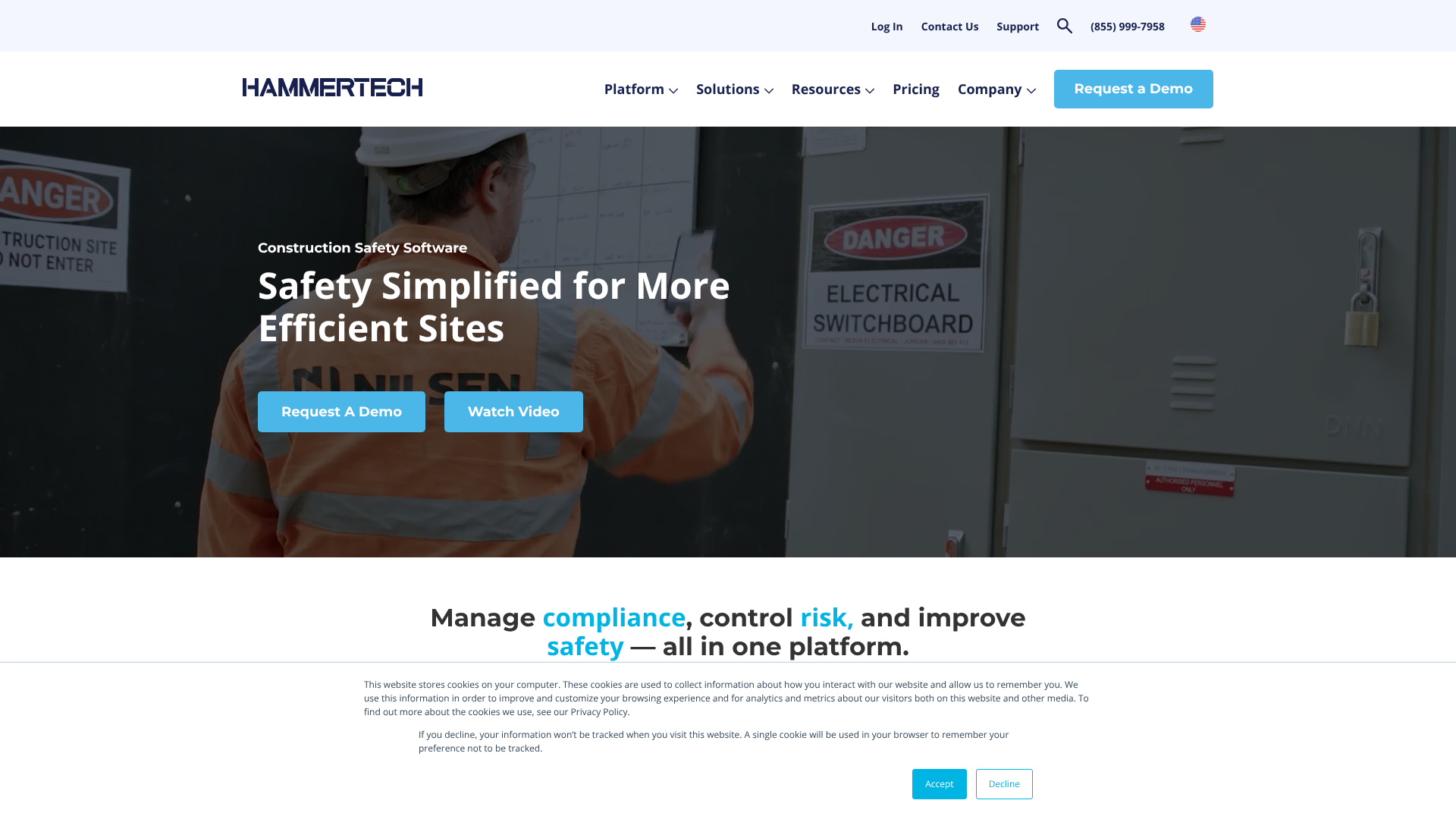
HammerTech is a platform that specialises in health, safety, environmental, and quality (HSEQ) management. It directly targets the safety and compliance risks that are so prevalent in the industry. It digitises and streamlines processes that are critical for risk control.
Pros:
- Specialised Focus: Deep functionality for safety, including digital inductions, safety observations, permits, and incident reporting.
- Real-Time Visibility: Provides a live view of safety performance and compliance across all projects, allowing managers to spot trends and intervene early.
- Improved Accountability: Creates a clear digital trail of all safety-related activities, ensuring that nothing falls through the cracks.
Cons:
- Niche Application: It is not an all-in-one project management solution; it focuses primarily on HSEQ, so you would need other tools for finance and scheduling.
- Implementation Effort: Like any specialised system, it requires proper setup and team training to get the most value.
BrickControl: For Operational and Financial Risk
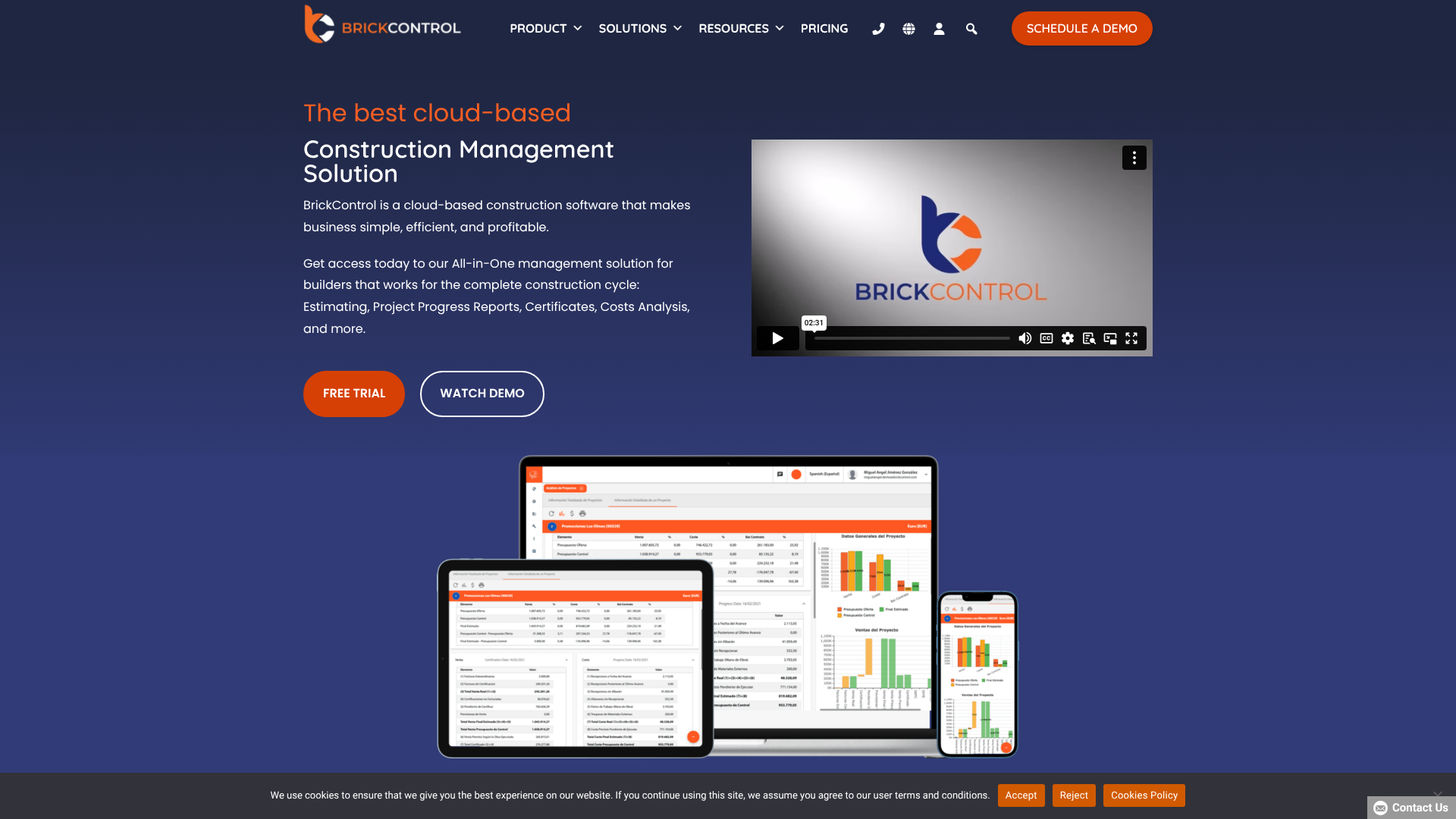
BrickControl is a more comprehensive construction management ERP (Enterprise Resource Planning) system. It helps manage operational and financial risks by integrating all aspects of a project, from budgeting and scheduling to procurement and cost control.
Pros:
- Integrated Solution: Manages multiple aspects of a project in one place, giving you a holistic view of financial and operational health.
- Strong Budget Control: Helps prevent cost overruns by tracking actual expenses against the budget in real-time.
- Improved Efficiency: Automates workflows and connects different departments (e.g., estimating, project management, accounting), reducing the risk of errors from manual data entry.
Cons:
- Broader Scope: As an ERP, it can be more complex to implement than a point solution.
- Less Specialised in Safety: While it manages overall project health, it may not have the deep, specialised safety features of a dedicated HSEQ platform like HammerTech.
| Feature | HammerTech | BrickControl |
|---|---|---|
| Primary Focus | Health, Safety & Compliance (HSEQ) | Overall Project Management (ERP) |
| Key Risk Areas | Safety, Legal, Compliance | Financial, Operational, Schedule |
| Core Features | Digital Inductions, Incident Reporting, Safety Audits | Budgeting, Cost Control, Scheduling, Procurement |
| Best For | Companies prioritising a best-in-class safety program | Companies needing an integrated system to manage project financials and operations |
Understanding the Costs of Risk Management
When considering a formal risk management system, it's easy to focus on the upfront costs: software subscriptions, employee training, or higher insurance premiums. However, this view is incomplete. The true financial calculation should compare these investments against the potentially catastrophic costs of not managing risk effectively.
The direct costs of a risk event are obvious. A serious site accident can lead to medical bills, legal fees, regulatory fines, and increased insurance costs for years to come. A major schedule delay results in liquidated damages, extended overhead costs, and frustrated clients. These are the visible, immediate impacts that can cripple a project's profitability.
But the indirect costs are often even more damaging. A poor safety record can make it harder to attract and retain skilled labour. A reputation for budget overruns and delays will make it nearly impossible to win new business. These long-term consequences can threaten the survival of the entire company.
When viewed through this lens, the cost of a software platform like HammerTech or BrickControl is not an expense; it's an investment in resilience and long-term success. The price of proactive management is almost always lower than the price of a preventable disaster.
Pros and Cons of a Formal Risk Management System
Adopting a structured, formal system for managing risks in construction is a significant business decision. While the benefits are substantial, it's important to have a balanced view of the potential challenges involved in its implementation.
Pros
- Increased Project Predictability: The biggest advantage is a dramatic reduction in surprises. This leads to more accurate budgets, more reliable timelines, and happier clients.
- Enhanced Profit Margins: By preventing costly mistakes, rework, and delays, you protect your profit margins. Effective risk management is a direct driver of financial performance.
- Improved Safety and Reduced Liability: A systematic focus on risk directly translates to a safer work environment, fewer accidents, and lower exposure to legal and financial liability.
- Competitive Advantage: A company that can demonstrate a mature risk management process is often seen as more professional and reliable, giving it an edge in a competitive market.
Cons
- Initial Investment: There is an upfront cost in terms of time and money. This includes purchasing software, training staff, and dedicating time to developing processes.
- Potential for Bureaucracy: If not implemented thoughtfully, a risk management system can become a box-ticking exercise that adds administrative burden without adding real value. The focus must remain on practical risk reduction, not just paperwork.
- Requires Cultural Shift: For the system to be effective, it requires buy-in from everyone, from senior leadership to workers on site. Overcoming resistance to change can be a significant hurdle.
Frequently Asked Questions
What are the 5 steps in the construction risk management process?
The five core steps form a continuous cycle: 1. Risk Identification, where you list all potential threats. 2. Risk Assessment, where you analyse the likelihood and impact of each risk.
Risk Response Planning, where you decide whether to avoid, transfer, mitigate, or accept the risk. 4. Implementation, where you execute your response plan.
Monitoring and Control, where you track existing risks and look for new ones throughout the project.
What are the four types of construction risk?
While risks can be categorised in many ways, they are commonly grouped into four main types. Financial Risks relate to the project budget and costs. Safety Risks concern the health and well-being of workers and the public. Operational Risks are associated with the day-to-day execution of the project, like schedules and quality.
Finally, Legal and Contractual Risks arise from contracts, permits, and regulations.
What are the 5 P's of risk management?
The '5 P's' is a mnemonic used in general risk management to describe key areas of focus. In a construction context, they can be interpreted as: People (risks related to personnel, skills, safety), Process (risks in your workflows, communication, and planning), Project (risks inherent to the specific project's scope and complexity), Partners (risks from third parties like subcontractors and suppliers), and Planet (environmental risks like weather, ground conditions, and regulations).
Pro Tip: When reviewing your risk register, categorise each risk using the '5 P's'. This can help you spot patterns. For example, if you find that most of your high-priority risks fall under 'Partners', it might indicate a need to improve your subcontractor vetting process.
What are the 4 pillars of risk management?
The '4 Pillars' is another framework, often referring to the foundational elements of a risk management program within an organisation. These are typically: Risk Governance and Culture (setting the tone from the top), Risk Identification and Assessment (the process of finding and analysing risks), Risk Control and Mitigation (the actions taken to manage risks), and Risk Monitoring and Reporting (the feedback loop to ensure the system is working).
Final Thoughts
Effective risk management in construction projects is not about creating a risk-free environment—that’s an impossible goal. Instead, it's about creating a resilient, prepared, and proactive organisation that can anticipate challenges and respond to them intelligently. It's the discipline that transforms uncertainty from a threat into a manageable variable.
By following a structured process, understanding the different types of risks, and using modern tools, you can significantly improve your project outcomes. You can protect your workers, your budget, and your reputation. The initial investment in building a robust risk management framework pays for itself many times over by preventing costly errors and building a foundation for sustainable growth.
If you're looking to enhance your risk management capabilities, exploring specialised software is a logical next step. For a world-class safety and compliance program, consider a platform like HammerTech. If your goal is to gain better control over your project's financial and operational health, an integrated solution like BrickControl could be the right fit.