
Project Management for Construction Projects: A Beginner's Starter Guide
Successfully completing a building project is a complex task with countless moving parts. From initial blueprints to the final handover, every stage requires meticulous coordination of people, materials, and budgets. This is where a structured approach to project management for construction projects becomes not just helpful, but essential for avoiding costly delays, budget overruns, and safety issues that can derail even the most promising builds.
- What You'll Learn
- What is Project Management in Construction?
- The 5 Core Phases of Building Project Management
- 1. Project Initiation and Conception
- 2. Project Planning and Definition
- 3. Project Execution and Construction
- 4. Performance Monitoring and Control
- 5. Project Closeout
- Key Responsibilities and Benefits of Effective PM in Construction
- Choosing the Right Construction Management Software
- Top Construction Project Management Tools to Consider
- For Integrated Financial and Project Control: BrickControl
- For Advanced Safety and Site Operations: HammerTech
- For All-in-One Project Management: Procore
- Understanding Software Pricing and Costs
- Pros and Cons of Dedicated Construction PM Software
- Frequently Asked Questions
- What does a construction project manager do on a daily basis?
- What qualifications are needed for a career in construction project management?
- What are the biggest challenges in construction project management?
- How is project management for construction different from general project management?
- Final Thoughts
For anyone new to the industry, understanding the principles of construction project management can seem daunting. It’s a unique discipline that blends the core tenets of general project management with the specific, high-stakes challenges of the building world. This guide is designed to break down the fundamentals, providing a clear roadmap for beginners to navigate the complexities of managing construction projects from start to finish.
What You'll Learn
- The Core Definition: Understand what makes project management in construction unique and why it's critical for success.
- The Five Key Phases: Learn the distinct stages every construction project goes through, from initial concept to final completion.
- Essential Responsibilities: Discover the primary duties of a construction project manager, including budgeting, scheduling, and safety compliance.
- The Role of Technology: Recognise how specialised software is crucial for streamlining communication, tracking progress, and managing risk.
- Common Pitfalls to Avoid: Identify frequent challenges like scope creep and communication breakdowns and learn how to manage them effectively.
What is Project Management in Construction?
Project management in construction is the specialised practice of planning, coordinating, and overseeing a building project from its conception to its completion. Unlike project management in other industries like tech or marketing, it deals with tangible assets, strict regulatory environments, and high levels of risk related to safety and finance. The ultimate goal is to deliver the finished project on time, within the allocated budget, and to the required quality and safety standards.
At its heart, this discipline involves a constant balancing act between three primary constraints, often called the 'iron triangle':
- Scope: This defines the specific work that needs to be done—the size of the building, the materials to be used, and the features to be included. A clear scope prevents 'scope creep', where uncontrolled changes lead to delays and extra costs.
- Time: This is the project schedule, outlining the timeline for every task from groundbreaking to final inspection. Delays in construction can have significant financial consequences, making schedule management a top priority.
- Cost: This encompasses the entire project budget, including labour, materials, equipment, and subcontractor fees. Effective cost management ensures the project remains profitable and financially viable.
A construction project manager must expertly manage these three elements while also navigating quality control, safety protocols, contract administration, and communication with dozens of stakeholders, including clients, architects, engineers, and trade contractors.
The 5 Core Phases of Building Project Management
Every construction project, regardless of its size, follows a structured lifecycle. Understanding these five distinct phases is fundamental to effective building project management. Each stage has its own objectives, tasks, and deliverables that build upon the last, creating a logical progression from idea to reality.
1. Project Initiation and Conception
This is the starting point where the project's feasibility is determined. The owner or client identifies a need—be it a new office building, a residential flat complex, or a public infrastructure project. The primary goal is to define the project at a high level and determine if it's worth pursuing.
Key activities in this phase include conducting a feasibility study to assess the project's viability, identifying key stakeholders, and creating a preliminary project charter. This document outlines the project's vision, objectives, and scope, and it formally authorises the project to begin. It's at this stage that the fundamental question, "Should we do this project?", is answered.
2. Project Planning and Definition
Once the project is approved, the detailed planning begins. This is arguably the most critical phase, as a solid plan is the foundation for everything that follows. The project manager and their team develop a comprehensive roadmap that will guide execution.
This involves creating a detailed project schedule (often using Gantt charts), finalising the budget and arranging financing, and developing a risk management plan to identify potential problems. Other crucial documents created here include a communication plan, a procurement plan for materials and subcontractors, and detailed architectural and engineering drawings. The more thorough the planning, the smoother the execution phase will be.
3. Project Execution and Construction
This is the phase where the plan is put into action and the physical construction takes place. The project manager coordinates all resources—labour, equipment, and materials—to build the project according to the specifications. Daily and weekly meetings are held to ensure everyone is aligned and to address any immediate issues that arise on site.
Effective execution relies on clear communication and strong leadership. The project manager is responsible for managing subcontractors, ensuring materials are delivered on time, and solving problems as they occur. This phase is dynamic and often unpredictable, requiring the manager to be adaptable and decisive.
4. Performance Monitoring and Control
This phase runs concurrently with the execution phase. Its purpose is to track, review, and regulate the progress and performance of the project. The project manager constantly compares the actual progress against the planned schedule and budget, identifying any variances.
Key activities include tracking key performance indicators (KPIs) for cost and schedule, conducting quality control inspections, and monitoring safety on the site. If the project is deviating from the plan, the manager must implement corrective actions to get it back on track. This continuous oversight prevents small issues from escalating into major problems.
Pro Tip: Implement a daily reporting system for all site supervisors. A simple digital form submitted at the end of each day detailing work completed, materials used, and any issues encountered provides invaluable data for the monitoring phase and creates a clear, documented project history.
5. Project Closeout
In the final phase, the project is completed and handed over to the client. This involves more than just finishing the construction; it's a formal process to ensure all work is finalised, all contractual obligations are met, and the site is ready for occupancy.
Key tasks include a final site inspection (the 'punch list' walk-through) to identify any remaining minor issues, commissioning of building systems (like HVAC and electrical), and submitting all required documentation to the client. This also includes finalising all payments to subcontractors and suppliers and officially closing out all contracts. A smooth closeout ensures a satisfied client and a successful end to the project.
Key Responsibilities and Benefits of Effective PM in Construction
Effective construction project management is driven by a skilled project manager who juggles numerous responsibilities to keep the project moving forward. Their role is multifaceted, requiring a blend of technical knowledge, leadership skills, and business acumen. When these responsibilities are handled well, the benefits to the project are immense.
Core Responsibilities of a Construction Project Manager
- Cost Estimation and Budget Management: Developing a realistic budget and continuously tracking expenses to prevent overruns.
- Schedule Development and Management: Creating a detailed project timeline and ensuring all tasks are completed on schedule to meet deadlines.
- Quality Management: Ensuring all work meets the project specifications and adheres to industry quality standards through regular inspections.
- Safety Management: Implementing and enforcing strict safety protocols to protect workers and comply with regulations. According to the UK's Health and Safety Executive (HSE), construction remains a high-risk industry, making this responsibility paramount.
- Contract Administration: Managing all contracts with clients, subcontractors, and suppliers, including handling change orders and payments.
- Stakeholder Communication: Serving as the central point of communication for all stakeholders, providing regular updates and managing expectations.
- Risk Management: Proactively identifying potential risks (e.g., supply chain disruptions, bad weather, design errors) and developing mitigation plans.
The Tangible Benefits
When a project is managed effectively, the positive outcomes are clear:
- Improved Cost Control: Meticulous budget tracking and proactive issue management significantly reduce the risk of going over budget.
- On-Time Completion: A well-managed schedule ensures the project is delivered by the agreed-upon deadline, avoiding penalties and allowing the client to use their new asset sooner.
- Enhanced Quality and Value: A focus on quality control throughout the build results in a better final product with fewer defects.
- Increased Safety: A strong safety culture reduces accidents, protects workers, and minimises the risk of costly work stoppages and legal issues.
- Clearer Communication: Centralised management prevents misunderstandings and ensures all parties are working from the same information, leading to better collaboration.
Choosing the Right Construction Management Software
In today's construction industry, managing a project with spreadsheets and emails is no longer efficient or competitive. Specialised construction management software has become an indispensable tool for centralising information, improving collaboration, and providing real-time insights into a project's health. However, with so many options available, choosing the right one can be a project in itself.
Here’s a step-by-step approach to selecting the best software for your needs:
Assess Your Core Needs: Before looking at any software, identify your biggest pain points. Are you struggling with financial tracking? Is site safety and compliance your main concern? Do you need better document management and communication between the office and the field? Your specific needs will determine which features are most important.
Consider Your Project Scale and Type: The software needed for a small residential builder is very different from what a large commercial contractor requires. Look for solutions that are designed for your type of work (e.g., commercial, residential, industrial) and can scale with your business.
Prioritise Ease of Use and Mobile Access: The best software is useless if your team won't use it. Look for an intuitive interface that is easy to learn. Since much of construction work happens in the field, a powerful and user-friendly mobile app is non-negotiable for site managers, supervisors, and subcontractors.
Check for Key Integrations: Your construction software should work well with other tools you already use, such as accounting software (e.g., Xero, QuickBooks) or design software (e.g., Autodesk). Seamless integrations prevent double data entry and ensure information flows smoothly across your business.
Evaluate Reporting and Analytics: The ability to generate clear, concise reports is crucial for monitoring project health and making data-driven decisions. Look for platforms with customisable dashboards and reporting features that give you instant visibility into KPIs like budget vs. actual cost, schedule progress, and safety incidents.
Request Demos and Run Trials: Never buy software based on a brochure alone. Shortlist 2-3 top contenders and request a personalised demo. If possible, run a free trial with a small project team to see how the software performs in a real-world environment.
Top Construction Project Management Tools to Consider
Once you've defined your needs, you can start exploring specific platforms. The market is filled with excellent tools, but they often specialise in different areas of project management for construction projects. Here are a few top recommendations that cater to different needs.
For Integrated Financial and Project Control: BrickControl
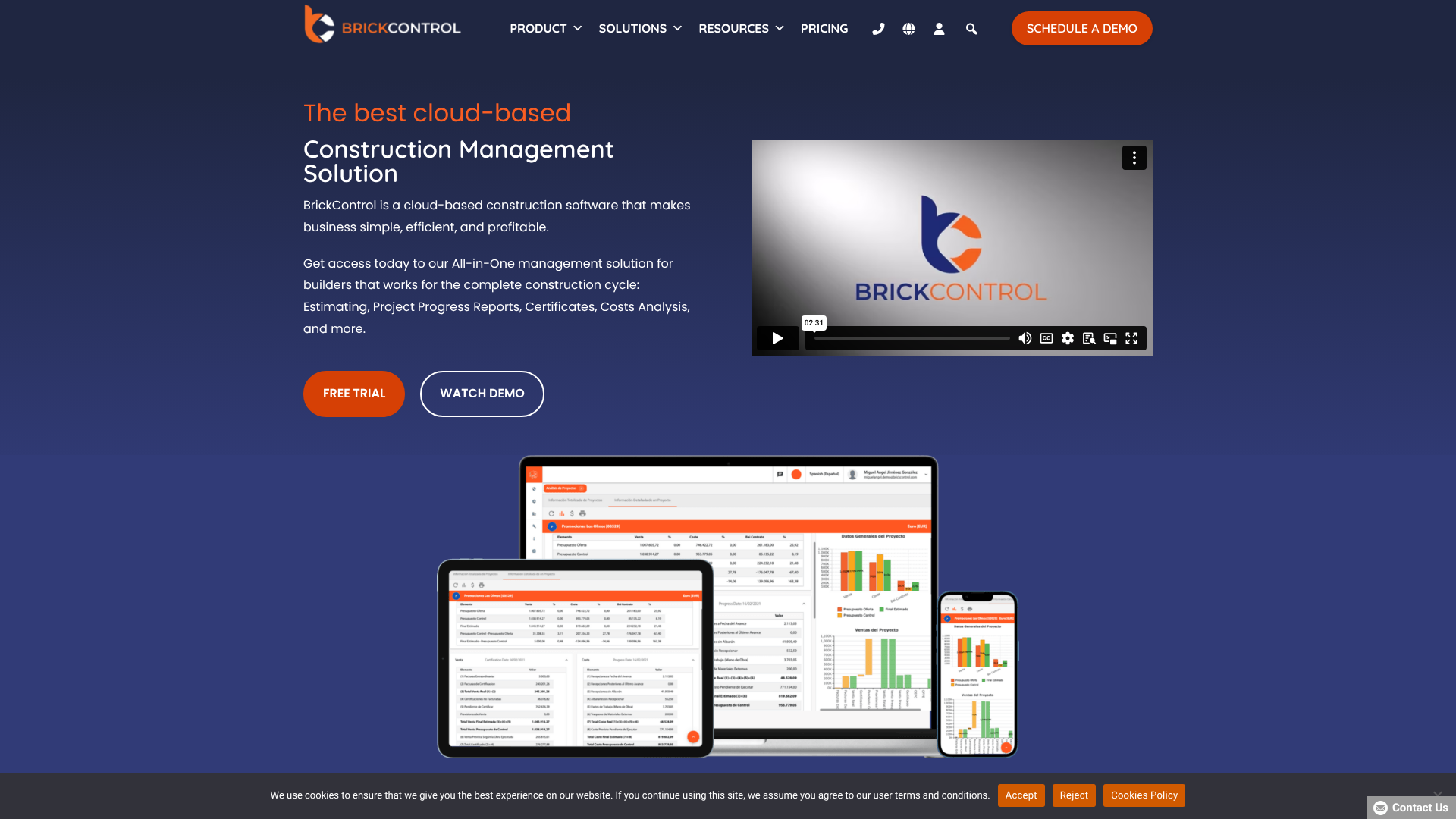
BrickControl is a comprehensive cloud-based software designed for construction companies that need tight control over every aspect of a project, from budgeting to execution. It excels at integrating financial management directly with project operations, providing a single source of truth for costs, progress, and profitability.
Its strengths lie in its detailed cost estimation, budget management, and procurement tools. You can manage subcontractors, track invoices, and compare real costs against your budget in real-time. This makes it an excellent choice for general contractors, property developers, and any business where financial oversight is the top priority.
Pros
- Strong integration of financial and operational data.
- Comprehensive features covering the entire project lifecycle.
- Powerful tools for budgeting, estimating, and cost control.
Cons
- The extensive feature set might have a steeper learning curve for smaller teams.
- May be more than what's needed for companies focused solely on site operations.
For Advanced Safety and Site Operations: HammerTech
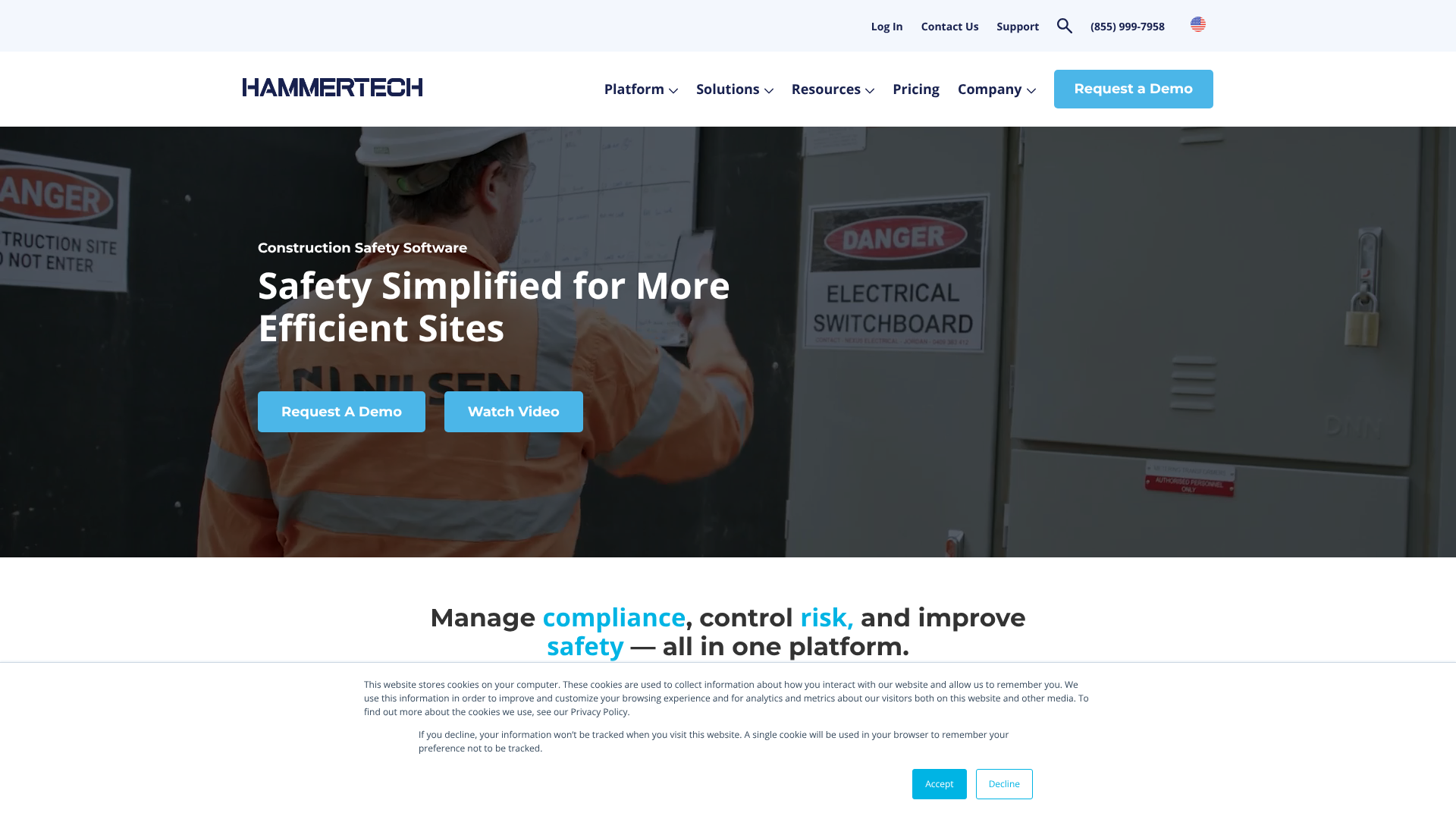
HammerTech is a leading platform focused on streamlining site operations, with a particular emphasis on safety and compliance. It's designed to digitise and automate the daily processes that happen on a construction site, reducing administrative work and improving safety outcomes.
Key features include online worker inductions, digital safety checklists and inspections, permit management, and incident reporting. By moving these processes from paper to a digital platform, HammerTech provides real-time visibility into site safety and helps ensure that all compliance requirements are being met. It's ideal for large contractors who manage complex sites with a strong focus on health and safety.
Pros
- Best-in-class features for safety and compliance management.
- Excellent mobile app for field use.
- Automates many time-consuming administrative tasks on site.
Cons
- Less focused on the financial aspects of project management.
- Primarily designed for main contractors on larger projects.
For All-in-One Project Management: Procore
Procore is one of the most widely used construction management platforms globally, offering a vast suite of tools that cover nearly every aspect of a project. It connects all stakeholders—from the owner to the subcontractors—on a single platform, facilitating collaboration and providing a complete project record.
Its modules cover everything from project management and financials to quality and safety. While it is a powerful and comprehensive solution, its extensive nature and pricing structure often make it a better fit for larger, enterprise-level construction firms that can take full advantage of its capabilities.
| Feature Focus | BrickControl | HammerTech | Procore |
|---|---|---|---|
| Primary Strength | Financial & Cost Control | Safety & Site Operations | All-in-One Platform |
| Ideal User | Contractors & Developers | Large Main Contractors | Enterprise-Level Firms |
| Mobile App | Yes | Yes | Yes |
| Key Feature | Integrated Budgeting | Digital Safety Inductions | Centralised Collaboration |
Understanding Software Pricing and Costs
Investing in construction management software is a significant decision, and understanding the pricing models is crucial for making an informed choice. Unlike simple subscription services, construction software pricing can be complex and is often tailored to the size and needs of your business.
Common pricing structures you'll encounter include:
- Per User, Per Month: Some platforms charge a flat monthly fee for each user on the system. This model can be straightforward but may become expensive as your team grows.
- Based on Annual Construction Volume (ACV): Many enterprise-level platforms, like Procore, base their pricing on your company's total revenue or the total value of the construction projects you manage annually. This model scales with your business but can be a substantial investment.
- Tiered Feature Packages: Software providers often offer several pricing tiers (e.g., Basic, Pro, Enterprise). Each tier unlocks more features and supports more users or projects. This allows you to start with a more affordable plan and upgrade as your needs evolve.
When comparing costs, it's important to look beyond the sticker price. Ask about implementation fees, data migration costs, and charges for training and ongoing support. Always request a custom quote based on your specific requirements, as the prices listed on websites are often just a starting point. For platforms like BrickControl and HammerTech, visiting their websites for the latest pricing information or to request a quote is the best approach.
Pros and Cons of Dedicated Construction PM Software
Adopting a dedicated software platform is a major step for any construction business. While the benefits are substantial, it's important to have a balanced view of both the advantages and the potential challenges.
The Pros
- A Single Source of Truth: The greatest benefit is having all project information—drawings, documents, communications, and financial data—in one centralised location. This eliminates confusion and ensures everyone is working from the most current information.
- Real-Time Visibility: Cloud-based platforms allow you to see what's happening on-site and in the budget from anywhere, at any time. This enables faster decision-making and proactive problem-solving.
- Improved Collaboration: By connecting the office, the field, and external stakeholders on one platform, software breaks down communication silos and fosters a more collaborative environment.
- Standardised Processes: Software helps you implement consistent processes for tasks like RFIs (Requests for Information), change orders, and safety inspections, which improves efficiency and reduces errors.
The Cons
- Initial Cost and Investment: High-quality construction management software requires a significant financial investment, which can be a barrier for smaller companies.
- Implementation and Training: Getting the software set up and training your entire team to use it effectively takes time and effort. A poor implementation can lead to low adoption rates, undermining the investment.
- Resistance to Change: Some team members, particularly those accustomed to traditional paper-based methods, may be resistant to adopting new technology. Overcoming this requires strong leadership and clear communication about the benefits.
Pro Tip: When implementing new software, start with a pilot project. Select one tech-savvy project team to use the platform on a single project. Their success and positive feedback will serve as a powerful case study to encourage adoption across the rest of the company.
Frequently Asked Questions
What does a construction project manager do on a daily basis?
A construction project manager's day is highly varied. It typically involves a mix of office and on-site activities. A manager might start their day reviewing daily reports and project budgets, then head to the site for a walk-through and to meet with site supervisors. The rest of the day could be spent in meetings with clients or architects, negotiating with suppliers, and solving any problems that have arisen.
What qualifications are needed for a career in construction project management?
Many construction project managers have a bachelor's degree in construction management, civil engineering, or a related field. However, practical experience is just as important. Many successful managers start in a trade and work their way up. Professional certifications, such as those from the Chartered Institute of Building (CIOB) in the UK, can also significantly enhance career prospects.
What are the biggest challenges in construction project management?
The most common challenges include managing unforeseen site conditions, dealing with labour shortages, navigating complex regulations and permits, and controlling scope creep. Effective communication is a constant challenge, as managers must coordinate between dozens of different stakeholders who all have their own priorities. Supply chain disruptions have also become a major challenge in recent years.
How is project management for construction different from general project management?
While both share core principles like managing scope, time, and cost, construction project management has unique complexities. It involves managing physical sites with significant safety risks, dealing with complex contracts and legal regulations, and coordinating a diverse workforce of trades. The final product is a tangible physical asset, and the consequences of failure are often much higher than in other industries.
Final Thoughts
Mastering project management for construction projects is a journey of continuous learning, but it starts with a firm grasp of the fundamentals. By understanding the five core phases, embracing the key responsibilities, and using the right tools, you can build a foundation for success. The complexity of modern construction demands a structured, proactive, and technology-driven approach.
Whether you are just starting your career or looking to improve your company's processes, focusing on these principles will lead to safer, more efficient, and more profitable projects. For those ready to take the next step with technology, exploring specialised solutions can make a significant difference. If your focus is on financial control, a platform like BrickControl could be a great fit. If site safety and operations are your priority, HammerTech is worth a closer look.