



Best Practices for Sales Prospecting: A Guide for Modern Sales Teams
An empty sales pipeline is a constant source of anxiety for any sales professional. The pressure to consistently find new, qualified leads can feel relentless. The old methods of simply dialling for hours on end are no longer effective. To succeed in today's competitive market, you need a structured, intelligent approach.
- What You'll Learn
- What Are Sales Prospecting Best Practices?
- The Key Benefits of a Structured Prospecting Strategy
- Foundational Best Practices: Before You Even Reach Out
- 1. Define Your Ideal Customer Profile (ICP)
- 2. Build a High-Quality, Targeted Prospect List
- 3. Conduct Thorough Pre-Contact Research
- Top Prospecting Methods and Strategies for 2026
- The Multi-Channel Approach: Combining Touchpoints
- Effective Prospecting Method 1: Personalised Cold Email
- Effective Prospecting Method 2: The Modern Cold Call
- Effective Prospecting Method 3: Social Selling on LinkedIn
- Choosing the Right Tools: Your Prospecting Tech Stack
- The Core: Customer Relationship Management (CRM)
- The Engine: Sales Engagement Platforms (SEPs)
- The Fuel: Data and Lead Intelligence Tools
- Pricing and Cost Considerations for Prospecting Tools
- Pros and Cons of Different Prospecting Philosophies
- The Prospecting Process Top Salespeople Use
- Frequently Asked Questions (FAQ)
- How many touchpoints does it take to get a meeting?
- What is the best day or time to prospect?
- How do I measure prospecting success?
- Is cold calling still effective in 2026?
- Final Thoughts: Implementing Your Prospecting Strategy
Mastering the best practices for sales prospecting is the difference between a pipeline that's consistently full and one that's feast or famine.
This guide moves beyond simple tips and provides a comprehensive framework for building a repeatable, scalable prospecting engine. We'll cover the foundational strategies, the most effective modern methods, and the technology you need to tie it all together. By implementing these practices, you can transform prospecting from a dreaded chore into a predictable source of revenue for your business.
What You'll Learn
- Quality Over Quantity: The most effective prospecting strategies prioritise identifying and engaging high-fit prospects rather than simply contacting a massive, unqualified list.
- A Multi-Channel Approach is Essential: Relying on a single channel like email or phone calls is no longer enough. Successful prospecting involves a coordinated sequence of touchpoints across email, social media, and phone.
- Personalisation is Non-Negotiable: Generic, one-size-fits-all messages are ignored. Deep research and genuine personalisation are required to capture a prospect's attention and start a meaningful conversation.
- The Right Tech Stack is a Force Multiplier: Modern tools like CRMs and sales engagement platforms are crucial for managing data, automating outreach, and executing a sophisticated strategy at scale.
What Are Sales Prospecting Best Practices?

Sales prospecting best practices are a set of proven, systematic principles and repeatable actions designed to identify, engage, and qualify potential customers. It's not about finding a single magic script or a secret trick. Instead, it's a strategic framework that guides your entire top-of-funnel activity, ensuring your efforts are efficient, effective, and buyer-centric.
This modern approach stands in stark contrast to old-school prospecting, which often relied on brute force—making hundreds of generic calls or sending thousands of templated emails. That method, often called "smiling and dialling," treated prospecting as a pure numbers game. While volume still matters, the focus has shifted dramatically towards quality and relevance.
Today's best practices are built on a foundation of deep customer understanding. They prioritise providing value and building relationships before asking for a sale. This means your outreach is informed by research, tailored to the prospect's specific challenges, and delivered through the channels they actually use. It's about being a helpful consultant, not just another salesperson.
The Key Benefits of a Structured Prospecting Strategy
A disciplined approach to prospecting does more than just fill your calendar with meetings; it has a cascading positive effect on the entire sales cycle. Adopting these strategies is an investment that pays significant dividends in efficiency, predictability, and revenue.
One of the most immediate benefits is a higher-quality sales pipeline. By focusing on your Ideal Customer Profile (ICP) from the start, you ensure that the leads entering your funnel are a good fit for your solution. This means less time wasted on prospects who will never buy and more time spent on opportunities with a real chance of closing.
This focus naturally leads to increased efficiency and productivity. With a clear process and the right tools, sales reps can automate repetitive tasks and focus their energy on high-value activities like research and personalisation. This not only improves their output but also leads to better conversion rates, as well-researched, relevant outreach is far more likely to get a positive response.
Finally, a structured strategy improves forecasting accuracy. When your prospecting is consistent and measurable, you can more reliably predict how many meetings will be booked and how much pipeline will be generated each month. This predictability is invaluable for business planning and growth.

Foundational Best Practices: Before You Even Reach Out
Success in prospecting is often determined before the first email is sent or the first call is made. The preparation phase is the most critical part of the process. Skipping these foundational steps is like trying to build a house on sand; your efforts are destined to collapse.
1. Define Your Ideal Customer Profile (ICP)
Your Ideal Customer Profile (ICP) is a detailed, written description of the perfect company to sell to. It's the absolute cornerstone of all effective prospecting methods. Without a clear ICP, you're just guessing, wasting time and resources on companies that are a poor fit for your product or service.
An ICP goes beyond basic industry and company size. A strong ICP includes firmographics (like industry, revenue, employee count), technographics (the technology they currently use), and even behavioural attributes (like their growth trajectory or market position). For example, a weak ICP might be "tech companies in the UK." A strong ICP would be "B2B SaaS companies in the UK with 50-250 employees, using Salesforce as their CRM, who have recently hired a Head of Sales."
Creating this detailed profile allows you to focus your resources with surgical precision. It helps you build highly targeted lists, craft resonant messaging, and disqualify poor-fit prospects early, saving countless hours of wasted effort down the line.
2. Build a High-Quality, Targeted Prospect List
Once your ICP is defined, the next step is to build a list of companies and contacts that match it. The quality of this list will directly impact the success of your campaigns. A small, highly-qualified list is infinitely more valuable than a massive, inaccurate one.
There are many sources for building these lists. LinkedIn Sales Navigator is a powerful tool for identifying companies and decision-makers that fit your ICP criteria. Industry databases and B2B data providers are also excellent resources. Tools like Apollo.io are particularly useful as they combine a vast database of contacts with verification features to ensure the data is accurate.
Data accuracy is non-negotiable. Email addresses, phone numbers, and job titles must be up-to-date. Using an email verification tool is a crucial step to protect your domain's sending reputation and ensure your messages actually reach the inbox. A clean list is the foundation of a successful outreach campaign.
3. Conduct Thorough Pre-Contact Research
In an era of information overload, generic outreach is ignored. Personalisation is what cuts through the noise, and the only way to personalise effectively is through research. This step separates top-performing sales reps from the rest.
Before contacting a prospect, spend 5-10 minutes researching them and their company. Look for "trigger events" or relevant information you can use to make your outreach timely and specific. Good places to look include the company's recent news or blog posts, the prospect's LinkedIn profile and recent activity, and their company's job postings (which often reveal priorities and pain points).
For example, you might find they just secured a new round of funding, hired a new executive, or published a case study about a challenge you can solve. Referencing this specific information in your opening line shows you've done your homework and aren't just sending another generic template. This small investment of time dramatically increases your chances of getting a reply.
Pro Tip: Set up Google Alerts for your top 10-20 target accounts. You'll get an email notification whenever they are mentioned in the news, giving you a perfect, timely reason to reach out with a relevant message.
Top Prospecting Methods and Strategies for 2026
With a solid foundation in place, it's time to execute your outreach. The most successful prospecting strategies don't rely on a single tactic. They weave together multiple channels into a cohesive sequence that keeps you top-of-mind without being intrusive.
The Multi-Channel Approach: Combining Touchpoints
Buyers are active on multiple platforms, and your prospecting should reflect that. A multi-channel approach involves engaging prospects across different mediums like email, phone, and social media over a set period. This persistence is key, as studies consistently show it takes between 8 and 12 touchpoints to secure a meeting.
An effective sequence might look like this: a LinkedIn connection request on Day 1, a personalised email on Day 2, a follow-up email on Day 4, and a phone call on Day 7. This approach increases your chances of reaching the prospect at the right time on the right channel. It also demonstrates professionalism and persistence.
Managing these complex sequences manually is nearly impossible. This is where Sales Engagement Platforms (SEPs) become invaluable. Tools like Outreach and Reply.io allow you to build and automate these multi-channel sequences, ensuring no prospect falls through the cracks and every follow-up happens on schedule.
Effective Prospecting Method 1: Personalised Cold Email
Cold email remains one of the most scalable and effective prospecting methods when done correctly. The key is to differentiate your messages from spam. This means every email should be highly personalised and focused on the recipient, not on you.
A great prospecting email has three core components. First, a compelling and specific subject line that piques curiosity without being clickbait. Second, an opening line that is 100% about them, referencing your research (e.g., "Saw your post on LinkedIn about scaling sales teams…"). Third, a clear and low-friction call-to-action (CTA), like asking an interest-gauging question rather than immediately demanding a 30-minute meeting.
To execute this at scale, you can use cold email software like Instantly.ai or Hunter Campaigns (Hunter.io). These platforms allow you to use custom variables (like {{firstName}} or {{companyName}}) and snippets to personalise templates, so you can send hundreds of unique-feeling emails efficiently.
Effective Prospecting Method 2: The Modern Cold Call
Reports of the cold call's death have been greatly exaggerated. It's not dead; it has simply evolved. The modern cold call is not about dialling through a list and reading a generic script. It's a targeted, research-backed conversation.
Before you pick up the phone, you should know who you're calling, what their company does, and have a hypothesis about a challenge they might be facing. Your goal for the first call isn't to sell your product; it's to sell the next conversation. Your opening should be confident and direct, stating who you are and the reason for your call in the first 15 seconds.
A simple framework works well: introduce yourself, state the purpose of your call by referencing a relevant insight, deliver a concise value proposition, and then ask an open-ended question to start a dialogue. This approach respects the prospect's time and positions you as a thoughtful expert.
Effective Prospecting Method 3: Social Selling on LinkedIn
LinkedIn is no longer just an online CV; it's a powerful platform for research, networking, and relationship-building. Effective social selling isn't about spamming inboxes with connection requests and sales pitches. It's about playing the long game by providing value first.
Start by optimising your own LinkedIn profile to clearly articulate who you help and how. Then, actively engage with the content shared by your prospects. Leaving thoughtful comments on their posts is a fantastic way to get on their radar in a non-intrusive way. You can also share valuable content relevant to your industry to establish yourself as a thought leader.
When you do send a connection request, always personalise it. Reference a mutual connection, a shared group, or a piece of content they recently engaged with. This simple step can dramatically increase your acceptance rate and opens the door for a future conversation.
Choosing the Right Tools: Your Prospecting Tech Stack
Following these best practices manually is possible, but it's not scalable. A modern sales tech stack is essential for executing a sophisticated prospecting strategy efficiently. These tools automate low-value tasks, provide critical data, and keep your efforts organised.
The Core: Customer Relationship Management (CRM)
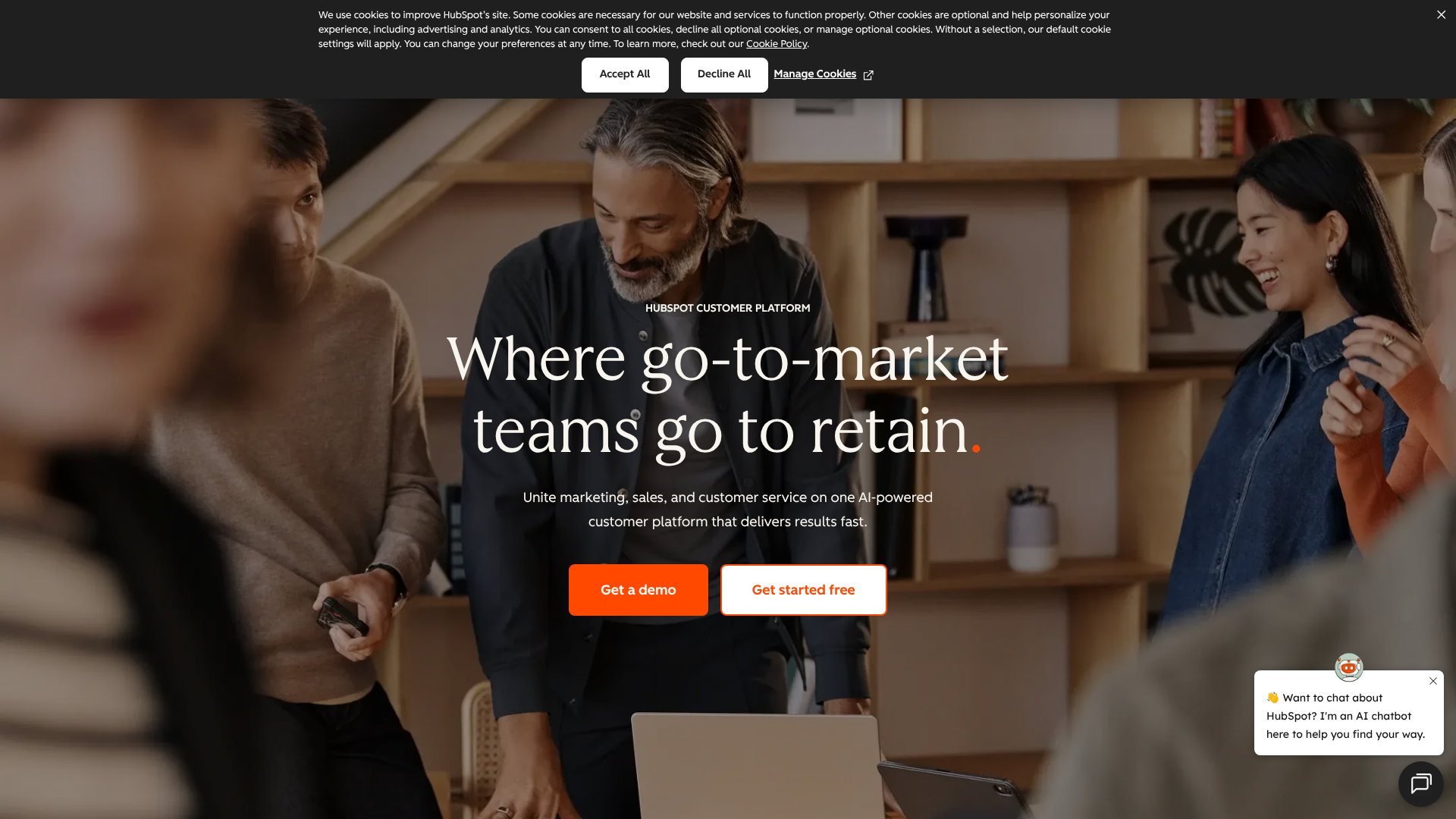
Your CRM is the central nervous system of your sales operation. It's the single source of truth where all prospect data, interactions, and activities are logged. Without a CRM, you're flying blind, with valuable information scattered across spreadsheets, inboxes, and notepads.
A good CRM allows you to track every touchpoint with a prospect, manage your pipeline, and set follow-up reminders. This ensures a consistent experience for the buyer and prevents leads from being forgotten. For teams just starting out, HubSpot CRM offers a powerful free version that covers all the essentials. For businesses needing more advanced features and customisation, Zoho CRM is a robust and cost-effective option.
| Feature | HubSpot CRM | Zoho CRM |
|---|---|---|
| Best For | Startups & SMBs | SMBs & Mid-Market |
| Free Plan | Yes, very generous | Yes, limited to 3 users |
| Key Strength | Ease of use, integration | Customisation, feature depth |
| Pricing | Visit website for current plans | Visit website for current plans |
The Engine: Sales Engagement Platforms (SEPs)
While a CRM stores data, a Sales Engagement Platform (SEP) acts on it. These platforms are the engine of your outreach, allowing you to build, execute, and analyse multi-channel prospecting sequences at scale. They automate the process of sending emails, making calls, and creating social media tasks.
SEPs are a game-changer for productivity. They allow a single rep to manage hundreds of prospects simultaneously, ensuring each one receives the right message at the right time. They also provide detailed analytics on what's working—which email templates get the most replies, which subject lines get the most opens, and which sequences book the most meetings.
For enterprise teams, Outreach is a market leader with a comprehensive feature set. For small to mid-sized businesses, Reply.io provides a powerful and user-friendly platform for automating personalised outreach across multiple channels.
The Fuel: Data and Lead Intelligence Tools
Your prospecting engine needs fuel, and that fuel is accurate data. Lead intelligence tools provide the contact information (email addresses, mobile numbers) and contextual data (company size, technologies used) you need to build your lists and personalise your outreach.
These platforms save countless hours of manual research. Instead of searching for an email address, you can find it in seconds. Many of these tools also provide real-time alerts about your target accounts, such as funding announcements or new hires, giving you timely reasons to connect.
Apollo.io is a popular all-in-one solution that combines a massive B2B database with sequencing and engagement features. For those focused purely on finding accurate email addresses, Hunter Campaigns (Hunter.io) is a highly reliable and well-regarded specialist tool.
Pricing and Cost Considerations for Prospecting Tools
Investing in a sales tech stack can seem daunting, but it's crucial to view it as an investment in efficiency and growth, not just a cost. The pricing for these tools varies widely based on features, the number of users, and the vendor's target market.
CRMs like HubSpot offer free-forever plans that are perfect for individuals or small teams. Paid plans can range from around £40 to over £150 per user per month, depending on the tier. Sales Engagement Platforms typically start around £60-£100 per user per month. Data tools often have tiered pricing based on the number of credits you need, which are used to reveal contact information.
When evaluating cost, it's essential to calculate the potential return on investment (ROI). Consider how much time a tool will save your reps. If a £80/month tool saves a rep five hours of manual work, it has likely already paid for itself in productivity gains. Always visit the official websites for the most up-to-date pricing information and look for free trials to test the software before committing.
Pro Tip: Before investing in a full suite of paid tools, maximise the free tiers available. The free version of HubSpot CRM, combined with LinkedIn Sales Navigator and manual outreach, can be a surprisingly powerful stack for a solo founder or a very small team.
Pros and Cons of Different Prospecting Philosophies
Within the world of sales, there are different schools of thought on the best way to approach prospecting. Understanding the trade-offs between these philosophies can help you build a strategy that's right for your market, product, and team.
Inbound vs. Outbound Prospecting
Inbound prospecting involves creating valuable content (like blog posts, webinars, or ebooks) that attracts potential customers to you. Leads generated this way are often warmer and more educated about their problem. The main pro is higher lead quality, but the con is that it can take a long time to build momentum and see results.
Outbound prospecting is the proactive approach of reaching out to potential customers who haven't yet expressed interest. This includes cold calling, cold emailing, and social outreach. The pro is that you have direct control over the volume of activity and can generate results much faster. The con is that conversion rates are typically lower, and it requires a higher level of skill to be effective.
Ultimately, the most successful companies don't choose one or the other; they build a blended strategy. Inbound marketing fills the top of the funnel with interested leads, while a skilled outbound team proactively targets high-value accounts that might not find them otherwise.
High-Volume vs. High-Personalisation
Another key debate centres on volume versus personalisation. A high-volume approach focuses on contacting as many prospects as possible, using automation and templates to maximise efficiency. The advantage is that you get more "at-bats," and it can work well in markets with a very large total addressable market (TAM) and a transactional sale.
The downside is that the lack of personalisation can lead to low response rates and potentially damage your brand's reputation if it comes across as spammy. A high-personalisation approach, on the other hand, involves deep research and crafting unique messages for a smaller number of high-value prospects. This leads to much higher engagement and conversion rates.
The challenge is that it's extremely time-intensive and doesn't scale easily. The modern best practice is to find a middle ground: use technology to automate the process but build in steps for deep personalisation for your top-tier accounts. This allows you to achieve both scale and relevance.
The Prospecting Process Top Salespeople Use
Understanding the theory is one thing, but seeing how top performers put it into practice is another. This video provides an excellent overview of the mindset and process that elite salespeople use to consistently book meetings.
Key takeaways from the process include the importance of a disciplined schedule, the focus on quality over quantity, and the relentless dedication to research and preparation. Top performers don't just show up and start dialling; they have a plan for every day, every week, and every account they target.
Frequently Asked Questions (FAQ)
How many touchpoints does it take to get a meeting?
There is no single magic number, as it can vary by industry, seniority of the prospect, and the quality of your outreach. However, most industry data suggests it takes between 8 and 12 touchpoints to secure a meeting with a new prospect. This highlights the importance of persistence and using a multi-channel sequence.
A single email or call is rarely enough. A well-planned sequence that spreads these touchpoints over several weeks is the most effective way to stay on a prospect's radar without being annoying. The key is to add value with each interaction, perhaps by sharing a relevant article or insight.
What is the best day or time to prospect?
This is a common question, and while many studies have tried to answer it, the results are often contradictory. Some data suggests mid-week (Tuesday to Thursday) and mid-morning or mid-afternoon are peak times. However, this has become common knowledge, so many reps are calling at these times, creating more noise.
The best approach is to test and see what works for your specific audience. A better strategy is to be consistent with your prospecting block every day, regardless of the time. The most important factor is the quality and relevance of your message, not the exact minute it's sent.
How do I measure prospecting success?
While closed deals are the ultimate goal, it's important to track leading indicators to measure the health of your prospecting efforts. The most crucial metric is the number of qualified meetings booked. This is the direct output of your prospecting activity.
Other key metrics to monitor include reply rates on your email campaigns, connection rates on your calls, and the number of conversations started. These activity metrics help you diagnose problems in your process. For example, a low email reply rate might indicate your messaging needs improvement, while a low call connection rate might mean your data is poor.
Is cold calling still effective in 2026?
Yes, cold calling is still a highly effective prospecting method, but it has changed significantly. The days of picking up a phone book and dialling for hours are over. A modern cold call is strategic, well-researched, and part of a broader multi-channel outreach sequence.
Instead of being the first touchpoint, a call is often more effective after you've already engaged with a prospect via email or social media. The goal is to be a familiar name when you call. When done with a clear purpose and a value-driven message, a phone call can be the fastest way to start a real conversation and qualify a prospect.
Final Thoughts: Implementing Your Prospecting Strategy
Mastering the best practices for sales prospecting is an ongoing process, not a one-time task. It requires a commitment to a structured process built on a foundation of deep customer understanding, consistent execution, and the intelligent use of technology.
Start by solidifying your foundation: define your ICP, build clean lists, and make research a non-negotiable part of your workflow. From there, build out multi-channel sequences that combine personalised email, strategic calls, and social selling. Remember that persistence and value are your greatest assets.
To manage this process effectively, the right tools are essential. If you're looking to organise your efforts and create a single source of truth for your customer data, a powerful CRM is the first step. Consider exploring the free tools from HubSpot CRM. For scaling your outreach and automating your sequences, platforms like Reply.io can make a significant difference in your productivity and results.