

How to Write Sales Proposals That Win Deals: A 9-Step Guide
A well-crafted sales proposal is more than just a price list; it's the final, crucial step in your sales process that can turn a promising lead into a long-term client. Yet, many sales professionals struggle with writing sales proposals that are compelling, persuasive, and clear. They end up sending generic documents that get ignored, leading to lost opportunities and wasted effort. The key is to shift your focus from selling a product to solving a problem, and this guide will show you exactly how to do that.
- What You'll Learn
- What Exactly is a Sales Proposal (And What It's Not)?
- The Anatomy of a Winning Sales Proposal: Key Components
- The Cover Page & Title
- The Executive Summary: Your Proposal's Hook
- The Problem Statement: Show You Understand Their Pain
- The Proposed Solution: Your Value Proposition
- Pricing & Investment: Clarity is Key
- Timeline & Deliverables: Setting Expectations
- Social Proof: Case Studies & Testimonials
- Terms & Conditions and Call to Action
- How to Write Sales Proposals: A 9-Step Process
- Step 1: Deep Dive Discovery & Research
- Step 2: Outline Your Proposal Structure
- Step 3: Write a Compelling Executive Summary
- Step 4: Detail the Client's Problem and Goals
- Step 5: Present Your Tailored Solution
- Step 6: Create a Transparent Pricing Table
- Step 7: Define the Scope and Timeline
- Step 8: Add Social Proof and Your 'About Us'
- Step 9: Proofread, Refine, and Add a Clear CTA
- Choosing the Right Tools to Create a Sales Proposal
- Manual Creation (Word/Google Docs) vs. Dedicated Software
- Top Proposal Software Recommendations
- Integrating Proposals with Your CRM
- Software Pricing Comparison
- Common Mistakes to Avoid When Writing Sales Proposals
- Being Too Generic (The "One-Size-Fits-All" Trap)
- Focusing on Features, Not Benefits
- Unclear Pricing or Scope Creep
- Poor Design and Formatting
- Forgetting to Follow Up
- Advanced Sales Proposal Tips to Increase Your Win Rate
- Use Video in Your Proposals
- Add Interactive Elements
- Track Engagement with Analytics
- Offer Tiered Pricing Options
- Frequently Asked Questions
- What are the 5 essential things a sales proposal should include?
- What is the 3 C's of proposal writing?
- Can ChatGPT write a sales proposal?
- What should a good proposal look like visually?
- How long should a sales proposal be?
- Final Thoughts: Turning Proposals into Partnerships
This comprehensive guide breaks down how to write sales proposals that not only get read but get signed. We'll cover the essential components, a step-by-step process, and the best tools to streamline your workflow. By following these steps, you can create a sales proposal that clearly communicates your value and persuades clients that you are the right choice.
What You'll Learn
- The Essential Anatomy: Discover the eight critical components every winning sales proposal must include, from the executive summary to the final call to action.
- A Step-by-Step Framework: Follow a detailed, nine-step process for researching, writing, and delivering a proposal that is tailored to your client's specific needs.
- Tools of the Trade: Learn about the top software options that can automate proposal creation, track engagement, and help you close deals faster.
- Common Pitfalls to Avoid: Understand the most frequent mistakes that cause proposals to fail, such as generic content and focusing on features over benefits.
- Advanced Closing Techniques: Get expert sales proposal tips, including using video and interactive elements to make your document stand out from the competition.
What Exactly is a Sales Proposal (And What It's Not)?
A sales proposal is a formal document sent from a seller to a prospective buyer. Its primary purpose is to persuade the buyer to purchase a product or service by outlining the value proposition, scope of work, pricing, and terms. Think of it as the bridge between verbal discussions and a signed contract. It formalises the solution you've discussed and presents a clear, actionable plan for the client.
It's crucial to understand what a sales proposal is not. It is not a generic company brochure, a technical manual, or a simple price quote. A quote just lists prices, while a proposal explains why those prices deliver specific value and solve the client's problem. A brochure talks about your company; a proposal talks about the client's company and their challenges.
There are two main types of sales proposals: solicited and unsolicited. A solicited proposal is sent in response to a request for proposal (RFP) or a direct inquiry from a potential client. An unsolicited proposal, often called a proactive proposal, is sent without a prior request. While solicited proposals generally have a higher success rate, a well-researched unsolicited proposal can be a powerful way to generate new business by identifying and solving a problem a prospect may not have even fully recognised yet.
The Anatomy of a Winning Sales Proposal: Key Components

A persuasive proposal follows a logical structure that guides the reader from their problem to your solution. Each section builds on the last, creating a compelling narrative that ends with a clear decision. Here are the essential components you must include.
The Cover Page & Title
First impressions matter. A professional cover page should include your company's name and logo, the client's name and logo, the proposal title (e.g., "Proposal for a New Digital Marketing Strategy"), and the date of submission. It sets a professional tone from the very beginning.
The Executive Summary: Your Proposal's Hook
If your client only reads one section, this is it. The executive summary is a concise overview of the entire proposal. It should briefly touch on the client's problem, the proposed solution, and the expected outcomes or return on investment (ROI). Keep it short, impactful, and completely focused on the client's goals.
The Problem Statement: Show You Understand Their Pain
This is where you demonstrate that you've been listening. Clearly articulate the challenges, pain points, and goals the client shared with you during your discovery calls. Use their own language where possible. This section builds trust and shows the client that you're not offering a generic solution, but one that is specifically designed for their situation.
The Proposed Solution: Your Value Proposition
Now, you connect their problem to your solution. Detail exactly how your product or service will address the challenges outlined in the problem statement. Focus on the benefits and outcomes, not just the features. For example, instead of saying "Our software has a reporting dashboard," say "Our software provides a real-time reporting dashboard so you can track key metrics and make data-driven decisions instantly."
Pricing & Investment: Clarity is Key
Avoid confusion with a clear, itemised pricing table. Break down the costs so the client understands exactly what they are paying for. If possible, offer a few pricing tiers (e.g., Basic, Standard, Premium) to give the client a sense of control and find a budget that works for them. This section should frame the cost as an investment, not an expense, by tying it back to the value and ROI you'll deliver.
Timeline & Deliverables: Setting Expectations
Provide a clear timeline that outlines key milestones and deliverables. When will the project start. What are the major phases. When can they expect to see results.
This manages expectations and shows the client you have a concrete plan for success. A visual timeline or Gantt chart can be very effective here.
Social Proof: Case Studies & Testimonials
Reduce the client's perceived risk by showing them you've achieved great results for other, similar companies. Include a short case study, relevant testimonials, or logos of well-known clients. This section provides third-party validation and builds credibility, making it easier for the client to trust you.
Terms & Conditions and Call to Action
Finally, outline the legal terms of the agreement. Keep this section as simple and jargon-free as possible. End with a clear and easy-to-follow call to action (CTA). Tell the client exactly what to do next, whether it's signing the document electronically, clicking an acceptance button, or scheduling a final call.
Make it effortless for them to say "yes.".
How to Write Sales Proposals: A 9-Step Process
Knowing the components is one thing; assembling them into a persuasive document is another. Follow this step-by-step process to create a sales proposal that stands out and gets results.
Step 1: Deep Dive Discovery & Research
A winning proposal is built on a foundation of thorough research. Before you write a single word, you must understand the client's business, industry, competitors, and specific challenges. Review your notes from discovery calls, visit their website, and check their social media profiles. The goal is to gather enough information to tailor every section of the proposal to their unique context.
Step 2: Outline Your Proposal Structure
Don't start writing from scratch. Use the components listed in the previous section as your outline. Create a skeleton document with headings for each section: Executive Summary, Problem Statement, Proposed Solution, etc. This ensures you cover all the necessary points and helps organise your thoughts before you dive into the details.
Step 3: Write a Compelling Executive Summary
Write this section last, even though it appears first. Once you've written the rest of the proposal, you'll have a much clearer picture of the key points to highlight. Distil the most important information—the client's core problem, your unique solution, and the primary benefit—into a powerful, concise summary of about 3-5 sentences.
Step 4: Detail the Client's Problem and Goals
Using your research, write a detailed problem statement. Frame the challenges in a way that resonates with the client. Quantify the problem where possible (e.g., "losing an estimated £10,000 per month due to inefficient processes"). This shows you've done your homework and understand the real-world impact of their issues.
Step 5: Present Your Tailored Solution
This is the heart of your proposal. Clearly explain how you will solve the problem. Break your solution down into phases or specific activities. For each activity, explain the benefit to the client.
Always connect your actions back to their goals to reinforce the value you provide.
Step 6: Create a Transparent Pricing Table
Design a simple and easy-to-read pricing table. Itemise your services or products clearly. If you offer different packages, present them side-by-side so the client can easily compare them. Always include the total investment and any payment terms, such as deposit requirements or payment schedules.
Pro Tip: Instead of a single price, consider offering three pricing tiers. This psychological technique, known as price anchoring, makes the middle option seem like the best value and gives the client a sense of choice, increasing the likelihood they'll select one rather than rejecting the proposal outright.
Step 7: Define the Scope and Timeline
Clearly define what is included in the project and, just as importantly, what is not. This helps prevent scope creep later on. Follow this with a realistic timeline that maps out the project from start to finish. This demonstrates your professionalism and ability to manage the project effectively.
Step 8: Add Social Proof and Your 'About Us'
Select a case study or a few testimonials that are highly relevant to the client's industry or problem. Following this, add a brief 'About Us' section. Keep it short and focused on your expertise and experience relevant to their project, not your entire company history.
Step 9: Proofread, Refine, and Add a Clear CTA
Typos and grammatical errors can make you look unprofessional and undermine your credibility. Read through the entire document carefully, or use a tool like Grammarly to check for mistakes. Ensure the tone is consistent and the language is clear. Finally, make sure your call to action is impossible to miss and simple to complete.
Choosing the Right Tools to Create a Sales Proposal
How you create and deliver your proposal can be just as important as what's in it. While you can use traditional word processors, dedicated proposal software offers powerful features that can save time, improve professionalism, and provide valuable insights.
Manual Creation (Word/Google Docs) vs. Dedicated Software
Creating proposals manually in Microsoft Word or Google Docs is free and familiar. However, it can be time-consuming, difficult to maintain brand consistency, and offers no tracking capabilities. You send it as a PDF and hope for the best, with no idea if the client has even opened it.
Dedicated proposal software automates much of the process. These platforms offer professional templates, content libraries for reusing common sections, and seamless integration with CRMs and payment gateways. Most importantly, they provide analyti
cs, so you can see when your proposal is opened, which sections are viewed, and for how long. This data is invaluable for timely follow-ups.
Top Proposal Software Recommendations
Several excellent platforms can help you create a sales proposal more efficiently. Here are three of the top contenders:
1. PandaDoc
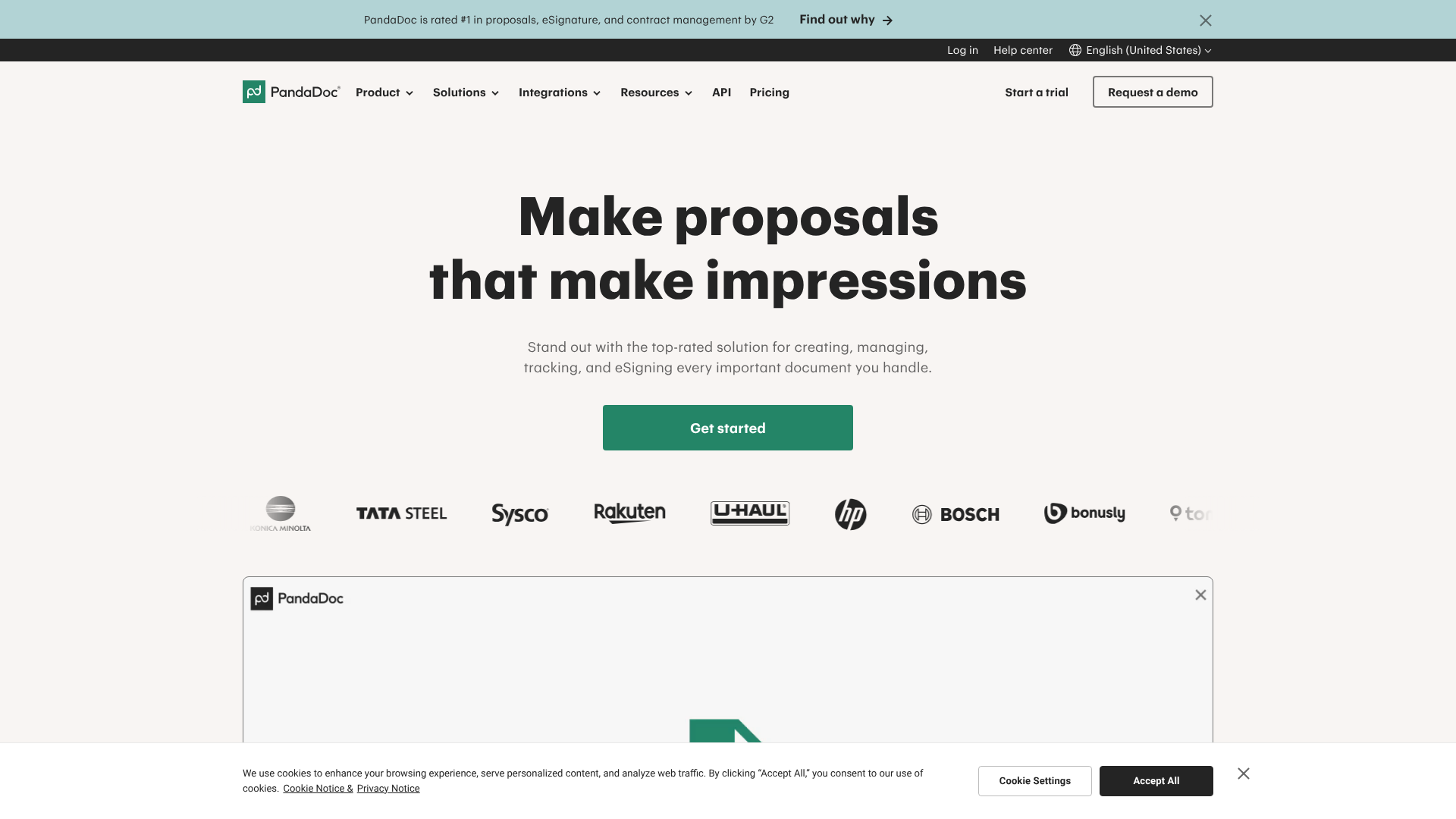
[Pa, making it easy to get started quickly.
- Pros: Powerful document analytics, built-in e-signature functionality, and strong integrations with CRMs like HubSpot and Zoho.
- Cons: Some advanced design customisation features can be limited compared to more design-focused tools.
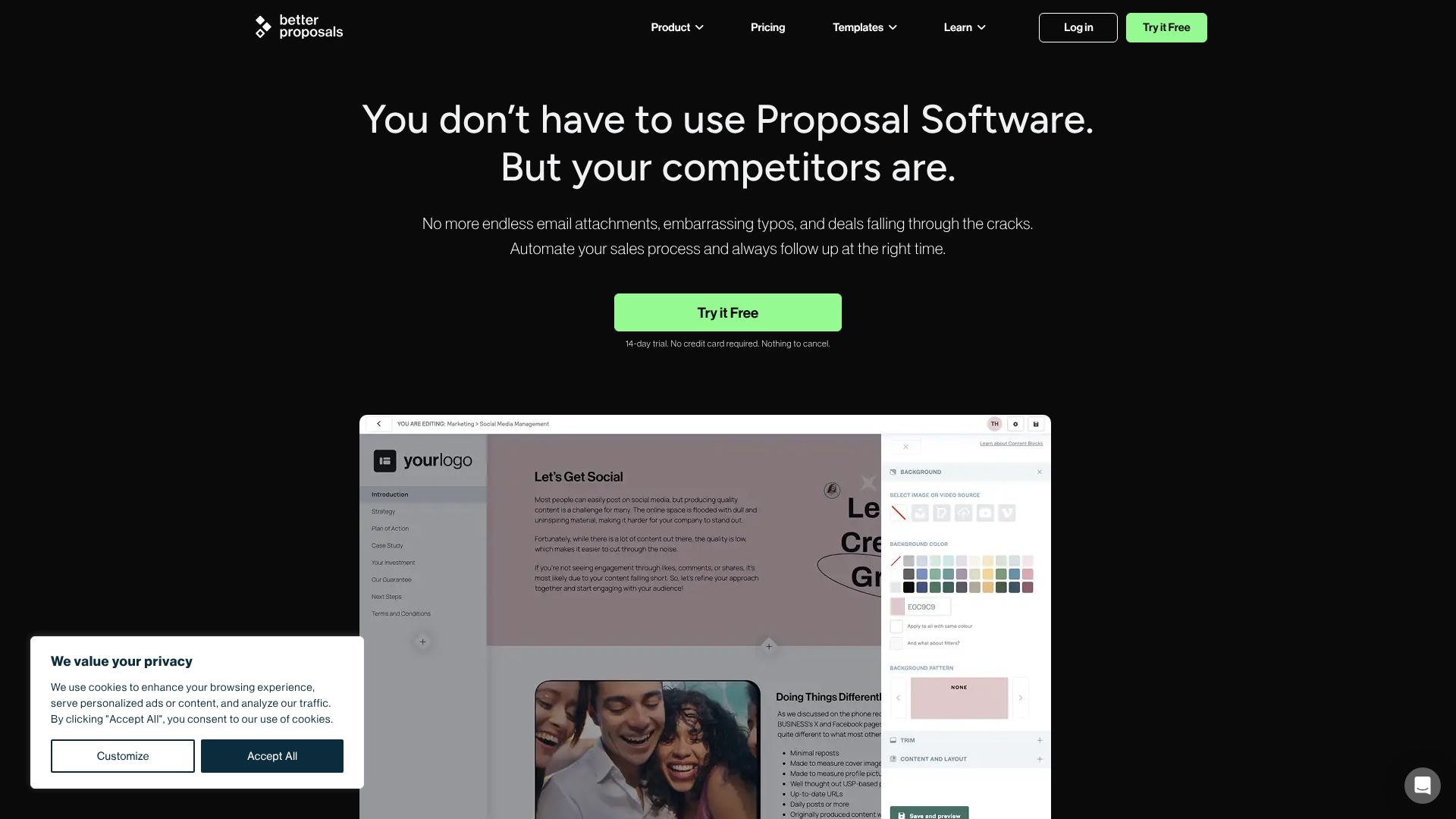
2. Better Proposals
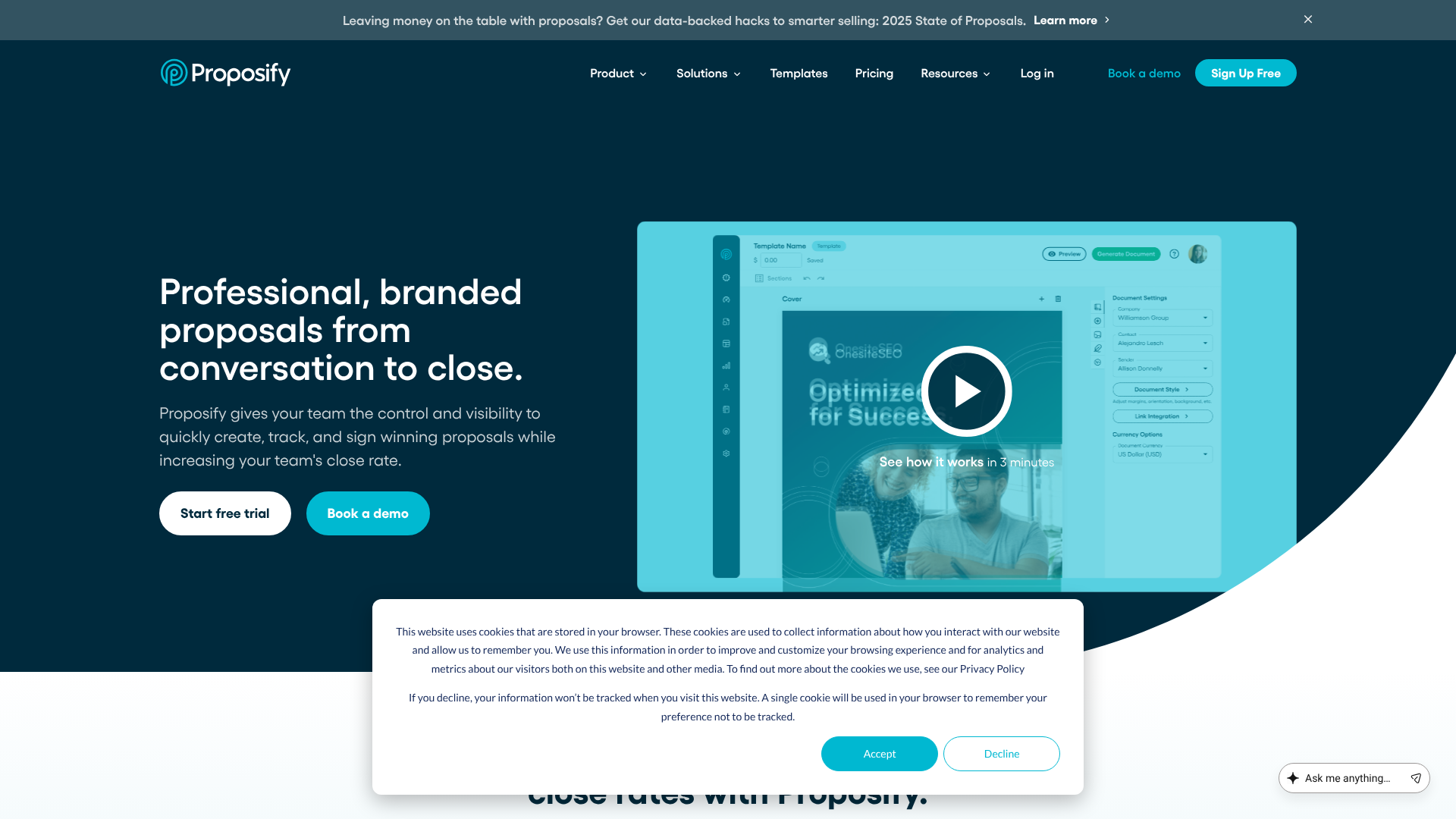
Better Proposals focuses on creating visually stunning, web-based proposals that look great on any device. Their key selling point is speed, claiming you can create a proposal in minutes.
- Pros: Beautiful, modern templates; integrated payment options (Stripe, PayPal); and intelligent tracking that tells you when to follow up.
- Cons: The editor can feel less flexible than a traditional document editor for those who want granular control.
3. Proposify
Proposify is designed for growing sales teams that need control and consistency. It offers features like content libraries, approval workflows, and brand management to ensure every proposal is on-brand and error-free.
- Pros: Excellent for team collaboration, highly customisable, and provides detailed metrics on proposal performance.
- Cons: Can be more complex and has a steeper learning curve than simpler tools.
Integrating Proposals with Your CRM
One of the biggest advantages of using proposal software is its ability to connect with your Customer Relationship Management (CRM) system. By integrating your proposal tool with a platform like HubSpot CRM or Zoho CRM, you can automatically populate proposals with contact and deal information, eliminating manual data entry.
This integration also allows you to track proposal status directly within your CRM. You can see when a proposal is sent, viewed, and signed right on the contact's timeline. This creates a single source of truth for your sales activities and helps ensure no opportunities fall through the cracks.
Software Pricing Comparison
Pricing for proposal software typically depends on the number of users and the feature set. Most offer tiered plans to suit different business sizes. Always check the provider's website for the most current pricing information.
| Feature | PandaDoc | Better Proposals | Proposify |
|---|---|---|---|
| Starting Price | Often starts with a free eSign plan, paid plans vary. | Visit website for current pricing. | Visit website for current pricing. |
| Free Trial | Yes | Yes | Yes |
| Key Feature | All-in-one document workflow | Visually impressive web-based proposals | Team control and brand consistency |
| Best For | Individuals and teams wanting robust analytics | Small businesses and freelancers | Growing sales teams needing scalability |
Common Mistakes to Avoid When Writing Sales Proposals
Even a well-structured proposal can fail if it falls into common traps. Being aware of these mistakes is the first step to avoiding them and improving your win rate.
Being Too Generic (The "One-Size-Fits-All" Trap)
This is the most common and damaging mistake. Sending the same proposal to every prospect shows you haven't taken the time to understand their specific needs. Personalisation is key. Reference your previous conversations, use their company name, and tailor the solution directly to their stated problems.
Focusing on Features, Not Benefits
Your client doesn't care about the technical specifications of your product; they care about what it can do for them. Always translate features into tangible benefits. A feature is what your product is (e.g., "10GB of cloud storage"). A benefit is what the client gets (e.g., "Securely store and access all your project files from anywhere, ensuring your team is always in sync").
Unclear Pricing or Scope Creep
Ambiguity in pricing or scope is a recipe for disaster. If your pricing is confusing, clients may assume you're hiding something. If the scope isn't clearly defined, you risk the client expecting more work than was agreed upon. Be transparent and specific in both areas to build trust and set clear expectations from the start.
Poor Design and Formatting
A proposal that is a wall of text is intimidating and unlikely to be read thoroughly. Use professional branding, plenty of white space, clear headings, and bullet points to make the document scannable and easy to digest. Visual elements like charts, images, and brand colours can make your proposal more engaging and professional.
Forgetting to Follow Up
Sending a proposal and waiting for a response is not a strategy. Your work isn't done until you get a "yes" or a "no." If you're using proposal software, you'll get a notification when the client opens it—that's the perfect time to follow up with a call or email. If not, plan to follow up within 2-3 business days to ask if they have any questions.
Advanced Sales Proposal Tips to Increase Your Win Rate
Once you've mastered the basics, you can incorporate more advanced techniques to make your proposals even more effective. These sales proposal tips can help you stand out in a crowded inbox.
Use Video in Your Proposals
Embedding a short, personalised video can dramatically increase engagement. Use a tool like Loom or Vidyard to record a quick message where you walk the client through the proposal's key points. This adds a human touch, builds rapport, and allows you to explain complex details in a more engaging way.
Add Interactive Elements
Modern web-based proposals allow for interactive elements that a static PDF cannot. Consider adding an interactive pricing calculator that lets clients adjust quantities or select different services to see the price change in real-time. This gives them a sense of control and can help them build their own perfect package.
Track Engagement with Analytics
This is a critical advantage of proposal software. Use the analytics to guide your follow-up strategy. If you see a client has viewed the pricing page five times, you know that's a key area of focus for them. If they haven't opened the proposal after 48 hours, a gentle nudge is in order.
Data-driven follow-ups are far more effective than guessing.
Pro Tip: Pay attention to the 'time spent on page' metric. If a prospect spends a lot of time on your case studies section, it's a strong signal that social proof is important to them. Mention another relevant client success story in your follow-up call to reinforce your credibility.
Offer Tiered Pricing Options
As mentioned earlier, offering 2-3 pricing options is a powerful strategy. It shifts the client's mindset from a "yes/no" decision to "which option is best for me?" This approach caters to different budgets and needs, and often leads to clients choosing the middle or higher-tier option because it appears to offer the best value.
Frequently Asked Questions
Here are answers to some common questions about writing sales proposals.
What are the 5 essential things a sales proposal should include?
Every strong proposal should include at least these five elements: 1) A clear problem statement that shows you understand the client's needs. 2) A tailored solution that explains how you will solve their problem. 3) Transparent pricing that details the investment required. 4) Social proof, like testimonials or case studies, to build trust.
- A clear call to action that tells the client exactly what to do next.
What is the 3 C's of proposal writing?
The three C's are a great guideline for effective proposal writing: Clear, Concise, and Compelling. Your proposal should be Clear, using simple language and avoiding jargon. It should be Concise, getting straight to the point without unnecessary fluff. Finally, it must be Compelling, telling a persuasive story that convinces the client you are the best choice to solve their problem.
Can ChatGPT write a sales proposal?
Yes, AI tools like ChatGPT can be a helpful assistant in the proposal writing process. You can use it to generate outlines, draft initial sections, or rephrase sentences for clarity. However, it cannot replace the critical human elements of research, strategic thinking, and personalisation. An AI can't understand the nuances of your client conversations or your unique value proposition, so it should be used as a tool to augment your efforts, not replace them.
What should a good proposal look like visually?
A good proposal should be visually appealing and easy to read. It should incorporate your company's branding (logo and colours) for a professional look. Use clear headings, subheadings, bullet points, and short paragraphs to break up text. Incorporating visuals like images, charts, and graphs can help explain complex information and make the document more engaging.
How long should a sales proposal be?
The ideal length of a sales proposal depends entirely on the complexity of the project. A simple project might only require a 3-5 page proposal, while a complex, multi-phase project could be 20 pages or more. The goal is not to hit a specific page count but to be as long as necessary to convey the required information, and as short as possible to maintain the reader's attention. Focus on providing value in every section, not on adding filler.
Final Thoughts: Turning Proposals into Partnerships
Learning how to write sales proposals is a fundamental skill for any sales professional. A great proposal does more than just outline services and prices; it tells a story, builds trust, and demonstrates a deep understanding of your client's world. It's the final piece of the puzzle that solidifies your position as a valuable partner, not just another vendor.
By following the structured approach in this guide—understanding the core components, following a step-by-step process, and avoiding common mistakes—you can transform your proposals from simple documents into powerful sales tools. Remember to always focus on the client's needs, communicate your value clearly, and make it easy for them to say yes.
If you're looking to streamline this process and gain a competitive edge, consider using dedicated software. Tools like PandaDoc, Better Proposals, and Proposify can help you create, track, and manage your proposals more effectively, giving you more time to focus on what you do best: selling.