


9 Best AI Writing Apps for Marketers & Creators (2026 Tested)
Creating high-quality content consistently can feel like a constant uphill battle. Between brainstorming ideas, drafting articles, and polishing every sentence, the process is demanding. This is where the best AI writing apps are changing how we work, acting as powerful assistants to speed up workflows and overcome writer's block. These tools are no longer a novelty; they are essential for marketers, bloggers, and creators looking to scale their output without sacrificing quality.
- What to Know
- What Exactly Are AI Writing Apps?
- The Core Benefits: Why Use an AI Writing Tool?
- Overcome Writer's Block
- Boost Productivity and Speed
- Improve Content Quality and Consistency
- Scale Content Creation
- How to Choose the Right AI Writing App for Your Needs
- Define Your Primary Use Case
- Evaluate the Quality of Output
- Check for Key Features
- Consider Ease of Use and Integrations
- Analyse Pricing and Value
- The 9 Best AI Writing Apps in 2026 (Reviewed)
- 1. Jasper (formerly Jarvis): Best for Marketing Teams
- 2. Writesonic: Best All-in-One Content Platform
- 3. Grammarly: Best for Editing and Polishing
- 4. QuillBot: Best for Paraphrasing and Academic Writing
- 5. Copy.ai: Best for Short-Form Copywriting
- 6. Sudowrite: Best for Fiction and Creative Writers
- 7. Surfer SEO: Best for SEO Content Optimisation
- 8. Rytr: Best for Budget-Conscious Users
- 9. ChatGPT / Claude: Best for General-Purpose Brainstorming
- AI Writing Tools: A Head-to-Head Comparison
- The Pros and Cons of Using AI Text Generators
- Frequently Asked Questions about AI Writing Apps
- What is the best AI for writing?
- Are there any free AI writing apps?
- Can I legally write a book with AI?
- How can you tell if someone used ChatGPT?
- Final Thoughts: Integrating AI into Your Writing Workflow
Whether you need to generate a blog post outline, write compelling ad copy, or simply refine your grammar and tone, there's an AI-powered solution designed for the task. This guide breaks down the top options available in 2026, helping you understand their core features, strengths, and ideal use cases. We'll explore everything from full-featured content platforms to specialised editing assistants, so you can find the perfect fit for your writing process.
What to Know
- Best for Marketing Teams: Jasper excels with its advanced Brand Voice features and extensive library of templates, making it ideal for creating consistent, on-brand marketing content.
- Best for Polishing & Editing: Grammarly remains the top choice for improving existing text. Its AI-powered suggestions for grammar, style, and tone are invaluable for any writer.
- Best All-in-One Platform: Writesonic provides a versatile suite of tools for everything from SEO articles and landing pages to social media ads, offering a great balance of features and value.
- Your Use Case is Key: The best tool for you depends entirely on your needs. A novelist requires different features than a social media manager, so define your primary goal before choosing.
What Exactly Are AI Writing Apps?
At their core, AI writing apps are software programs that use artificial intelligence, specifically large language models (LLMs), to generate human-like text. Think of them as far more advanced versions of the autocorrect on your phone. Instead of just suggesting the next word, they can write entire paragraphs, articles, emails, and even creative stories based on a short instruction, known as a prompt.
These sophisticated AI text generators are trained on vast amounts of text data from the internet, allowing them to understand context, grammar, tone, and style. When you give a tool like Jasper or Writesonic a command—such as "write a blog post intro about the benefits of remote work"—it processes your request and predicts the most logical and coherent sequence of words to form a response. This process allows it to create original content that is often indistinguishable from what a human would write.
It's important to distinguish between different types of writing apps AI. Some are designed for long-form content creation, helping you draft entire blog posts or reports. Others specialise in short-form copy for ads or social media. And a third category, which includes tools like QuillBot, focuses on paraphrasing, summarising, and refining existing text rather than creating it from scratch.
The Core Benefits: Why Use an AI Writing Tool?

Integrating an AI writing tool into your workflow offers more than just speed; it provides a range of benefits that can fundamentally improve your content creation process. From sparking initial ideas to adding the final polish, these apps serve multiple functions that help writers at every stage.
Overcome Writer's Block
Every writer has stared at a blank page, waiting for inspiration that never seems to arrive. AI writing tools are an excellent cure for this common problem. You can use them to brainstorm a list of blog post titles, generate a complete article outline, or even write the first paragraph to get you started. This initial momentum is often all that's needed to get your own creative ideas flowing.
Boost Productivity and Speed
The most immediate benefit is a dramatic increase in efficiency. Tasks that once took hours, like researching and drafting a 1,500-word article, can be condensed into a fraction of the time. An AI can handle the initial heavy lifting of drafting, allowing you to focus your energy on higher-level tasks like strategic editing, adding personal insights, and fact-checking. This allows a single writer to produce the output of a small team.
Improve Content Quality and Consistency
Maintaining a consistent brand voice across dozens or hundreds of pieces of content is a significant challenge. AI tools with brand voice features, like Jasper, can be trained on your existing content to ensure every new piece aligns with your established style and tone. Furthermore, tools like Grammarly go beyond basic spell-checking to offer suggestions on clarity, engagement, and delivery, helping you produce more professional and polished writing every time.
Scale Content Creation
For businesses, the ability to scale content is crucial for SEO and marketing efforts. AI text generators make it possible to produce a higher volume of blog posts, social media updates, email newsletters, and product descriptions without needing to hire a large team of writers. This scalability helps companies maintain a constant presence and engage their audience across multiple channels more effectively.
How to Choose the Right AI Writing App for Your Needs

With so many options on the market, selecting the right AI writing app can feel overwhelming. The key is to move beyond the hype and focus on the features and functions that align with your specific goals. Here are the critical factors to consider to make an informed decision.
Define Your Primary Use Case
First, identify what you'll be writing most often. The needs of a fiction author are vastly different from those of a marketing copywriter. Are you writing long-form SEO articles, short and punchy social media ads, academic papers, or email campaigns. A tool like Sudowrite is built for novelists, while Jasper is geared towards marketing teams.
Be clear about your main task to narrow down the options.
Evaluate the Quality of Output
Not all AI models produce the same quality of text. Some are better at creative and nuanced language, while others excel at structured, factual content. The best way to assess this is to take advantage of free trials or freemium plans. Test each tool with the same set of prompts relevant to your work and compare the results.
Pay attention to coherence, accuracy, and how much editing is required to make the text usable.
Check for Key Features
Look for features that will streamline your workflow. Important ones include:
Templates: Pre-built templates for specific formats (e.g., blog posts, Google Ads, AIDA framework) can save a lot of time. * Brand Voice/Tone Control: The ability to define a custom style guide or tone of voice ensures content consistency. * SEO Integration: Some tools, like Surfer SEO, integrate keyword research and on-page analysis directly into the writing process.
Plagiarism Checker: A built-in plagiarism checker is essential to ensure the content you generate is original.
Consider Ease of Use and Integrations
A powerful tool is useless if its interface is confusing. Look for a clean, intuitive dashboard that is easy to navigate. Additionally, check for integrations with other software you use. A Chrome extension, a Google Docs add-on, or a WordPress plugin can make it much easier to incorporate the AI assistant into your existing habits without constantly switching between tabs.
Pro Tip: When testing a new AI writing app, pay close attention to how much 'prompt engineering' is required. The best tools understand natural language and require minimal tweaking to get a great result, while others may need very specific and detailed instructions to produce usable content.
Analyse Pricing and Value
Pricing models vary widely. Some platforms use a monthly subscription with unlimited words, while others operate on a credit-based system where you pay for the amount of content you generate. Calculate the potential return on investment. If a £50/month tool saves you 20 hours of work, it offers excellent value.
Compare the feature sets at different price points to find the plan that offers the best balance of cost and capability for your budget.
The 9 Best AI Writing Apps in 2026 (Reviewed)
After extensive testing and comparison, here are the top AI writing apps that stand out for their features, quality of output, and overall value across different use cases.
1. Jasper (formerly Jarvis): Best for Marketing Teams
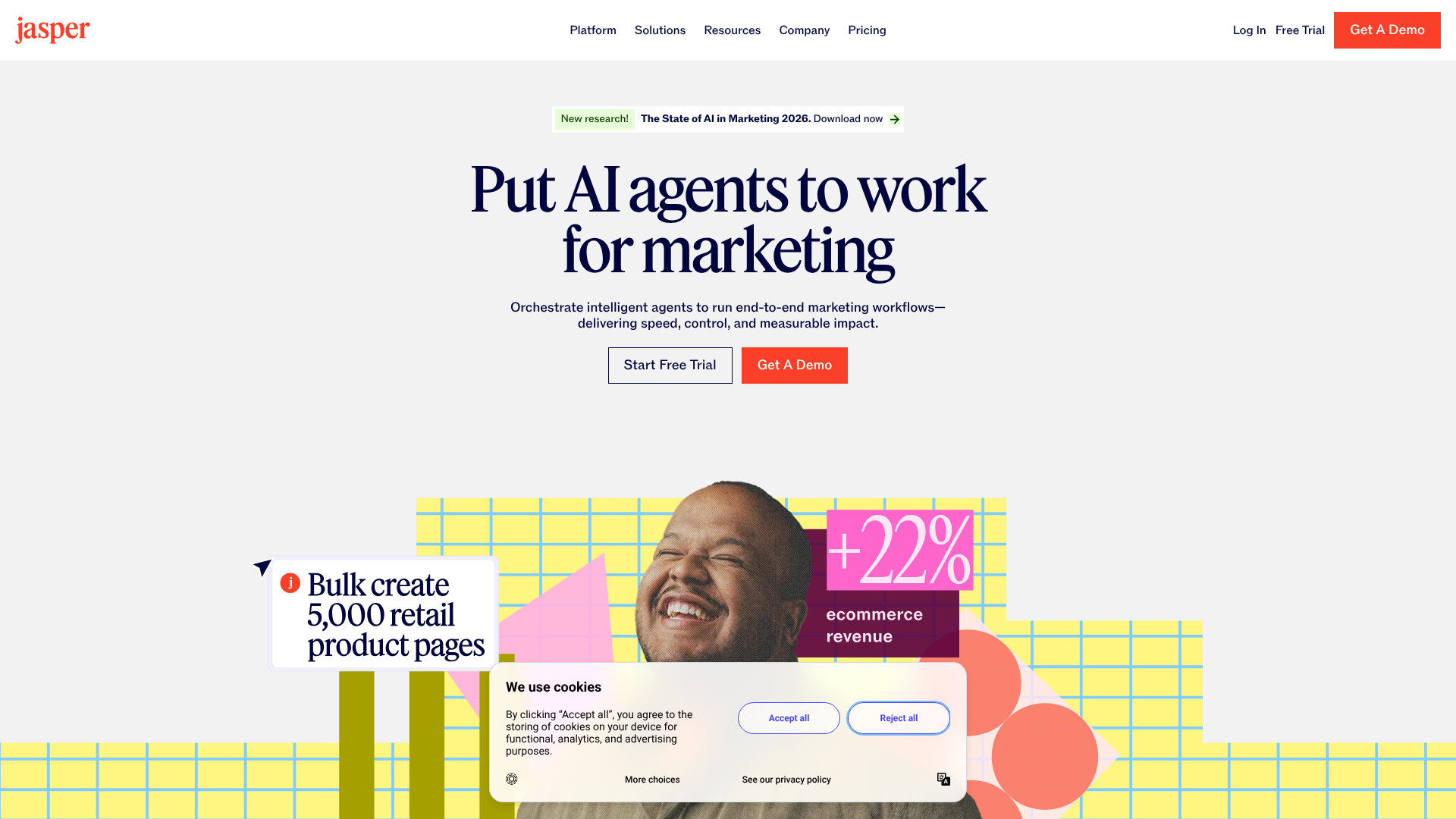
Jasper has established itself as a leader in the AI writing space, particularly for marketing and business content. Its standout feature is the Brand Voice, which allows you to upload documents, paste text, or scan your website to create a custom AI persona that understands and replicates your specific tone and style. This is incredibly useful for teams needing to maintain brand consistency across all communications.
Beyond its brand features, Jasper offers a massive library of over 50 templates for everything from blog posts and social media captions to video scripts and ad copy. Its campaign feature is also powerful, allowing you to generate a suite of related marketing assets from a single brief. While it sits at a higher price point, its specialised marketing toolset provides a clear return on investment for businesses focused on content-driven growth.
Pros
- Excellent Brand Voice feature for consistent, on-brand content.
- Extensive library of high-quality templates for marketing tasks.
- Powerful collaboration features for teams.
Cons
- One of the more expensive options on the market.
- The sheer number of features can present a learning curve for new users.
Pricing
Jasper offers several subscription tiers based on features and word counts. Visit the Jasper website for the most current pricing information.
2. Writesonic: Best All-in-One Content Platform
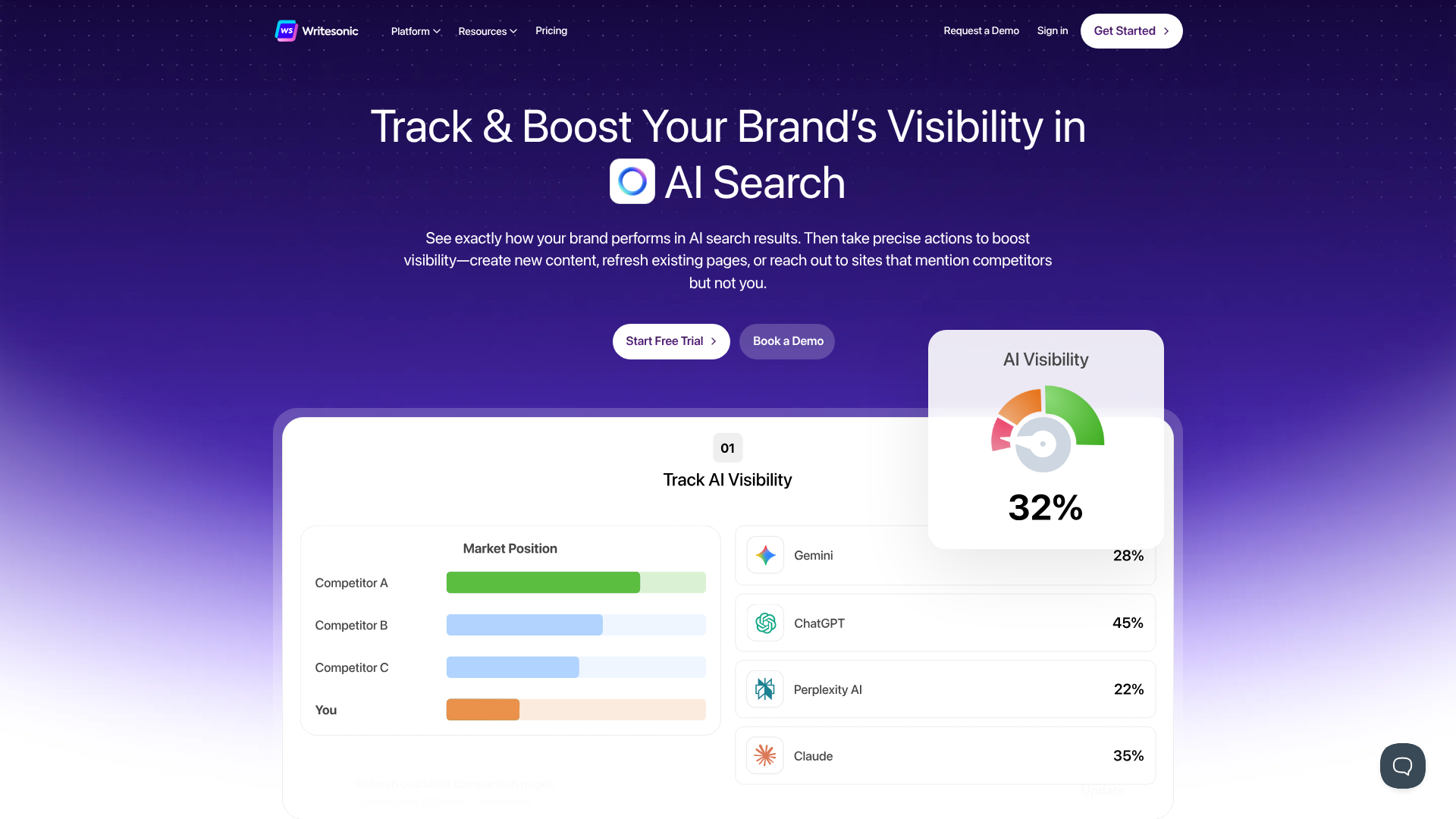
Writesonic positions itself as a comprehensive content platform, and it delivers on that promise. It's incredibly versatile, offering tools for almost any writing task imaginable. Its AI Article Writer 5.0 is excellent for generating factual, SEO-optimised blog posts, while its Photosonic tool creates AI images and Audiosonic generates voiceovers, making it a true multimedia content suite.
What makes Writesonic stand out is its commitment to factual accuracy, often integrating real-time data from Google Search into its output. This reduces the risk of AI 'hallucinations' and minimises the time you need to spend fact-checking. With a user-friendly interface and competitive pricing, it's a fantastic all-rounder for freelancers, marketers, and agencies who need a single tool for diverse content needs.
Pros
- Highly versatile with tools for articles, ads, images, and audio.
- Focus on factual accuracy with real-time data integration.
- User-friendly interface and a generous free trial.
Cons
- The credit system can be slightly confusing to get used to.
- Output quality can sometimes require a bit more editing than Jasper's.
Pricing
Writesonic offers a free trial along with several paid plans that use a credit system. Check out Writesonic's plans to see which fits your needs.
3. Grammarly: Best for Editing and Polishing
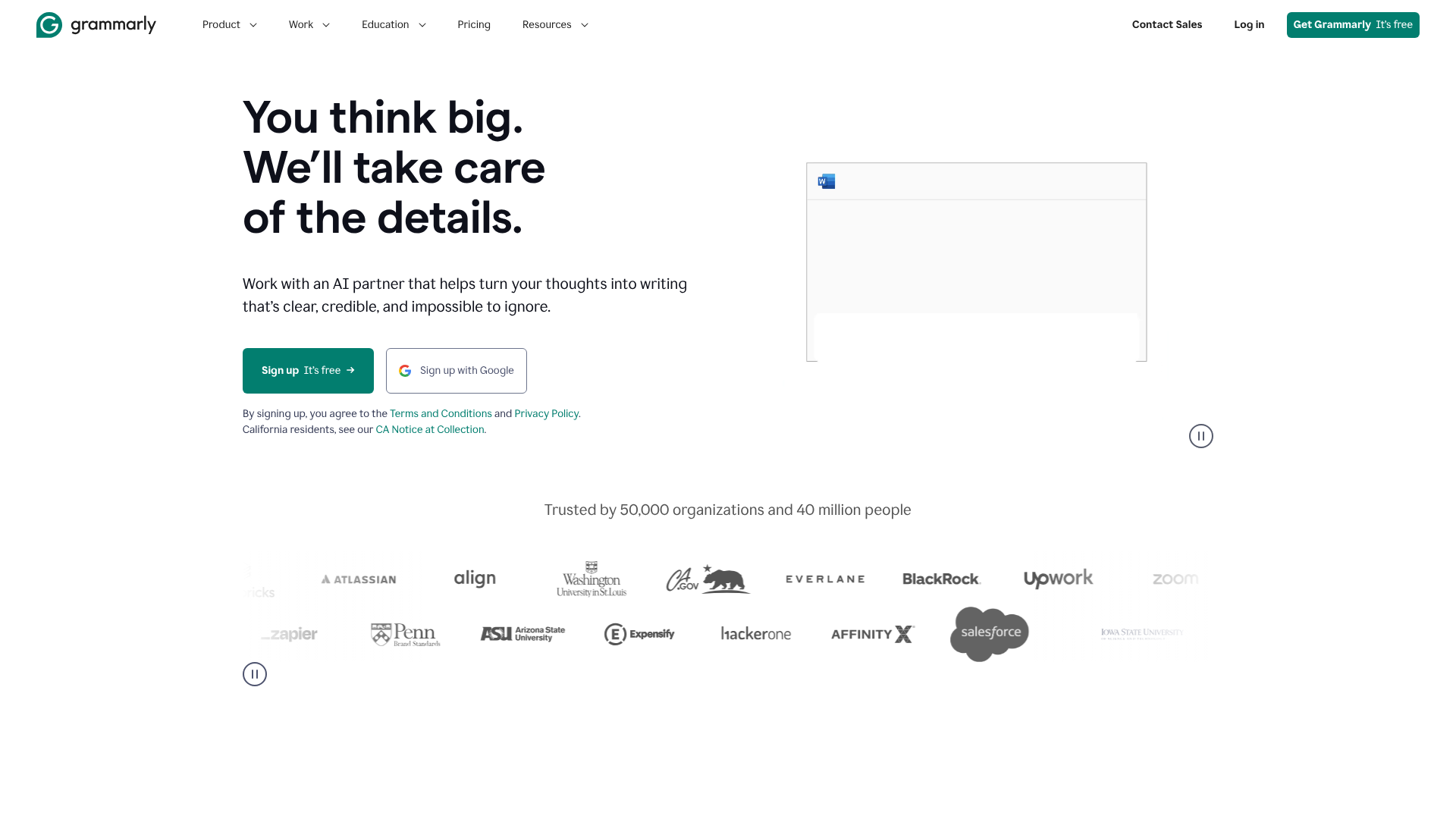
While many know Grammarly as a world-class grammar checker, its evolution into an AI writing assistant makes it an indispensable tool. It's not designed to write a full article for you from scratch. Instead, it acts as your personal editor, improving text you've already written (whether by you or another AI). Its suggestions go far beyond spelling and punctuation, offering feedback on clarity, tone, conciseness, and engagement.
The introduction of GrammarlyGO brings generative AI features directly into the editor, allowing you to rephrase sentences, adjust tone, or brainstorm ideas within your document. Its seamless integration via browser extensions and desktop apps means it works everywhere you write. For anyone serious about producing professional, error-free content, Grammarly is a non-negotiable part of the toolkit.
Pros
- Best-in-class grammar, style, and tone checking.
- Excellent integrations that work across most websites and apps.
- Generative AI features help refine and improve existing text.
Cons
- Not a long-form content generator.
- The most powerful features are locked behind the premium subscription.
Pricing
Grammarly offers a robust free version and a Premium plan with advanced features. Explore what Grammarly offers on their website.
4. QuillBot: Best for Paraphrasing and Academic Writing
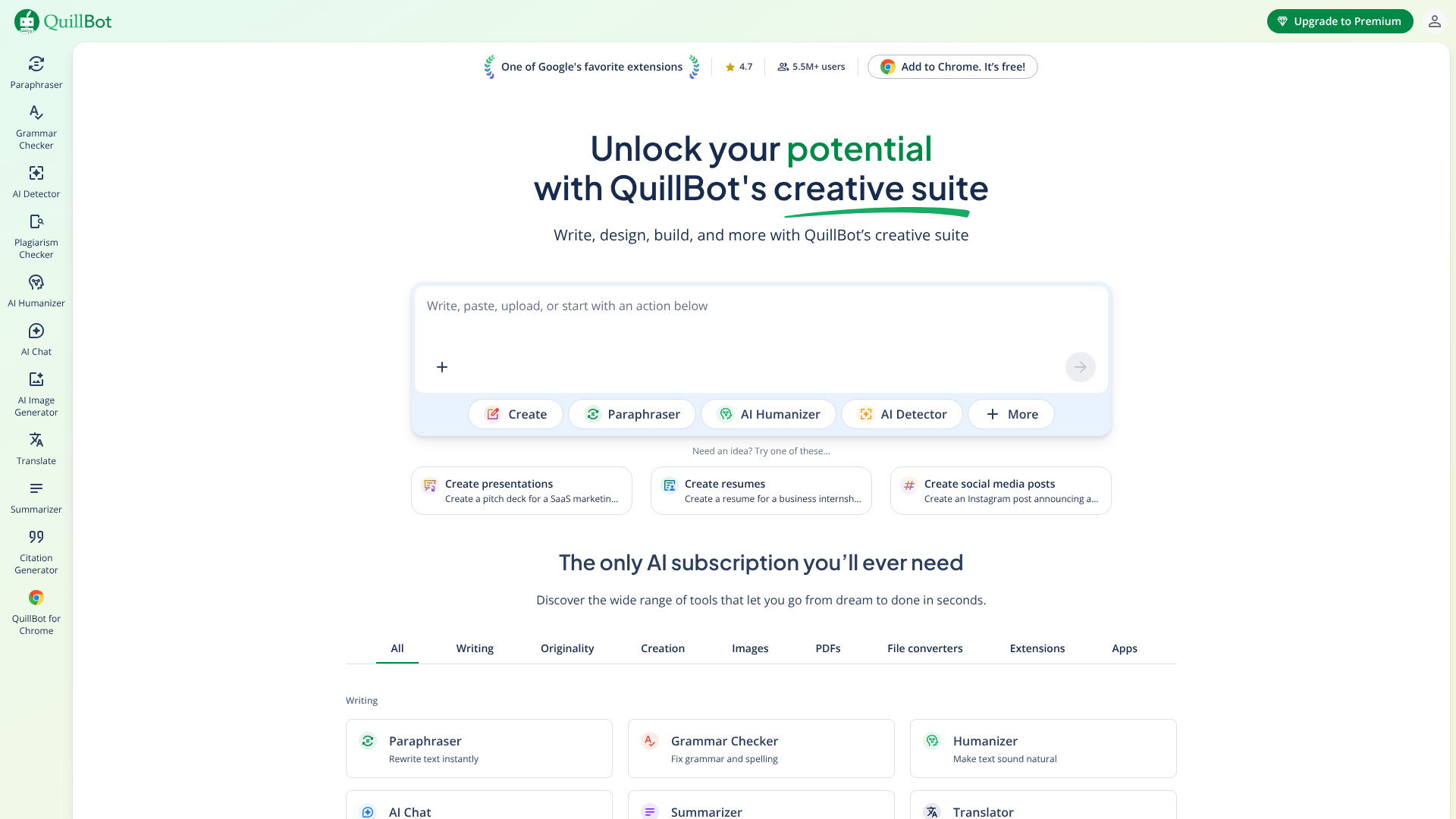
QuillBot has carved out a niche as the go-to tool for rephrasing and restructuring text. Its paraphraser is exceptionally powerful, offering multiple modes (e.g., Formal, Simple, Creative) to help you rewrite sentences and paragraphs without losing their original meaning. This makes it incredibly popular among students, academics, and writers who need to avoid plagiarism or simply find a better way to phrase an idea.
In addition to its core paraphrasing tool, QuillBot includes a summariser, grammar checker, and a citation generator, making it a comprehensive suite for academic work. While its co-writer feature can generate text, its primary strength lies in refining and reworking existing content. It's an affordable and highly effective tool for anyone who does a lot of research-based writing.
Pros
- Market-leading paraphrasing tool with multiple modes.
- Useful features for academic writing, including a citation generator.
- Very affordable premium plan.
Cons
- The AI content generation capabilities are more basic than competitors.
- The free version has significant limitations on character count.
Pricing
QuillBot has a free plan and an affordable Premium subscription. You can find details at the QuillBot website.
5. Copy.ai: Best for Short-Form Copywriting
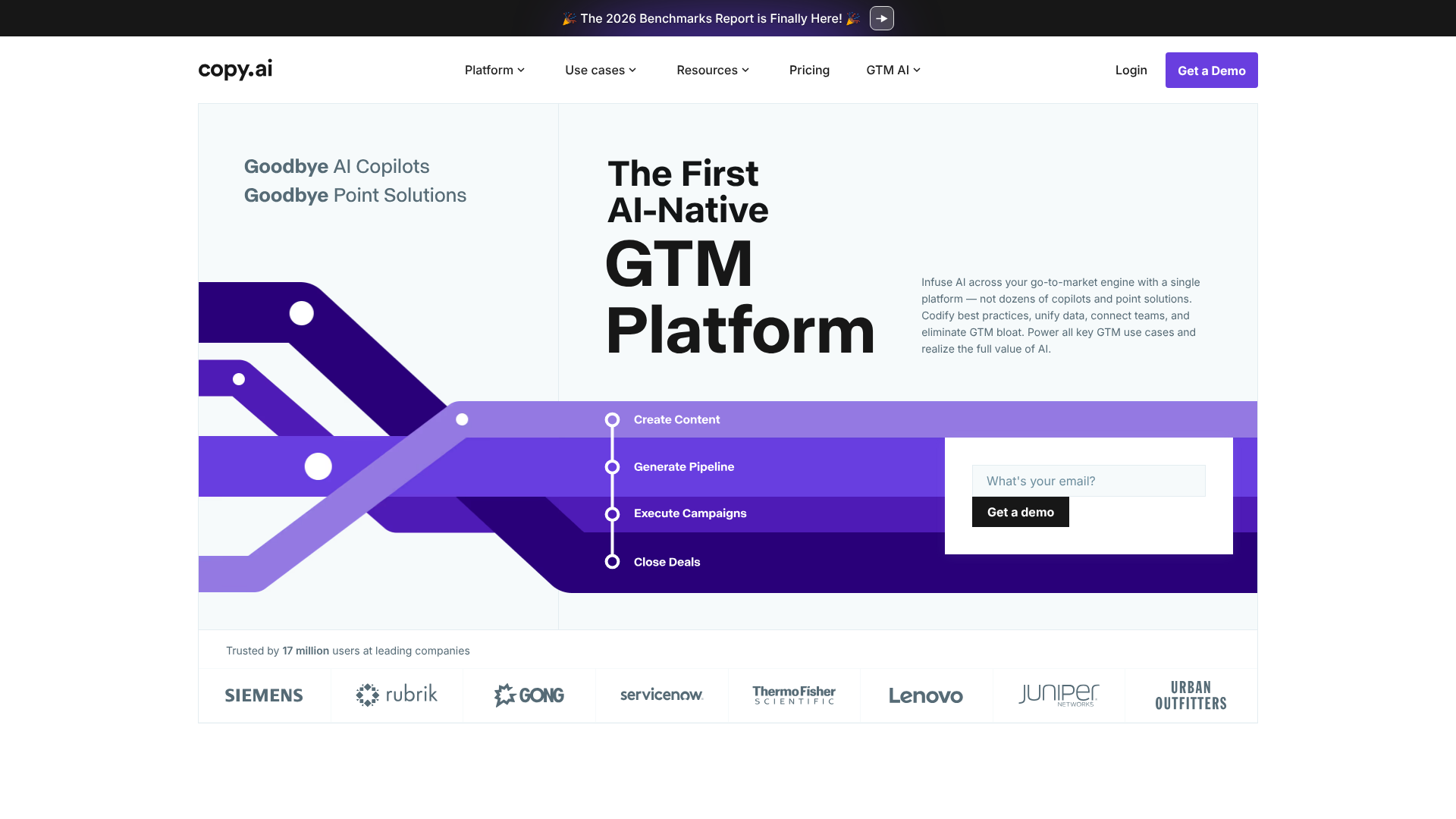
Copy.ai is designed for speed and efficiency, particularly for short-form marketing copy. If you need to generate dozens of social media posts, product descriptions, or digital ad variations quickly, this is an excellent choice. The platform has a clean, simple interface and a workflow that guides you through creating high-quality copy in minutes.
Its generous free plan makes it very accessible for freelancers or small businesses just starting with AI. While it may not have the deep, long-form capabilities of Jasper or Writesonic, its strength lies in its simplicity and focus. It does one thing—generating short-form copy—and it does it very well.
Pros
- Excellent for generating a high volume of short-form copy.
- One of the most generous free plans available.
- Simple, intuitive user interface.
Cons
- Not as effective for long-form content like blog posts.
- Lacks advanced brand voice and team collaboration features.
Pricing
Copy.ai offers a free plan with a monthly word limit, alongside paid plans for higher volume and more features.
6. Sudowrite: Best for Fiction and Creative Writers
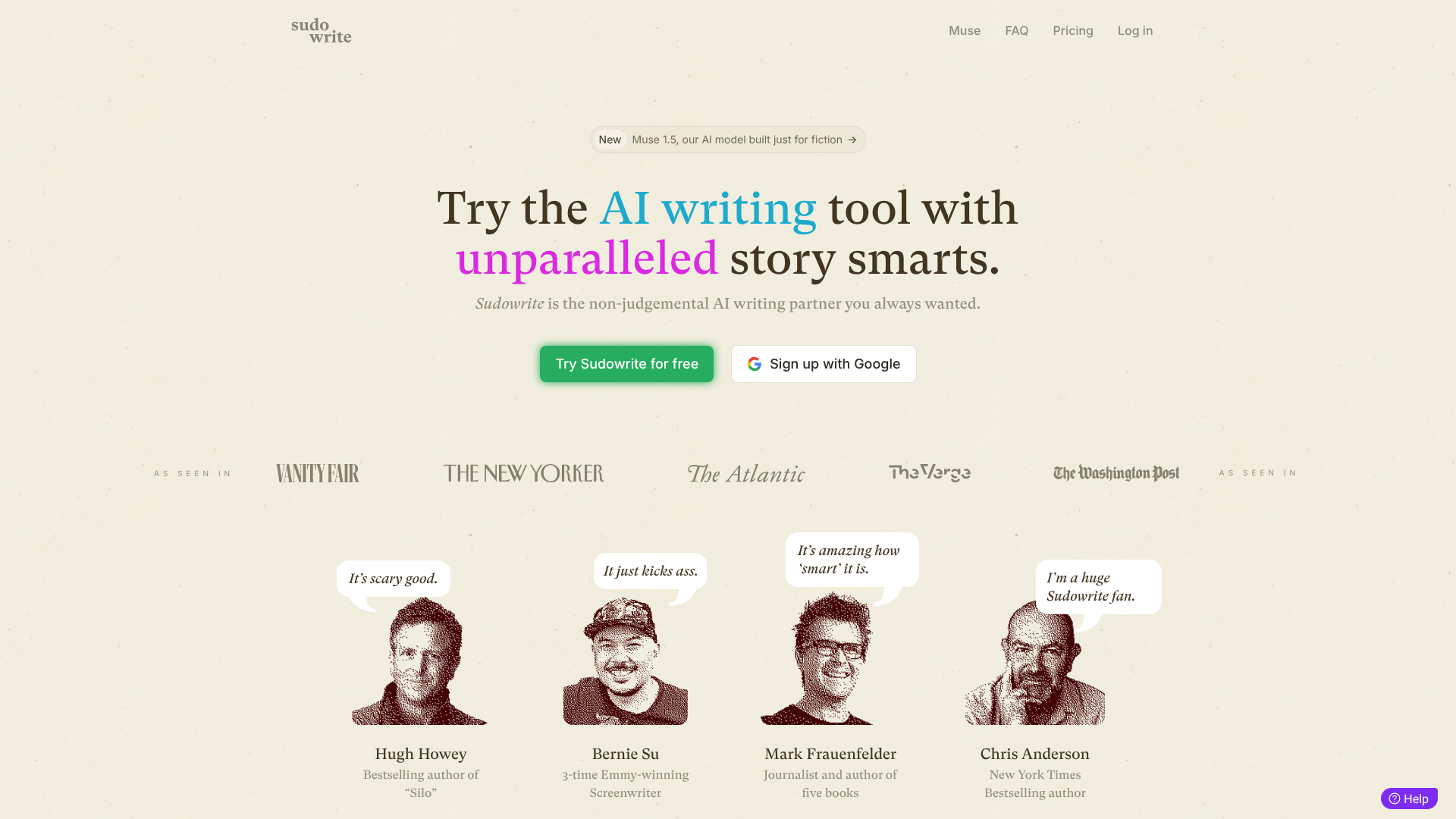
Sudowrite is a unique tool built from the ground up for fiction authors. It doesn't use generic marketing templates; instead, its features are designed to enhance the creative process. The 'Describe' feature can take a simple sense (like 'smell of rain') and expand it into rich, sensory prose. The 'Write' button analyses your characters and plot to generate the next section of your story in your style.
Other features like 'Brainstorm' help you come up with plot twists, character names, or world-building ideas. It acts as a non-judgemental writing partner that can help you get unstuck and explore new creative avenues. For novelists, screenwriters, and storytellers, Sudowrite is an invaluable creative assistant.
Pros
- Specifically designed for the needs of fiction writers.
- Unique features that enhance creativity and description.
- Helps overcome creative blocks and expand on ideas.
Cons
- Completely unsuitable for marketing, business, or academic writing.
- Can feel like 'cheating' for some creative writers.
Pricing
Sudowrite is available via a monthly or annual subscription with different word count tiers.
7. Surfer SEO: Best for SEO Content Optimisation
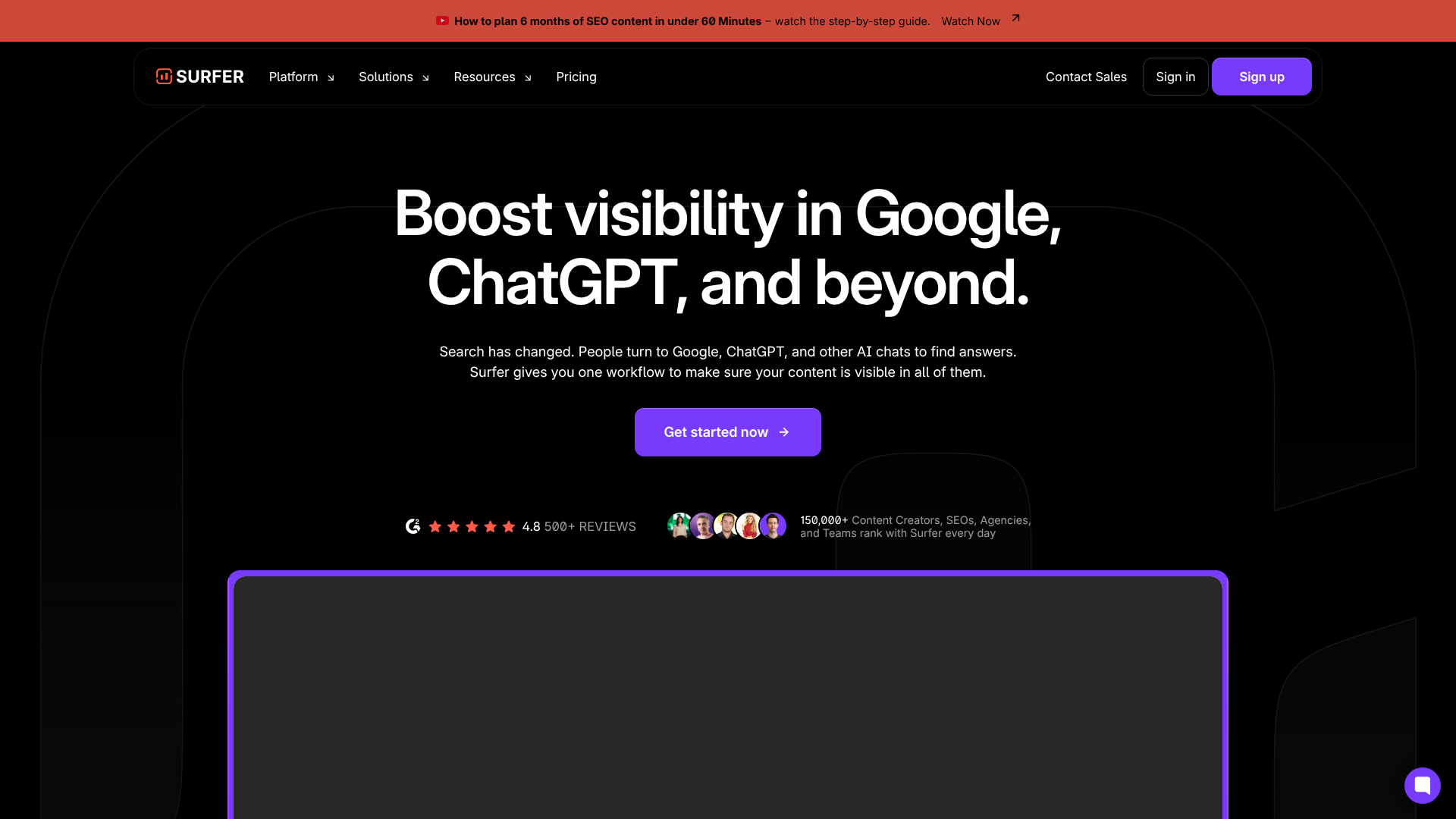
Surfer SEO is, first and foremost, an SEO tool. However, its integrated AI writer, Surfer AI, makes it a powerhouse for creating content designed to rank on Google. Surfer analyses the top-ranking pages for your target keyword and generates a detailed content brief, including recommended keywords, headings, and word count. The AI then writes an article based on this data-driven outline.
This approach takes the guesswork out of SEO writing. You're not just creating content; you're creating content that is structured to meet the expectations of search engines. It's an expensive option, but for businesses where organic search traffic is a primary goal, the investment can pay for itself many times over.
Pros
- Deeply integrates SEO data into the writing process.
- Generates content that is optimised to rank from the start.
- Excellent for creating detailed, data-driven content briefs.
Cons
- High price point makes it inaccessible for many.
- More of an SEO tool with an AI writer than a general-purpose writing app.
Pricing
Surfer SEO offers several subscription plans, with Surfer AI available as an add-on.
8. Rytr: Best for Budget-Conscious Users
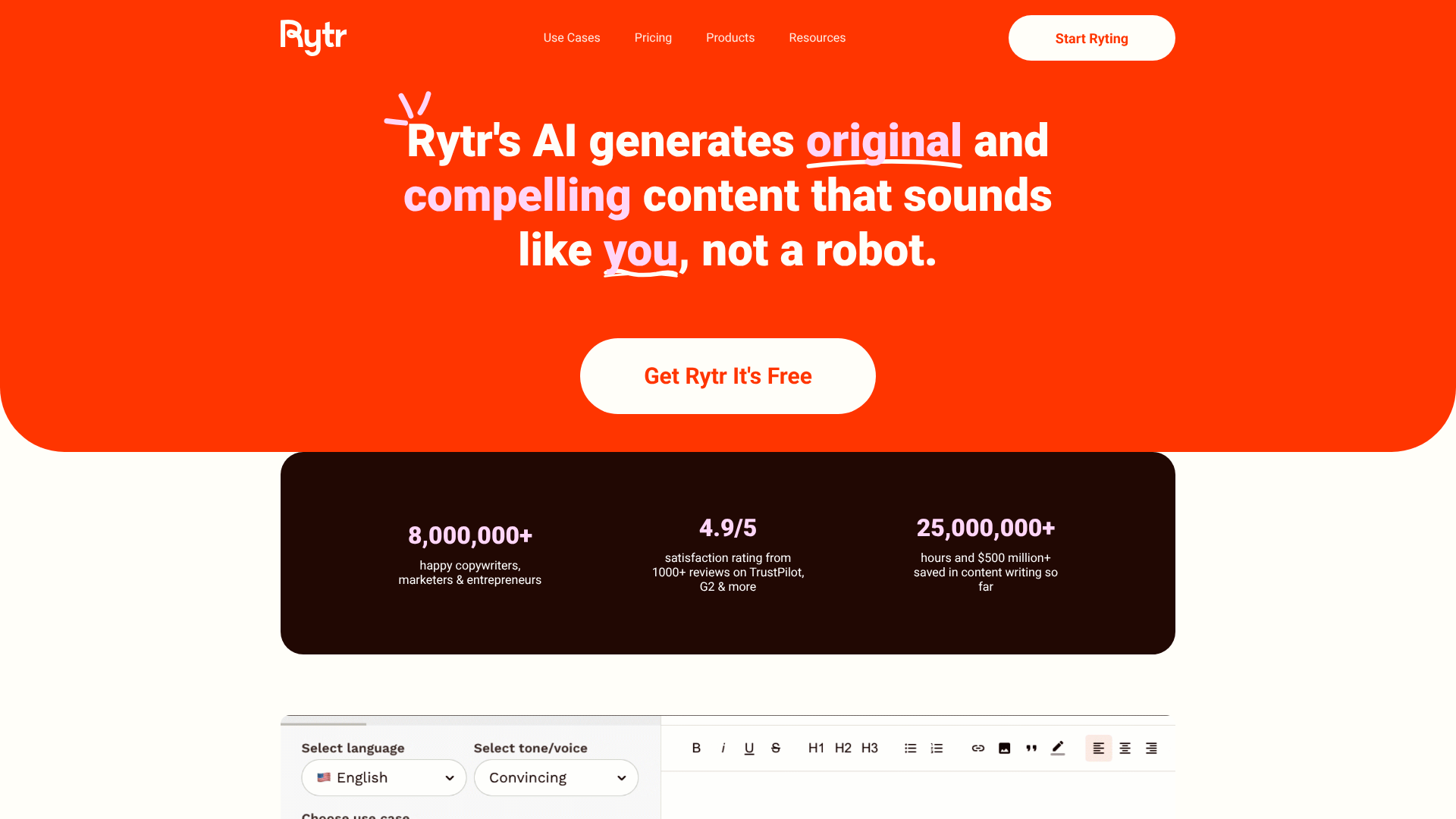
Rytr is a fantastic entry-level AI writing tool that offers a great balance of features and affordability. It has a simple, no-frills interface and provides over 40 use cases, from blog intros to YouTube video descriptions. You can select a tone, provide some input, and Rytr generates several variations for you to choose from.
Its free plan is quite generous, making it a perfect starting point for those who want to experiment with AI writing without a financial commitment. While the output may not always be as polished as premium tools like Jasper, it's a reliable and cost-effective solution for basic content creation tasks.
Pros
- Extremely affordable pricing, including a great free plan.
- Simple and easy-to-use interface.
- Good variety of use cases and supported languages.
Cons
- Content quality can be inconsistent and may require more editing.
- Lacks the advanced features of more expensive competitors.
Pricing
Rytr has a free plan with a monthly character limit, and its paid plans are among the most affordable on the market.
9. ChatGPT / Claude: Best for General-Purpose Brainstorming
No list of AI writing tools would be complete without mentioning the foundational models themselves: ChatGPT and Claude. These conversational AI chatbots are incredibly versatile and can handle a vast range of writing tasks, from drafting emails and summarising articles to writing code and brainstorming ideas. Their conversational nature makes them very intuitive to use.
While they lack the specialised templates, brand voice controls, and streamlined workflows of dedicated writing apps, their raw power is undeniable. For writers who are skilled at 'prompt engineering' (crafting detailed instructions), they can be used to produce high-quality content. The free versions are remarkably capable, making them an excellent resource for anyone.
Pros
- Extremely versatile for a wide range of tasks.
- Highly capable free versions are available.
- Conversational interface is easy for anyone to use.
Cons
- Lack of specialised templates and workflow features.
- Requires more skill in prompt writing to get optimised results.
- Higher risk of factual inaccuracies without built-in web search (on some versions).
Pricing
Both offer powerful free versions, with paid subscriptions (like ChatGPT Plus and Claude Pro) that provide access to more advanced models and features.
AI Writing Tools: A Head-to-Head Comparison
To help you visualise the differences between some of the top contenders, here’s a quick comparison table.
| Feature | Jasper | Writesonic | Grammarly | QuillBot |
|---|---|---|---|---|
| Best For | Marketing Teams | All-in-One Content | Editing & Polishing | Paraphrasing & Academic |
| Pricing Model | Subscription | Subscription/Credits | Freemium | Freemium |
| Brand Voice | Advanced | Basic | Tone Detection | No |
| SEO Features | Basic Integration | Good | No | No |
| Free Plan | No (Trial Only) | Yes | Yes | Yes |
The Pros and Cons of Using AI Text Generators
While AI writing apps offer incredible advantages, it's crucial to approach them with a balanced perspective. Understanding their limitations is just as important as appreciating their strengths. This awareness allows you to use them as effective tools rather than infallible oracles.
The Advantages (A Quick Recap)
To briefly summarise, the primary benefits are clear. They provide a massive boost in speed and efficiency, allowing you to produce content at a scale that was previously unimaginable. They help maintain consistency in tone and style, which is vital for branding. Finally, they are fantastic for idea generation, helping you break through creative barriers and explore new topics.
The Potential Downsides to Consider
On the other hand, there are several potential pitfalls to be aware of. The most significant is the risk of factual inaccuracies, often called 'hallucinations'. AI models can confidently state incorrect information, making human fact-checking an absolutely essential step in the writing process. Never publish AI-generated content without verifying all facts, figures, and claims.
Another issue is a potential lack of originality and nuance. Because AI models learn from existing text, their output can sometimes be generic or derivative. They may struggle to capture subtle human emotions or provide truly unique insights without significant guidance from a human editor. Your personal experiences, stories, and expert analysis are what will make your content stand out.
Finally, there's the risk of over-reliance and skill atrophy. If you use AI as a crutch for all your writing, your own skills may diminish over time. The best approach is to use these writing apps AI as collaborators—let them handle the first draft or suggest improvements, but ensure you remain the final author and editor, sharpening your own critical thinking and writing abilities in the process.
Frequently Asked Questions about AI Writing Apps
Here are answers to some of the most common questions people have when exploring AI writing tools.
What is the best AI for writing?
There is no single 'best' AI for writing because the ideal tool depends entirely on the task. For marketing content and maintaining a brand voice, Jasper is widely considered a top contender. For fiction and creative writing, Sudowrite is specifically designed for storytellers. For simply polishing and perfecting your existing text, Grammarly is the industry standard.
The best choice is the one that aligns with your primary writing needs.
Are there any free AI writing apps?
Yes, many AI writing apps offer free plans or generous free trials to help you get started. Rytr and Copy.ai both have excellent free tiers with monthly character or word limits. The foundational models, ChatGPT and Claude, also offer extremely capable free versions that are perfect for a wide range of tasks. Most premium tools provide a free trial so you can test their features before committing to a subscription.
Can I legally write a book with AI?
This is a complex and evolving area of law. As of 2026, guidance from copyright offices generally states that purely AI-generated text cannot be copyrighted because it lacks human authorship. However, a work that is co-created with AI, where a human has provided significant creative input, selection, arrangement, and modification, may be eligible for copyright. It is crucial to be transparent about the use of AI and to consult the latest guidelines from your local copyright authority.
The human element of editing and storytelling remains key.
How can you tell if someone used ChatGPT?
It is becoming increasingly difficult to tell if content was written by an AI, as the technology improves. AI detection tools exist, but they are often unreliable and can produce false positives. Some potential signs of AI-generated text include a very uniform and formal tone, a lack of personal anecdotes or opinions, repetitive sentence structures, and occasional factual errors. However, a skilled writer using AI as an assistant can produce content that is virtually indistinguishable from human-only writing.
Final Thoughts: Integrating AI into Your Writing Workflow
AI writing apps are not here to replace human writers; they are here to augment them. When used thoughtfully, these tools can handle the most time-consuming parts of the content creation process, freeing you up to focus on strategy, creativity, and adding the unique human touch that no algorithm can replicate. The key is to view them as powerful assistants rather than autonomous authors.
By understanding your specific needs—whether for marketing, creative projects, or academic work—you can select a tool that seamlessly integrates into your workflow and elevates your output. The future of writing isn't about human versus machine; it's about the powerful collaboration between the two.
If you're a marketing professional looking for a robust platform to ensure brand consistency, Jasper is an excellent investment. For those needing a versatile, all-in-one solution for various content types, Writesonic offers incredible value. And for any writer who wants to ensure their final product is polished and professional, adding Grammarly to your toolkit is essential.