



Service Level Agreement Templates: A Buyer's Guide for Businesses
Setting clear expectations is the foundation of any successful business relationship. Whether you're a service provider or a client, ambiguity can lead to misunderstandings, disputes, and disappointment. This is where using professional service level agreement templates becomes essential, providing a clear, documented framework that defines the terms of a service, from performance metrics to responsibilities and remedies.
- What You'll Learn
- What Are Service Level Agreement Templates? (And Why They Matter)
- Key Features to Look For in an SLA Template
- 1. Agreement Overview and Parties
- 2. Detailed Scope of Services
- 3. Performance Metrics and KPIs
- 4. Responsibilities of Both Parties
- 5. Compensation, Penalties, and Remedies (Service Credits)
- 6. Disaster Recovery and Security Protocols
- 7. Reporting, Review, and Escalation Procedures
- The Benefits of Using Pre-Made Service Agreement Templates
- How to Choose the Right SLA Template for Your Business
- Step 1: Assess Your Service Complexity
- Step 2: Consider Your Industry
- Step 3: Check for Customisation and Clarity
- Step 4: Verify the Source and Legal Soundness
- Top Sources for Reliable SLA Templates
- Legal Document Platforms
- Industry-Specific Associations and Publications
- Open-Source and Educational Resources
- Understanding Pricing and Costs
- How to Customise and Implement Your SLA Template
- 1. Fill in the Basic Details
- 2. Define the Services with Extreme Clarity
- 3. Set Realistic and Measurable Metrics (KPIs)
- 4. Outline Reporting and Communication Channels
- 5. Agree on Penalties and Remedies
- Frequently Asked Questions (FAQ)
- How do you write a simple service level agreement?
- What are the three main types of SLAs?
- What is a real-world example of a service level agreement?
- Can I use a template for a service agreement?
- Final Thoughts
These documents are more than just formalities; they are crucial tools for managing relationships and ensuring both parties are aligned on service delivery standards. A well-crafted SLA protects both the provider by managing client expectations and the client by guaranteeing a certain standard of service. Without one, you're navigating a critical business function based on assumptions, which is a risky strategy.
What You'll Learn
- What an SLA Is: Understand the core purpose of a Service Level Agreement and why templates are a crucial starting point for businesses.
- Essential Components: Discover the key clauses and metrics that every effective service agreement template must include to be comprehensive.
- How to Choose: Learn a practical framework for selecting the right SLA template based on your industry, service type, and specific business needs.
- Customisation is Key: Realise why a template is just the beginning and how to properly adapt it to create a binding, effective agreement.
- Sources and Costs: Compare the pros and cons of free versus paid templates and identify reliable sources for legally sound documents.
What Are Service Level Agreement Templates? (And Why They Matter)
A Service Level Agreement (SLA) is a contract between a service provider and a client that specifies, in measurable terms, what services the provider will furnish. Think of it as a detailed promise. It moves beyond vague assurances and establishes concrete benchmarks for performance, availability, and responsibilities. Using service level agreement templates provides a structured starting point for creating these vital documents, ensuring you don't miss critical components.
These templates are pre-drafted documents that outline the typical sections and legal language required in an SLA. Instead of starting from a blank page, you begin with a framework designed by legal or industry experts. This saves an enormous amount of time and reduces the risk of overlooking important clauses, such as those detailing service scope, performance metrics, or penalties for non-compliance.
The primary goal of an SLA is to create alignment. For the client, it defines exactly what they can expect. For the provider, it clarifies what they are obligated to deliver, protecting them from 'scope creep'—where a client's demands expand beyond the original agreement. By setting these boundaries upfront, both parties can work together with a shared understanding, which significantly reduces the potential for future conflicts.
The Three Main Types of SLAs

While the core purpose remains the same, SLAs can be structured in different ways to suit various business models. Understanding these types helps you choose the right kind of template.
Customer-based SLA: This agreement is with a single customer or group and covers all the services they use. For example, a large corporation might have a customer-based SLA with its IT provider that covers everything from helpdesk support to network maintenance and cloud services, all under one contract.
Service-based SLA: This type of agreement defines a specific service for all customers who use it. A cloud storage provider, for example, might offer a service-based SLA that guarantees 99.9% uptime and a certain data retrieval speed to every single one of its clients. The terms are the same for everyone who buys that particular service.
Multi-level SLA: This structure involves layering different SLAs within the same system. It often includes a corporate-level SLA covering general issues for all customers, a customer-level SLA for issues specific to a customer group, and a service-level SLA for a particular service. This model is common in large organisations with multiple departments or locations.
Key Features to Look For in an SLA Template
Not all SLA templates are created equal. A comprehensive template should serve as a robust checklist, ensuring you cover all essential aspects of your service relationship. When evaluating a template, look for dedicated sections that address the following critical components. A weak or incomplete template can leave you exposed to risk, so thoroughness is paramount.

1. Agreement Overview and Parties
This is the foundational section. The template must have clear fields for the names of the service provider and the client, the effective date of the agreement, and the end date or review period. It should also include a brief overview that summarises the purpose of the agreement, setting the context for the detailed terms that follow. This ensures there is no ambiguity about who is bound by the agreement and for how long.
2. Detailed Scope of Services
A vague description of services is a recipe for disaster. A quality template will have a section that prompts you to list and describe every service provided in detail. This includes what tasks are covered, any dependencies on the client (e.g., providing access or information), and, just as importantly, what is explicitly excluded from the scope. For instance, an IT support SLA might state that it covers software issues on company-owned devices but excludes support for personal mobile phones.
3. Performance Metrics and KPIs
This is the heart of the SLA. The agreement is only as strong as its metrics. A good template will include placeholders for specific, measurable, achievable, relevant, and time-bound (SMART) Key Performance Indicators (KPIs). Common examples include:
- Availability/Uptime: Usually expressed as a percentage (e.g., 99.9% service uptime per month).
- Response Time: The time taken to acknowledge an issue (e.g., first response to a support ticket within 15 minutes for critical issues).
- Resolution Time: The time taken to fix a reported issue.
- Error Rate: The percentage of tasks or outputs that contain errors (e.g., less than 1% error rate in data processing).
4. Responsibilities of Both Parties
A service relationship is a two-way street. The template should outline the obligations of both the provider and the client. The provider's responsibilities are tied to the KPIs, but the client also has duties, such as providing timely feedback, ensuring key personnel are available, or maintaining their own equipment. Clearly defining these mutual responsibilities prevents one party from blaming the other for issues caused by their own inaction.
5. Compensation, Penalties, and Remedies (Service Credits)
What happens when the provider fails to meet the agreed-upon metrics. A professional service agreement template will include a section on remedies. This often takes the form of 'service credits,' where the client receives a discount on their bill for the period during which the service was substandard. The clause should clearly define the 'credit' amount for each KPI failure.
Conversely, some SLAs might include bonuses or incentives for exceeding targets.
6. Disaster Recovery and Security Protocols
In today's world, data security and business continuity are non-negotiable. The template should prompt you to detail the provider's security measures, data handling policies, and disaster recovery plans. This section should answer questions like: How is client data protected. What happens in the event of a data breach or a major service outage.
This provides assurance to the client and clarifies the provider's liability.
7. Reporting, Review, and Escalation Procedures
An SLA is a living document. A good template will include clauses for regular performance reporting (e.g., monthly performance reports), scheduled reviews of the agreement (e.g., annually), and a clear escalation path for resolving disputes. The escalation procedure should define who to contact at each stage of a problem, from initial support to senior management, ensuring issues are addressed efficiently before they become major conflicts.
The Benefits of Using Pre-Made Service Agreement Templates
Starting with a pre-made template might seem like a shortcut, but it's actually a strategic business decision that offers significant advantages. For businesses without a dedicated legal department, service agreement templates provide a safe and efficient way to formalise service relationships. They democratise access to structured legal frameworks, saving time and money while reducing risk.
One of the most immediate benefits is speed. Drafting a comprehensive SLA from scratch can take days or even weeks of research and writing. A template provides a 90% solution right out of the box. You simply need to fill in the specifics of your service, metrics, and party details.
This allows you to onboard clients or engage vendors much faster, accelerating your business operations.
Cost savings are another major factor. Hiring a solicitor to draft a custom SLA can be expensive, often running into hundreds or even thousands of pounds. While a final legal review is always recommended, starting with a professionally crafted template dramatically reduces the time a lawyer needs to spend on the document, thereby lowering the overall legal cost. For many standard services, a high-quality template may be all you need.
Furthermore, using a standardised template ensures consistency and completeness. It acts as a checklist, preventing you from accidentally omitting crucial clauses like liability limits or dispute resolution procedures. When you use the same foundational template for all clients, it also standardises your service delivery promises, making them easier to manage, track, and report on internally.
How to Choose the Right SLA Template for Your Business
With countless options available online, from free downloads to premium legal document services, selecting the right one can feel overwhelming. The best template for your business depends entirely on your specific context—your industry, the complexity of your services, and your client relationships. A one-size-fits-all approach rarely works. Here’s a simple framework to guide your decision.
Step 1: Assess Your Service Complexity
First, evaluate the nature of the service you are providing or receiving. Is it a simple, straightforward service like website hosting with a single key metric (uptime). Or is it a complex, multi-faceted service like managed IT support with dozens of KPIs. For simple services, a basic, one-page SLA template might suffice.
For complex services, you'll need a more detailed, multi-page document with extensive sections for each service component.
Step 2: Consider Your Industry
Different industries have different standards and regulatory requirements. A healthcare software provider will need an SLA that addresses patient data confidentiality (like GDPR or HIPAA compliance), while a construction management tool's SLA might focus more on project data availability and on-site support response times. Look for templates that are either designed for your industry or can be easily adapted to include industry-specific clauses.
Step 3: Check for Customisation and Clarity
The best templates are both comprehensive and easy to customise. A document filled with impenetrable legal jargon is unhelpful if you can't understand or modify it. Look for templates that use plain English and provide clear instructions or annotations explaining what each clause means. The ability to easily add, remove, or edit sections is crucial, as no template will perfectly match your business needs without some adjustments.
Pro Tip: When customising, involve the other party. An SLA shouldn't be a document you impose on someone. It's an agreement. Collaborating on the metrics and responsibilities builds a stronger relationship from the start and ensures both sides feel the terms are fair and achievable.
Step 4: Verify the Source and Legal Soundness
Where you get your template from matters. A random template from a blog post may not be legally sound or up-to-date. Prioritise sources that are reputable and specialise in legal documents. Paid services often provide the assurance that their templates are created and reviewed by legal professionals.
Free templates from university or government websites can also be reliable, but they may be more generic. Always check for reviews or information about who created the template.
Top Sources for Reliable SLA Templates
Once you know what to look for, the next step is finding a trustworthy source. The quality of your template directly impacts the quality of your final agreement. Here are a few types of sources to consider, each with its own pros and cons.
Legal Document Platforms
Services that specialise in providing legally vetted documents are often the safest and most efficient choice. They offer a wide range of templates that are typically created and maintained by legal experts, ensuring they are compliant with current laws and best practices.
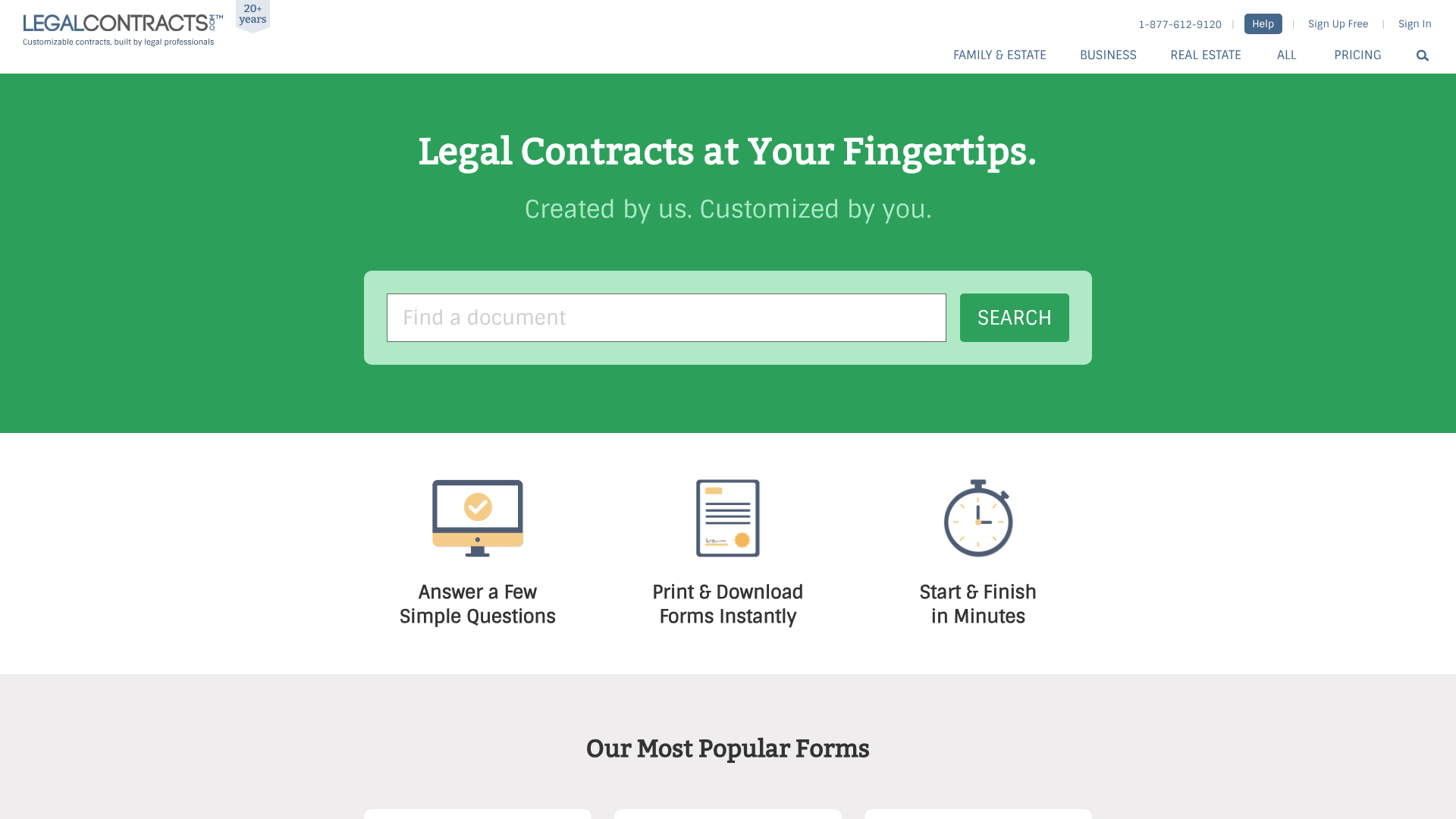
One such platform is LegalContracts. They offer a variety of business and service agreements designed for different needs. The primary advantage of using a service like this is the peace of mind that comes from knowing the foundational language is solid. These platforms often guide you through the process of filling out the template, making it easier to customise correctly.
- Pros: Legally vetted, regularly updated, wide variety, often includes guidance.
- Cons: Usually requires a subscription or one-time payment.
Industry-Specific Associations and Publications
For specialised fields, industry associations are an excellent resource. A marketing association, for instance, might offer SLA templates specifically for digital marketing agencies, including relevant KPIs like click-through rates or conversion metrics. These templates are highly relevant but may be available only to members. They are tailored to the nuances of a specific sector, which can be a significant advantage.
- Pros: Highly relevant to your industry, includes appropriate metrics.
- Cons: May require membership, might be less legally comprehensive than a dedicated legal source.
Open-Source and Educational Resources
Many reputable sources offer free templates as a public resource. University IT departments, for example, often publish their internal SLAs, which can be adapted for commercial use. Similarly, government websites sometimes provide basic level agreement forms for small businesses. While free, these templates are often very generic and will almost certainly require significant customisation and a legal review before use.
- Pros: Free to access and use.
- Cons: Often generic, may not be up-to-date, requires more effort to customise and verify.
Understanding Pricing and Costs
The cost of a service level agreement template can range from completely free to several hundred pounds for a bespoke document from a law firm. Understanding the different pricing models helps you make an informed decision that balances cost with risk.
Free Templates: These are widely available online. Their main appeal is the zero upfront cost. However, they come with hidden risks. A free template might be outdated, incomplete, or not legally sound in your jurisdiction.
The potential cost of a dispute arising from a poor agreement far outweighs the initial savings. Use free templates with caution, preferably as a learning tool rather than the final basis for your contract.
One-Time Purchase Templates: Some websites sell individual templates for a flat fee. This can be a good middle ground, offering a more professional document than a free version without committing to a subscription. This model is ideal if you only need an SLA occasionally.
Subscription-Based Services: Platforms like LegalContracts often operate on a subscription model. For a monthly or annual fee, you get access to their entire library of legal documents, including various service agreement templates. This is the most cost-effective option for businesses that need legal documents regularly. Subscriptions often come with the added benefit of continuous updates and customer support.
Ultimately, the 'cost' of an SLA isn't just its price tag. It's also the value it provides in risk mitigation. Investing in a quality template from a reputable source is an investment in business security. A weak agreement could cost you thousands in lost revenue or legal fees down the line.
How to Customise and Implement Your SLA Template
Finding the right template is only the first step. The real work lies in customising it to accurately reflect your unique service relationship. A template is a framework, not a finished product. Here’s a step-by-step guide to turning a generic template into a powerful, specific agreement.
1. Fill in the Basic Details
Start with the easy part. Enter the full legal names of the client and the service provider, their business addresses, and the key contacts for both parties. Define the agreement's term—the start date, end date, and any conditions for renewal or termination. This ensures the document is correctly assigned to the right entities.
2. Define the Services with Extreme Clarity
This is the most critical part of the customisation process. Replace the template's generic service descriptions with a highly detailed account of what you will do. Be specific. Instead of “Provide IT Support,” write “Provide remote IT helpdesk support for company-issued laptops running Windows 11, available from 9:00 AM to 5:00 PM GMT, Monday to Friday.” Remember to also list what is not included to prevent scope creep.
3. Set Realistic and Measurable Metrics (KPIs)
Work with your client to establish the KPIs. The metrics in the template are just examples. You need to define your own based on what matters to the client and what you can realistically deliver and measure. For each KPI, define the target (e.g., 99.5% uptime), how it will be measured (e.g., via a third-party monitoring tool), and the reporting frequency (e.g., in a monthly report).
4. Outline Reporting and Communication Channels
How will you keep the client informed. Specify the format, content, and frequency of performance reports. Define the official channels for communication. For instance, all support requests must be submitted via a specific portal, not through emails to individual technicians.
This keeps communication organised and trackable.
5. Agree on Penalties and Remedies
Customise the service credits or penalties section to be fair and motivating. The penalties should be significant enough to incentivise the provider to meet their targets but not so punitive that they cripple the business relationship. Ensure the process for claiming service credits is clearly defined.
Pro Tip: Before finalising the document, have it reviewed by a qualified legal professional. Even the best templates can't account for every legal nuance in your specific situation or jurisdiction. A quick review can save you from major headaches later.
Frequently Asked Questions (FAQ)
Here are answers to some common questions people have about using service level agreement templates.
How do you write a simple service level agreement?
To write a simple SLA, start with a clear template. Focus on the essentials: 1) Identify the parties involved. 2) Clearly describe the service to be provided. 3) Define one or two key, measurable performance metrics (like uptime or response time).
- State the responsibilities of both the provider and the client. 5) Specify the term of the agreement. For a simple agreement, avoiding overly complex legal language is key; clarity is more important.
What are the three main types of SLAs?
The three main types of Service Level Agreements are Customer-based, Service-based, and Multi-level. A Customer-based SLA is an agreement with a single customer covering all services they use. A Service-based SLA defines one specific service for all customers. A Multi-level SLA combines different layers, often including corporate, customer, and service-level agreements to address the needs of a large organisation.
What is a real-world example of a service level agreement?
A common example is for a web hosting provider. The SLA would promise a specific level of server uptime, such as 99.9% per month. It would define how this is measured and state that if uptime drops below this level, the customer will receive a service credit, perhaps a 10% discount on their monthly bill. It would also define the technical support response time, guaranteeing a response to critical issues within 30 minutes.
Can I use a template for a service agreement?
Yes, you absolutely can and should use a template for a service agreement, especially if you don't have an in-house legal team. Templates provide a structured, comprehensive starting point that ensures you cover all critical clauses. They save time, reduce costs, and promote consistency. However, it is crucial to choose a template from a reputable source and to customise it thoroughly to fit your specific needs before getting it signed.
Final Thoughts
Service level agreements are the bedrock of a transparent and professional service relationship. They transform vague promises into concrete commitments, providing clarity and security for both the service provider and the client. While drafting one from scratch can be a daunting task, service level agreement templates offer a practical, efficient, and reliable solution.
By choosing a high-quality template, customising it with specific details, and focusing on clear, measurable metrics, you can create a powerful document that aligns expectations and prevents future disputes. Remember that the goal is not just to have a contract, but to build a strong, trusting relationship based on a shared understanding of success.
If you're looking for a reliable starting point with legally vetted language, consider exploring the options available on a dedicated platform. A service like LegalContracts can provide the professional framework you need to build your next great business partnership.