


Zoho CRM vs HubSpot CRM: Which is Best for Small Businesses in 2026?
Choosing the right Customer Relationship Management (CRM) platform is a critical decision for any small business. It's the central hub for your sales, marketing, and customer service efforts. Two of the biggest names you'll encounter are Zoho and HubSpot, and making a decision in the Zoho CRM vs HubSpot CRM debate can be tough. Both offer powerful tools, but they cater to different business needs, priorities, and budgets.
- Quick Summary
- An Introduction to Two CRM Powerhouses
- Zoho vs HubSpot: A Head-to-Head Feature Comparison
- User Interface and Ease of Use
- Sales Automation and Workflows
- Marketing Automation Capabilities
- Customisation and Flexibility
- Reporting and Analytics
- Integrations and Ecosystem
- HubSpot CRM vs Zoho CRM: A Detailed Pricing Breakdown
- Weighing the Pros and Cons: Zoho vs HubSpot
- Making Your Decision: Which CRM Fits Your Needs?
- Frequently Asked Questions about Zoho and HubSpot
- Is Zoho CRM better than HubSpot?
- What are the disadvantages of Zoho?
- Who is HubSpot's biggest competitor?
- Is Zoho CRM hard to learn?
- What is the #1 CRM platform?
- Final Thoughts: The Verdict on Zoho CRM vs HubSpot CRM
This guide provides a detailed breakdown, comparing everything from core features and pricing structures to ease of use and customisation. We'll explore the strengths and weaknesses of each platform to help you determine which one is the right fit for your team's growth. Whether you're a startup looking for a free, user-friendly solution or a scaling business needing deep customisation, this comparison will give you the clarity you need.
Quick Summary
- HubSpot's Core Strength: HubSpot CRM shines with its exceptional ease of use, clean interface, and an incredibly generous free plan. It's built around an inbound marketing philosophy, making it ideal for businesses focused on content and lead nurturing.
- Zoho's Core Strength: Zoho CRM's main advantages are its affordability and powerful customisation. As part of the vast Zoho ecosystem, it offers an all-in-one solution that can run nearly every aspect of your business on a budget.
- The Key Difference: The choice often comes down to user experience versus customisability. HubSpot is designed to be intuitive and easy to adopt, while Zoho offers a deeper level of control and flexibility for businesses with unique processes.
- Our Recommendation: Choose HubSpot CRM if your team prioritises a simple user interface and needs powerful, integrated marketing tools from day one. Opt for Zoho CRM if you need a highly customisable, feature-rich platform at a lower price point and have the resources to manage its setup.
An Introduction to Two CRM Powerhouses
Before diving into a feature-by-feature breakdown, it's important to understand the philosophy behind each platform. Their origins influence their strengths and how they approach customer relationship management. One started as a marketing automation tool, while the other was built as part of a comprehensive suite of business applications.
This fundamental difference shapes the entire user experience, from the dashboard you see when you log in to the way features are bundled and priced. Understanding this context is the first step in a proper hubspot crm comparison.
What is HubSpot CRM?
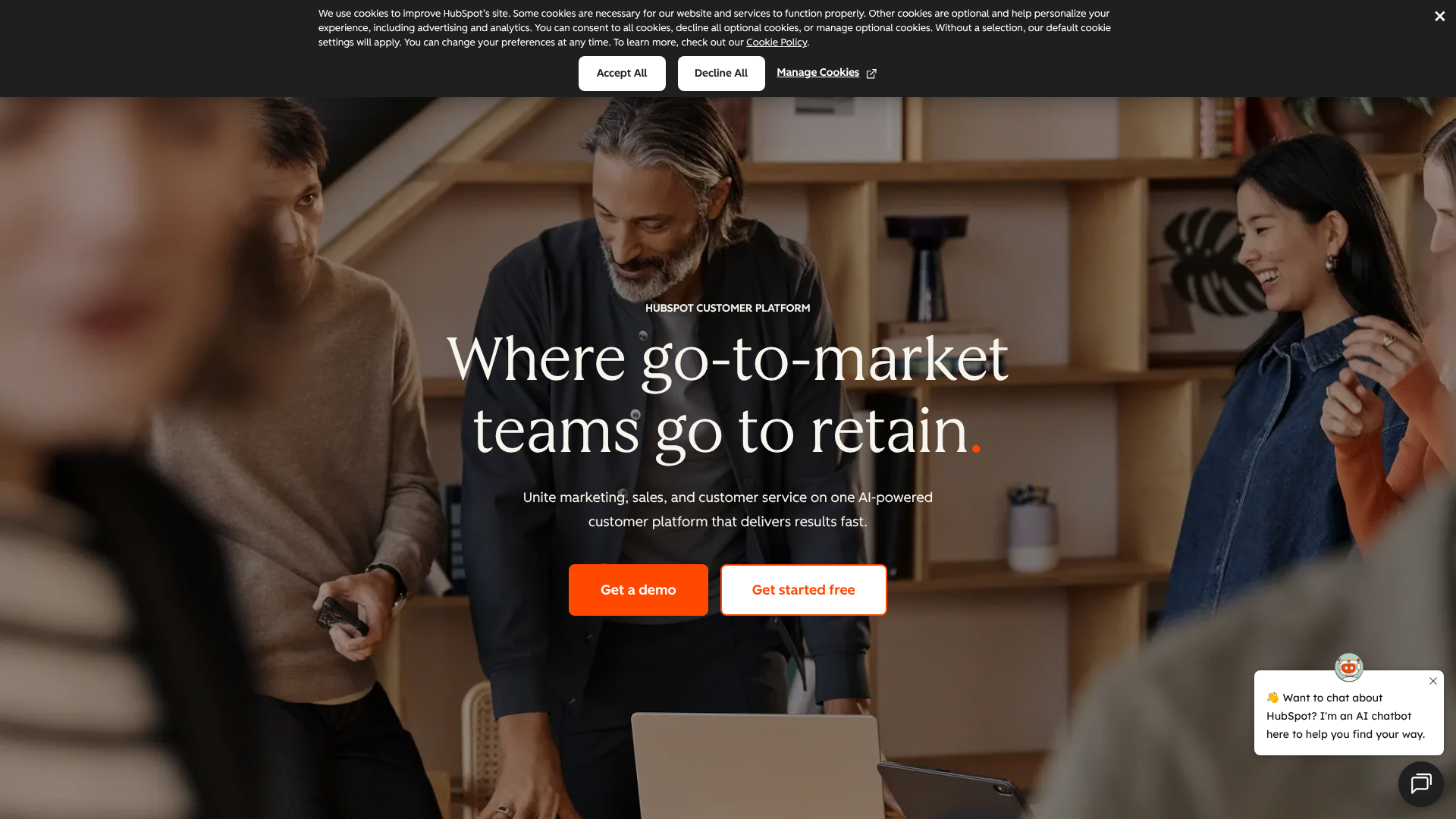
HubSpot began its journey in 2006 with a focus on inbound marketing—the idea of attracting customers with valuable content rather than outbound tactics. This philosophy is baked into its DNA. The HubSpot CRM platform was launched as a free tool to complement its paid Marketing, Sales, and Service Hubs, creating a seamless, all-in-one growth platform.
Its primary appeal is its user-friendly design. HubSpot is known for its clean, intuitive interface that requires minimal training for teams to adopt. It excels at providing a single source of truth for all customer interactions, tracking everything from website visits and email opens to sales calls and support tickets in a single, easy-to-read timeline.
For businesses that want to get up and running quickly without a steep learning curve, HubSpot is often the top choice. Its ecosystem is designed to grow with you, allowing you to start with the free CRM and add more advanced functionality as your needs evolve.
What is Zoho CRM?
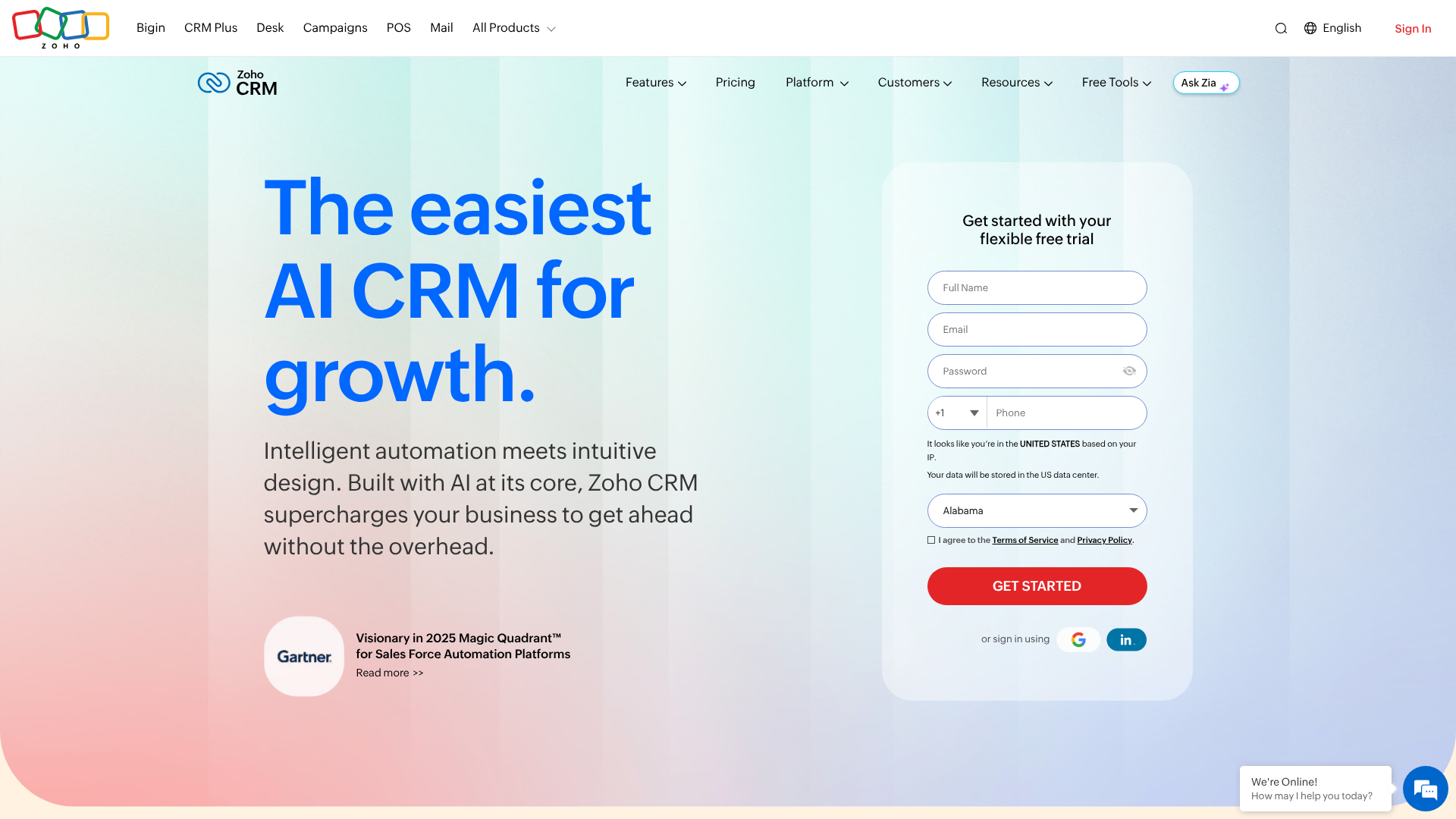
Zoho Corporation has been around since 1996, and its approach is fundamentally different. Zoho CRM is just one piece of the massive Zoho One suite, which includes over 50 integrated applications for finance, HR, project management, and more. This makes Zoho an incredibly powerful option for businesses looking for a single vendor to handle most of their software needs.
Zoho CRM's greatest strengths are its customisation capabilities and affordability. It allows businesses to tailor almost every aspect of the CRM to fit their specific industry or sales process. You can create custom modules, fields, layouts, and workflows to build a system that works exactly the way your business does.
This power comes with a trade-off: a steeper learning curve. While powerful, the interface can feel more complex and less intuitive than HubSpot's. However, for businesses willing to invest time in setup and training, a zoho crm review often concludes that it offers unparalleled value for money, especially for teams needing advanced features without a high price tag.
Zoho vs HubSpot: A Head-to-Head Feature Comparison
Now, let's break down how these two platforms stack up across the most important CRM categories. While both manage contacts and deals, their approaches to automation, marketing, and reporting differ significantly.

| Feature | HubSpot CRM | Zoho CRM |
|---|---|---|
| Free Plan | Very generous; unlimited users, 1M contacts | Limited to 3 users; fewer features |
| Ease of Use | Excellent, intuitive interface | Steeper learning curve, more complex |
| Sales Automation | Strong, user-friendly workflow builder | Highly advanced and customisable |
| Marketing Tools | Best-in-class, fully integrated | Comprehensive, but can feel disjointed |
| Customisation | Good, but limited on lower tiers | Excellent, highly flexible at all levels |
| Reporting | Good pre-built dashboards, advanced on paid tiers | Powerful and customisable analytics |
| Ecosystem | Large app marketplace (1,000+ integrations) | Massive native suite (50+ Zoho apps) |
User Interface and Ease of Use
This is where HubSpot has a clear advantage. The platform is designed for simplicity and clarity. Dashboards are clean, navigation is logical, and new users can typically start logging activities and managing deals within hours, not days. Every contact record provides a chronological timeline of every interaction, making it easy for anyone on the team to get up to speed.
Zoho, on the other hand, presents more of a learning curve. Its interface is packed with features and options, which can be overwhelming for first-time users. While it has improved its design over the years, it still feels more like a traditional enterprise tool compared to HubSpot's modern, streamlined experience. Businesses often need a dedicated administrator to properly set up and manage a Zoho CRM instance.
Sales Automation and Workflows
Both platforms offer robust sales automation, but they cater to different needs. HubSpot's workflow builder is visual and intuitive. You can easily create sequences to automate follow-up emails, set task reminders for sales reps, and update deal stages based on specific triggers. It's powerful enough for most small to medium-sized businesses.
Zoho's automation capabilities, particularly on its higher-tier plans, are more advanced. With tools like Workflow Rules, Blueprints (for process management), and the Zia AI assistant, you can build incredibly complex and granular automation. For example, you can design a rigid sales process with Blueprint that dictates every step a rep must take before moving a deal forward. This level of control is ideal for larger teams or industries with strict compliance requirements.
Pro Tip: When evaluating automation, map out your ideal sales process first. If it's a straightforward sequence of follow-ups and tasks, HubSpot will be faster to implement. If your process involves complex conditional logic and multi-stage approvals, Zoho's advanced tools will be a better fit.
Marketing Automation Capabilities
HubSpot's origins in inbound marketing make it a leader in this category. Even on the free plan, you get access to email marketing, landing pages, forms, and ad management tools. The integration between the Marketing Hub and the CRM is seamless. You can see exactly which marketing campaigns a lead has interacted with directly on their contact record, giving sales reps valuable context.
Zoho also has a strong marketing offering through Zoho Campaigns and other apps in its suite. It provides email marketing, social media management, and survey tools. However, the integration between these different apps can sometimes feel less unified than HubSpot's all-in-one platform. You might find yourself switching between different browser tabs to manage a single campaign, whereas HubSpot keeps everything under one roof.
Customisation and Flexibility
This is Zoho's standout strength. From the moment you sign up, Zoho CRM allows for deep customisation. You can create custom modules to track anything specific to your business (e.g., properties for a real estate agency or projects for a consultancy), add countless custom fields, and design unique page layouts for different teams. This flexibility ensures the CRM adapts to your business, not the other way around.
HubSpot offers customisation, but it's more limited, especially on the free and lower-priced plans. You can create custom properties to store data, but the ability to create custom objects (the equivalent of Zoho's modules) is reserved for its expensive Enterprise tiers. For most standard businesses, HubSpot's options are sufficient, but for those with unique operational needs, Zoho's flexibility is unmatched.
Reporting and Analytics
Both platforms provide powerful tools for tracking performance. HubSpot offers a range of pre-built dashboards for sales, marketing, and service activities. These are easy to set up and provide a clear overview of key metrics like deal forecasts, pipeline health, and team activity. Custom report building is also available, becoming more powerful as you move up the paid plans.
Zoho's analytics are also highly capable and, in line with its overall philosophy, very customisable. You can build detailed reports and dashboards from scratch, pulling in data from any standard or custom module. It also integrates with Zoho Analytics, a dedicated business intelligence tool, for even deeper insights. The trade-off is complexity; building a custom report in Zoho can take more time and expertise than in HubSpot.
Integrations and Ecosystem
The zoho vs hubspot debate also extends to their ecosystems. HubSpot boasts a large App Marketplace with over 1,000 third-party integrations, including popular tools like Slack, Zapier, and PandaDoc. This makes it easy to connect HubSpot to the other software you already use.
Zoho's primary integration strength is its own suite of products. If you use Zoho Books for accounting, Zoho Projects for project management, and Zoho Desk for customer support, the data flows effortlessly between them. While it also has a marketplace for third-party apps, the true power lies in adopting the full Zoho One ecosystem, which can effectively run your entire business from a single, integrated platform.
HubSpot CRM vs Zoho CRM: A Detailed Pricing Breakdown
Cost is one of the most significant factors for any business, and it's where the differences between HubSpot and Zoho become most apparent. Their pricing philosophies are fundamentally different, making a direct comparison tricky.
HubSpot's Pricing Model
HubSpot's model is built on a powerful free CRM that acts as the foundation. You can then add paid "Hubs" for Marketing, Sales, Service, CMS, and Operations. This à la carte approach allows you to pay only for what you need, but costs can escalate quickly.
- Free CRM: HubSpot's free tools are incredibly generous. You get unlimited users, up to 1 million contacts, contact management, deal pipelines, and basic email marketing. It's arguably the best free CRM on the market.
- Paid Hubs: The paid plans (Starter, Professional, Enterprise) unlock more advanced features. For example, the Sales Hub Starter plan (starting around £15/user/month) adds simple automation and reporting. The Professional plan (starting around £360/month for 5 users) adds advanced sales automation, forecasting, and custom reporting.
The main thing to watch with HubSpot CRM is that the price jump between tiers is substantial. A small business can quickly go from paying a small monthly fee to thousands per year as their needs grow.
Zoho's Pricing Model
Zoho's pricing is much more straightforward and budget-friendly. It's a traditional per-user, per-month SaaS model with several clear tiers.
- Free Edition: Zoho offers a free plan for up to 3 users. It's functional for basic contact management but is much more limited than HubSpot's free offering.
- Paid Plans: The paid tiers offer exceptional value. The Standard plan (around £12/user/month) includes sales forecasting and workflow automation. The Professional plan (around £20/user/month) adds features like Blueprint process management. The Enterprise plan (around £35/user/month) unlocks Zia AI and advanced customisation.
- Zoho One: This is Zoho's ultimate value proposition. For a single price (around £30/user/month), you get access to the Enterprise edition of nearly all 50+ Zoho apps, including CRM. For businesses looking for an all-in-one suite, this is an unbeatable deal.
Which Offers Better Value for Money?
For pure feature-per-pound value, Zoho CRM is the clear winner. You get access to advanced features like sales automation and process management at a fraction of the cost of HubSpot. The Zoho One bundle, in particular, offers incredible value for businesses that want to consolidate their software stack.
However, HubSpot's free plan provides immense value for startups and small businesses that aren't ready to pay for a CRM. You can run a sophisticated sales and marketing operation for free, something that isn't possible with Zoho's more limited free edition.
Weighing the Pros and Cons: Zoho vs HubSpot

Every platform has its trade-offs. Here’s a straightforward look at the strengths and weaknesses of each CRM to help you make a balanced decision.
HubSpot CRM: Strengths and Weaknesses
Pros
- Unmatched Ease of Use: The intuitive interface means faster team adoption and less time spent on training.
- Powerful Free Version: The free CRM is robust enough to run a small business's entire sales and marketing operation.
- Seamless Marketing Integration: The connection between the CRM and marketing tools is best-in-class, providing a unified view of the customer journey.
- Excellent Educational Resources: HubSpot Academy offers free courses and certifications that are valuable for any marketing or sales professional.
Cons
- High Cost at Scale: The price jumps between tiers are significant, and it can become one of the more expensive options on the market.
- Limited Customisation on Lower Tiers: True flexibility and custom objects are locked behind the highest-priced Enterprise plans.
- Rigid Contracts: Higher-tier plans often require annual contracts, offering less flexibility than Zoho's monthly options.
Zoho CRM: Strengths and Weaknesses
Pros
- Exceptional Affordability: Zoho offers enterprise-grade features at a price point that is accessible to most small businesses.
- Deep Customisation: The ability to tailor almost every aspect of the CRM makes it adaptable to any business process.
- All-in-One Ecosystem: The Zoho One suite provides a single, integrated platform to run your entire business, offering incredible value.
- Scalability: The platform is built to handle the needs of both small businesses and large enterprises.
Cons
- Steeper Learning Curve: The sheer number of features and settings can be overwhelming for new users.
- Clunky User Interface: While functional, the UI can feel dated and less intuitive compared to modern competitors like HubSpot.
- Inconsistent Customer Support: The quality of support can vary, with faster and more dedicated support reserved for higher-priced plans.
Making Your Decision: Which CRM Fits Your Needs?
Choosing between Zoho CRM and HubSpot CRM isn't about which one is objectively "better," but which one is better for you. Your company's size, budget, technical expertise, and primary goals should guide your decision.
Choose HubSpot If…
- You prioritise ease of use and quick adoption. If you want your team to be up and running with minimal training, HubSpot is the clear choice.
- Your business is heavily focused on inbound marketing. HubSpot's tools for content marketing, lead nurturing, and email campaigns are second to none.
- You're a startup or small business starting with a free tool. You can't beat the power and generosity of HubSpot's free CRM.
- You value a clean, modern user experience. The platform is designed to be visually appealing and easy to navigate.
Choose Zoho If…
- You are on a tight budget but need powerful features. Zoho provides more functionality for your money than almost any other competitor.
- You have unique business processes that require deep customisation. If standard CRM fields and objects don't fit your needs, Zoho's flexibility is a huge asset.
- You want an all-in-one software suite. The Zoho One bundle is an unbeatable value proposition for businesses looking to consolidate their tools.
- You have a dedicated administrator or tech-savvy team members. You'll need someone who can invest the time to set up, customise, and manage the platform effectively.
A Visual Guide to Choosing Your CRM
For a more detailed visual breakdown, this video from StartupWise offers a great overview of the key differences and helps you see the platforms in action.
Pro Tip: Don't just rely on reviews. Sign up for the free trials or free versions of both platforms. Spend a week using each one for your daily tasks. This hands-on experience is the best way to determine which interface and workflow feels more natural for you and your team.
Frequently Asked Questions about Zoho and HubSpot
Here are answers to some of the most common questions people ask when comparing these two CRM platforms.
Is Zoho CRM better than HubSpot?
Neither CRM is universally "better"; they are better for different types of businesses. HubSpot is generally better for companies that prioritise ease of use, a modern interface, and integrated inbound marketing tools. Zoho CRM is better for businesses that need deep customisation, operate on a tighter budget, and want an all-in-one suite of business applications. The best choice depends entirely on your specific priorities and resources.
What are the disadvantages of Zoho?
The main disadvantages of Zoho CRM are its steep learning curve and a user interface that can feel complex and dated compared to competitors like HubSpot. New users may find the sheer number of options overwhelming. Additionally, while customer support is available, the response times and quality can be inconsistent on the lower-priced plans. Finally, to get the most out of it, you often need to invest significant time in initial setup and customisation.
Who is HubSpot's biggest competitor?
HubSpot's biggest competitors are generally considered to be Salesforce and Zoho. Salesforce is the dominant player in the enterprise market, competing with HubSpot's higher-tier plans. Zoho is a direct and fierce competitor in the small and medium-sized business (SMB) space, often competing on price and the breadth of its product ecosystem. The zoho vs hubspot rivalry is one of the most prominent in the SMB CRM market.
Is Zoho CRM hard to learn?
Yes, Zoho CRM is generally considered harder to learn than HubSpot. Its power lies in its vast feature set and deep customisation options, which naturally creates a steeper learning curve. While a small team can use its basic features out of the box, unlocking its full potential requires a dedicated effort to learn the system, configure settings, and build custom workflows. Businesses without a dedicated IT person or CRM administrator may find it challenging.
What is the #1 CRM platform?
By market share, Salesforce is consistently ranked as the #1 CRM platform in the world, particularly in the enterprise sector. However, for small and medium-sized businesses, the answer is less clear. HubSpot has a massive user base and is often considered the leader for ease of use and inbound marketing. The "best" CRM is subjective and depends on the specific needs of the business using it.
Final Thoughts: The Verdict on Zoho CRM vs HubSpot CRM
Ultimately, the choice between Zoho CRM and HubSpot CRM comes down to a fundamental trade-off: simplicity and user experience versus affordability and customisation. There is no wrong answer, only the right answer for your business's current stage and future goals.
HubSpot offers a smooth on-ramp into the world of CRM. Its free platform is a fantastic starting point, and its entire ecosystem is designed to be intuitive and user-friendly, especially for teams focused on marketing-driven growth. It removes friction and empowers your team to start building better customer relationships immediately.
Zoho, in contrast, is a powerhouse of functionality offered at an incredibly competitive price. It’s a platform you can bend and shape to your will, creating a truly bespoke system to manage your unique processes. For the business that wants one suite of tools to do everything without breaking the bank, and is willing to invest the time in setup, Zoho is an unmatched proposition. If this sounds like the right fit for your team, you can get started with HubSpot CRM today to see how its user-friendly platform can help you grow.