

Semrush vs Ahrefs: Which SEO Tool is Best for Your Business in 2026?
Choosing the right SEO toolkit is one of the most critical decisions for any digital marketer or business owner. The debate over Semrush vs Ahrefs has dominated the industry for years, with both platforms offering powerful features to boost your online visibility. These tools are the titans of the SEO world, but they have distinct strengths and philosophies that make one a better fit for certain users over the other.
- Quick Summary
- What are Semrush and Ahrefs? An Introduction to the SEO Giants
- Semrush vs Ahrefs Comparison: A Deep Dive into Key Features
- Keyword Research
- Backlink Analysis
- Technical SEO & Site Auditing
- Beyond SEO: Content, PPC, and Social Media
- Feature Comparison at a Glance
- Pricing and Cost Comparison: Which Tool Offers Better Value?
- Pros and Cons: A Balanced View
- How to Choose: Semrush or Ahrefs for Your Specific Needs?
- Frequently Asked Questions (FAQ)
- Is Ahrefs or Semrush more accurate?
- Is Semrush Russian owned?
- What is the most accurate SEO tool?
- Is Semrush good for local SEO?
- Final Thoughts: The Verdict in the Battle of SEO Titans
This comparison is designed to cut through the noise. We'll break down the core features, pricing structures, and unique advantages of each platform. Whether you're an in-house marketer, an agency professional, or a small business owner, this guide will provide the clarity you need to make an informed decision between these two industry leaders.
Quick Summary
- Overall Winner: For most users, Semrush is the more complete marketing toolkit. It offers a broader range of features beyond SEO, including comprehensive tools for PPC, content marketing, and social media management, making it a true all-in-one platform.
- Best for Backlinks: Ahrefs maintains a slight edge with its backlink analysis tools. Its crawler is renowned for its speed and the depth of its backlink index, making it the preferred choice for SEO specialists focused heavily on link building.
- The Key Difference: The core of the ahrefs vs semrush debate comes down to breadth versus depth. Semrush provides a wide array of good-to-great tools across the entire digital marketing spectrum. Ahrefs offers exceptional, best-in-class tools focused almost exclusively on SEO.
- Your Choice Depends On: If you need a single platform to manage SEO, content, PPC, and social media, Semrush is the logical choice. If your role is purely SEO and you demand the most granular backlink data available, Ahrefs is a powerful contender.
What are Semrush and Ahrefs? An Introduction to the SEO Giants
Before diving into a feature-by-feature breakdown, it's important to understand the fundamental identity of each tool. While they share many overlapping features, their core focus and target audiences are different. This context is crucial when considering which platform aligns best with your business goals.
What is Semrush?
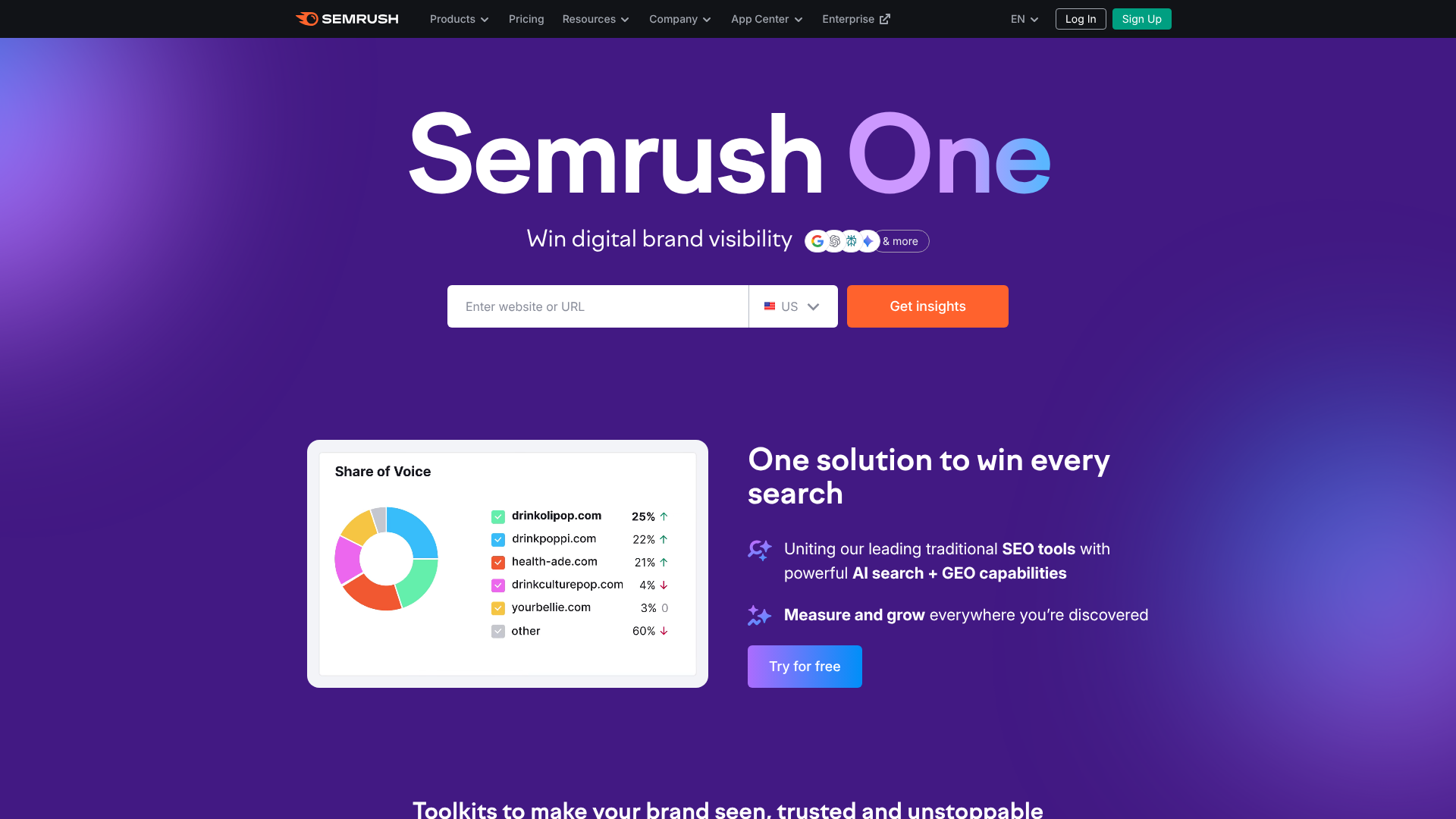
Semrush positions itself as an all-in-one online visibility management platform. It started primarily as an SEO and PPC tool but has since expanded dramatically. Today, its suite includes over 55 different tools covering SEO, content marketing, competitor research, PPC, and social media marketing.
Think of Semrush as a complete digital marketing Swiss Army knife. It's designed for marketers who need a holistic view of their online presence. From finding keywords and auditing your site to managing social media posts and creating content briefs, Semrush aims to be the central hub for all your marketing activities. This breadth of functionality makes it particularly popular with marketing agencies and in-house teams who manage multiple channels.
What is Ahrefs?
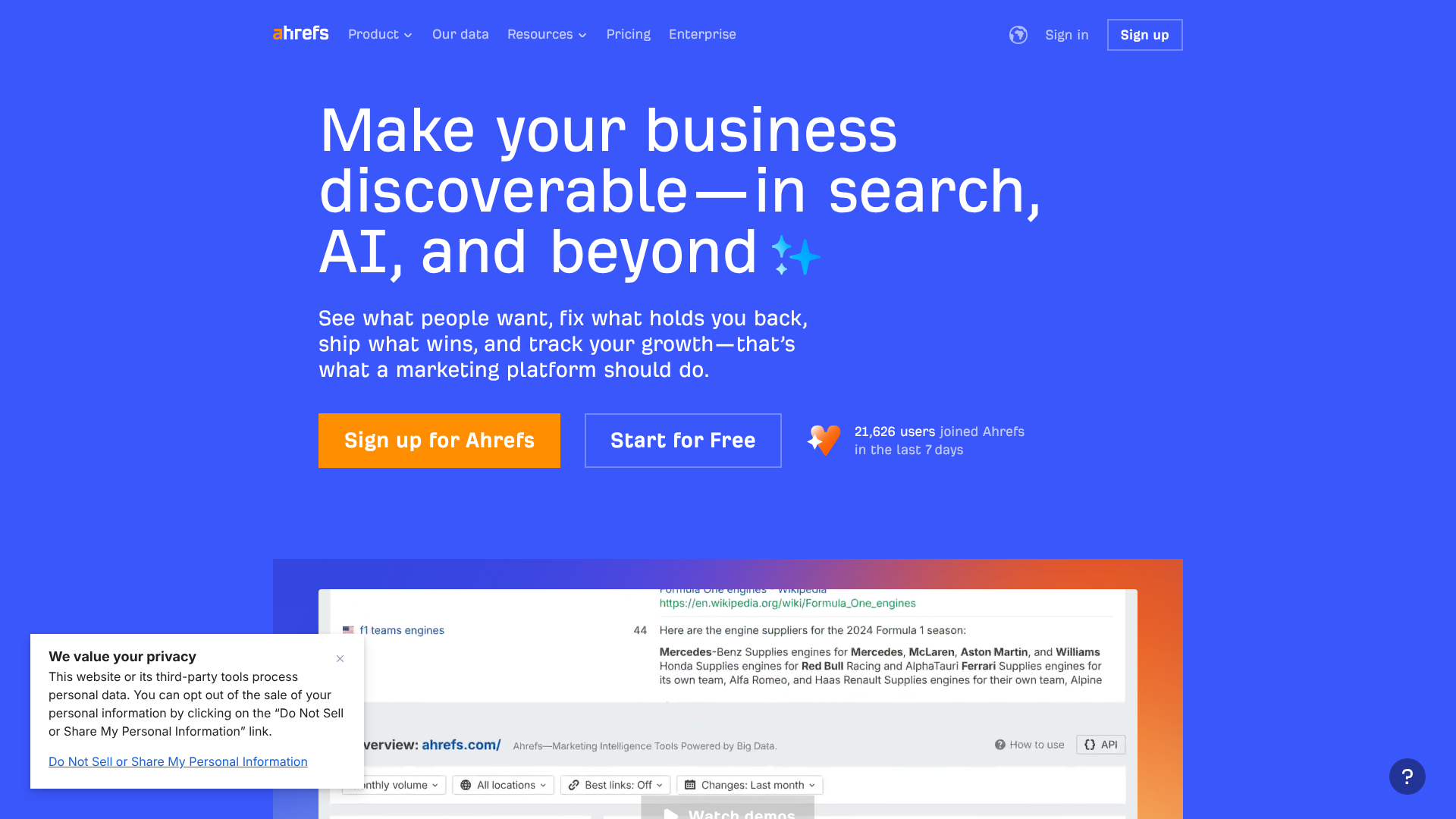
Ahrefs, on the other hand, is a purebred SEO tool at its core. It built its reputation on having the most active web crawler in the industry, second only to Google. This allows it to maintain a massive and frequently updated index of live backlinks, which has historically been its main competitive advantage.
While Ahrefs has expanded its feature set to include keyword research, site audits, and rank tracking, its soul remains in backlink analysis and competitor research. The user interface is clean, fast, and built for SEO professionals who need to get deep into the data quickly. It's the specialist's tool, favoured by SEO consultants and link-building experts who need the most powerful data for their specific tasks.
Semrush vs Ahrefs Comparison: A Deep Dive into Key Features
Now, let's get into the specifics. The choice between semrush or ahrefs often comes down to how each tool handles the core tasks of an SEO professional. We'll compare them across the most critical areas of functionality.

Keyword Research
Both platforms offer powerful keyword research tools, but they approach it with slightly different strengths.
Semrush's Keyword Magic Tool is incredibly comprehensive. It boasts a database of over 25.5 billion keywords across 142 geodatabases. Its strength lies in its filtering capabilities, allowing you to group keywords by topic, search intent (informational, navigational, commercial, transactional), question type, and more. This makes it easy to build out entire content strategies from a single seed keyword.
Semrush also provides superior data for local SEO, offering keyword metrics for specific city-level locations.
Ahrefs' Keywords Explorer is also excellent, with a database of over 23.9 billion keywords. Its interface is fast and intuitive, and it provides unique metrics like "Clicks" and "Clicks Per Search," which help you understand if a keyword actually results in traffic or if the SERP is dominated by features that satisfy the query directly. Ahrefs also provides a great "Parent Topic" feature, which helps you see if you can rank for a more specific term while targeting a broader head term.
Verdict: It's a close call, but Semrush gets the slight edge due to its superior filtering options, search intent data, and local SEO capabilities. For building large-scale content plans, Semrush's workflow is often more efficient.
Backlink Analysis
This is the battleground where Ahrefs traditionally shines. Its crawler is famously fast, meaning its index of live backlinks is often more current.
Ahrefs' Site Explorer is the gold standard for many SEOs. It provides a clean, detailed overview of a domain's backlink profile, referring domains, and anchor text distribution. The tool makes it incredibly easy to see new and lost backlinks, identify toxic links, and analyse a competitor's link-building strategy. Its historical backlink data is also exceptionally detailed.
Semrush's Backlink Analytics tool has improved significantly over the years and is now a very strong competitor. Its index is massive, and it offers a unique "Authority Score" to gauge the quality of a linking domain. Semrush also has a fully integrated Link Building Tool and Backlink Audit Tool, which help you find prospects, run outreach campaigns, and disavow harmful links all within one ecosystem. This integration is a major workflow advantage.
Verdict: Ahrefs still holds a slight lead for the raw power and freshness of its backlink data. However, Semrush's integrated toolset for auditing and outreach makes it a more complete end-to-end link-building solution.
Technical SEO & Site Auditing
A healthy website is the foundation of any successful SEO campaign. Both tools offer robust site auditing features to find and fix technical issues.
Semrush's Site Audit tool is comprehensive and user-friendly. It crawls your site and categorises issues into Errors, Warnings, and Notices, making it easy to prioritise fixes. It checks for over 140 different technical and on-page SEO issues, from crawlability problems and HTTPS implementation to internal linking and site performance. The thematic reports are particularly helpful for understanding specific problem areas.
Ahrefs' Site Audit is also very powerful and known for its speed. It provides similar functionality, checking for over 140 pre-defined SEO issues. Ahrefs gives you a great deal of control over how your data is visualised and allows you to build custom filters and reports based on a huge range of data points. This flexibility is great for advanced users who want to dig into very specific issues.
Verdict: This is a tie. Both tools offer excellent, enterprise-grade site auditing capabilities. Semrush is slightly more beginner-friendly in its presentation, while Ahrefs offers more customisation for power users.
Beyond SEO: Content, PPC, and Social Media
This is where the semrush vs ahrefs comparison becomes much clearer and where Semrush pulls away significantly.
Semrush offers a full Content Marketing Platform. This includes tools for topic research, a real-time SEO Writing Assistant (which functions like a more advanced Grammarly for SEO), content tracking, and auditing. You can manage your entire content workflow, from ideation to creation and performance analysis, within Semrush.
Furthermore, Semrush has an extensive Advertising Toolkit for PPC professionals. You can analyse competitor ad copy and budgets, research display ads, and use the Keyword Magic Tool for paid search campaigns. It also includes a Social Media Toolkit for scheduling posts and tracking performance across multiple platforms.
Ahrefs is almost entirely focused on organic search. While its Content Explorer is a great tool for finding popular content ideas, it doesn't have an integrated content creation or management workflow. It offers virtually no features for PPC or social media marketing.
Verdict: Semrush is the decisive winner here. If your role extends beyond pure SEO, Semrush provides a far more complete and valuable toolkit.
Feature Comparison at a Glance
To make the decision easier, here’s a side-by-side look at the core offerings of each platform.
| Feature | Semrush | Ahrefs |
|---|---|---|
| Keyword Research | Excellent, with advanced intent filters & local data | Excellent, with unique click metrics |
| Backlink Analysis | Very Good, with integrated outreach tools | Best-in-class, with the freshest data |
| Site Auditing | Excellent, user-friendly reports | Excellent, highly customisable for power users |
| Rank Tracking | Excellent, with daily updates and SERP features | Very Good, with reliable tracking |
| Content Marketing | Full platform (ideation, creation, audit) | Good (Content Explorer for ideation) |
| PPC Advertising Tools | Yes, extensive suite | No |
| Social Media Tools | Yes, scheduling and analytics | No |
| All-in-One Solution | Yes | No (SEO-focused) |
Pricing and Cost Comparison: Which Tool Offers Better Value?
Pricing is a major factor in the ahrefs vs semrush decision. Both are premium tools with significant costs, and their pricing models have some key differences. Please note that pricing structures can change, so it's always best to visit their official websites for the most current information.
Semrush Pricing
Semrush typically offers three main tiers, aimed at different user types:
- Pro: Designed for freelancers, startups, and in-house marketers with a limited budget. It provides access to all the core tools but with limits on projects, keywords to track, and reports per day.
- Guru: A great fit for small to medium-sized businesses and growing marketing agencies. It increases all the limits and adds features like the Content Marketing Platform, historical data, and Looker Studio integration.
- Business: Built for large agencies and enterprises. This plan offers the highest limits, API access, and more advanced features like Share of Voice metrics.
Semrush's pricing is generally seen as more straightforward. You pay a flat monthly fee for a set package of features and limits. This predictability can be beneficial for budgeting.
Ahrefs Pricing
Ahrefs also offers several tiers, typically starting with Lite and moving up to Standard, Advanced, and Enterprise. However, Ahrefs recently moved to a model that includes "credits." In addition to your plan's base features, many actions (like running reports or using certain tools) consume credits. You can purchase more credits if you run out.
- Lite: Aimed at hobbyists and small businesses just starting with SEO.
- Standard: A popular plan for SEO professionals and marketing consultants.
- Advanced & Enterprise: For larger teams and agencies needing higher limits and more advanced features.
The credit system has been a point of contention for some users, as it can make monthly costs less predictable. If you are a heavy user, you may find yourself needing to purchase additional credits regularly, increasing the overall cost.
Verdict: Semrush often provides better value for money, especially for users who need more than just SEO tools. Its predictable, all-inclusive pricing model is easier to manage, and the sheer number of tools included in the Guru plan, for example, is hard to beat.
Pros and Cons: A Balanced View
No tool is perfect. To help you make a balanced decision, here are the main advantages and disadvantages of each platform.
Semrush: Pros and Cons
Pros:
- True All-in-One Platform: It covers nearly every aspect of digital marketing, from SEO and PPC to content and social media.
- Superior Keyword Data: The depth of its keyword database and its advanced filtering by intent and question type are top-notch.
- Integrated Workflows: Tools like the Backlink Audit and Link Building Tool are seamlessly connected, saving time.
- Strong Content Marketing Suite: The SEO Writing Assistant and Topic Research tools are incredibly valuable for content creators.
Cons:
- Can Be Overwhelming: The sheer number of tools and reports can have a steep learning curve for beginners.
- Backlink Data Freshness: While excellent, its backlink index is sometimes slightly less current than Ahrefs'.
Ahrefs: Pros and Cons
Pros:
- Best-in-Class Backlink Data: Widely considered to have the most comprehensive and up-to-date backlink index.
- Clean and Fast User Interface: The platform is incredibly responsive and easy to navigate for SEO tasks.
- Excellent Educational Resources: The Ahrefs blog and YouTube channel are among the best in the industry for learning SEO.
- Powerful Competitor Analysis: Site Explorer makes it simple to deconstruct what's working for your competitors.
Cons:
- Narrowly Focused on SEO: It lacks the PPC, social media, and broad content marketing tools that Semrush offers.
- Confusing Pricing Model: The credit-based system can lead to unpredictable monthly costs for heavy users.
Pro Tip: Before committing to an annual plan for either tool, use their free trials or lowest-tier monthly plans extensively. Test them with your own website and a few key competitors to see which platform's data and workflow you prefer. Hands-on experience is the best way to determine the right fit.
How to Choose: Semrush or Ahrefs for Your Specific Needs?
Ultimately, the best tool is the one that aligns with your specific role, goals, and budget. Here’s a simple guide to help you decide.

You should choose Semrush if:
- You are a marketing manager or generalist who needs a single tool to oversee multiple channels.
- You run a full-service digital marketing agency and need to manage SEO, PPC, and content for clients.
- Content marketing is a core part of your strategy, and you need tools to help with ideation and creation.
- You need strong local SEO capabilities with city-level keyword data.
- You prefer a predictable, all-inclusive monthly cost.
You should choose Ahrefs if:
- You are a dedicated SEO specialist or consultant whose primary job is organic search.
- Your main focus is on link building and backlink analysis.
- You value a clean, fast, and minimalist user interface over a vast number of features.
- You primarily need to perform deep competitor analysis from an SEO perspective.
As one user on a Reddit discussion in the r/SEO community noted, the choice often boils down to workflow: "Semrush is where I build my campaigns and manage projects. Ahrefs is where I go to do deep-dive research on a competitor's backlinks." This perfectly encapsulates the different use cases.
Frequently Asked Questions (FAQ)
Here are answers to some of the most common questions that come up when comparing these two powerful SEO tools.
Is Ahrefs or Semrush more accurate?
"Accuracy" can be subjective and depends on the metric in question. For backlink data, Ahrefs is generally considered slightly more accurate and up-to-date due to its incredibly active web crawler. For keyword search volume, both tools use different data sources and algorithms, leading to different numbers. Neither is 100% accurate, as only Google has the true data.
However, both are industry leaders and provide reliable trend data that is more than sufficient for making strategic decisions.
Is Semrush Russian owned?
This is a common misconception. While Semrush was founded by Oleg Shchegolev and Dmitri Melnikov, the company is now headquartered in Boston, Massachusetts, USA. Semrush is a publicly traded company on the New York Stock Exchange (NYSE: SEMR) and is an American entity.
What is the most accurate SEO tool?
There is no single "most accurate" SEO tool for everything. The best tool depends on your priority. For backlink analysis, Ahrefs is often cited as the leader. For the breadth of keyword data and search intent analysis, many prefer Semrush.
For technical site crawls, tools like Screaming Frog are also considered highly accurate. The best approach is to use a primary tool like Semrush or Ahrefs and supplement it with others as needed.
Is Semrush good for local SEO?
Yes, Semrush is excellent for local SEO. It offers several features specifically for local businesses, including the ability to track keyword rankings at a city or postcode level. Its Listing Management tool helps ensure your business NAP (Name, Address, Phone number) information is consistent across dozens of online directories, which is a critical local ranking factor. These features give it a distinct advantage over Ahrefs for businesses focused on a specific geographic area.
Final Thoughts: The Verdict in the Battle of SEO Titans
In the long-running contest of Semrush vs Ahrefs, there is no universal winner, only the right choice for you. Both are exceptional platforms that can provide the data needed to grow your organic traffic significantly. The decision should not be based on which tool is objectively "better," but on which tool is a better fit for your specific marketing needs and workflow.
For the majority of businesses, marketing teams, and agencies, Semrush offers more comprehensive value. Its evolution into an all-in-one visibility management platform means you get powerful tools for SEO, content, advertising, and social media under one roof and for one predictable price. This holistic approach aligns with the reality that modern marketing is multi-channel.
If you're ready to take a holistic approach to your online marketing and want a tool that can grow with you across all channels, we recommend giving Semrush a try. Its sheer breadth of features provides an unmatched foundation for any digital marketing strategy.