




How to Cold Email for a Job: A Step-by-Step Guide for Professionals
Applying for jobs through online portals can often feel like sending your CV into a black hole. You spend hours tailoring your application, only to receive an automated rejection or, more often, complete silence. Learning how to cold email for a job offers a powerful alternative, allowing you to bypass the digital gatekeepers, connect directly with decision-makers, and create opportunities that may not even be advertised yet. It's a proactive strategy that puts you back in control of your career search.
- What You'll Learn
- What is Cold Emailing for a Job, and Why Does It Work?
- The Strategic Advantages of Cold Emailing in Your Job Search
- The 5-Step Process for Cold Emailing for Jobs
- Step 1: Foundational Research – Identifying Your Targets
- Step 2: Crafting the Perfect Subject Line
- Step 3: Writing a Compelling Email Body
- Step 4: The Art of the Follow-Up
- Step 5: Measuring and Refining Your Approach
- Choosing Your Cold Emailing Strategy: Volume vs. Hyper-Personalisation
- Recommended Tools to Supercharge Your Job Search Outreach
- The Pros and Cons of Cold Emailing for Jobs
- Frequently Asked Questions (FAQ)
- What is the 30/30/50 rule for cold emails?
- How do I professionally say I'm looking for a job?
- Is cold email illegal?
- How many sentences should a cold email be?
- How to end a cold email?
- Final Thoughts: Turning Cold Emails into Warm Conversations
This guide breaks down the entire process, from identifying the right person to contact to writing a compelling message that gets a response. We'll cover proven templates, essential job application email tips, and the tools that can streamline your efforts. By mastering the art of cold emailing for jobs, you can significantly increase your chances of landing interviews at your target companies.
What You'll Learn
- The Power of Personalisation: Discover why deep research into a company and individual is the single most important factor for getting a reply to your cold email.
- The Anatomy of a Winning Email: Learn the essential three-part structure of a successful cold email: a compelling hook, a clear value proposition, and a low-friction call-to-action.
- Systematic Follow-Up is Key: Understand why the majority of responses come after the first email and how to implement a polite and effective follow-up strategy without being annoying.
- Essential Tools for Efficiency: See how specific, often free, tools can help you find contact information, manage your outreach efforts, and schedule meetings with ease.
What is Cold Emailing for a Job, and Why Does It Work?
A cold email for a job is an unsolicited email sent to someone at a company you'd like to work for, with whom you have no prior connection. Unlike a traditional application where you respond to a specific job advert, a cold email is about initiating a conversation and exploring potential opportunities. You are not applying for a listed role; you are introducing yourself as a valuable professional who could solve problems for their team.
The primary reason this strategy works so well is that it circumvents the standard, overcrowded application process. When a company posts a job online, its applicant tracking system (ATS) can receive hundreds, if not thousands, of CVs. Your carefully crafted application is often first filtered by software looking for keywords before a human ever sees it. Cold emailing allows you to skip this entire system and land directly in the inbox of a relevant person, such as a department head, a team lead, or even the CEO of a smaller company.
This direct approach demonstrates initiative, confidence, and genuine interest in the company. You're not just another applicant clicking "Apply"; you've taken the time to research their organisation, identify a key person, and articulate how you can contribute. This level of effort immediately sets you apart and makes a memorable first impression, turning a "cold" outreach into a warm professional conversation.
The Strategic Advantages of Cold Emailing in Your Job Search

Adopting a cold emailing strategy offers several distinct advantages that can transform your job search from a reactive, frustrating process into a proactive, empowering one. The most significant benefit is gaining access to the "hidden job market." It's widely estimated that up to 80% of jobs are never publicly advertised. These roles are often filled through internal promotions, employee referrals, or by hiring managers who identify a need and seek out talent directly. Cold emailing allows you to tap into this vast pool of unlisted opportunities.
Furthermore, it allows you to stand out in a sea of applicants. For any publicly listed role, especially in competitive fields like tech, a hiring manager's inbox is flooded. Your cold email, if crafted well, isn't competing with 200 other applications for the same role. It's a one-on-one communication that frames you as a problem-solver rather than just another job seeker.
This changes the dynamic entirely; you are positioned as a peer offering value, not a subordinate asking for a chance.
Finally, this method is an excellent way to build your professional network. Even if the company isn't hiring for a role that fits your profile right now, a positive interaction can lead to future opportunities. The recipient might keep you in mind for upcoming positions, refer you to a colleague at another company, or offer valuable career advice. Every well-written cold email is a seed planted for your future career growth, regardless of the immediate outcome.
The 5-Step Process for Cold Emailing for Jobs
Success in cold emailing isn't about luck; it's about following a structured, repeatable process. Breaking it down into these five steps will help you stay organised, be more effective, and ultimately get more positive responses.
Step 1: Foundational Research – Identifying Your Targets
This is the most critical step. A generic email sent to a generic info[[@company](https://[twitter](https://twitter.com/company).com/company).com](https://www.(https://www.instagram.com/company.com/).com/company.com/) address is destined for the bin. Your goal is to find the right company and the right person within that company.
First, create a target list of 10-20 companies you genuinely admire. Go beyond the big names and look for businesses whose mission, products, or culture resonate with you. Follow them on LinkedIn, read their company blog, and understand their recent achievements and challenges. This knowledge will be crucial for personalising your email.
Next, identify the specific person to contact. This is rarely someone in HR. You want to reach the person who would be your potential manager or the head of the department you want to join. For a software engineering role, this could be the Head of Engineering or a specific Engineering Manager.
For a marketing role, it might be the Chief Marketing Officer. Use LinkedIn to find these individuals. Look for titles like "Hiring Manager," "Director," "VP," or "Head of [Your Department].".
Once you have a name and title, you need their email address. This is where tools become invaluable. Tools like Hunter Campaigns (Hunter.io) and Apollo.io are designed for this. Many have browser extensions that can find email addresses associated with a specific company domain or LinkedIn profile.
Most offer a generous number of free searches per month, which is often enough for a targeted job search.
-c84d8076-0170-4408-a7ea-9e8f1c991052-1772529298321-a9tz0m.png "How to Cold Email for a Job: A Step-by-Step Guide for Professionals 3")
Step 2: Crafting the Perfect Subject Line
The subject line has one job: to get your email opened. It needs to be professional, intriguing, and concise. Avoid generic or desperate-sounding subjects like "Job Application" or "Enquiry about Open Roles." These are easily ignored.
A great subject line is personalised and hints at the value inside. Here are a few proven formulas:
- The Question Format:
Question about [Project Name/Company Initiative]- Example:
Question about your recent mobile app launch
- Example:
- The Value Proposition Format:
[Your Key Skill] for [Company Name]- Example:
Python expertise for the data science team at Acme Corp
- Example:
- The Referral Format (if applicable):
Referral from [Mutual Connection's Name]- Example:
Referral from Jane Doe
- Example:
Keep your subject line under 10 words. Mobile devices often cut off longer subjects, and you want the recipient to see the full message at a glance. The goal is to spark curiosity and make your email stand out in a crowded inbox.
Step 3: Writing a Compelling Email Body
Your email must be short, respectful of the recipient's time, and focused on the value you can provide. Aim for a total length of 150-200 words, broken into three short sections.
The Personalised Opening: Start by showing you've done your homework. This is where your research pays off. Mention something specific and genuine that caught your attention. It could be a recent project they launched, an article they wrote, or a talk they gave at a conference. This immediately proves you're not spamming them.
- Example:
Hi [Name], I was incredibly impressed by the recent article you published on [Topic]. Your insights on [Specific Point] really resonated with me.
- Example:
The Value Proposition: This is the core of your email. Don't just list your past job duties. Instead, briefly explain who you are and how you can solve a problem for them. Frame your experience in terms of their needs. Use 2-3 bullet points to highlight specific, quantifiable achievements.
- Example:
I'm a [Your Role] with X years of experience in [Your Industry]. In my previous role, I helped my team:Increase user engagement by 30% through a redesigned onboarding flow.Reduce server costs by 15% by optimising database queries.
- Example:
The Low-Friction Call-to-Action (CTA): End with a clear, simple, and easy next step. Your goal is not to get a job offer from this one email; it's to start a conversation. Ask for a brief, informal chat. Make it easy for them to say yes.
- Example:
Would you be open to a brief 15-minute chat next week to discuss how my skills in [Your Skill] could benefit the [Their Department] team?
- Example:
To make scheduling even easier, you can include a link to your calendar using a tool like SimplyBook.me. This removes the back-and-forth of finding a suitable time.
Step 4: The Art of the Follow-Up
Most people won't reply to your first email. This isn't necessarily a rejection. Decision-makers are busy, and your email may have arrived at a bad time. A polite follow-up is essential and shows persistence.
A good follow-up strategy involves sending 2-3 additional emails spaced a few days apart. The key is to add value with each message, not just to "check in." Reply to your original email so the context is preserved in the same thread.
- Follow-Up 1 (3-4 days later): A simple, polite bump.
Hi [Name], just wanted to follow up on my previous email in case it got buried. Would love to connect briefly if you have a moment. - Follow-Up 2 (7-10 days later): Add a new piece of value. Share a relevant article, a new idea you had for their company, or a link to a new project in your portfolio.
Hi [Name], I came across this article on [Relevant Topic] and thought you might find it interesting. I'm still very keen to discuss how I could contribute to your team.
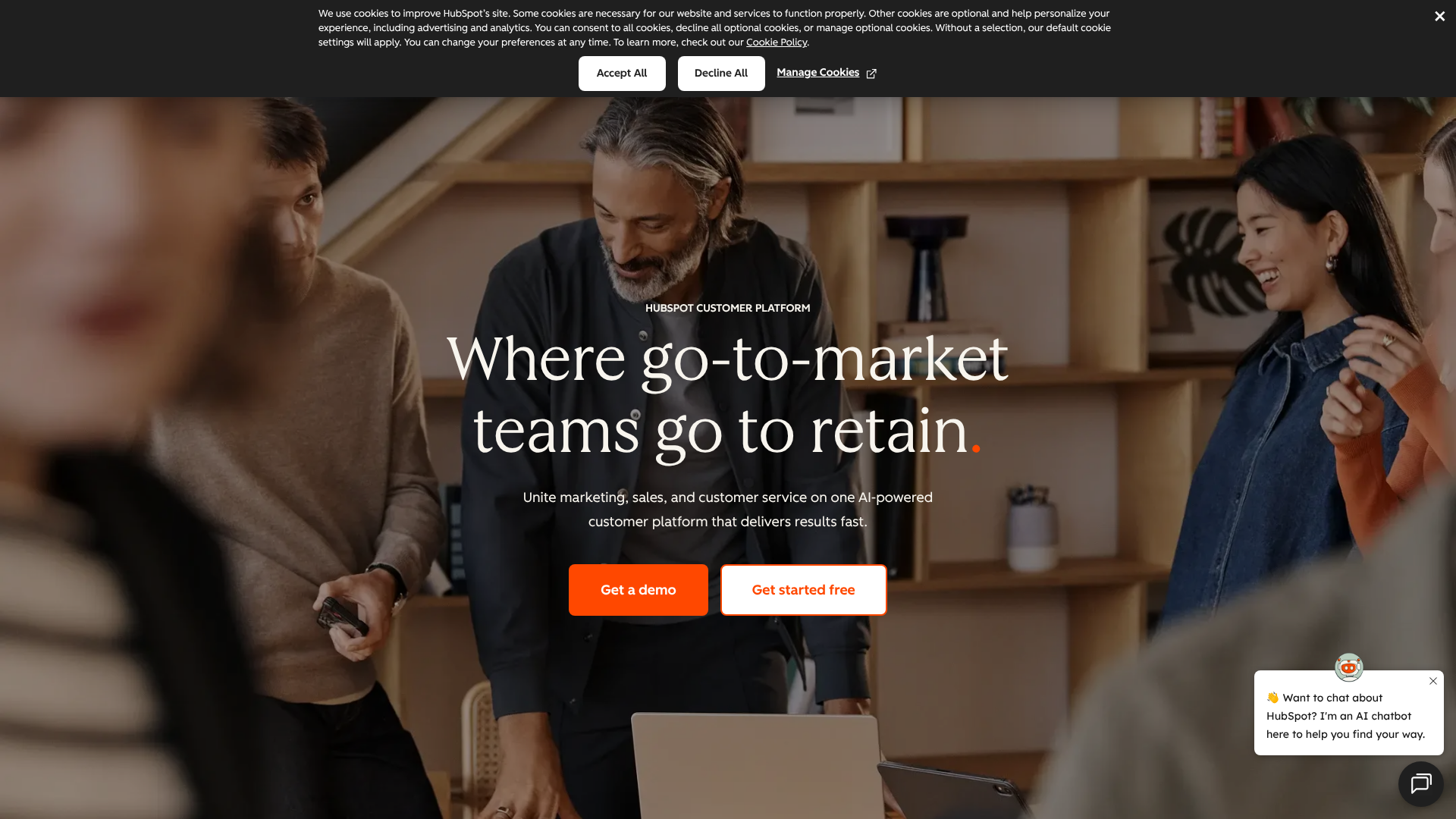
Managing this process for multiple contacts can get complicated. This is where a simple CRM (Customer Relationship Management) tool can be a great help. The free version of HubSpot CRM allows you to track your contacts, set reminders to follow up, and see when your emails are opened. For more advanced users, a sales engagement platform like Reply.io can automate these follow-up sequences, saving you significant time.
Step 5: Measuring and Refining Your Approach
Treat your cold emailing campaign like a science experiment. Track your key metrics: how many emails you send, your open rate, and your reply rate. If your open rate is low (below 30-40%), your subject lines likely need improvement. If your open rate is high but your reply rate is low, your email body isn't compelling enough.
Don't be afraid to A/B test different approaches. Try different subject lines, tweak your value proposition, or experiment with a different call-to-action. By continuously measuring and refining, you'll learn what works best for your industry and your target audience. Remember that persistence is key.
It's a numbers game, and every "no" or non-response brings you closer to a "yes.".
Pro Tip: Create a simple spreadsheet or use a CRM to track every email. Note the company, contact person, date sent, follow-up dates, and the outcome. This data is invaluable for refining your strategy and will keep you motivated by showing your consistent effort.
Choosing Your Cold Emailing Strategy: Volume vs. Hyper-Personalisation
Not all cold emailing approaches are created equal. Broadly, they fall into two categories: a higher-volume, semi-automated approach and a low-volume, hyper-personalised approach. The right choice depends on your career level, industry, and the types of roles you're targeting.
The volume approach focuses on reaching a larger number of contacts with a templated but still customised message. You might create a core template and then use merge tags to insert the person's name, company, and title. This strategy can be effective for entry-level to mid-level roles where the required skills are more standardised. It's a numbers game, where the goal is to make a good impression on a wider scale.
Tools designed for sales outreach, like Instantly.ai, can be used to manage these larger campaigns, but you must ensure your messaging remains professional and relevant to avoid looking like spam.
The hyper-personalisation approach is the opposite. It involves deep, time-consuming research into a very small number of high-value targets. You might spend hours researching a single company and person before writing a completely unique, tailored email. This is the best strategy for senior-level roles, executive positions, or when targeting a specific "dream company." The goal isn't to send 100 emails, but to send 5-10 incredibly well-crafted messages that are almost guaranteed to get a response because they demonstrate such a deep understanding of the recipient's work and challenges.
For most job seekers, a hybrid approach works best. Use the hyper-personalisation method for your top 5 dream companies, and a more streamlined, semi-personalised approach for your next 15-20 target companies. This balances quality with quantity, maximising your chances of success.
Recommended Tools to Supercharge Your Job Search Outreach

While you can certainly manage a cold email campaign manually, a few key tools can save you time, improve your effectiveness, and keep you organised. Many of these offer free plans that are perfect for job seekers.
| Tool | Primary Use | Why It's Useful for Job Seekers | Typical Starting Point |
|---|---|---|---|
| Hunter Campaigns (Hunter.io) | Finding Email Addresses | Quickly finds professional email addresses from a company domain or a person's name. The Chrome extension is great for use with LinkedIn. | Free plan with monthly search credits. |
| Apollo.io | Contact Data & Emails | A powerful database for finding contacts at specific companies, along with their verified email addresses and other professional data. | Free plan with monthly credits. |
| HubSpot CRM | Tracking & Organisation | A free and powerful tool to manage your list of contacts, track email opens, log interactions, and set follow-up reminders. | 100% free CRM available. |
| Reply.io | Email Sequencing | For more advanced users, this automates follow-up sequences, allowing you to scale your outreach while maintaining personalisation. | Paid plans; visit their site for current pricing. |
| SimplyBook.me | Scheduling Meetings | Eliminates the back-and-forth of scheduling by allowing contacts to book a time on your calendar directly from a link. | Free plan available for basic use. |
Using a combination of these tools can create a powerful workflow. For example, you could use Apollo.io to find a contact, log them in HubSpot CRM, send your initial email, and then use HubSpot's reminders to manage your follow-ups. This systematic approach ensures no opportunity falls through the cracks.
The Pros and Cons of Cold Emailing for Jobs
Like any strategy, cold emailing has both significant upsides and potential downsides. Understanding both sides can help you manage your expectations and stay motivated throughout the process.
Pros
- Direct Access: You can bypass HR and automated systems to connect directly with the people who make hiring decisions.
- Less Competition: You are not competing with hundreds of other applicants for a single advertised role.
- Demonstrates Initiative: The act of sending a thoughtful cold email showcases valuable soft skills like proactivity, research, and communication.
- Uncovers Hidden Opportunities: You can create conversations about roles that haven't been advertised yet or may be created based on your profile.
Cons
- Time-Intensive: Proper research and personalisation take a significant amount of time and effort for each email.
- High Rejection Rate: You will face a lot of silence and many rejections. It requires resilience and a thick skin.
- Can Be Discouraging: Without consistent positive feedback, it can be easy to lose motivation. Tracking your efforts is key to seeing progress.
- Requires Strong Writing Skills: Your ability to communicate your value concisely and compellingly is paramount to your success.
Ultimately, the pros far outweigh the cons for job seekers who are willing to put in the work. It's a high-effort, high-reward strategy that can dramatically accelerate your job search.
Frequently Asked Questions (FAQ)
What is the 30/30/50 rule for cold emails?
The 30/30/50 rule is a benchmark often used in sales, but it can be adapted for job searching. It typically stands for aiming for a 30% open rate, a 30% click-through rate (on links in your email), and a 50% reply rate from those who opened it. For job seekers, the "click-through" part is less relevant unless you're linking to a portfolio. A more realistic goal would be to aim for a 40-50% open rate (achievable with great subject lines) and a 5-10% positive reply rate.
The key is to track your own numbers and work on improving them over time.
How do I professionally say I'm looking for a job?
Instead of directly stating "I am looking for a job," which can sound passive, frame it proactively and focus on the value you can offer. Use phrases like: "I am exploring new opportunities where I can leverage my skills in [Your Skill] to contribute to a team like yours." Another great option is: "I am reaching out to express my interest in potential opportunities within your [Department Name] department." This sounds confident and positions you as a professional seeking a good fit, not someone desperate for any role.
Is cold email illegal?
No, sending a professional cold email for job-seeking purposes is not illegal. Regulations like GDPR in Europe and the CAN-SPAM Act in the US are primarily aimed at commercial marketing spam, not individual, personalised professional outreach. As long as your email is targeted, relevant, professional, and you provide a clear way for them to know who you are (e.g., your LinkedIn profile), you are well within legal and ethical boundaries. The key is to ensure your communication is a one-to-one professional inquiry, not a mass, unsolicited advertisement.
How many sentences should a cold email be?
A cold email should be as short as possible while still conveying your message effectively. Aim for a structure of 3-4 short paragraphs, with a total word count under 200 words. A good rule of thumb is to keep it to about 5-7 sentences in total. The goal is to make it easily scannable in 30 seconds.
A hiring manager is far more likely to read and respond to a brief, punchy email than a long, rambling one.
How to end a cold email?
End your cold email with a clear, low-pressure call-to-action and a professional closing. After you ask for a brief chat, sign off with a simple and professional closing like "Best regards," "Kind regards," or "All the best." Avoid overly casual closings like "Cheers" unless you are in a very informal industry. Always include your full name and a link to your LinkedIn profile or personal portfolio website in your signature. This gives the recipient an easy way to learn more about you.
Final Thoughts: Turning Cold Emails into Warm Conversations
Mastering how to cold email for a job is less about finding a magic template and more about adopting a proactive mindset. It's about shifting from passively waiting for opportunities to actively creating them. The core principles are simple but powerful: do your research, lead with genuine personalisation, clearly articulate the value you can provide, and be persistent with your follow-up.
This strategy requires effort and resilience, but the rewards can be immense. Each email you send is a chance to bypass the competition, connect with influential people in your field, and uncover roles that you would never have found on a job board. It puts you in the driver's seat of your career journey.
To make this process more manageable, using the right tools is essential. If you're ready to get organised, a free tool like the HubSpot CRM can be a great starting point for tracking your contacts. For finding those crucial email addresses to begin with, consider trying the free plans offered by Hunter Campaigns (Hunter.io) or Apollo.io. By combining a smart strategy with efficient tools, you can turn cold outreach into your most effective job-seeking channel.