


What Is Sales Engagement Software? A Guide for Sales Teams to Close More Deals
Modern sales is a complex balancing act. Your team juggles prospecting, sending personalised emails, making calls, updating the CRM, and engaging on social media—all while trying to build genuine relationships. Without the right systems, this process becomes chaotic, leading to missed opportunities and burnt-out reps. This is the core problem that sales engagement software is designed to solve, acting as a central command centre for all seller activities to streamline workflows and boost effectiveness.
- In a Nutshell
- The Core Problem: Why Your CRM Alone Isn't Enough
- Key Features of Modern Sales Engagement Platforms
- Multi-Channel Outreach Automation
- Automated Sequences and Cadences
- Advanced Analytics and A/B Testing
- AI-Powered Insights and Conversation Intelligence
- Seamless CRM Integration
- The Tangible Benefits: What's in It for Your Sales Team?
- Skyrocket Sales Productivity
- Improve Engagement Quality and Personalisation
- Gain Actionable Insights into What Works
- Ensure Consistent Messaging and Process
- How to Choose the Right Sales Engagement Tool for Your Business
- Assess Your Current Sales Process and Pain Points
- Consider Your Team's Size and Technical Skill
- Evaluate Integration Capabilities
- Look for User-Friendliness and a Short Learning Curve
- Check for Scalability and Future Needs
- Top Sales Engagement Platforms to Consider in 2026
- Understanding Pricing Models and Cost
- The Pros and Cons of Adopting Sales Engagement Software
- Frequently Asked Questions (FAQ)
- What is a sales engagement software?
- What does sales engagement mean?
- What is the difference between CRM and sales engagement?
- What is the best sales engagement platform?
- Final Thoughts
These powerful tools sit on top of your CRM, transforming it from a passive database into an active engine for communication. They automate repetitive tasks, provide data-driven insights on what messaging works, and ensure no lead ever falls through the cracks. By organising the entire outreach process, they free up your sales team to focus on what they do best: selling.
In a Nutshell
- What It Is: Sales engagement software is a tool that helps sales teams manage and automate their interactions with prospects across multiple channels like email, phone, and social media.
- Core Function: It streamlines the sales process by organising outreach into automated sequences (cadences), tracking every interaction, and providing analytics to optimise performance.
- Key Difference from CRM: While a CRM is a system of record (a database for customer information), a sales engagement platform is a system of action that powers the daily activities of sellers.
- Primary Benefit: It significantly increases sales productivity by reducing manual administrative work, allowing reps to focus more time on high-value activities like building relationships and closing deals.
- Essential Features: Look for multi-channel outreach, sequence automation, A/B testing, detailed analytics, and deep integration with your existing CRM.
The Core Problem: Why Your CRM Alone Isn't Enough
A common misconception is that a Customer Relationship Management (CRM) system does everything a sales team needs. While CRMs are essential, they serve a fundamentally different purpose. Think of your CRM as a digital filing cabinet or a library of customer information. It’s brilliant at storing data: contact details, deal stages, past interactions, and company information.
It is the single source of truth for your customer data.
Platforms like HubSpot CRM or Zoho CRM are incredibly powerful for managing your pipeline and understanding your customer history. However, they are primarily systems of record. They tell you who your customers are and where they are in the sales funnel, but they aren't built to actively manage the high volume of daily outreach activities required to move them through that funnel efficiently.
This is where sales engagement platforms come in. They are systems of engagement, or systems of action. They are the engine that powers the salesperson's day-to-day work. While the CRM holds the 'what' and 'who', the sales engagement tool manages the 'how' and 'when' of communication.
It takes the data from the CRM and uses it to execute structured, multi-step, multi-channel outreach campaigns at scale, something a traditional CRM is not designed to do.
Key Features of Modern Sales Engagement Platforms
Effective sales engagement tools are more than just email autoresponders. They are sophisticated solutions packed with features designed to make sales reps more efficient and effective. Understanding these core components is crucial to grasping their true value.
Multi-Channel Outreach Automation
Prospects live on more than just email. A top-tier sales engagement platform centralises communication across every key channel. This means a sales rep can build a sequence that includes an automated email, a manual phone call task, a LinkedIn connection request, and a follow-up email, all from a single interface. This ensures a consistent and persistent approach without the rep having to manually switch between different applications.
It keeps the entire history of interaction in one place, giving a complete picture of the engagement with a prospect.
Automated Sequences and Cadences
This is the heart of any sales engagement platform. A sequence, or cadence, is a pre-defined series of touchpoints that a salesperson executes over a period of time. For example, a 10-step sequence might unfold over three weeks and include a mix of automated emails, manual research tasks, phone calls, and social media interactions. The software automates the scheduling and execution of these steps, reminding the rep when a manual task is due and sending automated emails on their behalf.
This ensures a structured follow-up process for every prospect, eliminating the risk of leads being forgotten.
Advanced Analytics and A/B Testing
"What gets measured gets managed." Sales engagement platforms provide deep analytics into every aspect of the outreach process. You can track email open rates, click-through rates, reply rates, and meeting book rates for every template and sequence. This data is invaluable. It allows sales leaders to understand which messaging resonates most with their audience.
Furthermore, built-in A/B testing capabilities let you test different subject lines, email copy, or calls-to-action against each other to scientifically determine what works best, enabling continuous improvement of your sales playbook.

AI-Powered Insights and Conversation Intelligence
The most advanced platforms are now incorporating Artificial Intelligence to provide even deeper insights. AI can analyse email replies to detect sentiment (positive, negative, objection), automatically categorising them for the sales rep. Conversation intelligence features can record, transcribe, and analyse sales calls, identifying keywords, talk-to-listen ratios, and successful closing language. This AI layer helps coach reps, identify best practices from top performers, and provide real-time guidance on how to handle objections or move a deal forward.
Seamless CRM Integration
For a sales engagement platform to be effective, it must work hand-in-hand with your CRM. A deep, bi-directional sync is non-negotiable. This means that when a rep sends an email or makes a call through the engagement platform, that activity is automatically logged in the correct contact record in the CRM. Conversely, when a deal stage is updated in the CRM, it can trigger a new sequence in the engagement platform.
This eliminates hours of manual data entry, prevents data silos, and ensures that the CRM remains the accurate, up-to-date system of record.
The Tangible Benefits: What's in It for Your Sales Team?
Adopting new sales software solutions is only worthwhile if they deliver a clear return on investment. Sales engagement platforms offer compelling benefits that directly impact both the efficiency of your team and the company's bottom line.
Skyrocket Sales Productivity
This is the most immediate and noticeable benefit. By automating repetitive tasks like sending follow-up emails, logging activities in the CRM, and scheduling tasks, sales engagement software frees up a significant amount of a sales rep's time. Instead of getting bogged down in administrative work, they can spend more time on revenue-generating activities: having meaningful conversations with prospects, conducting product demos, and negotiating deals. This often translates to a 20-30% increase in the number of prospects a single rep can effectively manage.
Improve Engagement Quality and Personalisation
It might seem counterintuitive that automation can lead to better personalisation, but it's true. By handling the repetitive parts of outreach, the software gives reps the mental bandwidth to focus on high-impact personalisation. They can use the time saved to research a prospect's company, reference a recent LinkedIn post, or tailor the first paragraph of an email to a specific pain point. Good platforms facilitate this with features like snippets and dynamic fields, allowing for personalisation at scale.
Pro Tip: Use a 'manual email' step as the first touchpoint in your automated sequences. This forces reps to write a highly personalised, research-based message to break the ice. Once the prospect is engaged, the subsequent automated follow-ups feel more natural and are more likely to get a response.
Gain Actionable Insights into What Works
Without data, sales strategy is just guesswork. Sales engagement platforms replace assumptions with facts. Sales managers can see exactly which email templates get the most replies, which call scripts lead to the most meetings, and which sequences are most effective at converting leads. This data allows you to build a predictable and scalable sales process based on proven tactics.
You can identify what your top performers are doing differently and use those insights to coach the rest of the team, raising the performance level of the entire organisation.
Ensure Consistent Messaging and Process
In a growing sales team, it's challenging to ensure everyone is following the same playbook. Sales engagement platforms solve this by standardising the outreach process. Managers can create and share approved email templates and sequences, ensuring that every prospect receives consistent, on-brand messaging. This not only improves the customer experience but also makes it easier to onboard new reps, as they can be quickly plugged into a proven system for success.
How to Choose the Right Sales Engagement Tool for Your Business

With a growing market of sales engagement tools, selecting the right one can feel overwhelming. The best platform for a large enterprise might be overkill for a small startup. Focusing on your specific needs is key to making the right choice.
Assess Your Current Sales Process and Pain Points
Before you even look at a demo, map out your current sales workflow. Where are the bottlenecks. Are reps spending too much time on data entry. Are follow-ups inconsistent.
Is your messaging all over the place. Identify your top 3-5 problems. This will give you a clear checklist of 'must-have' features to look for in a solution.
Consider Your Team's Size and Technical Skill
A team of 10 sales development representatives (SDRs) has different needs than a team of 200 account executives. Some platforms are built for simplicity and rapid deployment, making them ideal for smaller teams. Others offer deep customisation and enterprise-grade security, which are critical for larger organisations but might be too complex for a startup. Be honest about your team's ability and willingness to adopt new technology.
Evaluate Integration Capabilities
Your sales engagement platform must integrate flawlessly with your existing tech stack, especially your CRM. Ask for specifics. Does it offer a native, bi-directional sync with your CRM. What about your marketing automation platform or your calendar tool like SimplyBook.me.
A weak integration will create more manual work and data headaches, defeating the purpose of the tool.
Look for User-Friendliness and a Short Learning Curve
A powerful tool is useless if your team doesn't use it. The user interface should be intuitive and easy to navigate. During demos, pay close attention to the daily workflow of a sales rep. How many clicks does it take to enrol a prospect in a sequence.
How easy is it to view tasks for the day. A platform with a steep learning curve will face low adoption rates and waste your investment.
Check for Scalability and Future Needs
Choose a platform that can grow with you. While you might only need basic email sequencing today, will you need call-coaching and conversation intelligence in a year? Does the platform have a product roadmap that aligns with your company's growth trajectory? Picking a scalable solution prevents you from having to go through a painful migration process down the line.
Top Sales Engagement Platforms to Consider in 2026
While there are many options on the market, a few platforms consistently stand out for their features, usability, and impact on sales performance. Here are some of the top contenders.
1. Outreach
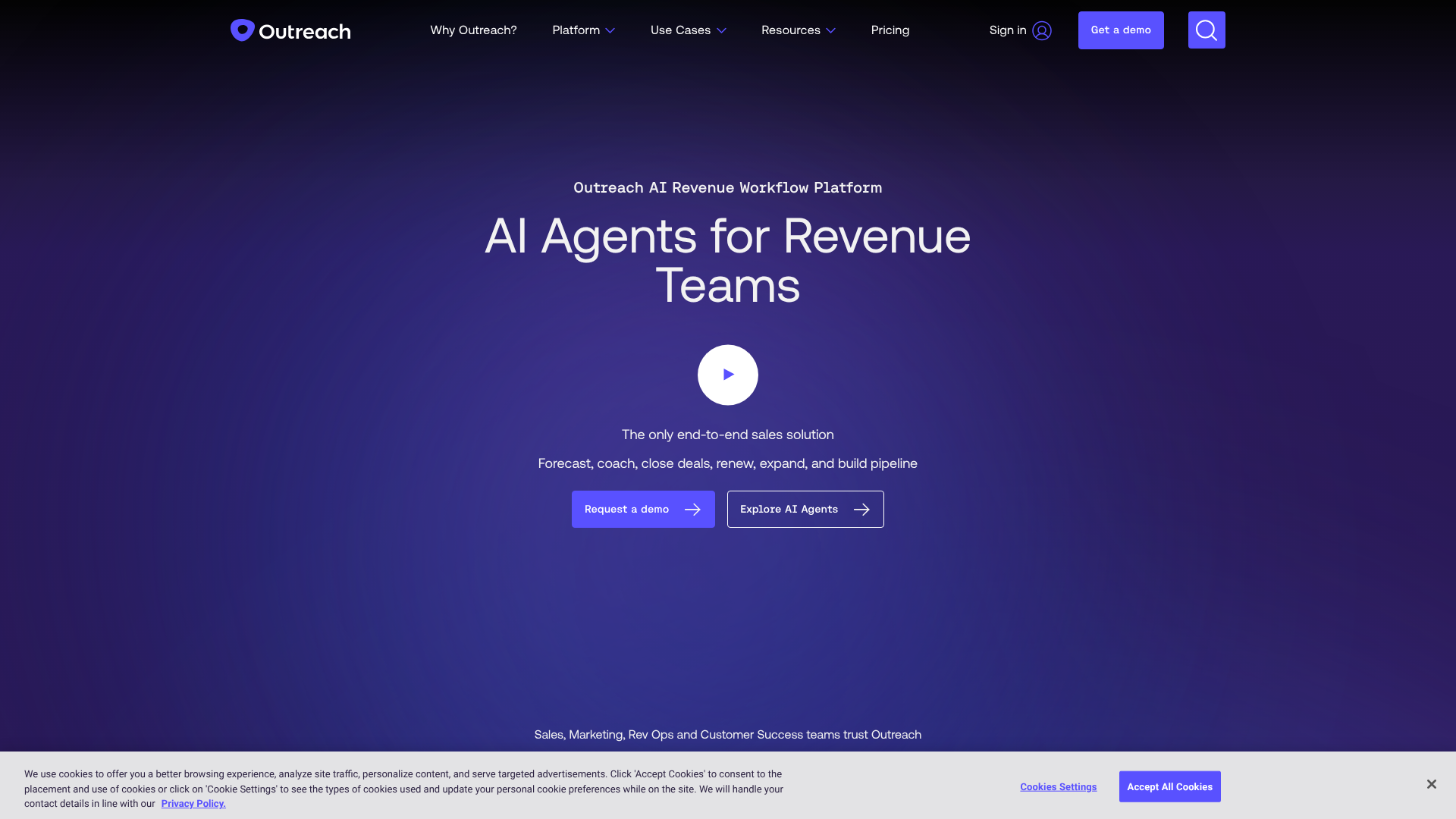
Outreach is widely regarded as the market leader, particularly for mid-market and enterprise companies. It offers an incredibly comprehensive set of features, including robust sequencing, AI-powered insights (Kaia), conversation intelligence, and deep analytics. It's built for teams that need powerful customisation and governance to manage complex sales processes at scale.
- Pros: Extremely powerful and feature-rich, excellent AI and analytics capabilities, highly scalable for large teams.
- Cons: Can be one of the more expensive options, may be too complex for very small businesses or startups.
- Best for: Established sales teams looking for a best-in-class, all-in-one platform to manage and optimise their entire sales cycle. If your process is complex and data is critical, Outreach is a top choice.
2. Reply.io
Reply.io is a fantastic option for small to medium-sized businesses (SMBs) and startups. It provides a strong core of sales engagement features—multi-channel sequencing, email validation, reporting—in a user-friendly and more affordable package. It also includes a B2B contact database, which can be a huge plus for teams that need help with prospecting.
- Pros: More affordable than enterprise leaders, intuitive and easy-to-use interface, includes a data-finding component.
- Cons: Analytics and AI features are not as advanced as those in platforms like Outreach.
- Best for: Growing sales teams that need a powerful but straightforward tool to automate their outreach without the enterprise-level price tag. If you want to get up and running quickly, Reply.io is an excellent starting point.
3. Apollo.io
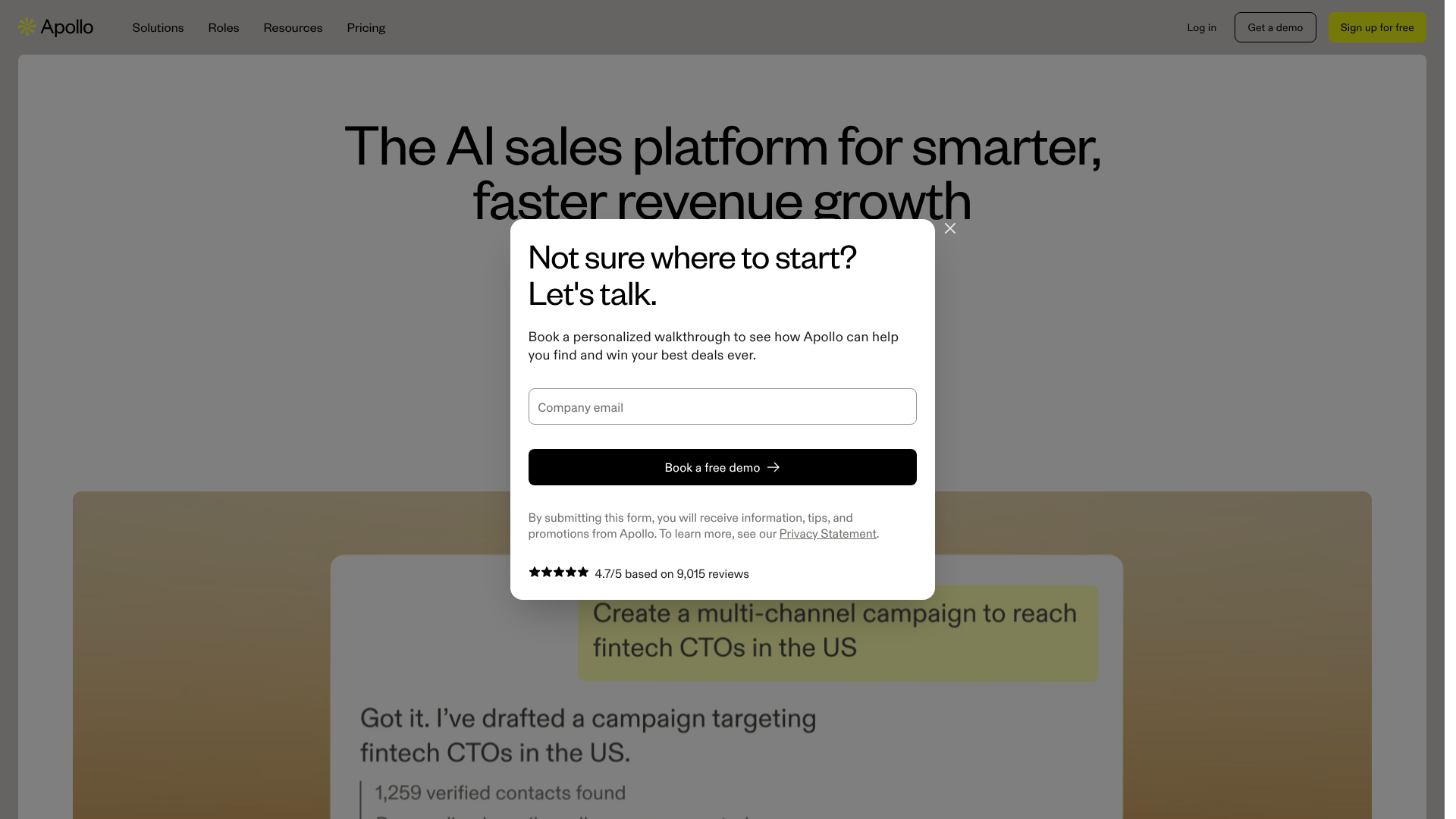
Apollo.io has carved out a unique position by combining a massive B2B contact database with a full-featured sales engagement platform. It's an all-in-one solution for prospecting and outreach. You can find verified contact information for prospects and immediately enrol them into automated email and call sequences within the same tool.
- Pros: Combines a high-quality data source with engagement features, excellent value for money, strong filtering for lead generation.
- Cons: The engagement features, while solid, may not have the same depth of customisation as dedicated platforms like Outreach.
- Best for: Teams that need both lead data and an outreach automation tool. If your budget is tight and you want to consolidate your tech stack, Apollo.io offers an unbeatable combination of data and engagement.
Other Notable Sales Software Solutions
For teams focused purely on cold email at scale, tools like Instantly.ai offer powerful email warming and sending capabilities. For finding contact information to fuel your campaigns, Hunter Campaigns (Hunter.io) is another excellent choice that combines email finding with simple outreach features.
Understanding Pricing Models and Cost
Pricing for sales engagement platforms can vary significantly, so it's important to understand the common structures to budget effectively.
Per-User, Per-Month Subscription
This is the most common model. You pay a monthly or annual fee for each user (or 'seat') on the platform. Annual contracts usually come with a discount of 10-20%. Prices can range from around £40 per user/month for simpler tools to over £100 per user/month for enterprise-grade platforms.
Always check the vendor's website for the most current pricing, as it changes frequently.
Tiered Plans Based on Features
Most vendors offer several pricing tiers. A basic tier might include email sequencing and CRM sync, while a professional or enterprise tier will add features like A/B testing, call recording, conversation intelligence, and advanced analytics. Carefully evaluate which features are essential for your team to avoid overpaying for functionality you don't need.
Hidden Costs to Watch For
Be sure to ask about any additional costs beyond the subscription fee. These can include:
- Onboarding and Implementation Fees: Some vendors charge a one-time fee to help you set up the platform and integrate it with your systems.
- Training Costs: While many offer free resources, personalised team training may come at an extra cost.
- Add-ons: Features like a built-in dialler or access to a contact data enrichment service may be priced separately.
The Pros and Cons of Adopting Sales Engagement Software
Like any technology, these platforms come with both significant advantages and potential challenges. A balanced perspective is crucial before making an investment.
Advantages Summarised
- Massive Productivity Gains: Automates low-value tasks, giving reps more time to sell.
- Improved Consistency: Ensures every lead gets a structured, persistent follow-up.
- Data-Driven Decisions: Provides clear analytics on what strategies are working.
- Faster Ramp Time for New Hires: New reps can be onboarded onto a proven process quickly.
- Better Pipeline Visibility: Managers get a clearer picture of sales activity and team performance.
Potential Disadvantages and Challenges
- Risk of Impersonal Automation: If used poorly, automated outreach can feel robotic and damage your brand's reputation. Training is key.
- Cost: These platforms are a significant investment, especially for larger teams.
- Adoption Hurdles: Some sales reps may be resistant to changing their workflow and adopting a new tool.
- Complexity: The most powerful platforms can be complex to set up and manage correctly.
- Data Hygiene: The platform is only as good as the data you feed it. Poor data from your CRM will lead to poor results.
Frequently Asked Questions (FAQ)
What is a sales engagement software?
Sales engagement software is a type of technology that helps sales teams streamline, automate, and analyse their communication with prospects across multiple channels. It acts as an 'engagement layer' on top of a CRM, providing tools for email sequencing, automated follow-ups, call dialling, and social selling. The primary goal is to make sales reps more efficient and effective in their daily outreach activities.
What does sales engagement mean?
Sales engagement refers to all the interactions between a salesperson and a prospect or customer throughout the sales cycle. It's about building a relationship and providing value at every touchpoint, from the initial cold email to the final proposal. Effective sales engagement is personalised, relevant, and consistent, aiming to guide the buyer through their decision-making process.
What is the difference between CRM and sales engagement?
The key difference is their core purpose. A CRM is a system of record—a database that stores all your customer information, history, and deal data. A sales engagement platform is a system of action—a tool that uses the CRM data to execute and manage the daily outreach activities like sending emails and making calls. They are designed to work together: the CRM holds the data, and the SEP uses that data to drive engagement.
What is the best sales engagement platform?
There is no single 'best' platform for everyone; it depends entirely on your needs. For large enterprise teams needing deep functionality, Outreach is often considered the leader. For SMBs and startups looking for a balance of power and usability, Reply.io is a strong contender. For teams that need an all-in-one solution for both finding prospects and engaging with them, Apollo.io offers exceptional value.
Final Thoughts
In today's competitive market, sales teams can no longer rely on manual processes and guesswork. Understanding what sales engagement software is and how it functions is the first step towards building a more efficient, predictable, and high-performing sales engine. These platforms are not just a nice-to-have; they are becoming a foundational piece of the modern sales tech stack.
By automating repetitive work, providing crucial data insights, and ensuring a consistent process, sales engagement tools empower your reps to focus on building human connections and closing deals. They bridge the critical gap between your CRM's data and the actions required to turn that data into revenue.
If you're looking to boost your team's productivity and effectiveness, evaluating sales engagement platforms is a logical next step. For a powerful, all-in-one solution that combines data and outreach, consider exploring Apollo.io. If your focus is on a user-friendly platform perfect for a growing team, Reply.io might be the right fit.