


Competitor Analysis with Semrush: A 2026 Guide for Marketers
Understanding your competition is fundamental to building a successful digital strategy. A detailed competitor analysis using Semrush provides the data-driven insights you need to identify opportunities, mitigate threats, and make smarter marketing decisions. Instead of guessing what your rivals are doing, you can see their strategies laid bare, from the keywords they target to the websites that link to them.
- What You'll Learn
- What Exactly is Competitor Analysis in Semrush?
- The Core Semrush Toolkit for Competitor Research
- H3: Domain Overview: The 30,000-Foot View
- H3: Traffic Analytics: Deconstructing Your Rival's Audience
- H3: Organic Research: Uncovering SEO Secrets
- H3: Keyword Gap: Finding Your Golden Opportunities
- H3: Backlink Analytics & Backlink Gap: Mapping Their Authority
- H3: Advertising Research: Peeking at Their Paid Strategy
- H3: Social Media Tracker: Monitoring Their Social Presence
- A Step-by-Step Guide to Conducting Competitor Analysis with Semrush
- H3: Step 1: Identify Your True Digital Competitors
- H3: Step 2: Analyse Their Traffic and Audience Engagement
- H3: Step 3: Deep-Dive into Their Keyword and Content Strategy
- H3: Step 4: Audit Their Backlink Profile
- H3: Step 5: Synthesise Your Findings into an Action Plan
- Understanding Semrush Pricing for Competitor Analysis
- The Pros and Cons of Using Semrush for Competitor Research
- Frequently Asked Questions (FAQ)
- Does SEMrush do competitor analysis?
- Which tool is best for competitor analysis?
- How to do an SEO competitor analysis?
- What are common competitor analysis mistakes?
- Is Google Analytics better than Semrush?
- Final Thoughts: Turning Insights into Action
This guide will walk you through exactly how to use this powerful platform for comprehensive competitor research. We'll explore the essential tools within the Semrush suite, outline a step-by-step process for your analysis, and show you how to turn raw data into an actionable plan that drives growth for your business.
What You'll Learn
- Core Tools: Discover the key Semrush features designed specifically for competitor analysis, including Domain Overview, Traffic Analytics, and Keyword Gap.
- Step-by-Step Process: Follow a clear, five-step framework for conducting a complete competitor analysis, from identifying rivals to creating an action plan.
- Strategic Insights: Learn how to analyse competitor SEO, content, backlink, and paid advertising strategies to find weaknesses and opportunities.
- Actionable Data: Understand how to translate the data and reports from your Semrush analysis into concrete marketing tasks that improve your online performance.
- Pros and Cons: Get a balanced view of Semrush's strengths and limitations as a competitor analysis tool to decide if it's right for you.
What Exactly is Competitor Analysis in Semrush?
A competitor analysis in Semrush is the process of using its suite of tools to research and understand the digital marketing strategies of your rivals. It goes far beyond simply looking at their websites. It involves a deep dive into their performance across various channels, including organic search (SEO), paid advertising (PPC), content marketing, and social media.
Think of it as digital reconnaissance. You're gathering intelligence on what works for them, where they are succeeding, and, just as importantly, where they are failing. This information allows you to benchmark your own performance, identify gaps in your strategy, and discover new avenues for growth that you might have otherwise missed.
A comprehensive semrush analysis helps you answer critical business questions. Which keywords are driving the most traffic to your competitors. What kind of content resonates with their audience. Where are they getting their most valuable backlinks from.
How much are they spending on Google Ads. Answering these questions gives you a significant competitive advantage.
The Core Semrush Toolkit for Competitor Research
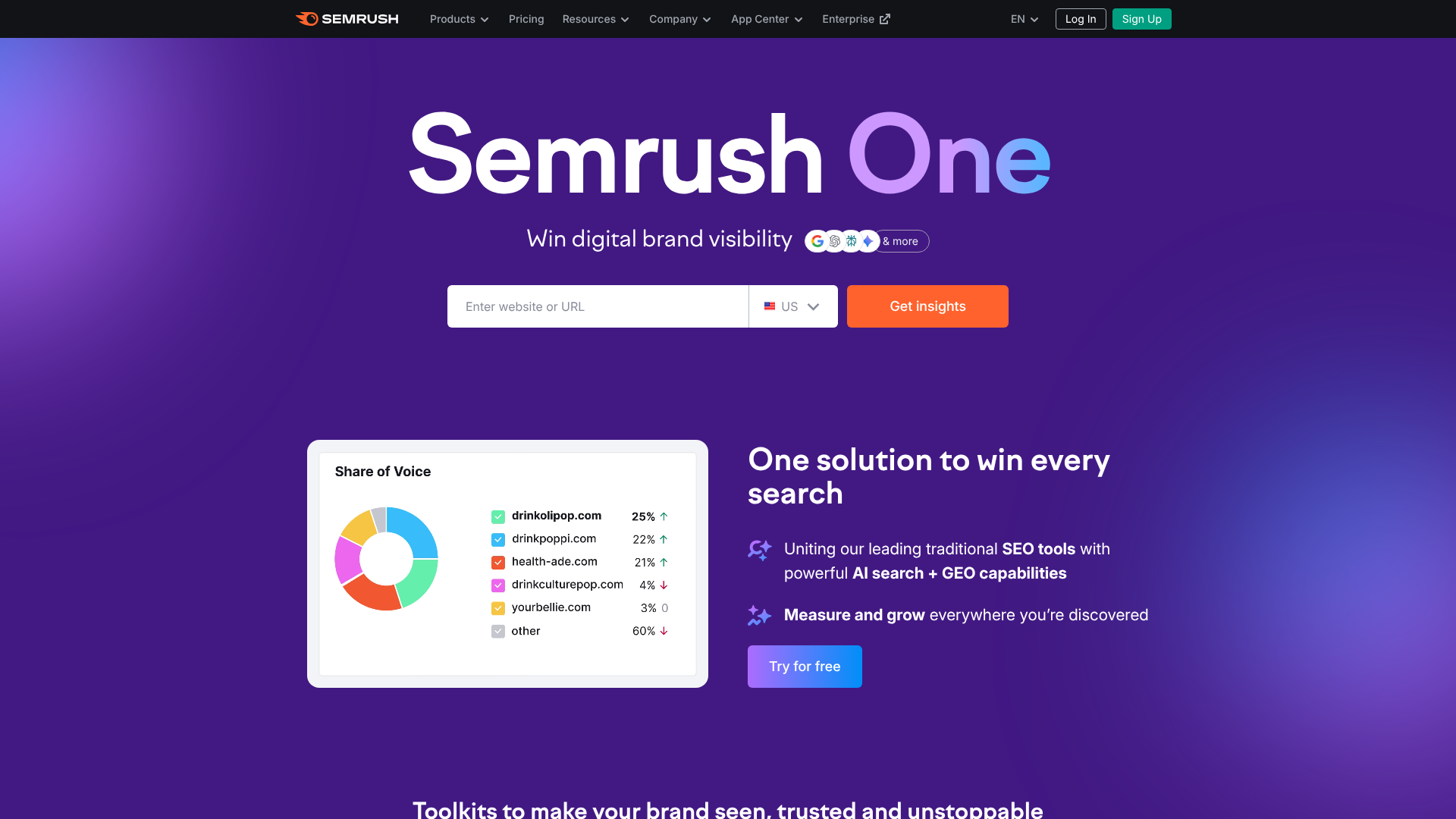

Semrush is not a single tool but a collection of specialised toolkits. For effective competitor research, you'll primarily use a handful of these powerful features. Each one provides a different piece of the puzzle, and together they create a complete picture of your competitor's digital footprint.
H3: Domain Overview: The 30,000-Foot View
The Domain Overview report is your starting point. By simply entering a competitor's URL, you get an instant, high-level snapshot of their online presence. It’s the quickest way to gauge their overall digital health and authority.
Key metrics you'll see include the Authority Score (Semrush's metric for a domain's overall quality and SEO performance), estimated monthly organic and paid search traffic, and the total number of backlinks. It also shows you their top organic keywords, main organic competitors, and a breakdown of their traffic by country. Use this report for a quick comparison between your site and a few key rivals.
H3: Traffic Analytics: Deconstructing Your Rival's Audience
While Domain Overview focuses on search traffic, Traffic Analytics gives you a broader view of a website's entire traffic profile. This is where you can see how people really get to your competitor's site. It provides estimations for total site visits, unique visitors, pages per visit, and average visit duration.
Crucially, it breaks down traffic sources into Direct, Referral, Search, Social, and Paid. This helps you understand their marketing mix. For example, if a competitor gets 40% of their traffic from referral sources, it signals a strong backlink profile or affiliate programme. If they have high direct traffic, it suggests strong brand recognition.
H3: Organic Research: Uncovering SEO Secrets
This is one of the most valuable competitor analysis tools in the Semrush arsenal. The Organic Research report shows you every keyword a competitor ranks for in Google's top 100 results. You can see their top-performing keywords, the estimated traffic each keyword brings, and the specific pages that are ranking.
You can use this tool to find keyword ideas you haven't considered and to analyse the performance of their most important pages. The 'Positions' tab lets you track their ranking changes over time, revealing if their SEO efforts are gaining or losing momentum. This is your window into their entire organic search strategy.
H3: Keyword Gap: Finding Your Golden Opportunities
The Keyword Gap tool is designed for direct comparison. You can enter your domain alongside up to four competitors to instantly see how your keyword profiles overlap. The tool visualises this data, making it easy to spot opportunities.
Its most powerful feature is identifying 'Weak' and 'Missing' keywords. 'Missing' keywords are terms your competitors rank for, but you don't. These represent a list of immediate content and SEO opportunities. 'Weak' keywords are terms where all your competitors outrank you, highlighting areas where you need to improve your existing content or build more authority.
H3: Backlink Analytics & Backlink Gap: Mapping Their Authority
Backlinks are a critical ranking factor, and understanding a competitor's link profile is essential. The Backlink Analytics tool gives you a complete list of every website linking to your competitor. You can filter these by Authority Score, industry, and other metrics to find their most powerful links.
Similar to the Keyword Gap tool, the Backlink Gap tool allows you to compare your backlink profile against your competitors. It quickly generates a list of domains that link to your rivals but not to you. This list is a ready-made outreach plan for your link-building campaigns, as these sites have already shown a willingness to link to businesses in your niche.
Pro Tip: When using the Backlink Gap tool, filter for domains with a high Authority Score (e.g., 50+). This helps you prioritise outreach to the most impactful websites first, making your link-building efforts more efficient.
H3: Advertising Research: Peeking at Their Paid Strategy
If your competitors are running paid search campaigns, the Advertising Research tool is invaluable. It shows you the keywords they are bidding on, the estimated monthly cost of their campaigns, and the amount of traffic they receive from those ads.
One of the best features is the ability to see their live ad copy. You can analyse their headlines, descriptions, and calls-to-action to understand their messaging and unique selling propositions. This research can inspire your own ad copy and help you craft more compelling offers for your target audience.
H3: Social Media Tracker: Monitoring Their Social Presence
Finally, the Social Media Tracker helps you benchmark your performance against competitors across major platforms like Facebook, X (formerly Twitter), Instagram, and LinkedIn. You can track their audience size, posting frequency, and engagement rates.
The tool also highlights their top-performing content, showing you which posts generated the most likes, comments, and shares. This is a great way to get ideas for your own social media calendar and understand what type of content resonates with your shared target audience.
A Step-by-Step Guide to Conducting Competitor Analysis with Semrush
Knowing the tools is one thing; using them in a structured way is another. Following a clear process ensures your semrush competitor research is thorough and leads to actionable insights. Here is a five-step framework you can follow.
H3: Step 1: Identify Your True Digital Competitors
Your business competitors aren't always your main search competitors. A local shop might compete with a national chain in person, but online they might be competing with blogs and review sites for keywords. Start by entering your domain into the Organic Research tool and navigating to the 'Competitors' tab.
Semrush will generate a list of domains that rank for the same keywords as you. This is your list of true digital competitors. Analyse this list and pick 3-5 of the most relevant ones to focus on for the rest of your analysis. These are the sites you'll be measuring yourself against.
H3: Step 2: Analyse Their Traffic and Audience Engagement
Next, take your list of competitors and analyse them one by one in the Traffic Analytics tool. Create a spreadsheet to compare key metrics side-by-side: total visits, unique visitors, pages/visit, and average visit duration. Also, note the breakdown of their traffic sources (Direct, Referral, Search, Social, Paid).
This high-level benchmark shows you who is leading in overall audience size and engagement. It also reveals their primary marketing channels. For instance, a competitor with high social traffic is likely investing heavily in that area, which might be an opportunity for you to explore.
H3: Step 3: Deep-Dive into Their Keyword and Content Strategy
This is where you find the actionable SEO and content opportunities. Use the Keyword Gap tool to compare your domain against your chosen competitors. Export the lists of 'Missing' and 'Weak' keywords. These are your new content targets.
Then, use the Organic Research tool and look at the 'Top Pages' report for each competitor. This shows you which of their articles or landing pages attract the most organic traffic. Analyse this content: What topics do they cover. What is the format (e.g., blog post, guide, tool).
How can you create something better and more comprehensive.
H3: Step 4: Audit Their Backlink Profile
A strong backlink profile is a key differentiator. Use the Backlink Gap tool to find all the websites linking to your competitors but not to you. Export this list—it's your roadmap for link building.
Don't just look at the number of links; assess the quality. In the Backlink Analytics tool, review your competitors' top referring domains. Are they getting links from high-authority news sites, industry blogs, or directories? Understanding their link-building strategy will inform your own outreach efforts.
H3: Step 5: Synthesise Your Findings into an Action Plan
Data is only useful if you act on it. The final step is to bring all your research together and create a clear action plan. A simple SWOT (Strengths, Weaknesses, Opportunities, Threats) analysis framework can be very effective here.
- Strengths: Where are you currently outperforming your competitors?
- Weaknesses: Where are your competitors beating you?
- Opportunities: What 'Missing' keywords, content topics, or backlink sources did you uncover?
- Threats: Are any competitors rapidly gaining ground or dominating a key channel?
Based on this analysis, create a prioritised list of tasks. This could include creating new blog posts for target keywords, optimising existing pages, or launching an outreach campaign to acquire specific backlinks. Your semrush analysis should always end with a clear set of next steps.
Understanding Semrush Pricing for Competitor Analysis

Semrush offers several pricing tiers, and the tools available for competitor analysis vary depending on the plan. The main plans are typically named Pro, Guru, and Business, each designed for different types of users, from freelancers to large agencies.
The Pro plan is a great starting point and offers access to most of the core competitor analysis tools, including Domain Overview, Organic Research, and Keyword Gap. However, it has limits on the number of reports you can run per day and the amount of data in each report. For example, you might only see the top 10,000 results in a report.
The Guru plan expands on these limits and adds crucial features like the Content Marketing Platform and historical data, which can be very useful for tracking competitor trends over time. The Business plan offers the highest limits, API access, and more advanced features like Share of Voice metrics, making it suitable for large-scale operations.
Pricing for these plans can change, so it's always best to visit the official Semrush website for the most current information. They often offer a free trial, which is an excellent way to test the platform's capabilities and see which plan fits your competitor research needs before committing.
The Pros and Cons of Using Semrush for Competitor Research
No tool is perfect, and while Semrush is a market leader, it's important to understand its strengths and weaknesses. A balanced view will help you get the most out of the platform and set realistic expectations.
H3: The Advantages (Pros)
- All-in-One Platform: The biggest advantage is having a vast array of tools in one place. You can analyse SEO, PPC, content, and social media without needing to subscribe to multiple different services. This saves time and simplifies your workflow.
- Massive Data Library: Semrush maintains one of the largest keyword and backlink databases in the industry. This means the data you get is generally comprehensive and reliable, giving you a solid foundation for your strategic decisions.
- User-Friendly Interface: Despite its complexity, Semrush does a great job of visualising data. Its charts, graphs, and comparison tools make it easy to spot trends and insights without having to sift through endless spreadsheets.
- Action-Oriented Tools: Features like Keyword Gap and Backlink Gap are specifically designed to provide actionable to-do lists. They don't just show you data; they point you directly towards opportunities.
H3: The Limitations (Cons)
- Steep Learning Curve: For a complete beginner, the sheer number of tools and reports can be overwhelming. While the interface is good, it takes time to learn how to use all the features to their full potential.
- Cost: Semrush is a premium tool, and its subscription cost can be a significant investment, especially for freelancers or small businesses with limited budgets. The value is there, but you need to be prepared to use it regularly to justify the expense.
- Data is an Estimation: This is true for all third-party SEO tools. The traffic and keyword data are highly accurate estimates, but they are not 100% precise like the data you see in your own Google Analytics or Google Search Console. It's essential for directional analysis, not absolute figures.
Pro Tip: To get the most accurate picture, combine Semrush's competitor data with the first-party data from your own Google Analytics. Use Semrush to understand the market and your competitors, and use Google Analytics to understand your own audience's behaviour with certainty.
Frequently Asked Questions (FAQ)
Does SEMrush do competitor analysis?
Yes, absolutely. Competitor analysis is one of the core functions and primary strengths of the Semrush platform. It offers a comprehensive suite of specialised tools, such as Organic Research, Traffic Analytics, Keyword Gap, and Backlink Analytics, all designed to give you deep insights into your competitors' digital marketing strategies.
Which tool is best for competitor analysis?
While many great competitor analysis tools exist, Semrush is widely regarded as one of the best all-in-one solutions on the market. Its strength lies in the breadth and depth of its data, covering everything from SEO and PPC to content and social media. For businesses looking for a single platform to handle the majority of their competitor research needs, Semrush is a top contender.
How to do an SEO competitor analysis?
To do an SEO competitor analysis using a tool like Semrush, you should follow a structured process. Start by identifying your main search competitors. Then, analyse their top-ranking keywords and best-performing content pages. Finally, audit their backlink profile to understand their off-page authority.
The goal is to find gaps and opportunities you can target with your own SEO strategy.
What are common competitor analysis mistakes?
One of the most common mistakes is focusing only on one metric, like traffic, without understanding the context. Another error is only looking at direct business competitors and ignoring online search competitors who may be ranking for your target keywords. Finally, a huge mistake is gathering data without creating an actionable plan; the analysis is pointless if it doesn't lead to changes in your strategy.
Is Google Analytics better than Semrush?
They are not directly comparable because they serve different purposes. Google Analytics is a web analytics service that tracks and reports on your own website's traffic and user behaviour. It provides 100% accurate data for your domain. Semrush is a competitive intelligence suite that provides estimated data for any website, allowing you to analyse the broader market and your competitors.
You should use both: Google Analytics for your own data and Semrush for market research.
Final Thoughts: Turning Insights into Action
Conducting a thorough competitor analysis with Semrush is one of the most powerful activities you can undertake to improve your digital marketing. It moves you from a reactive to a proactive stance, allowing you to anticipate market shifts and strategically position your brand for success.
The tools within Semrush provide an unparalleled view of the competitive landscape. From uncovering hidden keyword opportunities with the Keyword Gap tool to mapping out a link-building strategy with Backlink Analytics, the platform is built to deliver actionable intelligence.
Remember, the goal of this research isn't to simply copy your competitors. It's to understand their playbook so you can write a better one. Use the data to find their weaknesses, build on their strengths, and innovate in areas they've overlooked. If you're ready to stop guessing and start making data-driven decisions, exploring what Semrush has to offer is your logical next step.