


Sales Engagement Platform vs CRM: Which Tool Your Sales Team Needs in 2026
Sales teams often face a confusing choice when building their tech stack: should they invest in a sales engagement platform or a CRM? The debate over a sales engagement platform vs crm is common, but it's based on a misunderstanding. These two powerful tools aren't competitors; they are partners designed to solve different problems, and together, they create a formidable sales machine.
- What to Know
- What is a Sales Engagement Platform vs a CRM? The Core Difference
- Side-by-Side Comparison: CRM vs Sales Engagement Tools
- Key Features and Benefits: A Deeper Look
- Top Recommendations: The Best of Both Worlds
- The Power Couple: How SEPs and CRMs Work Together
- Pricing and Cost Comparison: What to Expect
- Pros and Cons: Making an Informed Decision
- How to Choose: Do You Need a CRM, an SEP, or Both?
- Frequently Asked Questions (FAQ)
- What is the difference between CRM and sales engagement?
- What is the difference between CRM and sales enablement platform?
- What is a sales engagement platform?
- What are the 4 types of CRM?
- What are the best sales engagement tools?
- Final Thoughts
A Customer Relationship Management (CRM) system acts as your company's central memory, a database of every customer interaction, deal, and detail. A Sales Engagement Platform (SEP), on the other hand, is the engine of action. It's the tool your reps use every day to connect with prospects through emails, calls, and social media, turning stored data into active conversations.
This guide will clarify the distinct roles of each platform, explore how they work together, and help you decide which tool—or combination of tools—is right for your sales team's specific needs.
What to Know
- CRM is the System of Record: A CRM's primary job is to store and organise all your customer data. Think of it as the central library for your contacts, deals, and communication history.
- SEP is the System of Action: A sales engagement platform focuses on executing and automating sales outreach. It's the tool that helps reps efficiently connect with prospects at scale.
- They Are Complementary, Not Competitive: The most effective sales teams use an SEP that integrates with their CRM. The SEP pulls contact data from the CRM, executes outreach campaigns, and logs all activity back into the CRM automatically.
- CRM Manages Relationships, SEP Initiates Them: A CRM is essential for tracking the entire customer lifecycle and nurturing long-term relationships. An SEP excels at the front end of the sales process, helping reps start conversations and book meetings.
What is a Sales Engagement Platform vs a CRM? The Core Difference
Understanding the fundamental purpose of each tool is the first step to building an effective sales tech stack. While both aim to improve sales outcomes, they approach the goal from completely different angles. One is a passive repository of information, while the other is an active engine for outreach.
The CRM: Your Digital Filing Cabinet
A Customer Relationship Management (CRM) system is, at its core, a database designed to manage your company's relationships and interactions with current and potential customers. It’s the single source of truth for all customer-related information, accessible to anyone in your company who needs it, from sales and marketing to customer service.
Imagine a highly organised digital filing cabinet. Every contact has a file containing their contact details, communication history (emails, calls), deal status, and any other relevant notes. This centralised data allows sales managers to track team performance, forecast revenue, and understand the health of their sales pipeline. For sales reps, it provides the context needed for every conversation.
Popular and effective options like the free HubSpot CRM provide a powerful foundation for businesses of any size to start organising their customer data.
The Sales Engagement Platform: Your Action Engine
If the CRM is the filing cabinet, the Sales Engagement Platform (SEP) is the high-tech assistant that takes the files and acts on them. An SEP is built for sales execution. Its main purpose is to help sales representatives connect with more prospects more effectively and efficiently. It automates and streamlines the repetitive tasks involved in outreach, freeing up reps to focus on what they do best: selling.
SEPs achieve this through features like automated email sequences (cadences), one-click diallers, task management, and performance analytics. Instead of manually sending follow-up emails or logging calls, a rep can enrol a prospect into a pre-built sequence of touches across multiple channels (email, phone, LinkedIn). The platform handles the follow-ups, tracks engagement (opens, clicks, replies), and tells the rep exactly what to do next. Tools like Outreach are industry leaders in this space, providing a comprehensive suite for sales teams to manage their engagement workflows.
Side-by-Side Comparison: CRM vs Sales Engagement Tools
To make the distinction even clearer, let's break down the differences between CRM vs sales engagement tools across several key areas. This table highlights their unique roles within a sales organisation.
| Feature/Aspect | Customer Relationship Management (CRM) | Sales Engagement Platform (SEP) |
|---|---|---|
| Primary Goal | To be the system of record for all customer data and relationships. | To be the system of action for executing and optimising sales outreach. |
| Main User | Sales reps, managers, marketing, customer service, and leadership. | Primarily Sales Development Reps (SDRs) and Account Executives (AEs). |
| Core Function | Data storage, pipeline management, reporting, and forecasting. | Outreach automation, communication tracking, and workflow management. |
| Data Focus | Historical and static data (contact info, past interactions, deal stages). | Real-time engagement data (email opens, clicks, replies, call outcomes). |
| Workflow Role | A passive database that reps consult for information. | An active workspace where reps spend their day executing tasks. |
| Key Question Answered | "Who is this customer and where are they in our pipeline?" | "What is the next best action to take to move this prospect forward?" |
Key Features and Benefits: A Deeper Look

While the high-level differences are clear, the specific features of each platform truly define their value. A CRM's strength lies in its organisational power, while an SEP's value comes from its ability to drive productivity and engagement.
Must-Have CRM Features
A good CRM provides the foundation for a scalable sales process. Its features are centred around organisation, visibility, and long-term relationship management.
- Contact & Lead Management: This is the bread and butter of any CRM. It allows you to store detailed information about every lead, prospect, and customer in a centralised, easily searchable database.
- Pipeline Visualisation: CRMs offer visual representations of your sales pipeline, often in a Kanban-style board. This allows reps and managers to see exactly where every deal stands, identify bottlenecks, and prioritise efforts.
- Reporting & Analytics: From sales activity reports to revenue forecasting, CRMs turn raw data into actionable insights. A platform like Zoho CRM is known for its powerful and highly customisable reporting capabilities, giving leaders a deep understanding of business performance.
- Deal Tracking: This feature allows you to track the progress of individual sales opportunities from initial contact to a closed deal. You can associate contacts, companies, and activities with each deal, ensuring no detail is lost.
Powerful Sales Engagement Platform Features
An SEP is built to make sales reps more effective at their primary job: engaging prospects. Its features are designed to automate, guide, and optimise every interaction.
- Multi-channel Outreach Cadences: This is the core feature of most SEPs. It allows you to build automated sequences of emails, phone calls, LinkedIn connections, and other tasks to ensure persistent and consistent follow-up with prospects.
- Email Tracking & Templates: SEPs provide real-time alerts when a prospect opens an email, clicks a link, or downloads an attachment. They also allow teams to create, share, and test high-performing email templates to standardise effective messaging.
- AI-Powered Insights: Modern SEPs use artificial intelligence to analyse sales conversations, suggest the best times to send emails, and even recommend which content will resonate most with a prospect. Tools like Reply.io leverage AI to help reps write better emails and optimise their outreach sequences for higher response rates.
- Automated Task Management: The platform automatically creates tasks for reps based on the sales cadence. When it's time to make a call or send a LinkedIn message, the task appears in their workflow, eliminating guesswork and ensuring no prospect falls through the cracks.
Pro Tip: When evaluating SEPs, look for conversation intelligence features. These tools record, transcribe, and analyse sales calls to identify key topics, successful talk tracks, and areas for coaching. This is invaluable for training and improving team performance.
Top Recommendations: The Best of Both Worlds
Choosing the right tools is critical. Here are some of the top platforms in both categories, each with unique strengths catering to different business needs.
Top CRM Platforms for Modern Sales Teams
- HubSpot CRM
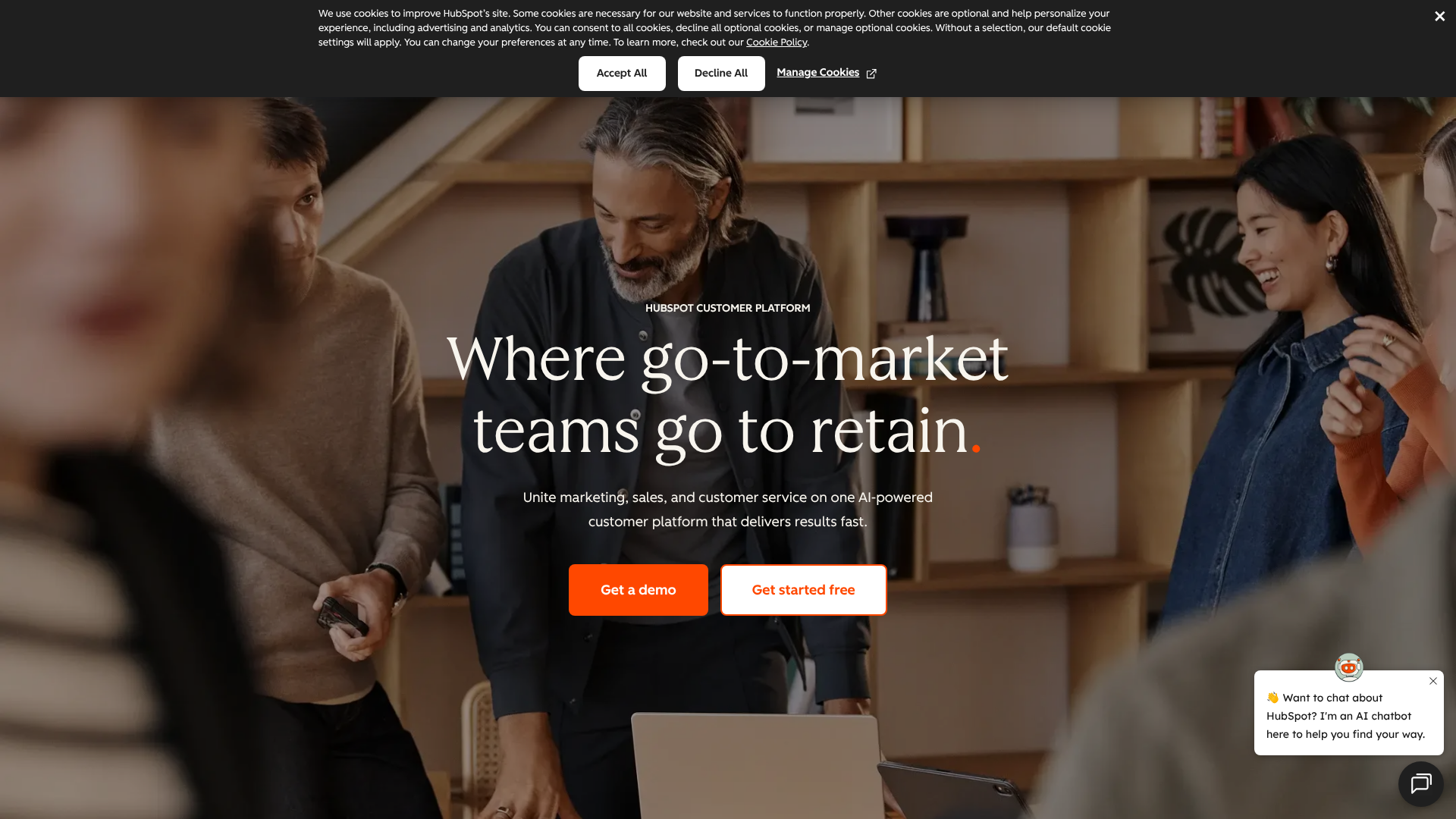
HubSpot CRM is renowned for its user-friendly interface and powerful free-forever plan. It's an excellent choice for small to medium-sized businesses that need a central hub for their sales, marketing, and service activities. The platform is designed to grow with you, offering more advanced features in its paid Sales Hub tiers.
- Pros: Incredibly easy to use, generous free plan, excellent for aligning sales and marketing teams, strong integration ecosystem.
- Cons: Advanced features can become expensive, customisation is more limited compared to some enterprise-level CRMs.
- Zoho CRM
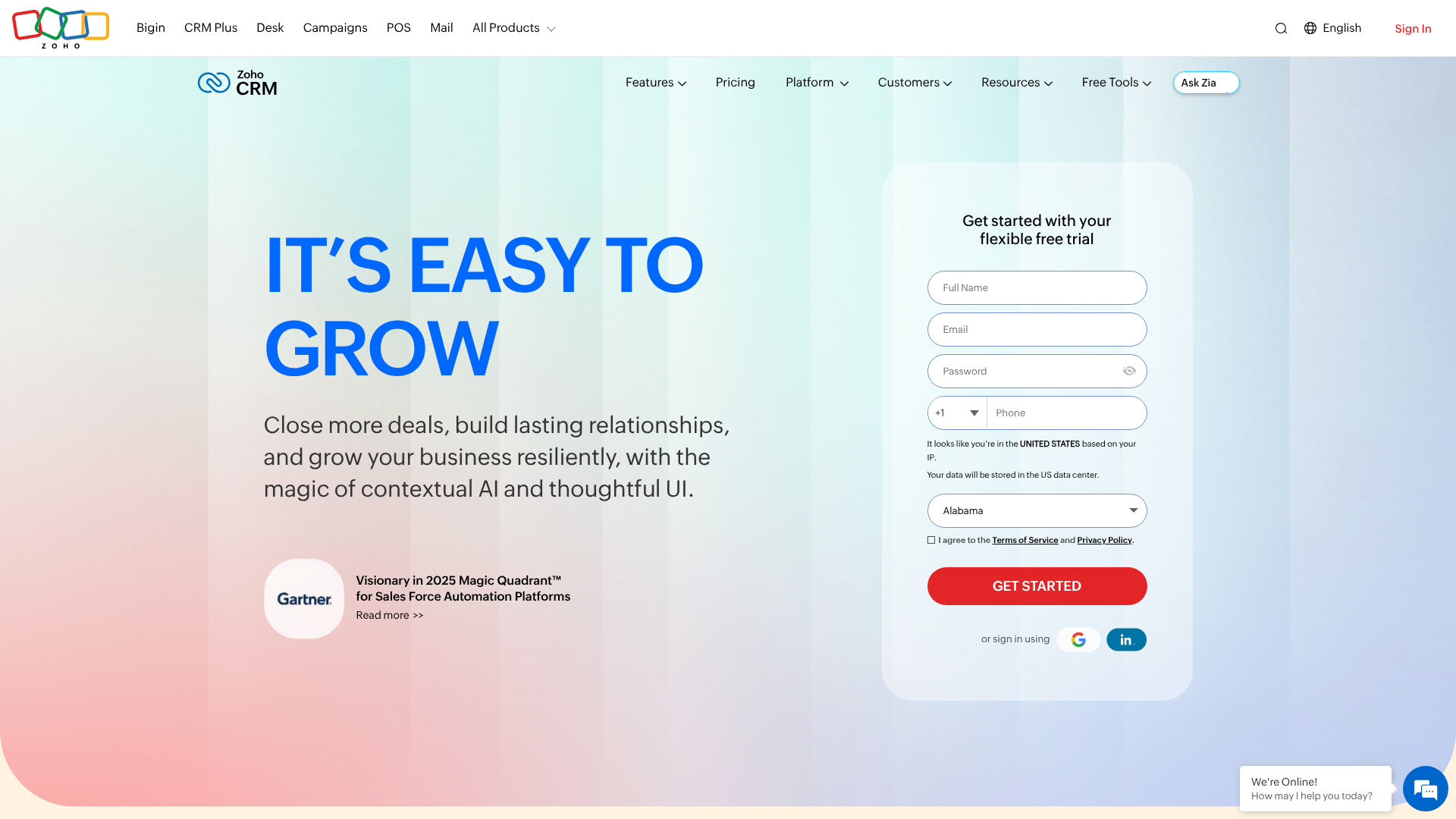
Zoho CRM offers an extensive suite of features at a very competitive price point, making it a favourite among businesses looking for power and value. It is highly customisable and integrates seamlessly with the broader Zoho ecosystem of business apps.
- Pros: Excellent value for money, highly customisable, powerful automation and reporting tools, part of a comprehensive business suite.
- Cons: The sheer number of features can be overwhelming for new users, user interface feels less modern than some competitors.
Top Sales Engagement Platforms to Boost Outreach
- Outreach
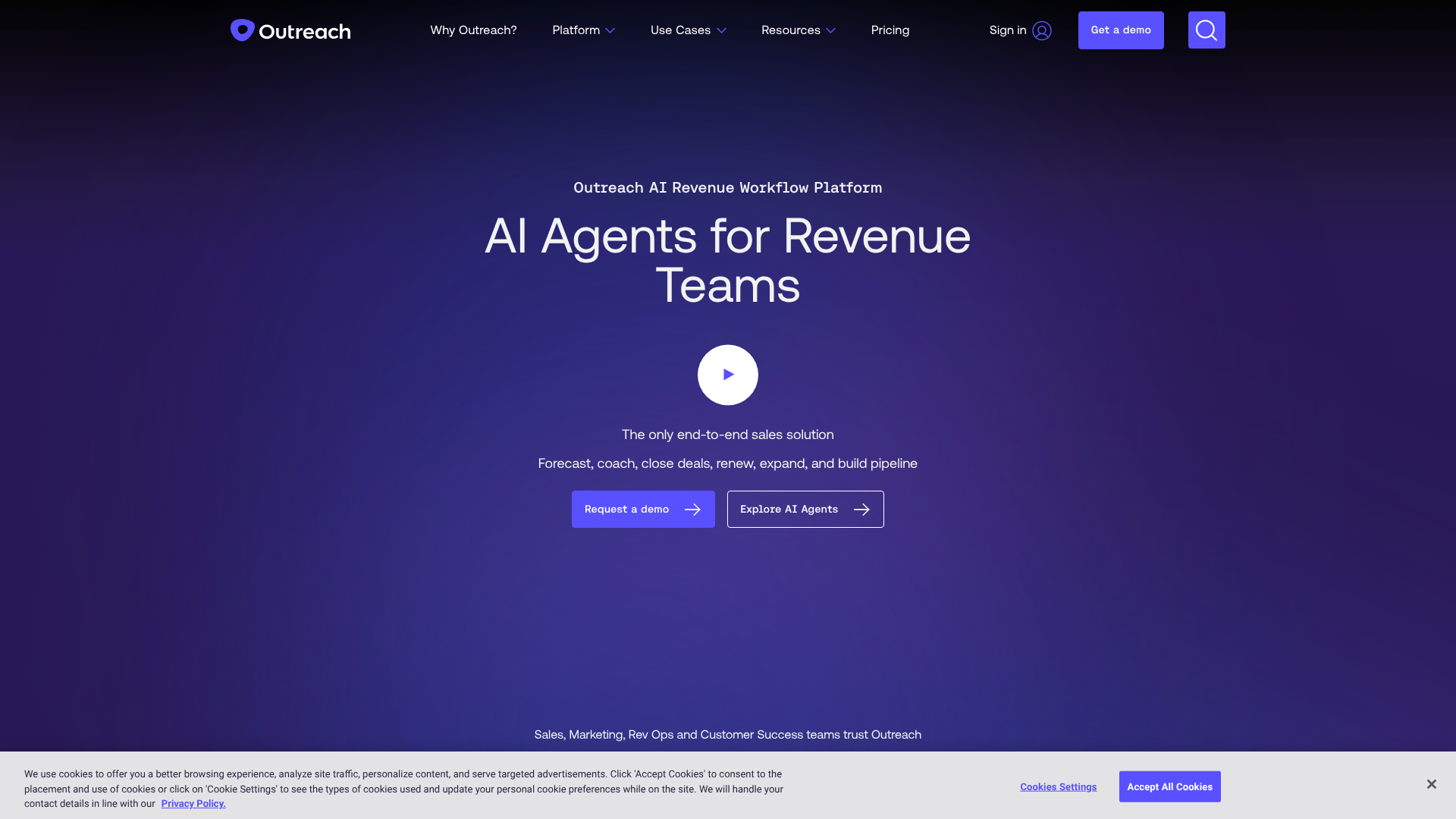
Outreach is a market leader in the sales engagement space, particularly for mid-market and enterprise companies. It offers a comprehensive and powerful set of tools for managing complex sales cadences, analysing performance, and forecasting with AI.
- Pros: Robust feature set for large teams, excellent analytics and reporting, powerful AI-driven insights, strong security and governance.
- Cons: Can be expensive, may be overly complex for small teams or simple use cases.
- Reply.io
Reply.io is a versatile multi-channel sales engagement platform that is particularly strong for SMBs and mid-market teams. It uses AI to help with email writing, sequence optimisation, and appointment setting, and it includes a built-in database of B2B contacts.
- Pros: Strong AI features, includes a B2B data finder, good value for the feature set, easy to set up multi-channel sequences.
- Cons: The user interface can sometimes feel cluttered, data accuracy in the built-in database can vary.
- Apollo.io
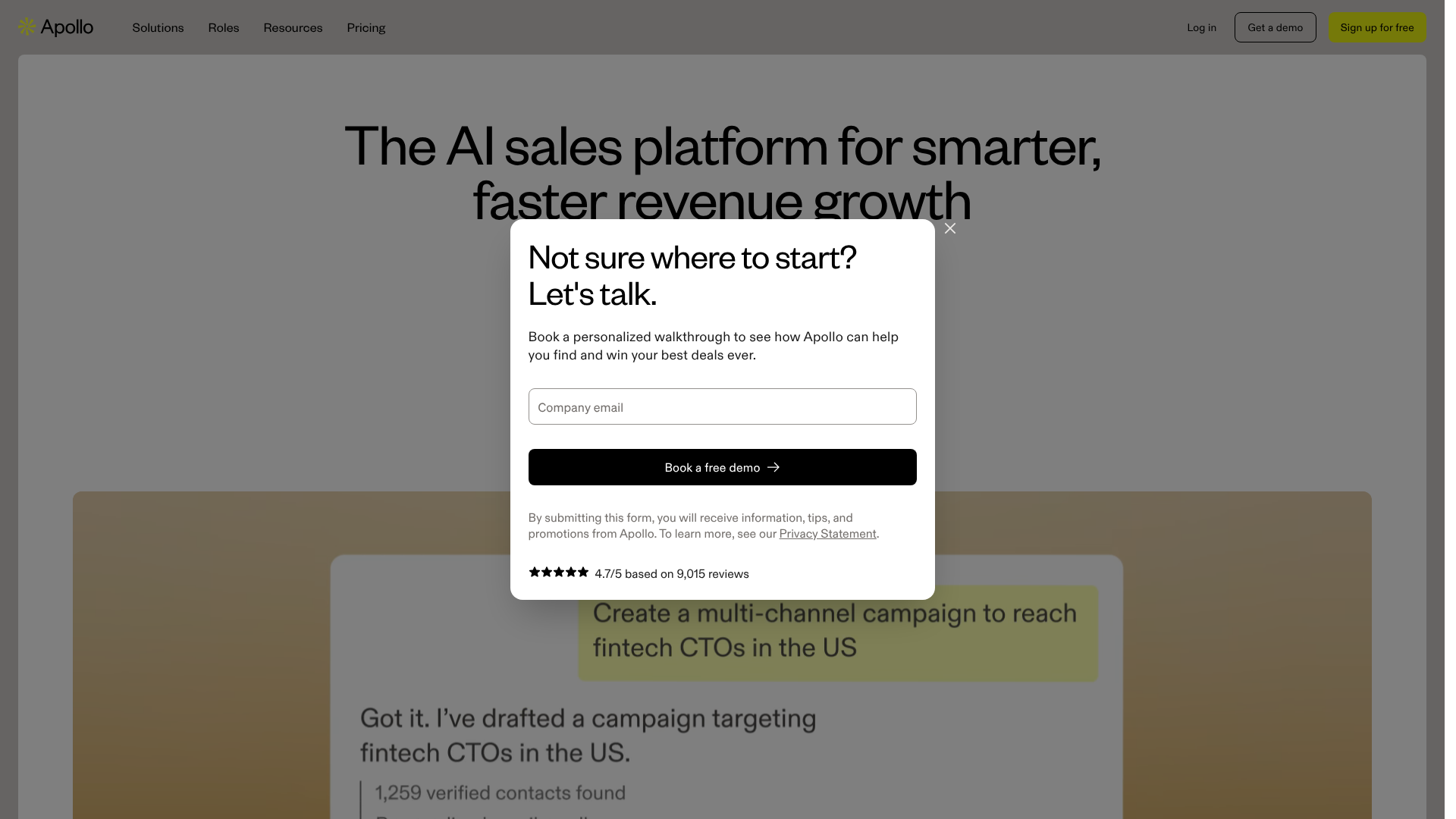
Apollo.io combines a massive B2B contact database with sales engagement features, making it a powerful all-in-one solution for prospecting and outreach. It's an excellent choice for teams that need both lead data and the tools to engage those leads effectively.
- Pros: Huge, high-quality contact database included, all-in-one platform for prospecting and engagement, competitive pricing, generous free tier.
- Cons: Engagement features are not as deep as dedicated platforms like Outreach, can have a steeper learning curve due to its breadth of features.
The Power Couple: How SEPs and CRMs Work Together
Thinking in terms of "sales platform vs CRM" misses the biggest opportunity: integration. When a sales engagement platform and a CRM are connected, they create a seamless workflow that boosts productivity and provides complete visibility into sales activities.
The synergy works like this: The CRM acts as the master database. The SEP syncs with the CRM, pulling lists of contacts for reps to engage. The rep then uses the SEP to execute their outreach cadences. Every email sent, call made, and meeting booked is automatically logged back to the contact's record in the CRM in real-time.
This eliminates the soul-crushing manual data entry that sales reps despise and ensures the CRM is always up-to-date.
This integration provides three key benefits:
Increased Productivity: Reps can live in their SEP to execute tasks without constantly switching back and forth to the CRM to log activities. 2. Data Accuracy: Automated activity logging ensures that all interaction data is captured accurately in the CRM, leading to more reliable reporting and forecasting.
360-Degree Customer View: Managers and other team members can look at any contact in the CRM and see a complete, up-to-the-minute history of every sales interaction, providing crucial context for strategy and support.
Pricing and Cost Comparison: What to Expect

Budget is a major factor when choosing sales tools. The pricing structures for CRMs and SEPs are similar in format but often differ in scale and commitment.
Typical CRM Pricing Models
CRM pricing is almost always on a per-user, per-month basis. Most vendors offer several tiers, allowing you to pay for the features you actually need.
- Free Tiers: Many CRMs, like HubSpot, offer a free-forever plan with basic features. This is an excellent way for small businesses to get started.
- Starter Tiers: These typically range from £15 to £50 per user/month and include more advanced features like automation and custom reporting.
- Professional/Enterprise Tiers: For larger teams, these plans can cost £80 to £150+ per user/month and include advanced customisation, security, and analytics features.
Typical Sales Engagement Platform Pricing
SEPs also use a per-user, per-month model, but their entry-level prices are generally higher than CRMs, and they often require an annual contract.
- Entry-Level: Expect to pay between £60 and £100 per user/month for foundational SEP features.
- Mid-Tier & Enterprise: More advanced platforms like Outreach can cost £120+ per user/month. Pricing is often not public and requires a custom quote based on your team's size and needs.
It's important to factor in the total cost of ownership. While an SEP might seem like a significant investment, the productivity gains and increased meeting booking rates often deliver a substantial return on investment.
Pros and Cons: Making an Informed Decision
To choose wisely, you must understand the limitations of using just one tool without the other.
The Case for a Standalone CRM
- Pros:
- Provides a crucial single source of truth for all customer data.
- Essential for pipeline management, forecasting, and reporting.
- Excellent for long-term customer relationship management across departments.
- Cons:
- It's a passive tool; it doesn't help reps execute outreach efficiently.
- Can lead to significant time wasted on manual data entry.
- Poorly suited for managing high-volume, multi-touch prospecting campaigns.
The Case for a Standalone Sales Engagement Platform
- Pros:
- Dramatically increases sales rep productivity and activity volume.
- Improves engagement rates through consistent, multi-channel follow-up.
- Automates repetitive tasks, allowing reps to focus on selling.
- Cons:
- It's not a system of record; without a CRM, customer data becomes siloed and disorganised.
- Lacks the robust pipeline management and forecasting features of a CRM.
- Can lead to a disjointed customer experience if not synced with a central database.
How to Choose: Do You Need a CRM, an SEP, or Both?
Your choice depends entirely on your team's stage, size, and goals. Here’s a simple framework to guide your decision.
Scenario 1: You're a startup or a solo entrepreneur.
Your immediate need is organisation. Start with a CRM. A powerful free option like the HubSpot CRM is the perfect first step. It will help you build a clean database and track your first deals without any financial investment.Scenario 2: You have a small sales team and a CRM, but productivity is low.
Your reps are struggling to keep up with follow-ups, and prospects are slipping through the cracks. Your foundation is solid, but you need an engine. It's time to add a sales engagement platform. A tool like Reply.io or Apollo.io can be integrated with your existing CRM to supercharge your team's outreach efforts.Scenario 3: You are building or scaling a modern sales team.
Don't choose. You need both from day one. An integrated CRM and SEP stack is the standard for high-performing sales organisations. This combination ensures that you can scale your outreach efficiently while maintaining a clean, accurate system of record. This is the foundation for predictable revenue growth.
Pro Tip: Before investing in an SEP, audit your sales process. An SEP automates a process; it doesn't fix a broken one. Ensure you have a clear ideal customer profile, compelling messaging, and a defined outreach strategy first.
Frequently Asked Questions (FAQ)
What is the difference between CRM and sales engagement?
The primary difference lies in function. A CRM is a database for storing and managing customer information (a system of record). Sales engagement is the process of interacting with prospects, and a sales engagement platform is the tool used to automate and optimise those interactions (a system of action). The CRM holds the 'who' and 'what', while the SEP drives the 'how' and 'when' of outreach.
What is the difference between CRM and sales enablement platform?
This is another common point of confusion. While a CRM manages customer data and an SEP manages outreach, a sales enablement platform manages content and training. Sales enablement tools provide reps with the right content (case studies, presentations, battle cards) at the right time and offer training and coaching resources to improve their skills. They work alongside CRMs and SEPs to make reps more effective.
What is a sales engagement platform?
A sales engagement platform (SEP) is a software tool that helps sales teams streamline, automate, and analyse their outreach to prospects. Key features include multi-channel cadences (email, phone, social), email tracking, automated task management, a call dialler, and analytics to measure what's working. The goal is to help reps connect with more buyers more efficiently.
What are the 4 types of CRM?
CRMs can generally be categorised into four main types based on their primary function:
- Operational CRM: Focuses on automating sales, marketing, and service processes. This is the most common type. 2.
Analytical CRM: Focuses on analysing customer data to identify patterns, understand customer behaviour, and gain business intelligence. 3. Collaborative CRM: Focuses on improving communication and collaboration between different departments (e.g., sales, marketing, support) to enhance the customer experience. 4.
Strategic CRM: Focuses on building a customer-centric culture, using customer information to inform long-term business strategy.
What are the best sales engagement tools?
The best tool depends on your team's size and needs, but some of the top-rated sales engagement platforms include Outreach (for enterprise), Salesloft (a strong Outreach competitor), Reply.io (great for SMBs and AI features), and Apollo.io (excellent all-in-one for data and engagement).
Final Thoughts
The question is not sales engagement platform vs crm. The real question is how to use them together to build a powerful, efficient, and scalable sales process. A CRM is the non-negotiable foundation—every business needs a system of record to manage its customer relationships.
A sales engagement platform is the accelerator. It’s the tool that transforms your passive database into a dynamic engine for growth, empowering your reps to build more pipeline, book more meetings, and ultimately close more deals. For any team serious about growth in 2026, the answer is clear: you need both.
If you're building your foundation, start by exploring the powerful and free HubSpot CRM. When you're ready to accelerate your outreach and empower your sales team, consider integrating a dedicated sales engagement platform like Outreach or Reply.io to complete your modern sales stack.