



How to Follow Up on Cold Email: A Guide for Sales Pros to Get More Replies
You've crafted the perfect cold email. It's personalised, value-packed, and has a crystal-clear call-to-action. You hit send, feeling optimistic. And then.
- What You'll Learn
- Why You Absolutely Must Follow Up on a Cold Email
- The Art of Timing: When to Send Your Cold Email Follow-Up
- Crafting Follow-Up Emails That Actually Get Opened and Read
- Best Practices for Writing an Effective Follow-Up
- Subject Lines That Cut Through the Noise
- The Power of Personalisation in Your Follow-Up
- 7 Common Mistakes to Avoid When You Follow Up Cold Email
- Smart Follow-Up Templates You Can Adapt and Use Today
- Template 1: The Gentle Nudge (2-3 Days After Initial Email)
- Template 2: The Resource Share (4-5 Days After First Follow-Up)
- Template 3: The Breakup Email (Final Attempt)
- Automating and Tracking Your Follow-Up Strategy
- Real-World Examples: Successful Cold Email Follow-Up Campaigns
- Case Study 1: SaaS Company Targeting Marketing Managers
- Case Study 2: B2B Service Provider Targeting CTOs
- Frequently Asked Questions About Cold Email Follow-Ups
- How to follow up after a cold email?
- How soon to follow up on a cold email?
- How do I politely follow up on an email?
- Is cold emailing unprofessional?
- What is the 30/30/50 rule for cold emails?
- Is a 20% response rate good?
- Final Thoughts: Turning Silence into Opportunity
nothing. The silence can be disheartening, but it's not the end of the road. In fact, it's where the real opportunity begins. Learning how to effectively follow up on cold email is one of the most critical skills in modern sales and outreach, often separating campaigns that fail from those that generate consistent leads and revenue.
Most people are busy, and your initial email might have arrived at the wrong time, been buried in a crowded inbox, or simply been forgotten. A strategic cold email follow-up isn't about being pushy; it's about being persistent, professional, and helpful. It provides a gentle reminder, offers additional value, and gives your prospect another chance to engage when the time is right for them.
This guide will walk you through everything you need to know, from timing your messages perfectly to using templates that get results. We'll cover the common mistakes that kill your chances of getting a reply and explore how to integrate this process into a scalable sales strategy.
What You'll Learn
- The Golden Rule of Timing: Discover the optimal cadence for your follow-up sequence to stay top-of-mind without becoming a nuisance.
- Crafting Compelling Messages: Learn the key ingredients of a follow-up email that adds value, provides context, and encourages a response.
- Avoiding Common Pitfalls: Uncover the critical mistakes that cause prospects to ignore or delete your follow-up emails, and learn how to avoid them.
- Leveraging Automation Smartly: Understand how to use sales engagement tools to streamline your follow-up process, ensuring consistency and saving valuable time.
- Measuring What Matters: Identify the key metrics to track the success of your cold email follow-up efforts so you can continuously improve your approach.
Why You Absolutely Must Follow Up on a Cold Email

The single biggest mistake in cold outreach is giving up after one attempt. The data is overwhelmingly clear: the majority of responses come from follow-up emails, not the initial one. Sending a single email and hoping for the best is like buying one lottery ticket and expecting to win the jackpot. It's possible, but highly improbable.
Consider this: professionals receive, on average, over 120 emails per day. Your carefully crafted message is competing with internal communications, client requests, newsletters, and countless other pitches. It's easy for it to get lost. A study by Yesware found that if you don't get a reply to your first email, you still have a 21% chance of getting a reply to your second one.
The odds are still in your favour if you persist.
Silence from a prospect rarely means a hard "no". It's more likely to mean "not right now". They could be in back-to-back meetings, dealing with a deadline, or on holiday. A polite and professional cold email follow-up serves as a helpful reminder.
It brings your original message back to the top of their inbox and gives them another opportunity to consider your offer when they have more time and mental bandwidth.
Ultimately, following up demonstrates professionalism and persistence. It shows that you believe in the value you're offering and that you're genuinely interested in helping their business. This simple act of perseverance can significantly increase your reply rates, leading to more conversations, more demos, and more closed deals.
The Art of Timing: When to Send Your Cold Email Follow-Up
Timing is everything when you follow up cold email. Sending your next message too soon can make you seem desperate or annoying. Waiting too long can cause the prospect to forget who you are and why you reached out in the first place. Finding the right balance is key to staying on their radar without overwhelming them.
A widely accepted best practice is to wait 2-3 business days before sending your first follow-up. This gives the recipient enough time to have seen and considered your initial email without letting the trail go cold. This short gap ensures the context of your first message is still fresh in their mind.
Here is a simple yet effective cadence you can adapt for your campaigns:
- Follow-up 1: 2-3 days after the initial email.
- Follow-up 2: 4-5 days after the first follow-up.
- Follow-up 3: 5-7 days after the second follow-up.
This schedule creates a gentle rhythm of communication that isn't intrusive. It respects the prospect's time while keeping your name and value proposition visible. As the sequence progresses, the time between emails increases slightly. This signals that you're persistent but not pushy, and it prevents your outreach from feeling like spam.
It's also wise to vary the time of day you send your emails. If your first email was sent on a Tuesday morning, try sending the follow-up on a Thursday afternoon. This increases the chance of catching the person at a different point in their workflow when they might be more receptive. Tools that automate outreach can help schedule these sends for optimal delivery times based on the recipient's time zone.
Crafting Follow-Up Emails That Actually Get Opened and Read
Once you've nailed the timing, the content of your follow-up becomes the deciding factor. A lazy, generic message will be deleted instantly. A thoughtful, value-driven email, however, can reignite a prospect's interest and earn you a reply. Here’s how to write follow-ups that work.
Best Practices for Writing an Effective Follow-Up
Every follow-up email should be built on a few core principles. First, always provide context. Don't make the recipient dig through their inbox to remember who you are. A simple line like, "I'm just following up on the email I sent last week about improving your team's workflow" is enough.
Always reply in the same email thread to keep the entire conversation in one place.
Second, keep it brief. Your prospect is busy, and a wall of text is an instant turn-off. Aim for three to five sentences maximum. Get straight to the point, state your purpose, and make it easy for them to understand what you want.
Brevity shows you respect their time.
Third, and most importantly, add new value. Never send a follow-up that just says, "Just checking in" or "Following up on my last email". This offers nothing to the recipient and feels like a chore. Instead, provide a new piece of information, a helpful resource, a relevant case study, or a short insight that connects to their business challenges.
Each message should be a new reason for them to engage.
Finally, end with a clear and simple call-to-action (CTA). Don't be vague. Instead of "Let me know what you think", try a more specific and low-friction question like, "Would you be open to a brief 15-minute call next week to explore this further?". Make it as easy as possible for them to say yes.
Subject Lines That Cut Through the Noise
The easiest way to handle subject lines for a cold email follow-up is to simply reply to your previous email. This automatically adds "Re:" to the original subject line, which creates a thread. This approach is highly effective because it provides immediate context, looks like an ongoing conversation, and stands out in a crowded inbox.
However, if you want to try a new subject line for a later follow-up, keep it short, relevant, and intriguing. Avoid clickbait or misleading phrases. Simple and direct subject lines often perform best.
Here are a few examples:
- Good: "Re: [Original Subject Line]"
- Good: "Quick question about [Their Company Name]"
- Good: "A resource for your [specific goal]"
- Bad: "Checking in"
- Bad: "Following up"
- Bad: "URGENT: Don't miss out!"
Your goal is to sound like a helpful professional, not a desperate salesperson. The subject line is your first impression; make it count by being clear and respectful.
The Power of Personalisation in Your Follow-Up
Personalisation is just as crucial in your follow-ups as it is in your initial email. A generic, copy-pasted message shows a lack of effort and is easy to ignore. Taking a minute to add a personal touch can dramatically increase your chances of getting a reply.
Go beyond simply using their first name. Reference a recent company achievement you saw on LinkedIn, a new product they launched, or an article they were featured in. This shows you've done your homework and are genuinely interested in their business, not just making a sale.
For example, you could say, "I saw your company just announced its expansion into the European market—congratulations! That kind of growth often brings new challenges with data management, which is relevant to what we discussed."
This level of personalisation transforms your follow-up from a generic nudge into a relevant and timely conversation starter. It validates your reason for reaching out again and positions you as a thoughtful advisor rather than just another vendor.
7 Common Mistakes to Avoid When You Follow Up Cold Email
Even with the best intentions, it's easy to make mistakes that sabotage your follow-up efforts. Being aware of these common pitfalls is the first step to avoiding them and ensuring your outreach remains professional and effective.
Following Up Too Quickly or Too Often: Bombarding someone's inbox every day is the fastest way to get marked as spam. Stick to a respectful cadence, leaving at least a few business days between each message.
Using Passive-Aggressive or Guilt-Tripping Language: Phrases like "In case you missed my last email" or "Just wondering if you saw my message" can come across as accusatory. Assume they're busy, not that they're ignoring you on purpose. A positive and helpful tone is always better.
Failing to Add New Value: As mentioned before, a follow-up that just asks if they read the last email is a wasted opportunity. Each point of contact should offer something new—a resource, an insight, a relevant statistic—to justify being in their inbox.
Writing an Essay: Your follow-up is not the place for a long-winded pitch. Keep your message concise and scannable. If they want more information, they'll ask for it. Respect their time by getting straight to the point.
Having a Vague or Missing Call-to-Action: Don't leave the prospect wondering what you want them to do next. Your CTA should be direct, clear, and easy to act on. A simple, low-commitment question often works best.
Relying on a Single, Generic Template: While templates are useful, sending the exact same message to everyone is a recipe for failure. Always take a moment to personalise your template to make it relevant to the specific individual and their company.
Giving Up Too Soon: Most sales require multiple touchpoints. Many people give up after one or two follow-ups, but persistence pays off. A sequence of 3-5 follow-ups over several weeks is often necessary to get a response.
Smart Follow-Up Templates You Can Adapt and Use Today

Templates provide a great starting point for your follow-up emails, saving you time and ensuring you cover the key elements. However, remember to always personalise them before hitting send. Here are a few proven templates for different scenarios.
Template 1: The Gentle Nudge (2-3 Days After Initial Email)
This template is designed to be a simple, polite reminder that adds a small piece of new value.
Subject: Re: [Original Subject Line]
Hi [First Name],
I'm just quickly following up on the email I sent last week regarding [your value proposition].
We recently helped [Similar Company] achieve [specific result], and it made me think of you. I've attached a one-page summary of how we did it, in case it's helpful.
Would you be open to a brief chat next week to discuss if this could work for [Their Company Name]?
Best,
[Your Name]
Template 2: The Resource Share (4-5 Days After First Follow-Up)
This follow-up focuses entirely on providing value without asking for anything in return, positioning you as a helpful expert.
Subject: Re: [Original Subject Line]
Hi [First Name],
Hope you're having a productive week.
I came across this article on [relevant topic] today and thought it might be interesting for you and your team at [Their Company Name].
Here's the link: [Link to article/resource]
No need to reply—just thought I'd share!
Cheers,
[Your Name]
Template 3: The Breakup Email (Final Attempt)
If you've followed up multiple times with no response, the breakup email is a final, polite attempt to close the loop. It often has a surprisingly high response rate.
Subject: Closing the loop
Hi [First Name],
I've reached out a few times regarding how we might be able to help [Their Company Name] with [specific goal], but haven't heard back.
I'll assume that now isn't the right time, so I won't trouble you again. If you do become interested in the future, please don't hesitate to get in touch.
Wishing you and the team all the best.
Regards,
[Your Name]
Automating and Tracking Your Follow-Up Strategy
Manually managing a follow-up sequence for dozens or hundreds of prospects is nearly impossible. Leads will inevitably fall through the cracks, and maintaining a consistent cadence becomes a major challenge. This is where technology plays a crucial role in scaling your outreach effectively.
Using Sales Engagement Platforms for Efficiency
Sales engagement platforms are designed to automate and streamline your outreach efforts. Tools like Reply.io, Outreach, and Instantly.ai allow you to build multi-step email sequences that run automatically. You can set the timing between each step, create personalised templates, and the platform will handle the sending for you.
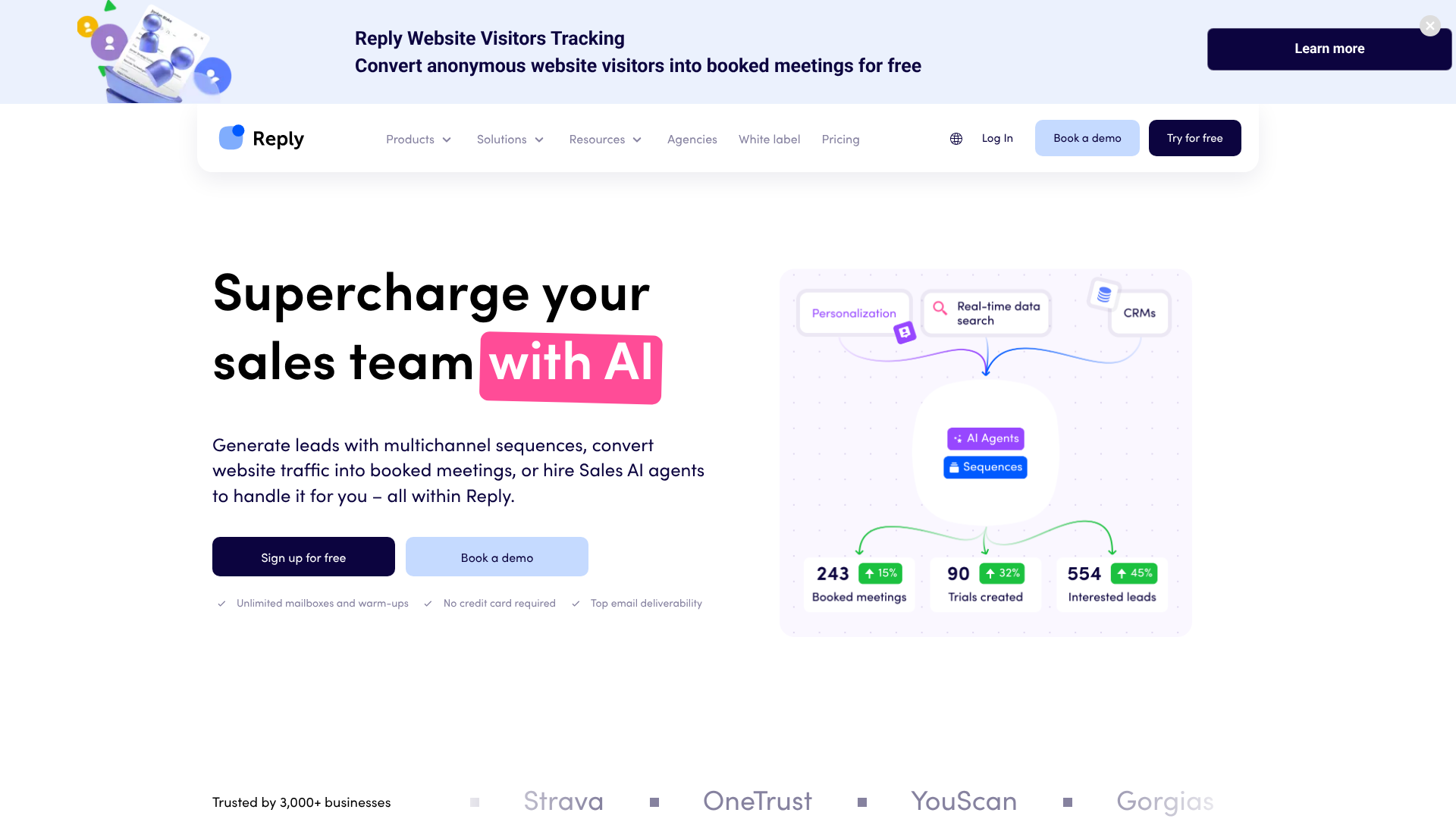
These tools are powerful because they ensure every prospect receives the right number of follow-ups at the right time. The sequence automatically stops for a prospect as soon as they reply, preventing awkward accidental follow-ups after you've already started a conversation. Using a platform like Hunter Campaigns (Hunter.io) can also help you find verified email addresses and manage your campaigns from one place, ensuring your outreach is both accurate and efficient.
Pro Tip: When setting up automated sequences, use custom fields beyond just the first name and company. Include fields for a recent company achievement, a specific pain point, or a shared connection. This allows you to automate highly personalised messages at scale.
Measuring Success: Key Metrics to Track
You can't improve what you don't measure. Tracking the performance of your follow-up emails is essential for understanding what's working and what isn't. The sales engagement platforms mentioned above provide detailed analytics, but integrating them with a CRM is crucial for a complete picture.
A CRM like HubSpot CRM or Zoho CRM acts as your central database for all prospect interactions. By connecting your outreach tool to your CRM, you can track how your follow-ups translate into actual business outcomes.
The key metrics to monitor for your follow-up emails include:
- Open Rate: What percentage of people are opening your follow-ups? A low open rate might indicate a problem with your subject lines or sender reputation.
- Reply Rate: This is the most important metric. What percentage of prospects are replying? Analysing the reply rate for each step in your sequence can show you which messages are most effective.
- Conversion Rate: Of those who reply, how many agree to a meeting, a demo, or whatever your desired next step is? This metric connects your outreach efforts directly to sales pipeline growth.
By regularly reviewing these metrics, you can A/B test different subject lines, messaging, and calls-to-action to continuously optimise your follow-up strategy for better results.
Real-World Examples: Successful Cold Email Follow-Up Campaigns
Theory is helpful, but seeing these principles in action provides clarity. Let's look at two hypothetical case studies to illustrate how a well-executed follow-up strategy can work.
Case Study 1: SaaS Company Targeting Marketing Managers
Goal: Book a 15-minute demo for a new social media analytics tool.
- Initial Email: A personalised email highlighting a specific gap in the prospect's current social media strategy and introducing the tool as a solution.
- Follow-up 1 (Day 3): A short email with the subject "Re: Social Analytics". It included a link to a case study showing how a similar company increased engagement by 30% using their tool.
- Follow-up 2 (Day 7): A value-driven email sharing a link to a blog post titled "3 Common Mistakes in Social Media Reporting". The email was brief and didn't ask for a meeting, focusing solely on providing helpful content.
- Follow-up 3 (Day 14): A final, direct email asking if they'd be open to a 15-minute demo next week to see the tool in action. This email received a reply: "Thanks for the persistence and the useful articles. Next Tuesday at 2 PM works for me."
Result: The multi-touch sequence, which blended direct asks with pure value, successfully secured the demo. The value-added emails built trust and kept the company top-of-mind until the timing was right for the prospect.
Case Study 2: B2B Service Provider Targeting CTOs
Goal: Schedule an introductory call to discuss cybersecurity services.
- Initial Email: A highly targeted email referencing a recent security breach in the prospect's industry and posing a question about their current security posture.
- Follow-up 1 (Day 4): A reply to the original thread with the subject "Re: Cybersecurity". The email contained a single, powerful statistic from a recent industry report about the average cost of a data breach for companies of their size.
- Follow-up 2 (Day 10): A breakup email with the subject "Closing the loop". It politely stated that since there was no reply, they would assume the timing wasn't right and would not follow up again.
Result: The breakup email triggered a response within an hour: "Apologies for the delay, I've been swamped. Your timing is actually good as we are reviewing our security vendors for next year. Can you speak tomorrow?" The fear of missing out (FOMO) combined with the professional closing of the loop prompted the CTO to act.
Frequently Asked Questions About Cold Email Follow-Ups
Here are answers to some of the most common questions people have when learning how to check in on cold email and manage their outreach.
How to follow up after a cold email?
The best way to follow up is by replying to your original email to create a thread. Keep your message short (3-5 sentences), provide context by reminding them of your initial message, add a new piece of value (like a resource or insight), and end with a clear, low-friction call-to-action. Always maintain a polite, professional, and helpful tone.
How soon to follow up on a cold email?
You should wait 2 to 3 business days before sending your first follow-up. This gives the recipient adequate time to read and process your initial email without letting the conversation go cold. For subsequent follow-ups, you can gradually increase the time between messages, such as waiting 4-5 days for the second follow-up and a week for the third.
How do I politely follow up on an email?
Politeness comes from your tone and your approach. Avoid any language that sounds demanding or passive-aggressive. Use phrases like "Just wanted to quickly follow up" or "Hope you're having a great week". The most polite thing you can do is respect their time by keeping your email brief and offering something of value, rather than just asking for something.
Is cold emailing unprofessional?
Cold emailing is not inherently unprofessional; it's all about the execution. A poorly researched, generic, and spammy cold email is unprofessional. However, a well-researched, personalised, and relevant cold email that seeks to solve a genuine problem for the recipient is a standard and accepted business practice. The follow-up process, when done respectfully, is simply a part of professional persistence.
What is the 30/30/50 rule for cold emails?
The 30/30/50 rule is a guideline for structuring a cold email to make it more effective. It suggests that 30% of the email should be about them (personalisation, referencing their company or role), 30% should be about you (introducing your solution and value), and 50% should be focused on the call-to-action and next steps, making it very clear what you want them to do.
Is a 20% response rate good?
A 20% response rate for a cold email campaign is exceptionally good. For most industries, a good response rate is typically considered to be in the 5-10% range. A great response rate would be anything above 10%. If you are achieving a 20% response rate, your targeting, messaging, and follow-up strategy are all working extremely well.
Final Thoughts: Turning Silence into Opportunity
Mastering the art of the follow up on cold email is not about finding a magic script or a secret trick. It's about embracing a mindset of professional persistence, empathy, and value creation. Silence is rarely a rejection; it's an invitation to be patiently persistent and to find new ways to demonstrate your value.
By implementing a structured and thoughtful follow-up strategy, you move from a passive hope for replies to an active process of building relationships. Remember to keep your messages short, add value with every touchpoint, and use technology to manage the process at scale. This approach will not only increase your reply rates but also build your reputation as a helpful and professional expert in your field.
If you're ready to systematise your outreach and ensure no lead is left behind, consider exploring a sales engagement platform. Tools like Reply.io or Instantly.ai can help you build, automate, and track your follow-up sequences, freeing you up to focus on what you do best: having meaningful conversations with interested prospects.