



How to Build Real Estate Lead Capture Landing Pages: A Guide for Agents
In the competitive world of real estate, a steady stream of qualified leads is not just an advantage; it's a necessity. While a general website serves as your digital brochure, it's the focused, high-intent traffic you need to convert. This is where creating effective real estate lead capture landing pages becomes a critical skill, transforming casual browsers into potential clients by offering them something of specific value in exchange for their contact information.
- What You'll Learn
- Why Lead Capture is the Lifeblood of Your Real Estate Business
- The Anatomy of a High-Converting Real Estate Landing Page
- The Irresistible Headline and Subheading
- Persuasive Copywriting: Benefits Over Features
- The Minimalist Property Lead Capture Form
- The Unmissable Call-to-Action (CTA) Button
- Designing Lead Capture Pages for Real Estate: Best Practices
- Crafting a Call-to-Action That Compels Clicks
- The Power of Visuals: Using Images and Video to Drive Conversions
- SEO for Real Estate Landing Pages: Getting Found on Google
- Streamlining Your Workflow: Integrating Landing Pages with Your CRM
- Measuring What Matters: Analysing Your Landing Page Conversion Rates
- The Scientific Approach: A/B Testing Your Real Estate Landing Pages
- Building Unshakeable Trust with Social Proof and Testimonials
- Frequently Asked Questions
- What makes a good real estate landing page?
- How do I get traffic to my real estate landing page?
- Should I use a single landing page for all my properties?
- What is a good conversion rate for a real estate landing page?
- Final Thoughts
These standalone pages are designed with a single objective: conversion. Whether you're promoting a new listing, offering a free home valuation, or providing a neighbourhood guide, a well-optimised landing page cuts through the noise. It directs a visitor's attention to one specific action, dramatically increasing the likelihood that they'll take the next step in their property journey with you.
This guide will walk you through everything you need to know, from the foundational elements of design and copywriting to advanced strategies like SEO, A/B testing, and CRM integration. You'll learn how to build pages that not only look professional but also work tirelessly to fill your sales pipeline.
What You'll Learn
- Focused Conversion is Key: The primary purpose of real estate landing pages is to achieve a single, specific goal, such as capturing an email for a property viewing or a free valuation.
- Essential Building Blocks: A successful page must include a compelling headline, high-quality property visuals, a simple and non-intrusive form, and a powerful call-to-action (CTA).
- Optimisation Drives Success: To maximise results, you must focus on continuous improvement through search engine optimisation (SEO), A/B testing different elements, and integrating with a CRM for efficient lead nurturing.
- Trust is a Major Factor: Incorporating social proof, such as genuine client testimonials and positive reviews, is one of the most effective ways to build credibility and encourage visitors to convert.
Why Lead Capture is the Lifeblood of Your Real Estate Business
Many estate agents invest heavily in a comprehensive website that showcases all their listings, their team, and their company history. While your main website is an essential digital asset, it's designed for exploration. It has multiple navigation links, various pages, and dozens of potential actions a visitor can take. This is great for general branding but inefficient for lead generation.
This is where lead capture pages for real estate make a significant difference. A landing page is a standalone web page, distinct from your main website, that has been designed for a single, focused objective. When a potential client clicks on one of your ads—whether on Google, Facebook, or another platform—they are sent to this page, not your homepage. This focused experience is crucial because it eliminates distractions.
There's no navigation bar to tempt them away, no blog to browse, and no 'About Us' page to get lost in. There is only the offer and a clear path to claim it.
This targeted approach ensures that the traffic you're paying for has a much higher chance of converting. A visitor arriving on a landing page for a "Free Home Valuation in Chelsea" is there for one reason. By providing a simple form to get that valuation, you are directly meeting their needs and capturing a high-intent lead. This process consistently fills your pipeline with individuals who have actively expressed interest, making your follow-up efforts more effective and ultimately leading to more closed deals.
The Anatomy of a High-Converting Real Estate Landing Page
An effective real estate landing page isn't a complex creation; it's a strategic combination of several key elements working together to guide the user towards a single action. Each component has a specific job, and when they are all optimised, the page becomes a powerful conversion machine.
The Irresistible Headline and Subheading
The headline is the first thing a visitor reads and it must grab their attention immediately. It should be benefit-driven and clearly communicate the value of your offer. For example, instead of "Property Listing," use "Discover Your Dream 3-Bedroom Family Home in Richmond." The subheading should then provide a little more detail or create a sense of urgency, such as "Virtual Tours Available – Book Your Private Viewing Today."
Persuasive Copywriting: Benefits Over Features
While it's important to list features like the number of bedrooms or square footage, your copy should focus on the benefits. Don't just say "large back garden"; say "a spacious, private garden perfect for summer barbecues and for children to play safely." Paint a picture of the lifestyle the property offers. Use clear, concise language and bullet points to make the information easy to scan and digest.
The Minimalist Property Lead Capture Form
Your property lead capture forms are where the conversion happens, so they must be as frictionless as possible. The golden rule is to only ask for the information you absolutely need. For an initial enquiry, a name and email address are often enough. Every additional field you add increases friction and can lower your conversion rate.
Keep the form visible 'above the fold' (without scrolling) and make it look clean and simple.
The Unmissable Call-to-Action (CTA) Button
Your CTA is the final instruction. It needs to be visually prominent and use compelling, action-oriented text. Avoid generic words like "Submit" or "Enter." Instead, use specific language that reinforces the value proposition, such as "Get My Free Valuation," "Download the Floor Plan," or "Schedule a Viewing."
Pro Tip: Make your CTA button a contrasting colour that stands out from the rest of the page. Data shows that bright, contrasting colours like orange or green often perform well because they draw the eye and encourage a click.
Designing Lead Capture Pages for Real Estate: Best Practices
Great design is not just about aesthetics; it's about creating a seamless and intuitive user experience that guides the visitor towards conversion. For real estate, where visual appeal is paramount, a clean and professional design builds instant credibility. The key is to remove all non-essential elements and focus the user's attention on the offer.
First, prioritise a strong visual hierarchy. Your most important elements—the headline, the hero image of the property, and the CTA button—should be the most prominent. Use size, colour, and placement to draw the eye naturally through the page towards the conversion goal. Ample white space is your friend; it prevents the page from feeling cluttered and makes the content easier to read and absorb.
Second, adopt a mobile-first approach. A significant portion of property searches happen on mobile phones, often during a commute or a lunch break. Your landing page must look and function perfectly on a small screen. This means large, easy-to-tap buttons, legible fonts, and forms that are simple to fill out with a thumb.
Test your page on multiple devices to ensure the experience is consistent.
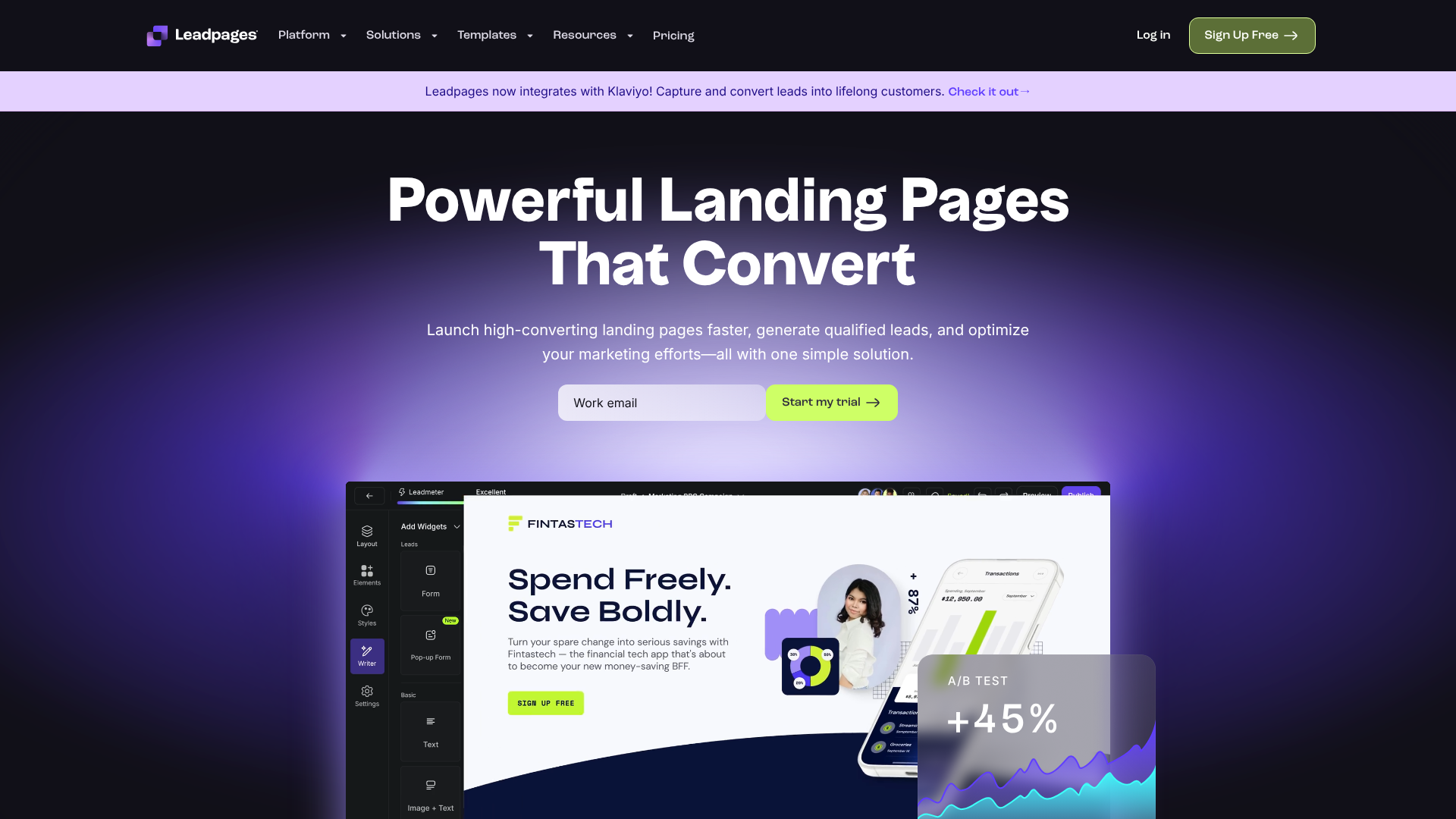
Finally, you don't need to be a professional designer to create stunning pages. Modern landing page builders like Leadpages or Unbounce offer a wide range of professionally designed templates specifically for the real estate industry. These tools use drag-and-drop editors, allowing you to customise templates with your own branding, images, and copy in minutes, ensuring a polished look without any coding knowledge.
Crafting a Call-to-Action That Compels Clicks
The Call-to-Action (CTA) is arguably the most important element on your landing page. It's the tipping point where a passive visitor becomes an active lead. A weak or unclear CTA can cause all your other efforts—great copy, beautiful design, targeted traffic—to fail at the final hurdle. A strong CTA, however, provides the final nudge a user needs to convert.
The language you use is critical. It must be direct, benefit-oriented, and create a sense of urgency or exclusivity. Instead of a passive word like "Submit," use a powerful action verb that tells the user exactly what they will get. For instance:
- Instead of: "Download" → Use: "Get Your Free Neighbourhood Guide"
- Instead of: "Sign Up" → Use: "Receive Exclusive Property Alerts"
- Instead of: "Contact Us" → Use: "Book Your Private Viewing Now"
Visual design also plays a huge role. The CTA button should be impossible to miss. Use a colour that contrasts sharply with the page's background to make it pop. The size of the button matters too; it should be large enough to be easily clickable, especially on mobile devices, but not so large that it becomes obnoxious.
Its placement is strategic—ideally, it should appear above the fold and be repeated further down the page if the content is long.
Think of your CTA as the logical conclusion to the story your landing page is telling. The headline made a promise, the copy built desire, and the CTA is the clear, simple way for the visitor to claim that promise. Every word and design choice should be deliberate and aimed at making that click an easy and compelling decision.
The Power of Visuals: Using Images and Video to Drive Conversions
Real estate is an inherently visual industry. Buyers aren't just purchasing bricks and mortar; they're buying a lifestyle, a future, and a place to call home. High-quality visuals are the most powerful tool you have to convey this emotion and value on your real estate landing pages. Professional, captivating images and videos can stop a visitor in their tracks and transform a vague interest into a strong desire.
Your primary 'hero' image—the large, prominent visual at the top of the page—should be your best shot. It should be a stunning photograph of the property's most appealing feature, whether that's the modern kitchen, the sun-drenched living room, or the beautiful exterior. Avoid blurry, poorly lit, or distorted photos at all costs, as they signal a lack of professionalism and can destroy trust in seconds. Investing in a professional property photographer is one of the highest-ROI decisions you can make.
Beyond static images, video content is becoming increasingly important. A short, well-produced video tour can give potential buyers a much better sense of the property's flow and layout than photos alone. It allows them to virtually walk through the space, building an emotional connection before they've even set foot inside. You can also use videos to introduce yourself as the agent, adding a personal touch that helps build rapport.
Embedding a video on your landing page has been shown to increase conversion rates significantly.
Here is an example of how to create effective real estate landing pages:
Remember to optimise your visuals for the web. Large image and video files can slow down your page's loading speed, which frustrates users and can harm your SEO rankings. Use tools to compress images without sacrificing quality, and host videos on platforms like YouTube or Vimeo to ensure smooth playback.
SEO for Real Estate Landing Pages: Getting Found on Google
While many landing pages are designed to receive traffic from paid ads, optimising them for organic search (SEO) can provide a long-term source of free, high-intent leads. When someone in your area searches for "three-bedroom houses for sale in Islington," having an optimised landing page for that specific query can put you directly in front of a motivated buyer.
On-page SEO for landing pages follows the same core principles as for any other web page. Start with keyword research. Identify the terms potential clients are using to search for properties in your area. Tools like Mangools (KWFinder) can help you find relevant, location-specific keywords with good search volume and manageable competition.
Once you have your target keyword (e.g., "luxury flats in Canary Wharf"), you need to incorporate it naturally into key areas of your page:.
-31058c18-ba73-41f8-b6a8-82c435c6ae94-1768468579407-robrnk.png "How to Build Real Estate Lead Capture Landing Pages: A Guide for Agents 4")
- Title Tag: This is the title that appears in the browser tab and search engine results. It should be compelling and include your primary keyword.
- Meta Description: The short snippet of text under the title in search results. While not a direct ranking factor, a well-written meta description entices users to click.
- Headings (H1, H2): Your main headline should be an H1 tag and should contain your keyword. Use H2 tags for subheadings.
- Body Copy: Weave your keyword and related terms throughout the page's text, but always prioritise natural, readable language over keyword stuffing.
Local SEO is particularly crucial for real estate. Ensure your page clearly mentions the specific city, neighbourhood, or postcode you are targeting. Page speed is another critical ranking factor. A slow-loading page will lead to a high bounce rate, which signals to Google that your page provides a poor user experience.
Optimise your images and use a reliable hosting provider to ensure your page loads in under three seconds.
Pro Tip: Create separate landing pages for different neighbourhoods or property types. A highly specific page for "Victorian terrace houses in Clapham" will rank better for that specific search and convert at a higher rate than a generic "London homes for sale" page.
Streamlining Your Workflow: Integrating Landing Pages with Your CRM
Capturing a lead is only the first step. The real value is unlocked in the follow-up. Manually downloading leads from your landing page and importing them into a spreadsheet or email client is inefficient and prone to error. This is where integrating your property lead capture forms directly with a Customer Relationship Management (CRM) system becomes essential for scaling your business.
Integration automates the entire process. As soon as a potential client fills out a form on your landing page, their contact information and the details of their enquiry are instantly and automatically sent to your CRM. This triggers a pre-defined workflow. For example, the lead could be immediately assigned to an agent, added to a specific email nurture sequence, and a task could be created for a follow-up call within 24 hours.
This speed is critical, as studies consistently show that the odds of converting a lead are highest when you respond within the first few minutes.
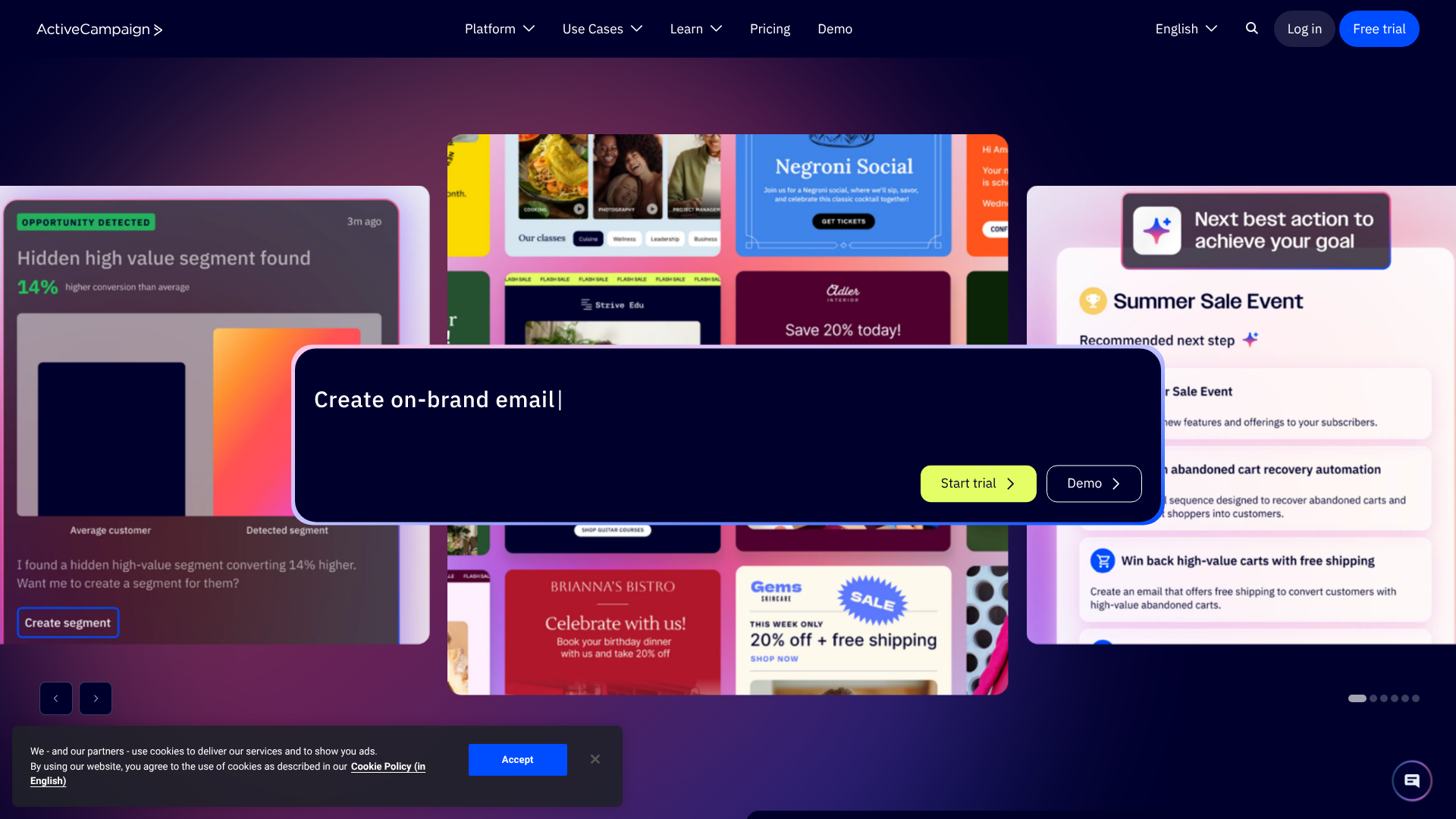
Most modern landing page builders and form tools offer seamless integrations with popular CRMs. Platforms like ActiveCampaign or GetResponse not only manage your contacts but also provide powerful marketing automation tools. You can create sophisticated follow-up campaigns that nurture leads over time, sending them relevant property listings, market updates, and helpful advice, keeping you top-of-mind until they are ready to transact. This automation frees you from administrative tasks and allows you to focus on what you do best: building relationships and closing deals.
Measuring What Matters: Analysing Your Landing Page Conversion Rates
You can't improve what you don't measure. To understand if your real estate lead capture landing pages are effective, you need to track their performance. The single most important metric is the conversion rate. This is the percentage of visitors who complete the desired action (i.e., fill out your form).
The formula is simple: (Number of Conversions / Total Number of Visitors) x 100 = Conversion Rate. For example, if 200 people visit your landing page and 10 of them fill out the form, your conversion rate is 5%.
But what is a 'good' conversion rate. This varies widely by industry, traffic source, and the nature of the offer. For real estate, a conversion rate between 2% and 5% is often considered average. However, highly optimised pages can achieve rates of 10% or even higher.
The goal is to establish your own baseline and work on improving it over time.
To diagnose performance, you need to look beyond just the conversion rate. Use a tool like Google Analytics to track other key metrics:
- Traffic Source: Where are your visitors coming from (e.g., Google Ads, Facebook, email)? This helps you understand which channels are most effective.
- Bounce Rate: The percentage of visitors who leave your page after viewing only one page. A high bounce rate might indicate a disconnect between your ad and your landing page content, or that the page is loading too slowly.
- Time on Page: How long visitors are spending on your page. Very low time on page could mean your headline or offer isn't compelling enough to hold their attention.
By regularly reviewing these metrics, you can identify weaknesses in your landing pages and form data-driven hypotheses about what changes might improve performance. This analytical approach is the foundation of successful optimisation.
The Scientific Approach: A/B Testing Your Real Estate Landing Pages
Once you start analysing your landing page data, you'll begin to form ideas for improvement. You might think, "What if I change the headline?" or "Would a different button colour work better?" Instead of guessing, you can use A/B testing (also known as split testing) to find definitive answers.
A/B testing is the process of comparing two versions of a web page against each other to see which one performs better. You create a second version of your page (the 'variation') with one single element changed. For example, you might test a new headline. Your landing page software will then show the original page (the 'control') to 50% of your visitors and the variation to the other 50%.
After a statistically significant number of visitors, the tool will tell you which version resulted in a higher conversion rate.
This scientific method removes guesswork from optimisation. Some of the most impactful elements to test on your lead capture pages for real estate include:
- The Headline: Test a benefit-driven headline vs. a feature-focused one.
- The Call-to-Action (CTA): Test different button text (e.g., "Schedule Viewing" vs. "Book My Tour"), colours, or sizes.
- The Hero Image: Compare a photo of the property's exterior with one of the interior.
- The Form: Test a short form (name and email) against a slightly longer one that also asks for a phone number.
- The Page Copy: Try a version with long, detailed copy against one with concise bullet points.
The key to successful A/B testing is to only change one element at a time. If you change both the headline and the button colour simultaneously, you won't know which change was responsible for the increase or decrease in conversions. Many leading landing page platforms, such as Unbounce and Instapage, have powerful, user-friendly A/B testing features built directly into their platforms, making it easy to run experiments and continuously improve your results.
Building Unshakeable Trust with Social Proof and Testimonials
In a high-stakes transaction like buying or selling a property, trust is everything. Potential clients are looking for an agent who is credible, experienced, and has a proven track record of success. Your landing page is often the first interaction they have with you, so it's crucial to establish this trust immediately. The most effective way to do this is by using social proof.
Social proof is the psychological phenomenon where people assume the actions of others in an attempt to reflect correct behaviour for a given situation. In simple terms, if we see that other people trust you, we are more likely to trust you too. On a landing page, this translates into showcasing positive feedback from past clients. A few well-placed, genuine testimonials can be more persuasive than any marketing copy you could write yourself.
There are several types of social proof you can use on your real estate landing pages:
- Client Testimonials: Short, powerful quotes from happy clients. Include their full name and a photo if possible to increase authenticity. Focus on testimonials that highlight specific results, such as "Jane sold our house in just one week, for over the asking price!"
- Video Testimonials: A short video of a client sharing their positive experience is incredibly powerful and difficult to fake, making it highly trustworthy.
- Star Ratings: Displaying an aggregate star rating from platforms like Google or Zillow provides a quick, visual indicator of your quality of service.
- "As Seen In" Logos: If you or your listings have been featured in local newspapers or prominent property blogs, displaying their logos adds a layer of third-party validation.
Place your social proof strategically near the call-to-action or form. Seeing a glowing review right before they are asked to provide their contact information can be the final piece of reassurance a visitor needs to overcome any hesitation and convert into a lead.
Frequently Asked Questions
What makes a good real estate landing page?
A good real estate landing page has a single, clear objective and is free from distractions. It features a compelling, benefit-driven headline, high-quality images or video of the property, persuasive copy that focuses on the lifestyle, a simple and short lead capture form, and a prominent call-to-action (CTA) button. It should also be mobile-responsive and load quickly to provide an excellent user experience.
How do I get traffic to my real estate landing page?
There are several ways to drive traffic. Paid advertising through platforms like Google Ads and Facebook Ads is one of the fastest and most common methods, allowing you to target specific demographics and locations. You can also promote your landing page through your email newsletter, social media profiles, and even on property portals. For long-term results, optimising the page for local SEO can attract free, organic traffic from search engines.
Should I use a single landing page for all my properties?
No, this is generally not effective. The power of a landing page comes from its specificity. You should create a unique landing page for each individual property listing you want to promote. This allows you to tailor the headline, copy, and images directly to that property, which will result in a much higher conversion rate than a generic, one-size-fits-all page.
What is a good conversion rate for a real estate landing page?
While this can vary, a typical conversion rate for the real estate industry falls between 2% and 5%. However, this is just a benchmark. A highly targeted campaign with a compelling offer and a well-optimised landing page can achieve conversion rates of 10% or more. The most important thing is to track your own performance and continuously use A/B testing to improve your baseline.
Final Thoughts
Mastering the art and science of real estate lead capture landing pages is a fundamental skill for any modern agent looking to grow their business. These focused, single-purpose pages are the most efficient way to convert online traffic into tangible, high-quality leads for your sales pipeline. By moving beyond a generic website and creating targeted experiences for buyers and sellers, you meet them exactly where they are in their journey.
Remember the core principles: a clear offer, compelling copy, stunning visuals, a frictionless form, and an unmissable call-to-action. Support this foundation with a commitment to continuous improvement through SEO, data analysis, and A/B testing. Finally, build trust at every step with authentic social proof from your satisfied clients.
Building these pages doesn't have to be a technical challenge. If you're ready to start creating high-converting pages without the complexity, consider exploring user-friendly platforms. Tools like Leadpages and Unbounce provide industry-specific templates and powerful features that make it simple to launch and optimise your lead generation efforts.