




SEO Content Generation Explained: A Beginner's Guide to Ranking Higher
Creating content that people love is one thing, but ensuring it gets discovered on Google is another challenge entirely. The process of seo content generation is the bridge between crafting a valuable article and getting it in front of the right audience. It’s not about tricking search engines; it’s about creating content so helpful and well-structured that they are eager to show it to their users.
- What You'll Learn
- What is SEO Content Generation?
- The Crucial Role of Keywords in Your Content Strategy
- Tools for Effective SEO Content Generation
- Best Practices for SEO Writing
- 1. Craft Compelling Titles and Meta Descriptions
- 2. Use Headings to Structure Your Content
- 3. Prioritise Readability
- 4. Implement Internal and External Linking
- How to Create Engaging Content That People and Google Love
- Common Mistakes to Avoid in SEO Content Generation
- Does Content Length Really Matter for SEO?
- Using Analytics to Refine Your SEO Content Performance
- Strategies for Updating and Repurposing Content
- The Future of SEO Content Generation: What's Next?
- Frequently Asked Questions
- What is SEO in content creation?
- What is the 80/20 rule for SEO?
- What are the 4 pillars of SEO?
- Is SEO still worth it in 2026?
- Final Thoughts
This guide breaks down the entire process, from understanding the fundamentals to using advanced strategies. You'll learn how to generate SEO content that not only ranks but also builds authority and drives meaningful results for your business. We'll cover the tools, techniques, and trends you need to know to succeed.
What You'll Learn
- The Core of SEO Content: Understand that SEO content generation is about satisfying user intent first and optimising for search engines second. It's a blend of quality writing and technical strategy.
- Keywords are Your Compass: Learn why keywords are crucial for guiding your content strategy and how to find the terms your audience is actively searching for.
- Tools Make the Difference: Discover how platforms for research, AI writing assistance, and editing can streamline your workflow and improve the quality of your output.
- Best Practices for Ranking: Master the essential on-page SEO techniques, from writing compelling headlines to structuring your content for maximum readability and impact.
- Future-Proof Your Strategy: Get ahead of the curve by understanding emerging trends like AI in search, voice optimisation, and the growing importance of topical authority.
What is SEO Content Generation?
SEO content generation is the strategic process of planning, creating, and optimising content with the primary goal of ranking high in search engine results pages (SERPs). Unlike standard content creation, which might focus solely on brand voice or storytelling, this process integrates search engine optimisation from the very beginning. The aim is to attract organic traffic from search engines like Google by directly addressing what users are looking for.
At its heart, it's about answering three key questions:
- What are people searching for? (Keyword Research)
- What is the reason behind their search? (Search Intent)
- How can we provide the best possible answer? (Content Creation & Optimisation)
Effective content SEO isn't just about inserting keywords into a blog post. It involves creating comprehensive, high-quality, and well-structured material that genuinely helps the reader. Google's algorithms are designed to reward content that demonstrates expertise, authoritativeness, and trustworthiness (E-E-A-T). Therefore, the best SEO content is that which is created for humans first and search engines second.
The Crucial Role of Keywords in Your Content Strategy
Keywords are the foundation of any successful SEO content strategy. They are the words and phrases that people type into search engines, acting as a direct line to your audience's needs, questions, and problems. Ignoring keywords is like trying to navigate a new city without a map; you might eventually find your way, but it will be inefficient and based on guesswork.
Understanding Search Intent
Simply finding a keyword isn't enough; you must understand the intent behind it. Search intent is the 'why' behind a search query. It generally falls into four categories:
- Informational: The user wants to learn something. (e.g., "what is content marketing")
- Navigational: The user wants to find a specific website or page. (e.g., "HubSpot login")
- Commercial: The user is researching before making a purchase. (e.g., "best AI writing tools")
- Transactional: The user is ready to buy something. (e.g., "buy Semrush subscription")
Aligning your content with the correct search intent is critical. If someone is searching for information, a hard sales page will not satisfy them, and Google will be less likely to rank it. Your SEO writing must match the user's goal to be effective.
Finding the Right Keywords
Keyword research involves identifying not just what people are searching for, but also how many people are searching for it (search volume) and how difficult it is to rank for (keyword difficulty). You should look for a mix of head terms (broad, high volume, e.g., "SEO") and long-tail keywords (more specific, lower volume, e.g., "how to generate SEO content for a small business"). Long-tail keywords often have a clearer intent and less competition, making them valuable targets.
Tools for Effective SEO Content Generation
Manually managing every aspect of SEO content generation is possible but highly inefficient. The right set of tools can automate research, accelerate creation, and ensure a higher standard of quality. These platforms are designed to give you data-driven insights and streamline your workflow.
For Research and Planning: Semrush
Before you write a single word, you need a solid plan based on data. Semrush is an all-in-one SEO platform that excels at the research phase. Its Keyword Magic Tool allows you to discover thousands of keyword ideas, analyse their search volume, difficulty, and intent, and group them into topic clusters.

You can also use it to analyse competitor content, identify content gaps in your own strategy, and get topic ideas that are proven to attract traffic. This data-first approach ensures you're not creating content blindly but targeting topics with real ranking potential.
Pros
- Comprehensive keyword and competitor analysis tools.
- Provides data on keyword difficulty, volume, and search intent.
- Topic research features help build content clusters and authority.
Cons
- Can be expensive for freelancers or small businesses
.
- The sheer number of features can have a steep learning curve.
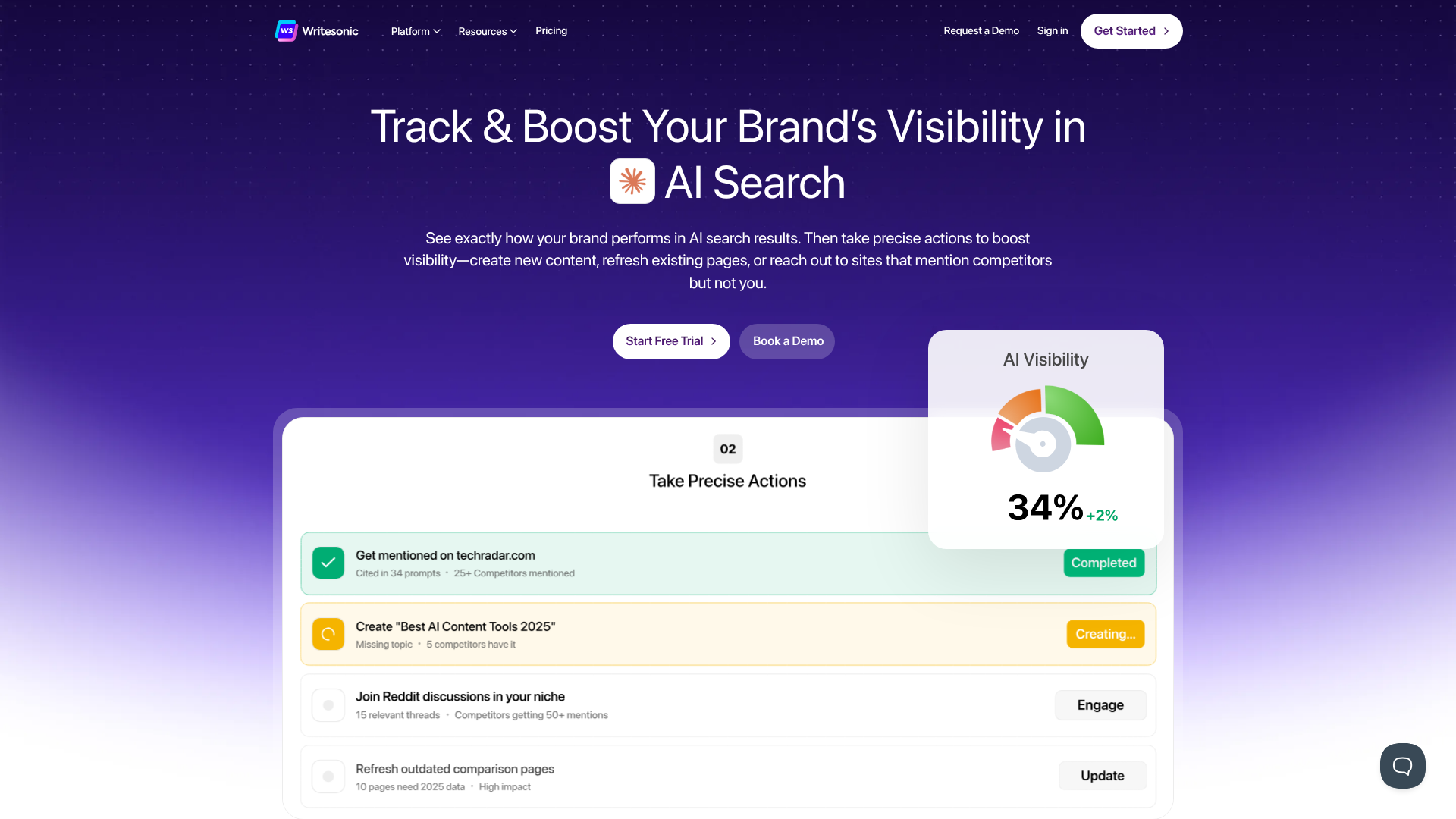
For AI-Assisted Writing: Jasper and Writesonic
Once you have your keywords and topic, AI writing assistants can help you overcome writer's block and speed up the drafting process. They are not meant to replace human writers but to augment their capabilities.
[Jasper](https:/t's particularly useful for creating structured content like blog posts and marketing copy.

Writesonic offers similar capabi

lities with a strong focus on SEO. Its AI Article Writer can generate SEO-optimised articles by incorporating keywords and following best practices for structure and readability. It's a great tool to generate SEO content frameworks that you can then refine with your own expertise.
https://rankamigomarly
Even the best content can be undermined by spelling mistakes and grammatical errors. Grammarly goes beyond a simple spell-check, offering suggestions on clarity, tone, and style. It ensures your final piece is professional, easy to read, and error-free.
Using a tool like Grammarly is the final quality check before you publish. It helps maintain a high standard of writing, which builds trust with both readers and search engines.
Best Practices for SEO Writing
Writing for SEO is a skill that balances creativity with a set of technical guidelines. Following these best practices ensures your content is structured in a way that search engines can easily understand and that users find accessible and engaging.
1. Craft Compelling Titles and Meta Descriptions
Your title tag and meta description are often the first things a user sees in the search results. They need to be compelling enough to earn the click.
- Title Tag: Keep it under 60 characters. Include your primary keyword naturally, preferably near the beginning. Make it benefit-driven to entice users.
- Meta Description: Keep it under 160 characters. Think of it as an advert for your page. Include your keyword and a clear call-to-action (e.g., "Learn more," "Find out how"” alt=”seo content generation” />.
2. Use Headings to Structure Your Content
Headings (H1, H2, H3, etc.) create a logical hierarchy for your content. They make the article scannable for readers and help search engines understand the main topics and subtopics of your page.
- Use only one H1 tag per page (this is usually your article title).
- Use H2s for main sections and H3s for subsections within them.
- Incorporate your primary and related keywords in headings where it sounds natural.
3. Prioritise Readability
If your content is a wall of text, users will leave. Google tracks user behaviour signals like bounce rate and time on page. Poor readability leads to poor signals, which can harm your rankings.
- Use short sentences and paragraphs (2-3 sentences max).
- Use bullet points and numbered lists to break up text.
- Use bold and italics to emphasise key points.
- Write at an 8th-grade reading level to ensure it's accessible to a wide audience.
Pro Tip: Use a tool like the Hemingway App or the built-in checker in Grammarly to assess your content's readability score. Aim for a score that aligns with a broad audience to maximise engagement.
4. Implement Internal and External Linking
Links are a crucial part of SEO. They help search engines discover your content and understand its relationship to other pages.
- Internal Links: Link to other relevant pages on your own website. This helps distribute page authority and keeps users on your site longer.
- External Links: Link out to authoritative, non-competing websites. This shows that your content is well-researched and provides additional value to the reader, which can build trust.
How to Create Engaging Content That People and Google Love

Ranking is only half the battle. Once a user lands on your page, the content must be engaging enough to hold their attention and deliver on the promise made in the search results. Truly great content SEO focuses on creating a positive user experience.
First, tell a story. Humans are wired for narratives. Instead of just listing facts, frame your content around a problem and a solution. Use relatable examples and scenarios that resonate with your target audience's pain points.
This approach makes complex information more digestible and memorable.
Second, incorporate multimedia elements. A page with only text can be intimidating. Break it up with relevant images, infographics, charts, and videos. Visuals can often explain concepts more effectively than words alone and significantly increase user dwell time.
Tools like Pictory make it easy to turn blog posts into engaging videos, while platforms like Synthesia allow you to create professional-looking videos with AI avatars, adding a dynamic element to your content.
Finally, make your content interactive. Encourage engagement by asking questions, including polls or quizzes, and inviting comments. An active comments section signals to Google that your content is sparking conversation and providing value. Responding to comments also shows that you are an engaged and authoritative source of information.
Common Mistakes to Avoid in SEO Content Generation
Even with the best intentions, it's easy to fall into common traps that can hinder your SEO efforts. Being aware of these mistakes is the first step to avoiding them and ensuring your hard work pays off.
One of the most frequent errors is keyword stuffing. This outdated practice involves unnaturally forcing your target keyword into the content as many times as possible. Modern search algorithms are sophisticated enough to detect this and will penalise your site for it. Keywords should always be used naturally and contextually.
As a user on Reddit's r/SEO board noted, "AI can help you find keywords, but a human needs to make sure they sound natural. Google is rewarding natural language more than ever.".
Another major mistake is ignoring search intent. You might write a brilliant, in-depth article, but if it doesn't match what the user was actually looking for, it won't rank. Always analyse the top-ranking pages for your target keyword to understand what type of content and format is satisfying users for that query.
Finally, many creators fall into the trap of producing thin content. This refers to content that provides little to no real value to the reader. A 300-word blog post that just rehashes basic information is unlikely to rank for any competitive term. Your goal should always be to create the most comprehensive and helpful resource available on the topic.
Does Content Length Really Matter for SEO?

There's a long-standing debate in the SEO community about whether content length is a direct ranking factor. The short answer is no, but the long answer is more nuanced. Google doesn't rank a page higher simply because it has 3,000 words instead of 1,000. However, there is a strong correlation between longer content and higher rankings.
This correlation exists because longer content tends to be more comprehensive. A detailed, in-depth article is more likely to fully answer a user's query and any follow-up questions they might have. It provides more opportunities to cover related subtopics, include relevant keywords and semantic variations, and demonstrate true expertise on the subject.
For example, a short article on "how to bake a cake" might just list the ingredients and steps. A longer, more comprehensive guide would also cover common baking mistakes, different types of frosting, and tips for decorating. This depth of information provides more value to the user, leading to longer dwell times and more social shares—all positive signals to Google. The goal isn't to hit an arbitrary word count; it's to cover a topic so thoroughly that the reader doesn't need to go anywhere else.
Using Analytics to Refine Your SEO Content Performance
Creating and publishing content is just the beginning. To truly succeed, you need to analyse its performance and use that data to make improvements. Analytics tools provide invaluable feedback on what's working and what isn't.
Google Search Console (GSC) is your most important tool for this. It shows you which queries your pages are ranking for, their average position, click-through rate (CTR), and total impressions. If a page is getting a lot of impressions but has a low CTR, it might mean your title tag and meta description aren't compelling enough. You can experiment with different versions to see if you can improve the click rate.
Google Analytics (GA) provides insights into how users behave once they are on your site. Key metrics to watch include:
- Average Time on Page: A low time on page might indicate that your content isn't engaging or isn't matching search intent.
- Bounce Rate: A high bounce rate means users are leaving after viewing only one page. This could signal a poor user experience or irrelevant content.
- Goal Completions: You can track how many users who land on your content go on to complete a desired action, like signing up for a newsletter or making a purchase.
By regularly reviewing this data, you can identify underperforming content, find opportunities for optimisation, and double down on the types of content that resonate most with your audience.
Strategies for Updating and Repurposing Content
Your content library is a valuable asset, but it requires maintenance. Over time, information can become outdated, links can break, and content can lose its relevance. This is known as "content decay." Regularly updating and repurposing your existing content is a highly effective SEO strategy.
Updating Existing Content
Start by identifying pages that have seen a decline in traffic or rankings. You can find this data in Google Analytics. Once you have a list of candidates, review the content for:
- Accuracy: Are all facts, statistics, and examples still current?
- Comprehensiveness: Have new developments occurred that should be added? Can you expand on certain sections to make them more helpful?
- Freshness: Update publication dates, replace old screenshots, and add new internal links to more recent content.
This process, often called a "content refresh," can provide a significant ranking boost with far less effort than creating a new piece from scratch.
Repurposing Content for Wider Reach
Repurposing involves taking one piece of content and transforming it into different formats. This allows you to reach new audiences on different platforms without starting from zero. For instance, a comprehensive blog post can be repurposed into:
- A video for YouTube (using a tool like Invideo)
- An infographic for Pinterest and social media
- A podcast episode (using an AI voice generator like Murf AI)
- A series of social media posts for LinkedIn or Twitter
- A slide deck for SlideShare
This strategy maximises the value of your initial research and writing efforts, extending the life and reach of your best-performing content.
The Future of SEO Content Generation: What's Next?
The world of SEO is constantly evolving, and content strategies must adapt to stay effective. Several key trends are shaping the future of how we create and optimise content.
The most significant trend is the rise of Artificial Intelligence in search. With features like Google's Search Generative Experience (SGE), search engines are moving towards providing direct answers at the top of the results. This means content creators must focus on building topical authority and creating content that is so unique and valuable that it gets cited in these AI-powered overviews. As one expert on LinkedIn commented, "Your goal is no longer just to rank, but to become the source Google's AI trusts."
Voice search continues to grow, driven by smart speakers and mobile assistants. This shifts the focus towards more conversational, question-based keywords. Content should be structured to provide clear, concise answers that can be easily read aloud by an AI assistant. Using FAQ sections and natural language is becoming increasingly important.
Finally, the importance of multimedia and interactive content will only increase. Users expect more than just text. Video, in particular, is a dominant force. Integrating video, interactive tools, and other engaging elements into your content will be essential for capturing and retaining user attention in a crowded digital landscape.
Pro Tip: Start building topical authority now by creating content clusters. This involves creating a main "pillar" page on a broad topic and linking it to several "cluster" pages that cover related subtopics in detail. This structure signals to Google that you are an expert on the subject.
Frequently Asked Questions
What is SEO in content creation?
SEO in content creation is the practice of strategically integrating search engine optimisation techniques into the content development process. This includes conducting keyword research to understand user queries, structuring content with clear headings, writing compelling titles and meta descriptions, and optimising for readability to create a positive user experience that search engines like Google will reward with higher rankings.
What is the 80/20 rule for SEO?
The 80/20 rule, or Pareto Principle, applied to SEO suggests that 80% of your results will likely come from 20% of your efforts. In content SEO, this often means that a small number of your articles (the top 20%) will be responsible for the vast majority (80%) of your organic traffic. This highlights the importance of identifying your top-performing content and focusing on keeping it updated and promoted, rather than spreading your efforts thinly across all pages.
What are the 4 pillars of SEO?
The four main pillars of SEO are generally considered to be:
- Technical SEO: Ensuring your website can be crawled and indexed properly by search engines. This includes site speed, mobile-friendliness, and site architecture. 2.
On-Page SEO: Optimising individual web pages to rank higher. This involves content quality, keyword optimisation, title tags, and headings. 3. Off-Page SEO: Actions taken outside of your own website to impact your rankings.
This is primarily driven by building high-quality backlinks from other reputable sites. 4. Content: Creating high-quality, relevant, and valuable content that satisfies user intent. Content is the foundation that the other three pillars support.
Is SEO still worth it in 2026?
Absolutely. SEO is arguably more important than ever. While tactics change, the fundamental goal of connecting users with the most relevant and helpful information remains. As long as people use search engines to find answers, products, and services, there will be immense value in optimising your content to be visible.
The rise of AI in search engines doesn't diminish the need for SEO; it simply shifts the focus towards higher-quality content, E-E-A-T signals, and building true topical authority.
Final Thoughts
SEO content generation is not a one-time task but an ongoing cycle of research, creation, optimisation, and analysis. It's a discipline that combines the art of great writing with the science of search engine algorithms. By focusing on creating genuinely helpful, comprehensive, and engaging content that directly addresses user intent, you build a sustainable strategy for long-term organic growth.
Remember that the ultimate goal is to provide value to your audience. When you make that your priority, you'll find that you are naturally aligning with what search engines want to reward. The tools and techniques discussed here can streamline the process, but the foundation will always be high-quality content that serves the reader.
If you're looking to enhance your content workflow, consider exploring tools like Semrush for in-depth research or AI assistants like Jasper to speed up your drafting process. They can provide the data and efficiency needed to take your content strategy to the next level.